Home Blog Page 2406

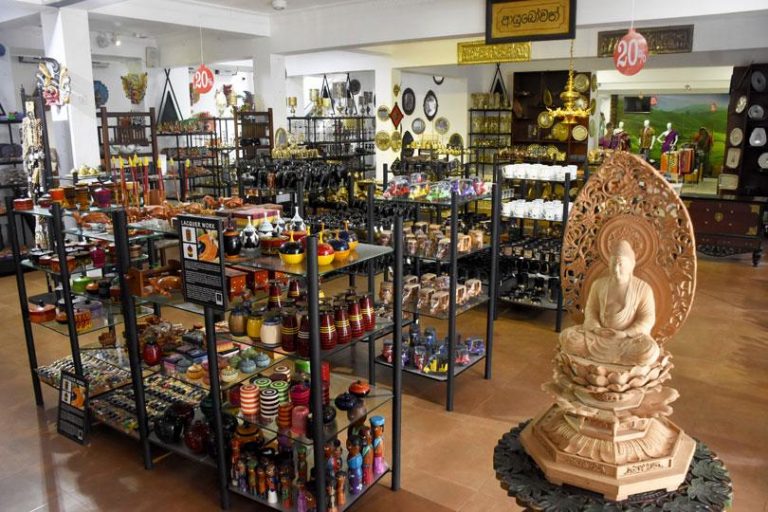
Laksala franchise outlet to be opened in China soon  

0

Sri Lanka handicrafts and handloom textiles and ready made garments are to be popularised in China under the government’s special programme of local traditional products in foreign countries. Foreign Ministry announced.

 The Foreign Ministry and the State Ministry of Batik, Handloom and Local Apparel Products will implement this programme to promote Sri Lankan batik, handloom and local apparel products through Sri Lankan Missions worldwide.

Under this initiative `Laksala’ franchise outlets are to be opened in those selected countries and the first such handicrafts and handloom soutlet was set up in in Miami, Florida in the USA in early September last year. 

The Boom Lanka Batik and Gifts LLC, USA (Ceylon Gallery) is the official franchisee of the Franchise Show Room outlet, at 1381, NW45 Street, Miami, FL 33142, USA. 

The sixth Laksala franchise outlet is to be set up in China under this initiative to sell traditional handicraft items including handloom products including batik costumes, gem and jewellery products, Ceylon tea, coffee, local ayurvedic products, organic products and Cosmetic products, produced by Sri Lankan rural craftsmen and also to promote the sale and marketing Sri Lankan handicrafts abroad.

The agreement to establish this shopping centre in Zheejian China was signed ata ceremony held at the State ministry auditorium on Friday 18 between Zhejiang Boswin Technology Private Limited and ‘Laksala –Sri Lanka Handicrafts Board.

State Minister Dayasiri Jayasekera was the Chief Guest at the signing ceremony held in the presence of SLHB, Chairman Attorney at Law Lakmal Wickramaarachchi and senior officials. 

 All Sri Lankan traditional products that are supplied at the franchise outlet are sold under the world-renowned Laksala brand which has been highly recognised among foreign tourists visiting Sri Lanka annually.

Sri Lanka Handicrafts Board’s Laksala will receive foreign exchange revenue  from from the exports of local handicraft and handloom textiles apparel and other items, a percentage from the monthly sales of products and a Royalty Fee for using’ Laksala’  world renowned brand name in China, state minister Dayasiri Jayasekera said.

He added that Laksala is the country’s only State-owned pioneer gifts and souvenir shop and it was established in 1964 during the tenure of former Prime Minister Sirimavo Bandaranaike. Currently, Laksala has a 12-Showroom island-wide network.

Sri Lanka & Russia commemorate 65th anniversary of diplomatic ties 

0

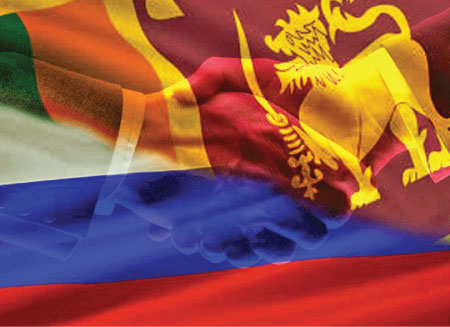
February 19 marks the 65th anniversary of the establishment of diplomatic relations between the Russian Federation and the Democratic Socialist Republic of Sri Lanka.

The Russian Embassy, while emphasising that bilateral relations between the two countries has always been developing in an environment of friendship, mutual understanding, amiability, stated that it is based on equality, goodwill, and respect for each other’s interests.

Although the diplomatic relations between the Soviet Union and Ceylon were established in 1957, links between the two countries were existed long before the Sri Lankan Independence.

The time-tested nature of the close Russian–Sri Lankan relations and their current status serve as an indicator that the bilateral political ties, the Embassy states, as the mutually beneficial cooperation in the trade, economic, educational and tourist spheres, as well as people-to-people contacts are expected to grow and intensify in the future.

The Russian-Sri Lankan Intergovernmental Commission for Trade, Economic, Scientific and Technical Cooperation effectively contributes to the strengthening of bilateral business ties. Its next meeting is planned to take place in Colombo this April.

The number of Russian tourists visiting Sri Lanka increased after direct flights between Moscow and Colombo were resumed in July 2021. Since the start of 2022, Russia is the leader of tourist arrivals to the Island.

Thousands of Sri Lankan citizens have got higher education in Russia and USSR throughout the last six decades, many becoming high ranking officials, prominent businessmen and top-level specialists in various fields

First mention of Ceylon is found in the 15th century’s memoirs of Russian merchant and traveler Afanasiy Nikitin.

 In the 18th and the 19th centuries many Russian dignitaries, scientists, geographers, writers, and artists visited the Island. Most notable among them were the great playwright and short story writer Anton Chekhov, novelist and poet Ivan Bunin, and painter Vasiliy Vereshchagin. 

The Russian consulate in Sri Lanka was opened in Colombo at the end of the 19th century. In 1891 Russian Crown Prince, future Emperor Nikolai II himself visited Ceylon and planted a tree in the Peradeniya Botanical Gardens.

In the late 1950s-1980s the Soviet Union and Sri Lanka developed close trade, economic cultural, scientific and technical cooperation.

 In 1958, the first bilateral agreement between the USSR and Ceylon, “On Development of Cultural Cooperation” was concluded. Moscow and Colombo signed agreements on opening air and sea travel routes.

 The Soviet Union assisted Sri Lanka in setting up a metallurgical plant in Oruwella, tyre-producing enterprise in Kelaniya as well as milling and house constructing plants.

Several mutual visits were undertaken by the delegations of the two countries which further expanded our ties. In December 1961 Yury Gagarin, first man in space, came to Ceylon during his world Peace Tour. In 1963 Prime Minister of Ceylon Sirimavo Bandaranaike became the first Sri Lankan leader to travel to the Soviet Union. 

She visited the USSR again in 1974. In April 1982 Minister of Foreign Affairs A.C.S.Hameed went on a working visit to the Soviet Union, marking the first-ever trip by a Sri Lankan chief diplomat to the USSR.

In October 2009 Russian Foreign Minister Sergey Lavrov undertook a working visit to Colombo, first by a Russian chief diplomat, met with then President Mahinda Rajapaksa and held talks with Foreign Minister Rohitha Bogollagama.

The first working visit by a Sri Lankan President, Mahinda Rajapaksa, to Russia took place in 2010. Negotiations were held with then President of Russia Dmitry Medvedev.

 In 2011 the Sri Lankan leader participated in the St. Petersburg International Economic Forum.

In 2017 President of Sri Lanka Maithripala Sirisena was in Moscow on an official visit and met President of Russia Vladimir Putin and Prime Minister Dmitry Medvedev. 

In June 2019 Vladimir Putin and Maithripala Sirisena had a short meeting on the sidelines of the 5th summit of the Conference on Interaction and Confidence-Building Measures in Asia.

In January 2020 Sergey Lavrov paid a working visit to Colombo for the second time and held talks with President Gotabaya Rajapaksa, Prime Minister Mahinda Rajapaksa and Foreign Minister Dinesh Gunawardena.

In 2021 Russian-Sri Lankan relations continued to expand as Russia extended its full support to the Government of Sri Lanka during the 46th session of the UN Human Rights Council, made every effort to oppose the anti-Sri Lankan Resolution and voted against it.

In November Secretary of the Security Council of the Russian Federation Nikolai Patrushev visited Colombo, met with President Gotabaya Rajapaksa, and held consultations on security issues with Defence Secreatry Kamal Gunaratne.

In December the Russian Government took a decision to transfer $5.5 million to World Food Programme to finance the development of sustainable school feeding projects in Sri Lanka.

Russia is an important trading partner of Sri Lanka and one of the main importers of Ceylon tea. Despite the COVID-19 situation the volume of bilateral trade has not dropped significantly and the import from Sri Lanka increased by over 10%. 
Chief Minister Stalin is heralding a new era of pride and optimism among global Tamils

0

It has not even been a year since Hon. M. K. Stalin became the Chief Minister of Tamil Nadu, yet the mark that the Dravida Munnetra Kazhagam (DMK) leader has made in his state and among Tamils worldwide is unmistakable.

Whether it was ably handling the second wave of the pandemic, or the progressive social justice agenda that includes economically uplifting the underprivileged while removing caste and gender barriers in many aspects of lives, or the bold vision of making Tamil Nadu ‘a one-trillion economy’ by 2030 – Chief Minister Stalin has become the envy of many leaders across India.

With the theme of ‘let Tamil bind us together’, Chief Minister Stalin has taken many meaningful steps towards promoting the commonalities and cohesiveness of the global Tamil community, arguably more so than any other Tamil leader in recent history. Appointing a dedicated Minister, viz., Hon. K. S. Masthan, whose portfolio includes Welfare and Rehabilitation of Non-Resident Tamils; declaring January 12 as the World Tamil Diaspora Day with Chief Minister Stalin inaugurating the event; taking steps to institute Tamil studies in international universities, including through donations towards the establishment of Tamil Chairs at Harvard University and the University of Toronto – are just a few examples.

The Tamil National Alliance (TNA), the predominant and authentic representatives of the North-East origin Tamil people in Sri Lanka, and the Global Tamil Forum (GTF), an organisation which strives for the interests of the Ilankai Thamizhar through its engagement initiatives in many countries, hold Chief Minister Stalin in high esteem for his inspiring leadership of the global Tamil community.

From the perspective of Tamils from Sri Lanka including those living in Sri Lanka and in the Diaspora – the approach adopted by the present Tamil Nadu government is commendable. They are grateful for the invitations extended to the Member of Parliament from the TNA, M. A. Sumanthiran, and the President of the Canadian Tamil Congress (CTC), Sivan Ilangko for the inaugural World Tamil Diaspora Day event last month. The participation and felicitation by the Tamil Nadu Minister Hon. K. S. Masthan at the annual Thai Pongal Celebrations conducted by the CTC on January 29, 2022 is equally pleasing.

Chief Minister Stalin’s announcement last August regarding Ilankai Thamizhar refugee camps, stating the following was a welcome gesture of notable significance. “They are not orphans; we are there for them and hereafter they will be called Ilankai Thamil rehabilitation camps” This announcement was backed up with a generous allotment of Rs. 317 crores for their welfare schemes, with a promise to improve their living standards further. We also note with gratitude Chief Minister M.K. Stalin’s strong public statements, in his capacity as opposition leader, exerting pressure on India to support the UNHRC resolution on Sri Lanka during the March 2021 session.

Chief Minister Stalin’s supportive approach towards the Tamil struggle in Sri Lanka is consistent with the long tradition of Dravidian political leaders of Tamil Nadu, particularly his illustrious father, late Hon. Kalaignar M. Karunanidhi. Tamil people in Sri Lanka and their political leaders looked upon the leaders of Tamil Nadu for guidance, support and inspiration. Their support – directly, as well as through the Government of India – has always been a great source of comfort for the Tamil people living in Sri Lanka.

We remember with gratitude, the leadership shown by the late Hon. M. Karunanidhi – the initiatives to protect lives, property, and political rights of the Tamil people following the 1983 anti-Tamil riots; the late Chief Minister using his influence to prod different Indian Prime Ministers to find a political solution to address the Tamils’ quest for equality, justice, peace, dignity, and devolution of power; and DMK MPs’ consistently voicing for the Ilankai Thamizhar in the Lok Sabha over decades. We are also conscious that the DMK support for the Tamil cause continued despite many challenges it faced in the Indian Union, including the dismissal of the DMK government in 1991 relating to the Tamil peoples’ problems in Sri Lanka.

We are acutely conscious of the difficulties and degrading treatments encountered by the leaders of the mainstream Dravidian Movements in Tamil Nadu, many of such regrettable actions originating from unrealistic and hardline positions adopted by some from both sides of the Palk Strait. However, the overwhelming majority of the Tamils of Sri Lankan origin have always been appreciative and grateful for the support provided by the leaders of Tamil Nadu, and also recognise their limitations in shaping every event of the past. Such understanding is growing in strength and will help solidify the bonds and mutual respect enjoyed by the people and the leaders of both communities.

Tamils in Sri Lanka are, once again, at a critical point. Twelve years after the end of the war, their economic prospects are dismal. The progress on war related accountability is marginal at best. Tamils face many existential challenges – to protect their land and to preserve their identity in the Northern and Eastern Provinces against rampant militarization and state sponsored initiatives aimed at altering regional demography. It is feared a new constitution under preparation could further weaken the status of the Tamil people, especially by abolishing or weakening the Provincial Councils – the only constitutional power devolution arrangement Tamil people achieved with direct Indian involvement.

It is in such a dire situation that we are looking for guidance and support from India and Tamil Nadu.

Tamil people in Sri Lanka aspire for a degree of self-rule in the areas of their historic habitation (the North-East) and believe this empowerment is fundamental for their equal citizenship in Sri Lanka and to protect their unique identity in the island – a position that always resonated with Tamil Nadu and Indian thinking and policy positions.

India has significant leverage over Sri Lanka and has repeatedly called upon Sri Lanka to address the legitimate aspirations of the Tamil people for equality, justice, peace, dignity, and meaningful political devolution. India has emphasized on many occasions, including during the March 2021 UNHRC sessions, about its two-pillar policy of supporting Sri Lanka’s unity and territorial integrity, and its commitment to Tamils’ aspirations, and that these were not mutually exclusive choices.

Tamil Nadu has always been critical in setting Indian policies towards Sri Lanka, and it is in this context that a path setting and pragmatic approach adopted by Chief Minister Stalin will give us enormous comfort.  A continued focus on this issue at this critical time is crucial for the long-term peace and prosperity of the Tamil people in Sri Lanka. It is also intrinsically linked with the interests of Tamils on both sides of the Palk Strait, and the greater India.

The TNA and the GTF, as organisations that have always adopted a sensible, pragmatic, and consensus building approach to settle the Tamil national question in Sri Lanka, look forward to establishing direct engagements with the Tamil Nadu government and to further strengthen the engagement with the Government of India.

No confidence in Government or Attorney General’s Department: Cardinal

0

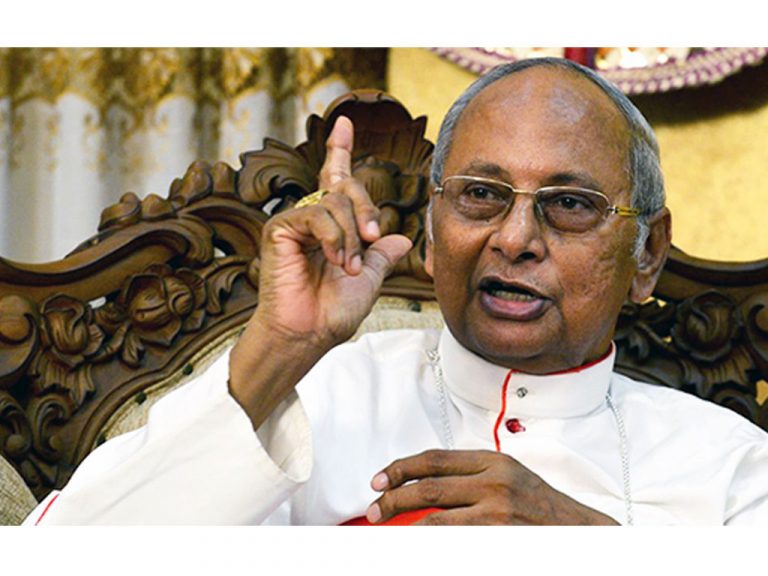
There is no confidence in the government or the Attorney General’s Department, said the Archbishop of Colombo His Eminence Malcolm Cardinal Ranjith, speaking to the launching of “Thitha,” a book complied by the National Catholic Mass Communication Commission after reviewing all commission reports related to the Easter Sunday Massacre, today (19).

“It can be clearly stated that not a single promise made by this government has been fulfilled. The State leaders and senior intelligence officials as well as senior police officers who were well aware of the issue and did nothing to prevent it have so far been protected. We have a feeling that one day we may have to wait for this justice to be served by a government that will come to power without our presence or the presence of the leaders of this government. It is now clear that we have no confidence in the current Government or the current Attorney General’s Department,” the Cardinal said.

He added: “This government and this Attorney General have hidden the evidence revealed by the Presidential Commission. There are letters asking for those volumes. We have told them to inform us about them. Requests have been made. However, without considering those requests, both the previous and the present government have taken measures to conceal evidence. What is happening now is that justice is not being served completely due to the misconduct of the Attorney General and the Attorney General’s Department. We are really sorry about that. The current regime has made the enforcement of law a complete joke. I blame them directly for that.”

MIAP

Non-debt inflows the key factor to being economically stable: CBSL Chief

0

While the Stock Market of Sri Lanka is one of the best performing markets of this year, all of the country’s bond-auctions have fully been subscribed and the interest rates are moderated, said Governor of the Central Bank of Sri Lanka (CBSL) Ajith Nivard Cabraal yesterday (18) commenting on the investor confidence as opposed to the International Monetary Fund (IMF) approach suggested by many parties amidst the ongoing economic crisis.

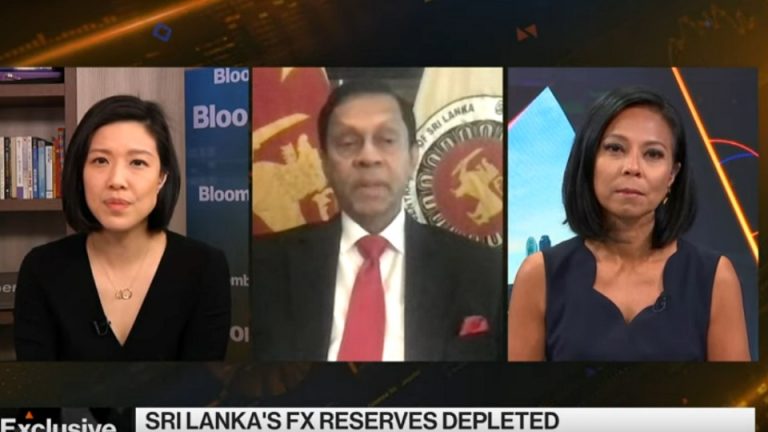
Speaking to “Bloomberg Markets: Asia,” the CBSL Governor discussed the country’s efforts to avoid a debt default, the outlook for the economy and monetary policy. Most holders of the country’s development bonds maturing in February have agreed to re-invest after being repaid, Cabraal revealed.

Looking at Sri Lanka’s Gross Domestic Product (GDP), Tourism and general conditions of the Banking Sector, they are in good shape promising investor confidence catering to a fairly stable economic condition in the country, the CBSL Chief emphasised.

Nevertheless, Sri Lanka will be having certain changes in economy, particularly in the fuel prices, he added.

Non-debt inflows would be the key to stabilise economy, particularly on the securitisation of Sri Lanka’s remittances, and the sale of certain underutilised assets, which are now on track, Cabraal pointed out.

Sri Lanka’s foreign exchange reserves fell 25% last month, after repaying a $500 million bond on Jan. 18 that helped ease worries of an immediate default. Since the CBSL’s roadmap was announced, Sri Lanka’s overall reserves have been buttressed by several swap arrangements between foreign states like India, China and Bangladesh and those have been helpful in dealing with the current situation, he noted.

No power cuts today, but interruptions may occur: PUCSL

0

There will be no power cuts today (19), said Chairman of the Public Utilities Commission of Sri Lanka (PUCSL) Janaka Ratnayake.

The Sapugaskanda Power Plant, which turned inactive yesterday due to running out of fuel oil, has been restored into the national grid and the Ceylon Electricity Board (CEB) is receiving the required amount of fuel at the moment, Ratnayake revealed, pointing out that a power cut, therefore, will not be necessary today.

Nevertheless, power might drop in between 2 pm and 6 pm today in restoration of the grid system, the PUCSL Chairman added.

MIAP

US $ 13 b retail industry calls for rapid remedy for forex crisis  

0

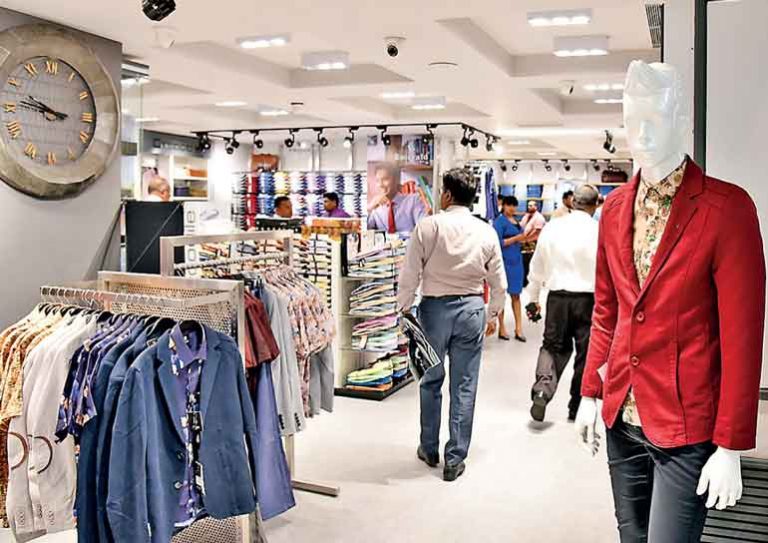
  The retail industry which constitutes 23% of the country’s GDP  has been hit hard by the ongoing forex crisis and it urged the Government to resolve  the issue  fast before putting thousands of jobs at risk.

In a statement, Sri Lanka Retailers’ Association (SLRA) said the wider ecosystem of employees, suppliers, farmers and consumers of Sri Lanka impacted by the ongoing crisis are pushing businesses to the brink of collapse.

The retail industry has been under tremendous pressure to deliver during the past one-and-a-half years, mainly owing to closures and disruptions due to the pandemic.

The situation has been exacerbated since mid-2021 due to increasing pressure on imports, which has been a core requirement for many retail businesses. 

The retail industry in Sri Lanka plays a vital role in the country’s economy and it is pertinent to note that the national retail sales in Sri Lanka are approximately $ 13 billion. As a growing industry over the past years, it accounts for about 23% of the country’s GDP. 

This industry also represents 14% of the labour market, with more than 1,100,000 people being employed within this sector in Sri Lanka. Additionally, the overall retail industry contributes significantly to the economic value chain of the country in many ways.

The current forex crisis and the resultant import restrictions have pushed many of these businesses to the brink of collapse.

Consumer durables, clothing and related industries are a case in point where there have been product shortages regularly due to the inability to gather adequate foreign exchange through the banks to fund imports and fulfill local requirements. 

The situation is moving from bad to worse, with many large entities struggling to keep their branches and facilities open due to a lack of goods for sale. If this continues, it is likely to result in the closure of stores, severely impacting the livelihood of many directly and indirectly dependent on these businesses. 

This could eventually lead to significant job losses and impact the local economy and result in wider social issues.

Retail is an integral part of the tourism industry and building Sri Lanka as a destination of choice.’ Notwithstanding, the business losses to thousands of retailers and the affiliated industries such as rental properties currently occupied by these entities, logistics and related businesses providing infrastructure support to several others, such as advertising to service affiliates, would be hard-pressed to survive given the sudden drop in volumes. 

Education and communication are another two key industries that have been impacted by the forex crisis and they too require essential products including computers and communication equipment, which could end up beyond the means of the average citizen both due to the short supply of these goods and increasing cost of imports.

As an industry that contributes heavily with over 25% of GDP and large numbers in employment, a preferred status should be accorded to facilitate forex requirements through the banking sector. This would be of national importance given the magnitude of the industry and its contribution toward the overall wellbeing of the economy.  

The court rejects the request made by Champika’s lawyers to adjourn the case

0

The Colombo High Court yesterday (18) rejected a request made by the lawyers of the accused Patali Champika Ranawaka to adjourn the hearing of the case relating to a road accident in the Rajagiriya area in 2016.

The case has been filed against Champika Ranawaka and three others. President’s Counsel Sarath Jayamanne, appearing for Ranawaka, requested the court to adjourn the hearing since they have not received certain documents pertaining to the case as it could prejudice them.

Senior Deputy Solicitor General Dileep Peiris, who appeared for the complainant objected to the request.

However, after considering the submissions of both parties, Colombo High Court Judge Damith Thotawatte stated that the submissions made by the defendant were not a justifiable reason to adjourn the case. He further added that the expeditious conclusion of the proceedings was a matter of public concern.

Accordingly, the hearing of the case commenced, and Attorney-at-Law Sarath Jayamanne, appearing for the accused Ranawaka, cross-examined the father of the youth, Sandeep Gunawardena, who was injured in the accident.

The court ordered that the further hearing be held on March 07.

Laugfs Gas seeks support from Central Bank to procure LPG shipments

0

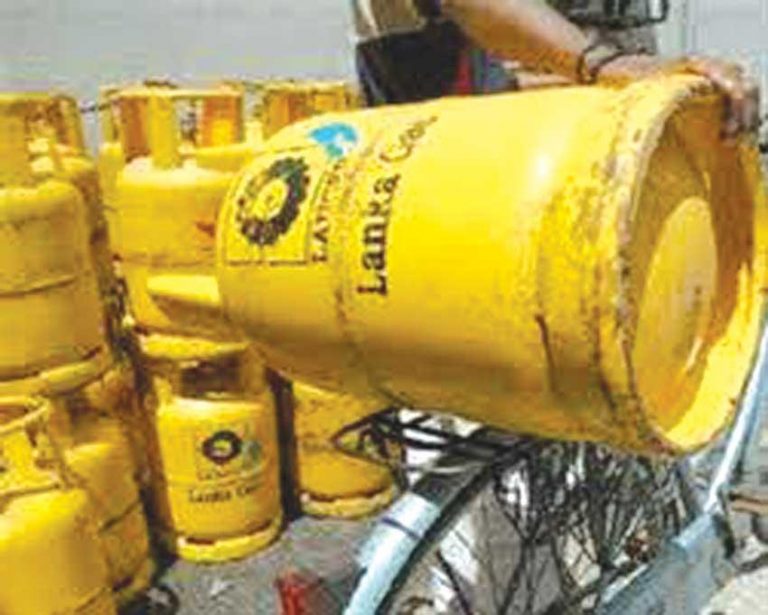
The Central Bank (CB) is to instruct State-owned banks to extend letter of credit (LC) facilities to Laugfs Gas PLC, which is struggling to procure LP gas (LPG) shipments amid the on-going foreign exchange crisis, according to industry sources.

Laugfs Gas officials have held several rounds of discussions with the CB as private sector banks are unable to extend LC facilities to import required LPG to
Laugfs customers.

Currently, Laugfs Gas has only been able to import less than 30 percent of the LPG demand of its customers. Sri Lanka’s duopoly LPG industry consists of State-owned Litro Gas, which caters to about80 percent of the market and Laugfs Gas, which caters to the remaining
20 percent.

Laugfs Gas is unable to import liquid petroleum (LP) gas due to a lack of dollars in the market making it difficult for the company to open letters of credit (LCs) with its banks, the company’s chairman W K Wegapitya said adding that thy have made a request from all the banks, even Samurdhi banks, to see if they can give us dollars,”

Earlier, Laugfs Gas and Litro Gas attempted to jointly procure LPG supplies to the country through the special purpose vehicle (SPV), Siyolit (Pvt.) Ltd based on a proposal by the former Secretary to the President, P. B. Jayasundara.

The joint procurement was expected to allow the country to procure a higher quantity of LPG, at a lower price.

However, it was shot down by Litro Gas eventually, and the SPV was dissolved two months ago. “.

Wegapitiya said that the company was supplying around 40,000 to 50,000 gas cylinders per day but now it’s only able to distribute around 10,000 to 15,000 cylinders after the Consumers Affairs Authority (CAA) and Sri Lanka’s Standards Institution (SLSI) increased the requirement of quality checks for gas distributors after a spate of domestic gas cylinder explosions.

Australia to assist Sri Lanka in developing a comprehensive national maritime disaster preparedness mechanism

0

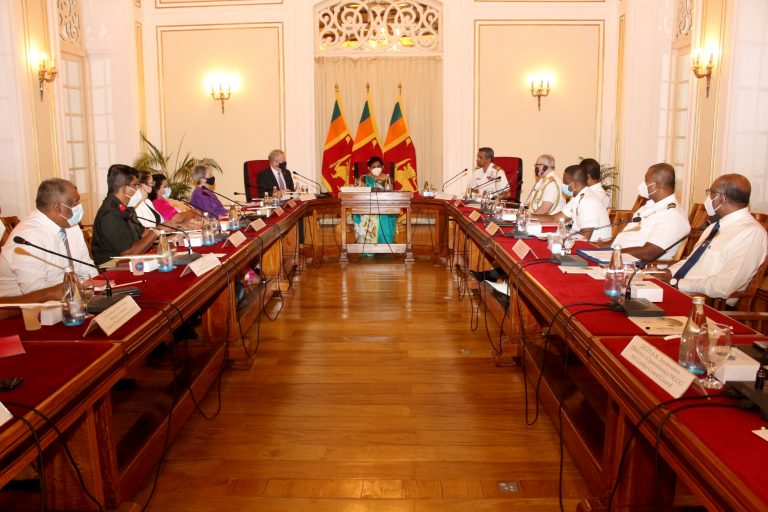
The Ocean Affairs, Environment & Climate Change Division of the Foreign Ministry, together with the High Commission of Australia to Sri Lanka and the Maldives, held a multi-stakeholder meeting recently, to discuss international best practices, application of Systems Engineering model to work on the vision, mission and needs of Sri Lanka to establish a holistic and state-of-the-art Maritime Safety Authority. 

The discussion was carried out to learn from the Australian experience on managing maritime disasters, in the aftermath of the MV-X Press Pearl, which is considered as the worst such disaster that ended up with polluting the ocean with a cargo containing large quantities of hazardous and noxious materials, chemicals and plastic nurdles.

On the 20 May 2021, MV X-Press Pearl, caught fire off the coast of Sri Lanka – leaving in its wake an environmental disaster that not only the island, but many littoral states of the Indian Ocean will have to live with for decades. For days it stood burning off the coast of Sri Lanka, plumes of thick dark smoke that could be seen from miles away. But the X-Press Pearl has now fallen silent, lying half sunken off the coast of Sri Lanka, its hull resting on the shallow ocean bed. But though the flames have now been doused – the problems have only just begun. While there have been shipwrecks before, Sri Lanka has never faced one with such poisonous cargo.

Chairing the meeting, Actg. Additional Secretary, Ocean Affairs, Environment & Climate Change, Hasanthi Urugodawatte Dissanayake highlighted that, if there is to be any upside from this incident, it would be by serving as a catalyst for building a more resilient system to prevent and respond to maritime disasters in the future. This means prioritizing maritime emergency preparedness and management through development of a maritime disaster preparedness plan, strengthening the institutional basis for its implementation with adequate capacity building for the staff of relevant agencies.

High Commissioner of Australia to Sri Lanka David Holly stated that, to achieve this, a collective initiative by the Government of Sri Lanka and its international friends and partners is needed. He expressed his appreciation to the government of Sri Lanka and in particular to the Foreign Ministry for coordinating this meeting as such coordination is pivotal to a successful outcome. The High Commissioner went on to state that to ensure that support is delivered efficiently, a mechanism needs to be setup for accepting and facilitating international assistance to avoid overlaps and that key gaps are left unaddressed. 

High Commissioner David Holly emphasized further that Australia’s approach to maritime disaster preparedness may not be the best fit for Sri Lanka. However, His Excellency stated that the Australian government is ready to assist Sri Lanka in building capacity to develop the most suitable system for Sri Lanka. The High Commissioner also highlighted that having such a maritime disaster management entity in Sri Lanka could serve not only to address disasters in Sri Lankan waters and Sri Lanka’s Search and Rescue region, but to act as a regional centre to complement other such entities in the Indian Ocean.  

Sri Lanka’s requirements for a Maritime Disaster Preparedness Mechanism/Authority from a defence viewpoint were explained by Chief of Staff Sri Lanka Navy Rear Admiral Y. N. Jayarathna, while Sri Lanka’s marine environmental conservation requirements were explained by Chairperson Marine Environmental Protection Authority (MEPA) Dharshani Lahadhapura, Sri Lanka Port’s Authority Harbour Master Nirmal Silva delivered a brief presentation on the current wreck removal process of the MV-X Press Pearl. 

Australian High Commission Capt. Ian Cain, Defence Adviser presented a perceptive and informative presentation on the considerations for establishing a maritime disaster management authority in Sri Lanka, using the Systems Engineering approach, as considered by Australia in setting up of their own agency, the Australian Maritime Safety Authority (AMSA). He explained further that the Australian model may not necessarily be the ideal system for Sri Lanka, but how a Systems Engineering approach would ensure that we focus on ‘needs’ rather than ‘wants’, which would assist us in developing a system based on our current capacity and resources. 

The Foreign Ministry developed an initial working draft for a Maritime Disaster Preparedness Mechanism for Sri Lanka in September 2021, and has handed over the process to the Ministry of Ports and Shipping, which heads the Committee established to develop the said mechanism. The Committee is currently in the process of fine-tuning the mechanism together with the relevant stakeholders. Foreign Ministry is also working with stakeholders to bring the issue of marine pollution and immediate recovery to global level, particularly caused by plastic nurdles.