Colombo (LNW): Sri Lanka has initiated a specialised operation with the objective of apprehending and repatriating 30 individuals involved in drug trafficking and underworld activities from abroad, Public Security Minister Tiran Alles disclosed.
Minister Alles pointed out that the government has received intelligence reports identifying 29 underworld members operating in Dubai and one in France.
These revelations were made during an official event in Kirindiwela, where Alles confirmed that discussions are actively underway with the concerned countries to facilitate the extradition of these individuals to Sri Lanka.
Addressing inquiries about the nationwide ‘Yukthiya’ operation, the Minister clarified that there is no intention to suspend the operation, asserting the continuity of the operation.
He noted that objections to ‘Yukthiya’ come from those hindering its progress, and that the government aims to completely halt underworld and drug trafficking in the country within the next six months.
Elaborating on the actions against underworld members located in Dubai and France, Alles acknowledged the intricacies of legal procedures in these jurisdictions. He asserted that negotiations are currently in progress with the relevant nations, and the government has obtained red notices for their arrest.
Despite facing legal challenges, the government remains steadfast in its commitment to bringing these individuals to Sri Lanka, he added.
Colombo (LNW): The Criminal Investigation Department (CID) has reportedly recorded a statement from former Health Minister Keheliya Rambukwella at his residence, as part of the ongoing probe into the sub-standard Immunoglobulin import matter, a scandal that has sent shockwaves through the nation.
Immunoglobulin, a vital medical product integral to the treatment of various health conditions, has become the centre of a controversy surrounding its quality and procurement processes during Rambukwella’s tenure as the Minister of Health.
Rambukwella denied any involvement with the scandal, regardless of the countless allegations levelled against the ex Minister by many concerned parties, including the Opposition, civil movements and activists.
The CID’s decision to question the ex Minister at his residence indicates the gravity of the situation and the determination to get to the bottom of the allegations.
The investigation has raised concerns about potential risks to public health, as sub-standard medical supplies pose serious threats, particularly to individuals with compromised immune systems who rely on Immunoglobulin for their treatment.
Colombo (LNW): In anticipation of heightened festivities during the holiday season, the Sri Lanka Police have proactively unveiled a comprehensive plan to ensure public safety.
This initiative involves the implementation of a special 24-hour operation specifically designed to apprehend individuals found driving under the influence of alcohol.
The primary objective of this initiative is to significantly augment road safety measures and address the inherent dangers posed by drunk driving.
Recognising the potential risks associated with an increase in celebratory activities during the festive season, law enforcement authorities are keen on taking proactive steps to safeguard the well-being of the public.
The initiative emphasises the importance of public awareness and education on responsible alcohol consumption.
Colombo (LNW): Sri Lanka is seeking transformative partnerships to thrust its trajectory towards energy sustainability.
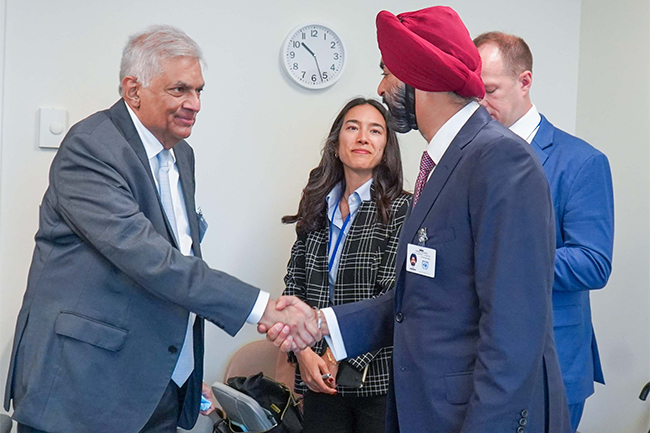
The recent meeting between President Ranil Wickremesinghe and a World Bank delegation revealed a broadened discourse that extends beyond conventional boundaries, encompassing ports, trade, and crucially, support for initiatives in digitalization, renewable energy, and education.
The prospect of establishing power grid connections involving India, Sri Lanka, Bangladesh, and Nepal emerged as a beacon of hope in the pursuit of a sustainable energy future.
Critical to Sri Lanka’s success in this transformative journey is the collaboration with international partners who not only understand local dynamics but also contribute to the country’s economic growth.
The Adani Group, the Indian conglomerate with a global footprint, has emerged as a noteworthy example. Renowned for its collaboration in developing large-scale projects worldwide, from Australia to Indonesia and Africa, the group aligns seamlessly with Sri Lanka’s development ambitions.
The Adani Group is presently involved in wind power initiatives in the Northern region of Sri Lanka.
Upon completion, these projects are expected to produce 1,498 gigawatt-hours per annum (GWh/year) of clean, affordable and sustainable energy, contributing to a decrease in Sri Lanka’s dependence on fossil fuels.
Moreover, the ventures are expected to attract significant investment on a large scale, bringing in substantial foreign exchange exceeding $732 million.
Furthermore, the projects will contribute to reducing ~1 million tons of CO2 emissions annually, thereby, enabling the country’s decarbonization goals.
The Adani Group’s significant investment of $700-$750 million in the Colombo West International Terminal at the Port of Colombo exemplifies its commitment to catalysing transformative change.
The recent announcement by the U.S. International Development Finance Corporation (DFC) to provide financial support amounting to $553 million to Colombo West International Terminal Pvt. Ltd. (CWIT), a consortium of Adani International Ports Holdings., John Keells Holdings (JKH) and the Sri Lanka Ports Authority, further solidifies the collaborative efforts from Port of Colombo’s infrastructure development perspective.
Sri Lanka’s ambitious target of achieving 70% domestic electricity from renewable sources by 2030, with a long-term vision of complete reliance on renewable energy by 2050, underscores the nation’s commitment to environmental stewardship.
The Ceylon Electricity Board (CEB), a cornerstone of Sri Lanka’s energy economy, plays a pivotal role in this transition. Operating in both primary and secondary energy provision, the CEB needs reliable international partners given the critical nature of the sector.
Independent Power Producers (IPP) like Adani Energy, with its track record of timely fulfillment of contractual obligations, financial stability, and commitment to sustainability, emerges as a top-tier candidate in Sri Lanka’s energy sector.
Colombo (LNW): The government initiated diplomatic discussions are continuing to rescue and repatriate the Sri Lankan youth who have been illegally detained in camps in Myanmar, the Ministry of Foreign Affairs (MFA) announced.
Issuing a press release, the MFA said that the Ministry and the Sri Lankan diplomatic corps in Myanmar have continued to actively seek the assistance and cooperation of the Myanmar authorities on the safe repatriation of the Sri Lankan nationals who have been trafficked there and also stated that this situation has been an ongoing issue since last year (2022).
Meanwhile, as per the latest reports of the International Criminal Police Organisation, in Myanmar alone, it identified trafficking victims originating from at least 22 different countries, although most come from the country’s Kayin and Shan States.
According to the MFA, as a result of the rescue and repatriation efforts spearheaded by its Consular Affairs Division in collaboration with the Sri Lanka Embassy in Myanmar and the Myanmar Government authorities, a total of 32 victims were rescued between 2022 and this year (2023).
In a concerted effort to secure the release of Sri Lankan youths trapped in a Myanmar terror camp, Ambassador Janaka Bandara announced a collaborative initiative involving six nations.
The Ambassador said that the mission is working tirelessly alongside India, Bhutan, Bangladesh, Myanmar itself, Thailand, and Nepal to bring the captive Sri Lankans back home safely.
Developments in the harrowing case of Sri Lankan youths trapped in a Myanmar terror camp took a shocking turn, with Ambassador Janaka Bandara revealing startling new information.
During discussions with counterparts from six nations, including India, Bhutan, Bangladesh, Myanmar itself, Thailand, and Nepal, Ambassador Bandara learned that over 200 Indian youth are also suffering as cyber slaves in the camp’s clutches.
In a sign of potential progress, Ambassador Bandara reported that the he has planned talks with the Myanmar military Junta to discuss the release of the Sri Lankan captives.
Additionally, a meeting between Sri Lankan Foreign Minister Ali Sabri and his Myanmar counterpart is slated for the near future, indicating intensified diplomatic efforts.
Adding a further layer of complexity, allegations surfaced of group selling Sri Lankans to the terrorist-controlled camp from Dubai.
Grieving parents pointed towards a woman named Juana, accusing her of facilitating their children’s enslavement.
The Chinese traffickers, involved in this global trafficking ring, are continuing their efforts to lure Sri Lankans into their cyber slave camps.
Senior Superintendent of Police (SSP) and Attorney-at-Law Nihal Thalduwa, spokesperson for the Sri Lankan Police, confirmed an ongoing investigation into alleged irregular migration attempts involving one Chinese national and three Sri Lankan citizens.
Speaking to the media, SSP Thalduwa stated that four related complaints have been received and are currently under investigation.
While no arrests have been made yet, he urged individuals seeking overseas employment to adhere to established procedures between countries instead of attempting irregular methods.
Colombo (LNW): The Chamber of Young Lankan Entrepreneurs (COYLE) has suggested the government to look at foreign direct investments with changing state policy decisions to have a more attractive and investor-friendly outlook to attract numerous investors from booming industries.
It was of the view on how the country can take further action to solve the foreign currency deficit by adopting different and dynamic strategies.
COYLE, believes Sri Lanka must look at foreign direct investments with changing state policy decisions to have a more attractive and investor-friendly outlook to attract numerous investors from booming industries.
They urge the Parliamentary Select Committee on Ease of Doing Business to reactivate and pursue proactive steps towards ensuring FDIs are secure in the country without further delay.
The Sri Lankan economy currently grapples with the significant challenges presented by a complex financial situation unfolding in unprecedented ways.
As the country tackles the intricacies of this economic turmoil to overcome fiscal obstacles, there is a prevailing sense of concern among the populace.
Against this backdrop, the nation contends with politically motivated decision-making that bears the marks of a presidential election at the end of 2024.
Despite these existing realities, COYLE remains optimistic about the rising potential through collective efforts and shared objectives driven by the nation’s private sector, aiming to revitalize the economy.
In the present circumstances, positive indicators emerge as macroeconomic policy reforms start showing concrete outcomes, signalling a promising phase of stabilization in Sri Lanka’s economic landscape.
Nonetheless, the path to recovery and inclusive growth relies on maintaining the ongoing momentum of these reforms.
Looking at the recent upgrade of Sri Lanka’s local currency rating from selective default (SD) to CCC+/C by S&P Global Ratings, there is a reflection of a more optimistic view of the country’s solvency.
The completion of the first IMF review under the 48-month Extended Fund Facility marks a significant milestone, unlocking access to SDR 254 million (about US$337 million) to support the country’s economic policies and reforms.
Notably, Sri Lanka’s performance under the program has been deemed satisfactory, with the majority of performance criteria and indicative targets met by the end of June.
Examining Sri Lanka’s net general government debt, which currently exceeds 100% of GDP and is projected to persist until at least 2028, there are challenges ahead.
It’s noteworthy that Sri Lanka’s Budget for 2024 presents ambitious targets, though they pose challenges, particularly with the projected wider fiscal deficit of 9.1% of GDP.
The government’s focus on achieving a primary surplus, excluding bank recapitalization, aligns with the IMF’s projections.
However, the expenditure target of 22.2% of GDP exceeds the IMF’s envisioned 19.7%. While this discrepancy may raise questions, it also reflects a commitment to ambitious goals, and successful implementation could enhance the budget’s long-term viability and effectiveness.
Colombo (LNW): Sri Lanka’s 101 parliamentarians who received housing units from the Viyathpura government housing complex in Pannipitiya have defaulted their housing rents causing massive loss of millions of rupees to the national housing development authority.
According to Cabinet Decision No. 22/0970/502/019 dated 16 July 2022, 101 housing units had been given on an annual rent of Rs.69 million to the Members of Parliament from the housing project of 500 houses located in Weeramawata, Pannipitiya on an one year rental basis.
But the national housing development authority had not received the rent for these housing units even as at July 2023 Auditor General’s latest report revealed.
A sum of Rs.10 million had to be received by the authority for the maintenance costs to be paid by each house owner and the electricity, gas and water charges to be paid for the housing units by August 2023, it added.
Former President Gotabhaya Rajapaksa had advised the Urban Development Authority (UDA) to take over the Madiwela land for development purposes and instead allocate housing units to parliamentarians at housing schemes owned by the UDA that is closest to the parliament.
Moreover, the document states that the closest land to the parliament after the Madiwela housing complex is the Viyathpura housing complex and the value of these housing units has been estimated at a staggering Rs. 1795 million in 2022.
The Madiwela housing complex, owned by the parliament, has 120 housing units and is situated in the suburbs of Sri Jayawardenapura. This housing complex facilitates usage for outstation parliamentarians.
Sri Lanka’s housing minister Prasanna Ranatunga told Parliament that 76 MPs who lost their houses and property to arson following the unrest that broke out since May have been given temporary housing at the Viyathpura Housing Scheme in Kalalgoda.
He noted that these houses were given for a period of one year, with a monthly rental charged from the occupant MP.
“Not a single MP was given a house free of charge,” he told the house in response to a claim made by an opposition lawmaker.
The Minister said the complex comprises 106 houses for MPs, and 76 of them have been given on rent to MPs, and if any other MP has a requirement a vacant house can be provided on rent.
He also said that these houses can be purchased by MPs as well to be used as their permanent residences.
The document says that those Members of Parliament (MPs) whose houses were burnt down during the May 9 attacks were given priority at this housing scheme
The Urban Development Authority says it has also earned US$ 500,000 by selling eleven middle-class housing units at the Viyathpura Scheme under the government’s programme to sell the UDA-built apartments for foreign currency to Sri Lankan migrant workers.
The UDA added that Sri Lankans living in the United Arab Emirates, Oman, Qatar, the United States, Canada, the United Kingdom and Fiji have purchased housing units.
Colombo (LNW): Commissioner General of Examinations Amith Jayasundara has announced that the final examinations for Buddhist Dhamma Schools, as well as Catholic, Hindu, and Islamic Sunday Schools, are scheduled for 28 and 29 December 2023.
A total of 669 examination centres across the island, as designated by the Department of Examinations, will host these examinations.
Student admissions for the examinations have already been dispatched to the respective schools through postal channels, Jayasundara noted.
Students anticipating participation in the examination but who have yet to receive their admissions can access the official website of the Department of Examinations, he added.
Colombo (LNW): In anticipation of the upcoming National Olympic Committee election, significant organisational changes and amendments are underway. These alterations involve modifications to key positions and realignments of groups to strategically position individuals for positions of influence and leadership.
This matter initially garnered attention as reports emerged concerning the Director General of the Asian Olympic Committee and the Chairman of the National Olympic Committee. Subsequent investigations revealed a range of allegations, including assertions that the Chairman was entitled to 100 air tickets for the Asian Games, extending to considerations at the highest levels of the country’s leadership, the President. The initially promised allowance during a meeting with the President has purportedly evolved into the mere extension of aid or grant, taking into account the prevailing economic conditions of the nation.
Additional accusations have been directed at the Chairman, including an undisclosed transaction amounting to Rs. 450,000. Termed as spending without prior consent or knowledge, the subsequent reimbursement occurred with knowledge. Given the context of the transaction and prevailing economic conditions, it is unlikely to be deemed a deliberate financial impropriety.
This situation also involves Maxwell de Silva, who faces charges. Allegations encompass non-payment of funds owed to the Sri Lanka Olympics and the misplacement of certain movable properties owned by the organisation.
Furthermore, Maxwell de Silva has accused Suresh Subramaniam of inappropriate conduct during an attempt to address the Asian Council. Allegedly, Subramaniam prevented him from speaking and physically pushed him to relinquish the microphone, further contributing to the complex dynamics surrounding these developments.
“The Secretary of the Olympic assembly reported that the individual presiding over the meeting did not afford any participant the opportunity to address the assembly. The Secretary further contends that upon attempting to speak, the Chairman of the National Olympic Committee instructed him to remain seated, asserting that the matter was not applicable to Sri Lanka. Such statements have been characterised as discourteous. The nature of the allegation raises concerns, suggesting that the Chairman may have sought to impede the speaker due to the perceived lack of direct relevance to Sri Lanka. The intricacies of this situation contribute to its complexity.“
The above response coming from a place off the official Olympic panel, which is now being divided, catering to a discussion about the crisis also resembles the allegations levelled against Maxwell, he said.
“Currently, the Olympic Secretary is facing allegations related to disappearances in Birmingham, and summons have been sent to facilitate questioning on this matter. These accusations have been put forth by specific sports administrations, adding a layer of complexity to the situation. The verification of such claims necessitates precise and substantiated evidence. It is imperative to carefully consider both the accusations and the information presented, taking into account the nature of statements made by the Secretary. While there appears to be a gravity to the situation warranting parliamentary attention, it is crucial to emphasise that thorough investigation is essential, as mere statements may not suffice for conclusive proof.“
Allegations between the secretary and the chairman are apparent, suggesting that the current group of officials will not present a unified front in the upcoming election. Maxwell de Silva, who has held the secretary position for an extended period, may perceive challenges in seeking re-election for that role. Consequently, there is speculation that he may be contemplating a transition to an Olympic position through a potential candidacy for the presidency, marking a departure from his previous role.
The prevailing circumstances suggest a scenario in which the international community may deem it necessary to summon the pertinent parties for inquiry in response to the allegations made by Maxwell. Such external scrutiny could potentially quell internal tensions, preventing further escalation of accusations and criticisms emanating from official entities. This, in turn, has the potential to cast a shadow over the overall sports landscape in Sri Lanka.
“At times, individuals facing such circumstances may find themselves without readily available assistance. The prospect of undergoing investigations, particularly if they are construed as involving bribery, could pose challenges to those offering support. Similarly, if funds designated for Olympic purposes are perceived to be diverted for personal gain, endeavours to assist the country in such a predicament may encounter obstacles.“
Even in the face of potential global repercussions, the pursuit of these pivotal positions may persist. Commencing such internal conflicts two years prior could potentially give rise to challenges in the effective management of significant events, such as the Olympic competition scheduled for the year 2024. Its indirect impact on diligent Olympic officials, involving travel and participation in various international events, may not be light, were the power struggle not the foremost concern to date.
Nonetheless, there remains a two-year timeframe. It is pertinent to conclude by invoking the wisdom inherent in the teachings of Jesus, aligning it with the warmth and spirit of Christmas.
‘Let anyone among you who is without sin be the first to throw a stone at her.’
It is challenging to fathom whether the phrase that rendered those who sought to throw stones at Mary Magdalene speechless would find acceptance in the contemporary political climate. Presently, individuals tend to metaphorically “throw stones” at others to deflect attention from their own missteps. Furthermore, it is apparent within this cultural context that individuals of integrity are unfairly targeted, potentially leading to interventions that may inadvertently contribute to the fabrication of evidence, resulting in the wrongful imprisonment of the innocent. Consequently, a meticulous and discerning observation of these dynamics is imperative. It is evident that this marks the initiation of a competition leading up to the impending election, scheduled to take place after two years.
It is prudent to conduct a thorough examination of issues related to loss and repayment, claims, and abductions individually rather than conflating them. It is evident that an increasing number of individuals will participate in the chair game, surpassing the available number of chairs. Those who typically contribute music to the chair game will align themselves with specific participants. However, the entire nation will be witness to the efficacy of participants in playing the game correctly. The scrutiny will be widespread, and citizens’ enthusiasm to witness a fair game devoid of racial or religious discrimination will be particularly heightened.
Colombo (LNW): Emergency response personnel have mobilised multiple fire trucks to combat a fire incident at a building located on Armour Street in Colombo.
The Colombo Fire Brigade has confirmed the deployment of a minimum of six fire trucks to address the ongoing blaze.
As of now, the precise cause of the fire remains under investigation, and efforts are underway to determine the origin and nature of the incident.
Authorities are actively engaged in managing and extinguishing the fire, with further updates expected as the situation develops.