Home Blog Page 1310

Minister Amaraweera Announces Significant Price Cut for Tea Fertilizers

0

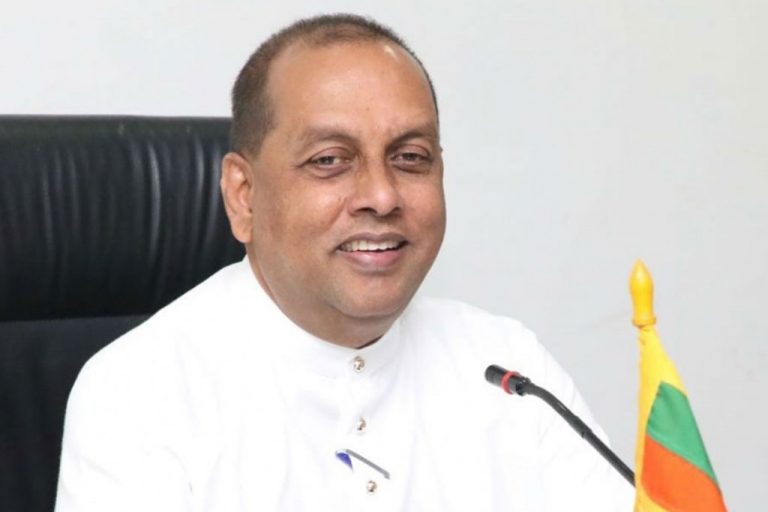
January 17, Colombo (LNW): In a decisive move, Agriculture and Plantation Industries Minister Mahinda Amaraweera declared a substantial reduction in the prices of key fertilizers for tea cultivation, namely T 750, T 709, and T 200, by Rs. 2,000. This announcement translates to a 50% reduction in the market price of these fertilizers, which currently exceeds Rs. 13,000 per bundle.

Minister Amaraweera directed Dr. Jagath Perera, Chairman of the Government-owned Colombo Commercial Fertilizers and Ceylon Fertilizer Company, to take immediate steps to implement the price reduction. As per the minister’s instructions, the price of a bundle of T 750 and T 709 tea fertilizers is set to be reduced to Rs. 7,735, while the price of a bundle of T 200 fertilizer will be lowered to Rs. 5,500.

This fertilizer concession is aimed at benefiting small- and medium-scale tea growers, offering them significant relief. Large-scale tea growing companies will also enjoy reduced prices, securing these fertilizers at Rs. 9,735.

During a meeting at the Plantation Industries Ministry, Minister Amaraweera engaged in discussions with representatives from tea growers’ associations across the eight tea-growing districts. The meeting, attended by officials responsible for tea cultivation in the ministry, highlighted the unanimous endorsement of the quality of special fertilizers for tea cultivation produced by government-owned fertilizer companies.

In addition to the Rs. 2,000 fertilizer concession, it was revealed that the Tea Board would bear the cost of Rs. 1,200 million, further emphasizing the government’s commitment to supporting the tea industry through this significant subsidy.

President Wickremesinghe Unveils Ambitious Plans for Renewable Energy at Davos Green Technology Forum

0

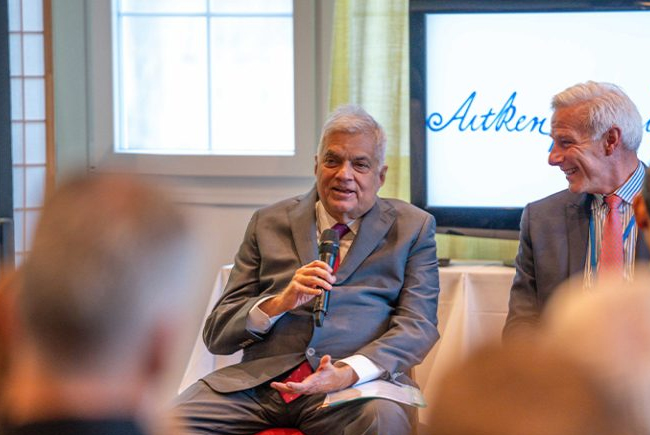
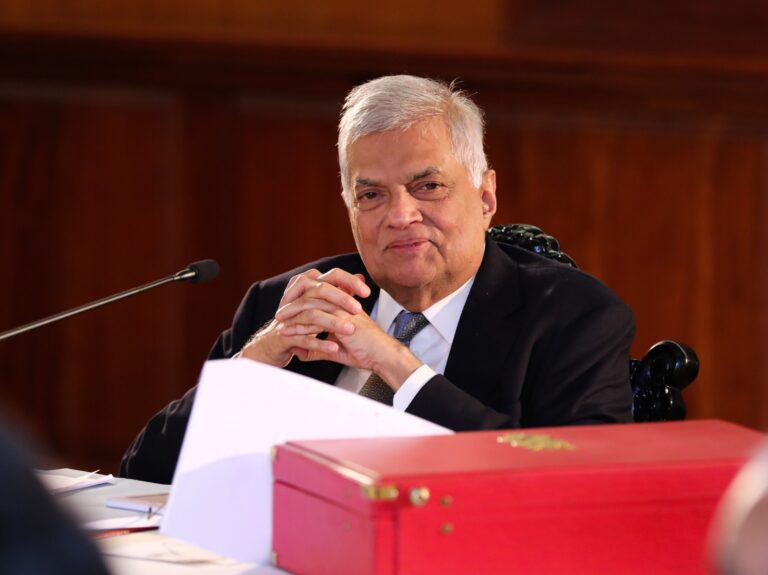
January 17, Colombo (LNW): President Ranil Wickremesinghe, speaking at the Green Technology Forum in Davos, Switzerland, on Monday, revealed a heightened commitment to integrating wind and solar power generation into Sri Lanka’s national grid. The President declared that his government is expediting this initiative, aiming to ensure that 70% of the country’s electricity needs are met through renewable energy sources by 2030.

Highlighting Sri Lanka’s historical commitment to renewable energy, President Wickremesinghe pointed out the nation’s extensive hydropower network, which commenced with the commissioning of its first major hydro-power plant in 1950. Hydropower played a significant role in meeting the country’s energy needs until the 1990s, with it still contributing around 40% to Sri Lanka’s installed electricity generation capacity today.

The President emphasized the urgency of the transition to renewable energy during his address at the forum, which was coordinated by the Swiss-Asian Chamber of Commerce. Acknowledging the need for substantial investment, estimated at up to US$ 11.5 billion, President Wickremesinghe noted that, until recently, the framework for private investment in the renewable energy sector had not been very conducive. The government’s intensified efforts seek to create an environment conducive to private investment, facilitating the ambitious shift toward sustainable and environmentally friendly energy sources.

New QR code system for three-wheelers to provide efficient service

0

By: Staff Writer

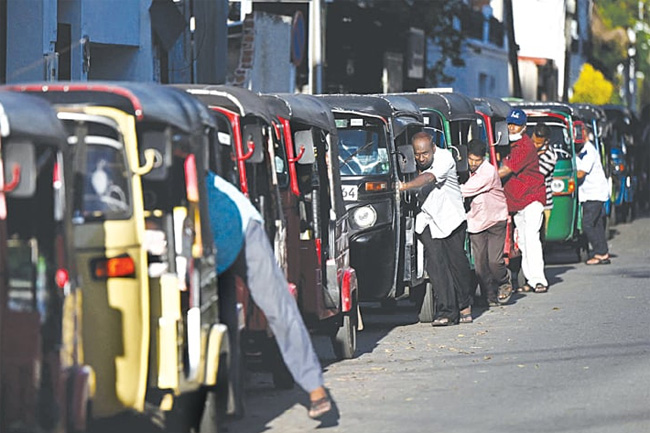
January 17, Colombo (LNW): A new QR code system  will be introduced within a very short period of time for three wheelers , Minister of Labour and Foreign Employment Manusha Nanayakkara sdisclosed. 

 This action will be taken in consideration of the proposal to introduce a QR code in relation to the registration and preparation of a data system for all three-wheeler drivers.

Nanayakkara expressed these views while attending the event for the establishment of the Interim Sectoral Steering Committee today (16) as the first stage of the establishment of professional councils for three-wheeler drivers.

Furthermore, the preparation of a system enabling the three-wheeler drivers to obtain hired journeys through the internet by means of the professional organization established for them, has also been taken into discussion.

This Steering Committee has been formed under the “Garu Saru” program which was commenced in order to provide professional dignity and pride to all those who are employed in the informal services sector in Sri Lanka.

This committee was formed and established under the chairmanship of the Minister of Labor and Foreign Employment Manusha Nanayakkara.

The committee reportedly includes representatives of all three-wheeler drivers’ associations in Sri Lanka.

Meanwhile, a resolution consisting of the matters agreed upon in the previous discussions regarding the development of the dignity of their profession was also handed over to the minister during the event.

Moreover, a clean and affordable transportation solution is now available for Sri Lanka’s 1.2 million three wheelers with Lanka E-Mobility Solutions (Private) Limited (LeMS), introducing electric three wheel battery swapping technology, branded ‘e-wheel’ to local owners!

The launch of this novel battery swapping technology means the three-wheeler owner no longer has to purchase a costly battery, or worry about end-of-life replacement, while the battery swapping process takes a mere two minutes!

The most expensive component in any electric vehicle is the battery and when converting a petrol three-wheeler to an e-wheeler, the owner does not need to pay for the batteries as they are owned and managed by LeMS, as are the Swapping Stations. 

The e-wheeler owner only pays for the energy used on a ‘pay-as-you-go’ basis. This marks a significant milestone in Sri Lanka’s journey towards sustainable transportation, with its founders being driven by the urgent need to reduce carbon emissions and combat harmful air pollution.

“Sri Lanka’s 1.2 million three wheelers currently guzzle a staggering 5.5 million liters of petrol a day and each ‘e-wheel’ will help reduce that figure.

Saudi Arabia cuts domestic worker hiring fee from six countries including Sri Lanka

0

By: Staff Writer

January 17, Colombo (LNW): Saudi Arabia has announced a reduction in the fees for recruiting domestic workers from several countries, including the Philippines, Sri Lanka, Bangladesh, Uganda, Kenya, and Ethiopia.

The revised fees unveiled by the Ministry of Human Resources and Social Development are: From SR15,900 to SR14,700 for the Philippines; from SR15,000 to SR13,800 for Sri Lanka; from SR13,000 to SR11,750 for Bangladesh; from SR10,870 to SR9,000 for Kenya; from SR9,500 to SR8,300 for Uganda and from SR6,900 to SR5,900 for Ethiopia.

The ministry had previously directed licensed recruitment companies and offices to set the upper limit for the costs of recruiting domestic worker services from some nationalities, as the upper limit for recruiting domestic workers from Sierra Leone and Burundi is SR7500; SR10000 from Thailand, without including the value added tax (VAT).

The decision comes within the framework of the ministry’s endeavor to develop all services, improve the labor market environment and enhance its attractiveness.

It also shows the ministry’s keenness to review costs, services and systems in accordance with economic variables, and in a manner commensurate with them.

The ministry stressed the need to adhere to not exceeding the ceiling of announced prices, as it will follow up on implementing this through the Musaned platform.

The decision is part of the ministry’s efforts to review and regulate recruitment costs, ensuring fair pricing in line with the changing costs in the recruitment industry.

Furthermore, the ministry has previously instructed licensed recruitment companies and offices to establish upper limits for the costs of recruiting domestic workers from specific nationalities.

The set upper limit for recruiting domestic workers from Sierra Leone and Burundi is SR7,500, and SR10,000 from Thailand, exclusive of the value-added tax (VAT).

The decision ‘aligns with the ministry’s broader goals to develop all services, improve the labour market environment and enhance its appeal,’ according to the ministry.

It reflects the ministry’s commitment to periodically reviewing costs, services, and systems in response to economic changes, ensuring they are appropriately aligned.

The ministry also emphasized the importance of adherence to these new price ceilings and stated that compliance would be monitored through the Musaned platform.

This initiative highlights the ministry’s dedication to creating a balanced and fair recruitment environment in the kingdom.

President outlines effective progress of SL debt restructuring at Business forum in Switzerland

0

By: Staff Writer

January 17, Colombo (LNW): Addressing the Business Roundtable organized by BOI Sri Lanka and the Swiss-Asian Chamber of Commerce   yesterday, during his official tour to Switzerland to attend the 54th Annual Meeting of the World Economic Forum, President Ranil Wickremesinghe highlighted significant strides in Sri Lanka’s economic recovery and outlined future growth prospects.

President Wickremesinghe began by acknowledging the challenging times the nation faced, noting the adverse effects of the recent crisis on businesses, small enterprises and the overall population. He mentioned a constructive meeting with the International Monetary Fund (IMF), where it was surprising to learn that Sri Lanka had over performed despite the difficulties.

One key aspect highlighted by the President was the successful debt restructuring in collaboration with the IMF, emphasizing its necessity for dealing with creditors.

He outlined the reforms undertaken in 2022 and 2023, addressing crucial business impediments and resolving supply bottlenecks in fuel and electricity. Additionally, import restrictions were lifted, foreign exchange liquidity was restored and a primary surplus in the balance of payments is anticipated for the first time since 1977.

President Wickremesinghe highlighted positive indicators such as the stabilization of the currency, a significant reduction in inflation, and the reversal of negative economic growth from the third quarter of 2023. The achievement of a primary budget surplus in 2023 marked a notable improvement.

The President went on to discuss the effective progress in debt restructuring, with key creditors agreeing in principle. The IMF’s approval of Sri Lanka’s first program review in December 2023 sets the stage for a shift from stabilization to recovery and growth in 2024.

Looking ahead, President Wickremesinghe emphasized the government’s focus on fostering growth through exports, services and investments, including foreign direct investment (FDI).

He announced concluded and upcoming FTAs with Singapore, Thailand, India and China, along with ongoing talks with other South Asian nations. The President highlighted Sri Lanka’s initiatives to join the Regional Comprehensive Economic Partnership (RCEP) and the benefits of GSP Plus for access to European markets.

The address concluded with the President unveiling opportunities for investments in renewable energy, agriculture modernization, tourism, IT and infrastructure development through public-private partnerships. He highlighted forthcoming laws and commissions aimed at enhancing market access, fostering trade and investment and ensuring the competitiveness of Sri Lanka’s economy. President Wickremesinghe reassured foreign investors by mentioning the removal of restrictions and the ongoing commitment to economic reforms.

Supreme Court Rules Duminda Silva’s Pardon Unlawful

0

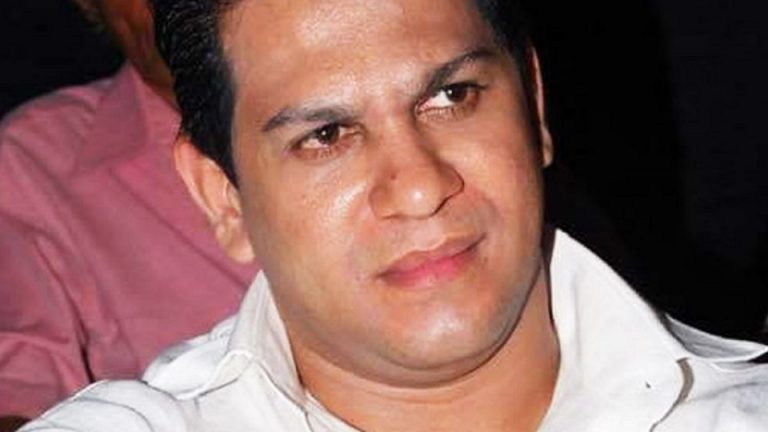
January 17, Colombo (LNW): Sri Lanka’s Supreme Court has ruled that the presidential pardon granted to former MP Duminda Silva by ex-President Gotabaya Rajapaksa was unlawful. Silva, along with four others, had been convicted in 2016 for the 2011 murder of politician Bharatha Lakshman Premachandra.

The High Court had sentenced all five individuals to death, a verdict subsequently upheld by a five-judge bench of the Supreme Court. However, following his election victory in 2019, Gotabaya Rajapaksa granted a pardon exclusively to Duminda Silva.

The unexpected and controversial pardon prompted three separate fundamental rights petitions challenging its legality, filed by Hirunika Premachandra, Sumana Premachandra, and Former Human Rights Commissioner Ghazali Hussain, PC.

After thorough consideration, the bench, comprised of Justices P. Padman Surasena, Gamini Amarasekera, and Arjuna Obeysekera, unanimously concluded that the pardon process was flawed, rendering it unlawful.

The High Court had sentenced all five individuals to death, a verdict subsequently upheld by a five-judge bench of the Supreme Court. However, following his election victory in 2019, Gotabaya Rajapaksa granted a pardon exclusively to Duminda Silva.

The unexpected and controversial pardon prompted three separate fundamental rights petitions challenging its legality, filed by Hirunika Premachandra, Sumana Premachandra, and Former Human Rights Commissioner Ghazali Hussain, PC.

After thorough consideration, the bench, comprised of Justices P. Padman Surasena, Gamini Amarasekera, and Arjuna Obeysekera, unanimously concluded that the pardon process was flawed, rendering it unlawful.

SL’s banking supervision to be strengthened following international good practices

0

By: Staff Writer

January 17, Colombo (LNW): Sri Lanka’s banking supervisory processes being handled by the Central Bank is now set to be strengthened following international good practices to promote the safety and soundness of banks, official sources claimed.  

However the government ownership and reduce potential exposure to illegitimate business practices have become a stumbling block for the stat banking sector performances in the recent past, IMF report observed.

In particular, supervisory processes should be developed to ensure that there is no supervisory forbearance, specific risks and challenges.

These specific risks and challenges arising from state ownership are identified and addressed timely, and ensure effective implementation of the good corporate governance framework and practices, in particular regarding the bank board’s composition, the processes for nominating and appointing the directors and senior managers,, it added.

Sticking to IMF directives, the Central Bank announced this week its intention to forward guidelines for appointing the State bank Board of Directors to the Finance Ministry.

“For State-owned banks, which account for 48% of the banking sector assets, the Central Bank expects to issue guidance to the Finance Ministry on appointments to the Board of Directors of such banks,” the Central Bank Governor Dr. Nandalal Weerasinghe said.

He noted that the development of a framework will strengthen State bank governance by mandating that a majority of independent members serve on their Boards.

“Nominations for the Board of Directors and senior management will be made by the banks’ nomination committees using open search procedures with specific standards for professional expertise and independence,” he added.

The assessment of the fitness and propriety of directors, chief executive officers and key management personnel of Licensed Commercial Banks (LCBs) is to be strengthened through the granting of approval for persons with relevant qualifications and experience, thereby improving the composition and competencies of the Board of Directors.

“The proposed amendments to the Banking Act will strengthen the legal and regulatory framework of licenced banks,” he said, adding that the Banking (Amendment) Bill is likely to be enacted in Parliament in early 2024.

The key amendments proposed include strengthening minimum licensing requirements, corporate governance, shareholder suitability, subsidiarisation of foreign banks, as deemed necessary, bank ownership, acquisitions, mergers and consolidation, disposal of non-financial subsidiaries, consolidated supervision, accounts and audit, proportionality, large exposures, and related party transactions.   

The regulatory framework that applies to public banks should be no less stringent that the one that applies to private banks. Ownership arrangements should be designed to avoid conflict of interest. in transactions, he pointed out.

However, the Banking Act sets that banking licences are issued by the Monetary Board with the approval of the Ministry of Finance.

Such provisions, in addition to the Government’s representation on the Monetary Board, the central bank body deciding on every regulatory and supervisory matter, may impair the independence of the Central Bank.

Dollar rate in Sri Lanka today(Jan 17)

0

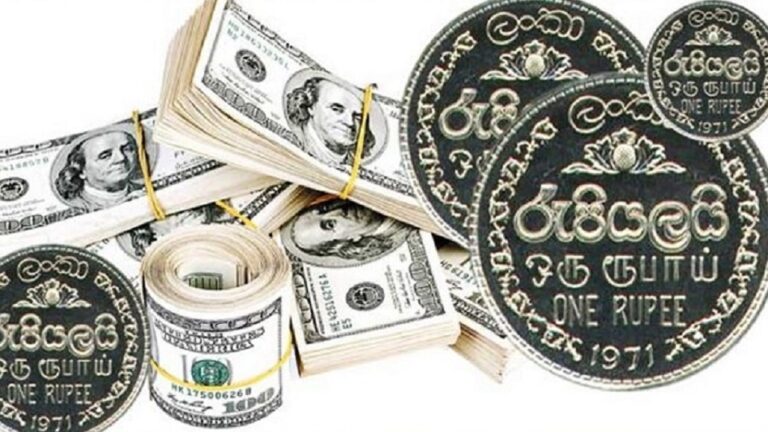
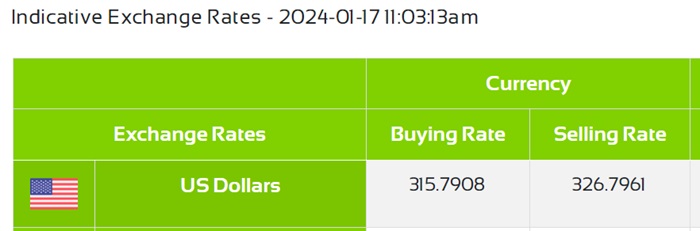
January 17, Colombo (LNW): The Sri Lankan Rupee has further appreciated against the US Dollar at commercial banks in Sri Lanka on January 17, compared to the previous day.

At Peoples Bank, both the buying and selling rates of the US Dollar have seen a decrease, moving from Rs. 316.03 to Rs. 315.79 for buying and from Rs. 327.05 to Rs. 326.79 for selling.

According to Commercial Bank, the buying rate of the US Dollar has decreased from Rs. 315.91 to Rs. 315.42, while the selling rate has also dropped from Rs. 326 to Rs. 325.50.

At Sampath Bank, the buying and selling rates of the US Dollar remain unchanged at Rs. 317 and Rs. 326, respectively.

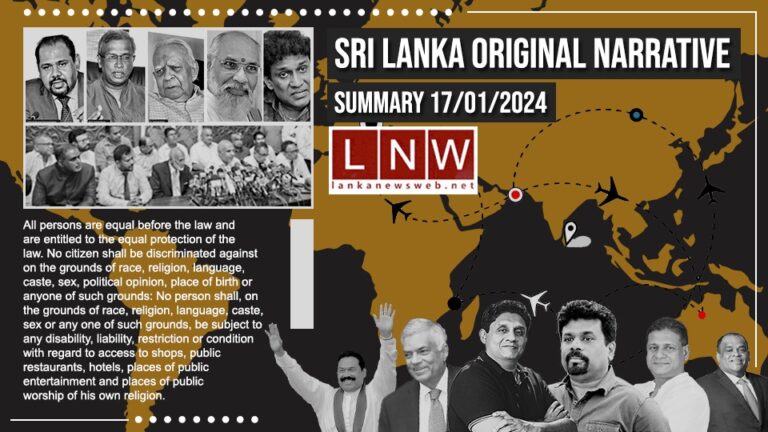
Sri Lanka Original Narrative Summary: 17/01

0
  1. IMF officials led by Mission Chief Peter Breuer tour the Jaffna District: meet Provincial Governor P M S Charles and discuss economic growth in the Province, de-mining, resettlement of conflict-displaced individuals & compensation for conflict victims: also discuss educational matters related to the Jaffna University, post-Covid operations, and effects of climate change in the region.
  2. Energy Minister Kanchana Wijesekera reveals that over one million electricity disconnections occurred in 2023, marking the highest number in history: says that out of nearly 7 million users, defaulted payments led to 1,064,400 disconnections: CEB was responsible for 965,566 disconnections and LECO for 98,834 disconnections.
  3. Consumers experience profound misery as the relentless surge in the cost of living reaches new & distressing heights: vegetables at staggering prices: Carrots Rs.2,200 per kg, broccoli Rs.7,000, Beans Rs.1,400, Beetroot Rs.1,200, Green chillies Rs.1,400: Central Bank says Inflation has moderated to less than 5%, and IMF praises the outcome.
  4. Speaker Mahinda Yapa Abeywardena says the 4th Session of the 9th Parliament will be ended on 24th January ’24: the termination date to be confirmed through a gazette issued by the President.
  5. Pivithuru Hela Urumaya leader & MP Udaya Gammanpila says the process of insulting Buddhism in the country is now a highly organized process and colossal amounts of money is invested by certain foreign countries for this purpose: also says those who insult Buddhism receive massive sums of money.
  6. Govt. seeks 3 weeks to respond to the health sector non-medical employees’ unions’ who are demanding the “Disturbance, Availability and Transport” allowance of Rs.35,000 as provided to doctors.
  7. Elections Commission Chairman R M A L Rathnayake says the Commission had already initiated work related to the Presidential Election: also says he hopes the necessary funds for the preliminary work will be received by the end of June’24.
  8. Recent Govt audit report reveals that the Prisons capacity has exceeded by 232%.
  9. Met Dept says polluted air from India has caused haze in Bandarawela & Badulla: explains that the wind flow from New Delhi comes in a circular motion where it travels from Delhi towards Bay of Bengal, and that this wind flow curves from Bay of Bengal thereby entering SL from the East.
  10. Zimbabwe wins the 2nd Cricket T20I against SL, by 4 wickets: SL – 173/6 in 20 overs: Charith Asalanka 69, Angelo Mathews 66*: Zimbabwe 178/6 in 19.5 overs.

Revised Academic Term Schedule Announced by Ministry of Education

0

January 17, Colombo (LNW): The Ministry of Education has released the revised schedule for the second phase of the 3rd academic term of 2023 for government and government-approved private schools. The updated start date for this term is now set for Monday, February 05, 2024.

Originally, the Education Ministry had planned to commence the second phase on February 01, 2024. However, this date had to be rescheduled due to a decision made by the Examinations Department. The department opted to reconduct the Agriculture Science paper for the ongoing 2023 GCE Advanced Level Examinations on February 01, 2024. The decision was prompted by concerns of paper leaks on social media, leading to the nullification of both papers 1 and 2 of the Agriculture Science examination. Consequently, the Ministry of Education adjusted the academic term schedule to accommodate the changed examination dates.