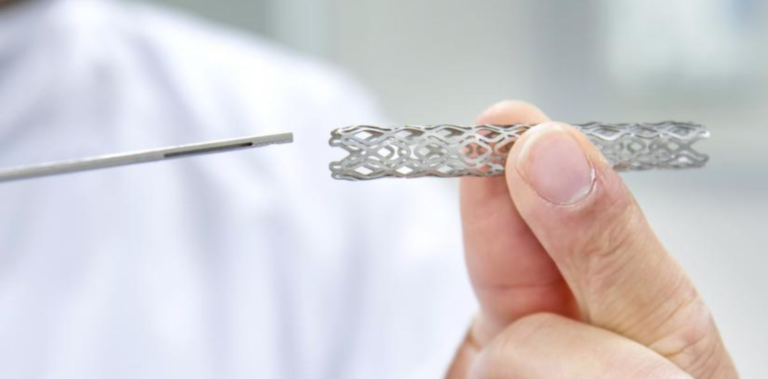
January 17, Colombo (LNW): A shortage of essential stents required for heart surgeries at the Colombo National Hospital is causing difficulties for patients, raising concerns about potential risks for those dealing with cardiac conditions.
Dr. Chamil Wijesinghe, spokesperson for the Government Medical Officers’ Association, emphasized the critical situation, expressing worries about the lives of heart patients being at risk due to the unavailability of necessary stents.
In an effort to verify the situation, News 1st reached out to Dr. Kumara Wickramasinghe, Director of the National Hospital, who confirmed the shortage of stents. This acknowledgment underscores the gravity of the situation, as a reliable supply of these medical devices is crucial for heart surgeries.
Dr. Palitha Mahipala, Secretary of the Ministry of Health, further confirmed the ongoing shortage. However, he provided reassurance by stating that orders have been placed to replenish the necessary medical supplies.
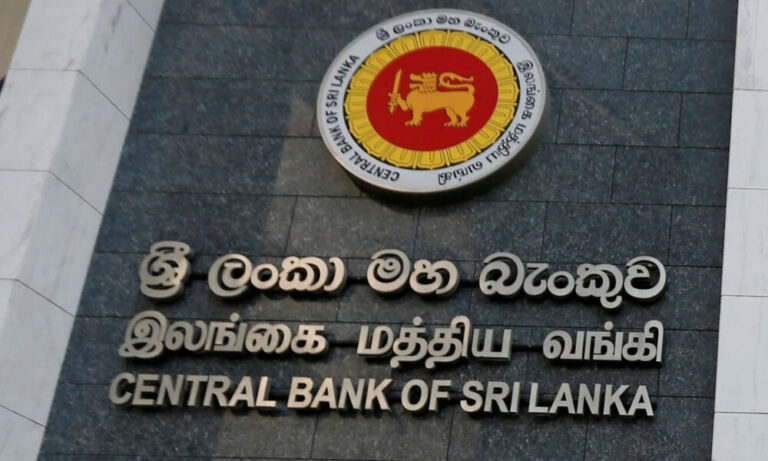
January 17, Colombo (LNW): In a recent announcement, the Central Bank of Sri Lanka has once again sounded the alarm regarding an escalating number of financial scams associated with promises of high returns through cryptocurrency investments.
The bank emphasizes that it has neither granted licenses nor provided authorization to individuals or businesses for engaging in activities such as cryptocurrency operations, Initial Coin Offerings (ICOs), mining, exchanges, deposit-taking or custody services, or advisory services related to cryptocurrencies.
Highlighting the alarming surge in fraudulent activities linked to crypto investments, the Central Bank urges the public to be vigilant and acquainted with the tactics employed by fraudsters to protect their finances.
The bank’s message warns against the various tactics employed by scammers, including the exploitation of social media platforms to promote schemes with high returns, often accompanied by boasts of claimed earnings. It underscores the use of communication channels like Whatsapp and Telegram by scammers to interact with potential victims.
The announcement sheds light on how scam advertisements often lead individuals to professional-looking websites, designed to mask their fraudulent nature. Some scammers even go so far as to conduct classes or awareness sessions on fabricated platforms, disseminating misleading information about earning high returns or trading cryptocurrencies.
Once an investment is made, scammers may swiftly seize funds or continue the deception to attract more victims. The announcement emphasizes the importance of recognizing potential scams, as victims may not realize they’ve fallen prey until attempting to divest from their investments.
Providing insights on protecting oneself from scams, the announcement highlights that cryptocurrencies are unregulated in Sri Lanka, not recognized as legal tender, and lack regulatory safeguards.
The Central Bank identifies several entities found promoting the involvement of cryptocurrencies, including Sport Chain App, Sports Chain ZS Society Sri Lanka, OnmaxDT 3, MTFE App, MTFE SL Group, MTFE Success Lanka (Pvt) Ltd, and MTFE DSCC Group (Pvt) Ltd.
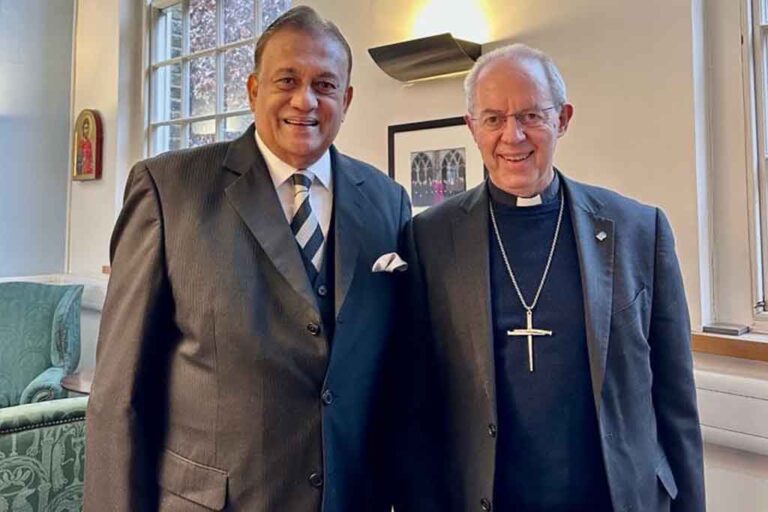
January 16, London, UK (LNW): The High Commissioner of Sri Lanka to the United Kingdom, Rohitha Bogollagama, paid a gracious courtesy call on the Archbishop of Canterbury, Right Reverend Justin Welby, on 11 January 2024 at the Lambeth Palace in London. the Sri Lankan High Commission in London said in a statement today (16).
Prior to their meeting, an Anglican paternity led by the Archbishop convened at the St-Mary-at-Lambeth church, offering prayers for the well-being of Sri Lanka.
During their interaction, High Commissioner Bogollagama and Archbishop Welby delved into the historical significance of the Church of Ceylon, established in 1845 as an extra-provincial jurisdiction of the Archbishop of Canterbury.
The discussion extended to exploring proposed reforms for the Church of Sri Lanka.
Archbishop Welby fondly recalled his visit to the Temple of the Tooth Relic during his tour to Sri Lanka in 2019.
In turn, High Commissioner Bogollagama provided a comprehensive briefing on the Buddhist heritage and the evolution of Buddhist institutions in Sri Lanka.
The dignitaries engaged in an extensive dialogue covering various facets relevant to Sri Lanka, including the country’s current economic and political landscape, international relations, economic ties between the United Kingdom and Sri Lanka, and the ongoing reconciliation process.
Archbishop Welby expressed the opinion that an effective reconciliation process must emanate from within the relevant community.
Archbishop Justin Welby, serving as the 105th Archbishop of Canterbury since 2013, holds the esteemed position of being the Primate of All England and the symbolic head primus inter pares of the worldwide Anglican Communion.
The High Commission of Sri Lanka looks forward to continued collaboration and strengthened ties between Sri Lanka and the Church of England.
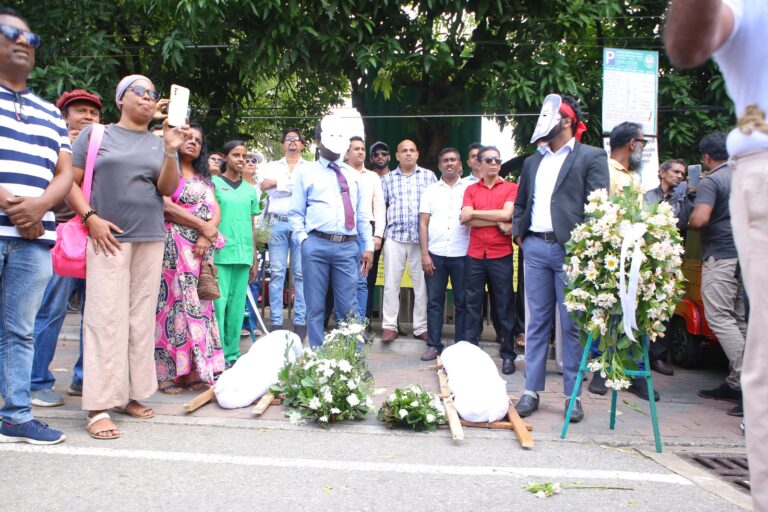
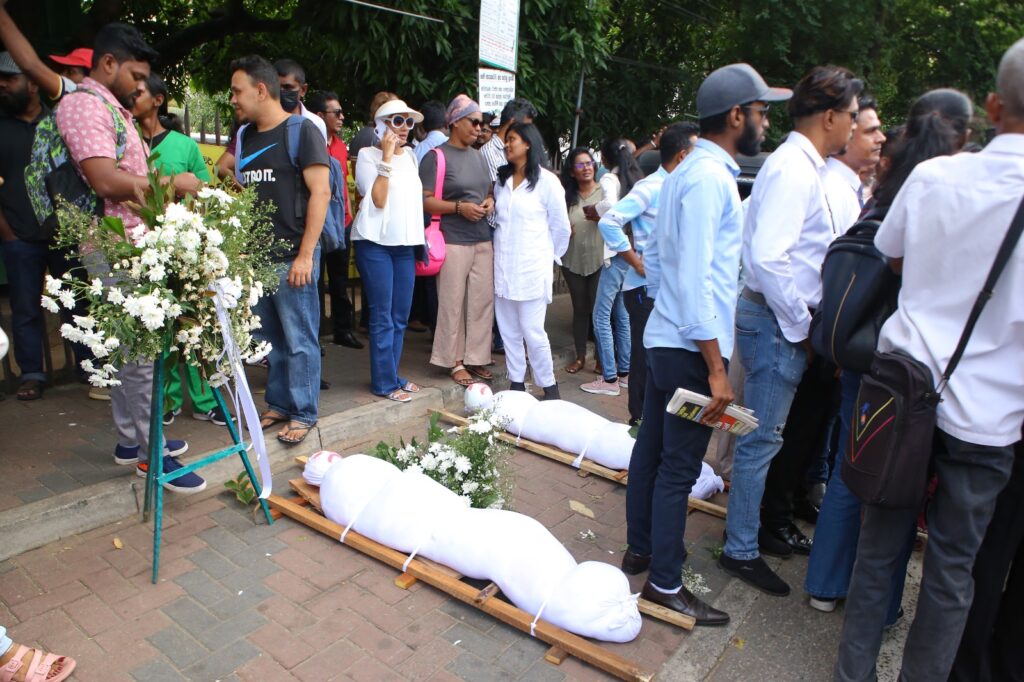
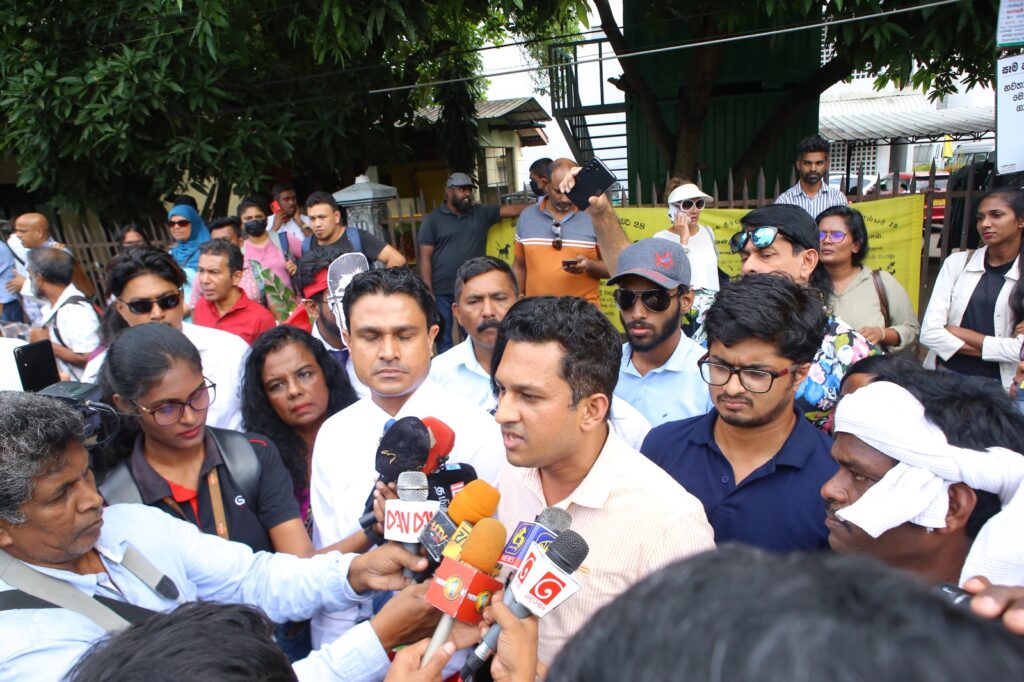
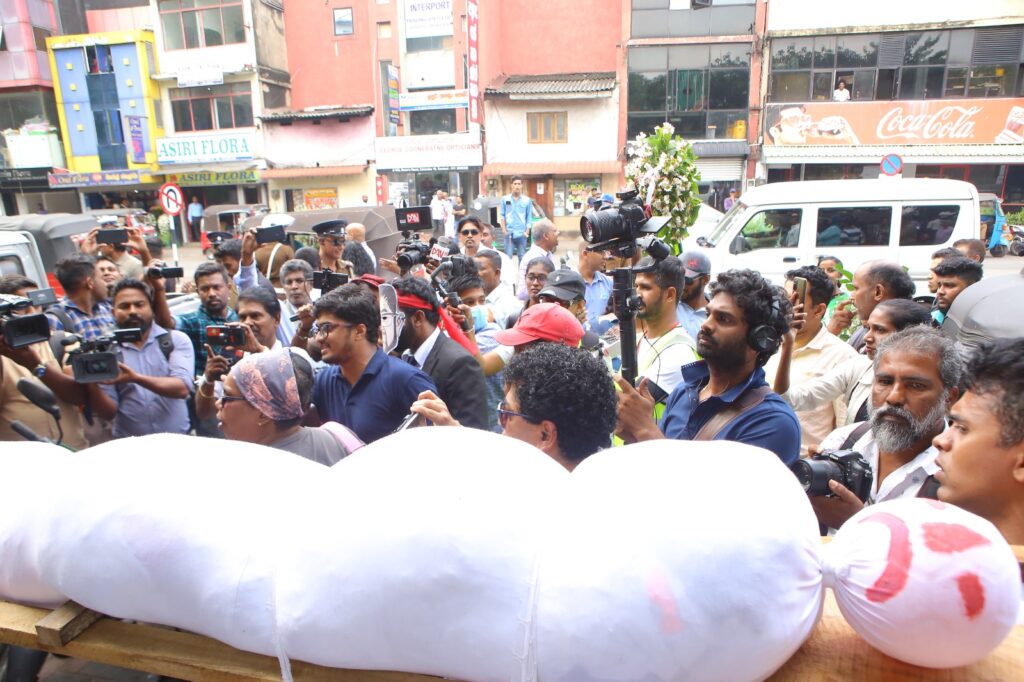
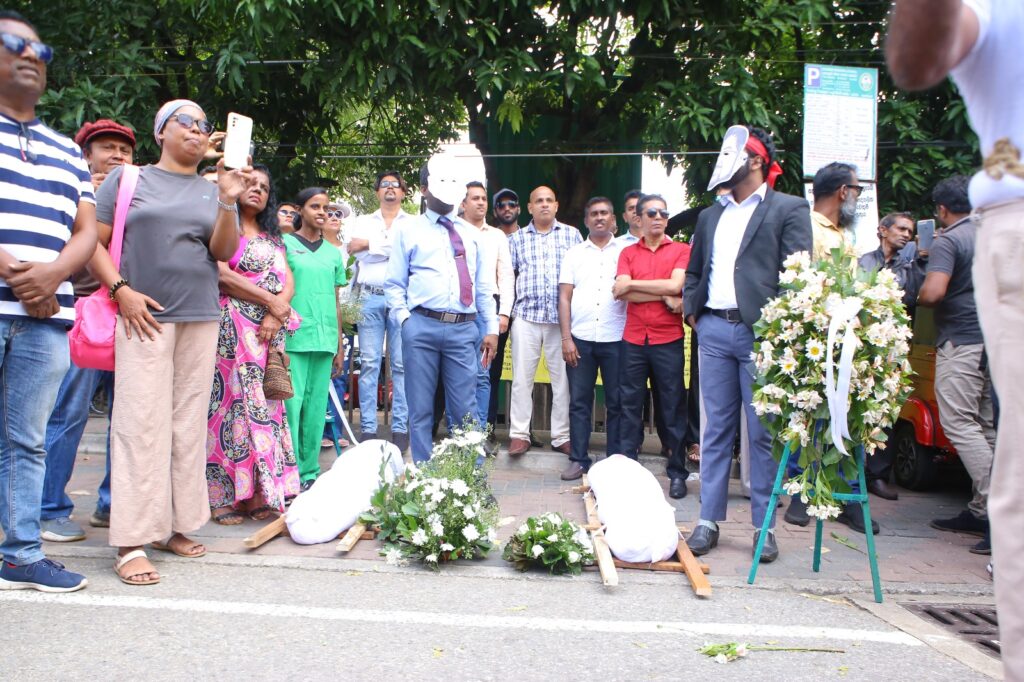
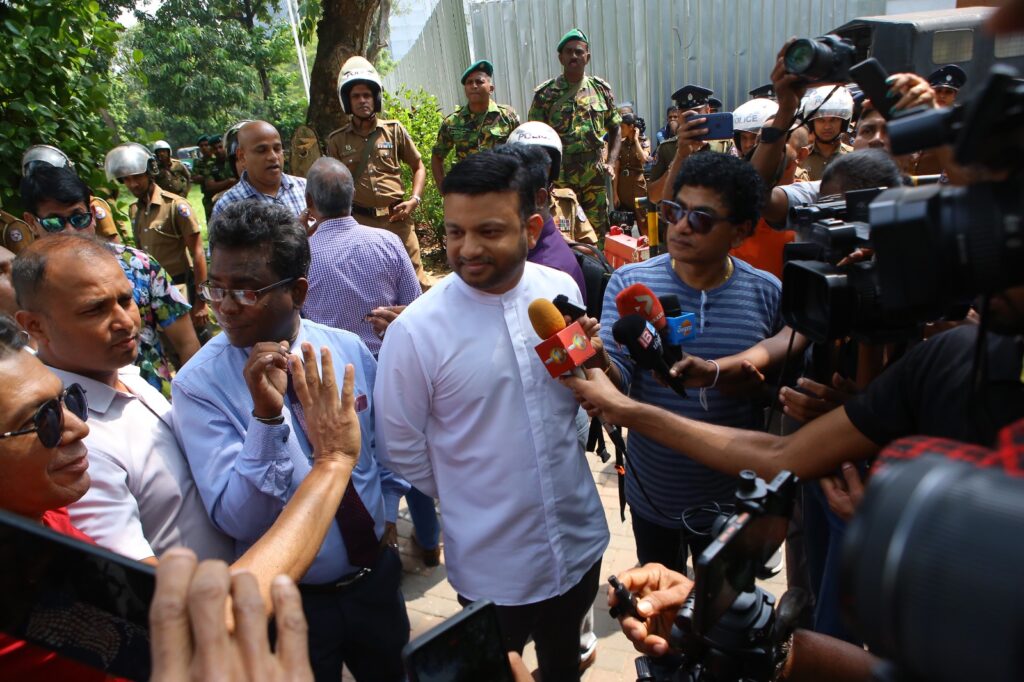
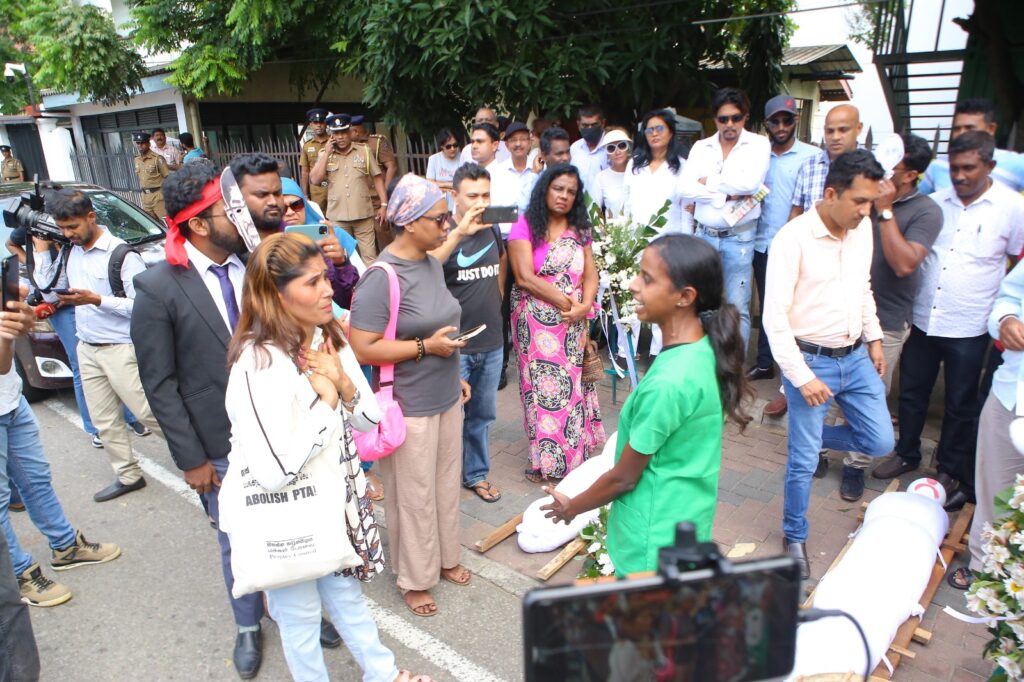
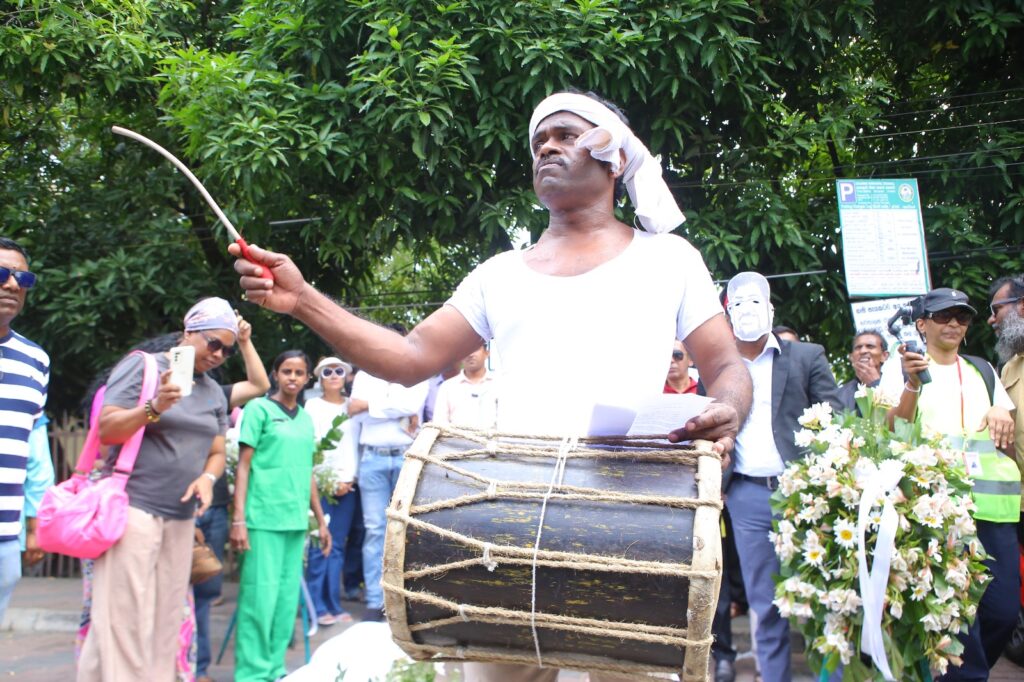
January 16, Colombo (LNW): A demonstration was staged in front of the Ministry of Health this (16) afternoon, marked by a fervent demand for the arrest of former Health Minister Keheliya Rambukwella.
The protesters alleged that the former minister jeopardised patient lives by permitting the importation of substandard medicines.
The roots of this protest trace back to January 1, when individuals, including Dr. Chamal Sanjeeva, laid a wreath in protest in front of Rambukwella’s residence in Colombo.
This act was a response to the ex-minister’s alleged involvement in allowing substandard medicines into the country. A complaint was filed against three individuals, including Dr. Chamal Sanjeeva, following this demonstration.
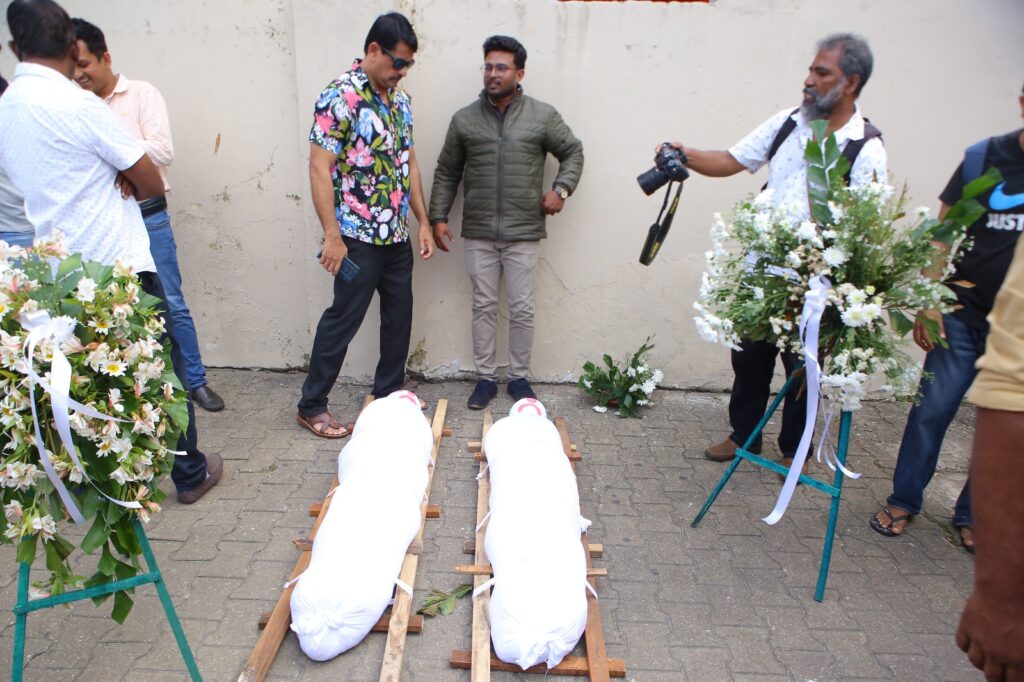
As part of the protest today, two replicas of corpses were brought to the site, symbolising death, in addition to wreaths. A street play condemning the ex minister’s actions was also added to the demonstration.
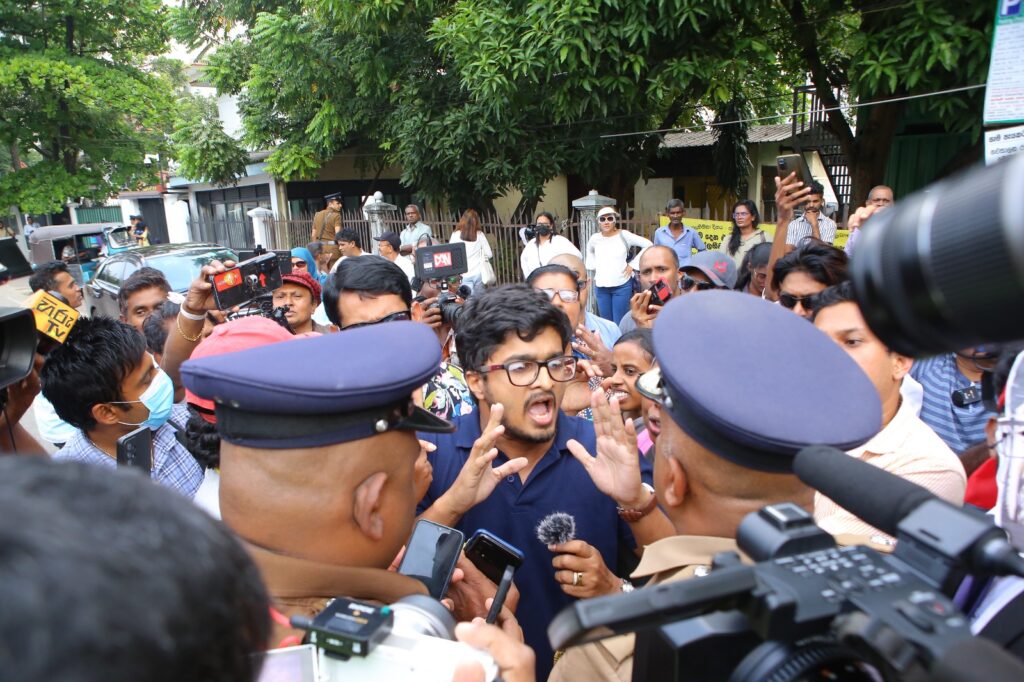
The protesters initially intended to march from the Ministry of Health to the police station with the effigies and wreaths. However, due to police restrictions, they opted to transport the symbolic elements in a vehicle to the Kuruduwatta Police station.
Tensions arose between the Police and protesters as they were not permitted to proceed on foot. Consequently, replicas of wreaths and corpses were placed in front of the Police station, resulting in additional confrontations.
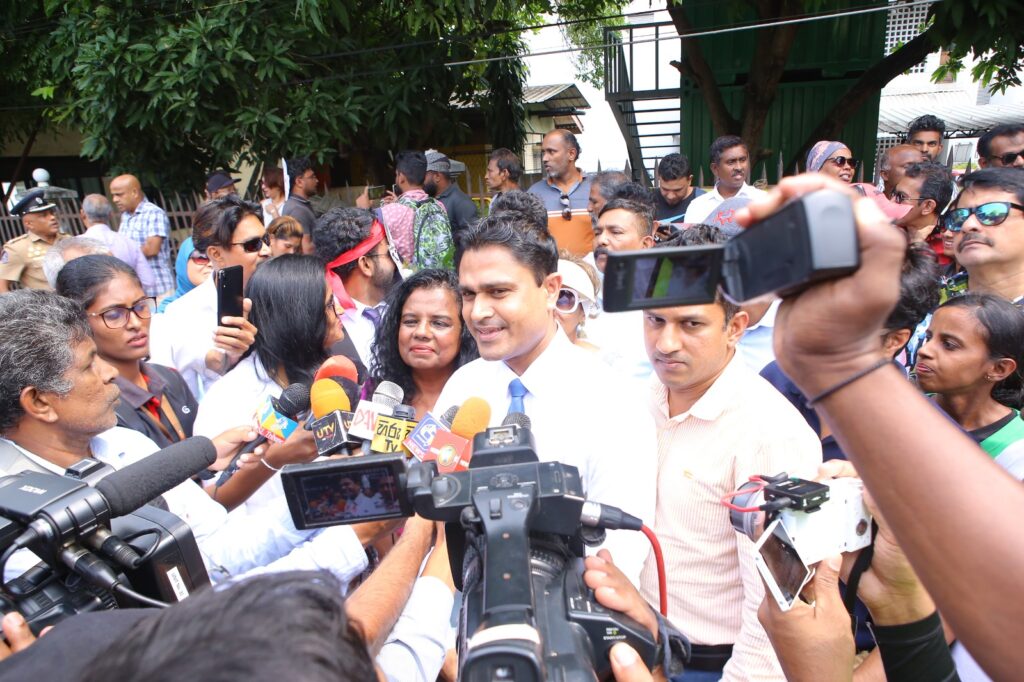
Notably, Samagi Jana Balawegaya (SJB) MP, Dr. Kavinda Jayawardena, arrived at the scene to express his solidarity with the protest. However, he faced severe opposition from the demonstrators, who asserted that a robust opposition would prevent the government from engaging in activities detrimental to human welfare.
Despite the protests, Jayawardena left the scene.
The demonstration garnered support from civil society activists and various individuals concerned about the alleged actions of the former Health Minister.
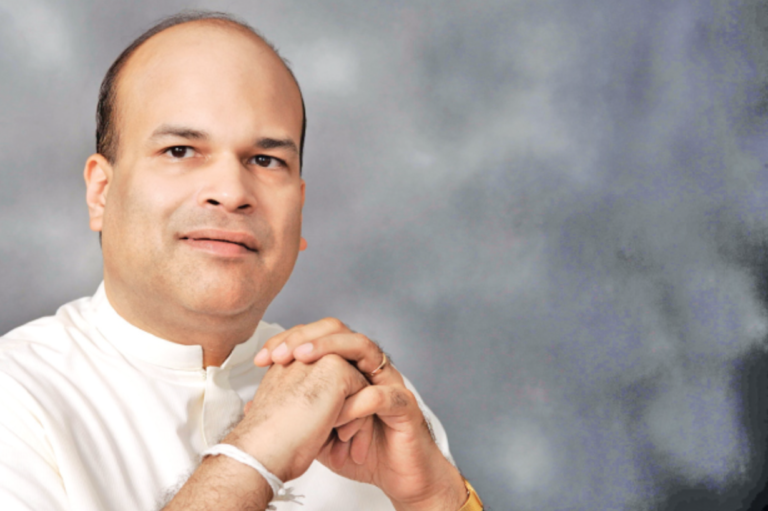
January 16, Colombo (LNW): Milinda Moragoda, Founder of the Pathfinder Foundation, has urged political parties to prioritize the abolition of the Provincial Council (PC) system in their upcoming campaign manifestos for the national elections. Moragoda reiterated his proposal to eliminate Provincial Councils, advocating for the direct devolution of power to strengthened and reconfigured Local, Urban, and Municipal Councils.
Emphasizing the proximity of these local bodies to the citizenry, Moragoda asserted that they are better equipped to address and resolve community-level issues. He argued that for a country with a population of 22 million, an additional layer of administration in the form of Provincial Councils is unnecessary.
Moragoda proposed this measure as part of a broader strategy to restructure and modernize Sri Lanka’s governance and economy. He envisioned a small, efficient, and people-centric Government, suggesting the removal of the Provincial Council layer. Instead, he proposed achieving necessary coordination through a district-level framework involving relevant Members of Parliament, key figures from existing Local Government offices, and other stakeholders.
The original purpose of the 13th Amendment, enacted in 1987, was to enhance provincial autonomy and address Sri Lanka’s ethnic issues. However, Moragoda argued that this structure has proven to be redundant, costly, divisive, and inefficient. In lieu of the Provincial Council layer, he recommended establishing an empowered Senate or Upper House to handle matters related to religious, ethnic, and regional diversity.
Moragoda believes that a representative and properly composed forum, such as an empowered Senate, would be better positioned to identify solutions for the complex issues facing the nation.
January 16, Colombo (LNW): The Secretary of the Government Medical Officers’ Association (GMOA), Dr. Haritha Aluthge, strongly criticized the ongoing strike by primary and secondary level health service employees demanding an allowance that, according to him, they are not entitled to. Dr. Aluthge labeled the strike as a concerning precedent, deeming it both absurd and unethical.
Speaking on the matter, Dr. Aluthge emphasized that the dispute revolves around the increase in the Disturbance, Availability, and Transport (DAT) allowance, which is exclusively designated for doctors as the most senior officials in the health sector. He pointed out the constitutional principle of treating equals equally and stressed that there is no provision for equal treatment of unequals.
While noting that the GMOA typically refrains from intervening in actions initiated by other professional groups, Dr. Aluthge considered this situation exceptional. He questioned the basis on which primary and secondary officers in the health field are seeking a special allowance reserved for doctors.
In response to the strike, the Health Secretary has communicated in writing to the Alliance of Health Trade Unions, informing them of a scheduled discussion chaired by the Minister at 11 am on the 16th to address the workers’ grievances.
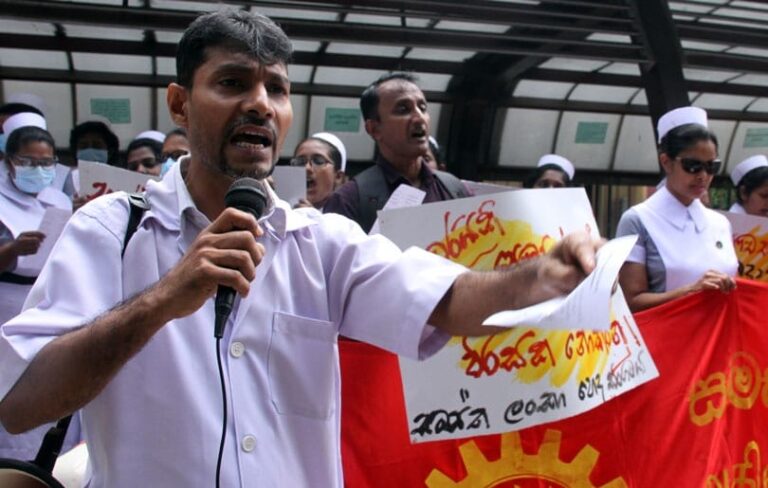
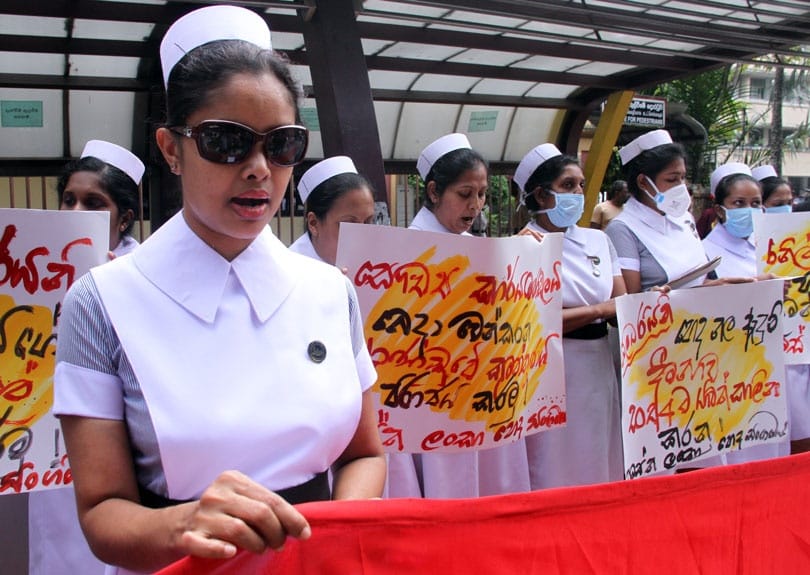
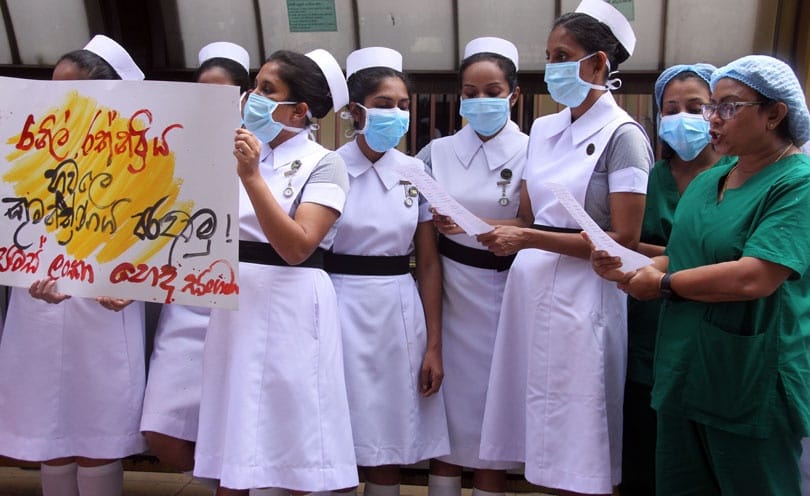
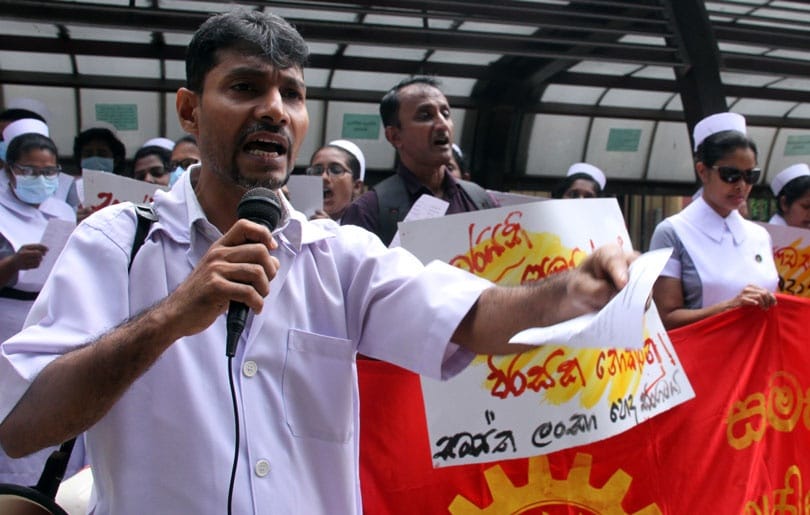
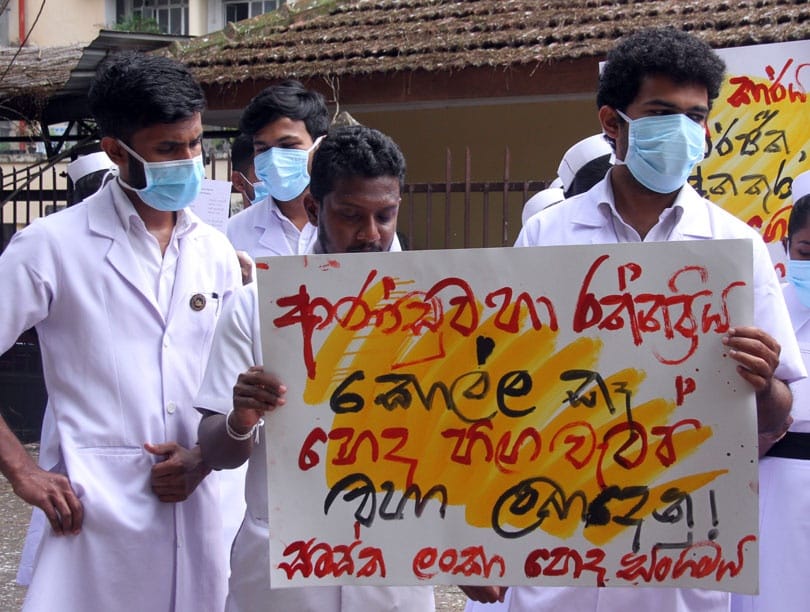
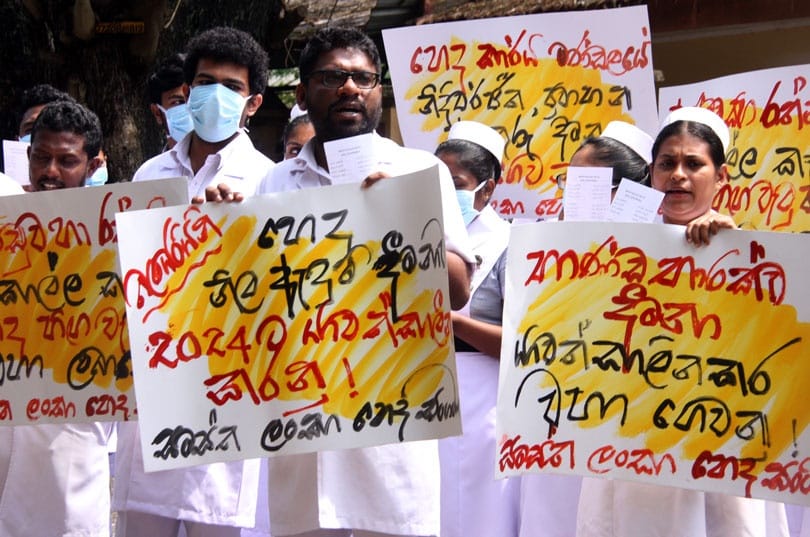
January 16, Colombo (LNW): The All Ceylon Nurses Union, currently engaged in a strike as of today, organised a demonstration in front of the Colombo National Hospital, expressing their urgent demand for the immediate resolution of issues related to allowances within the health service.
With a commitment to maintaining professional unity and avoiding conflicts within the health service, the All Ceylon Nurses Union emphasised the importance of justice in addressing the concerns surrounding allowances.
The paramedical services, aligned with the nurses’ stance, appeal to the government to consider providing an allowance of Rs 35,000 for their services, ensuring parity with the increased allowance granted to medical professionals.
It is noteworthy that 72 health unions have extended their support to today’s strike, underscoring the widespread concern within the health sector regarding allowance disparities.
The root of this issue stems from a decision by the Cabinet to approve the increase of the Disturbance, Availability, and Transport allowance (DAT) for doctors from Rs 35,000 to Rs 70,000, leading to a call for equitable treatment across all healthcare professionals.
The All Ceylon Nurses Association remains committed to fostering a collaborative environment within the healthcare sector and urges swift attention to this matter for the overall benefit of the healthcare workforce and, ultimately, the well-being of the public.
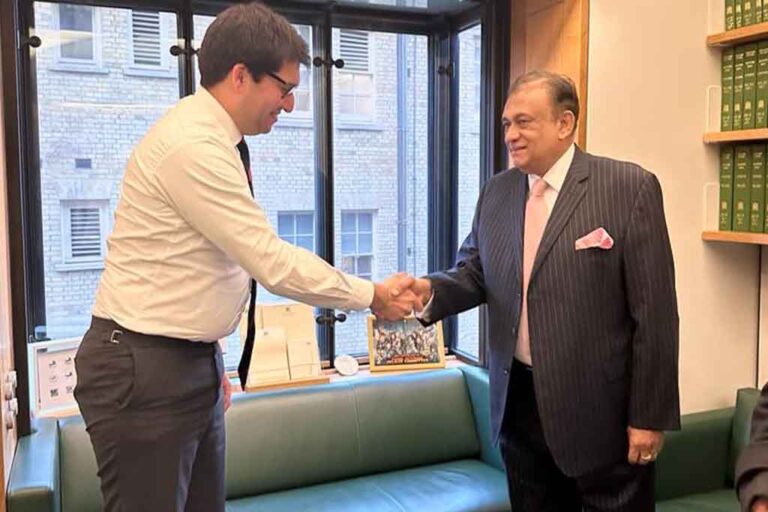
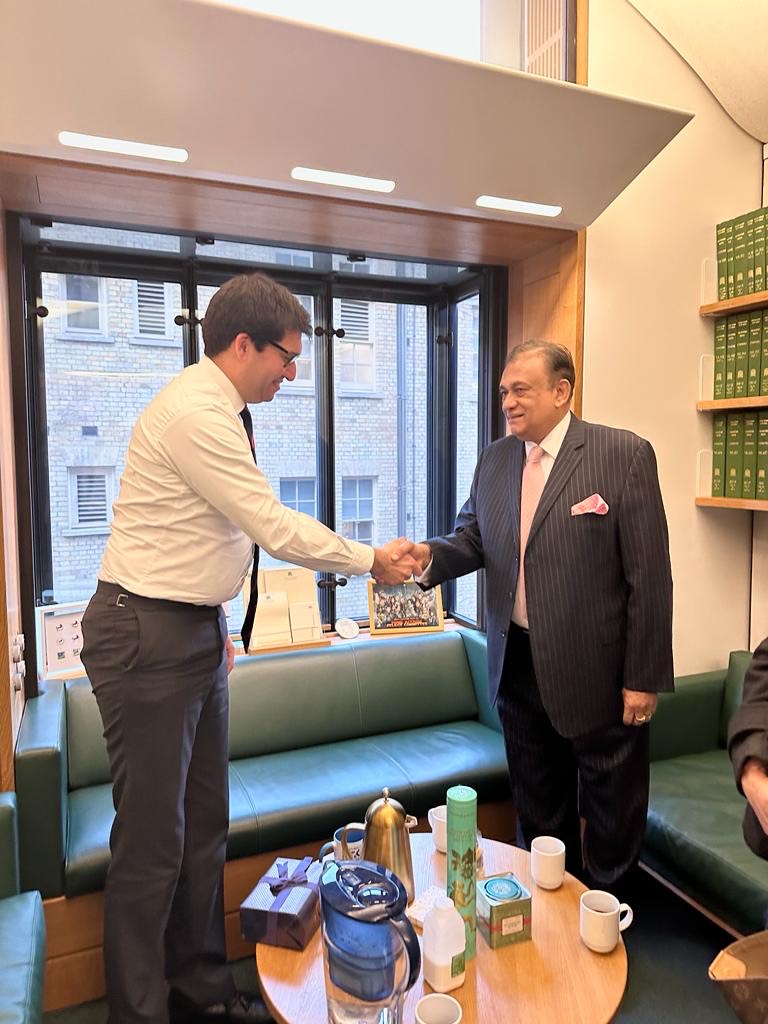
January 16, London, UK (LNW): Sri Lanka’s High Commissioner to the United Kingdom, Rohitha Bogollagama, engaged in a productive meeting with Conservative Party Member of Parliament for Northeast Hampshire, Ranil Jayawardena, on 10 January 2024 at the House of Commons, the High Commission of Sri Lanka in London said in a statement today (16).
The discussions covered various topics of mutual interest, including contemporary international relations, constitutional reforms, diaspora engagement, and the ongoing reconciliation process in Sri Lanka.
During the meeting, High Commissioner Bogollagama provided a comprehensive briefing to MP Jayawardena on the evolution of Sri Lanka’s constitution in response to the changing political landscape, emphasising the country’s efforts to devolve power to the periphery.
The two dignitaries engaged in an extensive conversation regarding constitutional amendments and governance in Sri Lanka.
Acknowledging the constructive approach of the Sri Lankan government in rebuilding the North and East regions, MP Jayawardena highlighted the potential role of the Sri Lankan diaspora in the United Kingdom as a crucial force in the development of Sri Lanka.
The discussion further delved into areas of enhancing UK–Sri Lanka economic relations, supporting the expansion of clean energy initiatives in Sri Lanka, and bolstering air connectivity between the two countries.
Jayawardena, who previously served as Parliamentary Under-Secretary for International Trade from May 2020 to September 2022, and as Secretary of State for Environment, Food, and Rural Affairs from September 6 to October 25, 2022, expressed keen interest in fostering stronger ties between the United Kingdom and Sri Lanka.
The High Commission of Sri Lanka looks forward to continued collaboration and strengthened relations between the two nations.
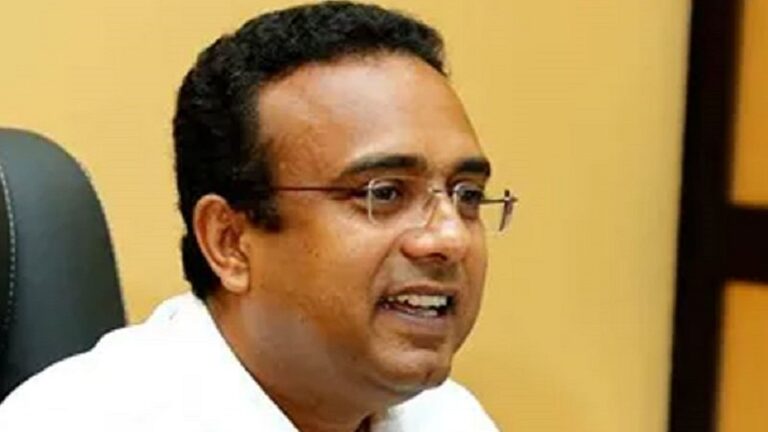
January 16, Colombo (LNW): Labour and Foreign Employment Minister Manusha Nanayakkara revealed that only 1.2 million out of the three million Sri Lankan expatriate workforce have formally registered with the Sri Lanka Bureau of Foreign Employment (SLBFE) before heading abroad for employment opportunities.
Minister Nanayakkara highlighted the prevalence of illegal migration, with a significant majority of individuals facing various oppressive incidents in foreign countries choosing to travel without proper registration.
During a media briefing on the 14th, the Minister, who had visited and received the blessings of Mahanayaka Theras of the Malwathu and Asgiriya Chapters in Kandy, emphasized the benefits available to those who legally register with the SLBFE before embarking on overseas employment. He mentioned that such individuals are entitled to insurance coverage and various other benefits.
Minister Nanayakkara expressed concern over individuals who opt for unauthorized means to work abroad, bypassing existing laws and regulations. He pointed out that the Ministry encounters difficulties in providing protection to those who find themselves in trouble due to not adhering to proper registration procedures.
The Minister’s statements shed light on the challenges faced by the government in ensuring the welfare and protection of Sri Lankan workers abroad, urging for increased awareness and adherence to legal processes for those seeking employment opportunities overseas.
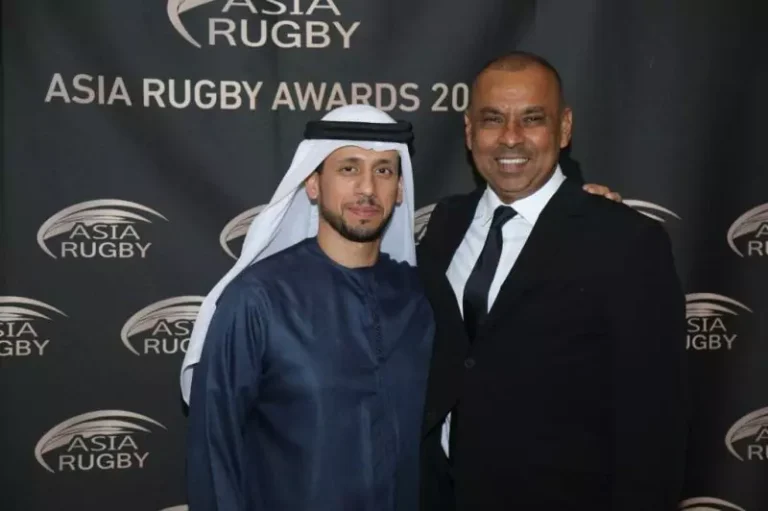
January 14,Colombo (LNW): Sports Minister Namal Rajapakse’s crackdown on Sri Lanka Rugby was also implemented under Roshan Ranasinghe and ended with the banning of Sri Lanka Rugby based on international political pressure. Asia Rugby President Quais Abdullah spearheaded the political efforts in Sri Lanka that led to the imposition of the rugby ban. We have long been revealing the details of that operation and identifying the Sri Lankan individuals who played a role in its execution.
Now, it appears that these figures are preparing to utilize the 100th anniversary of Colombo Zahira Rugby, one of Sri Lanka’s powerhouse schools, strategically laying traps to thwart the ascent of the upcoming generation of rugby aspiring to lift Sri Lanka’s rugby status from the bottom of Asia. This issue should be meticulously comprehended, as it could mark the commencement of a serious matter. The chief guest is the Asia President Quais Abdullah who has been a trap for the Sri Lanka Rugby.
There are several stories behind this, and it is difficult to understand the truth without connecting the present to those histories. However, in the endeavor to ban rugby in Sri Lanka over a personal issue, the involvement of Asanga Seneviratne, who remained silent from the arms of the Asia President, and Saabir Cader, whom he is using as bait for his own needs, is a good opportunity to recognize the danger from a distance. Saabir appears and Asanga watches from behind the screen.
In Sri Lanka, Zahira in Colombo is a Muslim school that extends support to Sinhalese Buddhist children, enabling them to progress based on their merits. In fact, in the continuation of this article, you will feel who will show Saabir Cader the way to connect the Asia President who destroyed the rugger of Sri Lanka in the United Arab Emirates and the Muslims of Zahira in a very subtle way.
In some way, by creating a Muslim extremist image, to break the friendship in rugby and to create distrust in each other, to create a rift among the young people who are going to take over the tomorrow of the Sri Lanka rugby, this opportunity has been used to spread the racist germs that are needed to spread the germs of racism, which are responsible for Zahira and Zahira rugby in Sri Lanka, Ignoring the large number of people responsible for the rugby in Zahira. Truly, Zahira’s rugby holds significance as a part of the country’s rugby identity and should not be marred by racial considerations.
When considering political leadership to invite sports to celebrate 100 years of Zahira, there is Sports Minister Harin Fernando. As a consider educational institution, there is Susil Premajayantha. When thinking about rugby, it is also possible to give that opportunity to Sri Lanka Rugby or Sri Lanka School Rugby.
We must decide based on this. Bringing Zahira to 100, the person who started the worst things for Sri Lanka rugby in recent times and putting a danger to the society of Zahira leading to Muslim extremism, should be slowly examined as to what is the background of the story.
Namal Rajapaksa’s term as sports minister comes at a time when sports clubs have decided to keep Asanga Seneviratne away from the Sri Lanka rugby clubs. There was a time when the Asia President vaguely against Sri Lanka Rugby, that because Lasitha Gunaratne, who succeeded Asanga, not casting a vote in favor of the Asia President. There were multiple reasons why Asanga was rejected.
Asanga’s tenure was an era during which he made a debt of 30 million to Sri Lanka Rugby. Additionally, it was a year when an offense was committed within Sri Lanka Rugby, leading to a fine of 50,000 pounds to be paid in installments. This is by introducing foreign players as Sri Lankans and fielding them in competitions within Sri Lanka. While Sri Lanka is under displeasure of the Asia President over Lasitha’s voting practices, Asanga is slowly coming to the arms of the Asia President.
At this juncture, with Rizly Illyas assuming the presidency, rather than fostering a connection between Asia and the official rugby administration of Sri Lanka, Asanga endeavored to build a relationship between Namal Rajapaksa and the Asia president. His aim was to involve himself in the management of Sri Lanka rugby according to the preferences of the Asia president.
As a step, Namal utilized the influence of his ministerial position to establish contact with the Asia President and subsequently, he appointed an advisory council led by Asanga Seneviratne to provide guidance, operating outside the established rugby administrative system of Sri Lanka. But Sri Lanka Ruger does not want to hand over chickens to a fox who subjected Sri Lanka Ruger to a 50000 pound fine and put Sri Lanka Ruger under a mountain of debt of 30 million.
In the midst of this conflict, the Sri Lanka Rugby President, who is angry about dragging the local Rugby sponsor to the Asia Rugby sponsorship, blames the Asia Rugby President for the independence and pride of Sri Lanka Rugby.
Sri Lanka’s sports ministers agree with Asanga and the Asia President who have put Sri Lanka rugby in jeopardy as the conflict escalates to the banning of Sri Lanka from Asia rugby. Especially like Roshan Ranasinghe, whose eyes are moist with his love for cricket, who talks about Jay Shah and the ICC, and the Chairman of the National Sports Council, Arjuna, who was supposed to give him advice, are basking in the shadow of the Asia President by attacking the President who fought for the independence of Sri Lanka Rugby.
Due to the joint efforts of Asanga and the Asia President, the outcome of their operation is that Sri Lanka will face the consequence of losing the Asian tournament. Subsequently, the National Olympic Committee, following a request through the Olympic Council of Asia, granted permission for Sri Lanka to partake in the tournament under the banner of the Olympic Council of Asia. Because of the actions taken by the Sri Lanka Rugby administration despite their close proximity to a medal in the prior Asian tournament closing doors and inhibiting even the training sessions, Sri Lanka experienced a decline in the tournament. In contrast, the United Arab Emirates, represented by Quais Abdullah, secured a substantial lead by the end.
According to the final result, there was a group of people who served Qais Abdullah to do the best thing for Sri Lanka Rugby to not vote for Lasitha. Among them was Asanga Senevratnath and Saabir Cader, who was in charge of the media operation during his presidentship, and after being ousted during the Lasitha and Illiyas eras, was promoted to a position in the Asia Rugby at the mercy of Asanga.
Under the leadership of this team, there was a potential for securing an Asian Games medal during his tenure as the country’s sports minister. However, Minister Roshan Ranasinghe exhibited his arrogance, neglecting the consideration of representing Sri Lanka Rugby in the Asian tournament. His behavior mirrored a childlike approach, reminiscent of the actions that led to the disarray of Sri Lankan cricket before the conclusion of the World Cup.
While the minister about localism by talking about Jay Shah and ICC loyalties about the scattering of cricket, he did not even consider the advocacy of localism by the president of Sri Lanka Rugby, who clashed with the Asia President for the independence of Sri Lank Rugby. What he did was to use ministerial power and slander the Sri Lanka Rugby President by claiming the power of the Asia President.
When this page was closed and the international ban was lifted and the society was enlightened about the problems of Sri Lanka Rugby in a different dimension, it may be seen that Asanga and Saabir, who had previously stood with the Asia President, have joined forces to betray Sri Lanka to a new level regarding the neglect of Sri Lanka Rugby. The intent appears to be to cast doubt and suspicion on Muslim culture within the realm of rugby, paving the way for undermining the foundations of Sri Lanka Rugby in the future.
For this, we admit that Fauzul Hameed, a prominent businessman, may wanted to give light to Zahira College centenary. Because he came forward to encourage Sri Lanka Rugby in some way even when rugby was down due to Asanga’s operations in a very bad situation. It is important to understand and unravel this issue from the point of view of Saabir Cader, who he joined to Zahira under the presidentship of Rugby.
The objective of the involvement is to craft a perception that bringing Qais Abdullah to a prestigious school in Sri Lanka, with an Asian president leading the way, is a noteworthy endeavor. But the story that the rugby lovers of this country know is different.
Qais Abdullah was the individua who caused problems with the president of Sri Lanka, banned rugby in Sri Lanka and pulled it down from the Asian tournament. Prominent among the Sri Lankans who stood alongside him were Asanga Seneviratne and Saabir Cader. For a rugby lover who clearly knows the situation, Zahira becoming a Muslim, Qais Abdullah becoming a Muslim, and ignoring the damage caused by Qais to the country because of that Muslimness, let a Muslim image be created by that call, beyond the identity of Sri Lanka. Don’t you think that this participation has the underlying purpose of creating the germs necessary to prepare the future generations of Sri Lanka so that they cannot pass the rugby of the United Arab States or the land of Qais for another time?
Is it not a problematic situation to bring together a Muslim who did something harmful to the country in a space that has not yet resolved the doubts caused by the Easter attack? While the majority of the Sri Lanka Rugby community recognizes him as the individual who significantly tarnished Sri Lanka’s centuries-old rugby history and diminished its standing in the Asian Games history, especially against the United Arab Emirates, whose rugby history is significantly shorter, wouldn’t it pose a problem to have him as the central figure in such a context? Could this be a calculated scheme to undermine the ascent of rugby by fabricating a racist and bigoted image that did not previously exist within the rugby community, thereby casting doubt and suspicion upon Zahira?
Although it seems like a show, we feel that through that context, a sinister serious plan has succeeded in guiding the dirty hands to take over many places from the famous Zahira. Certainly, addressing the challenges arising from this article with accurate answers is an important and responsible task. We are fully prepared and willing to provide the necessary space for it without hesitation.
In the recent history of Sri Lanka, did the decisions made by the Asia President not have an impact on the diminishing presence of rugby internationally?
During the Asia President’s decision to suspend all rugby activities in Sri Lanka within Asia Rugby due to a issue, did Asanga Seneviratne and Saabir Cader not represent the side of the Asia President in those circumstances?
Is it acknowledged that, as a consequence of decisions made by the Asia President in collaboration with Sri Lankan politicians, the country represented by the Asia President improved its position in the Asian Games, while Sri Lanka, which was on the brink of securing a medal, descended from its previous standing?
Does it acknowledge that, in light of this, Sri Lanka’s rugby, with a history spanning over a hundred years, was positioned beneath the country with the shorter history of the Asia President’s country?
Is it true that during Asanga Seneviratne’s presidency, that Sri Lanka Rugby was brought into disrepute due to the inclusion of foreign players in the national team and Sri Lanka has had to pay a fine of £50,000 for that, and it is still being paid in installments?
Is it not accurate that upon Asanga Seneviratne’s departure as the President, the Sri Lanka Rugby under a debt of 30 million incurred during his tenure?
Considering these circumstances, is it not factual that Asanga Seneviratne, who was not included by the rugby clubs in rugby administration, is set to secure a position through the Asia President, and subsequently, Saabir Cader will also have the opportunity to do the same?
Is it accurate to say that Saabir Cader held office alongside Asanga Seneviratne during their time in the Sri Lanka Rugby administration, but despite subsequent presidents Lasitha and Illyas removing him, they called upon Asanga Seneviratne to join Asia Rugby?
Due to factors such as bringing Asanga Seneviratne to the advisory council by Sports Minister Namal Rajapaksa as a person who was rejected by the official voting sports clubs in Sri Lanka and adding local sponsors to the Asian sponsorships along the lines created by Asanga, isn’t it true that Rizly Illyas, the former president who stood for the independence and pride of Sri Lankan rugby, blamed the Asia president?
The ex-sports minister and his gang, who are also criticizing people and organizations like Jay Shah, ICC, in cricket hoping for the popularity of the people, warmly welcomed the Asia Rugby President and said nothing to the Asia President about the man who fined Sri Lanka Rugby 50000 pounds while he was a president. Do you approve of standing with the Asia President against the Sri Lanka President who stood for the pride and independence of Sri Lanka Rugby?
Do you not agree that if the Minister of Sports had intervened to support Sri Lanka Rugby before World Rugby, upon understanding the truth from the president of Sri Lanka Rugby, rather than politically influencing a ban on Sri Lanka Rugby, there could have been a possibility for World Rugby to take action against the injustice done to Sri Lanka Rugby by addressing the matter with the Asia President of World Rugby? (Simply, isn’t it a problem for a minister to have a person who did things that lead to the fining of the rugby in the country he represents to be with the Asia President, but to make a problem with the person who fought to protect the Sri Lanka Rugby in front of the Asia Rugby president?)
If all the facts are accurate, wouldn’t it be considered unfair to prioritize the Asia President for the Zahira 100 celebration, placing him ahead of the Minister of Sports of Sri Lanka, the Minister of Education, Sri Lanka Rugby, and Sri Lanka School Rugby? Could this not potentially raise doubts of another nature? Is it not the case that, instead of ceasing efforts to uphold the reputation of Sri Lanka Rugby at the international level, certain actions are seemingly permitting specific Muslim extremists, thereby creating doubts and divisions that could potentially lead to the failure of future rugby endeavors in Sri Lanka through seemingly minor programs?
If you think that you have knowingly or unknowingly contributed in some way to the above sensitive matters, we will allow you to clarify the facts about that omission or to say that the things we have mentioned did not happen on this earth. It is our perception that the commemoration of Zahira’s 100 years has been strategically exploited by others for their personal gain, diverging from the auspicious path that could contribute to the future development of Sri Lanka Rugby.
*Adapted from original article “සිය වසක අභිමානයේ රසට වස දීම” by Nishman Ranasinghe published on January 14, 2024.