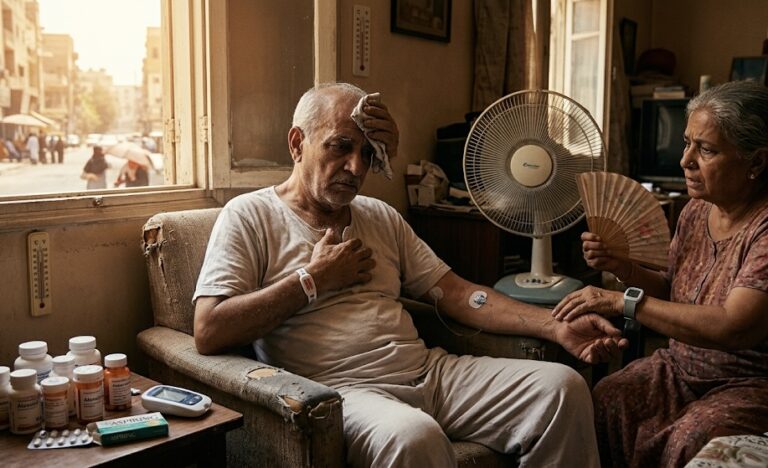
April 02, LNW (Colombo):Health experts have warned that the prevailing extreme heat conditions could seriously worsen chronic illnesses and may even lead to fatalities if proper precautions are not taken.
Consultant Community Physician Dr. Inoka Suraweera of the Ministry of Health stated at a media briefing held at the Health Promotion Bureau that prolonged exposure to high temperatures can lead to heat cramps, heat exhaustion, and potentially fatal heat strokes.
She emphasized that individuals suffering from chronic conditions such as diabetes, heart disease, kidney disease, and cancer are particularly vulnerable, as extreme heat can aggravate their health conditions.
Dr. Suraweera also advised people engaged in outdoor occupations, including farmers and construction workers, to remain cautious. She stressed the importance of staying hydrated by drinking plenty of water while avoiding alcohol, caffeinated drinks, and sugary beverages.
Meanwhile, Dr. Chandani Withana, Director of the Environmental, Occupational Health and Food Safety Unit of the Health Ministry, recommended consuming natural electrolyte-rich drinks such as coconut water, king coconut, and fresh fruit juices like lime, orange, and mandarin. She also encouraged the intake of water-rich foods such as cucumber and watermelon.
Health officials further advised the public to limit outdoor activities between 11:00 a.m. and 4:00 p.m., wear light-colored cotton clothing, and use protective items such as umbrellas or hats when going outside.
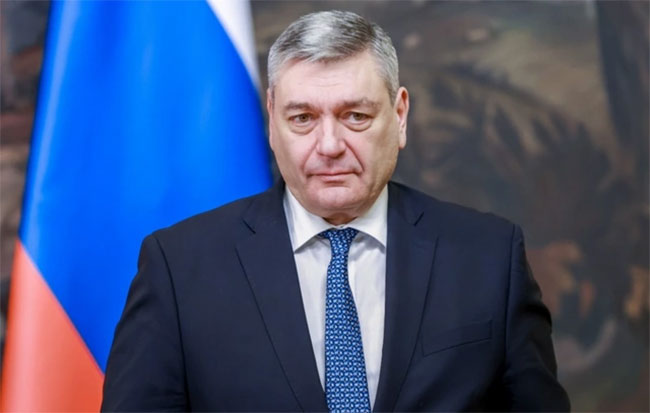
April 02, LNW (Colombo): Visiting Russian Deputy Foreign Affairs Minister Andrey Rudenko stated that Sri Lanka and Russia should not restrict energy cooperation based on the position of the United States, but instead focus on building partnerships on a strong legal and economic foundation.
He made these remarks during an interactive session organized by the Pathfinder Foundation with representatives of Sri Lankan media and think tanks.
Rudenko emphasized the importance of strengthening bilateral ties, noting that both countries should deepen engagement without limiting communication or potential agreements, particularly in the energy sector.
He also highlighted Sri Lanka’s growing appeal as a tourist destination for Russian nationals. According to him, increased tourism could pave the way for broader economic cooperation, including trade and technological investments.
“Beyond tourism, there is significant potential for expanding business relations, especially in trade and technology services. However, this requires better mutual understanding and a stable legal and economic framework,” he said.
Responding to a question regarding the recent visit of Russia’s Deputy Energy Minister, Rudenko noted that Sri Lanka is among several countries seeking Russian oil. He confirmed that Sri Lanka’s request is currently under consideration.
April 02, LNW (Colombo): Atmospheric conditions will be favorable for afternoon thundershowers in most parts of the island over the next few days from today (02 April).
Showers or thundershowers will occur at several places in Western, Central, Sabaragamuwa, Southern, Uva, North-western and North-central provinces after 2.00 p.m.
Fairly heavy falls above 50 mm are likely at some places in Western, Central and Sabaragamuwa provinces and in Kurunegala district.
Showers may occur at Southern province and in Ampara, Batticaloa and Monaragala districts in the morning too.
Misty conditions can be expected at some places in Central, Sabaragamuwa and Uva provinces during the early hours of the morning.
The general public is kindly requested to take adequate precautions to minimize damages caused by temporary localized strong winds and lightning during thundershowers.
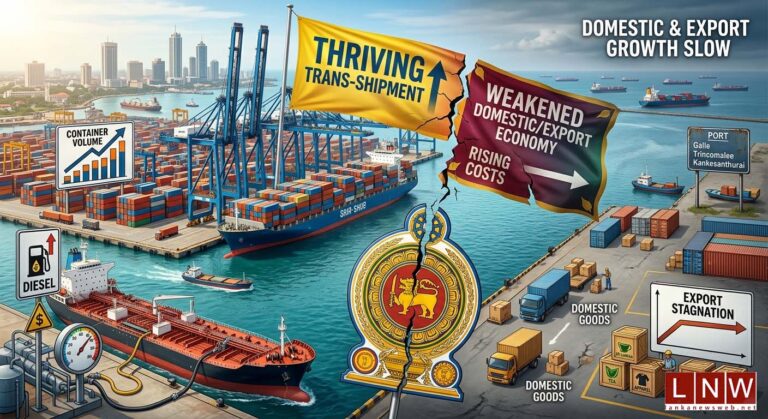
April 01, Colombo (LNW): Sri Lanka’s port sector is sending mixed signals strong container growth on one hand, and underlying economic stagnation on the other. The Sri Lanka Ports Authority maintains that operations remain uninterrupted, yet closer analysis reveals a more complex picture shaped by global disruptions and domestic constraints.
The headline figure is encouraging: container volumes at the Port of Colombo have risen by 10–15%, reinforcing its position as a key transshipment hub in South Asia. This increase suggests that international shipping lines continue to rely on Colombo despite turbulence in global maritime routes.
But this growth masks deeper challenges. Domestic cargo volumes have slowed, reflecting weakened economic activity within the country. More notably, export volumes have plateaued, indicating that Sri Lanka is struggling to expand its trade output amid rising fuel costs and uncertain global demand.
Fuel consumption trends further highlight the pressure points. The sharp increase in diesel usage from 1.5 million to 2.5 million litres monthly underscores the cost of maintaining operational continuity in a volatile environment. While support from the Ceylon Petroleum Corporation has ensured stability for now, it also raises concerns about long-term financial sustainability.
The situation is compounded by global factors. Shipping routes have been disrupted due to geopolitical tensions, leading to rerouted vessels and higher operational costs. For Sri Lanka, which depends heavily on its strategic location, these disruptions present both opportunities and risks. Increased transshipment volumes may boost short-term performance, but they do not necessarily translate into broader economic gains.
Regional ports including the Port of Galle, Port of Trincomalee, and Port of Kankesanthurai have remained stable, with no significant changes in fuel demand. However, their limited contribution to overall throughput highlights a structural imbalance in Sri Lanka’s port infrastructure, where Colombo dominates activity.
This concentration poses a strategic risk. Over-reliance on a single port increases vulnerability to disruptions, whether from external shocks or internal inefficiencies. Diversifying activity across regional ports could enhance resilience, but this requires investment, policy support, and improved connectivity.
Ultimately, the current performance of Sri Lanka’s ports reflects a balancing act between resilience and fragility. While operational continuity has been maintained and key metrics show growth, the lack of export expansion and rising operational costs point to underlying weaknesses.
For Sri Lanka to fully leverage its maritime potential, the focus must shift from short-term stability to long-term competitiveness ensuring that growth in port activity translates into tangible economic progress rather than just statistical gains.
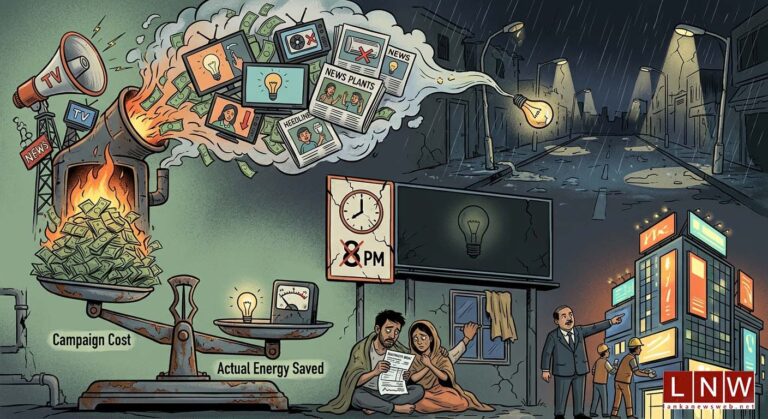
April 01, Colombo (LNW): Sri Lanka’s latest energy conservation push, led by directives from Essential Services Commissioner General. Prabath Chandrakeerthi and Minister of Public Administration Chandana Abayarathna, has reignited debate over whether Government-led awareness campaign particularly those heavily reliant on television and newspaper advertising deliver meaningful results or simply repeat past inefficiencies.
The new guidelines are extensive. Air conditioning in Government offices must be switched off by 3 p.m., illuminated billboards are to go dark by 8 p.m., and even street lighting is being curtailed. Event organisers are urged to use private generators, while citizens are encouraged to adopt small behavioural changes such as switching off unused appliances and limiting water waste.
On paper, the measures appear practical and necessary. Sri Lanka is facing mounting pressure from global energy instability and dry weather conditions, increasing the urgency for conservation. Yet, the real question lies not in the intent but in execution and impact.
A significant portion of the campaign relies on mass media messaging, with heavy spending on TV commercials and newspaper advertisements designed to influence public behaviour.
However, this approach mirrors strategies used by previous governments, many of which failed to produce sustained reductions in energy consumption. Critics argue that awareness alone does not translate into action, especially when economic realities constrain consumer choices.
For many households, particularly amid rising living costs, energy conservation is less about awareness and more about necessity. Families are already limiting electricity use due to high tariffs and financial pressure. In such a context, expensive media campaigns risk appearing redundant if not wastefulraising concerns about the efficient use of public funds.
Moreover, structural inefficiencies within the energy system often undermine conservation efforts. Poor urban planning, outdated infrastructure, and inconsistent enforcement of regulations contribute significantly to wastage.
For instance, while the Government highlights street lighting misuse, the responsibility for such inefficiencies lies largely with administrative bodies rather than individual citizens.
The reliance on advertising also raises questions about accountability. Without transparent metrics to measure the effectiveness of these campaigns, it becomes difficult to justify their cost. Are electricity savings directly attributable to these initiatives, or are they the result of external factors such as tariff increases and economic hardship?
There is also a growing perception that the burden of conservation is being shifted disproportionately onto the public, while systemic issues remain unaddressed. Reducing consumption at the household level is important, but it cannot substitute for comprehensive reforms in energy generation, distribution, and governance.
Ultimately, while the conservation drive underscores a genuine national challenge, its success will depend on more than messaging. Without tangible improvements in infrastructure, enforcement, and policy coherence, the cycle of high-cost campaigns with limited impact is likely to continue—leaving both energy savings and public trust in short supply.
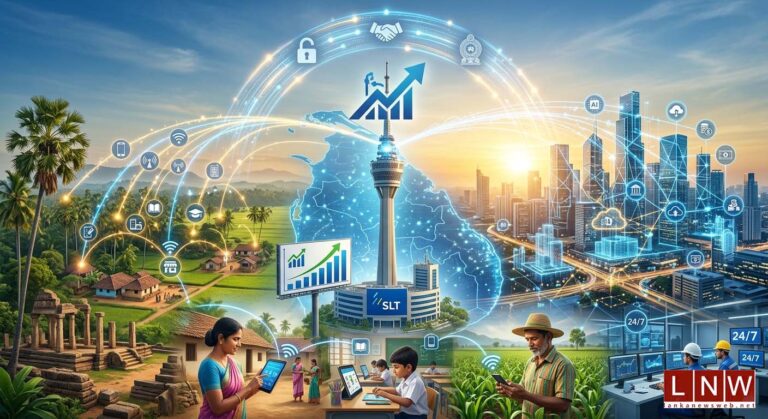
April 01, Colombo (LNW): Sri Lanka’s digital transformation agenda has entered a decisive phase, with the resurgence of SLT-Mobitel being positioned as both proof of concept and policy justification for a stronger State role in the sector.
After a dramatic 221% turnaround in 2025 and a profit surge to Rs. 10 billion, the State-backed telecom giant is now at the center of a broader debate: can public enterprises effectively lead a nation’s digital future?
Officials argue the answer is increasingly yes. The recovery comes amid rapidly shifting dynamics in Sri Lanka’s digital economy rising data consumption, declining traditional voice revenues, and intensifying cost pressures.
The ability of SLT-Mobitel to reverse losses, reduce debt, and regain operational stability is being framed as evidence that Government-linked entities can compete in a technology-driven market.
Deputy Minister Eranga Weeraratne has been vocal in challenging past narratives that favored privatization. With private firms already accounting for nearly 75% of telecom services, the Government sees its role as strategic rather than dominant focused on safeguarding critical infrastructure, enabling secure data ecosystems, and ensuring nationwide connectivity.
This positioning reflects a deeper policy shift. Telecommunications is no longer viewed as a standalone utility but as the backbone of digital governance, economic modernization, and national security. A State-linked operator, officials argue, allows sensitive data from public administration systems to financial transactions to remain within national control.
Operationally, SLT-Mobitel’s turnaround appears rooted in tighter financial discipline and strategic recalibration.
Under the leadership of Riyaaz Rasheed, the company has emphasized cost control, infrastructure investment, and service expansion.
Its mobile arm has returned to profitability, driven by pricing adjustments and a rebound in subscriber growth, while broadband services recorded a notable 22.5% increase offsetting the decline in voice revenues due to apps like WhatsApp.
Yet, challenges remain. The telecom sector is capital-intensive and heavily exposed to foreign exchange risks. Efforts to localize operations and reduce dependence on dollar-denominated inputs signal a pragmatic shift, but sustainability will depend on continued investment and policy consistency.
On the infrastructure front, the company’s move toward a 24/7 service model supported by 14 regional maintenance centers reflects lessons learned from disruptions such as Cyclone Ditwah. Reliable connectivity is no longer optional; it is essential for economic resilience, particularly during crises.
Beyond connectivity, SLT-Mobitel is expanding into emerging domains such as artificial intelligence, cloud computing, and digital services. Initiatives like SmartChat Mega and Ceylon Remit aim to integrate SMEs and diaspora communities into the digital economy, signaling a broader ecosystem approach.
However, the larger question persists: can one company’s recovery translate into nationwide digital acceleration? While SLT-Mobitel’s performance is encouraging, Sri Lanka’s digital transformation will ultimately depend on cross-sector collaboration, regulatory clarity, and sustained investment.
The turnaround is real but whether it marks a lasting structural shift or a temporary rebound remains to be seen.
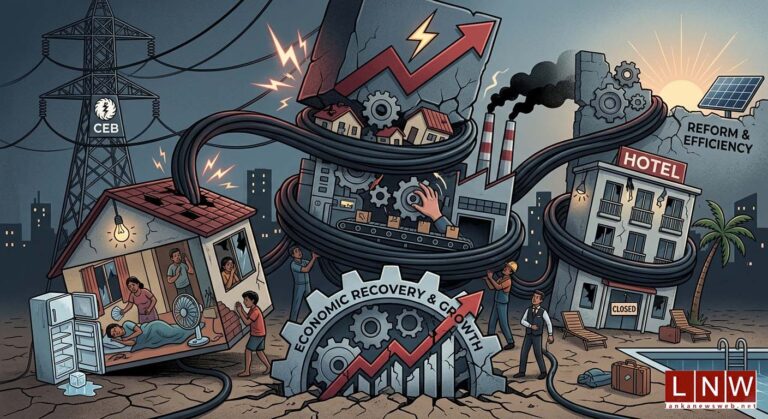
April 01, Colombo (LNW): Sri Lanka’s fragile economic recovery faces a new challenge as electricity tariffs rise across key sectors, raising alarm among industry leaders and economic analysts.
The recent increase approved by the Public Utilities Commission of Sri Lanka affects not just households but also industries, hotels, and general-purpose businesses the very engines expected to drive post-crisis growth.
The revised tariff system introduces a tiered structure, with lower users seeing marginal increases. But this cushioning effect fades rapidly as consumption rises especially during extreme heat, when fans, air conditioners, and refrigeration become necessities rather than luxuries.
Households consuming over 180 units now face a steep 25% increase, a move that disproportionately affects the urban middle class already grappling with inflation and stagnant wages.
Industrial electricity tariffs have risen by 8.7%, while hotels face a 9.9% increase and general-purpose users 8%. Government institutions bear the steepest hike at 14.4%.
Though these figures may appear moderate in isolation, their cumulative impact on production costs, service pricing, and competitiveness is significant.
For export-oriented industries, already struggling with high input costs and currency volatility, the tariff hike adds another layer of pressure.
Manufacturing sectors reliant on continuous power such as apparel, rubber, and food processing face shrinking margins and difficult choices: absorb costs, reduce output, or pass expenses onto consumers. None of these options bode well for economic stability.
The tourism sector, still recovering from years of setbacks, is also at risk. Higher electricity costs for hotels could translate into increased room rates, potentially undermining Sri Lanka’s competitiveness as a destination in a price-sensitive global market.
At the heart of the issue lies a deeper structural concern: the apparent transfer of operational inefficiencies from the Ceylon Electricity Board to the broader economy.
Critics argue that instead of addressing internal inefficiencies, losses, and questionable procurement practices including allegations surrounding substandard coal imports authorities continue to rely on tariff hikes as a default solution.
This approach risks creating a cycle where rising energy costs suppress economic activity, which in turn limits growth and reduces the ability of businesses to invest and expand.
The introduction of time-of-use tariffs and proposed concessions on Sundays and public holidays may offer some relief, but these measures are unlikely to offset the broader cost burden.
Moreover, the lack of transparency surrounding cost calculations raises concerns about governance. If procurement inefficiencies or corruption contribute to higher generation costs, passing these expenses onto industries effectively penalizes productivity and innovation.
Energy policy should ideally support economic growth, not constrain it. In the current context, however, the tariff hike may do the opposite slowing recovery, discouraging investment, and weakening Sri Lanka’s competitive edge.
As the country navigates a delicate economic path, the need for reform in the energy sector becomes increasingly urgent.
Without addressing root causes ranging from procurement practices to operational inefficiencies tariff increases risk becoming a recurring obstacle to sustainable development rather than a tool for stability.
April 01, World (LNW): Every year on April 01, much of the world collectively indulges in a peculiar yet enduring custom: the art of the prank. Known widely as April Fool’s Day—or All Fools’ Day—this annual tradition invites people to engage in harmless deception, only to reveal the trick with the familiar cry, “April Fool!”.
While it is a day marked by laughter and mischief, its origins remain surprisingly elusive, rooted in a blend of historical conjecture and cultural evolution.
A Day Defined by Harmless Deception
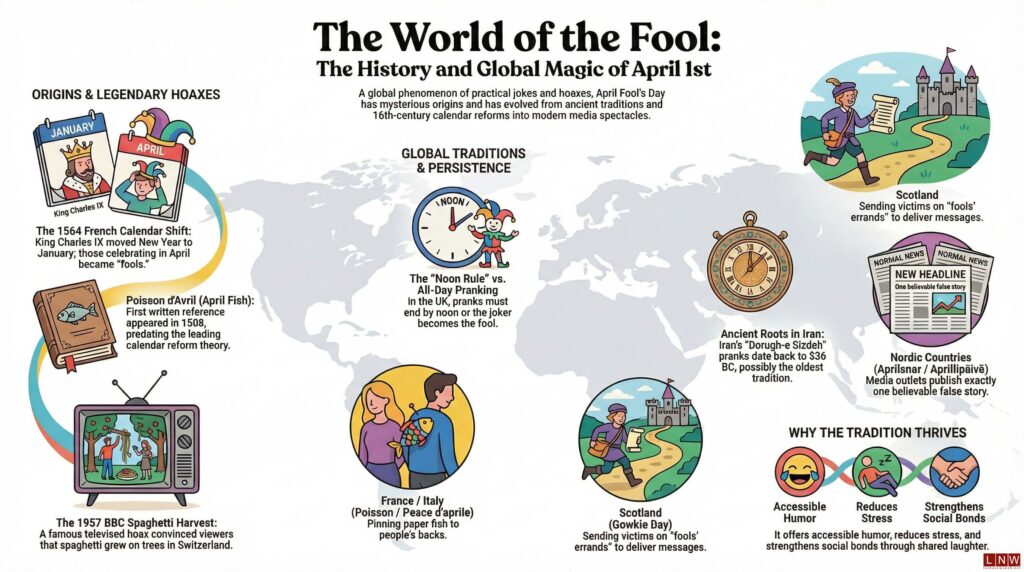
At its core, April Fool’s Day revolves around practical jokes, hoaxes, and playful pranks. These can range from simple tricks—such as pointing out an untied shoelace—to elaborate fabrications, including fake news stories published by reputable media organisations. In the United Kingdom and cultures influenced by it, tradition dictates that such pranks must end by noon; those who attempt them later risk becoming the “fool” themselves.
Despite its light-hearted nature, the day carries a surprisingly structured set of customs, many of which have been preserved across centuries.
The Mystery of Its Origins
The true beginnings of April Fool’s Day are uncertain, with historians unable to pinpoint a definitive source. However, the most widely accepted explanation traces its roots to 16th-century France.
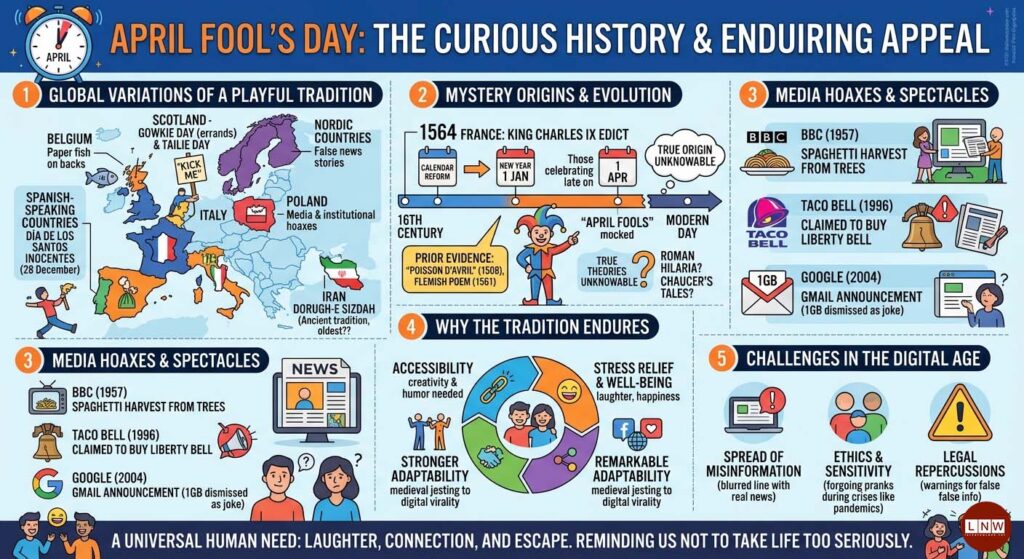
In 1564, King Charles IX introduced the Edict of Roussillon, which standardised the start of the new year to January 01. Prior to this reform, New Year celebrations were linked to Easter and often fell between late March and early April. Those who either resisted or were unaware of the change continued celebrating around April 01 and were subsequently mocked as “April fools”. Over time, this ridicule evolved into a tradition of pranking.
There is evidence suggesting that the custom predates the reform. A French reference to “poisson d’avril” (April fish) appears as early as 1508, while a 1561 Flemish poem describes sending individuals on foolish errands on April 01. These hints indicate that the spirit of the day may have existed even before it was formally recognised.
Other theories—ranging from ancient Roman festivals like Hilaria to interpretations of Chaucer’s Canterbury Tales—have been proposed, but none carry strong historical support. Ultimately, while the French calendar reform offers the most convincing explanation, the true origin of April Fool’s Day remains unknowable.
A Global Tapestry of Traditions
What makes April Fool’s Day particularly fascinating is its global reach and local variation. In France, Italy, and Belgium, the day is associated with the “April fish”, where people attach paper fish to others’ backs. Scotland celebrates “Gowkie Day”, sending victims on pointless errands, followed by “Tailie Day”, involving “kick me” signs.
In Poland, elaborate hoaxes are often orchestrated by institutions and media outlets, while Nordic countries traditionally publish a single false news story. Meanwhile, in Iran, a similar tradition known as Dorugh-e Sizdah takes place during Sizdah Be-dar, with roots dating back to around 536 BC—possibly making it the oldest prank-related celebration in the world.
Even outside April 01, similar customs exist. Spanish-speaking countries observe a comparable day of pranks on December 28, known as Día de los Santos Inocentes.
The Rise of Media Hoaxes
April Fool’s Day has also been shaped by the involvement of major institutions and corporations. Some of the most memorable pranks have come from trusted organisations, blurring the line between reality and fiction.
In 1957, the BBC famously aired a segment showing Swiss farmers harvesting spaghetti from trees, convincing many viewers. Decades later, in 1996, Taco Bell claimed it had purchased the Liberty Bell, prompting public outrage before the truth was revealed. Even technology giants have joined in; Google’s 2004 announcement of Gmail—with an unprecedented 1GB of storage—was initially dismissed as a joke.
These high-profile hoaxes have contributed significantly to the day’s modern identity, elevating it from personal pranks to large-scale spectacles.
Why the Tradition Endures
Despite its ambiguous origins, April Fool’s Day continues to thrive for several compelling reasons. Its accessibility is perhaps its greatest strength—participation requires nothing more than creativity and a sense of humour, making it inclusive across cultures, classes, and backgrounds.
Psychologically, the day offers a release from routine and stress. Laughter is widely recognised for its positive effects on mental well-being, while shared pranks can strengthen social bonds and create lasting memories. In an increasingly fast-paced and demanding world, such moments of levity are particularly valuable.
Moreover, the tradition has demonstrated remarkable adaptability. From medieval jesting to digital-age virality, April Fool’s Day has evolved alongside communication technologies. Social media now allows pranks to reach global audiences instantly, amplifying their impact.
Challenges in the Modern Era
However, the digital age has also introduced complications. The rapid spread of information online means that April Fool’s pranks can sometimes blur into misinformation. There have been instances where genuine news events were dismissed as jokes, with serious consequences.
Concerns over ethics and sensitivity have also emerged. During times of crisis—such as the COVID-19 pandemic—many organisations chose to forgo April Fool’s pranks altogether as a mark of respect. In some countries, authorities have even warned of legal repercussions for spreading false information under the guise of humour.
A Tradition That Refuses to Fade
From its uncertain beginnings in early modern Europe to its present-day global manifestations, April Fool’s Day has proven remarkably resilient. Its continued relevance lies not in its history, but in its ability to fulfil a universal human need: the desire for laughter, connection, and a temporary escape from seriousness.
As long as people value humour and creativity, April Fool’s Day is likely to endure—reminding us, if only for a moment, not to take life too seriously.
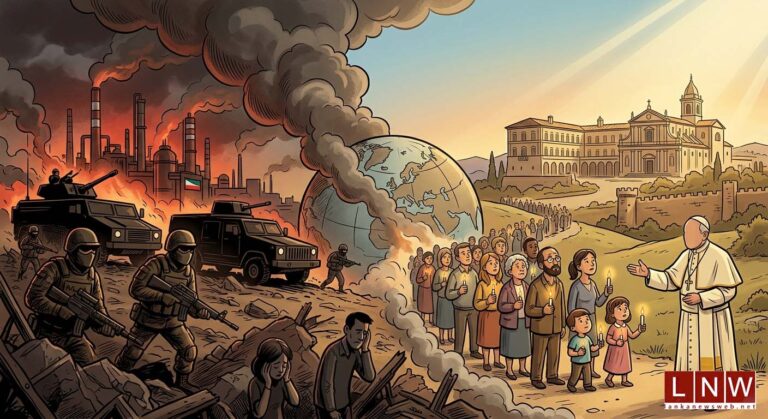
April 01, World (LNW): In an unusually direct intervention, Pope Leo XIV has urged President Donald Trump to seek a clear path towards ending the escalating conflict involving Iran, as violence across the region shows little sign of easing.
Speaking to reporters outside his summer residence at Castel Gandolfo, the pontiff expressed cautious optimism following recent remarks by the American leader suggesting a willingness to bring hostilities to a close. He stressed the importance of pursuing a strategy that would reduce bloodshed and prevent further destabilisation.
Traditionally measured in his public statements, the pope has in recent weeks adopted a more forthright tone regarding the crisis. His comments reflect growing concern within the Vatican over the humanitarian toll and the widening scope of the confrontation.
The conflict, which began in late February following coordinated strikes reportedly involving the United States and Israel, has since spread beyond its initial flashpoints. Analysts warn that continued escalation risks deepening regional instability, disrupting global energy markets, and placing further strain on an already fragile world economy.
Earlier this week, the pope delivered a stark message during a religious address, condemning those who pursue warfare while invoking faith. He suggested that moral accountability cannot be separated from political decisions that lead to widespread suffering.
Reiterating his appeal, the pontiff highlighted the mounting civilian casualties, including many children, and voiced hope that a ceasefire might be achieved before the approaching Easter. He concluded by calling on global leaders to reject violence and prioritise dialogue, warning that the continued pursuit of conflict would only deepen human tragedy.
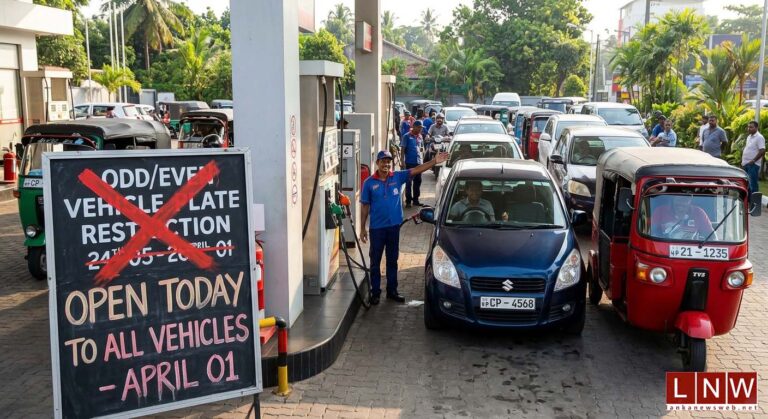
April 01, Colombo (LNW): The Ceylon Petroleum Corporation (CEYPETCO) has announced that motorists across the country will be permitted to obtain fuel today regardless of whether their vehicle registration numbers are odd or even, offering a brief reprieve from recent rationing measures.
According to CEYPETCO officials, the decision was made after a careful review of current fuel stocks, supply stability, and public demand. The move is expected to ease long queues at filling stations and provide some flexibility to commuters who have been constrained by the number plate system in recent weeks.
Managing Director Mayura Neththikumarage explained that the temporary relaxation is expected to improve public convenience while maintaining control over fuel distribution.