Colombo (LNW): The Government has decided to approve to purchase of 50 percent of the total supply stipulated in the 2024-2025 contract from the current supplier as a reorder of LP gas to ensure uninterrupted distribution in light of the ongoing restructuring process at Litro Gas Lanka.
It has short-listed transaction advisors to assist in the divestiture of Litro Gas Lanka Ltd including Litro Gas Terminals Ltd (LPG retailing).
For Litro the shortlisted advisors are Asia Securities, Capital Alliance, Platinum, Deloitte, PwC and NDB.
In the wake of divestiture of Litro Gas Lanka, the proposal to extend the LP Gas procuremnet to the present supplier reducing the quantity to 50 percent was presented by President Ranil Wickremesinghe in his capacity as the Finance Minister was approved by the Cabinet of Ministers.
The company’s contract for the supply of 280,000 tons of LP gas set to conclude on 31 December 2023, has prompted authorities to consider a strategic approach to maintain an uninterrupted gas supply.
Sri Lanka’s LP Gas shortage has been handled effectively with the procurement of 280,000 MT of LP from an Oman company OQ Trading last year.
Litro Gas Lanka has taken every necessary actionat that time to provide LP gas filled cylinders to consumers via its network consisting of 42 distributors, approximately 14,000 point-of-sale locations and 1,500 home delivery hubs, a company official said.
“The present plan involves the purchase of 50% of the total supply stipulated in the existing contract from the present supplier as a re-order.
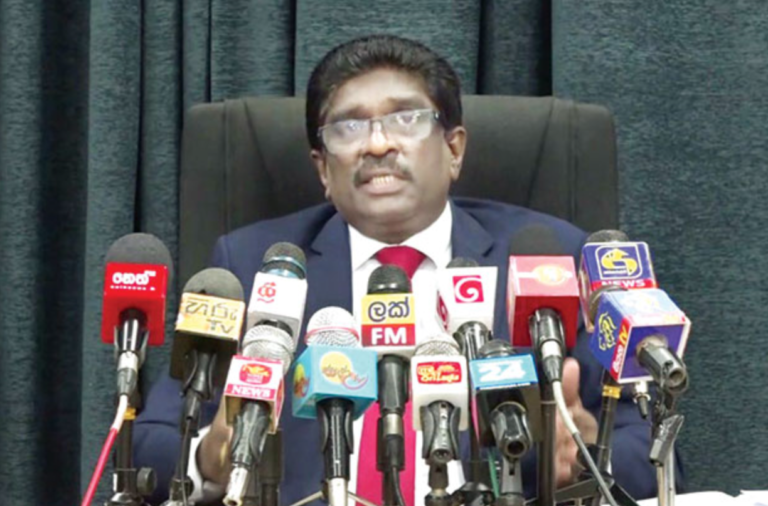
This move is intended to adhere to the Government’s procurement guidelines while also ensuring that the ongoing restructuring process remains unaffected,” Co-Cabinet Spokesman and Minister Bandula Gunawardena said at the post-Cabinet meeting media briefing.
Noting that Litro Gas Lanka’s restructuring process has already begun, he said it appears that signing additional agreements could hurt the streamlining process.
“This strategic manoeuvre is poised to safeguard both the interests of consumers and the successful completion of Litro Gas Lanka Company’s restructuring process,” Gunawardena added.
. As the national LPG provider, Litro Gas has a share of over 90% of the market. Industrial sectors such as the tile industry, confectionaries, rubber, glass, and the hospitality sector depend on LPG. As such, Litro has been key to Sri Lanka’s growth for over a century.
Litro Gas was amongst the many organisations that had to contend with a plethora of challenges.
Apart from the dollar shortage, the implementation of short-sighted policy meant that a once profitable organisation was now riddled with debt whilst suffering from major losses.
With the appointment of Muditha Peiris who served as the Managing Director of Litro on June 15, 2022, as the new Chairman of the company, the state-run gas supplier and Litro Gas Terminal Lanka (Pvt) Ltd have been turned round to a profitable venture.
Colombo (LNW): Sri Lanka plans to introduce an electric public transport system with 200 buses in the Western province around Colombo while seeking investors for the implementation of the novel venture Minister of Transport Bandula Gunawardana said.
The ministry of transport had earlier called for expressions of interest for 50 electric buses, but the investment cost of charging points made the project unviable, he said adding that feedback indicated that 200 to 500 buses are needed to make such a project viable.
This proposal of introducingelectric busses comes to light 122 years after the operating of tram public transport service using electric powred tramcars, and later it was replaced with trolley busses including double and single deckers to solve Colombo’s transport problems more efficiently.
Population of Colombo increased as over the years it had been the administrative and commercial centre rapidly developpig economically at that time.
Therefore, it was a very busy city, because the Port, schools, banks, shops, government offices, main hospitals and various educational institutions were available here. Hence, many people came to the Colombo city for their work.”
This effienttrolly bus transport system for comuters travelling in and out of Colombo city limits came to an abrupt end as aresult of the nationalization of private passenger transport service during SWRD Bandaranayake regime and the subsequent strike of trolly bus strike in 1964.
In the latest move to solve passenger trans port diffuclty in the Western province specially in Colombo City, the cabinet of ministers had now approved a 200-bus project, which will be run in collaboration with state-run Sri Lanka Transport Board.
“It will be a build operate transfer style project for a number of years,” Minister Gunawardana said, adding that any investor from Korea, or China or UK could express interest.
“They could also propose terms and the period.”The SLTB had no resources to invest in electric buses, he said. Once the investors earned back his return the assets will go the SLTB.
The buses will operate on existing SLTB routes in the Western province.Electric buses are found in India, Bangladesh, Singapore, South Korea and Japan.
When the electric buses come, 200 SLTB buses will be withdrawn from the Western province and deployed in provincial routes
During the good olden days the tramcar system was introduced in many countries in the beginning of the 20th century. Then it came to Ceylon.
On 11 January 1900 the Ceylon Electric Tramways opened the country’s first tramway for public service] with the ‘Grand Pass Route’ being the first section to open, followed by the ‘Borella (Maradana) Route’.
The tramways was eventually brought under Colombo Electric Tramways and Lighting Company Ltd after its formation in 1902, the same company that built the Pettah Power Station.
The Pettah Power Station was the second power station established in the country and was used to power the tram network, mercantile offices, government buildings and street lights.
The whole of the track on both routes was relaid with 43 kg (95 lb) rails between December 1905 and August 1907, with all joints being welded by thermite process.
The cultural arm of the High Commission of India in Colombo, Swami Vivekananda Cultural Centre (SVCC), will observe the World Sanskrit Day for the first time in Colombo on 31 August 2023.
2. An academic and cultural event will be held at the Bandaranaike Centre for International Studies, BMICH, Colombo on 31 August at 2 pm. On the occasion of the silver jubilee of SVCC, the event is being organised in collaboration with University of Kelaniya, University of Sri Jayewardenepura, Faculty of Indigenous Medicine of the University of Colombo, Buddhist and Pali University, Gampaha Wickramarachchi University of Indigenous Medicine, Bhiksu University, Units of Pirivena, National Institute of Education, University of Jaffna, University of Peradeniya, Eastern University and Bandaranaike Centre for International Studies.
3. The event will be inaugurated by the High Commissioner of India H.E Gopal Baglay and the State Minister for Higher Education Dr. Suren Raghavan will attend as the Chief Guest. The students and scholars of Sanskrit from across the country will participate in the event. Veteran Sanskrit scholars of Sri Lanka will also be felicitated on the occasion of World Sanskrit Day.
4. Sanskrit is among the oldest surviving languages and is a sacred language in several traditions. It is a repository of ancient knowledge including the Vedas and other renowned literary works such as the Yoga Shastra. Sanskrit is also known as the mother of many present day languages such as Hindi and Sinhala. The celebration of World Sanskrit Day will underscore the centuries old shared heritage of India and Sri Lanka.
Colombo (LNW): There is a possibility of enhancing the prevailing showery condition in south-western part of the Island during 01,02 and 03 of September, announced the Department of Meteorology in its daily weather forecast today (31).
Showers will occur at times in Western, Sabaragamuwa, Central and Northwestern provinces and in Galle and Matara districts, and fairly heavy showers about 75mm are likely at some places in Western and Sabaragamuwa provinces and in Galle and Matara districts, the statement added.
Showers or thundershowers will occur at several places in Eastern and Uva province and in Polonnaruwa, Vavuniya and Mullaitivu districts during the evening or night.
General public is kindly requested to take adequate precautions to minimise damages caused by temporary localised strong winds and lightning during thundershowers.
On the apparent southward relative motion of the sun, it is going to be directly over the latitudes of Sri Lanka during 28th of August to 07th of September in this year. The nearest towns of Sri Lanka over which the sun is overhead today (31) are Adappankulam (Vavuniya District), Dutuwewa(Anuradhapura District) and Nilaveli(Trincomalee District) about 12.11 noon.
PMD: In a significant diplomatic exchange, United States Senator Chris Van Hollen, currently on a visit to Sri Lanka, had a productive meeting with President Ranil Wickremesinghe. The meeting took place at the President’s House in Kandy yesterday afternoon (30).
The meeting was attended by Senior Advisor to the President on National Security and the Chief of Presidential Staff Mr. Sagala Ratnayaka and Julie Chung, the American Ambassador to Sri Lanka.
The CB has a practice of issuing such short publications as Guides to specific functions of the CB to make the general readers aware of the nature of such functions. However, this publication attempts to present highly conceptual and theoretical materials that are controversial among the economists and policymakers whereas its use to general readers is very limited.
Therefore, this article does not comment on diverse texts carried the publications but highlights a few of graphical materials of the publication to establish the technical inappropriateness of the publication.
My comments are given on following 7 figures presented in the publication.
Comment 1 – monetary policy evolution
The CB never followed such different approaches of the monetary policy as presented in figure 3 above. What the CB has ben pursued are the diverse policy actions permitted in the Monetary Law Act (MLA) since 1950. In general, the objective of the monetary policy is the stabilization of the economy through the use of appropriate policy actions and targets based on exchange rates, interest rates, credit flows, foreign currency flows, money printing, money supply, etc., as authorized in the MLA depending on sources of instabilities confronted by the economy from time to time.
The areas of instabilities are the general prices, national product and income, employment and international balance of payment. Therefore, the policy evolution presented in the publication in the form of different frameworks and operating targets is meaningless. Further, CB Annual Reports should have presented them as applicable if they were really pursued by the Monetary Board. Comment 2 – decision making process
The presentation in figure 4 above is incorrect in terms of relevant provisions and powers in the MLA. What is presented in the figure is only the internal divisions of CB operations. However, the Monetary Board and the CB Governor are the monetary policy decision-makers. Economic Research Department carries out only the research function to advise and guide the Monetary Board. Therefore, Monetary Policy Committee and Market Operations (MOC) Committee are unofficial groups.
For example, MOC has no mandate to decide on foreign exchange operations or domestic money market operations. They all are decided by the Governor. Departments of Domestic Operations and International Operations undertake only clerical jobs. That is why officials of those Departments are not responsible for chronic liquidity problems of domestic currency and foreign currency confronted by the economy at present.
Comment 3 – open market operations
This figure 8 is grossly incorrect. CB’s liquidity/money printing operations are carried out primarily based on targeting of the inter-bank overnight interest rates and not on short-term rates. The policy interest rates corridor and standing facilities window (overnight standing deposit and lending operations of the CB) are the primary sources of this liquidity managements.
Therefore, repos, reverse repos and outright trades of securities are only residual operations to mitigate the excessive pressures in the inter-bank market. Further, the differentiation between the temporary basis and permanent basis on the liquidity management is only a hypothetical presentation and the CB does not provide separate information in this regard.
Further, all these are hypothetically presented operations and there are no statistical models or internal controls under audit to decide the preferred policy interest rates, overnight inter-bank interest rates and required liquidity.
Comment 4 – effect of SRR
The presentation of the impact of changes in SRR as presented in figure 9 is based on the old text book hypothesis of money creation on bank deposit-taking business (i.e., lending money out of deposits after allocating funds for the SRR and additional reserves at hand).
However, in modern banking and monetary systems operating in electronic money and banking, credit is granted in bank book entries by creating deposits for borrowers whereas such deposits change hand without leaving the banking system. Therefore, deposits are created by bank credit business whereas deposits are a source of the wider liquidity management of banks among other liquidity sources such as borrowings and asset sales. Therefore, changes in SRR do not affect the ability of banks to create money/credit but affect the liquidity management. Banks also can borrow from the CB and maintain SRR in response changes in credit and deposits.
Comment 5 – purpose of OMO
The response of the teacher in the above figure is grossly incorrect. The CB conducts open market operations only for maintaining overnight inter-bank interest rates within the targets (i.e., policy interest rates corridor) through the changes in the inter-bank liquidity. Therefore, the CB does not announce any targets of wider money market interest rates and liquidity for the open market operations. In addition, the CB uses open market operations to fund the government fiscal operations too.
In the case of overnight inter-bank rates target, the immediate action is the standing facility window of the CB and, therefore, open market operation as already presented in figure 8 is only a subsidiary operation.
Comment 6 – transmission mechanism
The figure 10 is just a presentation of a hypothetical transmission of the monetary policy tools on the inflation or general prices through all other economic activities in the economy. However, the CB has never identified the time lags and the impact of policy changes on each economic sector/variable presented in the figure. Therefore, there is no any application of the presented transmission in the conduct of the monetary policy.
Further, there are several technical defects in the presentation.
First, the supply side of the economy that determines all economic activities and inflation is left out in the presentation. Therefore, the model assumes that inflation is fully determined by the demand side of the economy.
Second, the monetary policy also affects the supply side of modern monetary economies through credit flows to production activities. Therefore, it is incorrect to assume that the monetary policy affect inflation only through the demand side of the economy. In fact, in modern monetary economies, demand and supply cannot be separated with time lags as presented in the old monetary theory as they operate together.
Third, the presentation of inflation expectation as the second channel of the monetary policy to determine the inflation is highly exaggerated as nobody has any research to establish that monetary policy actions guide inflation expectations of the public in real economies. The assumption behind this is that the general public believe the monetary policy as the inflation buster and, therefore, they use the inflation target announced in the monetary policy as the expected inflation for their economic activities. This is a grossly incorrect presumptuousness as there is no real world data to prove that the inflation is always controlled by the monetary policy. The best example is the four-decade high inflationary pressured confronted by the global economy during the past two years.
Fourth, the CB’s objective required in the MLA is not the inflation control as presented in the above incorrect transmission figure, but is it is the wider stability of the economy covering economic and price stability and financial stability. Therefore, the CB cannot manipulate monetary policy actions as it wishes which exposes the economy to different crises such as the present foreign currency and debt crisis.
Comment 7 – effects of policy interest rates
The presentation given above to highlight the impact of policy interest rates is grossly incorrect. Policy interest rates are risk free interest rates of the CB on its secured overnight credit operations with banks.
However, interest rates on deposits and borrowing/lending in the banking system are determined by pricing of risks associated with underlying monetary/credit transactions. As such, changes in policy interest rates do not change bank risks involved in depositors and borrowers. Such risks are determined by factors outside risk free policy interest rates.
Therefore, depositors and borrowers do not behave in the manner presented in the figure and they are even not aware of policy interest rates. However, banks may tend to change deposit and lending interest rates in response to changes in policy interest rates if the CB passes unethical threats to banks.
The purpose of policy interest rates in fact is to influence overnight inter-bank interest rates through standing facilities.
Concluding Remarks
This booklet is the real evidence for incorrect premise presumptuously used by the CB for the conduct of its monetary policy. Therefore, the failure of the monetary policy to stabilize the economy as evident by the present economic crisis is not a surprise.
Therefore, relevant authorities need to assess the contents of such public documents and ensure that policy authorities perform their public duties as provided for in relevant legislations in the public interest only, irrespective of their presumptuous objectives and operational models.
(This article is released in the interest of participating in the professional dialogue to find out solutions to present economic crisis confronted by the general public consequent to the global Corona pandemic, subsequent economic disruptions and shocks both local and global and policy failures.)
P Samarasiri
Former Deputy Governor, Central Bank of Sri Lanka
(Former Director of Bank Supervision, Assistant Governor, Secretary to the Monetary Board and Compliance Officer of the Central Bank, Former Chairman of the Sri Lanka Accounting and Auditing Standards Board and Credit Information Bureau, Former Chairman and Vice Chairman of the Institute of Bankers of Sri Lanka, Former Member of the Securities and Exchange Commission and Insurance Regulatory Commission and the Author of 12 Economics and Banking Books and a large number of articles published.
The author holds BA Hons in Economics from University of Colombo, MA in Economics from University of Kansas, USA, and international training exposures in economic management and financial system regulation)
Whatever has gone wrong? After China rejoined the world economy in 1978, it became the most spectacular growth story in history. Farm reform, industrialisation and rising incomes lifted nearly 800m people out of extreme poverty. Having produced just a tenth as much as America in 1980, China’s economy is now about three-quarters the size. Yet instead of roaring back after the government abandoned its “zero-covid” policy at the end of 2022, it is lurching from one ditch to the next.
The economy grew at an annualised rate of just 3.2% in the second quarter, a disappointment that looks even worse given that, by one prominent estimate, America’s may be growing at almost 6%. House prices have fallen and property developers, who tend to sell houses before they are built, have hit the wall, scaring off buyers. Consumer spending, business investment and exports have all fallen short. And whereas much of the world battles inflation that is too high, China is suffering from the opposite problem: consumer prices fell in the year to July. Some analysts warn that China may enter a deflationary trap like Japan’s in the 1990s .
Yet in some ways Japanification is too mild a diagnosis of China’s ills. A chronic shortfall in growth would be worse in China because its people are poorer. Japan’s living standards were about 60% of America’s by 1990; China’s today are less than 20%. And, unlike Japan, China is also suffering from something more profound than weak demand and heavy debt. Many of its challenges stem from broader failures of its economic policymaking—which are getting worse as President Xi Jinping centralises power.
A decade or so ago China’s technocrats were seen almost as savants. First they presided over an economic marvel. Then China was the only big economy to respond to the global financial crisis of 2007-09 with sufficient stimulatory force—some commentators went as far as to say that China had saved the world economy. In the 2010s, every time the economy wobbled, officials defied predictions of calamity by cheapening credit, building infrastructure or stimulating the property market.
During each episode, however, public and private debts mounted. So did doubts about the sustainability of the housing boom and whether new infrastructure was really needed. Today policymakers are in a bind. Wisely, they do not want more white elephants or to reflate the property bubble. Nor can they do enough of the more desirable kinds of stimulus, such as pension spending and handouts to poor households to boost consumption, because Mr Xi has disavowed “welfarism” and the government seeks an official deficit of only 3% of gdp.
As a result, the response to the slowdown has been lacklustre. Policymakers are not even willing to cut interest rates much. On August 21st they disappointed investors with an underwhelming cut of 0.1 percentage points in the one-year lending rate.
This feeble response to tumbling growth and inflation is the latest in a series of policy errors. China’s foreign-policy swagger and its mercantilist industrial policy have aggravated an economic conflict with America. At home it has failed to deal adequately with incentives to speculate on housing and a system in which developers have such huge obligations that they are systemically important. Starting in 2020 regulators tanked markets by cracking down on successful consumer-technology firms that were deemed too unruly and monopolistic. During the pandemic, officials bought time with lockdowns but failed to use it to vaccinate enough people for a controlled exit, and then were overwhelmed by the highly contagious Omicron variant.
Why does the government keep making mistakes? One reason is that short-term growth is no longer the priority of the Chinese Communist Party (ccp). The signs are that Mr Xi believes China must prepare for sustained economic and, potentially, military conflict with America. Today, therefore, he emphasises China’s pursuit of national greatness, security and resilience. He is willing to make material sacrifices to achieve those goals, and to the extent he wants growth, it must be “high quality”.
Yet even by Mr Xi’s criteria, the ccp’s decisions are flawed. The collapse of the zero-covid policy undermined Mr Xi’s prestige. The attack on tech firms has scared off entrepreneurs. Should China fall into persistent deflation because the authorities refuse to boost consumption, debts will rise in real value and weigh more heavily on the economy. Above all, unless the ccp continues to raise living standards, it will weaken its grip on power and limit its ability to match America.
Mounting policy failures therefore look less like a new, self-sacrificing focus on national security, than plain bad decision-making. They have coincided with Mr Xi’s centralisation of power and his replacement of technocrats with loyalists in top jobs. China used to tolerate debate about its economy, but today it cajoles analysts into fake optimism. Recently it has stopped publishing unflattering data on youth unemployment and consumer confidence. The top ranks of government still contain plenty of talent, but it is naive to expect a bureaucracy to produce rational analysis or inventive ideas when the message from the top is that loyalty matters above all. Instead, decisions are increasingly governed by an ideology that fuses a left-wing suspicion of rich entrepreneurs with a right-wing reluctance to hand money to the idle poor.
The fact that China’s problems start at the top means they will persist. They may even worsen, as clumsy policymakers confront the economy’s mounting challenges. The population is ageing rapidly. America is increasingly hostile, and is trying to choke the parts of China’s economy, like chipmaking, that it sees as strategically significant. The more China catches up with America, the harder the gap will be to close further, because centralised economies are better at emulation than at innovation.
Liberals’ predictions about China have often betrayed wishful thinking. In the 2000s Western leaders mistakenly believed that trade, markets and growth would boost democracy and individual liberty. But China is now testing the reverse relationship: whether more autocracy damages the economy. The evidence is mounting that it does—and that after four decades of fast growth China is entering a period of disappointment.
It all began with a dare. Bindeshwar Pathak, then seven or so, wondered why the thin little woman who came through the back door sometimes, selling bamboo utensils to his Brahmin family, was called “untouchable”. He wondered why his grandmother sprinkled holy Ganga water over the floor where the woman had walked, and was told she had polluted it. So, one day, he dared to touch her sari, to see what would happen to his body.
Nothing happened to it. But uproar broke out in the house. They called in the pandit; he said Bindeshwar must be banished. His mother intervened to save him from that, but the rest of the priest’s remedy was almost as terrible. He had to plunge into cold Ganga water and, much worse, drink a mixture of milk, ghee, curd, cow urine and cow dung, to purify himself. Grandmother mixed it up fiercely and forced it down him.
Later he learned the reason for it. The poor, creeping woman belonged to the Valmiki community, the lowest caste. Its women mostly made a living by collecting night soil, cleaning it out from buckets and dry-pit toilets with a metal brush and pan but often with bare hands. They then carried it on their heads, in baskets, to some far place. For this work they were shunned, even after they had bathed. They could not use the wells unless some “clean” soul drew water for them. Shopkeepers threw them the goods they bought, and shook water over their money. It was fine to touch a dog, but not these human beings, who were exactly like him.
From 1950 the notion of “untouchable” was banned in India. It continued because their work did; because most Indians, if they had toilets in their homes, had pits that needed cleaning. The Pathak family did not employ anyone for that because, in their roomy and comfortable house, they had no toilet. It was not in the least unusual; most Indians had none then. Each day at 4am Bindeshwar would hear the women of the family set off to relieve themselves, safely in the dark and the trees.
So began his obsession with sanitation, which soon became a mission. The equation was simple. If Indians had proper flush toilets, they could clean them themselves. If the scavengers were not needed, they could, with training and support, find other jobs and lead dignified lives. India could become cleaner, healthier (since pit toilets spread disease) and, in time, more equal. Liberation of scavengers had been Mahatma Gandhi’s dream, even more strongly than independence; now it was his. Helping another human being was a prayer to God. In 1970 he set up an organisation, Sulabh Shauchalaya, meaning simply “accessible toilet”. Officials might not care to discuss his work over tea, but he sometimes felt he loved it more than his children or his wife.
The key to everything was his cheap pour-flush toilet, essentially a sieve-like clay-lined pit, flushable with only a litre of water, from which black- or grey-water leached into the soil and in which the dry solids gradually degraded into an odourless mulch that could fertilise fields. He designed it in 1969; in 1973 a local town in Bihar ordered two demonstration models for the municipal compound. They caught on. By 2020, 110m had been installed across the country. In 1974 he built India’s first public lavatory, with 48 seats, urinals and 20 bathrooms. A pee cost one rupee, a poo two. When it opened in the city of Patna, 500 people used it on the first day. By this year almost any bus stand, railway station or market had its own sulabh shauchalaya; around 20m used them each day. The revenue subsidised smaller community toilets out in the villages and toilets in schools, which encouraged girls to attend.
That success had been born in struggle, some of it deliberate. Shortly after university he spent three months among scavengers in the town of Bettiah, enduring with them the stench, the humiliation and the filth that leaked into his hair. One day he saw a small boy killed by a bull because, since he was untouchable, no one would help him. This redoubled his determination to make his mission national, though few listened. His family were appalled by his peculiar, shameful obsession; his father-in-law disowned him. He ran out of funds to build the toilets, and had to sell his wife’s ornaments to keep going.
As his inventions spread, however, so the scavengers began to rise. He established centres for the women where, in identical pale-blue saris, they could learn to read, write and open bank accounts, and could train as embroiderers and candlemakers. He also took them on trips to the Nathdwara temple, which banned such women, and the 5-star Maurya Sheraton restaurant in Delhi. At both places, those in charge begged him to take the women away; in his gentlest Gandhian mode, he refused. By this year, by his estimate, some 200,000 women had been liberated.
Others, too, needed his help. He took on the case of the 10,000 widows of Vrindavan, abandoned by their families to live on mattresses in decrepit government shelters in the city of Krishna’s childhood. Their condition was dire, but he gave them a little money each, medical care, and help to learn reading and writing. As with the scavengers, he also raised them up socially, urging them to swap their mourning white for forbidden bright clothes and to celebrate Holi, the festival of colour. He himself wore a scarlet jacket almost always, the vivid centre of crowds.
Awards came thick and fast. The prime minister, Narendra Modi, was a firm fan, declaring that toilets might be more important than temples. Change occurred; but large gaps remained. Although dry-pit toilets had been banned in 1993, two decades later 9.6m were still hand-emptied in India. In 2020 a fifth of the population still defecated in the open air, lining fields and cuttings as the dawn trains went past and dropped their own load of faeces on the track. And this in a country that was aiming to go to Mars.
Yet Dr Pathak was confident things would improve, if the will was there. One day all Indians, united in cleanliness, would worship together, dine together and bathe in the same pond. Even the likes of his grandmother would sit with the people they had thought filthy, and apply no Ganga water afterwards.
Opposition Leader Sajith Premadasa denounces reports that SJB and UNP will merge soon and that he would be PM under Ranil Wickremesinghe if the latter wins the next Presidential election: asserts he raises questions in Parliament on behalf of people who suffer from hunger & thirst: also says he doesn’t want to be like those Opposition MPs who get a monthly payment from the President.
Visiting US Senator Chris Van Hollen stresses the need to set up a single window to facilitate investments: also says US companies will be looking at whether or not the SL government is making progress on political reform and reconciliation as those are important contributing factors.
Former Chairperson of the Marine Environment Protection Authority Dharshani Lahandapura asks whether the govt has accepted the USD 878,000 (Rs 285 mn) offer made by the insurers of the sunken MV X-Press Pearl: says AG Sanjay Rajaratnam PC owes an explanation regarding the declaration by Justice Minister Wijeyadasa Rajapakse PC that the insurers had made such offer, plus Rs.16 mn: points out that the insurer’s offer should be compared with Sri Lanka’s claim of USD 6.2 bn.
President Ranil Wickremesinghe emphasises the Govt’s dedication to protect religious shrines & historical sites: announces the establishment of committees headed by religious leaders from their respective provinces aimed at addressing religious matters in the North & East.
Finance State Minister Ranjith Siyambalapitiya says the Govt will refund the 5% withholding tax levied on the interest and taxable income of senior citizens after Sept 10, if the interest income is less than Rs.100,000 per month.
National Aquatic Resources Research & Development Agency says all data collected by the Chinese geophysical and seismic survey vessel “Shi Yan 6” will be in the possession of NARA and that such data will be the property of the SL Govt.
Members of the Committee on Public Enterprises discuss a proposal with Officials of the University Grants Commission to introduce a procedure under which university dons will have to pay a bond fee when going overseas for studies and research, in order to prevent them from remaining in those countries.
Sri Lanka’s only privately-owned low-cost airline FitsAir adjudged Asia’s most punctual Airline in the month of July 2023: the airline presently operates flights to Chennai, Dubai, and Maldives.
Peradeniya University Deputy Vice Chancellor Professor Terrence Madujith says about 1.5 mn lunch sheets are being added daily to the country’s soil, although policy decisions had been made to avoid using polythene in order to safeguard the environment.
SL Cricket announces the squad for the Asia Cup as follows: Dasun Shanaka (C), Pathum Nissanka, Dimuth Karunaratne, Kusal Janith Perera, Kusal Mendis (VC), Charith Asalanka, Dhananjaya De Silva, Samara Samarawickrama, Maheesh Theeksana, Dunith Wellalage, Matheesa Pathirana, Kasun Rajitha, Dushan Hemantha, Binura Fernando, & Pramod Madushan.
In February 2008, the Australian Government recognised the Aboriginal and Torres Strait Islander peoples (the First Peoples) as ‘the oldest continuing cultures in human history’ in its National Apology to the Stolen Generations. However, the Constitution that needs to unite the Australian people does not mention or recognise the Aboriginal and Torres Strait Islander peoples.
On 14 October 2023, Australians will vote in a Referendum on whether to amend the Constitution to recognize the First Peoples. The proposed amendment will alter the Constitution to recognize the First Peoples of Australia by establishing an Aboriginal and Torres Strait Islander Voice.
The Voice will be an independent and permanent advisory body that will provide advice to the Australian Parliament and Government on policies and projects that affect the Aboriginal and Torres Strait Islander peoples’ lives. A YES vote will bring about a historic change that could deliver them better health, education, jobs, and the long overdue justice they deserve.
We are aware that a YES vote on its own will not provide a holistic solution to addressing the problems of the First Peoples. Nevertheless, it will pave the way for a better consultation process with the First Peoples, who have been denied a just share of socioeconomic benefits that befits a wealthy country like Australia.
As has been done in New Zealand, Canada and the United States, much more progress can be achieved by making a treaty arrangement between the First Peoples and the rest of Australia. However, the present economic and political environment in Australia does not appear conducive to making such arrangements. Given these circumstances, supporting the YES campaign for the VOICE Referendum would be the most decent and appropriate thing to do.
Many of us have migrated to Australia due to a lack of socioeconomic, political, and human rights in the countries where we were born. The lack of human dignity and respect for our lives, equitable opportunities for employment and promotions, and the lack of appropriate educational opportunities for our children forced us to make this choice. Whatever the reason is, we moved to Australia because we were looking for better opportunities and a fair go.
Ironically, for the many First Peoples of this country, such opportunities, fair go, and natural justice are denied due to the lack of truly participatory democracy. Many important decisions are made for them by ‘others’ who have no understanding of their cultures, beliefs and practices. Only recognition and consultation will provide a better way to reach solutions that may address those issues effectively. And that is the objective of the YES campaign of the VOICE Referendum.
On the other hand, most of those who support the NO campaign base their arguments on misrepresentation, misinformation, fabrication, and deception. They claim that the ‘Aboriginal and Torres Strait Islander Voice to Parliament’ will cause division in the country, give special treatment for the First Peoples, and is dangerous!
The fact of the matter is, based on any socioeconomic indicators, Australia is a fractured country politically and culturally, with the First Peoples suffering profound socioeconomic inequalities and lack of opportunities. Some say the Voice advisory body won’t be representative enough and won’t deliver better outcomes. And some others take a hardline and say, Treaty first.
The Uluru Statement from the Heart, a historic consensus on the way forward issued by the First Nations peoples whose elders and leaders gathered at the 2017 National Constitutional Convention, states: “We seek constitutional reforms to empower our people and take a rightful place in our own country. When we have power over our destiny our children will flourish. They will walk in two worlds and their culture will be a gift to their country.”
At present, more than 50 percent of the Indigenous people are under 25 years old. They are 24 times more likely to be locked up in prisons than their neighbours and more likely to have experienced homelessness than to hold an undergraduate degree. The suicide rate for the Indigenous people is almost twice the rate of fellow Australians. While the current life expectancy for Australians is 84 years, most Indigenous people die by the time they reach 70, and most of these are preventable deaths. According to Minister for Indigenous Australians Linda Burney, just 4 out of 19 closing the gap targets are “on track”.
So, as migrants who value equality, dignity and respect, it is our duty and responsibility to advocate the same opportunities and values for the First Peoples of Australia; and to ask those in authority to take effective measures to address the existing socioeconomic disparities from which the First Peoples are continuing to suffer.
The fearmongering, ignorance, selfishness and idealism with which the ‘NO’ camp is approaching this issue is quite deplorable. We are better than this. The Australian Advocacy for Good Governance in Sri Lanka (AAGGSL) will stand in solidarity with all those people and entities who support the ‘YES’ campaign. And we urge the Australian voters to:
Have courage and vote YES.
Choose goodness and hope over fear and trepidation.
Do the right thing and feel immense pride.
Yours sincerely
Signed Dr Lionel Bopage President Australian Advocacy for Good Governance in Sri Lanka (AAGGSL)
Signed Mr Antony Gratian Secretary Australian Advocacy for Good Governance in Sri Lanka (AAGGSL)