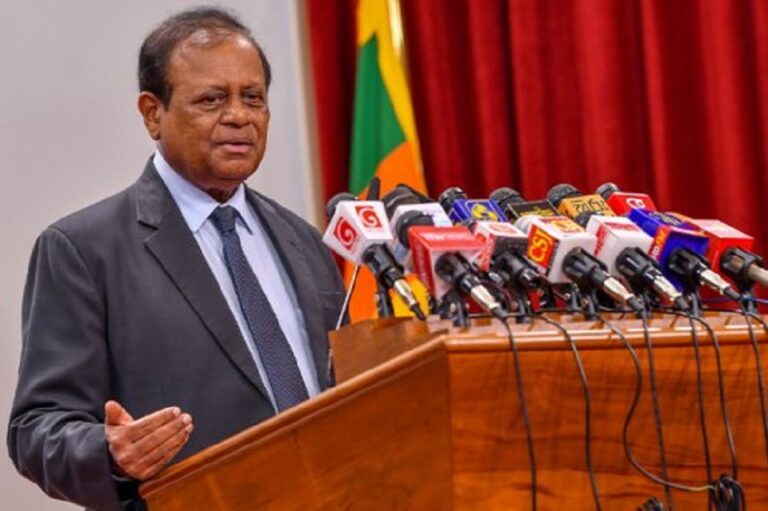
In a recent session of Parliament, Education Minister Dr. Susil Premajayantha addressed concerns regarding the recruitment of Principals and teachers in schools. He highlighted that a six-month interim order has led to difficulties in the recruitment process, causing injustices to children’s education. The Minister was responding to questions raised by SJB MP Rohini Kumari Wijeratne.
Dr. Premajayantha emphasized the need for a time limit on interim orders, suggesting that amendments to the Civil Procedure Code are necessary to rectify this issue. He urged the Minister of Justice to consider adjusting the Code of Civil Procedure to specify the validity period of interim orders. He expressed concern that some individuals attempt to extend interim orders indefinitely, leading to disruptions in educational operations.
The Minister underscored the seriousness of the violation of children’s right to education due to these legal disputes. He compared cases related to the recruitment of teachers and principals to land cases, noting that the impact on children’s education is distinctively significant.
Regarding teacher vacancies, Dr. Premajayantha disclosed that there are currently 32,000 vacant positions. He mentioned that three years ago, 22,000 individuals were recruited as teachers without proper transparency during the recruitment of development officers to the public service. These appointments lacked a proper system and training. Subsequently, legal challenges emerged when efforts were made to provide formal teacher education to these appointees. The resulting interim orders have impeded the recruitment process, affecting children’s access to education.
Dr. Premajayantha conveyed that Provincial Councils will soon gain authority to appoint graduates to replace retired and departing teachers. This move aims to address the shortage of educators in schools. The Minister assured that despite obstacles, steps will be taken to ensure an adequate number of teachers for children, particularly in subjects like science, technology, and English.
He also highlighted the impact of inappropriate teacher assignments on education quality. For instance, assigning an individual with a degree in archaeology to teach in the primary section of a school could undermine the formal education structure. He noted that both the informal teacher placement and the effects of the ongoing pandemic have disrupted education activities in primary sections.
Additionally, the Minister brought attention to a circular issued by the Central Provincial Education Director, which suspended annual salary increases for Principals who fail to achieve a 90 percent pass rate in the GCE Ordinary Level examination. Dr. Premajayantha asserted that policy decisions related to education are the purview of the Ministry of Education, and while provincial education directors can handle administrative matters, they should not make such decisions unilaterally. He emphasized the importance of collaboration and communication between the Ministry and provincial education authorities.
Justice Minister Dr. Wijeyadasa Rajapakshe responded to the issue, suggesting that discussions could be held to establish a policy for interim orders issued by courts. He expressed willingness to consider potential adjustments to address the challenges outlined by Dr. Premajayantha.
Colombo (LNW): The Sports Minister of Sri Lanka and the Stabilization Committee appointed by him are becoming contributors to the tradition of neck squeezing instead of hugging and kissing the Asia Rugby. Lasitha Gunaratne of the National Sports Council is the main factor that motivated the Asia President to strangle the neck under the guise of kissing. It is very hilarious in one sense that today he is also a facilitator of the crime he committed. The funniest thing is that he has also become an advisor to the minister.
Asanga Senaviratne is maintains proximity to the Asia President and is among those who are keeping silent regarding the disruption of the journey of Sri Lanka rugby by hiding all these historical facts as required by the Asia President. Asanga was one of the individuals who opposed Lasitha Gunaratne, advocating that Sri Lanka should cast its vote in favor of the present Asia President. The other person who held the same opinion is Rizly Illyas, who is targeting that hatred in the hateful matter of banning Sri Lankan rugby by the Asia President today.
While Rizly and Asanga advocated for voting in favor of the incumbent Asian president, Lasitha cast his vote for the Japanese candidate. The Stabilization Committee, appointed by the Sri Lankan Minister, lent its support to Lasitha’s decision back then, and currently, also there’s a requirement for the Asia Chairman. According to this matter, the next thing to consider is how the Asian president can use the hatred of not voting for him to ban Sri Lanka in a different way.
Asanga Senaviratne stands as the individual with the closest proximity to the Asia President. Attaining power through an election to be a difficult for him. Because he is the central figure in the allegation of facilitating the participation of foreign players in Sri Lanka’s team. The imposed fine of 50,000 pounds still continues on Sri Lanka rugby as a substantial burden.
During his tenure as president, Lasitha was one of the primary contributors to the financial indebtedness faced by Sri Lanka Rugby. In this scenario, aside from the rugby club’s aspiration to diminish the influence of a handful of sports clubs and seize authority, the alternative avenue for the group with negligible popularity is to establish an interim committee through the utilization of sports legislation under the minister’s jurisdiction.
That is why the interim committee that has come now shows a strong desire to withdraw the vote contribution from the current situation to make a legal way for it. The present voting involvement is an extension of a system prepared by a New Zealander regarding matters such as Sri Lanka’s rugger constitution and the determination of its voters, not one hundred percent prepared by the current administration.
The Asia president with the youngest rugby membership in their country, is using Sri Lankans to attack Sri Lanka rugby which has exceeded one hundred and forty years . That is why Namal Rajapaksa when he was the sports minister, aimed to establish Sri Lanka’s rugby as a prominent brand within his family, is trying to connect Asanga Senaviratne to the rugby administration as a president of an advisory council to the rugby administration, who worked independently without attaching his political role to rugby.
This presented a favorable chance for the Asia President to address the concerns pertaining to Sri Lankan rugby and for Minister Namal Rajapakse to extend his influence over the realm of Sri Lankan rugby through his directives. However, Sri Lankan rugby maintained its integrity by resisting external pressures, upholding its autonomy and striving to safeguard its independence.
Minister Namal Rajapakse gives the order to dissolve Sri Lankan Rugby even if refuses to bow his head and then snap his neck, it will not succeed in the eyes of the law.
Nonetheless, the Asia President remains aligned with the Sports Minister of Sri Lanka, and in an online conversation, the President of Sri Lanka Rugby personally assigned blame to the Asia President.
How should a sports minister of that country take the blame for the influence of the Asia president by improperly using his presidential powers due to a blaming conversation that accuses of influencing the independence of the sport in his country? As an act of standing up for the country, or if not, by punishing the president of the Sri Lanka Rugby for not being a shy goat to the Asia president?
The second scenario has transpired. They are dressing it up in the garb of patriotism and turning it into a celebration in the guise of racism. This exemplifies the nature of the Rajapaksa faction. There is no dispute regarding the affluence and benevolence of the prominent Muslim community. But where the lower society is connected, they have the desire to get votes by stoking the fires and inflaming the ignorance of the oppressed majority.
Even the people who are going to do praises for it do not see falling on their feet in front of the Asian president as dancing to the verse of a Muslim. Because of this peculiar drama, the final act is drawing near for rugby within the Asia Games.
The Supreme Court has extended its reach to encompass the withdrawal of the Stabilization Committee as part of its verdict, citing various reasons and thus causing a delay in the committee’s decision-making process. As a consequence of this delay, the participation of Sri Lankan rugby in the Asian Games is likely to be hindered.
As one of its steps, citing the Asian Federation, the news started spreading on four hands about the plans to run Rugby without Sri Lanka. This is happening even though the International Federation has said that the rugby team can participate through the National Olympic Committee.
However, the head of the Olympic Council of Asia has taken actions that seem to undermine this news. Vinod Kumar Tiwari, the Acting Director General of the Olympic Council of Asia, has dispatched a letter to Benjamin Van Rooyen, the Acting Chief Executive Officer of Asia Rugby, urging the implementation of essential measures to ensure the inclusion of Sri Lanka.
As per insider information, it’s been reported that the President of the National Olympic Committee has likewise forwarded a comparable letter to the World Rugby. Tiwari has conveyed to the Asian executive that they have agreed for the participate of the Sri Lankan rugby team under the flag of the Olympic Council of Asia. Nevertheless, he also mentioned that in the event the team secures a medal, it will be credited to Sri Lanka’s medal count.
This is the first uprising that the Olympic Council of Asia was expected to correct in the face of the actions of the Asian Rugby Association. Tiwari points out how the true love of the game should be awakened when those pretending to love Sri Lankan sports and rugby as much as the international side embrace the wishes of the Asia Rugby President beyond the country. Furthermore, it is difficult to clarify what the case that the Stabilization Committee is presenting to the Supreme Court. If the Court of Appeal has stopped the pressure from the minister and ministry officials and if the World Rugby has banned rugby in Sri Lanka as political interference, how can the stabilization committee appointed on the basis of the minister’s political authority have legal validity?
The letters sent by the World Rugby to inform Sri Lanka, they are addressed to the Executive Director of the Sri Lanka Rugby Administration, which was dissolved by the Minister.
Accordingly, they have stated because of the Stabilization Committee is a political intervention, will not involve the Stabilization Committee in Sri Lanka’s rugger-related affairs.
The current situation is that the Stabilization Committee is reporting to the court through its lawyers that it can get money for Asia Rugby through the Ministry headed by the Minister, the leaking of judicial records cast doubt on the independence of the judiciary.
Even though the World Rugby does not accept it, the National Olympic Committee of the country does not accept it and even though the Court of Appeal has told the Minister to refrain from interfering with rugby, it is clear from all these facts that the intervention of the Minister should not be allowed, if the interim committee appointed by him is valid, then he will be giving hints about the support of the Minister while arguing in the courts. Not all wrong?
Somehow, if the National Olympic Committee goes to the Asia Rugby tournament with Tiwari’s blessing, they do not see a crisis in contacting the official board of Sri Lanka Rugby, which the minister dismissed as resource persons, but which they accepted. In such a scenario, the Ministry cannot avoid its responsibility to support and facilitate those rugby-related activities.
The court’s ruling doesn’t dictate the prohibition of providing facilities for rugby as a national sport, unless it directly undermines its independence. Therefore, if anyone behaves by defining the decision of the court as harmful to the sport, it is also possible that it will be an insult to the law in a certain way.
At the time of writing this note, this is going to be discussed in the Sri Lanka Cricket parliamentary Chamber. However, why isn’t the matter of the Rugby issue and the potential repercussions for Rugby losing the Asia Series being considered by the Supreme Council?
For nearly three years now, the political sports authority of Sri Lanka and the Asia President have wronged the pressure on Rugby, and to find out that the reason for the Sri Lankan protest of the Asia President is the violation of an election promise by a person in the national sports council of the minister, and the former 2018 who is still in a ministerial chair today a sports minister should have evidence.
Parliament has the ability to bring this history to the fore along with the letter sent to that minister in a way that the Asia President threatens in some way. If this matter is deliberated within the Supreme Council of a nation, numerous undisclosed facts have the potential to come to light.
Armed with this information, inquiries could be directed towards the Board of Asia, questioning the reasonability of associating with an individual who incurred a fine of £50,000 for allowing foreign players to play in Sri Lanka. Additionally, the question arises as to why Sri Lanka Rugby continues to bear this expense year after year. Could it not be feasible to recoup a portion of that sum from the officials who made the decisions that led to this situation? How is it that they are currently able to travel abroad without encountering any hindrances through the Immigration and Emigration regulations?
Today, Lasitha Gunaratne, a member of the National Sports Council, displayed frustration due to not casting a vote in favor of the incumbent Asia President during the Asia President’s appointment. Furthermore, hasn’t the Asia President also dispatched a letter to a minister containing certain threats related to Sri Lanka rugby?
Furthermore, it’s worth discussing the ethical considerations surrounding the inclusion of a president who was previously responsible for incurring a fine of £50,000 upon Sri Lanka, as the President of the committee appointed by former Sports Minister Namal Rajapaksa to provide advice on rugby matters.
Taking into account the past 15 years, it’s possible to highlight the financial losses (debt) incurred by Sri Lanka Rugby, can be pointed out according to the tenure of each president. We can also delve into the contributions made by each individual to prevent and mitigate the accrued debt. Indeed, it’s imperative for the Parliament to initiate inquiries into various aspects such as the organization and non-organization of tournaments, the initiation of new competitions, the expansion of rugby, as well as the notable accomplishments and distinctiveness of the outcomes on the international stage.
Rather than engaging in direct negotiations with local rugby sponsors to agree their sponsorship terms for Sri Lanka Rugby, the sports minister of the country involved one of their representatives in their sports sponsorship program and added them to the sponsorship of the Asia Rugby and became a chief guest at the award ceremony.
However, in this scenario, Sri Lankan rugby managed to attract a new set of supporters by conducting themselves in a manner that inspired confidence in their endeavors. The fact that the Asia President can assemble a group of Sri Lankans who are striving diligently to prevent the country from achieving an Asia medal by taking it to court for nothing within the context of rugby reflects the unfortunate reality experienced by certain citizens of this nation.
We should pose the question to the 225 representatives in the Parliament, “Are you all friends?” in light of the Parliament seemingly evading responsibility for this issue. Those individuals who possess evidence of the prolonged resentment of the Asia President, yet among these 225 representatives, prioritize personal alliances over the welfare of a country’s sport and jeopardize the chance of securing a potential medal, should unequivocally be told, “Go to hell.”
In a recent announcement, Dr. Nandalal Weerasinghe, the Governor of Sri Lanka’s Central Bank, projected that the nation is poised to draw in more than USD 13 billion in foreign receipts this year. A substantial driver of this growth is expected to be the influx of foreign remittances from Sri Lankan workers abroad, which is forecasted to surpass USD 10 billion by the end of the year. Dr. Weerasinghe noted that the country presently receives around USD 500 million each month in foreign remittances.
The Governor highlighted that the reopening of the tourism sector will also contribute significantly, with Sri Lanka projected to accrue approximately USD 2.3 billion in foreign receipts from tourism activities. Additionally, earnings from exports and other sectors are predicted to exceed the USD one billion threshold.
Dr. Weerasinghe emphasized that these combined factors are positioned to push the total foreign receipts beyond USD 13 billion this year. Furthermore, he outlined plans to augment the foreign reserves from their current USD 3.8 billion to approximately USD 10 billion in the foreseeable future.
Commenting on the country’s financial restructuring, the Governor indicated that Sri Lanka’s annual debt payments have been significantly reduced, from a previous USD 8 billion per year to around USD 4 billion, following debt restructuring efforts guided by the International Monetary Fund (IMF). He mentioned that the IMF had already approved an initial tranche of USD 330 million even before the restructuring process was initiated.
Dr. Weerasinghe assured that despite some areas still needing attention, Sri Lanka has made substantial progress toward fulfilling key obligations on the IMF agenda, which bodes well for the release of the second tranche during the IMF’s upcoming visit in September.
He also revealed that Sri Lanka has commenced debt repayments to bilateral donors, with USD 50 million already released to Bangladesh. To promote economic stability, the Central Bank of Sri Lanka (CBSL) will issue a new directive mandating a minimum 3% reduction in interest rates by banks. The CBSL Governor also stipulated that interest rates for pawn lending should be set at 18%, while credit card interest rates should be capped at 28%. Importantly, these rate adjustments will initially apply exclusively to banking institutions. On a positive note, non-performing loans, which had risen from approximately 11.3% to 13.5%, are gradually on the decline once more.
Showers or thundershowers will occur at a few places in Uva provinces and in Ampara, Batticaloa and Polonnaruwa districts during the evening or night.
A few showers may occur in Western province and in Rathnapura, Galle and Matara districts.
Mainly fair weather will prevail elsewhere over the Island.
General public is kindly requested to take adequate precautions to minimize damages caused by temporary localized strong winds and lightning during thundershowers.
Today, it is hard to open a newspaper or watch a newscast without cringing at how little has changed in our political psyche since the rout of Gotabaya Rajapaksa just over a year ago. Of course, with Rajapaksa himself out of power, Sri Lanka is no longer careening towards the edge of a cliff, but things could be so much better if only our political class learned any lessons from the Aragalaya.
Across both sides of the aisle, we see the same faces, giving the same stump speeches, making the same demands, and remaining obsessed with eking out more votes. To borrow a phrase from James Freeman Clarke, they are obsessed with the next election, and unconcerned about the plight of future generations.
Nowhere is this clearer than the petulance with which most political parties have responded to President Ranil Wickremasinghe’s recent call to give serious consideration to the devolution of executive power to the provinces of Sri Lanka. The nationalists are clutching their pearls at the very idea of power sharing. When they hear “provinces”, they think “Tamils and Muslims”. Some of them say “we” won “the war”, and so power can stay where it is. Others take the position that no matter how much a policy helps the Sinhalese, it should not be done if it could also help minority communities to thrive. As boneheaded and myopic as the nationalist stances are, at least they have a stance. Liberals, such as those in the SJB whose leader and party platform have consistently stood for a full implementation of the 13th amendment in writing, seem unable to rise to the moment and articulate a stand in support of their own policy, seeing instead an opportunity to undermine a President who stuck his neck out by taking a bold and perhaps unpopular position. As the theatre continues, there is no one left to explain these concepts to ordinary Sri Lankans in simple words. To a population tired of hearing the same speeches over and over again, no one has broken out of the noise to articulate the potential strategies of power sharing and their associated risks and rewards. It is in moments like these that Sri Lanka most misses Mangala Samaraweera, who died two years ago today. Mangala was a political visionary who saw what others did not, and who in his final years graduated from politics to statesmanship. In those years, his entire priority was always the next generation, and not the next election. When today’s politicians discuss devolution, they harp on about the war, about India, the 13th amendment, Indo-Lanka Accord, colonialism or the LTTE. They are obsessed with history and frame our national conversation around the past, where if Mangala were here he would focus our attention squarely on the future. By the time President Wickremasinghe decided to raise the spectre of devolution once again, he had no doubt steeled himself for the pantomime that would follow, but there was nothing he could do about it, because he has no Mangala to wake us up to reality. He would have spoken plainly and fearlessly, unbowed by the terror tactics of extremists and nationalists. If Mangala was here, he would ask us to forget about the past, and just think of our predicament today. We have a central government that failed so catastrophically that its leader was ousted in the first successful revolution in Sri Lanka’s history. We have defaulted on our loans. We have shortages of food, medicine and almost everything else. Sri Lankans are giving up on their country, packing up and leaving in droves. However much things have improved since the Rajapaksas were shown the door, much more needs to be done to secure our future. It is no secret that the Rajapaksas don’t want the country to succeed when one of them is not at the helm. Their support of the President is nothing but a tactic to stall for time, to rebuild their brand and return to power.
Sri Lanka’s policies on any number of issues swing violently from one direction to another from election to election, and through it all, our core administrative infrastructure, from our schools to our hospitals to our justice system and utilities, all continue to stagnate as the world moves on. Potential investors who have visited Sri Lanka for decades hear the same ideas with the same zeal that they did 20 years ago, and still find that they can get nothing done without political patronage.
Mangala would challenge us to ask whether this path of decline is inevitable, or whether we could radically reimagine the way our country worked. Imagine, for example, if each of the nine provinces was indeed self-governing. Imagine for a moment that each province had its own executive and legislators, and its own set of policies around how to administer their schools, universities, hospitals, police forces or even agricultural policies.
Would crime and corruption still be rampant island-wide, or would at least one province take this problem seriously and elect a chief minister devoted to cleaning up that province’s public sector and making it the safest province in the country?
Would it still be impossible to seek justice in our court system without being able to both afford the services of a President’s Counsel and wait for years as your case was postponed for no apparent reason? Or would at least one province elect leaders who would adopt best practices from around the world to digitize magistrate’s courts, bar unnecessary delays and pride itself on hearing and concluding cases faster than anywhere else in the country? Might that same hypothetical province also suggest guidelines that encourage judges to rely on an increasingly large body of jurisprudence to avoid relitigating the same issues over and over again?
Is it possible that under a devolved government, Gotabaya Rajapaksa may not have been able to choke off the agriculture industry nationwide? Perhaps one brave governor and her provincial government may have negotiated directly with a benefactor to get its farmers the tools they needed to tend to their crops and avoid a rice shortage.
Could another province have decided that it would single-handedly stem our national brain drain by setting aside tracts of land and other incentives for cutting edge universities through public-private partnerships, perhaps to lead the world in research into generative artificial intelligence, while inviting the brightest minds in the world to live and work on their campuses as “digital nomads” under a tax-advantaged incentive scheme? Indeed, might that same province have decided that their primary and secondary schools would be the envy of Sri Lanka, from basic necessities like clean toilets to transparent and accountable admission systems? Would there be anything to prevent yet another province from digitizing its land records, perhaps on a public and transparent blockchain that puts an end to title deed fraud and gives investors peace of mind that they will not be tied up in court for decades over scams that boggle the imagination?
When you imagine the possibilities of decentralized government, it becomes clear that the real risk of devolution is not to any majority or minority religion or ethnic group. The real risk is to the “cabinet minister” political class, the revolving array of “senior politicians” who take turns between the halls of power and opposition benches, sucking up all the oxygen in the room and leaving no opportunity for the next generation of politicians to try their hand at governance.
In practice, “non-cabinet ministers”, “state ministers”, “deputy ministers” or “monitoring MPs” have no real or practical power to make a difference and are just positions to build names and own isolated pet projects or initiatives that succeed or fail based on the patronage of their cabinet minister or president.
If we had serious provincial government, Mangala would encourage every promising young leader to become a chief minister or provincial minister instead of hovering around Colombo. He would push them to try new ideas and bold initiatives to solve problems that had not yet been solved elsewhere in the country. Just like he opened competition in the telecom sector in the 1990s, he would have opened up competition among the different provinces in Sri Lanka.
Mangala was always sympathetic to the plight of ethnic and religious minorities feeling like they were treated like second class citizens. But his political secret and superweapon was that he always saw and knew that the mechanisms that minority stakeholders sought were the very same mechanisms that could unleash the full economic potential of the south and propel Sri Lanka past communal thinking. Just as winning ideas in the private sector are emulated by the competition, provinces would borrow the best ideas from each other and thrive. Those that failed would be punished by their electorates. The saddest thing about Mangala’s vision is that it was never a secret to his long-time political allies, including the leadership of the UNP and SJB. It is well known that Mangala broke away from the SJB because he feared the party would become a “Rajapaksa lite” and not a true liberal alternative force. Now the SJB, from its leader Sajith Premadasa down, have an opportunity to seize the moment, extend an authentic hand of support to the President, and put its own ideas before the people.
Especially for a party so full of promising young leaders, the SJB has nothing to lose and everything to gain from promoting a system that would allow its best and brightest to fan out across the country and drive real change and give people real hope. Ranil Wickremasinghe, the solitary liberal voice in his government, could not have held out a longer olive branch to the opposition, signalling his support for an unpopular policy direction that both he and the SJB leadership know would be the right thing to do.
They are sitting on a political masterstroke that would require little more than endorsing and standing up for ideas they themselves believe in. The SJB is a party that has sought credibility and relevance since its birth, and it finally has an opportunity for its senior leaders to shine. From Sajith Premadasa to Eran Wickremaratne to Harsha De Silva and the other liberal voices in the party, this is their chance to show that they are not afraid of the Weerawansas, Ratanas and Gnanasaras, and to channel their inner Mangalas to take an alternative view to the people and to take a stand against racism.
All his life, Mangala Samaraweera was never afraid to speak. Others were afraid to let him be heard. He was a strong, charismatic, articulate, and credible voice who lent his formidable stature to any leader he backed. If anyone proposed the correct policy, he would have endorsed it without a second thought. But today, there is no Mangala to hide behind. It is up to the few remaining statesmen to lead the way, inspire the people and work with whoever they must in order to make sure that the Rajapaksas never raise their head again.
The State Minister for Education Aravinda Kumar announced plans for the recruitment of eight thousand teachers for government schools in the near future. He indicated that this recruitment will include 5,500 graduate teachers and 2,500 teachers specializing in second language instruction.
These statements were made by the State Minister of Education, Mr. Aravinda Kumar, during his participation in a press conference at the Presidential Media Centre (PMD) August (23) under the theme ‘Collective Path to a stable country’.
State Education Minister Aravinda Kumar further said;
Despite facing economic challenges in the past, the government has shown heightened dedication to matters within the Ministry of Education. President Ranil Wickremesinghe has played a pivotal role in making significant decisions aimed at advancing the educational prospects of the nation’s youth.
President Wickremesinghe consistently emphasizes the importance of nurturing the education of the country’s children and advocates for essential reforms in this domain. In alignment with this vision, the ministry is meticulously executing a well-structured approach to propel these initiatives forward, marked by a series of innovative reforms in the education sector.
Under the guidance of the Minister of Education, a comprehensive educational reform program has already been set in motion, encompassing updated curricula. Globally, the STEAM (Science, Technology, Engineering, Arts and Mathematics) education system has garnered remarkable success, and presently, the government is directing its focus toward implementing the STEAM education concept. STEAM integrates science, technology, engineering, arts, and mathematics, serving as a dynamic approach to modern education.
The government has also developed strategic plans to equip students with technological proficiency and to facilitate learning through cutting-edge technical methodologies. Moreover, recognizing the challenges posed by the ongoing pandemic, the Ministry of Education has made a thoughtful decision to provide vocational, technical, and English language training to students who are awaiting the outcomes of their General and Advanced Level examinations. This initiative covers 320 schools across the nation and is scheduled to commence in January of the upcoming year. This forward-looking endeavour will empower students to gain valuable insights into their prospective careers.
A total of 8,000 teachers have already been successfully recruited for schools. Moving forward, plans are in place to train and hire an additional 5,500 graduates as teachers, alongside the recruitment of 2,500 more educators specializing in second language instruction.
The vocational training program faced disruptions due to the recent outbreak of the Covid epidemic. However, I’m pleased to inform you that all vocational training centres across the island have resumed their regular activities.
Furthermore, concerted efforts have been undertaken to ensure that the results of the 2022 A-level examination are published before September 10th.
In today’s context, children from all corners of the country are showcasing remarkable examination results. Additionally, a substantial number of students are achieving university qualifications. These achievements collectively reflect the evident quality of the country’s education system.
Colombo (LNW): The Chamber of Young Lankan Entrepreneurs (COYLE) is rallying countywide businesses under the Alliance of Lankan Entrepreneurs Chamber “(ALEC) Unit and Rebuild” banner.
COYLE organized a special forum where entrepreneurs from all scales and backgrounds in Sri Lanka came together under ALEC.
The gathering focused on the strength of unity among entrepreneurs and the need for stable policies to foster business growth and economic expansion in the country. The Chief Guest at the event was Peoples Bank Chairman Sujeewa Rajapakse.
COYLE Chairman Rasith Wickramasinghe addressing the meeting highlighted the importance of stable policies.
He emphasized the detrimental effects of continual and often arbitrary fluctuations in policy making, stressing the responsibility of entrepreneurs to impart and disseminate knowledge for the welfare of their employees.
The organization advocates for service development and improvement, grounded in core values of empowerment and sustainable economic development.
Its efforts cover a range of sectors including textiles, IT, Construction, Manufacturing, Financial Services, Pharmaceuticals, Power and Energy, driven by its firm view that global business opportunities, in terms of imports and exports, remain heavily untapped by Sri Lanka.
ALEC President Nishan Wasalathanthree at the meeting shared the history and purpose of ALEC. Founded to represent Sri Lankan entrepreneurs,
ALEC aims to create one voice for all entrepreneurs to face, mitigate and eradicate obstacles standing in the way of progress.
Over the years COYLE has formalized agreements with various regional bodies facilitating networking, and the management of various industry related issues. COYLE, with the creation of ALEC presently includes 28 such bodies with the master plan of connecting members throughout all 9 districts.
ALEC Secretary Yasas Chandrasekara, stressed the significance of entrepreneurs in the economy, and the need for a robust amalgamated chamber like COYLE to voice their concerns to the Government. He pointed out that despite contributing to foreign exchange, Sri Lankan entrepreneurs face challenges due to the absence of coherent foreign exchange policies.
Chief Guest Sujeewa Rajapakse took the opportunity to discuss the crucial role of the banking system in stabilizing the nation’s economy. He addressed serious concerns laid out by the gathering in terms of the lack of support for the SME sector.
While the Central Bank has been reducing interest rates, state and private sector banks have not been able to transfer the benefits to customers.
He cited among others, the fundamental problem being high prevailing counter interest costs caused by the high fixed deposit rates offered during the previous year to attract monies inward.
The gathering urged the Peoples Bank chairman to share the concerns with his colleagues, particularly the detrimental state the economy is facing due to the lack of support, as well as the stagnation caused by the banking sector.
Emphasis on climate action and international collaboration
A progress review meeting on climate change initiatives was held at the Presidential Secretariat yesterday morning (23), underscoring Sri Lanka’s commitment to climate action and international collaboration.
The meeting, presided over by President Ranil Wickremesinghe, brought together key advisors and experts to discuss strategies to strengthen the nation’s response to climate change.
Addressing the meeting, President Wickremesinghe stressed the importance of resilience on both local and global fronts. “We must be formidable in our actions, both domestically and internationally,” he declared, noting the critical role finance plays in supporting climate initiatives. He said that finance is the lifeblood of any endeavour, and the country needs to build substantial strength in this arena.
The President’s call for action was backed by his observation that while numerous climate change initiatives are proposed, limited attention is given to the vital matter of financing. He said Sri Lanka’s expertise in international economics, especially in climate financing linked to debt management, positions Sri Lanka uniquely.
President Wickremesinghe also proposed the establishment of a National Consultative Committee with the involvement of private and public sector agencies.
“There will be a national consultative committee that includes every agency involved in the public or private sector. This committee may consist of about 100 to 150 members. However, this committee should be the one consulted at least once every six months to discuss the progress being made. If you can establish a structure like this, it could be the desired outcome. I believe that all of you, especially foreign ministries, will need to collaborate with the environment ministry regarding international aspects. Additionally, I think we all need to contribute, including a focus on international finance. We could align this with our Institute of Economics and Trade, positioning Sri Lanka as a hub for global financial activities. Therefore, we will work on this to consolidate the concept.”
The President also highlighted alignment with international agendas, including those of the UN Secretary General and President Biden. He proposed the establishment of an International Climate Change University as a global research hub and a testament to Sri Lanka’s dedication.
Mr. Ruwan Wijewardane, Senior Advisor to the President on Climate Change, informed the President about discussions with prominent universities, including those in the US and Cambridge, regarding the establishment of the Climate Change University.
Key highlights for the upcoming COP28 were also revealed during the meeting, encompassing the Climate Justice Forum, International Climate Change University, Climate Prosperity Plan launch, and the Tropical Red initiative. The importance of showcasing Sri Lanka’s best practices through a pavilion and hosting discussions was also emphasized.
Advisor to the President on Environment, Climate, and Green Finance, Mr. Ananda Mallawatantri, presented a comprehensive proposal for collaborations with international universities, highlighting Georgetown’s agreement for collaboration and opportunities with Yale. He also detailed plans for collaborations with institutions in the EU, aiming to exchange expertise and promote sustainable practices.
In the realm of green finance, the President Appointed Green Financing Committee has been working on a roadmap for Sustainable Finance, with support from UN Economic and Social Commission for Asia and the Pacific (ESCAP), UNDP, and the Global Green Growth Institute (GGGI). The committee is actively engaging in initiatives like Debt for Nature Swaps and presenting a project on the Kelani River Basin.
The meeting’s outcomes echoed President Wickremesinghe’s vision of a sustainable future, marked by international collaboration, cutting-edge research, and strategic climate action. The commitment to environmental preservation alongside economic progress underpins Sri Lanka’s endeavours as it steps onto the global stage in addressing climate change.
The meeting was attended by Minister of Environment Naseer Ahamed, Mr. Ruwan Wijewardane, Senior Advisor to the President on Climate Change, President’s Senior Economic Adviser Dr. R.H.S. Samaratunga, Secretary to the Ministry of Finance Mr. K M Mahinda Siriwardana, Secretary to the Ministry of Environment Dr. Anil Jasinghe and other officials.
Colombo (LNW): Sri Lanka is targeting to get US $ 2 billion investments this year, an increase from only US $ 1 billion reported last year, said Chairman of the Board of Investment Dinesh Weerakkody.
“The BOI is looking at targeted initiatives to get from $ 1 billion in 2022 to $ 2 billion in 2023 by attracting 100 technology services companies with a new product, and a targeted programme to get 50 existing BOI companies to reinvest.
It will be setting up industry advisory councils for the four thrust sectors for leads, policy tweaking and promotion, digitalization of key investor services and aggressive promotion of the destination.
Key account management and modernization of existing zones to meet with international green standards were the other measures taken to increase foreign investment, he said. .
Also there is a large number of new sectors which are emerging, associated with digitalization and with the new economy.
Also the traditional sectors have new elements coming out as sub-sectors. However the sectors of the future will be the new sectors which are now emerging,” he said.
However the target set by the Board of Investments (BOI) for Foreign Direct Investments (FDI) for 2023 is 1.5 billion US dollars and BOI FDI realized in the First quarter of 2023 amounted to 211 million US dollars, State Minister of Investment Promotion Dilum Amunugama stated.
The BOI has approved investments of 682 million US dollars from January to July, he added.
Despite the ongoing economic crisis, the BOI has been able to attract Foreign Direct Investments of 1.75 billion US dollars exceeding the targeted amount of 1 billion US dollars for 2022, State Minister Dilum Amunugama mentioned.
State Minister of Investment Promotion Dilum Amunugama further commented; that it is necessary to update and modify Sri Lanka’s existing legislative framework in order to make the country an investment-friendly destination.
It is expected to introduce new investment laws by the end of 2023, without affecting other government entities’ current legal frameworks.
A seven-member committee consisting of Director Generals of government institutions has already been appointed to look into the existing laws that restrict investments.
The government intends to execute a program under concept of ‘One Village – One Product’ to empower entrepreneurs who produce export-level products in selected regional secretariats, involving them in the export process, and scale it up at the District and National levels.
A Central Export Center will be established for them and measures will be taken to strengthen the connection between the rural exporters and the Sri Lanka Export Development Board.
In line with the government’s proposal to cultivate cannabis for medicinal purposes, 200 project proposals have so far been submitted.
The Minister of Indigenous Medicine Promotion has undertaken the task of amending the relevant laws. The government intends to launch the Cannabis Pilot Project by the end of 2023 following the passage of these laws.
Today marks two years since the departure of Mangala Samaraweera, and his absence continues to resonate as a profound loss to Sri Lanka’s cultural foundation.
With his passing, Sri Lanka mourns the absence of a resolute voice in politics—one unafraid to confront the complexities of religion, advocate for minority rights, champion gender equality, and uphold diverse viewpoints.
In a landscape where many tread carefully to safeguard votes, Mangala stood apart, unwaveringly advocating for his convictions regardless of potential electoral consequences or public approval.
Mangala embodied freedom in his very presence—an unwavering embodiment of unrestricted authenticity.
It’s a lamentable reality that the political realm now lacks figures with such steadfast cultural integrity.
Amid a sea of seemingly lifeless politicians, Mangala Samaraweera remains a living force even in his absence—a testament to a legacy that transcends mortal confines.