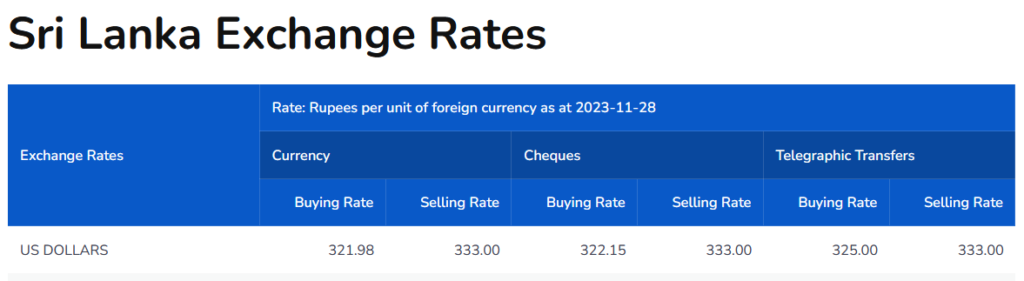
Colombo (LNW): The Sri Lankan Rupee (LKR) indicates fluctuation against the US Dollar today (28) in comparison to yesterday, as per the exchange rates of leading commercial banks in the country.
At Peoples Bank, the buying price of the US Dollar has increased to Rs. 323.39 from Rs. 322.90, and the selling price to Rs. 334.66 from Rs. 334.15.
At Commercial Bank, the buying price of the US Dollar has dropped to Rs. 321.98, but the selling price has increased to Rs. 333 from Rs. 332.50.
At Sampath Bank, the buying and selling prices of the US Dollar remain unchanged at Rs. 324 and Rs. 334, respectively.
Colombo (LNW): Minister of Water Supply and Estate Infrastructure Development Jeevan Thondaman has provided insight into the ongoing discussions regarding the establishment of a water tariff.
Speaking to a briefing at the President’s Media Centre (PMC) he emphasised that devising a formula that ensures the sustainability of the water board while also maintaining fairness for the general public would be of importance.
The government’s focus is on prioritising the major domestic category, which constitutes 75 per cent, and Samurdhi at 1.58 per cent, over industries, without exerting undue pressure on them.
Thondaman further noted that discussions are currently underway, exploring two parallel formulas—one centered on cost recovery and the other on cost reflection.
The final draft of the tariff formula is expected in December, with a commitment to avoiding unnecessary burden on the public. There is a possibility of an increased tariff rate for commercial institutions, with an emphasis on ensuring fair rates for charitable institutions, hospitals and schools.
To further deliberate on these crucial decisions, a meeting has been requested with Ministers Dilum Amunugama and Shehan Serasinghe. The outcome of these discussions will be communicated, leading to a vote on the proposed tariff.
Thondaman acknowledged the economic crisis affecting both foreign-funded and domestic-funded projects. He assured the public that new projects would kick-start in January, with a focus on completing existing projects. The government plans to engage in public-private partnerships to enhance water quality and reduce costs. The Minister clarified that while projects would involve private participation, there is no intention to sell or privatise water.
The Minister acknowledged operational losses, citing increased electricity prices and existing debt as contributing factors. However, he highlighted a silver lining—the reduction in water usage due to conservation efforts following a tariff hike. The Minister stressed the importance of a sustainable tariff formula that considers debt servicing and CAPEX (Capital Expenditure) but does not overburden the public.
Minister Thondaman discussed the government’s commitment to efficient water conservation, especially in areas with inadequate access to clean water. Plans for a desalination plant in Jaffna and efforts to prioritize water supply from villages and estates were highlighted. The Minister also emphasised the streamlining of the water resources management policy to implement a comprehensive water management plan.
The Minister refuted accusations of politicisation within the Water Board and clarified the appointment process for key positions. He assured that revenue for the Board has increased and discussed plans to explore renewable energy sources to reduce energy costs.
As the government works towards a stable tariff formula and sustainable water management, the Minister urged the public to understand the value of water and the necessity for a balanced approach to tariff reform.
The Minister concluded the press conference by reiterating the commitment to providing clean and accessible water to all citizens while ensuring financial viability in the water sector. The proposed reforms aim to strike a balance between the needs of the public and the economic realities faced by the water sector.
UNP General Secretary Palitha Range Bandara says President & UNP Leader Ranil Wickremesinghe is set to become the Presidential Candidate of a Coalition led by the UNP & the Party is to work on an Action plan drafted by its Working Committee ahead of the next Presidential Election.
Minister of Education Susil Premajayantha says preparations have been finalised to supply sanitary napkins to girls in schools, starting next year.
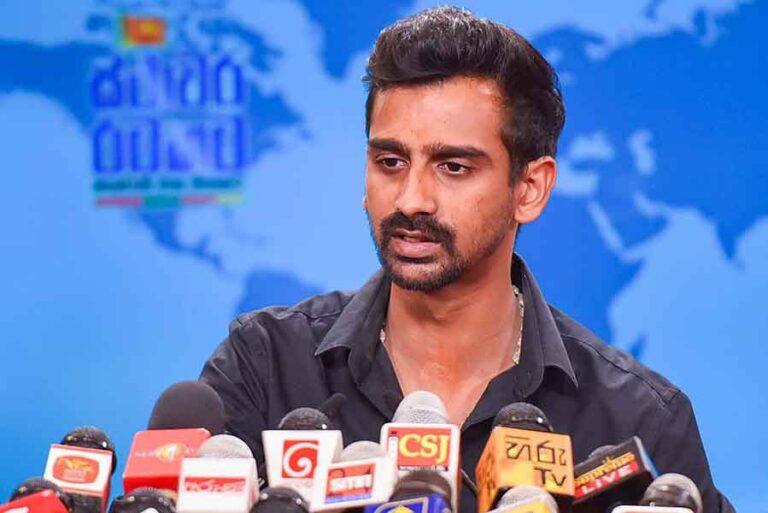
Sports Minister Roshan Ranasinghe says his life is at risk & in the event anything should happen to him, the President & Chief of Presidential Staff would have to take responsibility: also says he may be killed on the road & he’s not sure when it will happen: asserts he fought against corruption, but now he has to fight for his life: demands his right to live for the sake of his wife & children.
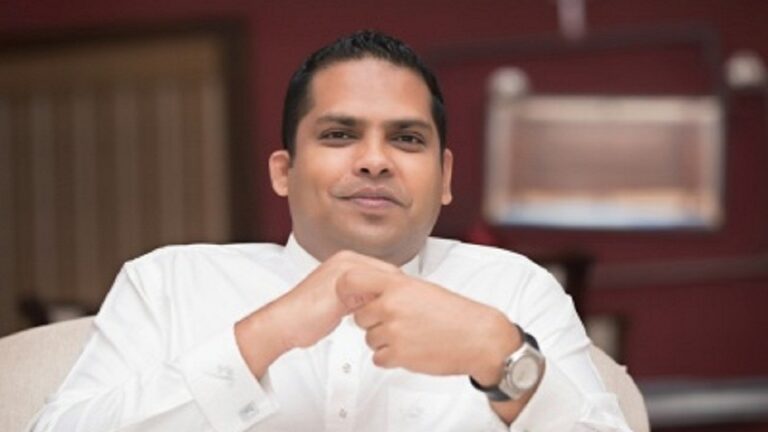
President Ranil Wickremesinghe removes Sports, Youth Affairs & Irrigation Minister Roshan Ranasinghe from all posts in the Govt: Harin Fernando appointed as the new Sports Minister & Pavithra Wanniarachchi as the new Irrigation Minister.
Colombo Stock Market falls to a four-&-a-half month low, riddled by sustained uncertainty: ASPI declines for the 3rd consecutive market day to 10,480 points: turnover dips to a miserly Rs 579mn: number of shares traded crashes to a negligible 19.82 mn.
President Ranil Wickremesinghe leads a delegation of over 80 persons, including Foreign Minister Ali Sabry, Environment Minister Keheliya Rambukwella & Energy Minister Kanchana Wijesekara to attend the upcoming UN Climate Change Conference of Parties (COP28) Summit in Dubai next week: several delegates from international non-governmental organisations, private sector entities & stakeholders will also be included in the largest-ever Sri Lankan delegation.
Top Opposition spokesman Professor G L Peiris warns of a major Govt offensive against the media to neutralise print & electronic media, ahead of the Presidential election scheduled for next year: asserts the proposed creation of a “Broadcasting Regulatory Commission” for electronic media, Online Safety Bill and Commission of Inquiry headed by retired Chief Justice Priyasath Dep, PC, poses a threat to media freedom.
Justice Minister Wijeyadasa Rajapakshe says a new Registration & Enforcement of Foreign Judgments Bill that would enable the registration & enforcement in SL of rulings given by Courts in other countries is to be submitted to Parliament: new law expected to repeal the existing “Enforcement of Foreign Judgments Ordinance & the Reciprocal Enforcement of Judgments Ordinance”.
Cardinal Malcolm Ranjith calls on people to reject oppressive leaders in order to cleanse the country’s politics, & to enable the emergence of a new leadership: asserts it’s the duty of all patriotic & independent media to defeat moves towards a dictatorship: urges people not to barter their votes for roofing sheets, food or alcohol.
SL Chess Olympiad first-ever Gold medalist Suneetha Wijesuriya receives the title of “FIDE Trainer” from the Int’l Chess Federation: this is the first time a SL chess player has received this title.
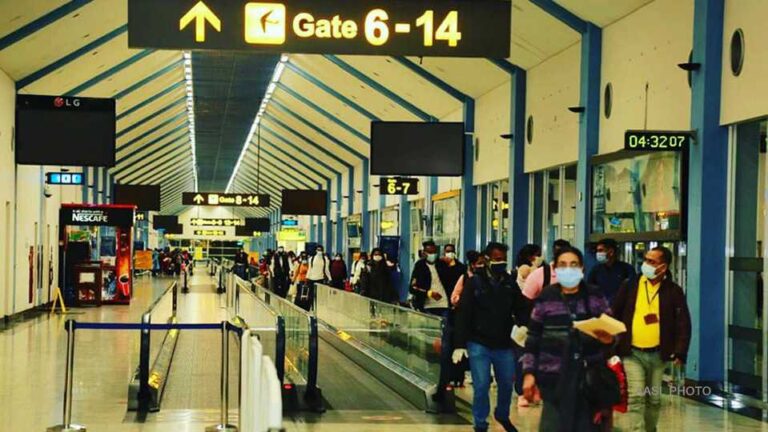
Colombo (LNW): The Ministry of Foreign Affairs affirmed the safe repatriation of a four-member Sri Lankan family who were stranded in the Gaza Strip.
The Consular Affairs Division of the Ministry facilitated their return, and upon arrival in Colombo on November 24, officials from the Foreign Ministry received the returning Sri Lankans.
Coordination efforts between the Sri Lankan Embassy in Cairo, Egyptian authorities, and the Consular Affairs Division ensured a smooth repatriation process at the Rafah border between Egypt and Gaza.
The Ministry of Foreign Affairs arranged logistics and air transportation for the returnees with the assistance of the International Organisation for Migration (IOM).
Since the onset of the recent crisis on October 7, 2023, a total of 15 Sri Lankans stranded in the Gaza Strip have been successfully repatriated to Sri Lanka through coordinated efforts with Sri Lanka Missions in Cairo and Ramallah.
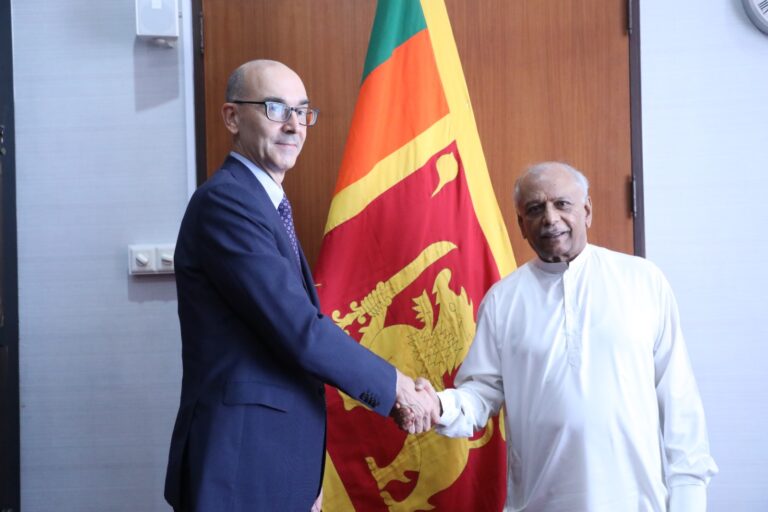
Colombo (LNW): A meeting took place between Premier Dinesh Gunawardena and the newly appointed Italian Ambassador, Damiano Francovigh, at the Prime Minister’s Office in Parliament yesterday (27).
Ambassador Damiano Francovigh expressed his willingness to promptly address matters related to establishing Colombo as a direct air and shipping destination, with the primary goal of fostering tourism ties between the two nations.
Discussions centred around the mutual desire to strengthen bilateral relations between the two countries, a statement by the Prime Minister’s Media Unit said.
In response to the Sri Lankan Prime Minister’s request, the ambassador conveyed that a delegation from the Italian Trade Agency would be dispatched for discussions with the private sector in Sri Lanka, aiming to foster trade relationships between the two nations.
Highlighting delays in visa issuance at the Sri Lankan embassy, Gunawardena noted the issue, and the Italian ambassador assured that his attention had been directed towards resolving the delays within the next few weeks.
The meeting included the participation of Secretary to the Prime Minister Anura Dissanayake and the Italian Deputy Ambassador.
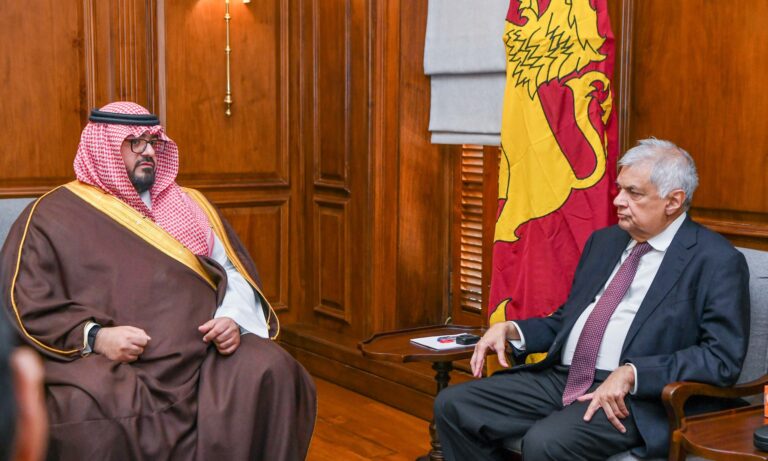
Colombo (LNW): President Ranil Wickremesinghe engaged in discussions with the Minister of Economy and Planning for the Kingdom of Saudi Arabia, Faisal F. Alibrahim, at the Presidential Secretariat yesterday (27).
During the meeting, Minister Alibrahim underscored Saudi Arabia’s keen interest in bolstering economic relations with Sri Lanka, focusing on various sectors, including garments and tourism.
The Saudi Minister highlighted his government’s commitment to expanding economic ties in the region, expressing significant regard for Sri Lanka, the President’s Media Division reported.
Wickremesinghe welcomed the Minister’s remarks, emphasising Sri Lanka’s proactive efforts to enhance cooperation in Asia, particularly West Asia. He further identified tourism and agriculture as sectors with considerable investment potential, and emphasised that the country is committed to modernising these areas.
Accompanying the President were the Secretary to the President, Saman Ekanayake, and the Director of International Affairs to the President, Dinouk Colombage.
Colombo (LNW): Showers or thundershowers will occur at times in Eastern and Uva provinces and in Hambantota district, and several spells of showers will occur in Northern and North-central provinces, the Department of Meteorology said in its daily weather forecast today (28).
Showers or thundershowers will occur at several places in other provinces of the island after 01.00 p.m, the statement added.
Fairly heavy showers about 75mm are likely at some places in Central, Uva and Sabaragamuwa provinces and in Galle and Matara districts.
The general public is kindly requested to take adequate precautions to minimise damages caused by temporary localised strong winds and lightning during thundershowers.
Marine Weather:
A low-pressure area is formed over south Andaman Sea and adjoining southeast Bay of Bengal Sea area. It is likely to move west-northwestwards and intensify into a depression over southeast Bay of Bengal around 29th November 2023. Fishing and naval community are requested to be attentive to future forecasts issued by the Department of Meteorology in this regard.
Condition of Rain:
Showers or thundershowers will occur at several places in the sea areas off the coast extending from Trincomalee to Puttalam via Pottuvil, Hambantota and Galle.
Winds:
Winds will be North-easterly. Wind speed will be (30-40) kmph in the sea areas off the coast extending from Chilaw to Trincomalee via Puttalam, Kankasanthurai. And from Galle to Hambantota via Matara. Wind speed will be (20-30) kmph in the other sea areas around the island.
State of Sea:
The sea areas off the coast extending from Chilaw to Trincomalee via Puttalam, Kankasanthurai and from Galle to Hambantota via Matara will be moderate and slight in the other sea areas around the island. Temporarily strong gusty winds and very rough seas can be expected during thundershowers.
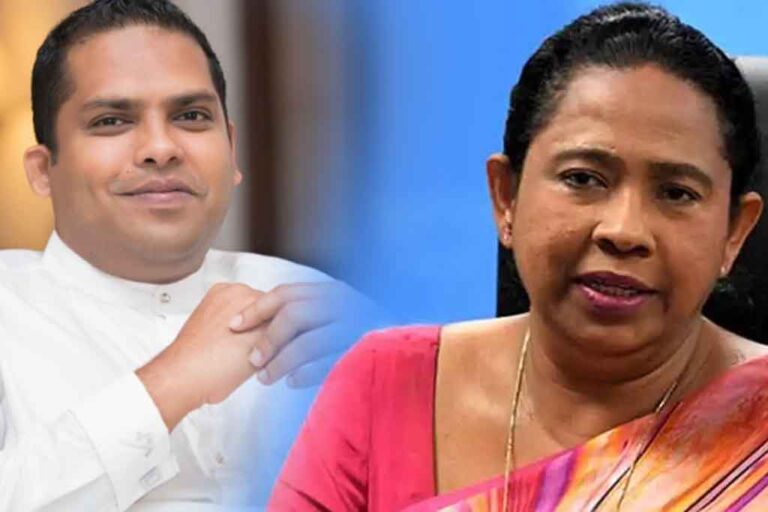
Colombo (LNW): Harin Fernando has been appointed as the Minister of Sports, while Pavitra Vanniarachchi has been appointed as the Minister of Irrigation.
Both individuals were sworn in before President Ranil Wickremesinghe a short while ago.
These ministerial appointments have been conferred upon them in addition to their existing ministerial responsibilities.
Colombo (LNW): In December, six colonial-era artefacts originating from Sri Lanka will be repatriated from the Rijksmuseum Amsterdam in the Netherlands, according to the Embassy of the Kingdom of the Netherlands.
Among the items returning to the island are the Lewke’s cannon, a Golden Kasthane, a Silver Kasthane, a Sinhalese Knife, and two Guns that have been confirmed to belong to Sri Lanka.
After more than 200 years abroad, Dutch Ambassador for International Cultural Cooperation Dewi van de Weerd will lead a mission overseeing the handover on behalf of the Netherlands.
The physical return of these artefacts is scheduled for a two-day event at the Colombo National Museum on December 5 and 6, which will be open to the public and include educational activities highlighting the shared history of Sri Lanka and the Netherlands.
“With the restitution the Netherlands aim to strengthen the bilateral ties with Sri Lanka, while also coming to terms with its colonial past. As a part of this, Ambassador Van de Weerd hopes to discuss possibilities for further strengthening the cultural cooperation between the Netherlands and Sri Lanka,” the Embassy said in a statement.
It added: “Governments, museums, universities and advisory committees in both countries are already working together to return more Sri Lankan cultural heritage in the future. Through these initiatives the government of the Netherlands aims to open a new chapter in its relationship with Sri Lanka. A chapter with more focus on justice, reconciliation and equality”.