Home Blog Page 1383

Foreign Minister concludes successful visit to Iran

0

Minister of Foreign Affairs of Sri Lanka, M.U.M. Ali Sabry undertook an official visit to the Islamic Republic of Iran, from 04 to 07 August 2023, on an invitation extended by the Minister of Foreign Affairs of the Islamic Republic of Iran, Dr. Hossein Amir-Abdollahian.

During the visit, Minister Ali Sabry paid a courtesy call on the President of the Islamic Republic of Iran, Dr. Ebrahim Raisi and had bilateral meetings with Foreign Minister Amir- Abdollahian and Governor of the Central Bank Dr. Mohammad-Reza Farzin. 

Commending the excellent bilateral relations, at the meeting with President Raisi, Foreign Minister Ali Sabry expressed Sri Lanka’s appreciation for the assistance extended to Sri Lanka for the development projects and outlined the steps being taken by the Government of Sri Lanka on the IMF-led debt restructuring process. President Raisi offered to share the capabilities with friendly countries like Sri Lanka, when referring to the progress that the Islamic Republic of Iran made in various fields, especially in science and technology.

Ministers Ali Sabry and Dr. Amir-Abdollahian had extensive discussions on bilateral cooperation and a host of other mutually important regional and global challenges. The Ministers emphasized the need to further strengthen and broaden the close and cordial bilateral relations, including on the economic partnership programmes and their desire to enter into agreements, in order facilitate the process. Minister Ali Sabry thanked Minister Dr. Amir Abdollahian for the support to Sri Lanka bilaterally and in the international fora and stated that Sri Lanka is “everyone’s friend and nobody’s enemy” in regards to the conduct of its foreign policy. 

Reference was also made to Sri Lanka’s assumption of the presidency of the Indian Ocean Rim Association and the Ministerial meeting of the grouping in October this year.

During this visit, Minister Ali Sabry also had discussions with Central Bank Governor Dr. Mohammad Reza Farzin on furthering economic cooperation between the two countries and ways and means in this regard. The Minister expressed Sri Lanka’s appreciation to the Government of the Islamic Republic of Iran for consenting to the IMF-led debt restructuring process. 

He appreciated the assistance for the Uma Oya Multi-Purpose Project as well as for the Rural Electrification Project. Minister Ali Sabry informed the Governor on the commencement of the settlement process for purchase of oil by the Ceylon Petroleum Corporation and the supply of Ceylon Tea. 

The Sri Lanka delegation headed by Minister Ali Sabry included Ambassador of Sri Lanka to the Islamic Republic of Iran Wishvanath Aponso, Director, the Department of External Resources Samantha Bandara and Deputy Director, Ministry of Foreign Affairs, Mohamed Rizvi.

Ministry of Foreign Affairs

Colombo

10 August 2023

President says SL will establish task force for agricultural modernisation

0

Colombo (LNW): A task force for agricultural modernisation will be established including both government and private sector representatives, revealed President Ranil Wickremesinghe.

This tasks force will soon merge Agriculture, Plantations, Irrigation and Mahaweli Development Ministries, and this unification, along with resources from the nine Provincial Councils, aims to efficiently tackle agriculture-related issues, the President’s Media Division (PMD) reported quoting the President.

State Minister reveals new mechanism to reduce burden of prisons on Treasury

0

PMD: A discussion has already commenced on setting up a legal system for maintaining prisons in a way that does not burden the treasury, State Minister of Justice and Prison Affairs Anuradha Jayaratne said.

The Minister of State also noted that four private institutions have shown their support for a program to construct private sector companies in the prisons and employ the prisoners there.

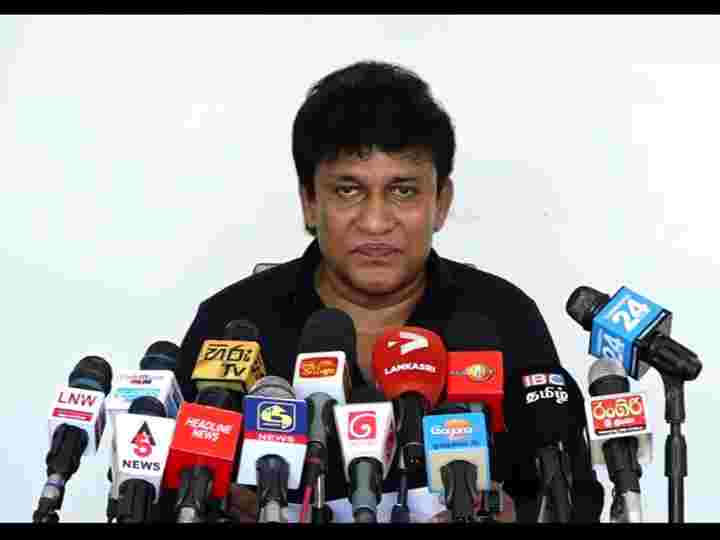
He expressed these views today (10) during a press conference themed ‘Collective Path to a Stable Country’ held at the Presidential Media Centre (PMC).

State Minister Anuradha Jayaratne further commented;

As of today, the total number inmates in prisons are 28,468. It was also revealed that the number of drug-related offenders has increased rapidly. As per today 50.3% of the total inmates are people who were imprisoned for drug related offences. In some prisons about 65% are detained due to drug related offences.

We observe a pattern of offenders being imprisoned for drug-related offenses repeatedly as they return to their regular environments following the completion of the sentence imposed by the court. As a result, attention has now been focused on guiding individuals toward a program that combines skills development and rehabilitation.

The development of two centers is being discussed with the Minister of Health, Mr. Keheliya Rambukwella, in order to consolidate rehabilitation and health services for the Western and Southern provinces, which report the most drug-related prisoners.

Also, the government incurs a cost of Rs. 3.9 billion on just the food expense of inmates. They are maintained by the society by bearing those expenses. Currently, the prisoners are cultivating 418 acres of land. We have asked for an additional 200 acres to boost that total. In this manner, we are trying to reduce the huge amount of money spent on food.

Meanwhile, various people have accused the government of misusing the Prevention of Terrorism Act but only 40 inmates are currently in prison under the Prevention of Terrorism Act. 33 LTTE prisoners who were detained under the PTA have already been released.

The lack of room in the prisons, however, is the most significant issue the Prison Department is now dealing with. There are about 29,000 prisoners despite the 13,000 capacity of the current facilities. Attention has also been given to the potential of changing the Bail Act for civil offenders and putting them under house arrest in an effort to alleviate this issue. The report of the committee appointed to look into the matter has now been received. It is therefore intended that the pertinent draft laws will be delivered to the Parliament as soon as feasible.

Additionally, suspects may participate in court processes using digital technology (Virtual Courts concept) in any situation where it is not required for them to physically appear in court.

Meanwhile, attention has also been focused on a program to establish private sector factories inside prisons and hire inmates. Four institutions have already expressed their agreement for that. The inmates will have the chance to be released into society as working people if the Prison Department and the prisoners can successfully run the factories. It is anticipated that an inmate who works in this capacity will receive Rs. 1400.00 in funding, while their family will receive Rs. 400–500.

So far 1120 inmates have been rehabilitated under the “Amadivi Ridma” program. With this, the inmates will be sent home on leave for 7-14 days and it will be considered whether they can be released on the basis of their good behavior. This also hopes to reintegrate them into society as good people.

In the meantime, it should be emphasized that even though some accuse that there are spaces for various underworld activities in prisons, there is no chance for that. We have controlled all the spaces for such activities as much as possible. However, it must be said that if the prison officials try to suppress it through various pressures, there is no room for that either. A special security program has been implemented with the support of the Inspector General of Police for the safety of prison officers. Also, in addition to the prison officers, the Special Task Force and a group of non-prison officers deal with security.

Bogambara prison has already been handed over to the Urban Development Authority. Also, the commercial value of the land where the Welikada prison is located is over 32 billion rupees. Taking this situation into consideration, 200 acres of land belonging to the Urban Development Authority in Horana has been acquired for the Prison Department. Instructions have been given to call for project reports not exceeding Rs. 18 billion for the construction of a prison in Horana.

We hope to complete the project with all modern facilities through an international tender call. The new jail is about four times the size of the existing jail. Apart from this, it is hoped to promote the open-air prison system and introduce the geo-tag system for civil convicts.

A discussion has now started on setting up a systematic, legal system that can be submitted to the Parliament to maintain the prisons without burdening the Treasury. It must be said that it is a different process than the story of the elite class being given the opportunity to get prison cells by paying money.

Additionally, plans have been made to host a Prisoners’ Art Exhibition at the Public Library Auditorium in Colombo on September 12 to commemorate the National Prisoners’ Day. By doing this, we seek to offer value to their skills, even if they are imprisoned for a crime, the Minister said.

Police disperse IUSF protest: Members arrested (PHOTOS)

0

Colombo (LNW): The Police have fired water cannons to disperse a protest march organised by the Inter-University Students’ Federation (IUSF) in Colombo this (10) afternoon, and arrested several members of the Union.

The protest was organised in objection to the government’s attempt to privatise free education and grant medical degrees via three private universities, the proposed labour law and matters related to the Employees’ Provident Fund (EPF) and the International Monetary Fund’s proposals.

The Police dispersed the protest in Kirulapone ane Townhall areas, and arrested several members.

Earlier this morning, the Fort and Maligakanda Courts had issued orders barring the IUSF from entering several parts of Colombo.

To view full photos, visit READPHOTOS

Investing in capital and human resources important for SL’s economic advancement: President

0

PMD: President Ranil Wickremesinghe emphasized the importance of capital, particularly financial and human, for driving growth. He noted that Sri Lanka’s historical capital formation efforts had been disrupted over the years, leading to current financial struggles. He pointed out that while the country had accumulated capital up to 2019, subsequent events such as the COVID-19 pandemic and economic downturn had led to a decline in financial strength. He drew parallels with other nations, pointing out how capital influx had fuelled their growth, and called for a focus on reorganizing and restructuring the financial system.

President Ranil Wickremesinghe addressed the 36th Annual Conference of the Organization of Professional Associations (OPA) of Sri Lanka yesterday (09) at the Kingsbury Hotel Colombo. He commended the nation’s collective efforts in navigating through challenging times, comparing the present to the previous year and acknowledging the reversal of gloomy circumstances. He asserted that the country now holds renewed hope and prospects for the future. The President also expressed his gratitude for the invitation and highlighted significant areas that will shape Sri Lanka’s future trajectory.

President Wickremesinghe also underscored the necessity of moving forward with confidence and determination. He highlighted the importance of constructive solutions over political distractions, cautioning against the detrimental effects of agitation without viable solutions, and mentioned the vacuum in political leadership that the nation experienced. He emphasized the need for consistent leadership to address pressing issues. However, the President praised those who stepped up to take on responsibilities and contribute to the country’s stabilization.

The President also highlighted his acceptance of leadership during the crisis and the subsequent efforts to stabilize Sri Lanka both politically and economically. He acknowledged the cooperation of various parties and individuals in these endeavours, emphasizing the critical role played by those who united for the nation’s betterment.

Turning to economic challenges, the President addressed the issue of domestic debt optimization and the potential sabotage of these efforts. He underscored the dire consequences if such endeavours were to fail, which would severely impact the nation’s banking sector and economy at large.

Addressing the issue of human capital, the President highlighted the significance of education and training. He noted the departure of skilled individuals from the country and expressed concern over the loss of professionals to other nations. He emphasized the urgent need for the establishment of vocational training centres and universities to address the skills gap and meet the demands of a competitive economy. He outlined plans to collaborate with the private sector and institutions to create a robust framework for education and training and stressed the importance of creating an environment that encourages professionals to remain in Sri Lanka.

While underscoring the importance of attracting investment, President Wickremesinghe highlighted the need for a competitive economy. He emphasized that Sri Lanka’s historical capital formation had faltered due to various reasons and underscored the importance of foreign investments and the Colombo financial zone to secure necessary funds. He stressed the role of a streamlined investment procedure and called for the development of a more appealing investment environment to compete with neighbouring countries.

President Wickremesinghe also discussed the legislative changes being proposed, including the devolution of powers to provincial councils and streamlined procedures for new universities. He mentioned plans for the establishment of multiple institutions to cater to the evolving demands of various fields. He emphasized the importance of human resource development, especially in universities, and urged the participation of organizations like the OPA to ensure the required human resources for future growth.

He emphasized that the key to Sri Lanka’s future success lies in the strategic management of financial and human capital in driving the country’s economic prosperity, marking them as pivotal factors for the nation’s future development to foster a thriving and competitive economy.

“Invest Sri Lanka” forum organised by CSE held in Chennai

0

The “Invest Sri Lanka” forum was held in Chennai organised by the Colombo Stock Exchange (CSE) in partnership with Stakeholders to promote foreign portfolio investment into the Sri Lankan Stock Market by showcasing investment opportunities.

Finance State Minister Shehan Semasinghe wrote: “Pointed out that Sri Lanka will be strengthened by carrying out deep economic reforms to rectify the basic structural weaknesses of the economy and the reforms necessary to prevent the recurrence of the main causes of macroeconomic instability have been completed. By introducing new laws such as the Anti-Corruption Law, Parliamentary Budget office and the New Central Bank Act, the necessary independence, transparency and good governance in financial management have been already established.”

Further mentioned that by managing expenditure and increasing revenue a primary surplus has been achieved in the first quarter of 2023, surpassing the IMF forecasted target. This is a significant improvement from a primary deficit of 5.7% of the GDP in 2021 and the programme to achieve a primary surplus of 2.3% of the GDP from 2025 is being implemented.

Further pointed out that Sri Lanka is carrying out all necessary reforms to achieve debt sustainability and Sri Lanka is on the right path and thus it is the best time to invest to take first advantage of a market that is key to sustainable growth.

Police fire water cannons to disperse IUSF protest

0

Colombo (LNW): The Police have fired water cannons to disperse a protest march organised by the Inter-University Students’ Federation (IUSF) in Colombo this (10) afternoon.

The protest was organised in objection to the government’s attempt to privatise free education and grant medical degrees via three private universities, the proposed labour law and matters related to the Employees’ Provident Fund (EPF) and the International Monetary Fund’s proposals.

The Police dispersed the protest in Kirulapone ane Townhall areas.

Earlier this morning, the Fort and Maligakanda Courts had issued orders barring the IUSF from entering several parts of Colombo.

Today’s (10) official exchange rates: LKR appreciated

0

By: Isuru Parakrama

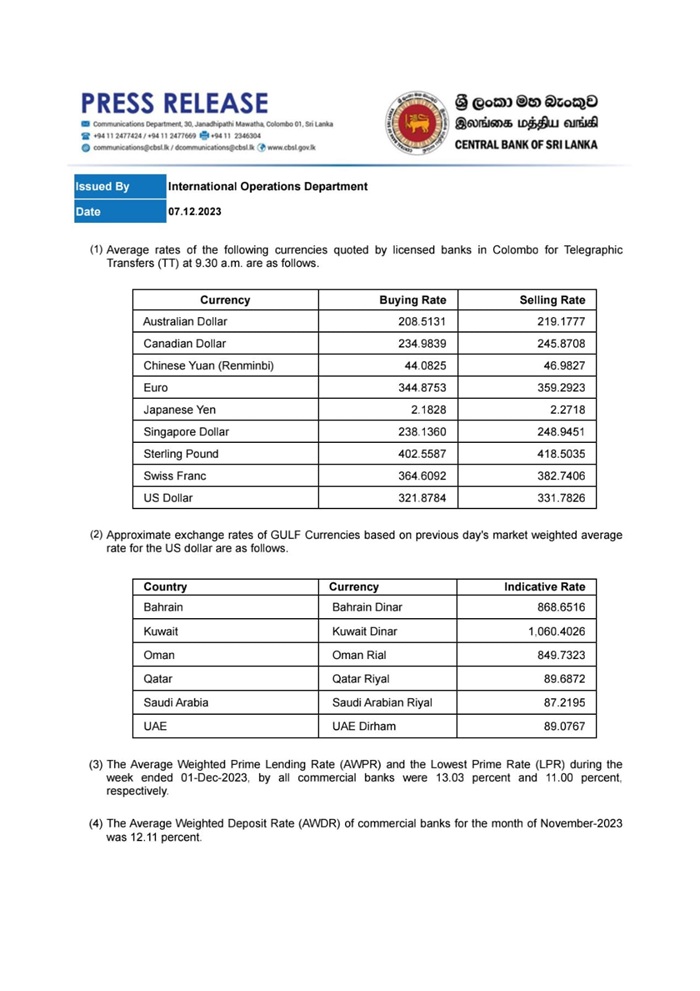
Colombo (LNW): The Sri Lankan Rupee has further appreciated against the US Dollar today (10) compared to yesterday, as revealed by the official exchange rates list issued by the Central Bank of Sri Lanka (CBSL).

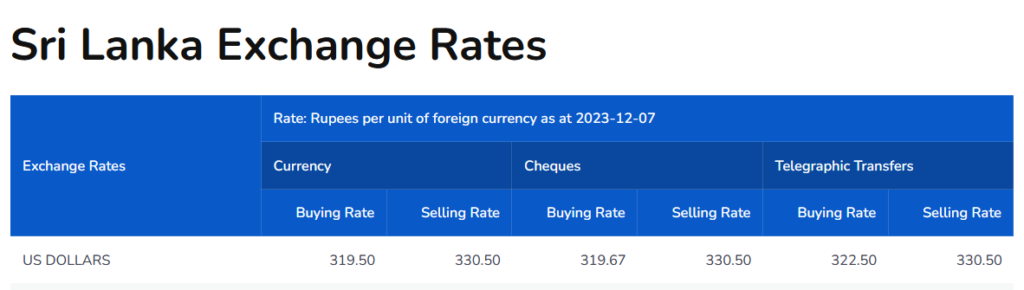
Accordingly, the buying price of the US Dollar has dropped to Rs. 313.16 from Rs. 314.94, and the selling price to Rs. 326.78 from Rs. 327.52.

Meanwhile, the Sri Lankan Rupee has also appreciated against a number of other foreign currencies, including Gulf currencies.

Kandos responds to controversial Social Media claim on chocolate products

0

Colombo (LNW): Ceylon Chocolates Limited, the manufacturer of Kandos chocolates, has responded to the recent allegations on Social Media involving one of its chocolate products.

The company has launched an investigation into the matter and expressed regret for the inconvenience caused to the public, and asserted the customers its ‘steadfast commitment to maintain the highest standards of quality in all its products.’

Controversy stormed in when photographs allegedly revealing a part of a human thumb inside a Kandos chocolate purchased in Mahiyanganaya area circulated on Social Media went viral, and the products of the same category were later withdrawn from supermarkets in the area.

FAO SL Trains 300 Agriculture Extension Officers as Facilitators for Farmer Field Schools

0

6.3 million people, or over 30 percent of Sri Lanka’s population, are “food insecure” and require humanitarian assistance and of these, around 5.3 million people are either reducing meals or skipping meals, and at least 65,600 people are severely food insecure, revealed the  joint FAO/WFP Crop and Food Security Assessment Mission (CFSAM) report 2022.

An overnight decision to transition from chemical fertiliser to organic fertiliser without an adequate alternative for farmers and stopping the fertiliser subsidies given by the government to the farmers left the agriculture sector in limbo, resulting two consecutive seasons of poor harvests in 2021-2022 leading to a nearly 40 percent drop in paddy production, posing a serious threat to food security in Sri Lanka.

To tackle the vulnerability of the food security system in the country under the above circumstances, the Food and Agriculture Organisation of the United Nations (FAO) together with the government of Sri Lanka, and with €4 million in funding from the European Union (EU) launched an innovative project – RiceUP.

FAO together with the Ministry of Agriculture and the Mahaweli Authority of Sri Lanka (MASL) implements the project “Responding to the Economic Crisis: Protecting smallholder farmer livelihoods through safe and efficient use of fertiliser and quality seed for better productivity in paddy farming” which aims to respond to the economic crisis in Sri Lanka by protecting smallholder farmer livelihoods through safe and efficient use of fertiliser and quality seed for better productivity in paddy farming.

As a step in capacitating key stakeholders in the agriculture sector on best practices, FAO has embarked on a training programme for 300 Agriculture Extension Officers (AEOs) on Integrated Plant Nutrient Management (IPNM) across four key rice-growing districts in Sri Lanka namely: Ampara, Badulla, Hambantota, and Polonnaruwa. These AEOs will then act as facilitators for the Farmer Field Schools (FFS) where farmers will be trained to adopt good practices for sustainable rice cultivation. The training will equip the AEOs with the necessary skills and knowledge to guide paddy farmers on soil management and the optimal use of organic and chemical fertilisers to enhance crop yield while reducing chemical fertiliser dependency.

The Training of Facilitators (ToF) is being conducted at the Rice Research and Development Institute, Batalagoda from 19th July to 18th August 2023. 7,500 farmers are expected to directly benefit from the FFS facilitated by the trained AEOs. The Training Manual, outlining technical IPNM content and structured learning exercises has been developed collaboratively with international and national consultants of FAO, the Department of Agriculture, MASL, and the University of Peradeniya. This manual will be instrumental in guiding the implementation of both the ToF and the FFS.

IPNM is a sustainable land management practice that ensures soil quality, prevents degradation, and maximises crop productivity while safeguarding the environment. FAO’s induction to IPNM and the provision of urea fertiliser to smallholder farmers in selected districts, are a combined response to the challenges faced by farmers in accessing essential fertilisers and maintaining food security. By adopting IPNM and more efficient use of urea fertiliser, smallholder paddy farmers can reduce costs and improve productivity, leading to better profitability and resilience to future shocks.

The trained AEOs will be instrumental in facilitating the FFS in these four districts guiding and training the farmers on IPNM practices. FFS is an effective farmer training approach which was introduced to Sri Lanka in 1994. In Sri Lanka, FFS has been widely adopted to promote sustainable farming practices, increase agricultural productivity, and address various agricultural and environmental challenges. The FFS typically involves a group of 25 farmers who come together to learn, share experiences, and collectively experiment with new agricultural techniques and sustainable management of soil while increasing the fertiliser efficiency. FAO expects that the AEOs will facilitate this process in FFS in their respective districts motivating the paddy farmers to raise productivity while collectively finding solutions to the problems in paddy cultivation.

Through the implementation of sustainable farming practices, including the safe and efficient use of fertiliser and quality seeds, and promoting FFS to be adapted among the AEOs to promote IPNM strategy, RiceUP aims to enhance productivity, food security, and livelihoods in Sri Lanka’s paddy farming sector. Together with its partners, FAO remains dedicated to ensuring the long-term sustainability and resilience of Sri Lanka’s agriculture sector.