Labour Minister Manusha Nanayakkara says 900 Electric Vehicle import licences have been issued to Sri Lankans who have sent remittances through legal channels and USD 100 mn has been remitted by persons under the scheme.
Higher Education Minister Suren Raghavan says many cases of harassment of juniors by their seniors within the universities go unreported: asserts the Govt will leave no stone unturned in its attempt to eradicate the ragging menace.
SOE Restructuring Unit says prospective bidders for the debt-saddled SriLankan Airlines will be given more time with the Govt extending the deadline for Request for Qualification to 9th Jan’24; the previous deadline was 5th Dec’23: extension said to be in response for requests for more time by interested parties.
Dissident SLFP MP Dayasiri Jayasekera expresses concern over a potential 50% drop in the revenue of Ceylon Petroleum Corporation due to the entry of foreign companies into the petroleum market.
SJB MP S M Marikkar says his party will go to the streets against the current Wickremesinghe-Pohottuwa “junta”, in Jan’24: expresses concern that the Govt is making efforts to conclude the term of the Parliament and dissolve it prematurely.
Colombo Port City Economic Commission says 3 leading commercial banks of SL (Commercial, HNB & Sampath), have been issued “Authorised Persons” licences by the Commission.
SL Navy conducts operations to chase Indian poaching trawlers from Sri Lankan waters: operation leads to seizure of 4 Indian trawlers with 21 Indian fishermen poaching in Sri Lankan waters off Mannar and off Kankasanthurei.
Committee on Public Accounts (COPA) learns there are around 37,000 firearms licensed in SL: asks officials of Defence Ministry to expedite the amendment of the Firearms (Amendment) Act No. 22 of 1996 and the Explosives (Amendment) Act, which have been delayed for many years.
Former SL Cricket captain Sanath Jayasuriya is set to become a Full Time “Cricket Consultant” for SL Cricket: Jayasuriya’s role will involve “providing his insights in strategy planning, technical aspects, as well as training, coaching and overall development of the national team”.
Former SL Cricket captain Mahela Jayawardene is set to get extension as “Consultant Coach” of the national Cricket team, despite SL’s horrendous World Cup campaign last month: the team finished 9th in the sport’s showpiece event suffering several embarrassing defeats and also failed to qualify for the Champions Trophy.
In a recent discovery at a courier cargo terminal in Seeduwa, Sri Lanka Customs intercepted seven parcels containing a variety of narcotics valued at Rs. 60 million.
Officials confirmed that the seized parcels comprised substances including Kush, Mandy, Ecstasy, and ICE. These parcels had purportedly been dispatched from the US, France, and Canada, but were addressed to fake locations in Colombo.
Taking swift action, Sri Lanka Customs took possession of the narcotics, securing them under their custody for further investigation and handling.
It is a significant milestone in Sri Lanka’s medical education landscape with the establishment of the Belarusian Center of Education (BCE) as the official country office of Grodno State Medical University, Belarus. Powered by IMC Education, BCE has been created with a singular mission – to transform the future of medical education in Sri Lanka and facilitate a seamless bridge to excellence in healthcare at Grodno State Medical University, Belarus.
Belarusian Center of Education (BCE), Country office of Grodno State Medical University, Belarus in Sri Lanka serves as the official ambassador of the Grodno State Medical University in Sri Lanka, bridging the geographical gap and fostering a robust connection between aspiring Sri Lankan medical professionals and Grodno State Medical University’s exceptional medical education offerings. Powered by IMC Education, Sri Lanka’s No.1 Medical Education placement institution took the initiative to form the Belarusian Center of Education (BCE), The Country Office of Grodno State Medical University recognizing the need to promote Grodno State Medical University as a singular, powerful entity.
Grodno State Medical University (GrSMU) is a leading medical educational institution in the Republic of Belarus and is renowned for its outstanding academic programs and commitment to producing highly skilled medical doctors around the world. Founded in 1958, the university has a rich history of providing world-class medical education and research opportunities for Sri Lankan students. Today, Grodno State Medical University, Belarus is home to more than 500+ Sri Lankan medical students studying at the university. GrSMU has welcomed Sri Lankan medical students with open arms and many have gone on to become successful healthcare professionals in Sri Lanka, Australia, the United Kingdom, Canada, the United States of America etc.
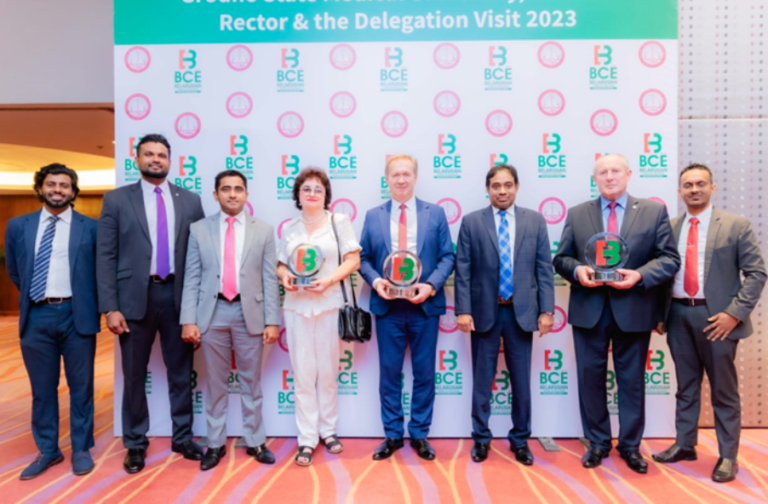
At the official launch of the Belarusian Center of Education (BCE), the country office of Grodno State Medical University, Belarus in Sri Lanka, we proudly announce the opening of its exquisite Colombo office at No 61/1, Lorensz Road, Colombo 5 with the presence of the esteemed delegation of the Grodno State Medical University, Belarus,
Rector: Prof. Zhuk Ihar Georgievich
Vice-Rector for International Relations and Extrabudgetary Activities: Assoc. Prof. Varabyeu Vitali Uladzimiravich
Vice-Dean of the Medical Faculty for International Students, Associate Professor of the Department of Foreign Languages: Assoc. Prof. Gushchyna Liudmila Nikolaevna,
whose presence in Sri Lanka signifies a momentous occasion as they join hands with the Belarusian Center of Education, the country office of their university, Grodno State Medical University, to open new horizons in medical education. We are honored to have them inaugurate this groundbreaking venture, ushering in a new era of medical education and collaboration between Belarus and Sri Lanka.
The BCE office at the heart of Colombo, this luxurious space captures the essence of European sophistication, mirroring the prestigious halls of Grodno State Medical University, Belarus. Featuring meticulously designed counseling rooms, plush waiting areas, and a captivating photo frame display showcasing Grodno’s architectural marvels, BCE’s new office is a beacon of elegance and scholarly excellence.
Under the distinguished leadership of the Chairman of BCE, Dr. Priyanjan Undugoda, Consultant In Child and Adolescents Mental Health Service and Examiner in the Royal College of Psychiatrists, is poised to become a beacon of excellence in medical education. Dr. Undugoda, with his impressive qualifications and extensive experience in the healthcare sector, embodies the vision of BCE.
BCE, accessible at www.bcedu.lk, serves as a comprehensive platform catering to the diverse needs of students aiming for a distinguished medical career. BCE as the country office of Grodno State Medical University here in Sri Lanka also has its own office operating in Belarus near the GrSMU to provide student support services throughout the entire study period. BCE’s services encompass personalized academic counseling, ensuring students make well-informed decisions about their medical education journey, smooth application process, and guidance for foreign medical licensing examinations through BCE’s global partners to secure placements in the UK (UKMLA Exam), USA (USMLE exam through Kaplan Medical) and Australia (AMC Exam through Alan Roberts Foundation) where total solution is provided under one roof. From the initial application process to securing scholarships and accommodations, BCE provides end-to-end support, simplifying the complex process of studying at Grodno State Medical University, Belarus.
BCE is not just a physical office; it embodies a commitment to nurturing the next generation of medical leaders from Grodno State Medical University here in Sri Lanka. By providing a centralized platform for information, guidance, and support, BCE empowers Sri Lankan students with access to world-class medical education and research opportunities at Grodno State Medical University, Belarus. BCE extends this legacy to Sri Lankan shores, offering students a chance to excel academically and professionally, both nationally and internationally.The launch event was held at the Radisson Hotel, Colombo on Wednesday, 08th Nov 2023 where the delegation of the Grodno State Medical University and the Director Board/Senior Management took equal privileges in taking part. The officials from the Grodno State Medical University, Belarus, Rector: Prof. Zhuk Ihar Georgievich, Vice-Rector for International Relations and Extrabudgetary Activities: Assoc. Prof. Varabyeu Vitali Uladzimiravich and Vice-Dean of the Medical Faculty for International Students, Associate Professor of the Department of Foreign Languages: Assoc. Prof. Gushchyna Liudmila Nikolaevna along with the IMC Education officials Dr. Dharangan Bakthaseelan (Executive director | Director of Finance), Dr. Gishan Sumanasiri (Executive director), Dr. Amila B Kulatunga (Deputy CEO), Mr. Inthikab Zufer (COO), Mr. Surath Edurapola (CAAO) joined the inauguration of the Belarusian Center of Education, a testament to our collective dedication to advancing medical education from Grodno State The launch event was held at the Radisson Hotel, Colombo on Wednesday, 08th Nov 2023 where the delegation of the Grodno State Medical University and the Director Board/Senior Management took equal privileges in taking part. The officials from the Grodno State Medical University, Belarus, Rector: Prof. Zhuk Ihar Georgievich, Vice-Rector for International Relations and Extrabudgetary Activities: Assoc. Prof. Varabyeu Vitali Uladzimiravich and Vice-Dean of the Medical Faculty for International Students, Associate Professor of the Department of Foreign Languages: Assoc. Prof. Gushchyna Liudmila Nikolaevna along with the IMC Education officials Dr. Dharangan Bakthaseelan (Executive director | Director of Finance), Dr. Gishan Sumanasiri (Executive director), Dr. Amila B Kulatunga (Deputy CEO), Mr. Inthikab Zufer (COO), Mr. Surath Edurapola (CAAO) joined the inauguration of the Belarusian Center of Education, a testament to our collective dedication to advancing medical education from Grodno State Medical University in Sri Lanka. Through the Belarusian Center of Education, we are not just opening doors to academic opportunities; we are forging pathways to a brighter, healthier future for our nation.
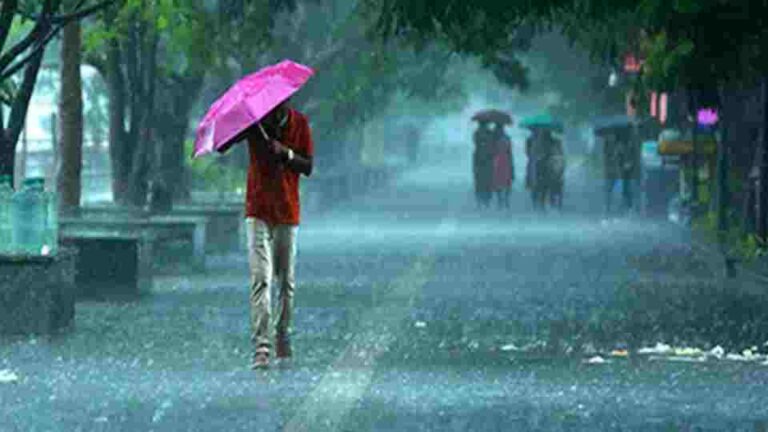
Fairly heavy showers above 75mm are likely at some places in Central, Sabaragamuwa, Western and Uva provinces and in Galle and Kurunegala districts.
Several spells of showers may occur in Eastern province during the morning too.
Misty Condition can be expected in Sabaragamuwa, Central and Uva provinces during the morning.
The general public is kindly requested to take adequate precautions to minimize damages caused by temporary localized strong winds and lightning during thundershowers.
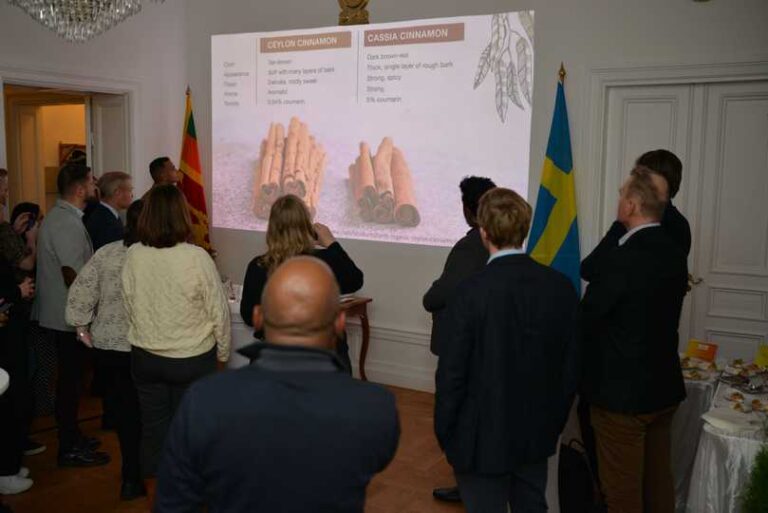
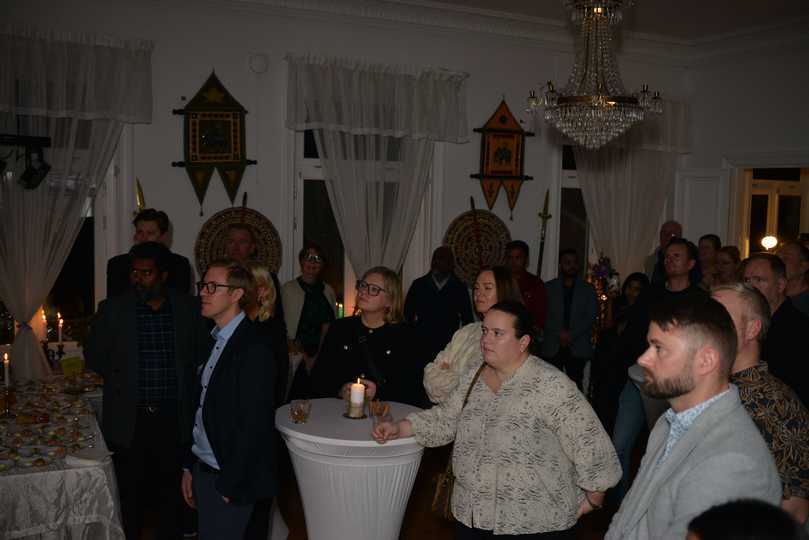
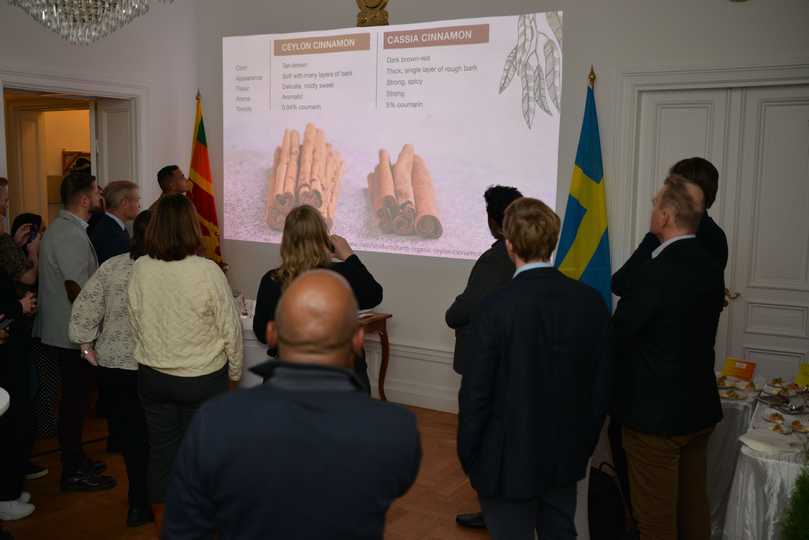
Chefs in Sweden together with Swedish food industry representatives and Sri Lanka’s Ceylon Cinnamon brands joined the Embassy of Sri Lanka in Sweden to showcase the island`s world renowned spice – Ceylon Cinnamon – at an event on 27 November 2023 in Stockholm.
The evening featured the versatility of Ceylon Cinnamon through cuisine, scientific and health analysis exploring the benefit of authentic Ceylon Cinnamon, presentations on cultivation, harvesting and delicate processing of Ceylon Cinnamon in Sri Lanka to an audience of restaurant and food industry representatives, Chefs from several cuisine specialties, food ingredient importers and Swedish food brands as well as culinary specialists, food bloggers and journalists.
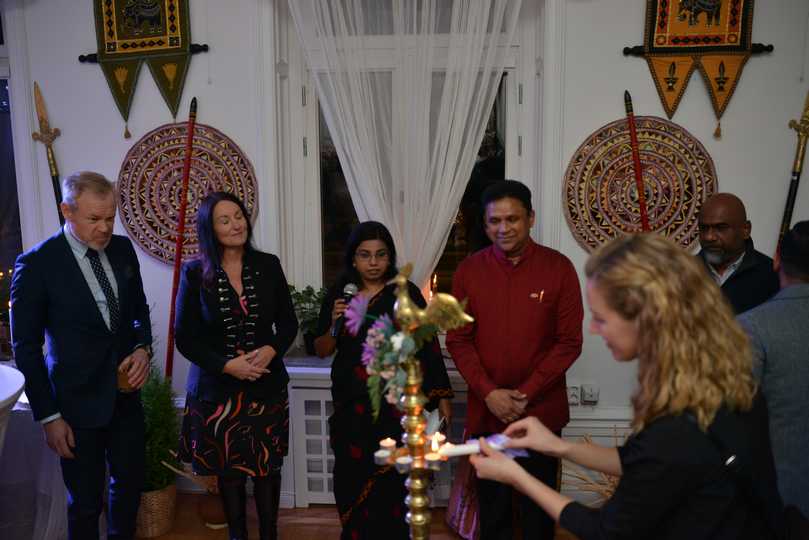
Gracing the evening was Mayor Marith Hesse and delegation of Partille who were among those who lit the traditional Sri Lankan oil lamp. The Embassy’s initiative was partnered by the Ministry of Foreign Affairs, Colombo under the Economic Diplomacy initiative and was consistent with the policy articulated on Ceylon Cinnamon in President Ranil Wickremesinghe’s Budget Speech for 2023.
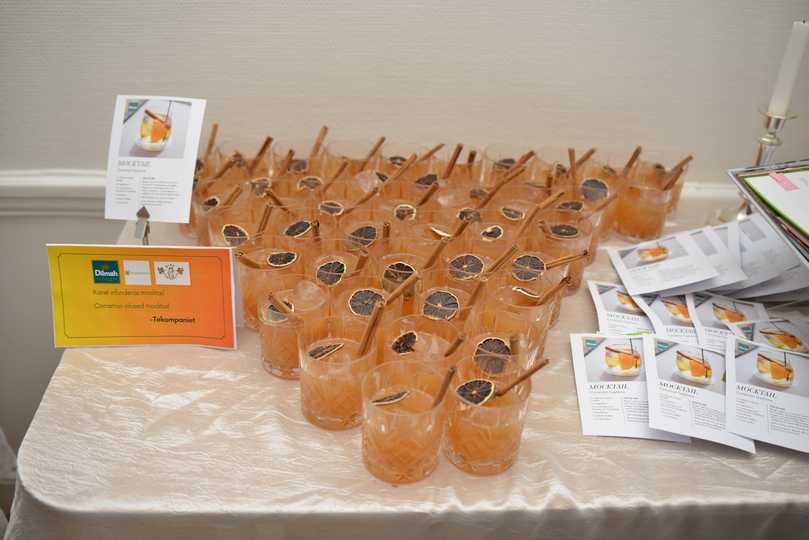
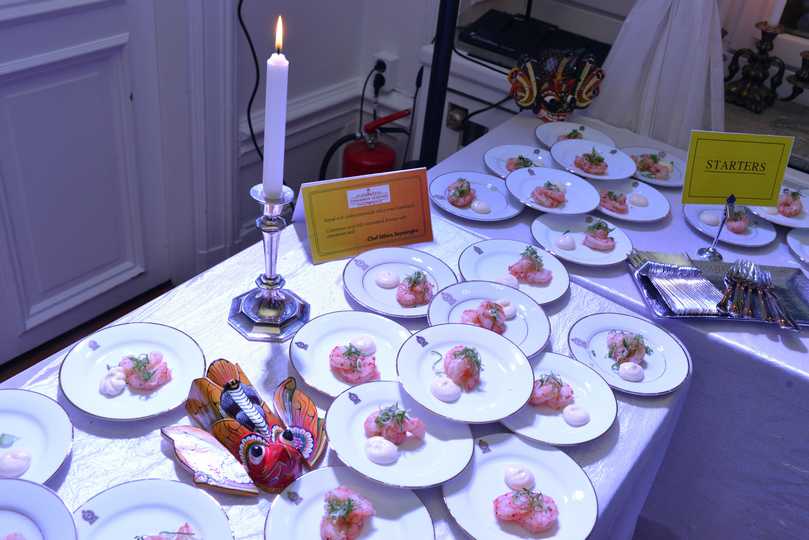
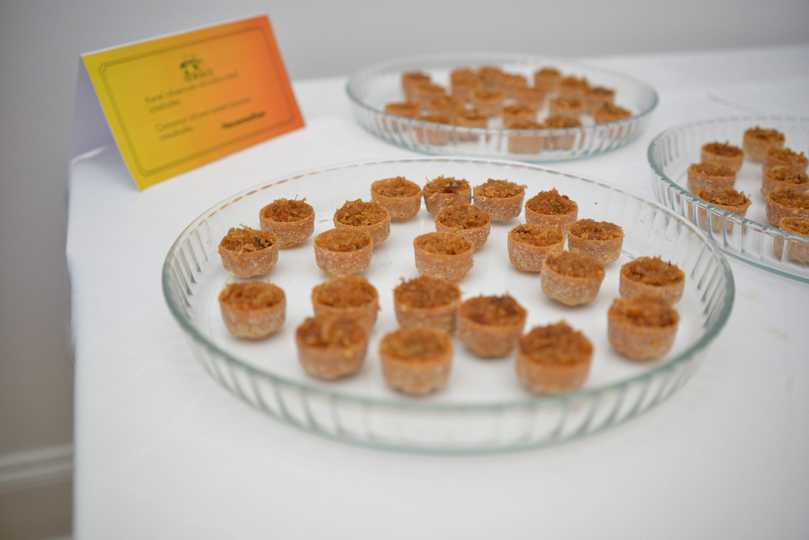
The evening’s cuisine presented the versatility of True Cinnamon in western, eastern, south american, Sri Lankan cuisine and Ceylon tea. The dishes highlighted Ceylon Cinnamon`s ability to blend, garnish and create starters, mains, desserts, mocktails and tea bringing out the fabulous versatility of the spice and thereby demonstrating why the age-old spice is indeed the King of spices. The cuisine was prepared by the Chefs with top Alba grade authentic Ceylon Cinnamon from two Sri Lankan global brands – HDDES and Cinnamon Legends – the event’s Cinnamon partners.
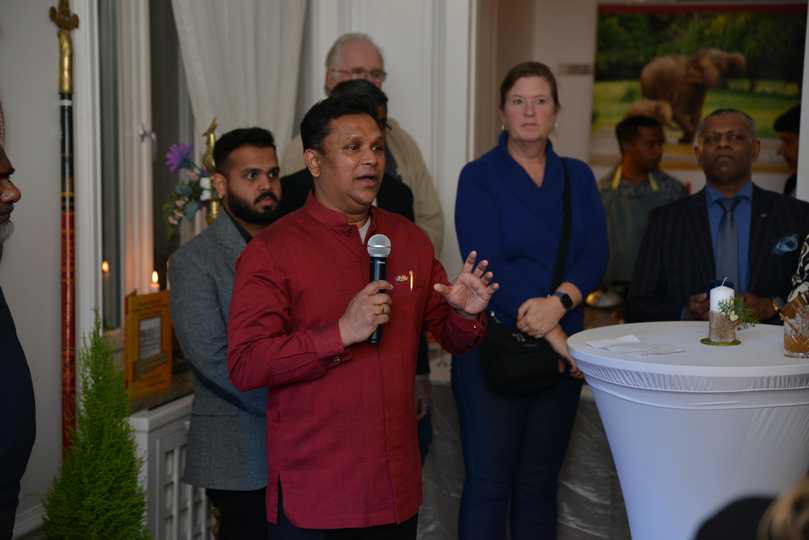
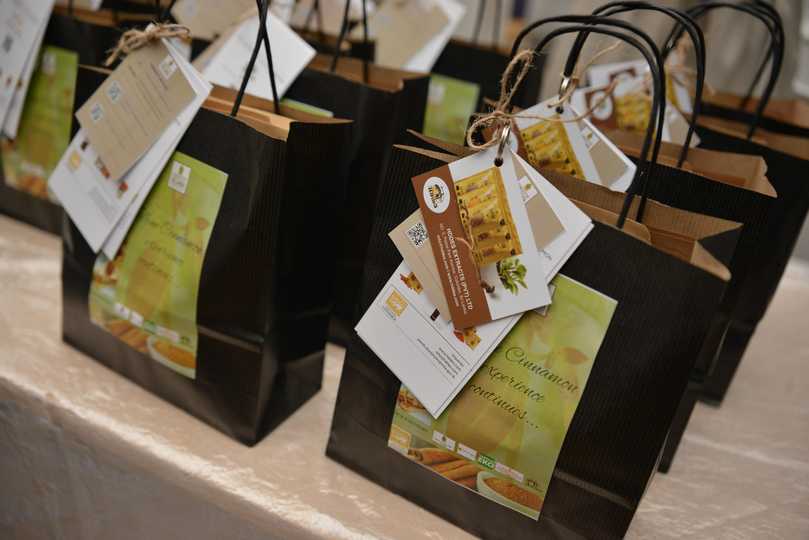
Sri Lanka’s Envoy in Stockholm Ambassador Dharshana M Perera in his remarks highlighted the versatility, authenticity, health and safety of Sri Lanka’s signature spice and the importance of understanding the distinction between Ceylon Cinnamon and ‘cinnamon’ alternatives such as Cassia by the discerning Swedish public. He spoke of the evening’s opportunity to explore the creativity in cuisine and business with this unique spice particularly in Europe given the EU’s GI certification. He invited the guests to explore the complimentary Ceylon Cinnamon provided by HDDES and Cinnamon Legends in their homes, bakeries and production houses and restaurants. The gift packs included Ceylon Cinnamon Powder, Quills and Liquid Smoke from Cinnamon Legends and HDDES.
Through a scientific analysis, Prof. Wimal Ubhayasekera presented the potential health benefits of Ceylon Cinnamon, as the preferred and healthy choice for consumption as against the ‘cinnamon` alternatives such as Cassia. He enlightened the audience of the concerns relating to the significantly higher Coumarin content in the alternatives.
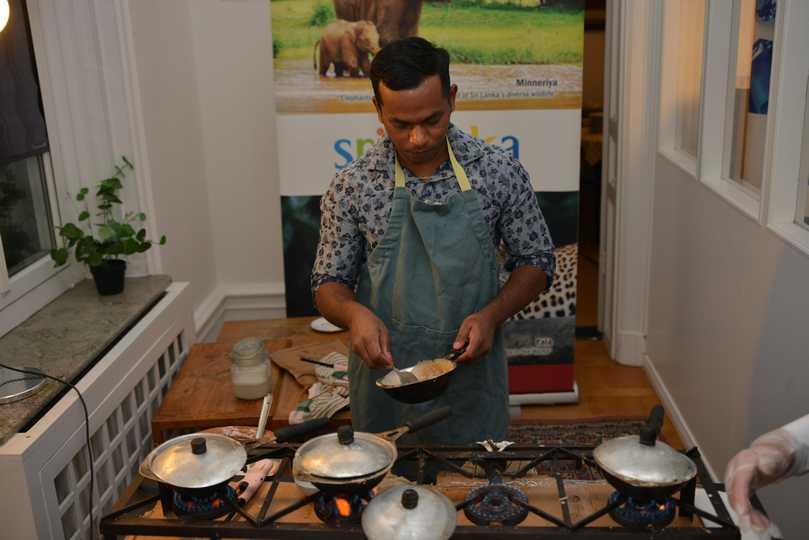
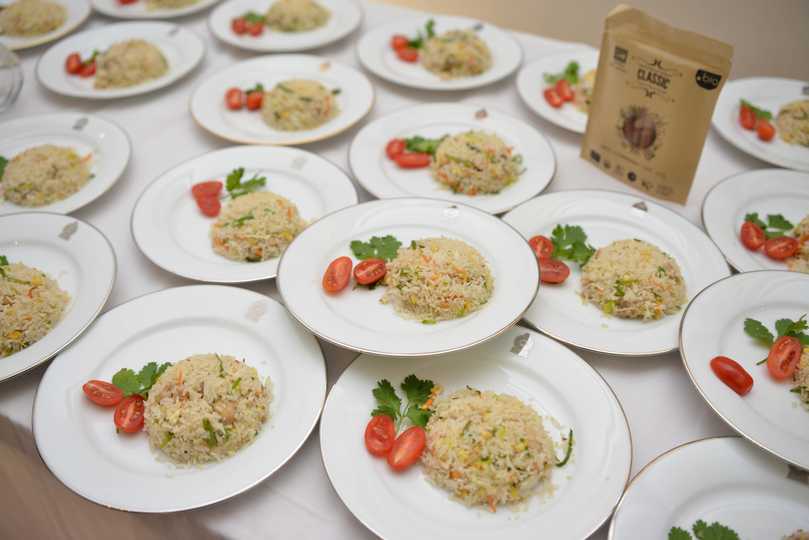
The evening’s dishes specially created for the event included among others Cinnamon and Chilli-marinated shrimp with Cinnamon aioli, Cinnamon marinated Fried Rice (Chef Sithira Jayasinghe), Cinnamon smoked Gua Bao bun with Cinnamon braised Pork belly (Chef Vishwa Tharidu), Cinnamon Hopper with Lunumiris (Mr. Navaneethan), Panna Cotta with Cinnamon Candied Apples(Chef Sithira Jayasinghe), Cinnamon Buns/cake (by Swedish food brand Naima), Mocktail Cinnamon Supreme with Ceylon Cinnamon (Dilmah/Tekompaniet with Chewy Cinnamon brand) and a range of other dishes capturing the versatility and flavour of True Cinnamon. The event also had guidance and association of Swedish Chef Carola Magnusson (Carola’s EKO), Margaretha Haglind (Bogawantalawa Tea).
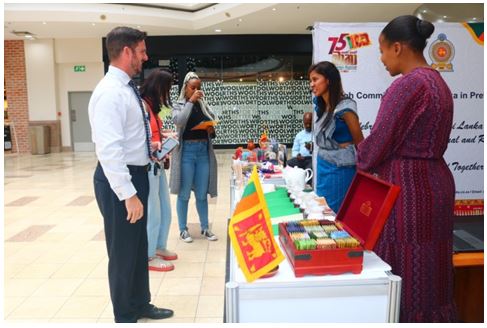
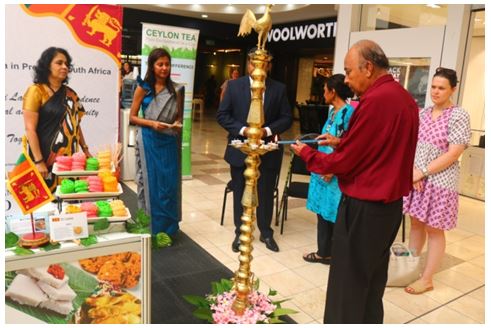
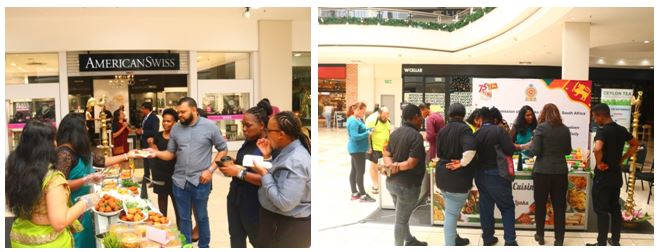
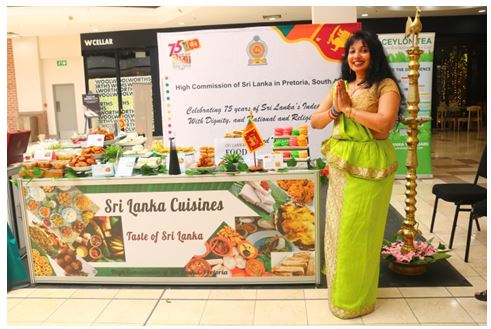
The High Commission of Sri Lanka in South Africa showcased Sri Lankan food, tea and tourism at the Brooklyn Mall in Pretoria recently.
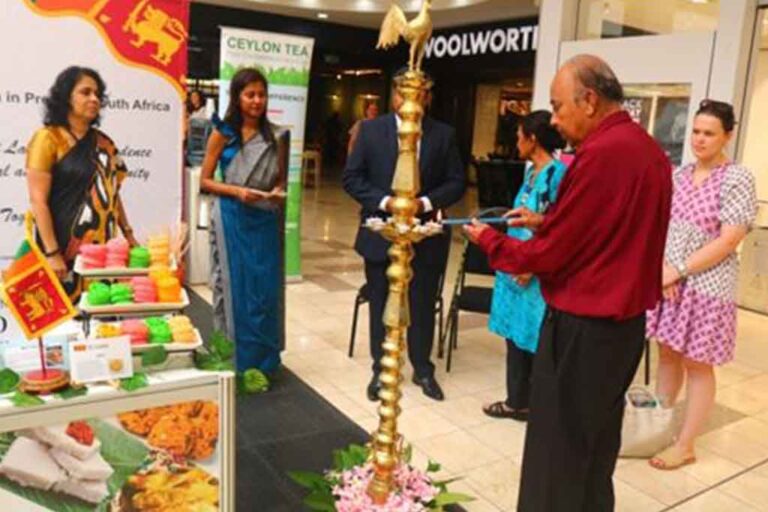
The Sri Lankan stall under the theme of “Taste of Sri Lanka” at the Brooklyn Mall was inaugurated by Sri Lanka’s High Commissioner of South Africa Gamini Gunawardena in the presence of the members of the diplomatic community in Pretoria and distinguished guests from the Sri Lanka community in South Africa.
The stall was designed to showcase Sri Lankan tourism, tea, food and handicrafts with a view to promoting Sri Lanka as a travel destination. Sri Lankan traditional delicacies, including Kiribath, Mung Kavum, Kokis, Kottu, Roti, and Cutlets, were served with hot cups of ‘Ceylon tea’ to the visitors. Basilar Tea facilitated the promotion of Pure Ceylon Tea for the event. The two-day event attracted more than 1,000 visitors.
Leaflets and booklets about tea and tourism were disseminated among visitors with a view to promoting Sri Lanka as an attractive tourist destination for South African tourists.
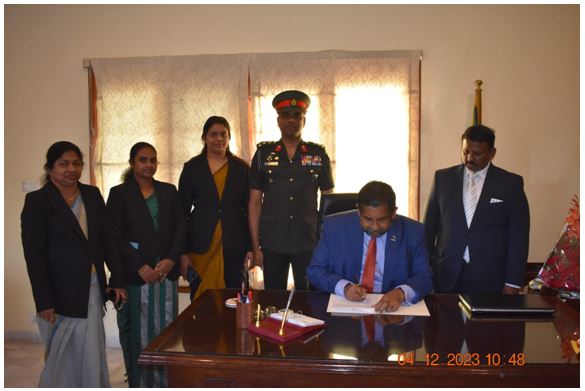
The newly appointed High Commissioner of Sri Lanka to the Islamic Republic of Pakistan Admiral Ravindra Chandrasiri Wijegunaratne (Rtd.) WV RWP & Bar RSP VSV USP NI (M), ndc psn assumed duties at the Sri Lanka High Commission in Islamabad on Monday, 04December 2023. The High Commissioner – designate was received and welcomed by the staff of the High Commission. His assumption of duties was marked by the lighting of the traditional oil lamp, religious rites and addressing the staff.
In his address to the staff, High Commissioner-designate Admiral Ravindra Chandrasiri Wijegunaratne (Rtd.) stated that Both Pakistan and Sri Lanka are strategic partners in South Asia and the relationship established between two brotherly countries is based on mutual trust. He said he is committed to extend his fullest support in order to strengthen the existing relationship and build people to people contacts stronger. He is the only Sri Lankan who has been awarded the Nishan – e- lmtiyaz medal by Pakistan.
Prior to the appointment as the High Commissioner of Sri Lanka to Pakistan, Admiral Ravindra Chandrasiri Wijegunaratne (Rtd.) served as the Commander of the Sri Lanka Navy and as the Chief of Defence Staff (CDS). From February 2023 to August 2023 he was the Managing Director of Ceylon Petroleum Corporation (CPC) and Chairman, Trinco Petroleum Terminals (Pvt) Ltd.(TPTL).
The High Commissioner-designate Admiral Ravindra Chandrasiri Wijegunaratne (Rtd.) joined the Sri Lanka Navy in 1980 and rose to the Rank of Admiral / Chief of Defense Staff (Tri-Forces Commander). And also previously served as the First Secretary/Defense Adviser of Sri Lanka High Commission in New Delhi from 2001 – 2005.
The High Commissioner-designate Admiral Ravindra Chandrasiri Wijegunaratne (Rtd.) holds a Bachelor of Science (Hon) (War Studies) Degree from Karachi University, Pakistan and MPhil (Defense and Strategic Studies) from Madras University.
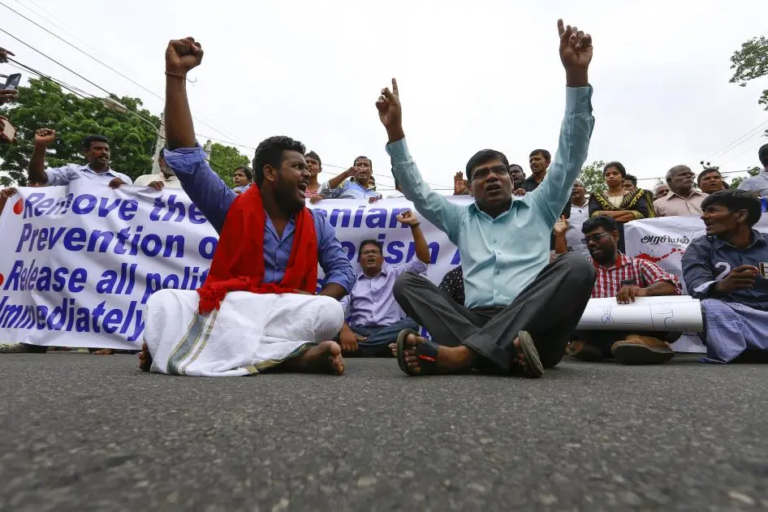
(New York, December 6, 2023) – Sri Lankan authorities have detained nine ethnic Tamils under the country’s abusive counterterrorism law for commemorating those who died in the 1983-2009 civil war, Human Rights Watch said today.
The Sri Lankan government has repeatedly assured international allies, trading partners, and the United Nations that it would replace the Prevention of Terrorism Act (PTA), which has long been used to arbitrarily detain and torture minority community members and civil society activists. The government should immediately release all those arbitrarily detained under the PTA and place a moratorium on its use until it can be repealed.
“The Sri Lankan authorities’ use of a counterterrorism law against Tamils commemorating those who died in the civil war is cruelly abusive and further marginalizes a community that already faces persistent government discrimination,” said Meenakshi Ganguly, deputy Asia director at Human Rights Watch. “President Ranil Wickremesinghe speaks of ‘reconciliation,’ but his government’s actions only serve to deepen ethnic divisions.”
The authorities arrested those newly detained under the PTA between November 25 and 27 in Batticaloa, in the Eastern Province, and confiscated decorations and loudspeakers from a commemoration vigil. Since the civil war between the government and the Liberation Tigers of Tamil Eelam (LTTE) ended in 2009 with the separatist armed group’s complete defeat, successive administrations have prevented Tamils from publicly memorializing the war dead.
On December 2, police in Mullaitivu district, in the Northern Province, reportedly shut down an event at a Hindu temple to commemorate the Sri Lankan army’s 1984 massacre of Tamil villagers in Othiyamalai. Preventing ethnic and religious minorities from conducting ceremonies to commemorate the dead violates the rights to freedom of religion, belief, expression, and association, Human Rights Watch said.
Soon after taking office in July 2022, President Wickremesinghe ended a short-lived moratorium on the use of the PTA. A previous administration, in which Wickremesinghe was prime minister, had pledged in 2017 to repeal the law when it rejoined a European Union trading program called the Generalized Scheme of Preferences (GSP+). The GSP+ grants tariff-free access for Sri Lankan exports conditioned on compliance with international human rights conventions. Sri Lankan authorities have repeatedly renewed the pledge but never carried it out.
The administration has also used the PTA to restrict criticism of government management of the economy and other policies. In August 2022, three student activists were detained under the law for protesting the government’s handling of the economic crisis. Other activists say that they fear being arrested under the PTA for speaking out and that the government is constraining civil society organizations’ access to funding, particularly donations from abroad, under the guise of “countering terrorist financing.”
The International Monetary Fund (IMF), which is providing Sri Lanka with a US$3 billion loan, reported in September that civil society’s “oversight and monitoring” of government actions is “restricted … by broad application of counter-terrorism rules.”
In a November report on Sri Lanka’s compliance with its human rights obligations under the GSP+ trading arrangement, the EU found that “the treatment of minorities remains a concern in particular as efforts towards reconciliation are slow, and the 1979 Prevention of Terrorism Act (PTA) continues to be applied including after the protest movements in 2022, causing fear among the population and suffocating dissent. Substantial reform or repeal of the PTA in line with human rights standards remains a priority, just as Sri Lanka’s need to re-commit to reconciliation and accountability.” Despite Sri Lanka’s failure to comply with its six-year-old pledge to reform the PTA, the EU continues to extend GSP+ benefits to the country.
On September 15, the government published the latest version of its proposed replacement counterterrorism legislation. It then withdrew the bill for further revisions after widespread domestic and international criticism that it reproduced many of the abusive provisions of the current law while creating new speech-related offenses that could be used to suppress dissent.
The government recently proposed another law, the Online Safety Bill, that could also be used to restrict freedom of expression by creating a commission, appointed by the president, which would decide whether online statements are false or prohibited. The commission could order the removal of online statements and participate in police investigations and prosecutions of those accused of posting them.
“The Sri Lankan government’s latest misuse of the PTA should be a strong reminder to the EU that its GSP+ requirements are being ignored,” Ganguly said. “The European Union and EU governments need to make their displeasure with this turn of events known.”
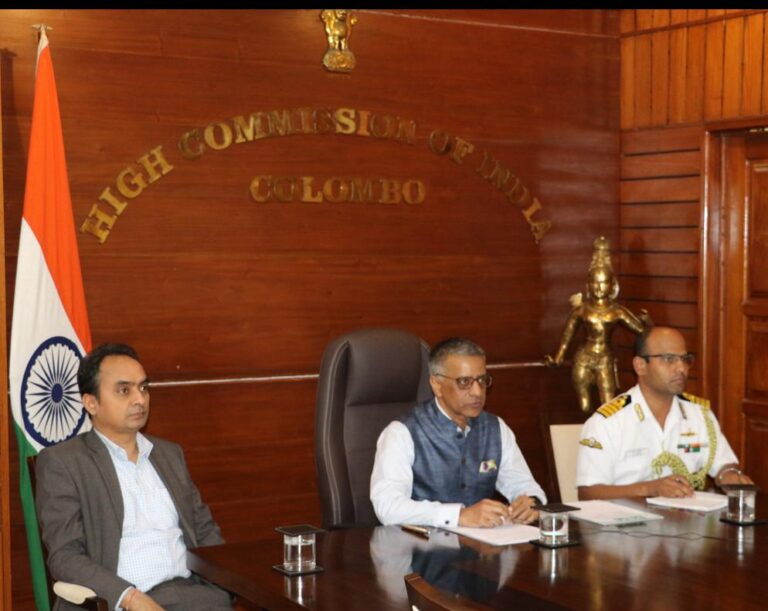
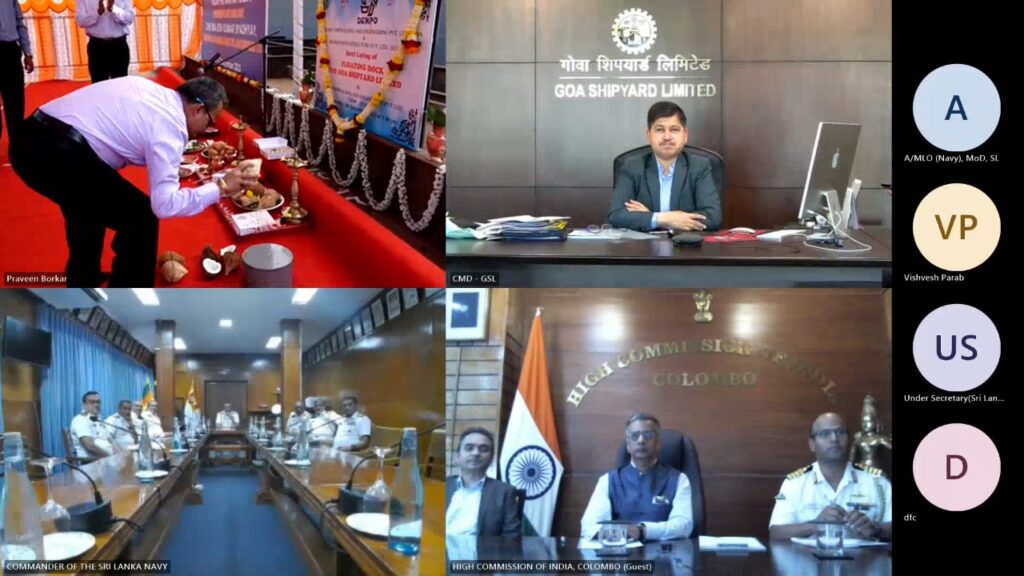
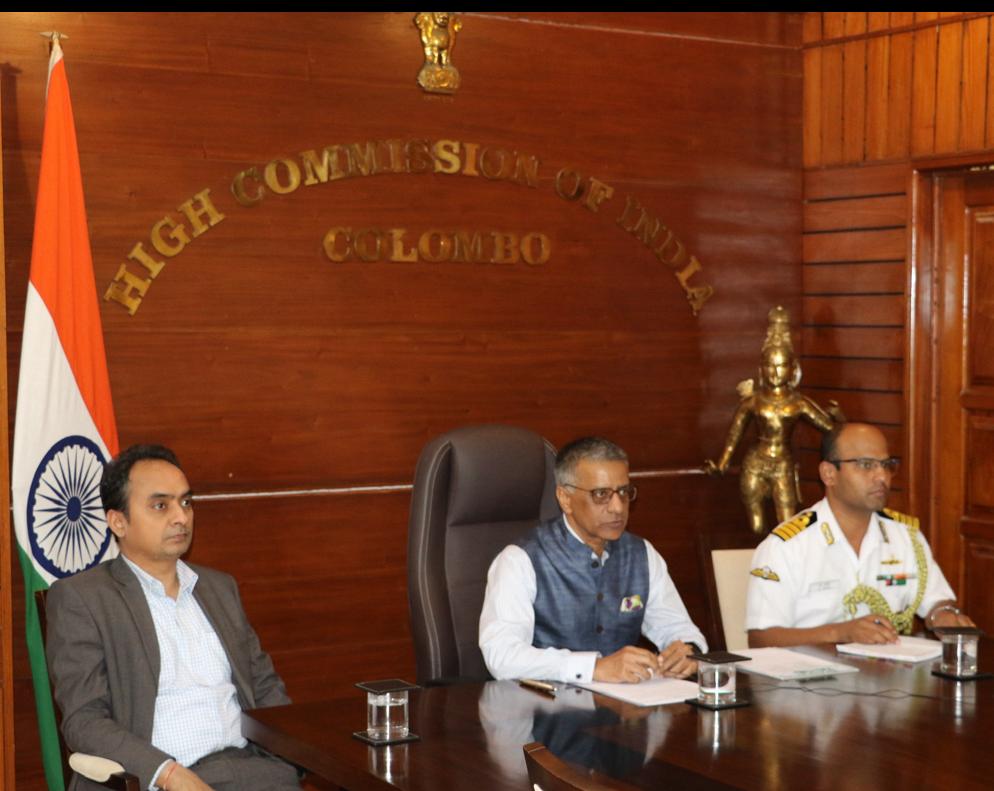
The Keel Laying ceremony of 4000T Floating Dock for the Sri Lanka Navy being built by M/s Goa Shipyard Ltd was conducted on 06 December 2023. The ceremony was held at M/s Dempo Shipbuilding and Engineering Pvt. Ltd. (DSEPL), Goa. This landmark event was graced by H.E. Gopal Baglay, High Commissioner of India in Sri Lanka, Vice Admiral UVMP Perera, Commander of Sri Lanka Navy along with all Joint Monitoring Committee members of Floating Dock from both countries through virtual participation.
The High Commissioner in his address during the occasion highlighted that the project symbolises the enduring bonds of cooperation, camaraderie and friendship between India and Sri Lanka. India has remained committed towards capacity building and sustained development of Sri Lanka Defence forces, towards realising vision of India’s SAGAR (Security and Growth for All in the Region) doctrine and ‘Neighbourhood First’ policy. He emphasized that the project of providing Floating Dock to Sri Lanka Navy has reinforced the strong bonds between Navies of both India and Sri Lanka. He mentioned that the Floating Dock will fulfill all maintenance needs of the Sri Lanka Navy and thereby enhancing Maritime security in the region.
He thanked all stakeholders for their contribution in making this project a reality and wished them for timely completion of the project. He expressed his appreciation to M/s Goa Shipyard Limited for organizing the event in physical as well as virtual mode.
The gifting of Floating Dock to Sri Lanka Navy is indicative of the growing cooperation and friendship between the two nations. It may be recalled that the agreement between GoI and GoSL for gifting of 4000T Floating Dock to Sri Lanka Navy was signed on 15 Mar 2022 in Colombo. The Floating Dock is capable of docking vessels up to 115 meters in length with lifting capacity of dock is 4000 Tons.
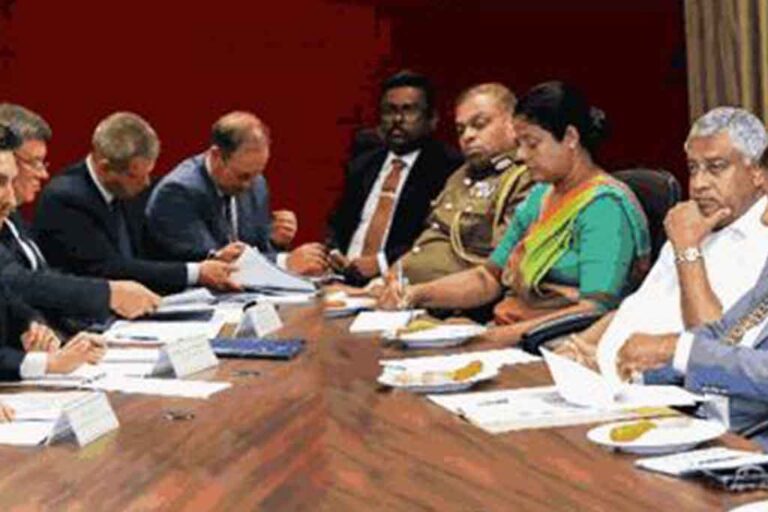
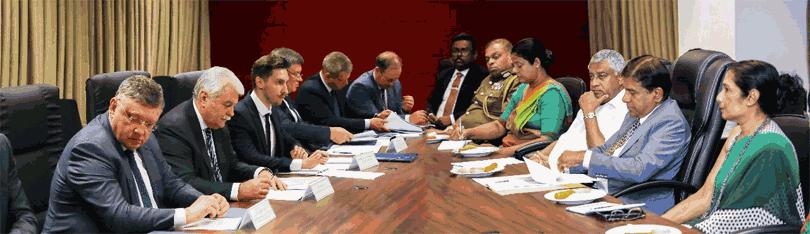
Colombo (LNW): A specialised dialogue focusing on bolstering bilateral security ties between Sri Lanka Russia, alongside discussions on international information security, has taken place today, the Public Security Ministry announced today (07).
Chaired by Public Security Minister Tiran Alles, the meeting was conducted at the ministry office and saw the participation of Nikolai Patrushev, Secretary of the Security Council of the Russian Federation, and Justice Minister Wijeyadasa Rajapakshe.
A distinguished Russian delegation, including Alexander Nikolaevich and Deputy Secretary Oleg Vladimirovich, actively engaged in the discussions.
The session also witnessed the presence of ministry officials and Acting Inspector General of Police (IGP) Deshabandu Tennakoon.