Showers will occur at times in Eastern, Uva and Central provinces and in Polonnaruwa and Hambantota districts. Fairly heavy showers above 50 mm are likely at some places in Uva and Eastern provinces and in Hambantota, Matale and Nuwara-Eliya districts.Several spells of showers will occur at Northern province and in Anuradhapura district.
Showers or thundershowers may occur at several places elsewhere after 2.00 p.m. Fairly heavy showers above 50 mm are likely at some places in Rathnapura, Kaluthara, Galle and Matara districts.
Fairly strong winds about (30-40) kmph can be expected at times over Northern and North-western provinces and in Matale, Trincomalee and Anuradhapura districts.
Misty conditions can be expected at some places in Western, Sabaragamuwa and Central provinces and in Galle, Matara and Badulla districts during the early hours of the morning.
The general public is kindly requested to take adequate precautions to minimize damages caused by temporary localized strong winds and lightning during thundershowers.
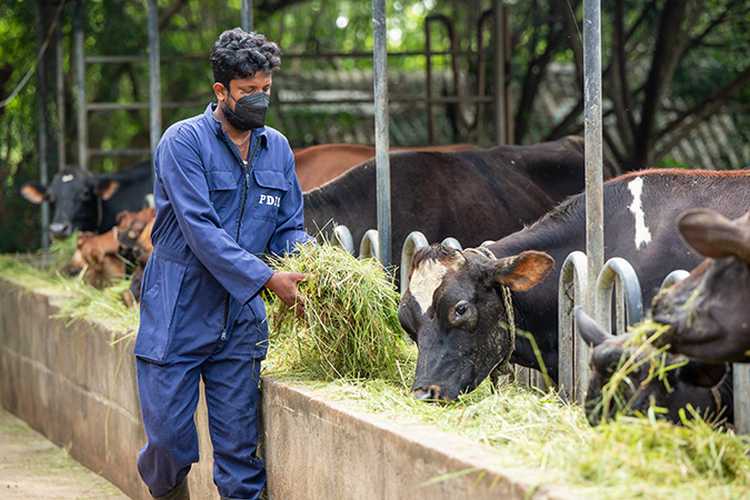
February 05, Colombo (LNW): Sri Lanka’s dairy industry is undergoing a noteworthy transformation, underlining both the challenges and emerging opportunities that shape one of the country’s most critical agricultural sectors. With domestic milk production still meeting only a fraction of national demand, the sector’s growth and its potential contribution to the broader economy hinges on enhancing local capacity, empowering dairy farmers, and harnessing state-owned assets more effectively.
According to recent industry figures, Sri Lanka produces about 40 % of its total milk demand locally, with the remainder met through imports chiefly powdered milk that costs billions of rupees every year. While production has increased over the past decade, local output remains significantly below national consumption. Official data show that domestic annual milk production has fluctuated around 380 million litres, a modest rise from earlier levels but still insufficient relative to national requirements.
Amid this backdrop, the Sri Lankan Government’s commitment to revitalise the dairy sector has taken centre stage. Prime Minister Dr. Harini Amarasuriya highlighted the transformation of state-owned Milk Industries of Lanka Company (MILCO) as a milestone in this strategy. At the recent MILCO National Dairy Farmers’ Profit Sharing and Insurance Program held at Temple Trees, she emphasised that the government’s approach prioritises economic inclusivity and shared benefits—a shift from decades of stagnation and mismanagement.
MILCO’s performance in 2025 stands as a symbol of this turnaround. The company reported its highest-ever sales turnover and historic net profit, a rare achievement for a formerly loss-making state enterprise. In recognition of this success, performance incentives will be distributed to some 22,000 dairy farmers affiliated with MILCO, with symbolic dividend payments already presented to 2,000 farmers at the event.
This revival owes much to stronger producer linkages, improved processing capacity, and better supply chain operations. MILCO now collects roughly 150,000 litres of milk daily—a significant improvement from earlier years when outputs lagged due to administrative weak points. To support sustainability, the Dairy Farmer Retirement Scheme and farm family insurance benefits were also introduced, further embedding social security within the sector’s growth narrative.
Yet challenges persist across the industry. Smallholder farmers—who constitute the backbone of Sri Lanka’s dairy production continue to grapple with rising input costs, limited access to high-quality feed and veterinary services, and logistical inefficiencies. Reports show many farmers struggle with low yields that undermine profitability, even as overall production inches upward.
Still, industry stakeholders view MILCO’s renewed performance as a catalyst for broader reform. Agricultural Minister K.D. Lalkantha praised both institutional leadership and dairy farmers for driving MILCO’s turnaround, stressing the importance of recognising national value in such achievements. Government support for tackling systemic challenges is expected to continue, signalling a long-term commitment to the sector.
Looking ahead, the Sri Lankan dairy industry’s capacity to reduce import dependence, boost rural incomes, and contribute meaningfully to GDP will depend on scaling up production efficiency and sustaining momentum from recent reform efforts. As MILCO leads by example, dairy’s potential role in strengthening the rural economy and enhancing food security becomes ever clearer
February 05, Colombo (LNW): The appointment of Samudika Jayaratne as Auditor General has finally ended a ten-month impasse that left Sri Lanka’s National Audit Office without a permanent head. The Constitutional Council’s unanimous approval follows the retirement of Chulantha Wickramaratne in April 2025, and months of heated debate over presidential nominees rejected by the Council.
The prolonged vacancy exposed the NAO to political manoeuvring. The controversy reached its peak when a serving military officer was nominated in December, sparking public concern that the audit institution could lose its independence and become an extension of state power.
Jayaratne’s appointment restores leadership, but she assumes office at a time when the economy remains vulnerable, and public scrutiny of government spending is at its highest.
Political Threats to Audit Independence
The repeated rejection of presidential nominees reflects deep distrust between the executive and oversight institutions. While the Council’s decision can be seen as a defence of institutional independence, it has also created a power vacuum that weakened the NAO’s ability to function effectively.
Jayaratne now faces the challenge of rebuilding trust in the office’s neutrality. Her appointment must signal a return to impartial audits, free from political interference. This will require courage, transparency, and a firm commitment to the principles of public accountability.
Fiscal Oversight in a Time of Scarcity
The economy’s current condition makes audit work more important than ever. Government spending is constrained, and there is heightened risk of corruption and mismanagement in areas such as public procurement, debt servicing, and emergency expenditures.
With international lenders and investors watching closely, audit reports will play a critical role in demonstrating fiscal discipline. Jayaratne must prioritise audits that reveal wasteful spending and safeguard the integrity of public funds.
Operational Challenges
The NAO’s internal capacity may have been compromised during the leadership gap. Staff morale, planning, and audit execution could have suffered, reducing the office’s effectiveness. Jayaratne must rebuild organisational stability, strengthen training, and ensure audits are conducted timely and professionally.
Moreover, she must engage with the public transparently. The NAO must not be perceived as an elite institution operating behind closed doors. Regular public disclosure of audit findings will be essential to regain credibility.
The Road Ahead
Jayaratne’s appointment is a critical step, but it marks the beginning of a difficult journey. To succeed, she must defend the NAO’s independence, strengthen fiscal oversight, and restore public confidence in governance. In the current economic environment, her performance will have profound implications for transparency and accountability in Sri Lanka.
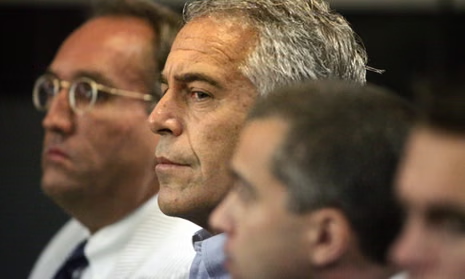
February 05, World (LNW): Jeffrey Epstein was an American financier and convicted sex offender who trafficked and abused dozens of underage girls over many years. He cultivated extensive relationships with political leaders, royalty, business magnates, academics, and celebrities. His case became one of the most significant criminal and institutional scandals of the 21st century due to its scale, the leniency he received from the justice system, and the continued release of official documents even after his death in 2019.
As of 2026, Epstein’s crimes, associates, and the failures surrounding his prosecution remain the subject of global scrutiny.
Background and Early Life
Jeffrey Edward Epstein was born in 1953 in Brooklyn, New York. Despite lacking a college degree, he briefly worked as a mathematics and physics teacher at the elite Dalton School in Manhattan. From there, he transitioned into finance, securing a position at Bear Stearns. He later founded J. Epstein & Company, through which he managed wealth for ultra-high-net-worth individuals.
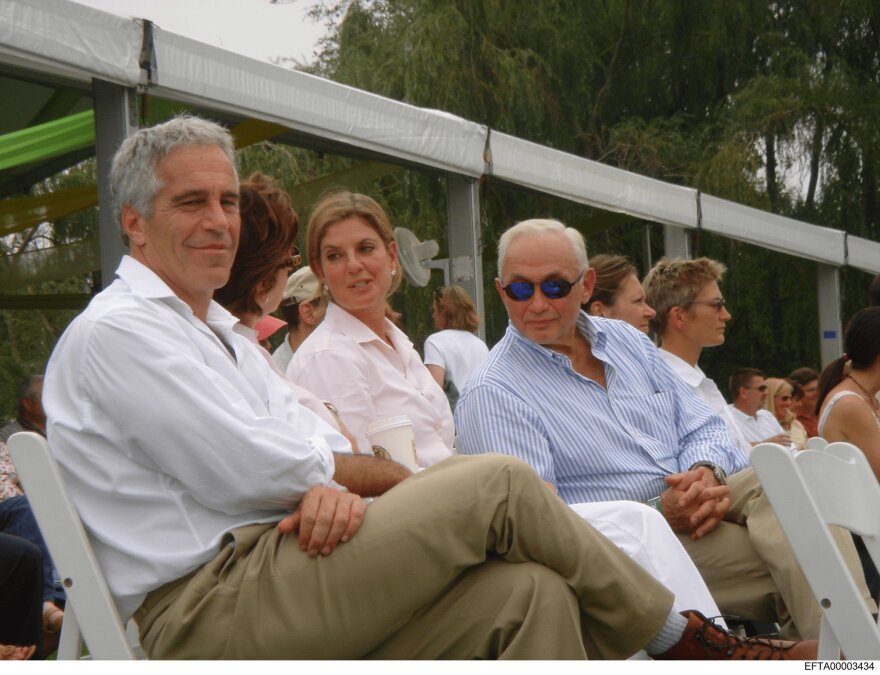
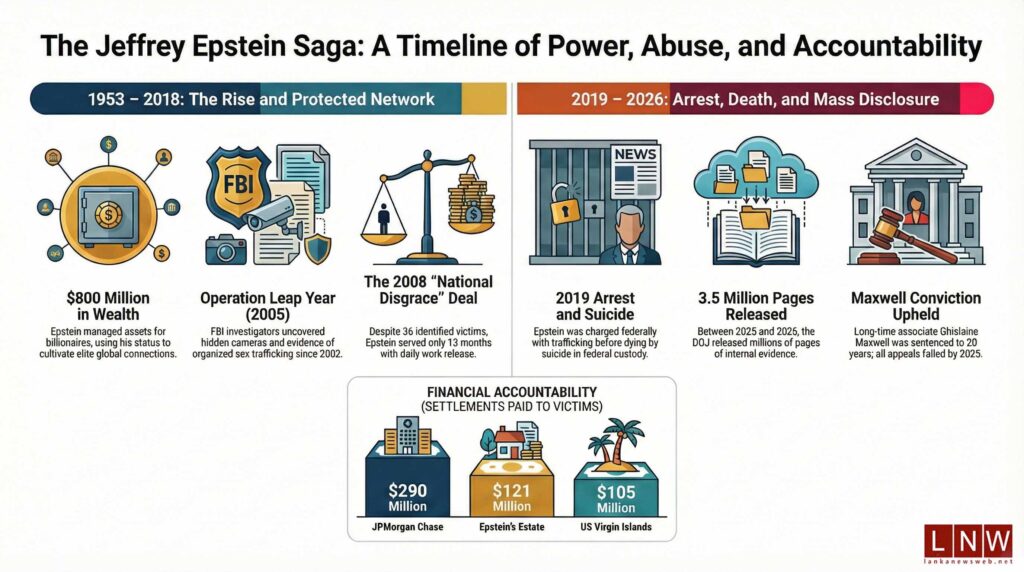
By 2018, Epstein had reportedly amassed over 800 million US dollars in fees by managing billionaire clients, most notably Leslie Wexner, founder of L Brands. Epstein’s exact sources of wealth were opaque and frequently questioned.
– A large Manhattan townhouse – A Palm Beach mansion in Florida – A ranch in New Mexico – Little St. James island in the US Virgin Islands
Little St. James became infamous as the primary site of sexual abuse and trafficking and was widely referred to as “Pedophile Island.”
Criminal Investigations (2005–2007)
In March 2005, the Palm Beach Police Department launched a criminal investigation after a parent reported that Epstein had sexually abused her 14-year-old daughter. Police identified at least 36 underage victims, some as young as 14 years old. The victims reported being paid cash for sexual “massages,” which frequently escalated into rape and sexual assault.
The FBI launched a parallel investigation known as “Operation Leap Year.” This investigation uncovered: – Hidden cameras in Epstein’s properties – Nude photographs of underage girls – Evidence of organised sex trafficking operating from at least 2002 onwards
Federal prosecutors prepared a 60-count indictment against Epstein. Despite the strength of the evidence, the indictment was never pursued due to a controversial non-prosecution agreement.
The 2008 Plea Deal
In 2008, Epstein pleaded guilty in Florida state court to: – Procuring a minor for prostitution – Solicitation of prostitution
He was sentenced to 18 months in prison but served only 13 months. During this period, Epstein was granted work release privileges that allowed him to leave jail for up to 12 hours per day, six days a week. The plea deal was accompanied by a secret federal non-prosecution agreement negotiated by US Attorney Alexander Acosta.
This agreement: – Granted Epstein immunity from federal prosecution – Extended immunity to unnamed co-conspirators – Was concealed from Epstein’s victims
The deal was later ruled a violation of victims’ rights and was widely condemned as a “national disgrace.” Alexander Acosta later stated that Epstein was treated leniently due to alleged intelligence connections, though these claims have never been substantiated.
2019 Arrest and Death
On 6 July 2019, Jeffrey Epstein was arrested at Teterboro Airport in New Jersey. He was charged federally with sex trafficking of minors in New York and Florida. Prosecutors alleged that he had trafficked and abused dozens of underage girls over many years and that he faced a potential life sentence.
Searches of his properties uncovered CDs labelled with descriptions indicating nude images of underage girls. On 10 August 2019, Epstein was found dead in his cell at the Metropolitan Correctional Center in Manhattan. The New York City medical examiner ruled his death a suicide by hanging. The death occurred amid serious jail irregularities, including: – Guards failing to perform required checks – Malfunctioning or missing CCTV footage
Although conspiracy theories persist, subsequent FBI reviews and released footage supported the conclusion of suicide.
Key Associates
Ghislaine Maxwell: Ghislaine Maxwell was Epstein’s long-time associate and partner. She played a central role in recruiting underage girls, grooming them, and normalising sexual abuse. In 2021, Maxwell was convicted of sex trafficking and related offences. She was sentenced to 20 years in prison. In 2025, the US Supreme Court rejected her final appeal. She remains incarcerated.
Other High-Profile Associates Numerous high-profile individuals have been named in court documents, flight logs, emails, and depositions. Being named does not imply criminal wrongdoing.
These individuals include: – Bill Clinton – Frequent passenger on Epstein’s private jet; no wrongdoing alleged – Donald Trump – Social relationship prior to a fallout around 2004; no island visits claimed – Prince Andrew – Accused of sexual assault by Virginia Giuffre; settled out of court – Alan Dershowitz – Accused by a victim (denied); assisted in Epstein’s 2008 plea deal – Ehud Barak – Frequent visitor after Epstein’s 2008 conviction – Stephen Hawking – Visited the island for a scientific conference – Leonardo DiCaprio – Named in documents; no allegations – Michael Jackson – Met Epstein; no abuse claims – David Copperfield – Mentioned regarding Epstein-hosted dinners – Bill Richardson – Named by Giuffre (deceased; denied allegations)
Victims and Compensation
Authorities confirmed at least 36 victims during the 2008 proceedings. Investigative reporting by journalist Julie Brown identified approximately 80 victims. Estimates by advocates suggest the true number may reach as high as 1,000 women.
Compensation outcomes include: – Epstein’s estate paid 121 million US dollars to 150 victims through a compensation fund – JPMorgan Chase settled claims for 290 million US dollars – Deutsche Bank settled for 75 million US dollars – The US Virgin Islands government received 105 million US dollars – Virginia Giuffre received 500,000 US dollars in a settlement with Prince Andrew
Document Releases (2024–2026)
2024 Unsealed Court Files: In 2024, approximately 950 pages of court documents were unsealed in connection with Virginia Giuffre’s defamation lawsuit against Ghislaine Maxwell. These documents named nearly 150 individuals mentioned in depositions, motions, and correspondence.
2025–2026 DOJ Releases: Between 2025 and January 2026, the US Department of Justice released approximately: – 3.5 million pages of documents – 180,000 images – 2,000 videos
These releases were mandated by a law signed by former President Donald Trump. The materials include emails, photographs, flight records, and communications with political and business elites. Hundreds of references to Donald Trump appear across multiple batches, including communications labelled “The Duke.” The Department of Justice stated in 2025 that no verified “client list” exists.
Current Status As of February 2026 – Ghislaine Maxwell remains imprisoned – Epstein’s Caribbean islands were sold in 2023 for 60 million US dollars – No new criminal charges have been brought against Epstein’s associates – The Department of Justice has formally closed investigations due to the absence of prosecutable evidence – Victims’ advocates continue to demand full, unredacted transparency
Conspiracy Claims and Factual Findings
Cannibalism Claims: Claims that Epstein or his associates engaged in cannibalism are entirely unsubstantiated. These allegations stem from debunked conspiracy theories, viral hoaxes, and misinterpretations of unrelated cases. No credible evidence supports these claims.
Murder Allegations: Despite persistent online claims that Epstein was murdered to silence him, all official investigations have concluded that he died by suicide. Allegations implicating political leaders or elites have been repeatedly debunked, and no evidence of homicide has been found.
Child Abuse Allegations: In contrast, allegations of child sexual abuse are firmly established. Epstein’s abuse of underage girls is supported by: – Criminal convictions – Victim testimonies – Physical evidence – Court records
There is no credible evidence of murder or cannibalism associated with Epstein’s criminal network, but there is overwhelming evidence of systematic child sexual abuse and trafficking.
With information pertaining to the Epstein case being made into public record, it remains one of the most controversial and unparalleled cases involving systemic sexual abuse, cloaked by wealth and power.
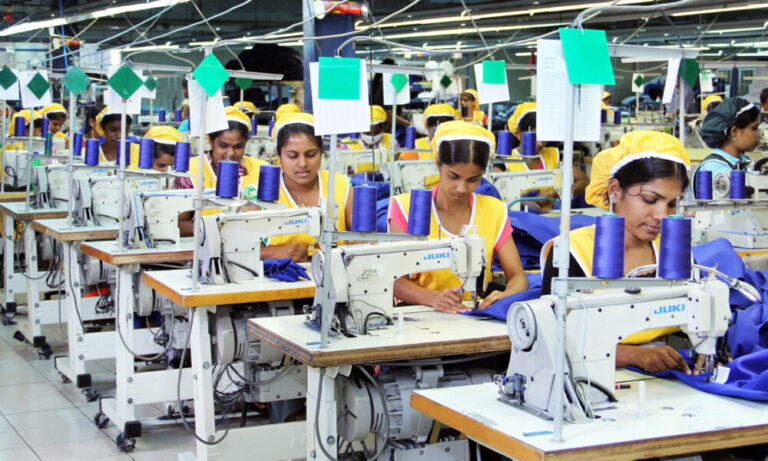
February 05, Colombo (LNW): Sri Lanka’s apparel sector is positioning itself for a decisive pivot in 2026, emphasizing deeper integration with India as a strategic lifeline amid intensifying regional competition. In a speech at the Sri Lanka Apparel Exporters Association (SLAEA) 2025 AGM, Chairperson Rajitha Jayasuriya outlined the industry’s priorities for the year ahead, focusing on securing quota-free access to India and building stronger regional value chains.
Jayasuriya argued that Sri Lanka cannot afford to rely solely on traditional markets, warning that Cambodia, Vietnam and Bangladesh are rapidly outpacing the island’s garment export performance. Cambodia has become the fastest-growing supplier to major Western markets, Vietnam is accelerating automation and smart factory investments, and Bangladesh continues to dominate large-scale basic apparel production. Sri Lanka’s response, she said, must be swift and strategic.
A stronger India–Sri Lanka apparel corridor is viewed as more than an economic opportunity—it is a geopolitical necessity. India’s emergence as a major global sourcing hub and retail powerhouse offers Sri Lankan exporters a chance to diversify and deepen their market reach. The industry expects diplomatic support from Indian officials and calls on the Indian High Commissioner and senior diplomats to actively promote trade collaboration.
Yet, the pathway is not smooth. Jayasuriya highlighted that Sri Lanka’s reform agenda remains incomplete, even as the government’s 2026 Budget introduced export-friendly measures and digital tax reforms. She warned that without urgent policy action, the industry risks falling behind competitors that are rapidly modernizing and expanding free trade agreements.
Technology and innovation have become central to Sri Lanka’s survival strategy. The sector plans to accelerate automation, adopt artificial intelligence, and transition toward fully data-driven operations. At the same time, market diversification into Asia, the Middle East and Africa is being prioritized to reduce dependency on traditional markets.
The chairperson also stressed workforce development and sustainability as critical pillars. Investment in skills, gender equity, worker wellbeing, and compliance with global ESG standards are seen as essential for maintaining Sri Lanka’s reputation for ethical production. Yet, these goals require strong government support in infrastructure and policy stability.
Key demands include full implementation of the National Single Window and Electronic Travel Authorisation systems, establishing a dedicated trade office for major FTAs, and operationalizing the Eravur Fabric Park. Without these reforms, the apparel industry’s future could be limited to shrinking market share and increasing vulnerability.
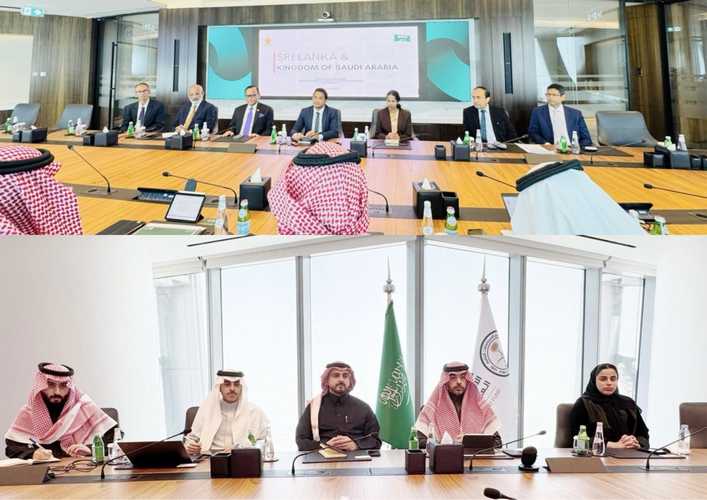
February 05, Colombo (LNW): A high-powered Sri Lankan delegation, led by Industry and Entrepreneurship Development Deputy Minister Chathuranga Abeysinghe, has engaged in strategic talks with senior officials of the Saudi Public Investment Fund (PIF) in Riyadh. The meeting marks one of the most significant diplomatic and financial outreach efforts by Sri Lanka since its economic crisis intensified.
Abeysinghe delivered a detailed presentation aimed at showcasing Sri Lanka’s competitive advantages and investment opportunities, especially in areas where the island nation can generate rapid economic returns. The delegation also used the platform to spotlight Sri Lanka’s capital market potential, a sector Sri Lanka has repeatedly identified as critical for rebuilding investor confidence.
Officials from the Securities and Exchange Commission (SEC) including Chairman Senior Prof. D.B.P.H. Dissabandara and CEO Rajeeva Bandaranaike outlined the country’s recent policy changes and regulatory reforms. These reforms are designed to strengthen transparency, boost investor protection, and accelerate market growth through sustainable mechanisms. The SEC leaders emphasized that Sri Lanka is now positioning itself as a more attractive destination for international capital.
From the Saudi side, PIF Senior Director Mulham Albakree revealed the Fund’s strategic priorities for 2026–2030, signaling interest in global markets that can deliver long-term growth and stable returns. Albakree also highlighted the need to finalize a Bilateral Investment Protection Agreement (BIPA) between Sri Lanka and Saudi Arabia a move that would provide legal safeguards for investors and reduce political and financial risks.
Both sides agreed to establish a continuous communication channel to follow up on the meeting’s discussions, which indicates that Sri Lanka is seeking a long-term partnership rather than a one-off investment.
Sri Lankan Ambassador to Saudi Arabia Ameer Ajwad briefed the delegation on existing bilateral agreements, including the Avoidance of Double Taxation Agreement, which could provide a fiscal incentive for Saudi investors. Also present were senior representatives from the Colombo Stock Exchange (CSE) and SEC, demonstrating a unified national approach toward attracting foreign capital.
The PIF is one of the world’s most influential sovereign wealth funds, holding assets valued at SAR 3.4 trillion (about $910 billion) as of 2024. It has played a central role in Saudi Arabia’s Vision 2030, diversifying the economy through investments in energy, infrastructure, technology, and capital markets.
For Sri Lanka, the meeting is more than a diplomatic visit it is a strategic attempt to attract the kind of deep-pocketed investment that could help stabilize an economy still recovering from severe financial turmoil.
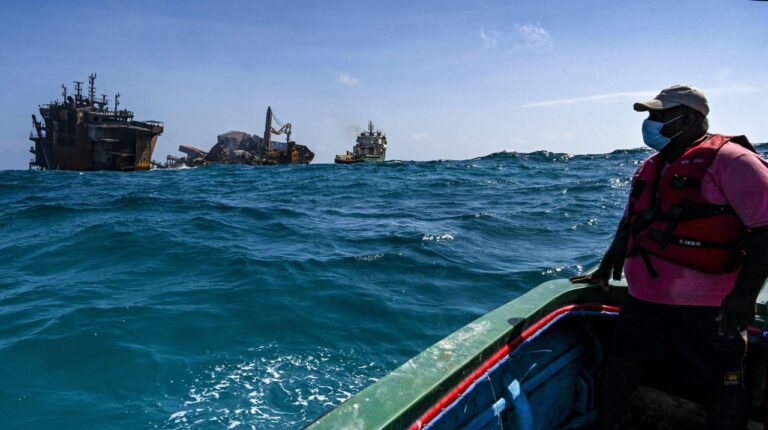
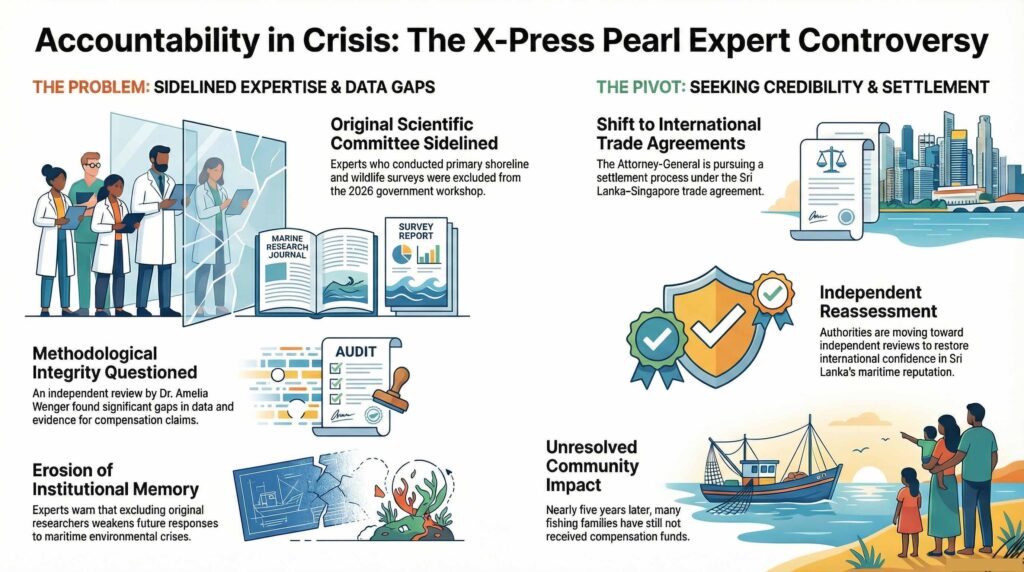
February 05, Colombo (LNW): Several marine scientists who were closely involved in assessing the environmental damage caused by the MV X-Press Pearl disaster have been excluded from a major government workshop intended to strengthen Sri Lanka’s Marine Environment Protection Authority (MEPA).
The decision has raised growing concerns about transparency, accountability, and the handling of scientific evidence in the aftermath of the country’s worst maritime environmental incident.
The omission comes shortly after an independent review by marine ecologist Dr Amelia Wenger highlighted serious shortcomings in MEPA’s second interim damage assessment. Her report questioned the robustness of the methodology, the availability of supporting data, and the strength of evidence used to justify significant compensation claims.
Members of the original expert committee, many of whom carried out shoreline surveys, wildlife examinations, and fisheries assessments following the 2021 disaster, say they were not invited to the January 2026 workshop.
Given their direct involvement and specialist knowledge, several have described the exclusion as perplexing. They argue that sidelining professionals with first-hand experience undermines efforts to improve technical capacity and institutional learning.
Dr Wenger’s review did not challenge the competence of Sri Lankan scientists. Instead, it acknowledged that their work was conducted under extreme pressure, including tight deadlines and restrictions imposed by the Covid-19 pandemic. These conditions, she noted, limited opportunities for long-term monitoring and comprehensive data collection. However, her findings have prompted renewed scrutiny of how environmental damage estimates were prepared and presented before the Supreme Court.
To date, government authorities have not provided a public explanation for the absence of the original experts from the workshop. Nor have they clarified whether the recent critical review influenced participation decisions. This silence has fuelled speculation that institutional sensitivities, rather than purely scientific considerations, may be shaping post-disaster governance.
Affected experts warn that excluding those who were involved from the outset risks eroding institutional memory and weakening future responses to environmental crises. At the same time, some observers suggest that the move may signal a shift towards a more independent reassessment of the original damage analysis, a process long advocated by the ship’s operators.
The controversy also reflects wider concerns about delays in delivering justice to affected communities. Parliamentary oversight committees have repeatedly criticised government agencies for failing to distribute compensation funds received from the shipping company. Nearly five years after the disaster, many fishing families and coastal residents continue to express deep frustration over the lack of tangible support.
Recent developments in the Supreme Court may point towards a new phase in the case. The court has approved the Attorney-General’s request to pursue a settlement process under the Sri Lanka–Singapore trade agreement, following an invitation from the ship’s operators. This has opened the possibility of a formal review involving independent experts.
As Colombo faces increasing competition in its role as a regional transshipment hub, questions remain about the long-term impact of disputed scientific findings on Sri Lanka’s international reputation. Some in the maritime community believe that conclusions defended for years, despite evident weaknesses, may now be quietly reconsidered in the interest of restoring credibility and confidence.
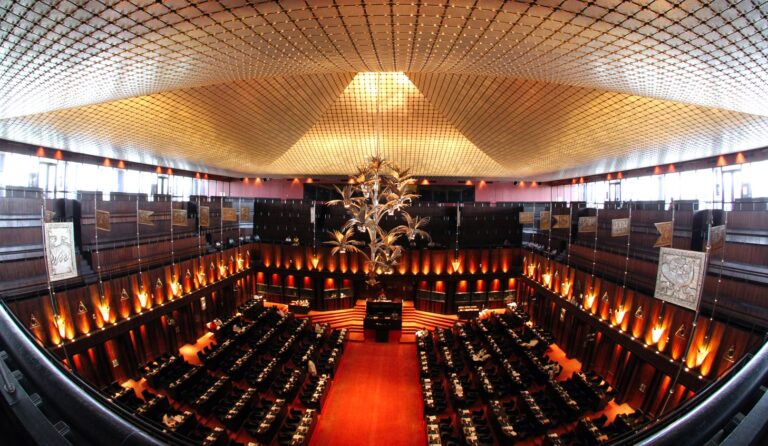
February 05, Colombo (LNW): Leaders and parliamentarians from across the political opposition have jointly called on the government to engage in a broad-based national conversation on the formulation of a new constitution, warning that meaningful reform cannot take place without state participation.
The appeal was made at a forum on constitutional change organised under the One Text Initiative, which brought together representatives from multiple opposition parties to exchange views on the country’s constitutional future. Speakers repeatedly stressed that a credible and lasting constitution requires inclusive dialogue rather than unilateral action.
MP Dayasiri Jayasekera criticised the government for what he described as a deliberate reluctance to open discussions on constitutional reform, despite having pledged such changes in its own policy agenda. He further alleged that the Janatha Vimukthi Peramuna had remained unclear about its true stance on constitutional matters.
MP Harsha de Silva highlighted the need for government involvement to ensure that any new constitutional framework safeguards minority rights within a system often dominated by majority politics. He argued that both President Anura Kumara Dissanayake and the National People’s Power had shown little urgency in pursuing reform, notwithstanding promises made during recent election campaigns.
Echoing these sentiments, MP Ravi Karunanayake said constitutional reform should be approached with a long-term vision, emphasising that future generations would bear the consequences of decisions taken today. Former minister Anura Priyadarshana Yapa added that a new constitution must narrow the divide between the state and the public, cautioning that such an outcome would be impossible if the government remained on the sidelines.
Pivithuru Hela Urumaya leader Udaya Gammanpila warned against attempts to impose a constitution shaped by the interests of a single political force. Drawing on past experience, he noted that draft constitutions proposed under several previous administrations failed precisely because they lacked national consensus. He cautioned that no government should assume its own ideology reflects the will of the entire country, arguing that only an inclusive and consultative process could produce a constitution acceptable to all.
February 05, Colombo (LNW): The Indian High Commission in Colombo has firmly rejected allegations that members of the Indian Coast Guard were involved in an attack on Sri Lankan fishermen at sea on January 29, stating that its own inquiries have found no basis for such claims.
In a statement issued after reports surfaced in sections of the media, the High Commission said it had reviewed the circumstances surrounding the incident and confirmed that neither the Indian Navy nor the Indian Coast Guard carried out any assault on Sri Lankan fishing crews on the date in question.
Reiterating India’s long-standing position, the High Commission stressed that issues linked to fishermen’s livelihoods should always be addressed through humanitarian and non-violent means, adding that the use of force is not endorsed under any circumstances. It also noted that Indian authorities remain in regular contact with the Sri Lankan government to address maritime and fisheries-related concerns.
The response follows complaints by a group of Sri Lankan fishermen who alleged that 12 individuals travelling on two fishing boats departing from the Wellamankaraya Fishery Harbour in Wennappuwa were assaulted while at sea. According to their account, the incident occurred as they were returning to Sri Lanka after fishing in international waters, and they claimed the encounter took place within Sri Lanka’s maritime zone.
Meanwhile, President of the All-Island Multi-Day Boat Owners’ Association, Tyrone Mendis, has called on the authorities to carry out an open and impartial investigation. He further alleged that three vessels were involved in the incident, asserting that at least two were within Sri Lankan territorial waters and claiming that foreign coast guard personnel had crossed the maritime boundary.
Officials on both sides have indicated that dialogue and verification mechanisms remain in place as efforts continue to clarify the facts surrounding the incident.
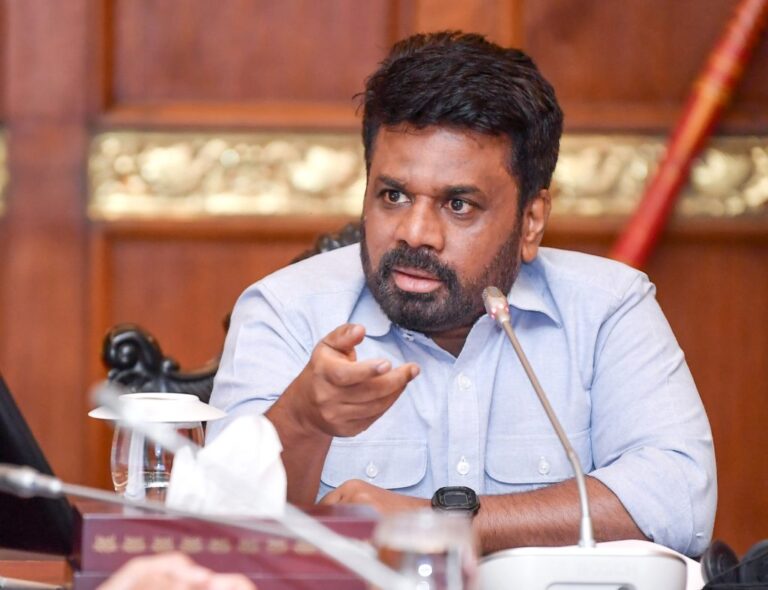
February 05, Colombo (LNW): President Anura Kumara Dissanayake is set to participate in the India AI Impact Summit 2026, which will take place in New Delhi from February 16 to 20 later this month, marking Sri Lanka’s presence at one of the most prominent global forums on artificial intelligence.
Billed as the largest of the four international AI summits convened so far, the event is expected to bring together heads of state, policymakers, technology leaders and experts to focus on the development of responsible, inclusive and socially impactful artificial intelligence.
Confirming the President’s attendance, Sri Lanka’s High Commissioner to India, Mahishini Colonné, said that President Dissanayake would join a wide range of global leaders in the Indian capital. She noted that his participation highlights Sri Lanka’s growing emphasis on digital transformation, innovation and deeper collaboration with India and the international community in emerging technologies.
Speaking at a separate event, the High Commissioner also reflected on Sri Lanka’s 78th Independence anniversary, stating that the country looks forward to advancing alongside India and other partners in a spirit of friendship, mutual respect and shared aspirations.
In a parallel development underscoring the close cultural ties between the two countries, the public exposition of the sacred Devnimori relics of Lord Buddha, brought from Gujarat, India, began this morning at the Gangaramaya Temple in Hunupitiya, Colombo, drawing devotees from across the island.