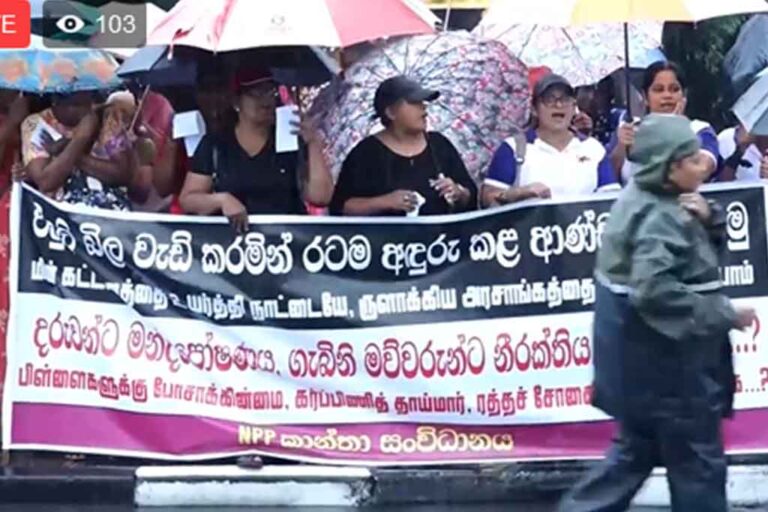
Colombo (LNW): Police deployed water cannons to disband a gathering of demonstrators at the Polduwa Junction in Battaramulla.
The protest, organised by the women’s wing of the National Peoples Power (NPP), commenced near the Parliamentary Roundabout this (04) afternoon, and is currently being held.
The NPP’s women’s wing initiated the protest to highlight various concerns, such as the escalating cost of living, the tax burden on citizens, and other pressing issues affecting the country.
Law enforcement employed water cannons when protesters endeavoured to advance towards Parliament along Parliament Road, according to reports.
Colombo (LNW): Consumer confidence fell again in October, continuing its slide from its peak in April 2023, according to the Institute for Health Policy (IHP) as per the latest update of its Consumer Confidence Indices, generated from its Sri Lanka Opinion Tracker Survey (SLOTS).
This sentiment of consumers was evident amidst the Headline inflation, as measured by the year-on-year (Y-o-Y) change in the Colombo Consumer Price Index (CCPI) increased to 1.5% in October 2023 from 1.3% in September 2023.
The Central Bank said this slight increase in the headline inflation is mostly in line with its projections envisaged in October 2023.
This is the second straight month that inflation has accelerated, albeit marginally. Since peaking in February 2023 at 50.60%, inflation was seen on steady and rapid disinflation path, reaching the current significantly moderated levels compared to a year ago.
CBSL said the food deflation (Y-o-Y) continued for the fourth consecutive month and remained unchanged at 5.2% in October 2023 compared to the previous month. Meanwhile, the non-food inflation (Y-o-Y) increased to 4.9% in October 2023 from 4.7% in September 2023.
“Inflation is expected to stabilise around the targeted level of 5% over the medium term, supported by appropriate policy measures and well-anchored inflation expectations.
Nevertheless, should there be any upward increases to administratively determined prices, tariffs or taxes by the Government, a transitory increase in inflation beyond the target is probable in the short term,” CBSL said.
IHP said all indices remain at pessimistic levels with the biggest decline in the Index of Current Conditions, which tracks current conditions, and which fell 5 points to 13 points.
The Index of Consumer Sentiment (ICS), the broadest measure of the public’s view of their personal economic status and the national economy, fell 3 points to 22 points in October.
The Index of Consumer Expectations (ICE), which tracks future perceptions fell 2 points to 28 points.
All IHP SLOTS consumer confidence indices range from zero to a potential maximum of 100, with levels below 50 indicating net pessimism.
The CCI estimates are based on 558 interviews conducted by telephone in October 2023 and 13,216 adults surveyed between Oct. 21 2021-Oct. 31 2023, with sample sizes varying between indices depending on response rates.
All estimates are adjusted to be representative of the national population, including gender, age, ethnicity, and income level.
The SLOTS platform tracks public opinion and wellbeing daily using a large national panel recruited by face-to-face interviews and other randomly dialled respondents, with numerous peer-reviewed scientific publications that use the data.
Colombo (LNW): Corporates are poised with apprehension as the proposals outlined in Budget 2024 take effect with a sense of uncertainty clouding expectations for the upcoming fiscal year,” leading business magazine LMD reports, in its December edition.
LMD states: “Optimism among business executives that the economy will ‘improve’ over the next 12 months has diminished, falling to eight percent in November. This represents a decrease of five points from the preceding month’s 12%.”
The leading magazine adds that 19% of the survey sample expect the economy to ‘stay the same,’ which is lower than the 27% recorded in October.
“A whopping 73% believe the economic situation will ‘get worse,’ marking a substantial increase of 12 points compared to the preceding month,” it notes.
There has also been a decline in optimism of anticipated sales volumes ‘getting better’ over the next 12 months with nearly a quarter (23%) saying so, that’s six percentage points lower than in October.
“Additionally, more than one in five respondents (23%) believe that sales numbers will ‘remain the same’ as opposed to 20% previously.
Only 11% of survey respondents say that volumes ‘increased’ compared to the past 12 months, which LMD says “is a notable decrease of 13 points from October.” And 12% reveal that their sales numbers ‘stayed the same’ while more than three-quarters (77%) reported a reduction.
“Caution dominates the outlook for sales volumes to ‘get better’ in the next three months with only 14% saying so, a slight decrease from the 17% recorded in October.
LMD’s publisher, Media Services, says the latest edition of the magazine will be released shortly. Its digital edition will also be shared on WhatsApp and the publisher’s social media platforms.
The magazine’s cover story unveils the pioneering Digital Readiness Index (DRI) with a listing of the corporate houses that a survey conducted by the University of Kelaniya has compiled.
Colombo (LNW): Sri Lanka’s tourism industry is entering into an encouraging resurgence track in the first eleven months of 2023, with the number of tourist arrivals showing a marked increase in comparison to the previous year, according to the Sri Lanka Tourism Development Authority (SLTDA).
In the wake of this tourism revival ,the first-ever Meetings, incentives, conferences and exhibitions( MICE ) tourism road map, outlining a visionary three-year plan for 2024- 2026 was unveiled by the Sri Lanka Convention Bureau (SLCB) on 15 November.
The Bureau has outlined its ambitious target for 2026, aiming to generate 20% of tourist arrivals through MICE activities, projecting an 11% increase in MICE arrivals from 2023.
One of the distinctive features of this initiative is the unprecedented collaboration between the public and private sectors, marking a significant milestone in Sri Lanka’s tourism development.
The tourism industry has demonstrated a robust resurgence, surpassing over $ 1.75 billion in earnings during the first 11 months of the year, accompanied by the arrival of over 1.27 million visitors.
“As per the provisional figures tourism earnings in the first 11 months are estimated at over $ 1.75 billion, reflecting a 55% increase from the corresponding period of last year, whilst November earnings stood around $ 160 million,” Sri Lanka Tourism Development Authority (SLTDA) Chairman Priantha Fernando disclosed.
He said November earnings were around US$ 160 million, contributing to the overall positive trajectory of the industry.
“Despite grappling with challenges stemming from the Easter Sunday attacks in 2019, the tourism sector not only weathered these storms but emerged stronger,” he added.
The surge in arrivals during November is particularly noteworthy, with Sri Lanka welcoming 151,496 tourists, a stark contrast to the crisis-ridden 59,759 seen in 2022. Nevertheless, when compared to the benchmark year of 2018, the industry still faces a 22.5% deficit.
Sri Lanka Tourism targeted 204,114 arrivals in November, but it fell short of 52,618 tourists becoming the fourth consecutive month to miss the monthly arrivals target.
India (30,339), Russia (24,912) and Germany (12,331) emerged as the top source markets in November.
Industry analysts view this upward trend as a welcome development for a sector that has navigated challenges over the past three years.
Despite setbacks, Sri Lanka Tourism is now cautiously optimistic and actively working to stimulate the sector, aiming to reclaim pre-crisis levels of activity in the coming years.
Anticipation is running high for the winter season, with the tourism sector setting ambitious goals to welcome 1.55 million visitors and achieve over $ 2.7 billion in income by year-end.
Colombo (LNW): In the wake of several countries worldwide combating climate change and its impacts that follow, the Environment Ministry cautioned that Sri Lanka is in an environmental conservation crisis.
The tackling of the crisis needs to be done sooner than later but conserving these species will have an enormous impact on securing global biodiversity, the ministry warned.
“Sri Lanka is an ideal illustration of the issues that plague the tropics. It is a biodiversity hotspot; however, a significant proportion of our endemic species are diminishing.
Sri Lanka is one of the most climate-vulnerable countries in the world. The country experiences on average US $ 313 million in annual disaster losses,” said Environment Ministry Secretary Dr. Anil Jasinghe.
Yet, Sri Lanka has been lauded as a success story for achieving high levels of human development while pursuing low-carbon growth, he added.
Sri Lanka has submitted the Climate Prosperity Plan to the UNFCCC, under which the country’s long-term low GHG emission strategy requires US $ 26 billion.
The island nation needs US $ 6.5 billion per year, if it is to successfully mitigate and adapt to climate change.
Sri Lanka is only just getting its bearings following the worst economic crisis the country has ever seen. It is evident that Sri Lanka and many other countries in the tropics with identical cases require concerted support from the global community.
The tropics are a catalytic accelerator of solutions to the triple planetary crisis—investments in the tropical belt are investments towards global progress on this front.
Meanwhile, National Experts Committee on Climate Change Adaptation Member Prof. Buddhi Marambe stressed that Sri Lanka needs a paradigm shift, moving beyond geo-political differences and boundaries.
“Investing in the tropical belt could be a unique and effective way to combat the triple planetary crisis. Higher investments in renewable energy, nature-based solutions and pollution control in the tropical belt can lead to significant, transformative changes across the world,” he said.
In place is a Tropical Belt Climate Ambition Plan and a proposed debt relief for low-income economies within the belt. The two efforts are poised to make a substantial contribution to advancing the Secretary General’s Acceleration Agenda.
As Sri Lanka prepares for COP28, the Tropical Belt Climate Ambition Plan is not just a global call to action but also a demonstration that tangible and ambitious action to credibly cut emissions and deliver climate justice is possible and practical, noted UNDP Sri Lanka Resident Representative Azusa Kubota.
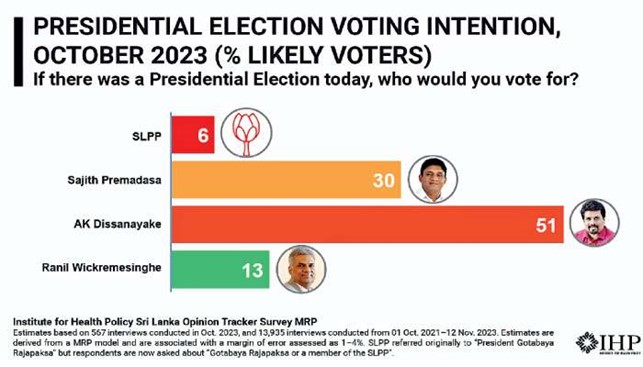
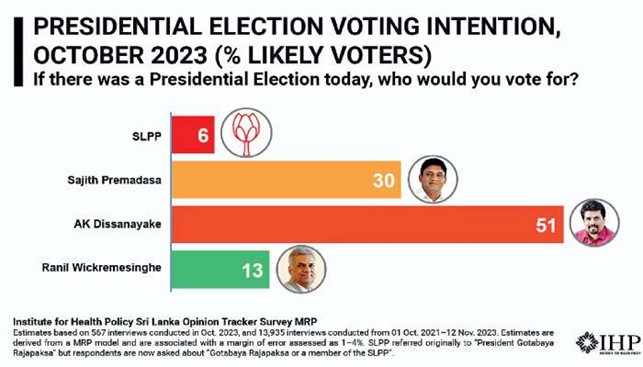
The sudden massive rise in popularity (provided the survey can stand scrutiny) of the JVP that could muster just 500,000 votes for decades and get 3 members into parliament, is not by accident.
It is largely due to the action of the government led by the Central Bank of Sri Lanka. Also the Ministry of Finance the Revenue administrator. Unfortunately we have a government that is unwilling to push back on the IMFs crazy austerity measures.
The country lacks the skills or the network to push back with the IMF or look for alternative financing options. There were billions of dollars of cheap money floating around in 2015-2021. Instead CBSL bought expensive debt.
The Sri Lankan Central Bank or the so called Treasury has not been able to raise 1 single USD to support large scale green projects . The debt restructuring should have looked at models used in Belize.
There are several example of debt-for-adaptation swap, There are countries who borrowed money from other nations or multilateral development banks and large Banks where debt has been forgiven, if the money that was to be spent on repayment was instead diverted to climate adaptation and resilience projects.
Have we worked on any of these opportunities? The government instead issued expensive local debt in 2022. Made no attempt to impose a hair cut on it other than burdening the EPF.
Thus creating an opportunity for the JVP to have a home run. Sadly the Ministry of Finance has been looking at everything in its traditional bureaucratic lens. They have taken the easy and traditional way – heap more taxes and levies on the public . But made sure the salaries of the public sector was increased.
What about the rest of?
Burden on Poor
According to the World Bank Poverty has risen since 2019, from 11.3 to 12.7 in 2020, adding over 300,000 new poor in that period. It continued to increase in 2021, and it then doubled between 2021 and 2022, from 13.1 to 25.0 percent .
This increase has added an additional 2.5 million people into poverty in 2022. Households have been impacted from different fronts as prices rose by 46 percent in 2022. The CBSL is crowing all over the place that they have made inflation negative. Perhaps they need a ride into the vegetable market.
Electricity prices have increased more than three fold. An average family consumes 40-60 units a month. They can’t even now afford 20 units. The government has effectively pushed the lower middle class to the JVP.
The struggling classes have confidence, the JVP will cut back on the bloated bureaucracy. Cut back on the perks of the politicians. Throw out the IMF austerity program. Tax the super rich. Give all that back by way of benefits to the public. Also replace the non productive bureaucrats with more current and dynamic young leaders.
Conclusion
Unless the government does something constructive for the middle class, the lower middle class and the poor and is firm with the bureaucracy in the CBSL and the Treasury. Deal with corruption. Protect the EPF. The country should not be surprised if the JVP finally comes to power democratically in 2024.
Because the public is so frustrated, and finding difficult to live. They are willing to take a gamble like they did with Gotabaya, which turned out to be a disaster. The economic pundits in the CBSL and Treasury and the Cabinet will be credited for this historic occurrence.
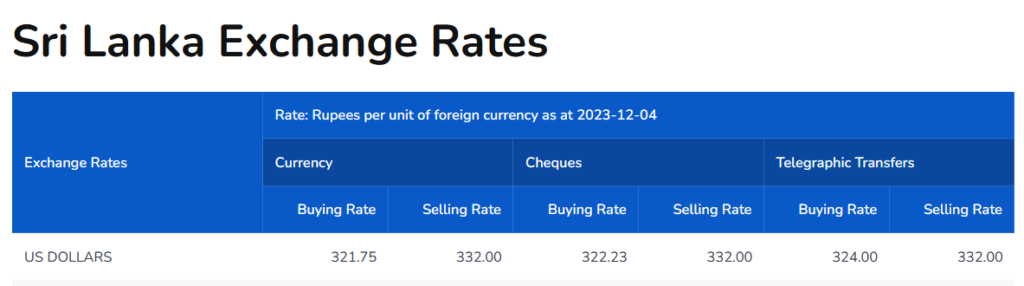
Colombo (LNW): The Sri Lankan Rupee (LKR) indicates steadiness against the US Dollar in leading commercial banks in the country today (04) in comparison to last week’s Friday.
At Peoples Bank, the buying price of the US Dollar has dropped to Rs. 322.17 from Rs. 322.41, and the selling price to Rs. 333.39 from Rs. 333.65.
At Commercial Bank, the buying price of the US Dollar has increased to Rs. 321.75 from Rs. 320.99, and the selling price remains unchanged at Rs. 332.
At Sampath Bank, the buying and selling prices of the US Dollar remain unchanged at Rs. 322 and Rs. 332, respectively.
Electricity Board sources say that due to non-payment of electricity bills, electricity supply to nearly eight lakh houses across the island has been disconnected so far this year: also state that “red notices” have been sent to around 12 lakh more houses across the country: the total number of electricity consumers in SL is about 70 lakhs.
Former CB Governor & Raj Rajaratnam’s co-director at Galleon, Dr Indrajith Coomaraswamy says SL has done “extremely well” on the economic front during the last 18 months: admits however that the economy shrank by 10% last year: concedes it will take SL about 3 years just to reach where it was in 2021: commends CB Governor Nandalal Weerasinghe for reducing inflation which was 70% in Sep’22 to 1.5% now: Coomaraswamy was also at the forefront of those who advocated the sovereign debt default in April’22.
Tourism Development Authority Chairman Priantha Fernando says SL’s tourism industry has demonstrated a robust resurgence, surpassing over USD 1.75 bn in earnings during the first 11 months of the year, accompanied by the arrival of over 1.27 mn visitors.
President Ranil Wickremesinghe engages with Bill Gates, Co-Chair of the Bill & Melinda Gates Foundation at the COP’28 in Dubai: President’s Media says Gates expressed the commitment of the BMGF to support SL in building a robust and climate-resilient nation.
NPP Leader Anura Kumara Dissanayake says the NPP will create a new political culture where politicians will travel in public buses & trains: also says the JVP MPs had never used police personnel for their private security.
Attorney General makes arrangements to adopt facial recognition identification technology into the country’s justice system for the first time during the Trial-at-Bar on the killings of MP Amarakeerthi Athukorala & his bodyguard, which took place on May 9 last year in Nittambuwa during the height of the “Aragalaya”.
Consumer confidence falls again in October’23, continuing its slide from its peak in April’23, according to the Institute for Health Policy: IHP also says all indices remain at pessimistic levels.
Ports Ministry says the construction of the East Container Terminal of the Colombo Port is to be completed by mid next year: also says the new terminal will be 1,400 metres long upon completion, allowing 3 mega ships to berth simultaneously: an investment of USD 585 mn has been allocated for the development.
Spin-bowling legend Muttiah Muralitharan says the Cricket team’s performance in the 2023 Men’s ODI World Cup was very disappointing and something which he wasn’t expecting, with SL winning just 2 matches & losing 7.
SL Cricketers Angelo Mathews & Wanindu Hasaranga listed among the top registered players for the Indian Premier League auction set to take place in Dubai on Dec 19. Mathews’ is among 25 players registered at a base price of Indian Rs. 2 crore, while Hasaranga is registered among the 20 players with a base price of Indian Rs. 1.5 crore.
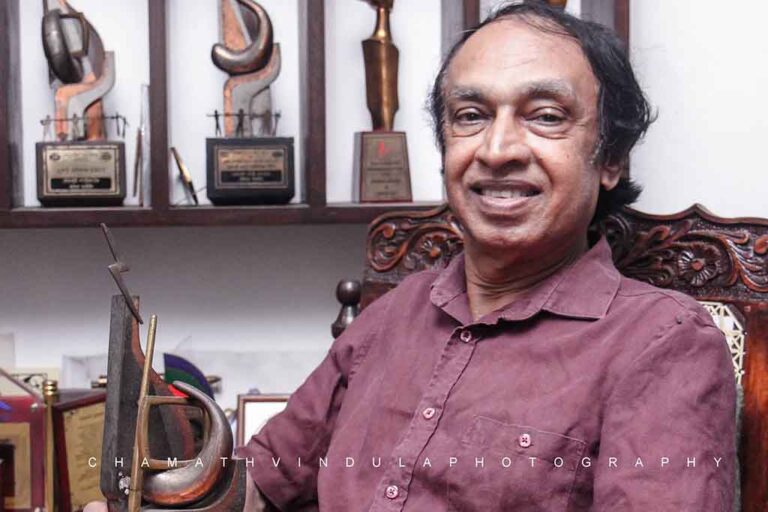
Colombo (LNW): In a heart-wrenching turn of events, veteran cinema, theatre, and television excellence Suminda Sirisena passed away at t he age of 75, today (04).
Sirisena’s journey came to an end while undergoing treatment in a private hospital in Gampaha, his family confirmed.
His illustrious career was a tapestry woven with a myriad of roles, both leading and supporting, showcasing the depth of his unparalleled talent.
Sirisena, a luminary in the world of acting, earned the coveted Best Actor award at numerous esteemed festivals, a testament to the indelible mark he left on the industry.