Colombo (LNW): The Ceylon Electricity Board (CEB) is discontinuing printed paper bills and introducing the CEB e-billing system in various areas, including Dehiwala, Kelaniya, Sri Jayewardenepura, Matara, and Ambalangoda.
Consumers in these regions will exclusively receive digital bills via SMS or email.
The CEB encourages nationwide customer registration for this service, as printed bills will gradually be phased out.
Registration can be done via SMS or online.
Consumers can register by typing the following send sending it to 1987:
Type REG<space>your CEB Account number.
The e-billing system aims to save about 100 million sheets of paper annually, with the CEB urging customers to embrace this eco-friendly digital transformation.
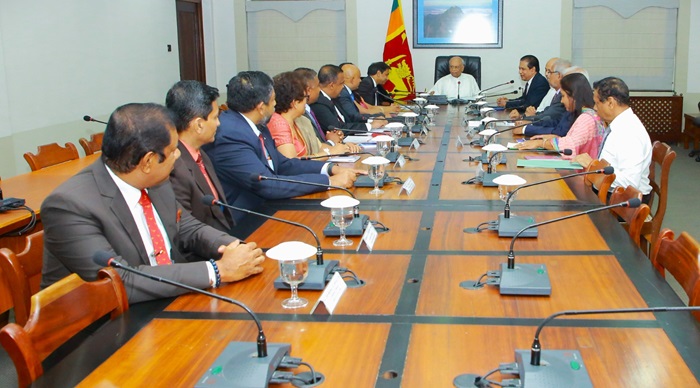
Colombo (LNW): Premier Dinesh Gunawardena addressing a meeting at Temple Trees yesterday (13) urged the ten newly appointed Sri Lankan envoys to prioritise economic diplomacy as a key element in the country’s path to rapid economic progress.
Emphasising the need for cooperation with other nations, the Prime Minister encouraged envoys to showcase Sri Lanka’s global interaction capabilities and take innovative measures to attract investments and foster joint ventures.
The Prime Minister outlined a strategic focus on increasing trade and investments, urging envoys to promote Sri Lanka as not only a tourist destination but also a favorable hub for investment and trade.
Gunawardena highlighted the potential for rapid economic growth by closely engaging with other nations, particularly in response to the shift in the world economy towards Asia, including the economic rise of China, India, and ASEAN.
In addition to engaging host governments and business entities, the Prime Minister advised the envoys to build networks with Sri Lankan expatriate organisations in host countries and cultivate ties with important friends of Sri Lanka.
He specifically emphasised the importance of strengthening connections with the Spanish-speaking world, particularly in Latin American countries through accredited ambassadors.
The ten newly appointed Heads of Mission include Admiral Ravindra Wijegunaratne (Pakistan), Air Marshal Sudarshana Pathirana (Nepal), former Foreign Secretary Kshenuka Senewiratne (India), Admiral Nishantha Ulugetenne (Cuba), Satyajit Rodrigo (Italy), Madurika Weninger (Egypt), Dharamapala Weerakkody (Bangladesh), Senerath Dissanayake (Singapore), and Chandana Weerasena (Belgium and the European Union). The new High Commissioner to the UK, Rohitha Bogollagama, was unable to attend due to a prior engagement. MP Yadamini Gunawardena, Secretary to the President Anura Dissanayake, Advisor Sugeeswara Senadhira, Additional Secretary of Foreign Ministry Mohammad Jauhar, and Director General Wijayanthi Edirisinghe were also present at the meeting.
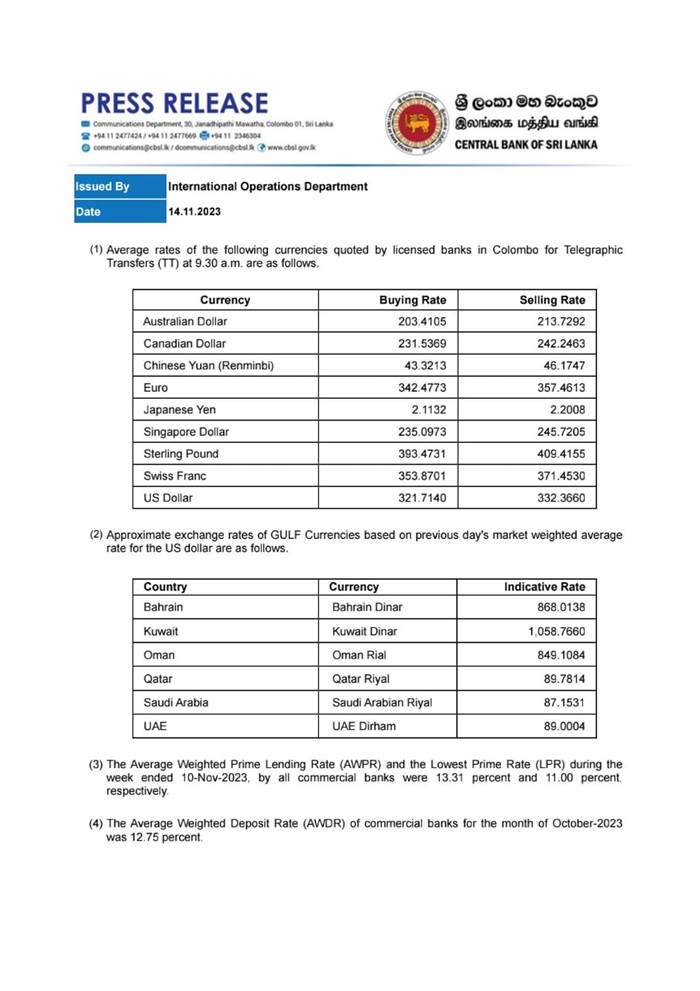
Colombo (LNW): The Sri Lankan Rupee (LKR) indicates further appreciation against the US Dollar today (14) in comparison to yesterday, as per the official exchange rates list issued by the Central Bank of Sri Lanka (CBSL).
Accordingly, the buying price of the US Dollar has dropped to Rs. 321.71 from Rs. 322.12, and the selling price to Rs. 332.36 from Rs. 332.47.
The Sri Lanka Rupee, meanwhile, indicates fluctuation against several other foreign currencies, including Gulf currencies.
Colombo (LNW): Justice Nissanka Bandula Karunaratne, Chairperson of the Court of Appeal, has opted to recuse himself from presiding over the motion filed by Sports Minister Roshan Ranasinghe seeking to lift the stay order against the recently appointed Sri Lanka Cricket (SLC) Interim Committee.
This decision unfolded during today’s (14) hearing before the two-judge bench, which included Justice Vikum Kaluarachchi.
The objection raised by the attorney representing the Minister prompted Justice Nissanka Bandula Karunaratne to recuse himself.
In response to the objection, Justice Karunaratne cited the recent unfair criticism directed at him by the Sports Minister, some Cabinet members, and certain Parliamentarians.
Consequently, the case has been transferred to another court within the Court of Appeal, where it will be heard by a different judge.
Colombo (LNW): President and Finance Minister Ranil Wickremesinghe yesterday unveiled an abundance of relief and reforms via the 2024 Budget and urged all political parties to join in to usher in an economic revolution.
Finance Ministry officials had a hard time in the preparation of the budget while bargaining with the IMF to secure space for some relief measures for people including public servants as they need to proceed with austerity measures.
Further a pay hike will exacerbate the revenue crisis of the government but it has opted for it.
People, across a wide cross section of society, go through difficulties given the soaring prices of essential items. It is a natural phenomenon for them to expect relief in the budget as a result.
Making opposition critics views on public sector salary hike may compel the government to print money the finance ministry has devised a mechanism for salary increases of public sector employees making Budget 2024 proposals to improve revenue mobilisation critical to Sri Lanka’s return to macroeconomic stability.
Relief announced, including an increase in allowance for 1.3 million public servants and 700,000 pensioners as well as two million beneficiaries of Aswesuma (cost of which is Rs. 183 billion up from Rs. 60 billion) is following admission by the President that cost of living had increased.
The salary allowance of Rs. 10,000 in addition to the present cost of living allowance will cost the government a very high amount of over Rs 13 billion per month and Rs156 billion per year. state finance minister Ranjith Siyambalapitiya said.
The basic fiscal theory in this respect is to increase public and private sector salaries to the level of maintaining the stability of the rupee within the limit of private credit growth, he explained.
The 2024 Budget envisages an expenditure of Rs. 7 trillion and a revenue of Rs. 4 trillion resulting in a deficit of Rs. 2.85 trillion, up by 19% from the estimate of 2023.
On the expenditure side, interest and principal debt payment accounted highest at 50% or Rs. 4.8 trillion (includes Rs. 3 trillion under external debt restructuring) followed by salaries Rs. 1.1 trillion or 14%.
He also announced an increase in the borrowing limit by Rs. 3.45 trillion from Rs. 3.9 trillion to Rs. 7.35 trillion. This includes Rs. 3.4 trillion of which Rs. 450 billion for bank recapitalisation and Rs. 3 trillion under external debt restructuring.
Taxes on domestic goods and services are to rake in the biggest revenue of Rs. 2.2 trillion or 53% following the increase of VAT from 15 to 18% from January.
This previously announced move was the biggest revenue effort apart from Rs. 1 trillion from taxes on income and profit
The government presented budget 2024 in Parliament on November 13 with wider social welfare package for the 6.8 million poverty stricken people amidst heavy increase in public expenditure, state minister of finance divulged
Sri Lanka’s welfare allocation for 2024 will have to be Rs 200 billion compared to the previous budget’s Rs. 65 billion s, he said.
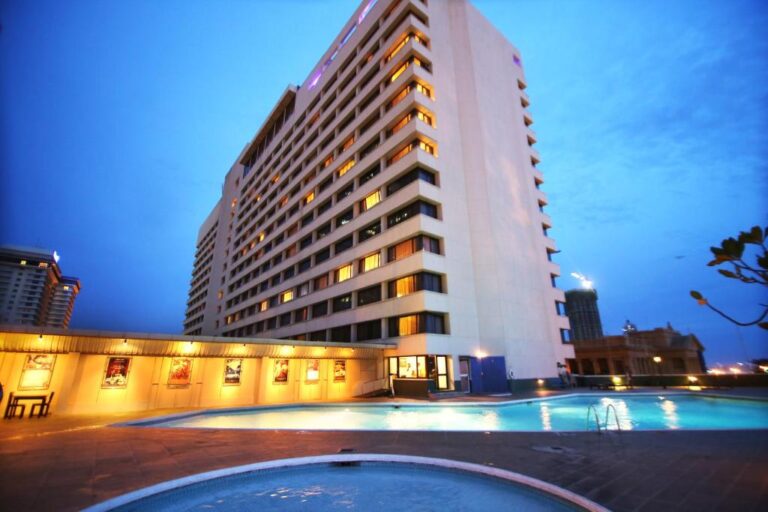
Colombo (LNW): Galadari Hotels Lanka PLC said yesterday it has successfully signed an agreement with the Board of Investment (BOI) of Sri Lanka as the first step towards the property’s refurbishment process.
Galadari Colombo has over the years built up an enviable reputation in the hospitality industry and proudly boasts of over 39 years of exceptional service.
The company has entered into two agreements which include the Hotel Development Services Agreement (HDSA) which will later be followed by a Hotel Management Agreement (HMA) with Radisson Hotels Asia Pacific Investments Ltd.
The property will go through a total transformation which will enable the hotel to set new standards solidifying its high competitiveness in the industry. A world-renowned architectural company based in Hong Kong will overlook the overall designing process of the property.
The first phase, which includes a project cost estimated at $ 33.5 million will include 200 rooms, restaurant outlets, guest lobby and common areas and a completely revamped hotel facade. The second phase will commence one year after the completion of phase 1.
Galadari said the BOI signoff is the first of a series of events that will be taking place as the hotel starts its new journey, which will ultimately lead to an engagement with Radisson Hotels Asia Pacific Investments Ltd. to manage Galadari Hotel Colombo under a new brand name.
Galadari Hotels Lanka PLC intends to rope in multinational hospitality management company Radisson Hotels Asia Pacific Investments Pte. Ltd to manage Galadari Hotel Colombo, under the name ‘Radisson Blu Hotel Galadari Colombo’.
“In this regard, the company has undertaken to renovate Galadari Hotel Colombo in preparation of the management and operation of the same by Radisson. Accordingly, the company has entered into a Hotel Development Services Agreement (HDSA) and a Hotel Management Agreement (HMA),” official circular said.
“The HMA provides for (both in form and content) a License Agreement and Management Consultancy Agreement, which may be entered into on a future date, at the option of the company and subject to satisfaction of identified conditions,” it added.
The deal has been determined by the board to be a major transaction under and in terms of Section 185 of Companies Act No.7 of 2007.
“The HDSA and HMA were executed on May 1, 2023 and shall be effective as at May 1, 2023, upon the passing of a special resolution by the shareholders of the company,” the circular said.
The company in May 2019 initially announced its plan to refurbish 400 rooms, MFP work and F&B outlets, at an estimated cost of US $ 15 million. The refurbishment was originally scheduled to commence in June 2019. However, it was pushed back, as the company decided to come up with fresh design plans.
Galadari Brothers Co LLC owns a 63.57 percent stake in the 1984-established Galadari Hotels (Lanka) PLC.
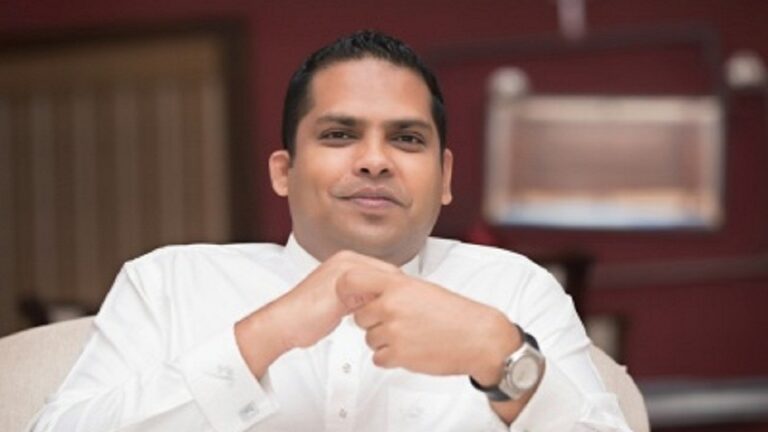
Colombo (LNW): Sri Lanka’s 2024 Budget has been hailed as a game-changer, positioning tourism as a catalyst for economic development, Tourism Minister Harin Fernando emphasized.
With a focus on making Sri Lanka a premier global tourist destination, the Budget has allocated a substantial Rs. 2.3 billion to improve the tourism sector.
These allocations were not mere proposals but a well-thought-out execution plan to propel Sri Lanka into a top travel destination,” he added.
Minister Fernando stressed that the President’s vision to attract five million tourists by 2030 hinges on collaborative efforts at the provincial and local levels, urging the enhancement of new attractions and facilities.
However the critical tourism industry’s outstanding debt has risen to a staggering Rs. 700 billion due to high interest rates prompting analysts to describe it as ‘unsustainable’ and needs urgent response from the Government and the banking sector.
The massive indebtedness of the tourism industry came to light during the pre-Budget webinar on Saturday organised by the Daily FT and other stakeholders.
Former Price water house Coopers Managing Partner Sujeewa Mudalige revealed that in 2018, the tourism industry outstanding debt was Rs. 300 billion and it has doubled to Rs. 600 billion last year and estimate it have increased to Rs. 700 billion this year and could possibly balloon to Rs. 1 trillion in the next few years.
He said that the increase was despite the industry borrowing anew hence it was due to accumulation of capital and interest payable amidst the debt moratorium.
He categorically stated that tourism debt was unsustainable like that of the Government hence needs urgent action by all stakeholders.
He called for an appointment of a Task Force comprising Government, banks and tourism industry stakeholders to deal with the issue.
Mudalige noted the tourism sector will never be able to recover from the record interest rates of 2022/23.
He noted that the interest policy of the Central Bank has hurt several sectors. Sri Lanka’s Tourism Sector went through the Easter bombing in April 2019 followed by the COVID pandemic and the political and economic crisis.
Mudalige opined that even if Sri Lanka draws over 2 million tourists, the industry won’t be able to pay even the interest.
The sector cannot service loans at 30% and the penalties at 30%. The Banks have called upon the beneficiaries of the moratorium to commence the settlement of the full accumulated debt and the interest, within 60 months.
Former President of The Hotels Association of Sri Lanka (THASL) Anura Lokuhetty said: “We are not even in a position to earn sufficient Dollars to cover the monthly Bank commitments, given the period is only 60 months.
He called on President Ranil Wickremesinghe to offer via Budget 2024, a freeze in repayment till mid next year and banks to opt for a rescheduled repayment plan over a period of 10 years.
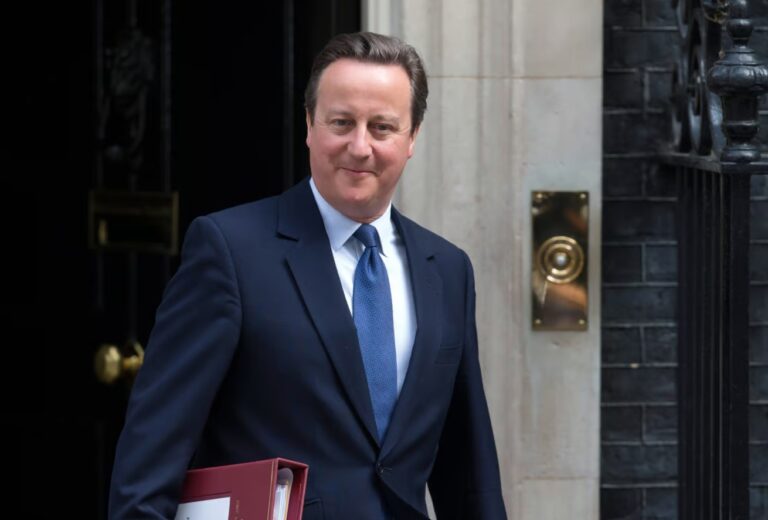
Colombo (LNW): Former British Prime Minister David Cameron, a friend of Sri Lanka especially having close contacts with President Ranil Wickremasinghe has been appointed as the Foreign Secretary of the United Kingdom
U.K. Prime Minister Rishi Sunak reshuffled his Cabinet today (Monday), bringing in former PM David Cameron as Foreign Secretary in a surprising move, UK media reported.
This appointment will renew friendly relations between Sri Lanka and Great Britan which were tainted by human rights issues in the recent past.
Relations with the West have been shaky in recent years over the country’s human rights record. The UK, in particular, has been instrumental in international attempts to hold Sri Lanka accountable for alleged human rights violations.
When incumbent UK Prime minister Rishi Sunak was sworn in in October 2022, President Wickremesinghe expressed his confidence that ties between the two island nations would be further strengthened under Sunak’s leadership
President Wickremesinghe is looking westward in his ambitions to resolve Sri Lanka’s ongoing currency crisis and usher in development.
Former UK Prime Minister David Cameron has met Sri Lanka President Ranil Wickremesinghe in Colombo in Janaury this year.
Cameron was recently involved in promoting the Colombo Port City among investors in the MIddle East, at the behest of the Government of Sri Lanka.
He replaces James Cleverly, who is replacing Suella Braverman as Home Secretary. Braverman was sacked after days of speculation following her criticism of police actions with regard to pro-Palestinian protests in the UK.
Meanwhile, Under-Secretary of State for Primary Care and Public Health Neil O’Brien and Schools Minister Nick Gibb have said they intend to step down for unrelated reasons.
Cameron has taken measures to promote the Colombo Port City at an invitee-only separate top events in Abu Dhabi and Dubai on 26 September.
He was involved in a conversation on “Now is the time to invest in the Port City Colombo, Sri Lanka.”
The exclusive event was also focused on the role of Sri Lanka in the new Indo-Pacific economy and position Port City as the nexus of trade investment and sustainability.
The event showcased Port City Colombo as a new city rising from the Indian ocean, as a strategic financial, residential, medical, education, leisure and entertainment hub for South Asia, Indian-Sub Continent, Middle East, East Africa and Southeast Asia.
Prime movers of the event included Senior Advisor to the President of Sri Lanka Nirj Deva Aditya who is a former UK MEP European Parliament and ex-MP of British Parliament and The Sovereign Wealth Fund Institute Chairman Lakshmi Narayanan and the Port City Economic Commission.
The 56 year old Cameron served as Prime Minister of the United Kingdom from 2010 to 2016 and Leader of the Conservative Party from 2005 to 2016.
He served as Leader of the Opposition from 2005 to 2010, and was Member of Parliament (MP) for Witney from 2001 to 2016. He identifies as a one-nation conservative, and has been associated with both economically liberal and socially liberal policies.
Colombo (LNW): The Sri Lankan Rupee (LKR) indicates fluctuation against the US Dollar at leading commercial banks in the country today (14) in comparison to yesterday.
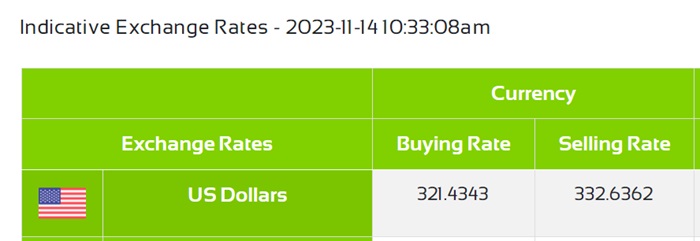
At Peoples Bank, the buying price of the US Dollar has dropped to Rs. 321.43 from Rs. 321.67, and the selling price to Rs. 332.63 from Rs. 332.89.
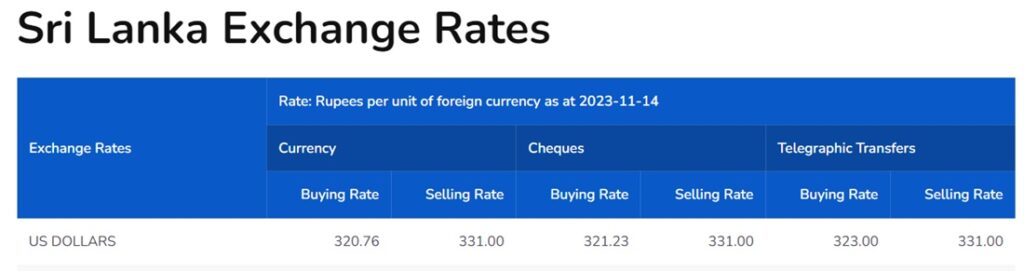
Commercial Bank follows a different pattern, with buying price of the US Dollar rising to Rs. 320.76 from Rs. 320.49, and the selling price dropping to Rs. 331 from Rs. 331.50.
At Sampath Bank, the buying and selling prices of the US Dollar remain unchanged at Rs. 322 and Rs. 332, respectively.
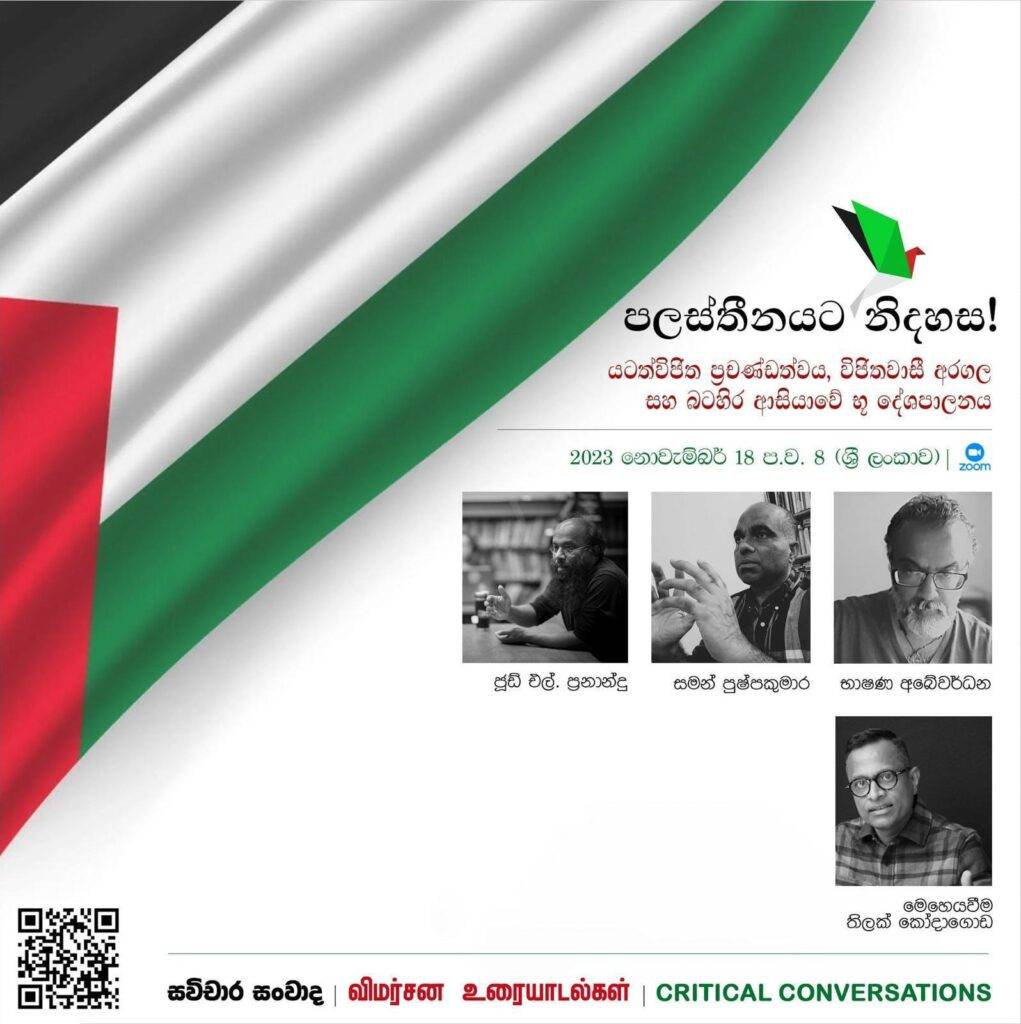
Colombo (LNW): Embark on a journey of intellectual exploration with “Critical Conversation” (Savivara Sanwada), a profound dialogue delving into the realms of colonial violence, struggles of the colonial era, and the intricate geopolitics of West Asia.
The discussion is set for Saturday, November 18, 2023, at 8:00 pm Sri Lanka time, unfolding its narrative via Zoom technology.
This immersive conversation unfolds in two enthralling acts. In the inaugural segment, the stage will be graced by the intellectual prowess of Jude L. Fernando, Saman Pushpakumara, and Rohitha Bhashana Abeywardena. The second act beckons you to step into the spotlight of discourse as the floor is open to a lively public discussion.
The discussion is moderated by Thilak Kodagoda.
Critical Conversations | விமர்சன உரையாடல்கள் | සවිචාර සංවාද
Join ‘Critical Conversations’ Zoom discussion via following link: