By: Staff Writer
February 03, Colombo (LNW): LB Finance PLC has strengthened its growth momentum after securing $45 million in long-term strategic funding from two prominent Switzerland-based impact investors, responsAbility Investments AG and BlueOrchard Finance Ltd. The funding marks a major milestone for the company as it deepens its role in expanding financial inclusion and supporting Sri Lanka’s micro, small and medium-sized enterprises (MSMEs).
The financing package consists of senior debt facilities amounting to $20 million from responsAbility Investments AG and $25 million from funds managed by BlueOrchard Finance Ltd. The transaction reflects a shared commitment between LB Finance and the investors to promote responsible lending and widen access to finance in emerging economies.
Commenting on the development, LB Finance Managing Director Niroshan Udage said the partnership represents a significant step forward in the company’s long-term strategy. He noted that the additional capital will enhance LB Finance’s ability to channel funding to MSMEs, a segment that plays a crucial role in job creation, income generation, and overall economic resilience.
“Support from globally recognised impact investors such as responsAbility and BlueOrchard reinforces confidence in our strategy and governance framework,” Udage said. “It also enables us to scale our efforts in providing sustainable and inclusive financial solutions to entrepreneurs across the country.”
Access to stable foreign currency funding remains a key requirement for financial institutions seeking to expand lending to under-served sectors. The new facilities strengthen LB Finance’s funding base and liquidity position, enabling it to accelerate portfolio growth while maintaining prudent risk management standards.
The company said the additional resources will be primarily directed towards expanding MSME financing, particularly businesses that contribute to employment, value addition, and regional economic development. By improving access to affordable credit, LB Finance aims to empower local entrepreneurs and support Sri Lanka’s broader economic recovery.
LB Finance Executive Director Ravi Yatawara said securing foreign currency funding of this scale amid challenging global conditions highlights the institution’s strong fundamentals and disciplined financial management. He added that the partnership will allow LB Finance to reach a wider base of under-served enterprises and support sectors linked to export growth and employment generation.
The funding agreement was formalised at AFIFORUM 2026 held in Bangkok, bringing together global development finance institutions and impact investors.
BlueOrchard Finance Ltd., part of the Schroders Group, is recognised as the world’s first commercial manager dedicated to microfinance debt investments, having deployed over $10 billion across more than 100 emerging markets. Respons Ability Investments AG is a leading Swiss impact asset manager with a focus on financial inclusion, climate finance, and sustainable food systems, aligned with the UN Sustainable Development Goals.
The latest investment further strengthens LB Finance’s position as one of Sri Lanka’s leading non-bank financial institutions, backed by over 50 years of operational experience and a national long-term rating of A-(lka) with a Stable Outlook from Fitch Ratings
LB Finance Secures $45 Million to Boost MSME Lending

Modern Cranes, Maritime Gains: SAGT’s Role in Sri Lanka’s Port Revival
By: Staff Writer
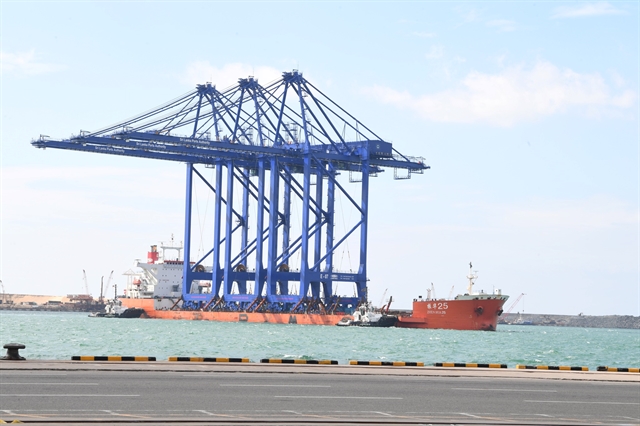
February 03, Colombo (LNW): South Asia Gateway Terminals (SAGT), operated by John Keells Holdings, continues to play a pivotal role in strengthening Sri Lanka’s maritime economy as fresh international financing signals renewed confidence in the country’s port infrastructure. A proposed USD 20 million financing package from the Washington-based International Finance Corporation (IFC) marks a critical step in SAGT’s ongoing modernization drive, particularly at a time when regional port competition is intensifying.
The planned funding, expected to be structured through a combination of the IFC’s Managed Co-Lending Portfolio Program and parallel lenders, is aimed at upgrading ship-to-shore (STS) cranes at the Colombo Port terminal. This investment directly addresses a pressing operational challenge: nearly half of SAGT’s existing STS cranes have reached the end of their productive lifespan, posing risks to efficiency and throughput.
Cranes are the backbone of container terminal operations, determining vessel turnaround times, berth productivity, and overall competitiveness. By replacing aging equipment with modern, energy-efficient cranes, SAGT is positioning itself to handle larger vessels, increase cargo volumes, and maintain Colombo Port’s status as a key transshipment hub in South Asia.
Beyond operational gains, the upgrade carries wider economic implications. Improved terminal productivity supports Sri Lanka’s export-import trade, enhances port-linked logistics services, and strengthens foreign exchange earnings. The expected reduction in fuel consumption and emissions also aligns with global shipping’s shift toward greener operations, making Colombo a more attractive port of call for environmentally conscious shipping lines.
SAGT’s journey is closely tied to Sri Lanka’s broader port sector evolution. As the country’s first private container terminal, SAGT set an early precedent for public-private partnerships in port development. IFC’s involvement from inception—both as an equity partner and now as a financier—underscores long-term international confidence in Sri Lanka’s maritime potential, even amid economic recovery challenges.
In a region where ports in India, Singapore, and the Middle East are rapidly expanding capacity, sustained investment is essential. The proposed crane upgrades may appear modest in scale, but their impact on reliability, efficiency, and environmental performance is significant. For Sri Lanka’s maritime economy, SAGT’s progress demonstrates how targeted infrastructure investments can reinforce competitiveness, attract global capital, and support long-term port-led growth.
Finance Companies Surge as Lending Boom Reshapes Credit Landscape

By: Staff Writer
February 03, Colombo (LNW): Sri Lanka’s finance company sector recorded a striking turnaround in 2025, emerging as one of the fastest-growing segments of the financial system amid a fragile but improving macroeconomic environment. Latest data released by the Central Bank of Sri Lanka (CBSL) show that total assets of licensed finance companies expanded by 44% year-on-year to Rs. 2.77 trillion as at end-December 2025, reflecting an aggressive push in lending activity and a gradual return of borrower confidence.
The sector’s loan book grew even faster, rising 56% to Rs. 2.22 trillion during the year, compared with much more subdued growth in 2024, when credit expansion was constrained by high interest rates, weak consumer demand and elevated credit risk. The sharp rebound in 2025 signals easing financial conditions, lower inflation and a revival in consumption-led borrowing, particularly in vehicle financing, personal loans and small enterprise credit.
Funding patterns also shifted significantly. While customer deposits rose a healthy 19.8% year-on-year to Rs. 1.26 trillion, borrowings surged by an extraordinary 178% to Rs. 849 billion. This contrasts sharply with 2024, when finance companies relied more heavily on deposits amid tighter wholesale funding conditions. The increased use of borrowings in 2025 suggests improved access to market funding and renewed confidence from institutional lenders, though it also raises questions about funding sustainability if market conditions tighten again.
Equity capital increased by a more modest 13.4% to Rs. 62.8 billion, indicating that balance sheet growth continued to outpace capital accumulation. While profitability improved, the slower pace of capital growth may prompt regulators to closely monitor capital adequacy as the sector expands.
Earnings performance strengthened in tandem with balance sheet growth. Net interest income rose 26% year-on-year to Rs. 185.1 billion in the nine months to end-December 2025, supported by higher loan volumes despite some moderation in interest margins compared with 2024. Non-interest income climbed 26.5% to Rs. 31.5 billion, reflecting improved fee income and recoveries. As a result, sector profits surged 45% to Rs. 61.5 billion, a sharp recovery from the weaker earnings environment seen in 2024.
Crucially, asset quality showed a marked improvement. Gross non-performing loans declined to 6.1% from 11.5% a year earlier, while net NPLs fell to 3.2% from 6.5%, highlighting the impact of stronger recoveries, loan restructurings and better credit underwriting. Returns also improved, with return on assets rising to 6.3% and return on equity climbing to 16.3%, up from 5.8% and 12.8% respectively in 2024.
The finance sector’s revival has broader economic implications. Increased lending is supporting consumption, trade and small-scale investment at a time when the economy is seeking durable growth momentum. However, the pace of expansion underscores the need for prudent risk management to avoid a repeat of past credit cycles that amplified economic stress.
Economic Centre Shake-Up Sparks Trader Revolt, Policy Scrutiny
By: Staff Writer
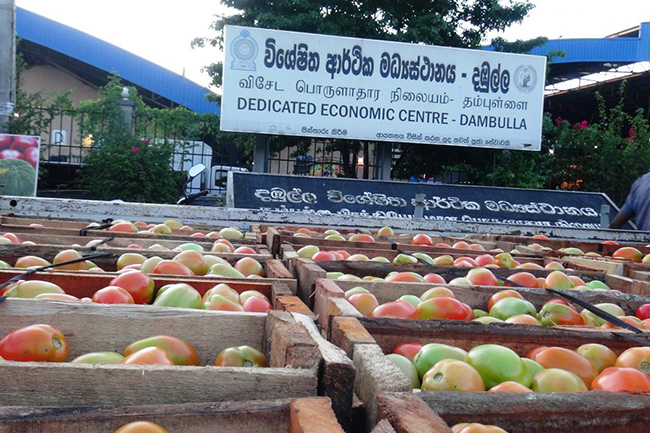
February 03, Colombo (LNW): A Government move to overhaul the administrative framework of Sri Lanka’s major economic centres has ignited strong resistance from traders, exposing deeper tensions over governance, transparency and control within a sector that plays a pivotal role in food distribution and price stability.
The controversy surfaced during a meeting held on 31 January at the Dambulla Dedicated Economic Centre, where traders formally objected to a proposal to remove five key centres Dambulla, Nuwara Eliya, Thambuttegama, Keppetipola and Narahenpita from their existing management trust and place them under a newly formed State-owned company. The discussion, chaired by Trade, Commerce, Food Security and Cooperative Development Minister Wasantha Samarasinghe, quickly escalated into a heated exchange.
According to traders, the centres have been built, expanded and sustained over more than three decades through trader-led investment, without financial support from the State. They argue that the existing management trust model has delivered operational efficiency, infrastructure development and farmer support, while insulating the centres from political interference. The trust, traders claim, currently holds savings of nearly Rs. 2.5 billion, accumulated through self-financed operations over 29 years.
The Government’s proposal includes appointing a seven-member board of directors to the new company and redirecting monthly rental and tax income from the centres to the entity starting next month. Traders warned that transferring control without prior consultation, feasibility studies or clear Cabinet approval would be unacceptable and could disrupt daily trade flows that supply vegetables and fruits across the country.
The timing of the proposal has raised further concerns. In 2025, Sri Lanka’s agricultural trade and wholesale distribution sector showed modest recovery following the contraction seen in 2024, supported by easing inflation, lower transport costs and improved harvest volumes. Economic centres played a stabilising role by maintaining supply chains and moderating price volatility. Traders fear that administrative uncertainty could reverse these gains, affecting farmer incomes and urban food prices.
Minister Samarasinghe defended the plan, stating that a new corporate structure would strengthen governance, improve accountability and ensure fairer market access for consumers. He insisted that farmers’ and traders’ rights would be protected. However, journalists’ present questioned discrepancies between the company name approved earlier by Cabinet and the name of the newly proposed entity. The Minister acknowledged the change, stating that Cabinet approval for the revised name would be sought later.
Traders countered that trade unions have already filed legal action against a previously approved company, alleging that the new proposal amounts to a rebranding exercise to bypass earlier objections. They also highlighted unfulfilled political promises, including a pledge made during the election campaign to grant traders 30-year lease agreements an issue the Minister did not address.
Amid mounting opposition, the Minister ultimately agreed to reconsider the proposal and promised further discussions, underscoring the growing policy challenge of reforming economic institutions without undermining stakeholder trust during a fragile economic recovery.
The Right of Legal Representation and Its Role in the Administration of Justice
By: Nalinda Indatissa (President’s Counsel)
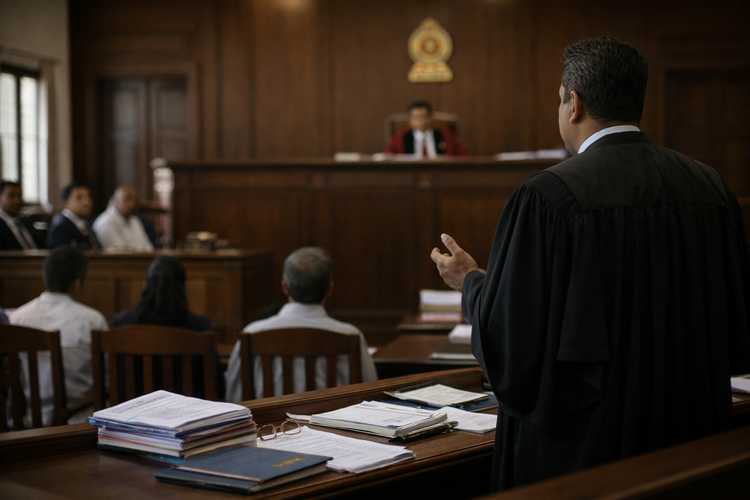
The administration of justice in Sri Lanka rests on the principle that disputes must be resolved fairly, openly, and according to law. A central feature of this system is the role played by Attorneys-at-Law. Legal representation is not merely a private convenience for litigants; it is an essential mechanism through which courts are able to deliver fair, reasonable, carefully considered, and credible justice.
Right of a Suspect or Accused Person to Legal Representation
The Constitution of Sri Lanka expressly guarantees the right of a person charged with an offence to be represented by an Attorney-at-Law. Article 13(3) provides that any person charged with an offence shall be entitled to be heard, either in person or by an Attorney-at-Law, at a fair trial before a competent court. This elevates legal representation to the level of a fundamental right and makes it an indispensable component of a fair trial.
This constitutional guarantee is further strengthened by the International Covenant on Civil and Political Rights Act, No. 56 of 2007. Section 4(1)(b) affirms the right of an accused person to defend himself in person or through legal assistance of his own choosing and requires that he be informed of that right. Section 4(1)(c) goes further by providing for State-funded legal assistance where the interests of justice so require and the accused lacks sufficient means. These provisions transform the constitutional right into a practical and enforceable safeguard.
The Judicature Act, No. 2 of 1978, provides the institutional framework within which these rights operate. Courts established under the Act function on the basis that parties may appear in person or through Attorneys-at-Law, who are recognised as officers of court with a right of audience. Although the Judicature Act does not itself create the right to representation, it enables the constitutional and statutory guarantees to be exercised in practice.
Read together, the Constitution, the ICCPR Act, and the Judicature Act firmly establish that a suspect or accused person has a strong and protected right to be represented by an Attorney-at-Law.
Right of an Aggrieved Party to Legal Representation
An aggrieved party or victim does not derive a constitutional right to representation from Article 13(3), as that provision is confined to persons charged with offences. However, Parliament has expressly recognised the importance of legal representation for victims through statute.
The Assistance to and Protection of Victims of Crime and Witnesses Act, No. 4 of 2015, permits aggrieved parties and witnesses to be represented by Attorneys-at-Law in court. This statutory right is intended to ensure meaningful participation, protection from intimidation, and proper articulation of the victim’s interests within the justice process. While statutory in nature, this right reflects a clear legislative policy that victims are not to be excluded or silenced in criminal proceedings.
How Legal Representation Improves the Quality and Credibility of Justice
Legal representation enables courts to deliver justice that is fair, reasonable, and carefully considered. Lawyers assist courts by identifying the real issues, presenting facts coherently, explaining the applicable law, and testing evidence through cross-examination. This assistance helps judges arrive at decisions based on reasoned legal analysis rather than incomplete information or emotional presentation.
Judgments delivered after hearing counsel carry greater credibility than decisions made in closed or informal settings. When arguments are tested openly and on record, judicial reasoning is sharpened, errors are minimised, and public confidence is strengthened. Such judgments are more consistent, more predictable, and more resilient on appeal.
Although lawyers appear on behalf of litigants, they are not partisan leaders. They are officers of court whose primary duty is to the court and to the administration of justice. They are bound by ethical and professional obligations not to mislead the court, not to abuse procedure, and to conduct themselves with candour and restraint. This special position explains why courts rely on counsel and why representation enhances, rather than undermines, judicial authority.
Obstruction of Legal Representation and the Contempt of Court Framework
Any act that interferes with legal representation strikes at the heart of the justice system. Threatening, intimidating, or assaulting a lawyer because of submissions made in court, positions taken in litigation, or representation provided to a client is not a private matter. It directly undermines the rights of accused persons, the participatory rights of victims, and the administration of justice itself.
The Contempt of a Court, Tribunal or Institution Act, No. 8 of 2024, expressly addresses such interference. Section 3(1)(b) provides that any act done with intent to interfere with, or cause grave prejudice to, the judicial process in relation to any ongoing litigation constitutes contempt of court. Where a lawyer is threatened or assaulted to deter him or her from appearing, continuing representation, or advancing submissions, such conduct is capable of falling squarely within this provision.
Further, section 3(2)(c)(ii) and (iii) deem it contempt to do any act that gravely prejudices or unlawfully interferes with the due course of a judicial proceeding, or that interferes with or obstructs the administration of justice. Intimidation or violence directed at lawyers because of their professional role is a clear form of obstruction of justice and may therefore attract contempt jurisdiction, in addition to ordinary criminal liability.
Because lawyers are officers of court, interference with them is treated not merely as an offence against an individual, but as an attack on the judicial process itself. The Act thus reinforces the principle that justice must be protected not only inside the courtroom, but also against external pressures and retaliation connected with court proceedings.


CEB Recovers Over Rs. 90 Million in Crackdown on Power Theft
February 03, Colombo (LNW): The Ceylon Electricity Board has recovered in excess of Rs. 90 million after intensifying action against electricity theft across the country last year, officials confirmed.
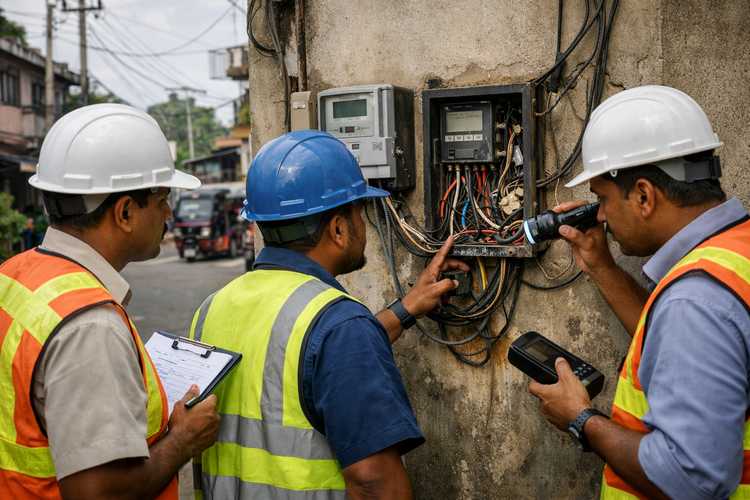
A series of island-wide inspections carried out by the Board’s Special Investigation Unit during 2025 exposed widespread abuse of the power supply, including tampered meters and unauthorised connections drawn directly from mains lines. In total, investigators detected more than 1,300 violations, causing significant revenue losses to the state utility.
According to Special Investigation Unit Manager Indika Fernando, the enforcement drive resulted in the recovery of nearly Rs. 93 million. The bulk of the amount was collected as compensation for losses incurred by the CEB, while a smaller portion covered court-imposed charges arising from prosecutions.
He said those apprehended came from a range of backgrounds, including commercial operators and professionals, and were found to have manipulated metering systems or bypassed them altogether to avoid paying for electricity consumed.
Fernando noted that surveillance and enforcement efforts would continue and encouraged members of the public to report suspected cases of power theft through the dedicated hotline. He stressed that the CEB remains firm in pursuing legal action to safeguard public funds and ensure fair use of electricity.
Harry J : The Unforgettable
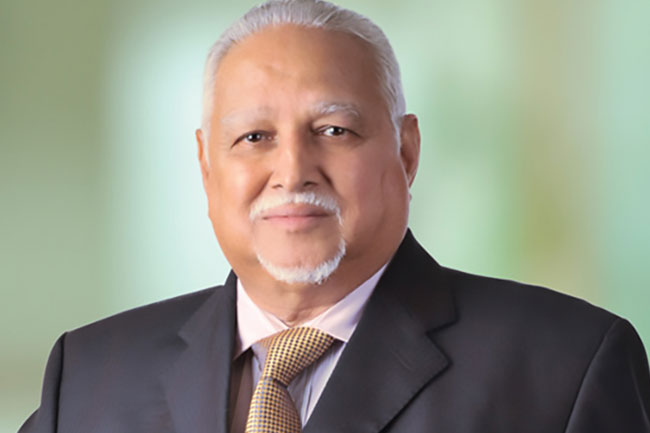
By Krishantha Prasad Cooray
Harry Jayawardena passed away a year ago. Twelve months. Three hundred and sixty five days. The time has ticked quickly. And yet, it is as though it was just the other day that we last spoke.
It is not surprising, really. After all, we were the closest of friends. There were no filters between us when we spoke. It was brutally honest conversations that we had. We spoke our minds freely. Although he was very much older, he treated me like a friend he had known all his life. He even called me ‘Lokka’ – a private joke between us, because that is also how I addressed him. He didn’t feel ‘older.’ He was, not in years, but in life experiences.
Harry Jayawardena, as everyone knows, was an iconic businessman and industrialist. He was in fact a kind of King Midas of Sri Lankan enterprise; whatever he touched, prospered. The fearlessness, the uncompromising relentlessness and attention to detail are unmatched. He didn’t exactly lecture me, but I knew him enough and listened to him enough to be privy, in a sense, to the man and his thinking. He didn’t set out to impart knowledge but he was so generous with advice and honest in our interactions that I could not but learn from him.
We spoke every single day. Maybe that’s why I miss him so much. It was part of my day to exchange a few words with Harry J, as I fondly refer to him. It’s been long enough for me not to expect, unconsciously, a call from him, but it’s still too soon not to remember him every day. Harry’s voice is in my ear. His advice guides me. Even though I don’t attribute analysis and decisions to him at the particular moment, there are innumerable times when I recognise how much he has shaped my thinking, not just by the things he’s said but his life work. In such moments, I feel an immense sense of gratitude. In such moments I am overwhelmed by sadness.
Loyalty was something he valued. Life, for Harry, centred on genuine relationships over success or power. He valued and fiercely protected friendships. Our friendship too was defined by absolute trust. Harry J didn’t trust easily. He assessed, weighed, let words and actions define the particular person. But when he did trust someone, it was for life. He would stand by friends through thick or thin, regardless of costs. That’s a measure of the man’s sincerity. A man’s word was his bond; that’s how it was for Harry. Once trust was established, there was no room for interference, misunderstanding, and most of all, no chance whatsoever of betrayal. Our conversations were unguarded. We didn’t have to second-guess. That, to me, is a rare and precious bond.
Harry loved challenges. He was, as mentioned, fearless. This doesn’t mean he walked into difficult situations with his eyes closed. He did his homework. He didn’t skim over the small print. He was meticulous when it came to assessing the pros and cons of any situation, be it in business or otherwise. Once he committed himself, he poured energy, passion and resources without fear. There was no retreat as far as he was concerned. He never gave up, whether it was a difficult business negotiation or standing up firmly for a friend. Harry was an unbelievable fighter. He believed in seeing things through no matter how tough it was.
We spent a great deal of time together and therefore understood each other well. Harry always gave me sound advice: practical, thoughtful, and rooted in experience. It was the kind of guidance that stayed with me shaping decisions long after the conversation ended. It is not that I ask myself, ‘what would Harry have done had he been in my shoes?’ I go ahead and later realise, ‘that’s what Harry would have wanted me to do.’
He was a religious man in his own way. A devout Catholic, he exemplified the ethics associated with those convictions. He did what he believed was right, and privileged truth and friendship over success or power.
It’s been a year. That’s a long time and yet it’s as though it was just the other day that he called me and in his booming voice greeted me as always with ‘Lokka’ and I would respond with the same one-word address with similar enthusiasm, ‘Lokka.’ He is missed. Immensely. It was such a privilege to have known him. It is, one might say, an obligation to remember. It is not just that. He just cannot be forgotten.
Government Rejects Claims of Falling Reserves, Cites USD 6.8bn Holdings

February 03, Colombo (LNW): The Government has dismissed claims that Sri Lanka’s foreign reserves have declined, asserting instead that holdings rose to US$ 6.8 billion by the end of 2025.
Deputy Minister of Economic Development Nishantha Jayaweera made the clarification in Parliament today while responding to a question raised by MP Dayasiri Jayasekara. The MP contended that reserves stood at around US$ 6 billion when the National People’s Power administration assumed office and have since slipped below that level.
Rejecting the assertion, the Deputy Minister told the House that official figures show a steady improvement in reserve levels, reaching US$ 6.8 billion as at December 31, 2025. He added that the increase reflects tighter fiscal management and improved inflows over the past year.
The exchange came amid ongoing parliamentary debate over the state of the economy and the government’s handling of external finances, with officials maintaining that recent data points to gradual stabilisation rather than deterioration.
CEB Restructuring Nears Conclusion as Liquidation Set for February

February 03, Colombo (LNW): Sri Lanka’s power sector overhaul has entered its final stretch, with the Ceylon Electricity Board’s long-running restructuring programme now approaching completion.
Officials confirmed that the formal announcement on the liquidation of the CEB is expected before the end of February, marking a major milestone in the government’s energy reform agenda. The process has been rolled out in five stages, four of which have already been wrapped up.
Pubudu Niroshan Hedigalla, who heads the CEB Transformation Task Force, said key components — including the Basic Assignment Plan, the annual power purchasing framework, and the long-term strategies for electricity generation and transmission — have all been finalised.
Work is currently focused on drafting the National Electricity Policy and the National Electricity Tariff Policy, the last remaining phase, which is due for completion by the third week of this month.
Alongside structural reforms, arrangements are also in place to settle compensation for staff opting to leave under the voluntary retirement scheme introduced as part of the restructuring. Of the 2,173 employees who initially applied, 20 later withdrew, leaving 2,153 staff members cleared to exit the organisation and receive the agreed payments.
Authorities say the final steps will pave the way for a reconfigured electricity sector aimed at improved efficiency, financial sustainability and long-term planning.
Constitutional Council Meets to Decide on Long-Vacant Auditor General Post

February 03, Colombo (LNW): The Constitutional Council is due to convene today at midday at the Parliament Complex, with proceedings chaired by Speaker Jagath Wickramaratne, amid expectations of a key decision on a long-delayed senior appointment.
According to parliamentary sources, the Council will review a fresh set of nominees put forward by the President for the post of Auditor General. A determination on the appointment is anticipated before the close of the meeting, potentially bringing an end to months of uncertainty surrounding the position.
The office of Auditor General has remained without a permanent head since April 2025, following the retirement of W. P. C. Wickramaratne. Although senior official Dharmapala Gammanpila was later appointed to serve in an acting capacity, his tenure concluded in early December last year.
Previous attempts by the President to secure approval for nominees were unsuccessful, with the Constitutional Council declining to endorse earlier recommendations. The latest submissions, however, are expected to be deliberated with a view to reaching a final outcome.
Meanwhile, Parliament commences its first sitting for February today and is scheduled to meet through to next Friday. The Parliamentary Secretariat has confirmed that there will be no sitting tomorrow, as proceedings will be suspended to mark Independence Day.