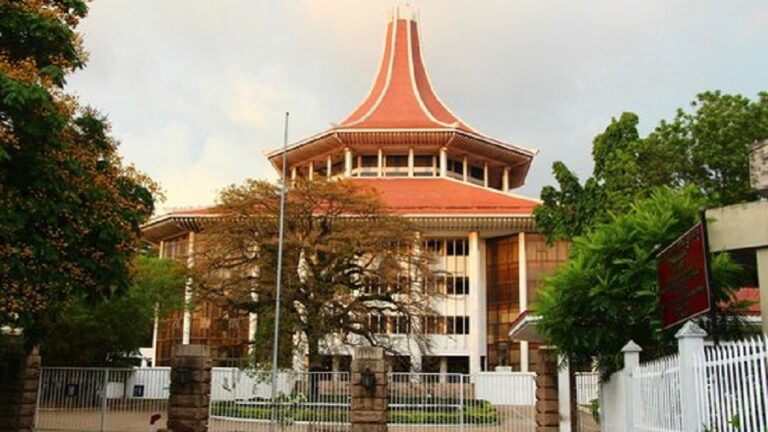
Colombo (LNW): The Online Safety Bill, along with its provisions, aligns with the country’s constitution and can proceed with a simple majority vote following specific amendments during the committee stage, the Supreme Court declared today (07).
The announcement of the Supreme Court’s decision that the proposed Online Safety Bill is not inconsistent with the Constitution was made by the Deputy Speaker in Parliament on Tuesday.
It was clarified that while certain clauses of the bill would require a special majority for passage, these clauses can be approved by a simple majority if they are modified during the committee stage.
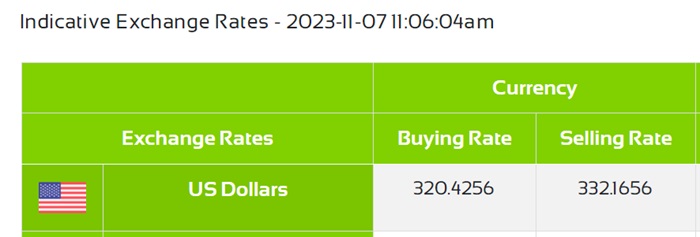
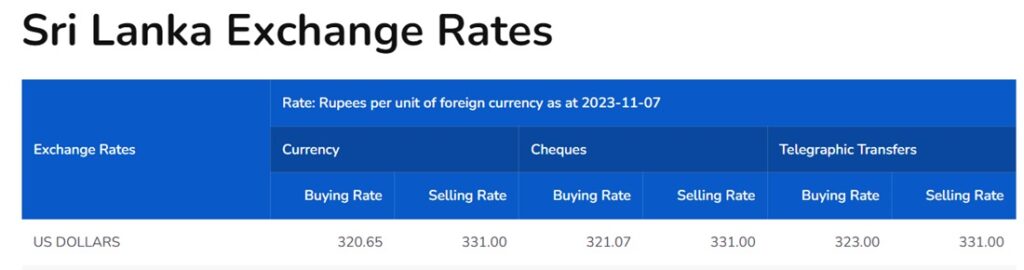
Colombo (LNW): The Sri Lankan Rupee (LKR) happens to be steady against the US Dollar at leading commercial banks in the country today (07) in comparison to yesterday.
At Peoples Bank, the buying and selling prices of the US Dollar are Rs. 320.42 and Rs. 332.16, respectively.
At Commercial Bank, the buying and selling prices of the US Dollar are Rs. 320.65 and Rs. 331.
At Sampath Bank, the buying and selling prices of the US Dollar are Rs. 321 and Rs. 331, respectively.
Colombo (LNW): The prolonged delay in implementing a Geographical Indication (GI) law in Sri Lanka has emerged as a significant roadblock in registering local GI products including cinnamon, thereby impeding their access to the associated benefits within export value chains.
The current cinnamon production capacity of 21,000Mt, with export quantity of 19,000Mt, has the potential for expansion up to 25,000 – 30,000Mt a year.
Sri Lanka has received Geographical Indication (GI) certification from the European Union for Ceylon Cinnamon helping it to stand out from substitutes in the trade block, the Export Development Board said.
GI registration can be used to differentiate Sri Lankan Cinnamon from others has in the EU markets. ‘Ceylon Cinnamon’ can also be sold for premium prices.
Despite receiving Cabinet approval to formalise it into law, spices and allied products, exporters pointed out that procedural slowness within the Trade and Commerce Ministry and Department of Commerce has thwarted the timely dispatch of the value-added initial batch of cinnamon slated for EU markets.
The issue was brought up at the recently held 23rd Exporters Forum organised by the Export Development Board.
In February 2022, Ceylon Cinnamon secured the country’s first Geographical Indication (GI) certification and status from the European Union (EU) Commission.
“GI registration has the purpose of differentiating Ceylon Cinnamon in the EU market from its substitutes of lower quality.
GI will act as a source of competitive advantage which will help to increase market differentiation, product turnover and allow for a premium price from the consumer,” SAPPTA past Chairman Vernon Abeyratne said.
He said as part of obtaining the GI status, the Ceylon Cinnamon GI Association (CCGIA) was established representing all the stakeholders in the cinnamon industry in the country.
The responsibility of the CCGIA is to implement an internal control mechanism to monitor their members meeting the specifications stated in the GI specification document.
The participants within the cinnamon supply chain need to be registered with the CCGIA to export Ceylon Cinnamon to the EU region under the ‘Ceylon Cinnamon’ brand.
Noting that Sri Lanka’s spices and essential oil exports were $ 370.3 million in 2022, Abeyratne stated that GI-certified cinnamon exports were initially expected to account for around 1% of this total in the current year.
“Regrettably, the delay in implementing GI certification has practically neutralised this prediction, resulting in an expected loss for the sector he said
GI certification not only confers legal protection but also adds significant value to the products, enhancing the competitiveness and marketability,” he pointed out.
During the first nine months, Sri Lanka earned $ 302.68 million via spices and essential oil exports recording 9.97% year-on-year growth compared to the same period in 2022.
State Minister of Investment Promotion Dilum Amunugama assured swift action in formalising the GI law.
Colombo (LNW): Israel’s Minister of Interior, Moshe Arbel, and Sri Lanka’s Ambassador to Israel, Nimal Bandaranaike, have signed an agreement that permits Israel to hire 10,000 Sri Lankan farm workers, Israeli-based business news aggregator Globes reported.
This agreement follows recent cabinet approval, which allowed Israeli companies to bring in 5,000 workers for the agricultural sector, according to the report.
Israel’s agricultural industry has been adversely affected by the conflict, with many foreign agricultural workers leaving the country due to safety concerns.
The first group of Sri Lankan agricultural workers under this agreement is expected to arrive in the coming weeks.
Currently, there are approximately 4,500 Sri Lankan workers in Israel, with most of them employed in the homecare sector.
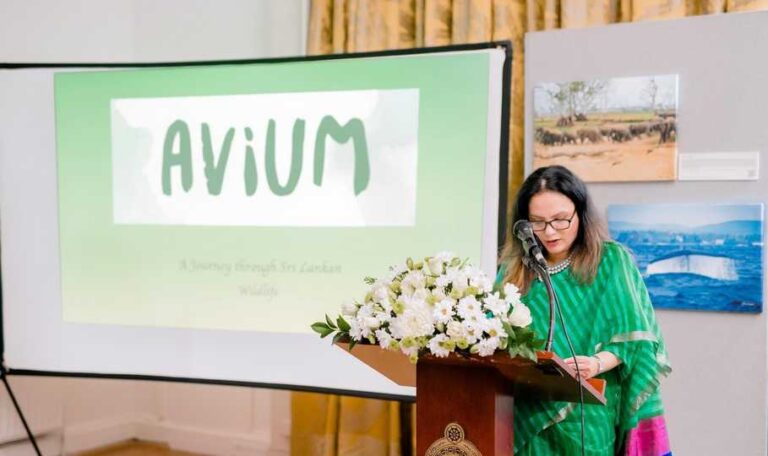
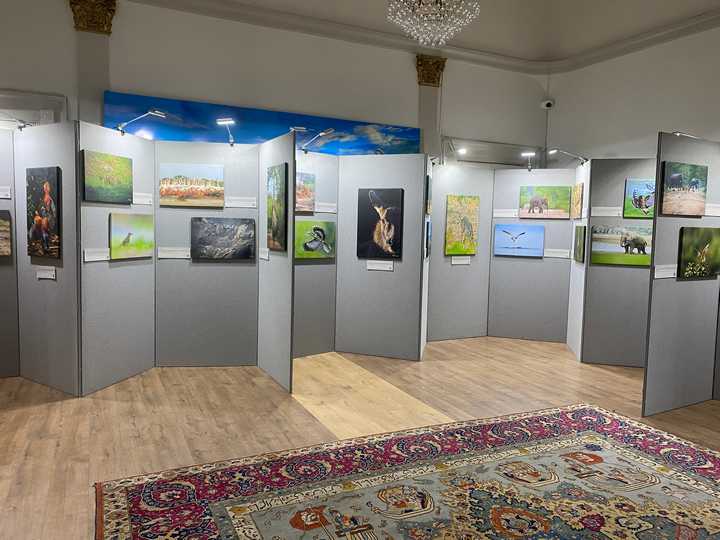
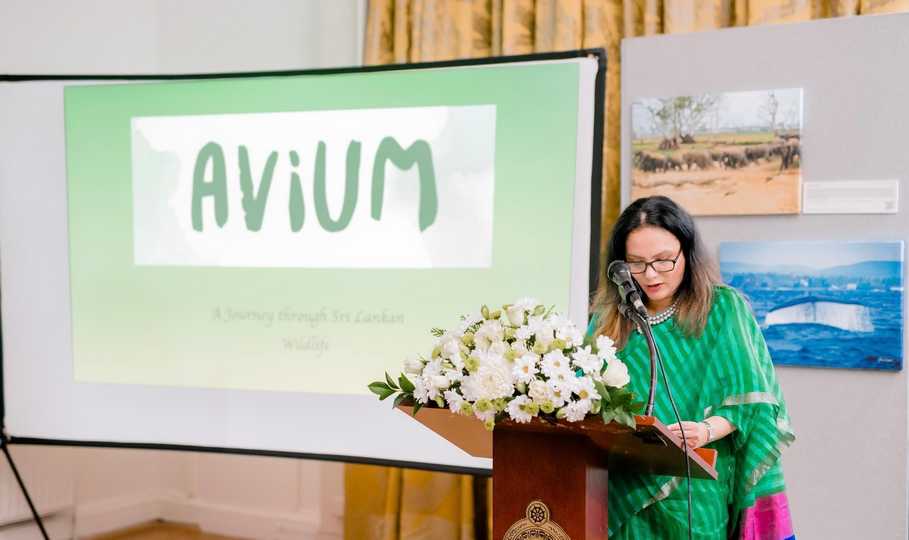
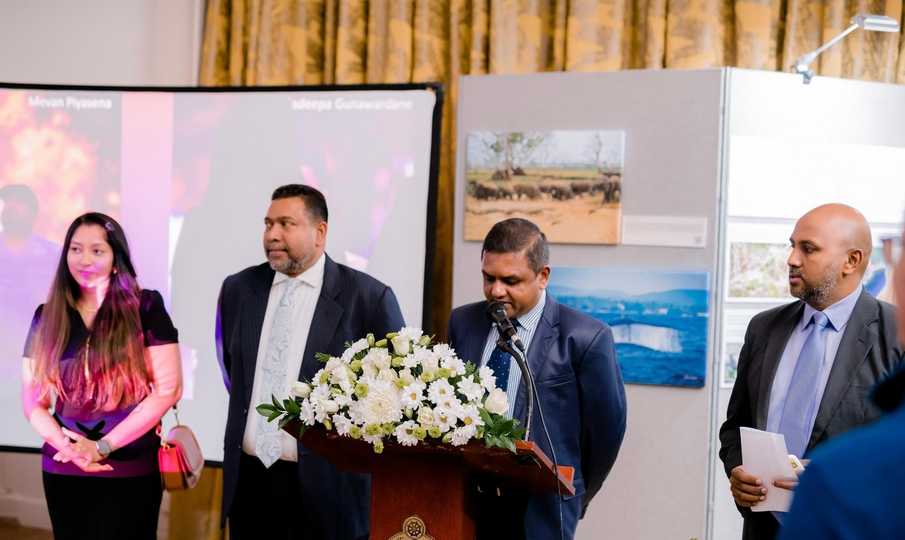
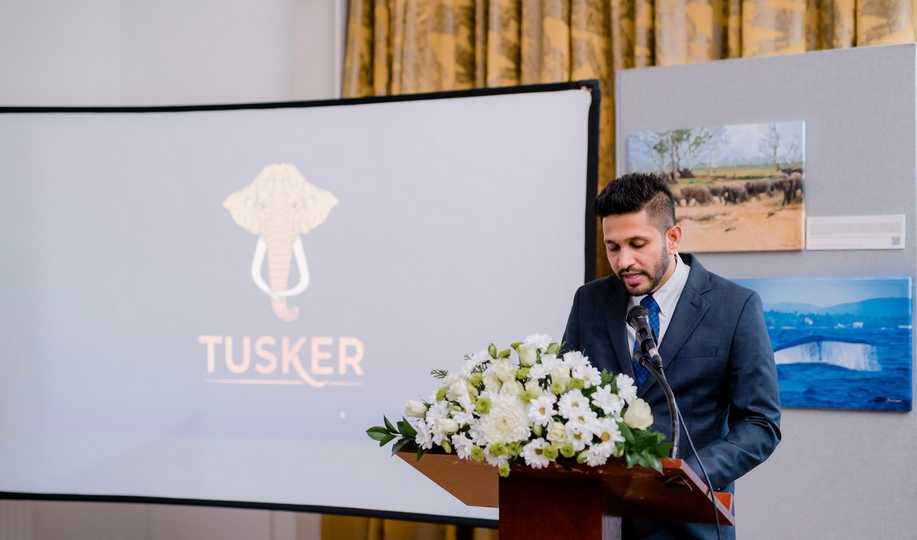
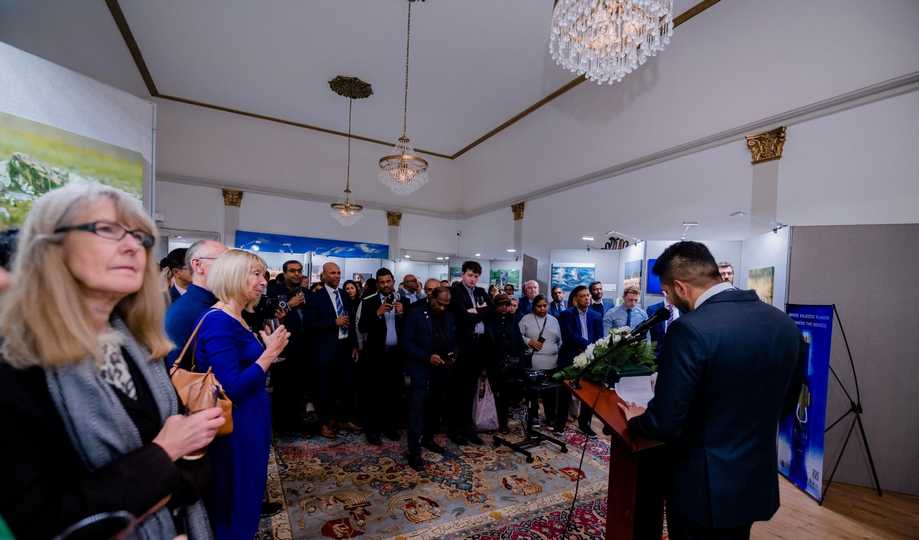
The opening of the Avium Wildlife Photography Exhibition and the launch of the Tusker foundation was held at the High Commission of Sri Lanka on 01 November 2023 under the patronage of the High Commission of Sri Lanka in the United Kingdom.
The Avium team which includes few photographers; Dushyantha Silva, Milinda Wattegedera, Raveendra Siriwardene, Melisa Fernando, Mevan Piyasena and Sadeepa Gunawardena have dedicated to leopard identification in Sri Lanka, through meticulous analysis of facial spot pattern, and successfully identified over 220 leopards in Yala and Kumana national parks.
This endeavour challenged common notions about leopards and leopard behaviour, leading to some fascinating ground-breaking discoveries such as that “A leopard can change its spots”. Additionally, the Avium team has observed that the behaviour of Sri Lankan leopards marked differently from that of other subspecies worldwide.
Speaking at the event, Deputy High Commissioner Manorie Mallikaratchy stated that the objective of the event is to promote purposeful tourism, and echo to the world what Sri Lanka has to offer is not just sun and sand, but an Island with rich biodiversity and home to many endemic species of both fauna and flora.
The CEO of VA Distilleries and the President of the Tusker Foundation, Kasthuri Hettiarachchi partnered with the High Commission for this event. The Tusker Foundation is committed to the conservation and welfare of wild tuskers of Sri Lanka, by contributing a proportion of their revenue from Tusker Brand beverages sales.
The Avium exhibition of a collection of photographs portraying the diversity of wildlife continued to 02 & 03November 2023. Over 100 guests attended the event from throughout the United Kingdom.
The decision to expel MP Raheem was made following a thorough inquiry by the Disciplinary Committee of the Party led by MP Rishard Bathiudeen.
Raheem’s actions, involving smuggling gold and mobile phones, have tarnished the party’s reputation, contravened the expected conduct of an ACMC Member of Parliament, and constituted a serious breach of party discipline, ACMC Chairman M.S.S. Ameer Ali said in a statement.
MP Raheem contested in the last General Elections under the symbol of the Muslim National Alliance (MNA) as per the Electoral Agreement with the ACMC.
The expulsion notification has been sent to Raheem and the Secretary General of MNA, Mr. Naeemullah, and the ACMC Chairman hopes for immediate action by the Secretary General of MNA.
Raheem was detained at the Bandaranaike International Airport (BIA) in Katunayake on May 23, 2023, with undeclared gold and mobile phones. Customs officials confiscated 3.5kg of undeclared gold and 91 mobile phones. He was released after paying a fine of Rs. 7.5 million.
Colombo (LNW): The Education Ministry will allocate Rs. 237 billion via the 2024 Budget for education-related expenses across nine provinces, a statement by the Education Minister disclosed.
The Cabinet has approved a policy framework for education reform aimed at establishing a stable and enduring education policy.
The reforms target four key areas, focusing on transitioning from an exam-centric system to more diversified and inclusive classroom assessment to provide quality education for students and educators.
The academic year will commence on February 19, 2024, ensuring the completion of the curriculum from the first to the eleventh year within the same academic year. Advanced-Level Examinations and Ordinary Level Examinations are on schedule.
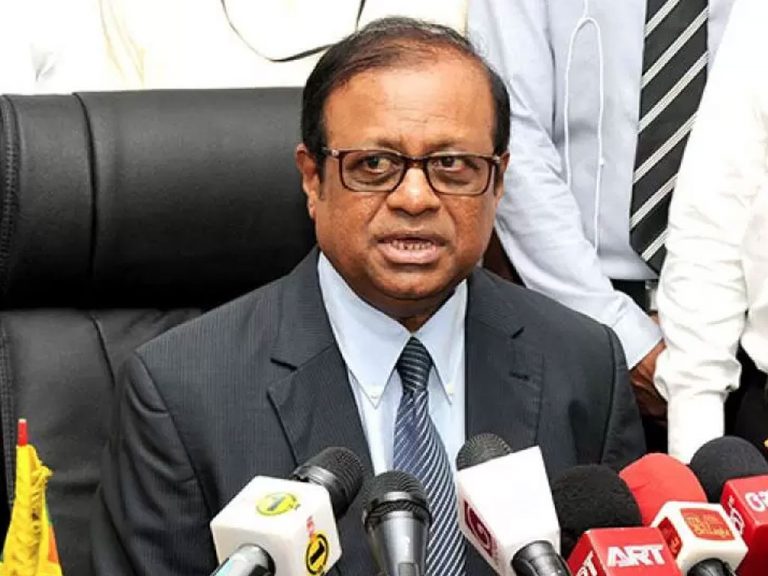
Efforts are being made to fill teaching service vacancies and address challenges related to teacher and development officer appointments, Education Minister Susil Premjayanth said.
The Treasury approved the recruitment of 5,450 personnel for specific subjects like science, mathematics, English, foreign languages, and technology.
Textbook distribution and school uniform work are nearly completed, with plans to provide meals to all school students starting next year and aiming for lunch for every school child by 2030.
Additionally, professional training in skills and technology will be offered to students post-general and advanced level examinations through evening classes.
The government remains committed to improving the education system and ensuring timely academic schedules.
PMD: In a significant development, the Cabinet of Ministers has convened to address the pressing issues facing the country’s cricket landscape. The attention of the Cabinet was drawn to various concerns within Sri Lanka Cricket. In the cabinet meeting held Nov (06), the Cabinet discussed and decided on a course of action to address these concerns.
The Cabinet has resolved to appoint a special sub-committee with the mandate to examine the current situation and work in collaboration with relevant stakeholders, including input from esteemed former cricketers. The primary objective of this sub-committee is to recommend immediate, viable measures to resolve the outstanding issues in Sri Lanka Cricket.
The members of this sub-committee, who have been entrusted with this vital responsibility, include: Ali Sabry – Minister of Foreign Affairs as the Chairman while Kanchana Wijesekara – Minister of Power and Energy Manusha Nanayakkara Minister of Labour & Foreign Employment and Tiran Alles – Minister of Public Security as its members.
In addition to the above, an additional secretary to the President, nominated by the Secretary to the President, will function as the Secretary/Convenor to the sub-committee. This appointment ensures efficient coordination and facilitation of the committee’s work.
Furthermore, the sub-committee has been authorized to co-opt the services of any official or expert in the relevant field as they deem necessary for their deliberations. This inclusive approach aims to tap into a wide range of expertise and perspectives to address the cricket-related issues more comprehensively.
The decision made by the Cabinet regarding the formation of this sub-committee is to be treated as confirmed, and it underscores the government’s commitment to addressing the challenges faced by Sri Lanka Cricket. The sub-committee is expected to work diligently to bring forth practical solutions to strengthen and rejuvenate the country’s cricketing landscape.
Reporters Without Borders (RSF) urges the Philippines’ authorities to conduct a swift investigation on the killing of a radio anchor during a live broadcast, and to take strong measures to end impunity for crimes committed against journalists.
On Sunday 5 November, radio anchor Juan Jumalon, also known as DJ Johnny Walker, was gunned down in the municipality of Calamba, in the southern region of Mindanao. The journalist, aged 57, was broadcasting a live show on Facebook for the media 94.7 Gold FM when a gunman entered his place, shot him twice in the head, and grabbed his necklace before fleeing with an accomplice.
Operating from a studio set up in his home, Jumalon mainly covered current affairs in Mindanao. While the motive for the crime is currently unknown, the National Union of Journalists (NUJP) points out that many journalists in the region have recently received threats following their coverage of local elections held last month.
“The murder of Juan Jumalon is deeply shocking and must not be left unpunished. We urge the Philippine Department of Justice to conduct a swift investigation to determine the motives and identify the perpetrators. We also call on President Ferdinand Marcos Junior’s administration to take concrete steps to put an end to the violence committed against Philippine journalists with almost total impunity.”
Cédric Alviani RSF Asia-Pacific Bureau Director
Juan Jumalon is the second radio journalist killed in the Philippines in 2023 and the fourth since Ferdinand Marcos Jr. took office in June 2022. As the population is dispersed across thousands of islands, radio plays a fundamental role in circulating news and information, and radio journalists often pay with their lives for being more outspoken and incisive.
In May of this year, radio journalist Cresenciano Bunduquinwas shot dead at his home, located in the central Philippines, after receiving repeated death threats. In October 2022, radio journalist Percival Mabasa, better known by his pseudonym Percy Lapid, was shot near his home in the suburbs of Manila.
With 199 murdered since the restoration of democracy in 1986, the Philippines is one of the most dangerous countries for journalists and press freedom defenders and ranks 132nd out of 180 on the 2023 RSF World Press Freedom Index.
REPORTERS SANS FRONTIÈRES / REPORTERS WITHOUT BORDERS (RSF)
Poll conducted by an internationally funded Research organisation says the approval rating of the Government has plunged from 21% in June’23 to 9% in October’23: economic confidence score has also fallen from negative (-) 44 in June to negative (-) 62.
“Lawyers’ Collective” condemns the 4th extension granted to IGP C D Wickremeratne, who passed the mandatory retirement age 8 months ago: alleges the extension has been granted unconstitutionally without the concurrence of the Constitutional Council.
Urban Development & Housing Minister Prasanna Ranatunga instructs the UDA to return Viharamahadevi Park to the Colombo Municipal Council: since 2011, the park had been under the UDA & modernised as part of the Metro Colombo Urban Development Project with a World Bank loan.
Media spokesman of the Ceylon Electricity Board Engineer Noel Priyantha says the electricity supply of a staggering 788,235 consumers has been disconnected due to the non-payment of the electricity bills in the last 10 months: 120,474 disconnections of supply have been recorded in August’23, while in July’23, 118,481 disconnections were carried out.
Cabinet appoints a 4-member Ministerial Committee to look into SL Cricket’s future activities & the appointment of Members to a SLC Interim Committee by the Sports Ministet: the 4-member Ministerial Committee to be Mohamed Ali Sabry (Chairman), Kanchana Wijesekara, Manusha Nanayakkara & Tiran Alles.
Former MP & SL Ambassador to Iran M M Zuhair says the US, UK & other European countries must respect the growing global public opinion, mostly in the West, including thousands of principled Jews, against the horrific crimes being committed against the Palestinians under cover of a ‘war on Hamas’ for the past one month.
The All Ceylon Makkal Congress says the Party has revoked the party membership of MP Ali Sabri Raheem who attempted to smuggle a stack of gold & mobile phones into the country.
US District Court Judge Denise Cote grants SL’s request for an interim halt on Hamilton Reserve Bank’s legal action against the country until 29th February’24 in it’s ISB dues claim: says the requested “stay action” by SL has been granted for 6 months, to enable the conduct of its sovereign debt restructuring negotiations with sovereign & commercial creditors: also says a breakdown in restructuring negotiations could threaten SL’s progress towards IMF targets & economic recovery.
SL loses to Bangladesh by 3 wickets in their ICC Cricket World Cup 2023 Group match: SL – 279 all out (49.3 overs), Charith Asalanka – 108, Pathum Nissanka – 41: Bangladesh – 282/7 (41.1 overs), Dilshan Madushanka – 69/3, Mahesh Theekshana – 44/2: Madushanka becomes the highest wicket-taker in the tournament so far, with 21 wickets.
SL top batsman Angelo Mathews becomes the first batsman in international cricket to be given out by way of being ‘timed out’: following an appeal from Bangladesh captain Shakib Al Hasan, Umpires rule Mathews out since he failed to receive the ball within the stipulated time from the previous dismissal.