Home Blog Page 1432

National United LITRO Guardianship urges President not to restructure LITRO

0

By: Isuru Parakrama

Colombo (LNW): In light of the organisational structure and the socio-economic benefits delivered by LITRO Gas, restructuring the state-owned LP gas vendor, which is so far the only state-owned body that incurs profits, would not be timely accurate, emphasised the National United LITRO Guardianship, in a letter addressed to President Ranil Wickremesinghe today (13).

Despite halted operations for a period of about three months during last year’s economic crisis, LITRO Gas defended the market, the manufacturer and the customer alike as the island nation’s LP gas provider, the Union said in its letter.

In the backdrop, it would be questionable as to whether LITRO, which always stood up for the customer in every national crisis in Sri Lanka, should be subject to restructuring thereby being submissive to private acquisition, the National United LITRO Guardianship added.

Below is the full letter sent to President Wickremesinghe by the National United LITRO Guardianship elaborating as to why the state-owned LP gas vendor shall not be restructured.

President underscores criticality of financial discipline in nation-building

0

PMD: President Ranil Wickremesinghe stressed the importance of financial discipline in nation-building and announced plans to promptly introduce formal measures to control public expenditure and generate new government revenue.

The President highlighted the need to maximise the value of every rupee spent by the government, as currently, public expenditure often fails to achieve this objective. He expressed concern over not only the neglect of public revenue but also the unrestricted spending of public funds on non-beneficial activities, which has contributed to the economic crisis in the country.

Furthermore, President Wickremesinghe attributed the current financial problems to the lack of parliamentary discussions on this matter in the past two or three years. To address this issue, he informed that several committees have been established in the parliament to examine the state’s financial situation and income tax matters.

President Wickremesinghe made these remarks during the presentation of a report by the committee chaired by State Minister for Finance, Economic Stabilisation, and National Policy, Mr. Ranjith Siyambalapitiya, which aimed to propose strategies for generating new sources of income for the state. The report was submitted to the President by State Minister Ranjith Siyambalapitiya at the Presidential Secretariat yesterday (12).

The report encompasses recommendations aimed at establishing a structured framework to attain the revenue goals of the Inland Revenue Department, Sri Lanka Customs, and the Excise Department. It also suggests the implementation of novel approaches to augment government revenue and the creation of a digital economic infrastructure to support these endeavours.

President Ranil Wickremesinghe directed the Minister of State to engage in further discussions regarding these proposals and present them to the Parliamentary Committee on Ways and Means.

Furthermore, the President emphasised the utmost importance of leveraging digital technology to its fullest potential in implementing these recommendations.
He also emphasised the necessity of formally informing the public about these initiatives through an extensive media campaign.

President Ranil Wickremesinghe further said;

“In the current economic crisis, a major concern is the improper collection of tax revenue. Some individuals and entities who are obligated to pay income tax fail to do so, leading to a significant shortfall. Additionally, there have been reports of the government experiencing delays in receiving complete tax revenue from customs, as well as similar accusations regarding excise duty.

During this crucial period of economic recovery, it is imperative to establish comprehensive financial discipline in the country. The first step is to control government expenditure, which is currently being addressed. Secondly, the government must ensure that each rupee spent delivers maximum value, as this is often not the case with public expenditure. Therefore, careful attention needs to be given to this matter within the Parliament. Thirdly, there is a need to increase state revenue. To tackle this challenge, a committee led by State Minister Ranjith Siyambalapitiya has been appointed and entrusted with the responsibility.

I extend my gratitude to everyone involved in the preparation and presentation of this report today.

We must explore new avenues for increasing income tax revenues, as outlined in the report. This aspect has received significant attention within our Parliament. It can be argued that the lack of parliamentary discussions in the past two or three years, along with a lack of interest in certain cases, has been a primary cause of the economic crisis. To address this, several inquiry committees on income tax and the fiscal situation have been established. It is within these activities that we should seek out these new approaches.

Furthermore, digitisation plays a crucial role in these endeavours. Those who oppose this transformation should consider stepping aside, as I intend to enforce digitisation within a designated timeframe. Any shortcomings that arise should be addressed promptly.

Importantly, the income generation methods we have adopted draw inspiration from the United Kingdom. These methods have been greatly refined and improved over time. Thus, we must examine the latest systems and develop the necessary infrastructure accordingly. Proposed amendments to the Audit Act have been put forward to support this objective.

We have extended an invitation to Mr. Francis Maude, who served under Prime Minister David Cameron and has substantial expertise in this area, to visit Sri Lanka and share his insights on sectoral reform.

When the British colonised this country, they prioritised revenue collection and appointed revenue officers for this purpose. Under a unified administration, revenue officers and local officials, known as Mudaliyar (or Mudali), paid special attention to revenue collection. As a result, income did not decline, and it even increased with the development of tea, coconut, and rubber industries. However, since the 1970s, revenue generation has been neglected, and it has been removed from the administrative agenda of the country. Not only has revenue been overlooked, but state funds have been spent without restraint.”

Minister of State for Finance, Economic Stabilisation and National Policy Mr. Ranjith Siyambalapitiya;

“This report has been meticulously prepared under the guidance of the President, encompassing short-term, medium-term, and long-term proposals. Its aim is to streamline existing sources of income and introduce new ones, ensuring that the burden on the people remains minimal.

It is important to acknowledge the wealth of experience we have gained while addressing the challenge of state revenue. Thanks to the President’s guidance, we have attained a certain level of stability. However, there are still numerous objectives to achieve in order to increase our state revenue in proportion to the gross domestic product.

We have reached the limits of introducing new taxes and raising tax percentages. Therefore, our focus must now shift towards expanding the tax base and closing the gaps in the tax net to enhance revenue generation.

Moreover, great emphasis has been placed on enhancing government revenue through improved competitiveness and transparency. Extensive discussions with all stakeholders have been on-going, leading to a fair resolution of long-standing contentious issues.”

Present at this significant occasion were Minister of State for Finance Mr. Shehan Semasinghe, Presidential Senior Advisor on National Security and Chief of Presidential Staff Mr. Sagala Ratnayaka, Presidential Secretary Mr. Saman Ekanayake, Presidential Senior Advisor on Economic Affairs Dr. R.H.S. Samaratunga, Acting Secretary of the Ministry of Finance Mr. R.M. P. Ratnayake, and other officials.

Applications called for 2024 Grade 01 enrolment

0

By: Isuru Parakrama

Colombo (LNW): The Ministry of Education has called for the applications for the enrolment of Grade 01 students in government schools for 2024.

Accordingly, the Ministry has issued a sample application form which can be downloaded at www.moe.gov.lk.

Parents and legal guardians are required to complete the application form to enrol their children in Grade 01 in government schools for the year 2024.

The completed forms should be submitted to the respective Heads of Schools via registered post, and the applicants are required to submit them before August 18, 2023.

Click Here to view circular.

DDO – Who misled the President and Parliament?

0

This short article is to highlight basic legal, conceptual and governance issues relating to Domestic Debt Optimization (DDO) as announced hitherto.

The article highlights few fundamental concerns over the implementability of the DDO and predicts severe repercussions on political and socio-economic fronts. 

Gazette issued under RSSO

On 3rd July, the President in the capacity of the Minister of Finance issued regulations under section 34 and 55 of the Registered Stocks and Securities Ordinance (RSSO) authorizing the Secretary to the Ministry of Finance and Registrar of Public Debt to carry out powers vested with the Minister under section 34 of the RSSO.

  • The gazette is as follows.
  • The section 34 of the RSSO is as follows.

Major legal concerns

  • The exercise of powers and authorities under section 34 of the RSSO does not require an issuance of Regulations. Subjects that require Regulations under section 55 of the RSSO do not cover the subject of “Conversion of Loans” under section 34. 
  • Regulations cover words “convert or exchange”. However, section 34 of the RSSO relates to “conversion” only while nothing is covered on “exchange.”
  • Minister’s powers under the RSSO can be delegated only to the Secretary to the Treasury through a gazette issued under section 56 of the RSSO. There is no any reference to the Secretary to the Ministry of Finance. Therefore, the authorization to the Registrar of Public Debt is unlawful.
  • The Sinhala version of the Regulations refers to “රාජ්‍ය ණය අධිකාරී“. However, RSSO does not refer to such a designation. It refers to the designation of “ලේඛකාධිකාරී” and “Registrar.” Further, there is no designation of Registrar of Public Debt in the RSSO as the duties of the “Registrar” apply only to debt raised through instruments permitted under the RSSO.
  • The conversion of loans requires the section 35 of the RSSO that provides for the arrangement for the conversion. However, it is not covered in the Regulations.
  • If Regulations are lawfully in order as they are, the Minister must declare the specific lists of securities or stocks in the Regulations as implied from the contents of the section 34 of the RSSO. However, the Minister has declared such lists in a separate document “Invitation to Exchange” issued by the Minister on 4 July to superannuation funds and other eligible holders.
  • As the Minister uses provisions in the RSSO to implement DDO, the legality as well as the purpose of a resolution sought from the Parliament for the DDO are not clear.
  • Treasury bonds specified in the “Invitation to Exchange” are not the loans raised in terms of sections 2 and 4 of the RSSO with the authorization by the Minister as required. Therefore, an issue remains as to how loans issued in contravention of the relevant provisions of the RSSO are converted into stocks or securities provided for in the section 34 of the RSSO.
  • If such Treasury bonds are lawful bonds in any case, loans have been raised through such bonds by the Registrar under section 5 of the RSSO. It is the statutory duty of the Registrar under this section to “make all such arrangements as may be necessary to raise loans upon the most favourable terms that can be obtained.” If so, an investigation is necessary as to how such Treasury bonds have become a burden causing public debt unsustainable.
  • The responsibility of domestic debt management with lowest cost and prudent risk has been vested by the Monetary Board with the Domestic Debt Management Committee (DDMC) of the CB. If so, an investigation is necessary as to why the DDMC failed to fulfil its public duties as DDO is now necessary to make domestic debt sustainable.  In fact, the proposed DDO is virtually a default of contracts on promissory notes on Treasury bonds.
  • Passing the burden of domestic debt mismanaged by the Registrar and DDMC to the general public through superannuation funds in a discriminatory manner without any investigations into those who mismanaged debt to the default status is an undemocratic use of the public governance powers by the incumbent government.
  • DDO proposed in Treasury bills held by the CB to convert into Treasury bonds or term loans is not practical as both Local Treasury Bill Ordinance and Monetary Law Act do not have supporting provisions. It is noted that the majority of Treasury bills held by the CB at present is the unlawful increase by the present CB Governor in the conflict of interest. 

DDO conceptual issues

  • Official communications reveal that the proposed DDO is undertaken on the request of external creditors at the discussion between them and the government on foreign debt restructuring consequent to the default announced with effect from 12 April 2022 on the advice of the present CB Governor. He is also responsible for the excessive issuance of International Sovereign Bonds for his foreign reserve management role. In fact, it is the foreign debt that is unsustainable due to the acute shortage of foreign currency reserves with the CB whereas it is the CB that expanded foreign debt aggressively and unlawfully for monetary policy purposes. Foreign lenders who lent excessively by knowing the risks must bear the loss of default and it is undemocratic to share this loss with local currency lenders.
  • Domestic debt raised in domestic currency cannot be unsustainable as debt service can be made through the rollovers at new interest rates as and when the debt matures and the government has money printing and creating power for debt service. The proposed DDO on Treasury bonds is also an early rollover of the existing debt in 63 Treasury bonds with a total face value of Rs. 8,904 bn maturing between September 2023 and March 2045 to 12 new bonds at new interest rates/coupon of 12% and 9% maturing between 2027 and 2038 (see the list below). Therefore, this rollover will not ease the debt stock or debt-GDP ratio. However, it is noted that the policy announcement made by the Ministry of Finance on 4 July covered bonds maturing between 2024 and 2032 for the conversion under the DDO. As such, the Ministry does not know what they are really doing.
  • As present interest rates structure has been elevated at historically high levels by the super tight monetary policy since April 2022, proposed interest rates on new bonds may be costly to debt service on new bonds for the period up to 2038. In contrast, rollovers at maturities would have the benefits of the market interest rates in the future after the economy recovers from the current monetary tightening and CB’s debt management. The rollovers are difficult at present not due to non-availability of liquidity but due to sugar high interest rates on government securities driven by the CB for the monetary policy as the CB serves both functions of debt manager and monetary authority. The CB has been injecting ample liquidity through reverse repo auctions and direct purchases of Treasury bills as it wishes.
  • The criteria used to select bonds for the conversion is highly questionable. 

    *First, there are several bonds with coupon rates below 9% in the declared bond list. The exchange of these bonds at new coupon rates of 12% and 9% as proposed will increase the debt service burden. 

    *Second, 6 bonds maturing from August 2039 to March 2045 are to be exchanged with new bonds maturing up to 2038. As the maturity is shortened here, the debt service burden will increase. What is actually required is to extend the maturity profile of the debt stock in order to ease debt service and bunching.

    *Third, there is no purpose of two bonds with outstanding value of less than 10 bn to be offered in the list as only large value bonds require optimization.

    *Fourth, the coupon rates of Treasury bonds in the list are not representative of the actual cost to the government as the weighted average yield to maturity of those bonds at issuances could be lower than specified coupon rates due to issuance at premium whereas the opposite will apply to discount bonds. As such, discount bonds should be optimized. For this purpose, new coupons can be linked to secondary market yields if the government securities market is developed in terms of the relevant provisions of the RSSO. 

    Overall, it is clear that all existing bonds have been listed for DDO without any assessment of the debt burden of each bond. Therefore, the proposed DDO on Treasury bonds will be another bureaucratic job that will effectively fail as usual.

  • Active Liability Management Act was passed in 2018 to restructure the debt stock as debt unsustainability or default was foreseen in advance. However, the Treasury or the CB never acted accordingly. Instead, they raised more debt by using the additional borrowing powers (i.e., 10% of the existing debt stock) given in the Act. These provisions could have been used for the DDO too as the Act was passed specifically for debt restructuring purpose. An investigation also is required why the provisions of this Act were not implemented despite evolving debt unsustainability.

Public concerns

  • Although authorities talk rosy stories on debt restructuring and DDO, its complexities can have severe effects legally, socially and economically.
  • The popular statement that EPF members will not be affected anyway by the DDO is untrue as any debt restructuring is implemented to gain trough the cost passed to lenders. If there is not cost to the EPF being the single largest lender, the purpose of the proposed DDO is questionable.
  • I recall the political calamity caused by a just attempt to introduce transparency and competition on issuance of government securities in place of the long existed private placements lovingly promoted by the CB. The attempt was to introduce transparency and market discipline to develop the debt market. The present CB Governor was a big advocate for private placements fighting against the market mechanism. As a result, the good governance based government in 2015 was shattered in few months from its beginning.
  • As compared to that event, the proposed DDO is much more controversial and complicated and, therefore, could cause serious legal and socio-economic repercussions due to issues presented above.
  • It appears that the President personally leads the restructuring task without facts known to him. Those who advised the President to follow this path of debt restructuring and DDO seem to have misled the President and Parliament by not revealing facts and consequences behind the DDO concept.
  • Officials who mismanaged debt to be unsustainable are in the forefront of debt restructuring without being subjected to any investigation. This is not acceptable.
  • In this context, if circumstances become unhealthy in future, the President will singularly be responsible for as those who advised the President would have retired and left to their foreign residences and Parliamentarians who voted for the DDO resolution can change their position abruptly overnight for political benefits as usual.

(This article is released in the interest of participating in the professional dialogue to find out solutions to present economic crisis confronted by the general public consequent to the global Corona pandemic, subsequent economic disruptions and shocks both local and global and policy failures.)

P Samarasiri

Former Deputy Governor, Central Bank of Sri Lanka

(Former Director of Bank Supervision, Assistant Governor, Secretary to the Monetary Board and Compliance Officer of the Central Bank, Former Chairman of the Sri Lanka Accounting and Auditing Standards Board and Credit Information Bureau, Former Chairman and Vice Chairman of the Institute of Bankers of Sri Lanka, Former Member of the Securities and Exchange Commission and Insurance Regulatory Commission and the Author of 10 Economics and Banking Books and a large number of articles published. 

The author holds BA Hons in Economics from University of Colombo, MA in Economics from University of Kansas, USA, and international training exposures in economic management and financial system regulation)

Source: Economy Forward

NMRA to probe leading private hospitals in Colombo over public complaints on prices of medicines

0

By: Isuru Parakrama

Colombo (LNW): The National Medicines Regulatory Authority will be probing some of the leading private hospitals in Colombo area in response to a series of public complaints that patients are being billed with exorbitant rates for medicines exceeding the government’s designated maximum retail prices (MRP).

The public’s outcry over the prices of medicines comes in against the backdrop where the Health Ministry declared a list of 60 essential and most commonly used medicines with their maximum retail prices slashed by 16 per cent with effect from June 15, 2023.

It is illegal if commonly used medicines are sold for prices beyond the MRP, and some of the commonly used medicines allegedly sold for exorbitant prices are paracetamol, amoxicillin, metformin, antibiotics and insulin, Daily Mirror reported quoting an official at the NMRA.

A similar probe was carried out in the South against a private hospital in Galle, and had discovered that it had violated the recent gazette declaration by the Health Ministry. The hospital in question is currently being processed for trial at Court.

Govt reimposes customs import duty for milk powder

0

By: Isuru Parakrama

Colombo (LNW): The government has reportedly reimposed the customs import duty for milk powder.

Accordingly, an import tax of Rs. 100 has been imposed per kilogram of milk powder, effective from Wednesday (12).

This tax revision comes in in replacement to the previous decision to remove the import duty of Rs. 225 per kilogram of milk powder imposed by the government.

The revised customs duty has been imposed by the Ministry of Finance, Economic Stablisation and National Policies.

Ranil Wickremesinghe, Sri Lanka’s president: Burning Qu’ran is a violation of the Freedom of Worship

0

AYO NEWS: President Ranil Wickremesinghe of Sri Lanka addressed the global community and denounced the burning of a Qu’ran in Sweden. He described it as a violation of the Freedom of Worship.

Sri Lankan President Ranil Wickremesinghe has issued a robust statement to the international community, expressing his strong condemnation of the recent Quran-burning incident in Sweden. He categorizes this act as a blatant violation of the fundamental right to Freedom of Worship and urges Western Nations to be vigilant against the spread of disorder masquerading as Freedom of Expression.


There is a tangible resonance between the immense importance of religious freedom and the necessity to treat all religions with respect. He stresses the need to protect these rights and warns against the misuse of Freedom of Expression to demean or undermine the dignity of individuals and their religious beliefs.


Hon Nirj Deva, a former Member of the British and European Parliament, commends the President’s firm stance. Deva praises President Wickremesinghe for recognizing Freedom to Worship as a core human right and establishing a hierarchy of rights. Deva further asserts that when Freedom of Expression infringes upon the dignity and respect individuals expect for their faith, religious freedom should take precedence.


For the audience, the statement resonates with the urgent need to safeguard the sanctity of religious beliefs and prevent any form of disrespect or discrimination. His call for Western Nations to respect the value system of the Global South reflects a broader aspiration for understanding and achieving harmony among nations.


Ultimately, the denouncement of the Quran burning incident in Sweden underscores the imperative for Western Nations to respect religious freedom and safeguard individual dignity. By emphasizing the significance of this issue, Wickremesinghe aims to prevent the abuse of Freedom of Expression.

Source: AYO NEWS

Sri Lanka Original Narrative Summary: 13/07

0

  1. President Ranil Wickremesinghe strongly condemns the burning of the Holy Quran in Sweden; urges Western nations to uphold the value system of the Global South and refrain from allowing disturbances under the pretext of freedom of expression.
  2. President’s Secretary Saman Ekanayake says President Wickremesinghe’s goal is not to pass the task of reconciliation in Sri Lanka to the next generation, but to solve it now: adds there is a strong need to resolve the issues related to the reconciliation process, and that if this effort is successful, there will be no need for the country to go to the UNHRC in Geneva for another year.
  3. Finance State Minister Shehan Semasinghe says the government has spent Rs. 144 billion on welfare benefits last year; adds as per the agreements with the IMF and WB Sri Lanka had agreed to spend a minimum of Rs. 187 billion annually on welfare benefits: asserts the government expects to spend Rs. 206 billion annually on ‘Aswesuma’ programme.
  4. Ven. Rajangane Saddharathana Thera who was arrested on the allegation of making comments harming religious co-existence granted bail: The Colombo Fort Magistrate imposes a bail condition preventing the Thera from making any statements using foul language.
  5. The IMF says it did not hold any discussion on a digital services tax with the authorities of Sri Lanka, or whether the country should sign on to a OECD/G20 inclusive framework for international corporate tax: A parliament panel had recently discussed a digital services tax, claiming that internet companies are not paying tax.
  6. Tamil political leaders slam SLPP MP Sarath Weerasekara for abusing parliamentary privileges and pressuring the judiciary by denouncing the race of a judge: warn Weerasekara is trying to stir up racist feelings among the Sinhalese by saying that a Tamil judge will intervene in the case related to the controversial Kurundi temple built at the Kurunthurmale archaeological site: Human rights activists, BASL, Mullaitivu Bar Association also stand against the ex Public Security Minister.
  7. Fitch Ratings revises the Outlook on CEB’s National Long-Term Rating to Positive, from Stable, and simultaneously affirms the rating at ‘B(lka)’: adds the National Long-Term Rating of CEB’s outstanding senior unsecured debentures at ‘B(lka)’: asserts the positive outlook reflects the likely upgrade of the Sri Lankan sovereign’s Long-Term Local-Currency IDR to reflect the sovereign’s prospects following the completion of a DDE.
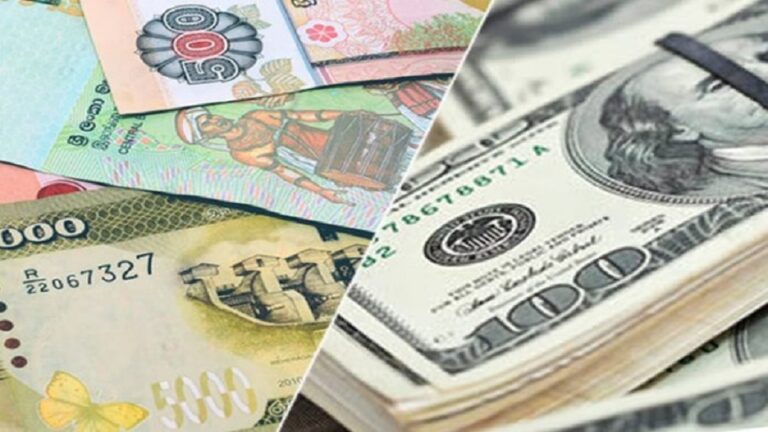
  8. LKR once again indicates depreciation against the USD at leading commercial banks: Peoples Bank – buying price rises to Rs. 305.58 from Rs. 304.61, and selling price to Rs. 320.61 from Rs. 319.59; Commercial Bank – buying price to Rs. 305.83 from Rs. 304.61, and selling price to Rs. 319 from Rs. 317; Sampath Bank – buying price to Rs. 305 from Rs. 302, and selling price to Rs. 320 from Rs. 317.
  9. Consultant Paediatrician at the LRH Dr. Deepal Perera divulges a measles outbreak has been identified at the hospital, with four confirmed cases; adds as of Monday (10), 12 children have displayed symptoms of measles, with four cases officially diagnosed: symptoms encompass high fever, cough, runny nose, watery eyes, and a characteristic rash known as the Measles rash; laments some children had not received the MMR vaccine for measles.
  10. Maheesh Theekshana and Pathum Nissanka make big gains in the ICC’s ODI player rankings, after making significant contributions to the team’s unbeaten run at the Cricket World Cup Qualifier: Theekshana, who finished as the second-highest wicket-taker, one dismissal behind teammate Wanindu Hasaranga, rose 13 spots in the rankings for bowlers to 19th: Nissanka, the second leading run-scorer, rose nine places from 38 to 29, overtaking Charith Asalanka as the highest-ranked Sri Lankan batsman: Hasaranga meanwhile rose one place to eighth in the ranking for all-rounders.

Fitch asserts positive outlook on CEB: Affirms at ‘B(lka)’

0

Fitch Ratings – Colombo – 12 Jul 2023: Fitch Ratings has revised the Outlook on Ceylon Electricity Board’s (CEB) National Long-Term Rating to Positive, from Stable, and has simultaneously affirmed the rating at ‘B(lka)’. Fitch also affirmed the National Long-Term Rating of CEB’s outstanding senior unsecured debentures at ‘B(lka)’.

The Positive Outlook reflects the likely upgrade of the Sri Lankan sovereign’s Long-Term Local-Currency Issuer Default Rating (IDR) to reflect the sovereign’s prospects following the completion of a domestic debt exchange (DDE). We will equalise CEB’s ratings with that of the sovereign if the sovereign’s Long-Term Local-Currency IDR is upgraded to above ‘CC’, in line with our Government-Related Entities (GRE) Rating Criteria, resulting in a rating upgrade on the national scale. This is based on our assessment of a strong likelihood of support from the state.

The affirmation follows our de-linking of CEB’s rating from that of the sovereign after we downgraded Sri Lanka’s Long-Term Local-Currency IDR to ‘C’, from ‘CC’ on 5 July 2023. This is because, despite the government’s selective default on some of its local-currency debt, we do not believe CEB has entered a default or default-like process requiring a similar rating action. In addition, CEB’s current rating already reflects a probable near-term default, as the company’s ability to service debt depends on the continuity of government support.

Key Rating Drivers

State Support Intact: The government continues to provide financial support to CEB to sustain its operations, which would have been otherwise challenging. The government converted a LKR200 billion project loan, amounting to 35% of CEB’s outstanding debt as at 30 September 2022, to equity late last year, while state banks continued to provide working capital funding to secure feedstock. The government has also facilitated uninterrupted fuel supply to CEB’s thermal power plants from state-owned Ceylon Petroleum Corporation (CPC), despite CEB having large dues to CPC.

We believe state support will be forthcoming, despite the state’s weak financial profile, as CEB fulfils an essential service for the country. A default of CEB would disrupt this service, as the company accounts for most of Sri Lanka’s power-generation capacity. It would also make it difficult for CEB to source imported feedstock for power generation, such as heavy oil and coal. CEB’s independent power producer (IPP) agreements, which account for around 20% of the power generated, would also be affected, as they are external arrangements with no clear alternatives.

Cost Reflective Tariff Mechanism: The government has established a formula-based tariff mechanism to ensure CEB’s operating costs and interest obligations are recovered going forward. Prior to this, CEB supplied electricity at significant subsidies, resulting in large accumulated losses and an unsustainable capital structure. The consistent application of the cost-reflective tariff mechanism should allow CEB to breakeven at the cash flow from operations level, but such implementation has yet to be proven.

Indeterminate Standalone Profile: We don’t believe ascertaining standalone credit profile of CEB is possible in the foreseeable future, as its ability to operate depends on continued state support and it cannot be meaningfully delinked from the government. CEB had LKR284 billion of debt equally spread across working capital and project loans as at end-April 2023. We expect CEB to generate negative free cash flow in the medium term, despite the tariff mechanism, and to depend on the state for expansion and refinancing.

We may provide a standalone credit view should CEB maintain a record of profitable operation that improves its access to external funding with less reliance on the state.

Large Dues to Operating Creditors: CEB owed LKR208 billion to CPC, IPPs and renewable energy generators as of end-April 2023, up by 20% from November 2022. CEB expects to settle its debt to CPC and some IPPs with support from the government, while the renewable producers will be settled incrementally with cash generated from operations. CEB plans to settle part of the dues owed to renewables producers through new funding lines, but approvals are taking time. Consequently, we do not expect a material reduction CEB’s trade payable position in 2023.

CEB Restructure: The government is looking at unbundling CEB’s generation, transmission and distribution process by transferring CEB’s resources to 14 companies established under the Companies Act as part of the country’s energy sector reforms. We expect the unbundling to provide autonomy and flexibility for CEB operations, while improving its efficiency and competitiveness, but it is too early to ascertain how the proposed restructure would affect CEB’s credit profile, as the plan’s details are still vague.

Derivation Summary

CEB’s ratings reflect a probable near-term default, as it relies on the Sri Lankan government, which has begun a local-currency debt restructuring process, to continue its operations. However, CEB itself has not begun a default or default-like process.

Key Assumptions

Fitch’s Key Assumptions Within Our Rating Case for the Issuer

– Sri Lanka’s annual electricity demand growth to average around 6% over 2023-2026

– Generation mix to remain at 50% thermal, 30% hydro and 20% other over 2023-2026

– Tariff to be adjusted every six months to cover CEB’s operating costs and interest obligations

– Annual capex of LKR90 billion over the next two years for maintenance and building new generation capacity

RATING SENSITIVITIES

Factors that could, individually or collectively, lead to positive rating action/upgrade:

– the Sri Lankan sovereign’s Long-Term Local-Currency IDR being upgraded to above ‘CC’ after the completion of the DDE could result in corresponding action on CEB’s National Long-Term Rating.

Factors that could, individually or collectively, lead to negative rating action/downgrade:

– the Sri Lankan sovereign’s Long-Term Local-Currency IDR being rated at ‘CC’ after the completion of the DDE would result in the Outlook on CEB being revised to Stable.

For the sovereign rating of Sri Lanka, the following sensitivities were outlined by Fitch in the agency’s Rating Action Commentary on 5 July 2023:

Factors that could, individually or collectively, lead to positive rating action/upgrade:

– Following completion of the DDE, the sovereign LTLC IDR will likely be lifted out of ‘RD’ to a rating that appropriately reflects its prospects.

– For the LTFC IDR, completion of the foreign-currency commercial debt restructuring that Fitch judges to have normalised relationship with private-sector creditors may result in an upgrade.

Factors that could, individually or collectively, lead to negative rating action/downgrade:

– The LTLC IDR will be further downgraded once the government executes its domestic debt restructuring.

Liquidity and Debt Structure

Liquidity Support from Government: CEB had LKR17 billion in unrestricted cash at end-March 2023, against LKR128 billion in debt due in the next 12 months. More than 90% of the outstanding debt is for working capital, which we believe will be rolled over in the normal course of business. We believe the government will continue to provide funding support for CEB to meet its contractual maturities amid the company’s weak liquidity.

CEB also has significant payments due to feedstock suppliers, including CPC and IPPs. CEB plans to settle the debt by using additional cash flow from the increased electricity tariff and by securing new funding facilities from banks. CEB received LKR80 billion in funding in 2022 from the Ministry of Finance to settle its dues to CPC, and we expect similar liquidity support from the government, given the essential service that CEB provides.

Issuer Profile

CEB is Sri Lanka’s sole electricity transmitter and distributor. It is a fully owned state entity and accounts for 75% of domestic electricity generation through its network of hydro and thermal power plants.

REFERENCES FOR SUBSTANTIALLY MATERIAL SOURCE CITED AS KEY DRIVER OF RATING

The principal sources of information used in the analysis are described in the Applicable Criteria.

Public Ratings with Credit Linkage to other ratings

A change in Sri Lanka’s Long-Term Local-Currency IDR to a level above ‘CC’ may result in an upgrade of CEB’s ratings.

Source: Fitch Ratings

IMF held no discussion on a digital services tax for SL

0

ECONOMYNEXT – The International Monetary Fund did not discuss a digital services tax with Sri Lanka or a whether Sri Lanka should sign on to a OECD/G20 inclusive framework for international corporate tax, a spokesman said.

A so-called Yellen tax sets corporate tax at 15 percent but corporate taxes in Sri Lanka are around 30 percent. The OEDB had G20 has been pushing for equal taxation to stop so-caleld Base erosion and profit shifting (BEPS), and tax holidays are discouraged.

The IMF has not discussed any plans for a digital services tax with the Sri Lankan authorities in the current program.

“…[N]or has it provided any recommendation on whether or not Sri Lanka should sign on to the OECD/G20 inclusive framework agreement for international corporate taxation,” the spokesperson said.

A Sri Lanka parliament panel had discussed a digital services tax recently, claiming that internet companies are not paying tax.

Protectionist domestic companies had claimed that foreign e-commerce firms were not paying income tax, though there is no information whether they are actually making profits.

Sri Lanka had already slammed a tax on credit card transactions to protect domestic e-commerce firms which has been deemed a multiple currency practice by the IMF.

Source: Economy Next