Home Blog Page 145

Bangladesh–India Ties Strained Further

0

Relations between Bangladesh and India have entered a deeper crisis following the killing of a minority community member during violent protests in Bangladesh, intensifying mutual accusations and diplomatic tensions between the two neighbours.

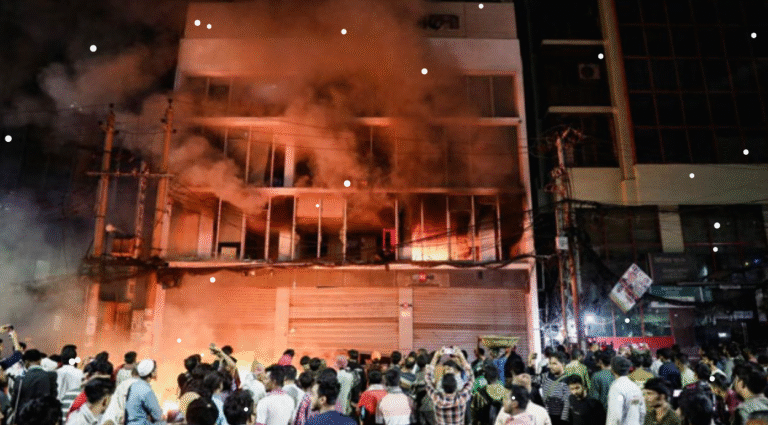
Dipu Chandra Das, a 27-year-old garment factory worker belonging to a minority community, was beaten to death by a mob in Mymensingh last week after being accused of blasphemy. Graphic videos of the killing, in which his body was later set on fire, circulated widely on social media, triggering outrage in both countries.

The killing occurred amid widespread unrest following the murder of student leader Sharif Osman Hadi in Dhaka. Supporters of Hadi alleged that a suspect linked to the Awami League had fled to India, fuelling anti-India sentiment in Bangladesh, though police said there was no confirmation of this claim.

Tensions quickly spilled over into diplomatic and public spheres. Both countries suspended visa services in several cities, summoned each other’s envoys, and accused one another of failing to ensure the safety of diplomatic missions. Protests erupted in India, while Bangladeshi authorities had to prevent demonstrators from marching toward the Indian High Commission in Dhaka. An Indian diplomatic facility in Chittagong was also attacked with stones.

Bangladesh’s interim government, led by Nobel laureate Muhammad Yunus, condemned the violence and promised justice, stating there was “no place for such brutality in the new Bangladesh.” Police have arrested 12 suspects in connection with Das’s killing.

Analysts warn that the incident highlights growing insecurity for minorities and civil society in Bangladesh, with radical groups becoming more assertive since the fall of former Prime Minister Sheikh Hasina. Attacks on media institutions and cultural spaces accused of being “pro-India” have further raised alarm.

Experts on both sides caution that escalating street anger and political rhetoric could further damage bilateral ties, stressing that stability in Bangladesh is crucial for regional security. With national elections scheduled for February, observers say restoring law and order and rebuilding trust with India will be critical challenges for Bangladesh’s interim administration.

India Pledges Continued Support to Sri Lanka in Post-Cyclone Recovery

0

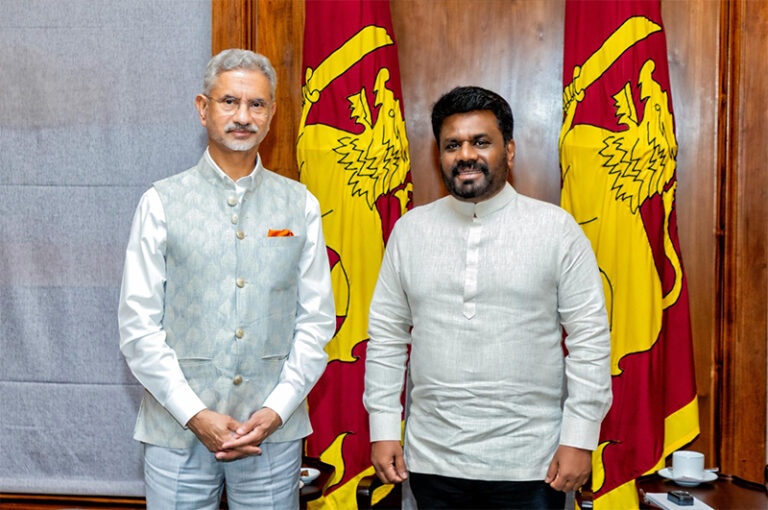
Indian Prime Minister Narendra Modi has reaffirmed India’s commitment to support Sri Lanka in the next phase of recovery following the devastation caused by Cyclone Ditwah.

The assurance was conveyed in a special letter addressed to President Anura Kumara Dissanayake and delivered through India’s Minister of External Affairs, Dr. S. Jaishankar.

In the message, Prime Minister Modi emphasized India’s role as a trusted partner and close friend, stating that India would stand “shoulder to shoulder” with Sri Lanka in rebuilding the lives of affected communities and strengthening national resilience.

He further reiterated that Sri Lanka could always count on India’s support, underscoring the longstanding friendship and cooperation between the two countries during times of crisis.

Several spells of showers may occur in Central, Uva, and Eastern provinces

0

Several spells of showers may occur in Central, Uva and Eastern provinces and in Polonnaruwa and Mullaittivu districts.

Showers or thundershowers will occur at a few places in Southern province and in Kaluthara and Rathnapura districts after 2.00 p.m. Fairly heavy falls above 50 mm are likely at some places in Galle and Matara districts.

Mainly fair weather will prevail in the other areas of the island.

Misty conditions can be expected at some places in Sabaragamuwa and Central provinces and in Kaluthara, Badulla, Galle and Matara districts during the early hours of the morning

Development expert Takes Charge as UDA Head Faces Defining Reform Moment

0

By: Staff Writer

December 23, Colombo (LNW): The appointment of M.G. Hemachandra as Chairman of the Urban Development Authority (UDA) comes at a decisive moment for Sri Lanka’s urban planning sector, long burdened by allegations of corruption, tender manipulation, institutional inertia and costly project failures.

As the country grapples with cyclone- and flood-related devastation of an unprecedented scale, expectations are mounting that the UDA, often branded a symbol of bureaucratic excess must undergo structural transformation rather than cosmetic change.

Hemachandra arrives with a professional background that sharply contrasts with the Authority’s troubled reputation.

A former Senior Specialist and Chief of Loan Projects at the Japan International Cooperation Agency (JICA), he brings decades of experience in development policy formulation, infrastructure financing, procurement governance, project evaluation and contract administration. These are precisely the areas where the UDA has drawn sustained criticism, particularly over opaque tender processes and poorly coordinated urban interventions.

The immediate challenge before the new Chairman is not merely institutional cleanup but strategic repositioning. With urban flooding, drainage failures and climate-induced displacement now recurring realities, the UDA’s role must shift from ad-hoc construction to resilient, data-driven urban planning.

Observers argue that Hemachandra’s exposure to international development standards positions him to recalibrate the Authority’s priorities toward disaster-responsive urban design, transparent procurement systems and measurable outcomes.

His earlier service at the National Water Supply and Drainage Board and the Central Engineering Consultancy Bureau further strengthens his understanding of infrastructure interdependencies, an essential requirement as flood mitigation, housing, transport and drainage can no longer be treated as isolated mandates.

Equally significant is his long-standing involvement with the Institution of Engineers Sri Lanka (IESL), where he currently serves as Vice President and previously chaired the IESL Policy Forum, advocating evidence-based policymaking.

During the COVID-19 crisis, Hemachandra demonstrated a hands-on approach by developing a digital support platform for Mahaweli farmers, signalling his willingness to combine technology with public service delivery. Analysts believe this experience could translate into improved project monitoring and public accountability mechanisms within the UDA.

However, expectations alone will not reform an institution. Critics’ stress that Hemachandra’s success will depend on whether he can assert independence, overhaul procurement practices, strengthen professional oversight and insulate planning decisions from political interference. In a period when climate disasters are exposing the cost of urban mismanagement, the UDA’s credibility and Hemachandra’s leadership will be judged by results, not résumés

Low Interest, High Stakes: RFI Claims Need Scrutiny

0

By: Staff Writer

December 23, Colombo (LNW): The Government’s portrayal of the IMF’s Rapid Financing Instrument (RFI) as a low-interest, stabilising solution following Cyclone Ditwah deserves careful scrutiny. While Finance and Planning Deputy Minister Dr. Anil Jayantha Fernando has highlighted favourable borrowing terms and swift disbursement, the broader economic trade-offs associated with the facility remain underplayed.

The IMF approved SDR 150.5 million (around US$206 million) to help Sri Lanka cope with the cyclone’s aftermath, citing urgent humanitarian and reconstruction needs. There is little dispute that immediate liquidity support is necessary. However, framing the RFI as an almost cost-free intervention risks blurring the line between emergency assistance and additional debt accumulation.

Dr. Fernando has pointed to the current SDR-linked interest rate of approximately 3.27% as evidence of affordability. Yet, IMF lending costs evolve over time. SDR rates are influenced by global monetary conditions, meaning Sri Lanka remains exposed to external interest rate movements beyond its control. Furthermore, IMF surcharges triggered by access levels and duration can significantly raise effective borrowing costs in later years.

Equally important is the question of impact. The RFI is designed to plug short-term balance-of-payments gaps, not to finance long-term reconstruction or growth-enhancing investment. As such, its capacity to “protect recovery momentum,” as claimed by the Deputy Minister, may be limited unless accompanied by decisive domestic reforms, targeted public investment, and disaster-risk financing strategies.

The Government has also announced temporary banking relief measures, including repayment moratoriums and concessional loans. While welcome, these interventions primarily defer financial stress rather than resolve it. Businesses facing destroyed assets, disrupted supply chains, and weakened demand may struggle once moratoriums expire, particularly if interest costs accumulate in the background.

A further concern is the signalling effect. Repeated reliance on emergency IMF facilities may reinforce investor perceptions of vulnerability rather than stability, especially if shocks whether climatic or fiscal continue to push the economy back into crisis mode. Confidence is built not only through access to funding, but through credible medium-term planning and institutional preparedness.

None of this diminishes the immediate value of IMF support in a humanitarian emergency. However, a balanced narrative must acknowledge that emergency financing is a stopgap, not a solution. The real test lies in how Sri Lanka uses the limited fiscal space created by the RFI to build resilience, reform public finance, and reduce exposure to future shocks.

Absent such a strategy, low-interest emergency loans risk becoming another layer in an already complex debt landscape, postponing rather than preventing the next crisis.

Beyond Relief: What Sri Lanka’s Plantations Need Now?

0

By: Staff Writer

December 23, Colombo (LNW): While immediate relief efforts following Cyclone Ditwah have stabilised conditions across most plantation areas, industry stakeholders warn that short-term responses alone will not secure the future of Sri Lanka’s plantation sector. The Planters’ Association of Ceylon (PA) says the disaster has once again exposed deep structural vulnerabilities that require urgent and coordinated intervention.

Plantation communities face a dual challenge: recovering from climate-induced shocks while navigating long-standing economic pressures. RPCs have ensured access to food, temporary shelter, and medical care for affected workers, with special attention given to children, the elderly, and those with existing health conditions. Yet, as damage assessments continue, the broader needs of the sector are coming into sharper focus.

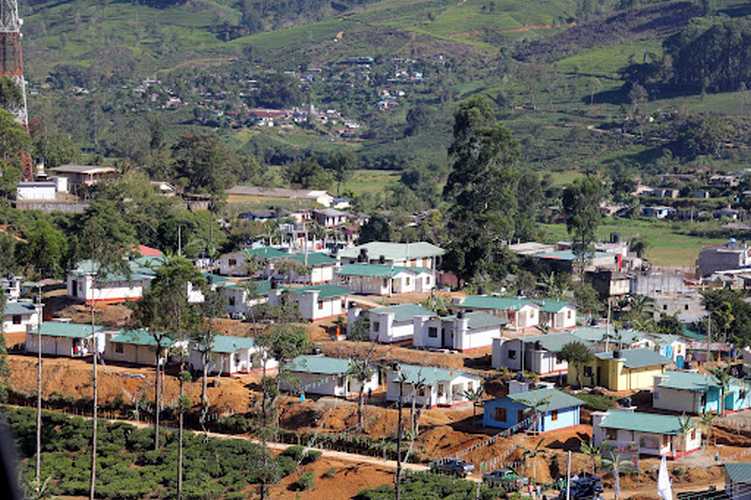
One critical concern is estate housing and infrastructure. Many line rooms and access roads, already in poor condition, have suffered further deterioration. Without targeted public investment and concessional financing, RPCs may struggle to undertake large-scale rehabilitation while maintaining wage payments and essential welfare services.

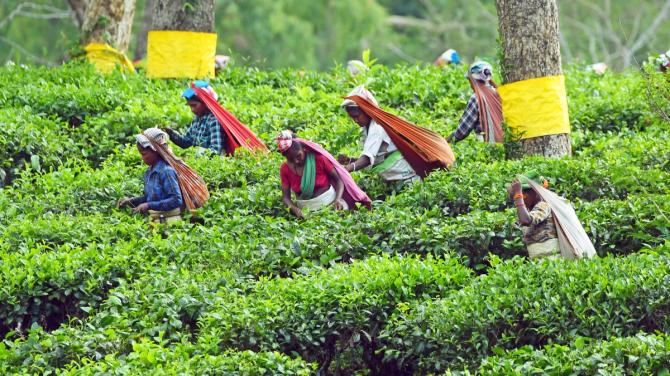
Equally pressing is the impact on cultivations. Flooding, soil erosion, and prolonged water saturation threaten tea and rubber yields over the coming months. Replanting and land restoration are capital-intensive processes, and delays could weaken productivity in an industry that already lags behind regional competitors in yield per hectare.

Labour remains another structural challenge. Estate employment has steadily declined due to migration, ageing workforces, and rising living costs. Extreme weather events further discourage retention, making improved living conditions, healthcare access, and education facilities central to long-term workforce stability.

From a policy perspective, industry observers argue that disaster recovery must be integrated into a broader plantation reform strategy. This includes climate-resilient infrastructure, land-use planning to reduce exposure to landslides, and incentives for mechanisation and diversification. Greater coordination between RPCs, provincial authorities, and national agencies is seen as essential to avoid fragmented responses.

Export competitiveness is also at stake. Sri Lanka’s tea sector continues to rely heavily on premium branding, but quality and consistency depend on uninterrupted cultivation cycles. Recurrent disruptions risk eroding buyer confidence at a time when global demand is increasingly price-sensitive.

The PA has called for collaborative solutions involving Government agencies, development partners, and financial institutions to support both immediate rehabilitation and long-term adaptation. As climate volatility becomes the norm rather than the exception, the sector’s survival will depend not only on resilience in crisis but on reform in recovery.

Cyclone Ditwah, the PA notes, should serve as a catalyst prompting decisive action to secure livelihoods, protect exports, and future-proof one of Sri Lanka’s most historically significant industries.

Tea Export Earnings Rise despite Price Pressures

0

By: Staff Writer

December 23, Colombo (LNW): Sri Lanka’s tea export earnings reached an estimated $1.4 billion during the first 11 months to November 2025, reflecting a resilient performance despite softer global pricing trends, according to Sri Lanka Customs data analysed by Forbes & Walker Research. The earnings marked a 13% increase year-on-year, up from approximately $1.3 billion in the corresponding period of 2024.

The growth was largely driven by a notable expansion in export volumes, which offset a marginal decline in average Free On Board (FOB) values when measured in rupee terms. Cumulative tea exports during the January–November period climbed to 239.57 million kilograms, an increase of 16.35 million kilograms compared to the same period last year.

November 2025, however, recorded a modest slowdown in monthly shipments. Total exports for the month stood at 19.36 million kilograms, down from 20.07 million kilograms a year earlier. Traditional categories such as Bulk Tea, Tea Packets, and Tea Bags posted year-on-year declines, while Instant Tea and Green Tea showed encouraging growth, reflecting gradual diversification in product demand.

FOB prices displayed mixed trends. In rupee terms, the average FOB value for November increased to Rs. 1,768.82 per kilogram, up nearly Rs. 50 from a year earlier. In dollar terms, however, the average declined slightly to $5.77 per kilogram, down $0.12 year-on-year, largely due to exchange rate movements rather than underlying market weakness.

Over the full 11-month period, the average FOB value eased to Rs. 1,755.45 per kilogram, down Rs. 14.48 from last year, while the dollar-denominated average edged marginally higher to $5.85 per kilogram. Despite pricing pressures, the volume-led expansion ensured that export revenues remained firmly on a growth trajectory.

Market diversification continued to play a key role. Iraq retained its position as Sri Lanka’s largest tea buyer, importing 36.77 million kilograms, a 21% increase from last year. Russia ranked second with 19.94 million kilograms, although volumes declined by 13%, while Türkiye followed closely with a strong 21% growth.

Emerging markets also delivered strong momentum. Libya more than doubled its imports to 18.30 million kilograms, while the UAE, Chile, Iran, China, Azerbaijan, and Saudi Arabia remained among the leading destinations.

Industry analysts note that sustaining earnings growth amid volatile prices underscores the sector’s adaptability, though long-term competitiveness will depend on productivity gains, value addition, and stable access to key export markets.

MSMEs Urge Action on Lending Rates amid Weak Policy Transmission

0

By: Staff Writer

December 23, Colombo (LNW): Sri Lanka’s Micro, Small and Medium Enterprise (MSME) sector has raised concerns over what it describes as excessive lending rates charged by licenced commercial and specialised banks, arguing that reductions in policy interest rates were not passed on proportionately to borrowers.

In a detailed submission to financial authorities, the Ceylon Federation of MSMEs said the interest-rate transmission mechanism had remained distorted well after the peak of the 2022 economic crisis, placing a sustained cost burden on businesses already weakened by the downturn.

The Federation pointed to the sharp tightening of monetary policy in 2022, when the Central Bank of Sri Lanka (CBSL) raised its Standing Deposit Facility Rate (SDFR) and Standing Lending Facility Rate (SLFR) to historic highs as part of crisis stabilisation measures. While acknowledging the necessity of those actions at the time, it said subsequent policy easing had not been reflected adequately in retail lending rates

Even when the Average Weighted Prime Lending Rate (AWPLR) had peaked at 29.67% in September 2022, the policy rate was 15.50%. While policy rates have since decreased, market rates continue to trail much higher. According to the submission, by 5 December, the Overnight Policy Rate (OPR) stood at 7.75%, while the AWPLR remained significantly higher at 8.74%, indicating a persistent gap between policy intent and market outcomes.

The Federation argued that this divergence disproportionately affected MSMEs, which rely heavily on bank credit and have limited pricing power to absorb higher financing costs. It said elevated borrowing rates constrained recovery, investment, and employment at a time when economic normalisation was expected to support growth

To underline its case, the submission included profit-after-tax figures of several licenced commercial banks for the 2022-2024 period, showing a marked improvement in earnings during the same years when MSMEs faced elevated interest expenses.

The Federation called on regulators to make fuller use of existing legal and supervisory powers to ensure fair transmission of monetary policy and prevent what it described as unjustified widening of lending spreads. It warned that failure to address the issue could undermine broader economic recovery and weaken confidence among small and medium-scale entrepreneurs. It called on the CBSL to ensure that the banking system paid back the excess interest charged on MSME borrowers.

Another 1,000 Arrested in Nationwide Anti-Drug Sweep

0

December 23, Colombo (LNW): Police across the country arrested more than 1,000 individuals yesterday (22) as part of the “Nation United – National Drive” campaign, a major initiative targeting illegal drug activity.

During the coordinated operations, authorities secured detention orders for 22 people, while 20 others were referred to rehabilitation centres.

The campaign aims to tackle the country’s drug problem through a comprehensive approach, combining law enforcement with prevention and rehabilitation efforts.

Authorities plan to disrupt drug supply chains, reduce demand, expand enforcement actions, and empower communities to resist the influence of narcotics.

The Police Media Division reported that officers recovered significant quantities of illicit substances, including 354 grams of heroin, 529 grams of crystal methamphetamine (commonly known as ‘Ice’), 124.282 kilograms of cannabis, 115,176 cannabis plants, 14 grams of kush, 284 grams of hashish, 791 grams of narcotics tablets, 42.7 grams of ‘Madana Modaka’, and 1.598 kilograms of ‘Maava’.

X-Press Pearl Disaster: Law, Risk and the Limits of Accountability

0

By: Staff Writer

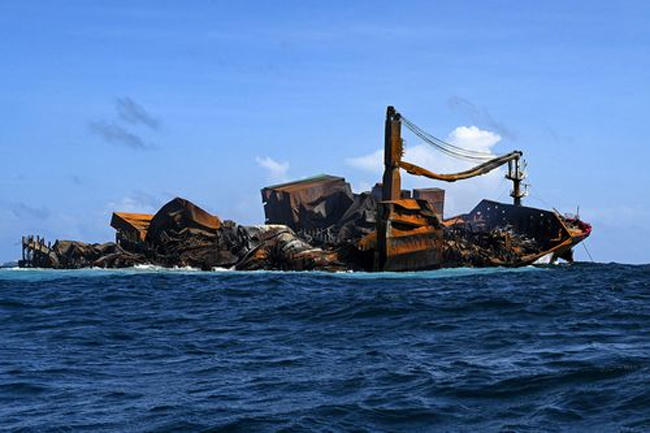
December 23, Colombo (LNW): The sinking of the MV X-Press Pearl off Sri Lanka’s western coast in June 2021 marked a defining moment for the country’s maritime history. What began as a shipboard fire escalated into an environmental catastrophe, releasing toxic substances, oil residue and billions of plastic pellets into the sea. Coastal ecosystems were damaged, fishing communities were disrupted and the long-term environmental consequences remain only partially understood.

In the years since, Sri Lanka’s legal system has sought accountability through domestic judicial processes, culminating in a Supreme Court ruling that ordered compensation in relation to the disaster. Yet responses from Singaporean public relations agencies—acting on behalf of maritime stakeholders—have made clear that Singapore does not accept an obligation to pay compensation under that ruling. Their position, however, is not framed as defiance, but as a reflection of how Singapore interprets international law, commercial risk and its role within global shipping.


A Legal Divide Between National Justice and International Enforcement

At the core of Singapore’s position is a clear distinction between judicial authority and enforceability. While the Sri Lankan court’s ruling is acknowledged as valid within Sri Lanka, Singapore’s response stresses that such decisions do not automatically carry weight beyond national borders. From this perspective, enforcement is not a matter of sympathy or morality, but of legal process.

Singapore’s agencies argue that international shipping operates within a framework where liability must be determined through globally recognised mechanisms—such as arbitration, international conventions or treaty-based cooperation. Accepting a domestic court ruling as enforceable abroad, they contend, would blur the lines between national sovereignty and international jurisdiction, introducing uncertainty into a system that depends on legal clarity.


Fear of Unintended Consequences in a High-Stakes Industry

More than legal theory is at stake. Shipping is an industry governed by risk calculation, insurance modelling and long-term confidence. Singapore’s communications reveal a strong concern that accepting unilateral compensation demands could alter how risk is priced across global maritime trade.

If operators believe they may be exposed to large, foreign-imposed liabilities without predictable legal pathways, the consequences could extend beyond a single case. Insurance premiums could rise, vessel routing decisions could change, and registration under certain flags could become less attractive. Singapore, positioning itself as a stable maritime hub, is acutely sensitive to any development that might weaken that perception.


Responsibility Beyond a Single Shoreline

Singapore’s narrative also reframes the X-Press Pearl disaster as a cumulative failure rather than a singular event confined to Sri Lankan waters. By highlighting earlier missed opportunities to intervene when the vessel was already experiencing hazardous cargo issues elsewhere, the response places the disaster within a broader regional context.

This framing does not deny the damage suffered by Sri Lanka, but it questions whether accountability can reasonably be assigned without examining decisions made across multiple ports and jurisdictions. In Singapore’s telling, the tragedy exposes a systemic weakness in how the global maritime system handles vessels in distress—particularly the absence of binding obligations on ports to provide assistance when risks are identified early.


Reputation, Confidence and the Indian Ocean Shipping Corridor

The Singaporean response also touches on reputational risk—not just for Singapore, but for the wider region. Prolonged uncertainty surrounding the X-Press Pearl dispute, they suggest, reinforces perceptions of instability in the Indian Ocean shipping corridor. This matters at a time when ports across South Asia are competing for transshipment traffic, investment and strategic relevance.

From this viewpoint, unresolved legal battles do not merely seek justice for past harm; they actively shape future commercial decisions. Singapore’s position implies that without internationally aligned solutions, compensation disputes risk becoming signals of unpredictability rather than instruments of reform.


Retrospective Penalties or a Call for Structural Solutions?

Rather than focusing solely on compensation, Singapore’s communications emphasise prevention and systemic reform. The disaster, in their assessment, highlights the absence of enforceable global standards governing port responsibility, emergency refuge and early intervention. Without these, similar incidents are likely to recur—regardless of how compensation disputes are resolved after the fact.

This emphasis shifts the conversation away from individual blame towards institutional failure. Singapore’s refusal to pay, as framed by its PR agencies, is thus presented not as rejection of accountability, but as resistance to addressing global problems through fragmented national actions.


Conclusion

Singapore’s stance on the X-Press Pearl compensation reflects a broader philosophy about how international shipping should be governed. It prioritises legal consistency, risk predictability and systemic reform over case-by-case enforcement of domestic rulings beyond national borders. While Sri Lanka continues to seek redress for one of its worst maritime disasters, Singapore’s response underscores the limitations of existing global frameworks—and the unresolved tension between national justice and international commerce. The tragedy of the X-Press Pearl, in this sense, has become as much a test of global maritime governance as it is a question of compensation.