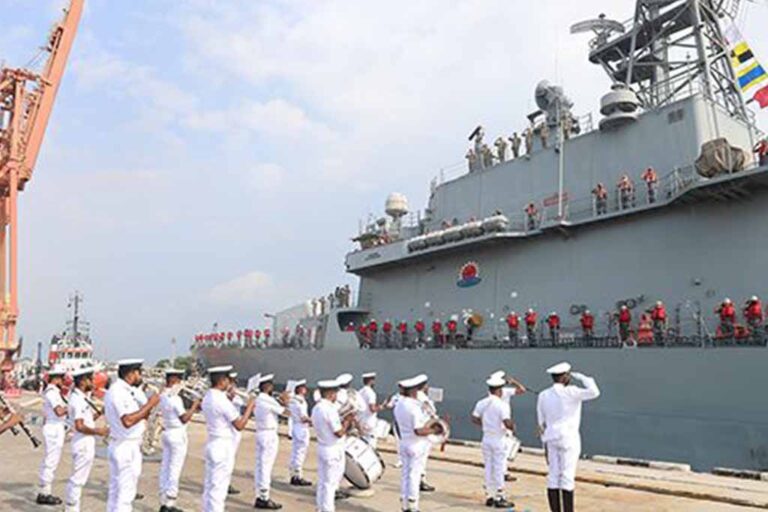
Colombo (LNW): The Royal Navy destroyer ROKS ‘Kwanggaeto the Great’, which had arrived in Colombo for an official visit, set sail from the island on 28th October 2023.
The Sri Lanka Navy extended a traditional send-off to the departing ship in line with naval customs at Colombo harbour.
Upon its departure, ROKS ‘Kwanggaeto the Great’ successfully undertook a Passage Exercise (PASSEX) alongside SLNS Vijayabahu.
This PASSEX included Communication Training and Tactical Maneuvering Training sessions, rounding off with the traditional cheer ship salute.
In the interim, the Commanding Officer of ROKS ‘Kwanggaeto the Great’, Captain Kim Hyoung Churl, paid a visit to the Commander of the Western Naval Area and Commandant of the Volunteer Naval Force, Rear Admiral Saman Perera, at the Western Naval Command Headquarters on 26th October.
Parallel to the ship’s stay in Sri Lanka, members of the Sri Lanka Navy were given the chance to tour the ship at Colombo harbour.
Such visits are pivotal in bolstering cooperation between naval forces. Furthermore, these interactions pave the way for naval drills and training endeavours, promoting the sharing of expertise and insights regarding their distinct maritime landscapes.
Such exchanges are especially advantageous when addressing mutual maritime issues.
Colombo (LNW): The owner of Eon Lanka Investment and Film Production Financial Company has been remanded by the Wariyapola Magistrate Court this week over an alleged financial misappropriation of around Rs10 billion of depositors money.
A group of customers who invested money in a firm called Eon Lanka has complained to the Inspector General of Police C.D. Wickramaratne that the owner of the financial institution which was sealed by the Central Bank of Sri Lanka two years ago has defrauded Rs.9.91 billion.
A large number of retirees, including those of the three armed forces and the police, have deposited money in the institution in Kurunegala which remained open from 2013 to 2020.
Wariyapola Magistrate Rasika Mallawaarachchi yesterday ordered the remand of owner of Eon Lanka Investment and Film Production Financial Company Attapattu Mudiyanselage Dhammika Attapattu over defrauding 8,000 people of money running into Rs 10 billion by promising higher interest, till November 1.
The suspected businessman, who is said to have been in hiding for almost two years after defrauding people of money, was arrested at a house located in Kandy by the Criminal Investigation.
The Police Media Spokesperson’s Office stated that this person had been the director and shareholder of this financial institution.
The suspect was arrested on Thursday (26) by the officers of the Financial and Commercial Crime Investigation Division of the CID. They also stated that Rs. 9,900 million had been defrauded by this person.
The Police Media Spokesperson’s Office stated further that charges of criminal misappropriation of money and breach of trust have been levelled against this person and he has also laundered the money thus earned.
Claiming to pay a high rate of interest, the suspected businessman had been operating the relevant financial institution at his home in Hanhamuna and taken cash deposits of various amounts ranging from Rs. 100,000 to Rs. 10 million and then committed this large-scale financial fraud by not returning the interest and money due for those deposits to the customers.
The Central Bank has imposed a ban on his illegal money transactions and published public notices banning those transactions in the newspapers.
A financial fraud case has also been filed against him in the Colombo High Court and it is currently being heard without the suspect’s attendance.
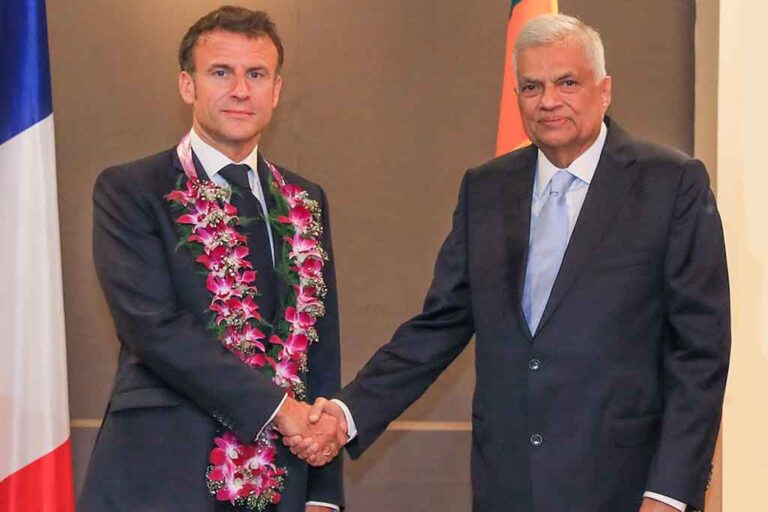
Colombo (LNW): Sri Lanka and France have agreed to boost trade investment and tourism bilateral ties and friendly political relations this week at the inaugural bilateral consultations between the two Foreign Ministries at senior official level in Colombo.
The consultations were part of the celebration of the 75th anniversary of the establishment of diplomatic relations between Sri Lanka and France which took place on 27 October 1948.
The consultations focused on strengthening bilateral relations, supporting ongoing work on existing projects and initiatives, and identifying new areas of partnership and coordinated action between the two countries.
The consultations reflected the desire expressed by President Ranil Wickremesinghe and President Emmanuel Macron during their meeting in Colombo on 28 July, 2023, to strengthen the partnership between the two countries.
The two parties reviewed progress in political relations; security; cultural cooperation and people-to-people contacts. They expressed their shared commitment to the values of freedom, democracy, human rights and the rule of law.
The parties discussed the expansion of trade, investment, tourism and development cooperation between the two countries and between Sri Lanka and the EU, including the setting up of relevant modalities to facilitate economic cooperation between Sri Lanka and France.
The parties committed to strengthening cooperation in the field of education by welcoming the support of France towards the teaching of the French language in Sri Lanka as well as strengthening cooperation between the two countries through academic and research exchanges between institutions of higher education.
Sri Lanka appreciated the role played by France in bringing together the creditor platform under the aegis of the Paris Club in advancing the debt restructuring discussions.
The two parties discussed progress in Sri Lanka’s debt restructuring program. Reference was made to the need to ensure fair and equitable treatment of all creditors.
France commended the action and reforms undertaken by Sri Lanka as part of the program agreed with the IMF, and expressed its firm commitment and support towards the country’s economic recovery.
The two sides reiterated their shared commitment to cooperate on global issues, including the sustainable development goals, climate change and environmental protection, food security, reform of the multilateral financial architecture.
It has been agreed to deepen their joint efforts in the future, building upon their participation in the Paris Pact for the People and the Planet.
The parties expressed their willingness to work together in preparation for the Third United Nations Ocean Conference to be held in France in 2025.
Colombo (LNW): Colombo Port City is set to attract investors by offering incentives in accordance with stipulated regulations for duty-free retail trades or operating duty-free shopping malls within the stipulated economic zone area.
One World Duty Free (ODF), a Singapore-based omnichannel retailer, has collaborated with Port City Colombo to open Sri Lanka’s first downtown duty-free store.
The two companies say their partnership will bring to life their shared vision, creating a framework for ODF to develop Port City Colombo into a preeminent global duty-free retail destination.
A Gazette notification has been issued outlining the requirements for investors interested in carrying out duty-free retail trades or operating duty-free shopping malls within the Colombo Port City.
The Gazette has been issued by President Ranil Wickremesinghe in his capacity as the Minister of investment Promotion.
According to the notification, investors must invest a minimum of USD 5 million to run duty-free retail businesses. In addition, the promoter must have global experience in duty-free trade operations to be considered eligible.
On the other hand, investors must invest a minimum of USD 7 million to run duty-free shopping malls.
This notification is expected to boost investors’ interest in the Colombo Port City, which is becoming a hub for trade and commerce in the region.
The initiative will not only create new job opportunities but also increase the inflow of foreign investments to Sri Lanka
Sri Lanka passport holders returning from abroad and resident diplomats, would be allowed to buy up to 5000 US dollars of goods at a duty free mall in the China-backed Colombo Port City according to regulations issued by its governing authority.
Sri Lanka passport holders would be would be allowed to buy one laptop, tablet, desktop and two cameras a year, according to rules issued by the Colombo Port City Commission. The allowance would be independent of any other allowance at airports.
Other goods include 36 pieces of apparel, 10 kilograms of confectionery, two bottles of perfume and 5 units of make up products.
Tourists would have no a value limit but would be subject to a volume limit per visit. They could however purchase more to be picked up at the airport.
Duty-Free goods cannot be re-sold or exchanged by the permitted customer in Sri Lanka. Its sole purpose is for self-consumption and use among the family members.
Sri Lankans travelling abroad could also buy goods outside of the limit to be picked up at the airport.
The duty free outlets could also sell unlimited quantities online to overseas customers.The Colombo Port City would be a dollarized (multiple currency) special economic zone.
Creating a historic economic landmark, South Asia’s first Downtown Duty-Free (DF) Mall, now being constructed at the Colombo Port City will be opened soon
The Downtown Duty-Free will offer duty free shopping to tourists as well as Sri Lankans and expatriates returning from overseas giving them more choices of shopping.
Colombo (LNW): In a bid to promote trade and tourism in the SAARC region Sri Lanka has designated Indian rupees as a legal currency in the island.
According to foreign media, reports have emerged saying banks from India’s neighbouring island nation have opened special rupee trading accounts, called Vostro account.
This comes days after the Central Bank of Sri Lanka said that g the Reserve Bank of India’s approval had been received to designate Indian Rupee (INR) as a foreign currency in Sri Lanka.
It means that Sri Lankan citizens can now hold $10,000 (INR 8,26,823) in physical form.
This also means that Sri Lankans and Indians can use Indian rupees instead of US dollars for international transactions with each other.
Taking advantage of the inclusion of the INR as a designated foreign currency offers numerous benefits to both the bank and its customers. Nations Trust Bank now provides INR-denominated regulated accounts.
These include PFCA (Personal Foreign Currency Account) and BFCA (Business Foreign Currency Account).
These accounts cater to individuals and businesses seeking to engage in international trade transactions with India, streamlining currency exchange processes, reducing transaction costs, and increasing overall convenience.
The utilisation of INR for international trade settlement has the potential to stimulate economic growth, enhance trade relations, benefiting not just the bank and its customers but also the broader community and the country as a whole.
With this move, Nations Trust Bank solidifies its competitive position and will increase revenue through foreign exchange services, thereby contributing to the growth and sustainability of the country’s foreign reserves.
Holders of INR accounts can engage in a range of transactions, including currency note encashments, currency issuance, and international trade settlement activities such as imports, exports, Letter of Credits (LCs), and bank guarantees, excluding capital transactions or investments outside of Sri Lanka.
Within Sri Lanka, INR accounts can be used for INR note acceptance, issuance, and foreign currency exchange.
Hotels can deposit INR collected from non-resident guests into BFCA accounts, subject to specific conditions and regulations.
Individuals can open a Personal Foreign Currency Account (PFCA) within 90 days of returning from travel, while certain limitations may apply.
Nations Trust Bank PLC serves a diverse range of customers across Consumer, Commercial and Corporate segments through an island wide network of 96 branches.
The bank is focused on digital empowerment through cutting-edge digital banking technologies, and pioneered FriMi, Sri Lanka’s leading digital banking experience.
PMD: In a momentous event at the Royal College, Colombo, marking a century of educational excellence at Reid Avenue, President Ranil Wickremesinghe delivered an inspiring address two days ago (27).
Acknowledging the inherent political differences in a multi-party democracy, President Wickremesinghe made a solemn call to all politicians and citizens alike. He urged them to set their sights on a new vision for the nation, emphasizing the need to build a new country, a fresh economy and a reinvigorated political system, united for the common good.
During his speech, the President also lauded the remarkable quality of education provided by Sri Lanka’s schools, with a special mention of institutions like Royal College. He stressed that the A-level curriculum in Sri Lanka is renowned for its rigor and its special emphasis on nurturing exceptional students, while maintaining a high standard of academic excellence.
President Wickremesinghe underscored the significance of the current moment, describing it as a turning point where the old order is facing a crisis. He firmly stated that returning to the ways of the past in economics, education and politics is not an option. Instead, he called for a collective effort to forge a new future for the nation, a country that aligns with the aspirations of its citizens.
The President’s words resonated with history, as he traced the journey of Royal College from its early days. He highlighted that Royal College, along with many other renowned institutions, has been instrumental in producing leaders and scholars who have contributed significantly to the development of Sri Lanka.
Royal College places a strong emphasis on character development, a fundamental expectation for all its members. The institution also commemorates its alumni who made the ultimate sacrifice in wars, with 380 from World War I and 83 from World War II.
“It’s worth noting that alumni Major General Fernando and Brigadier Jayatilaka serve as exemplary illustrations of unwavering commitment. They chose to hold their position at Elephant Pass, even in the face of orders to withdraw. Their sacrifice mirrors the resolute spirit ingrained in the Royal College ethos, characterized by the determination to confront adversity head-on.
Despite being instructed to retreat, they chose to remain, waiting for all others to depart, steadfastly guarding the rear. They didn’t falter; they held their ground. Tragically, both were shot and lost their lives. This unwavering sense of duty exemplifies the essence of what it means to be a Royalist, as highlighted by the President. Royalists don’t cut and run; they stand firm, resolute in their commitment. This unwavering spirit is precisely why the Prime Minister and I are here today.
As we honour this legacy, it’s crucial to focus on the future. What lies ahead for the institution, its vision, and how each individual can contribute to Sri Lanka’s future are paramount questions”.
As the President concluded his speech, he emphasized the importance of not only commemorating a century-old building but also celebrating the traditions, values and contributions that have been integral to Royal College. He urged the students and citizens to look toward the future, recognizing the evolving landscape of education and the changing world.
President Wickremesinghe hinted at forthcoming changes in education and urged a paradigm shift in the management of schools to meet the challenges of the modern world. He stressed the need for adapting to new technologies and sciences, especially in addressing pressing global issues like climate change.
The celebration of 100 years at Reid Avenue was not merely an event marking the passage of time; it was a call to embrace change, innovation and progress, resonating with the spirit of unity and forward-looking vision that President Wickremesinghe urged all to adopt.
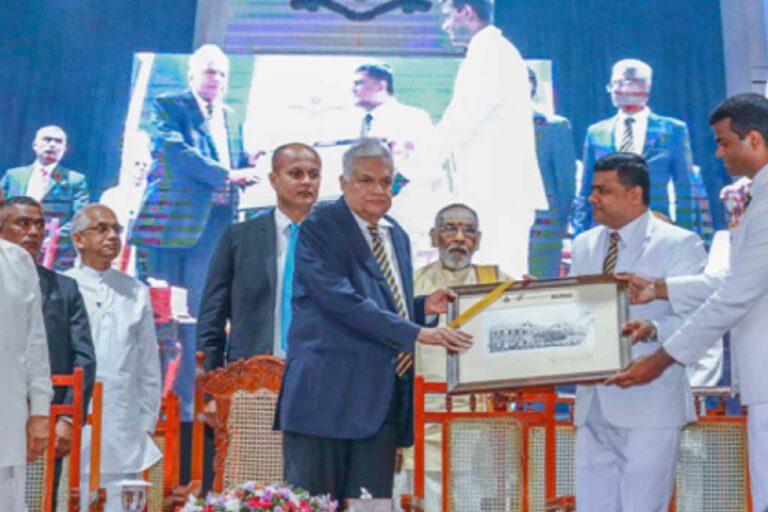
In recognition of the President’s presence, Thilak Waththuhewa, the Principal of Royal College presented a commemorative memento to the President, with Head Prefect Baskaran Yuganan also in attendance. Additionally, a special book printed to commemorate this prestigious occasion was presented to the President by the two Editors of the book.
The event was graced by the presence of Prime Minister Mr. Dinesh Gunawardena, Minister of Education Susil Premajayath, State Minister of Finance Mr. Ranjith Siyambalapitiya, as well as Parliamentarians Mr. Lakshman Kiriella, Mr. Gayantha Karunathilake, Mr. M. A. Sumanthiran, Mr. Rauff Hakeem, Mr. Eran Wickremeratne, Dr. Harsha De Silva, Mr. C. V. Wigneswaran, Mr. Yadamini Gunawardena and Dr. Kavinda Jayawardhana.
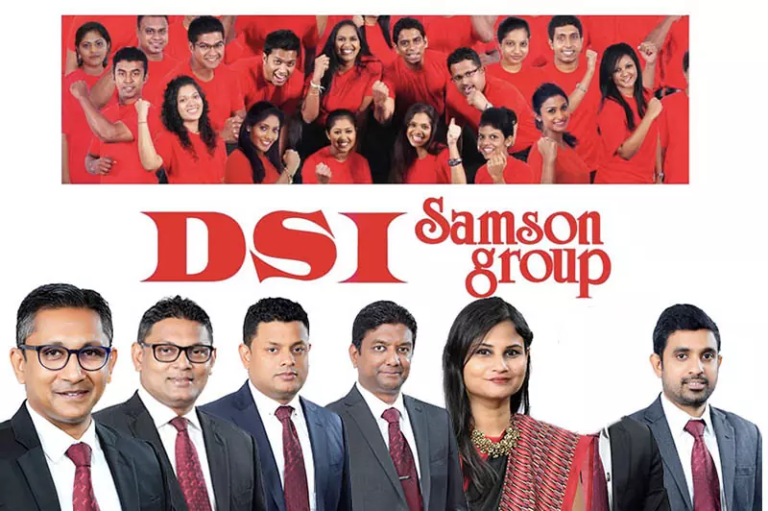
Colombo (LNW): The Colombo High Court of Commerce has ordered that the lawsuit lodged by Sajith Rajapaksa, board member of DSI Samson Group, against its Managing Director, Kasun Rajapaksa, and the entire Board of Directors be taken up for hearing on November 20, 2023.
The court order was handed down on October 09, 2023, and is rooted in the serious allegations put forth by Sajith Rajapaksa, accusing the company’s Managing Director, Kasun Rajapaksa, and its directors – Thusitha Rajapaksa, Bhathiya Amarakoon, Asanka Rajapaksa, Nelani Rajapaksa, and Company Secretary Waruni De Silva, of blatant contempt of court.
The core of the issue is the alleged breach of a court order linked to his removal from boards of Samson Group of companies.
Rajapaksa was unlawfully removed from his role as Managing Director of three DSI Samson Group companies and as Director of five more. Upon hearing the evidence, the Court had subsequently ordered his immediate reinstatement.
A major contention in Rajapaksa’s lawsuit against the company chiefs revolves around its Secretary, Waruni De Silva, who, in alleged collusion with other directors, is accused of deliberately undermining her responsibilities. Silva, with the knowledge of the other directors, has deliberately acted in a manner which, by legal definition, is an obstacle to the existence of the institutions in which he holds the position of Managing Director and Director and to him as well, Rajapaksa detailed in his lawsuit.
Such neglect, as claimed in the lawsuit, not only jeopardises the institutions where Rajapaksa held pivotal roles but also poses significant challenges to him personally, he pointed out.
Sajitha Rajapaksa further revealed that he, along with an army soldier who was absent without leave, were arrested in relation to a shooting incident at his Borella Cross Road residence on June 22, 2023. It is during this tumultuous period that the Company’s directors are believed to have conspired to expel him, he emphasised.
Tensions have risen amongst the board members of DSI Samson Family Company, one of Sri Lanka’s premier private entities, following a proposal by a former Managing Director. The crux of the proposal centred on the equitable distribution of the Company’s shares and dividends amongst the family members. This proposal was tabled to the DSI Samson Group’s Board of Directors early last April.
Comprising around 30 companies, the vast business empire sees some of its primary profit-making entities led by the sons of their respective managing directors.
Sajitha Rajapaksa, who was abruptly ousted from his Managing Director position, is the son of the aforementioned former Managing Director, and spearheads “Samson Rubber Products Pvt. Ltd.”, the flagship company responsible for the lion’s share of foreign exchange within the conglomerate, evidence produced before the Court disclosed.
A leading manufacturer, Samson Rubber Products Pvt. Ltd. specialises in producing DSI tyres for international markets. The company prides itself on its state-of-the-art facility, using cutting-edge global technologies to craft high-value products.
Under Rajapaksa’s leadership, the companies boast commendable financial health, for they shoulder minimal debt, and are amongst the highest corporate tax contributors in the DSI group, and provide career opportunities for thousands.
Notably, during the tumultuous period between 2019 – 2022 affected by the April 21 Easter Sunday attacks and the Covid-19 pandemic, both Samson Rubber Products and Samson Rubber Industries stood resilient, and emerged as top revenue-generating private entities in Sri Lanka.
Colombo (LNW): Tusker ‘Agbo’, currently under treatment after previously sustaining gunshot wounds earlier this year, is reportedly in a critical state following another shooting incident yesterday (28).
It is believed that an individual fired at the elephant near the Vannam Maduwa river in Thirappane.
Veterinarians have consequently highlighted that ‘Agbo’ is now in a dire condition.
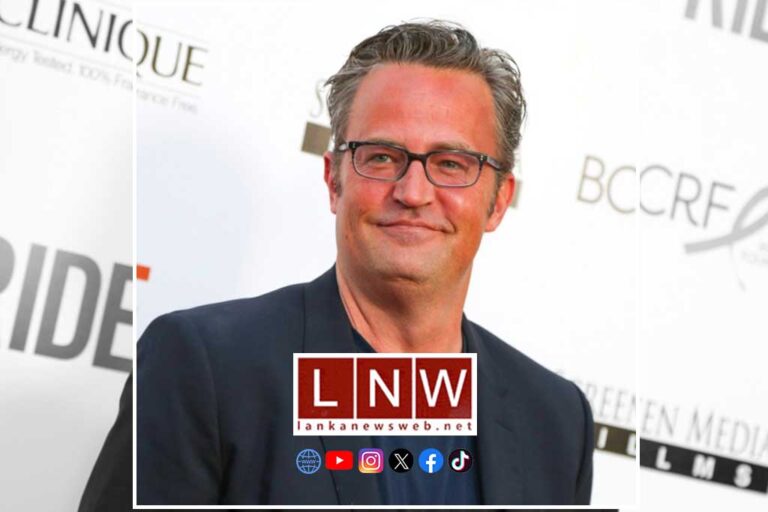
US actor Matthew Perry, best known for playing Chandler Bing in the hit ’90s TV sitcom Friends, has died at the age of 54, US media report.
The actor was found dead at his home in his Los Angeles, law enforcement sources told US media.
Friends, which followed the fortunes of six young friends living in New York City, aired from 1994 until 2004.
Its final episode was watched by 52.5 million in the US, making it the most watched TV episode of the 2000s.
Warner Bros TV, which produced Friends, said “we are devastated by the passing of our dear friend Matthew Perry”.
“Matthew was an incredibly gifted actor and an indelible part of the Warner Bros. Television Group family,” the statement read. “The impact of his comedic genius was felt around the world, and his legacy will live on in the hearts of so many. This is a heartbreaking day, and we send our love to his family, his loved ones, and all of his devoted fans.”
Born in Massachusetts in 1969, Perry was raised in Ottawa, Canada, where he attended elementary school with Justin Trudeau, who later became Canadian prime minister.
Perry moved to Los Angeles as a teenager. He starred as Chazz Russell in Boys Will Be Boys from 1987 to 1988 and also had roles in shows including Growing Pains.
But he became an international star on Friends, a show which followed the lives of six New Yorkers navigating dating, careers and friendship.
The comedy, co-starring Jennifer Aniston, Courteney Cox, David Schwimmer, Matt LeBlanc and Lisa Kudrow, became one of the most successful shows of all time.
Perry was cast as the awkward Chandler Bing, famous for his sarcastic one-liners.
He battled for years with addiction to painkillers and alcohol, and attended rehabilitation clinics on multiple occasions.
Perry also appeared in several films, including Fools Rush In, Almost Heroes and the Whole Nine Yards.
Maggie Wheeler, who played Janice in Friends, was the first of Perry’s co-stars to publicly pay tribute to the actor.
Ms Wheeler said the joy Perry brought to “so many” in his “too short lifetime will live on”.
“I feel so very blessed by every creative moment we shared,” she wrote on Instagram.
Cruel Intentions actress Selma Blair said Perry was her “oldest boy friend”, adding: “All of us loved Matthew Perry, and I did especially. Every day. I loved him unconditionally. And he me.
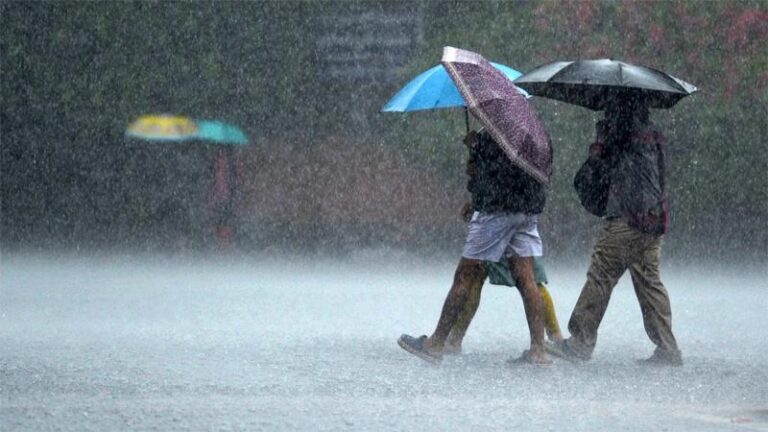
Colombo (LNW): Atmospheric conditions are favourable for the development of afternoon thundershowers, the Department of Meteorology said in its daily weather forecast today (29).
Showers or thundershowers will occur at several places in the most provinces of the island after 02.00 p.m, and fairly heavy showers about 75mm are likely at some places in Western, Sabaragamuwa and North-western provinces, the statement added.
Misty conditions can be expected at some places in Western, Sabaragamuwa, Central and Uva provinces during the morning.
The general public is kindly requested to take adequate precautions to minimise damages caused by temporary localised strong winds and lightning during thundershowers.
Marine Weather:
Condition of Rain:
Showers or thundershowers will occur at several places in the sea areas around the island particularly during the afternoon or night.
Winds:
Winds will be south-easterly or variable in direction and wind speed will be (20-30) kmph.
State of Sea:
The sea areas around the island will be slight. Temporarily strong gusty winds and very rough seas can be expected during thundershowers.