Home Blog Page 1452

SL receives first disbursement of US$ 250mn for budget support from WB

0

By: Isuru Parakrama

Colombo (LNW): Sri Lanka has received the first disbursement of US$ 250 million for budget support from the World Bank, announced Finance State Minister Shehan Semasinghe today (04).

“We are pleased the confirm that the first disbursement of US$ 250 million for budget support from the World Bank has been received,” Semasinghe wrote on Twitter.

This will be the first disbursement of the US$ 500 million allocated by the World Bank for budget support in Sri Lanka.

LITRO reveals new gas prices

0

By: Isuru Parakrama

Colombo (LNW): State-run LP gas vendor LITRO has announced that the prices of domestic LP gas cylinders will be reduced from midnight today (04).

Accordingly, the price of a 12.5kg domestic gas cylinder has been slashed to Rs. 2,982.

The price of a 05kg cylinder has been slashed to Rs. 1,198, and the price of a 2.5kg cylinder, to Rs. 561.

The state-run LP gas vendor will be revising the prices of gas in the first week of every month, and according to LITRO Chief Muditha Peiris, the price reduction may tally with the prices that had existed before the occurrence of the financial crisis in Sri Lanka.

Sri Lanka Original Narrative Summary: 04/07

0

01. President Ranil Wickremesinghe calls on Leader of the Opposition Sajith Premadasa and the whole Opposition to take prompt action and rebuild nation together without resorting to “fallacious arguments”: stresses the Opposition’s allegations regarding the restructuring of domestic debt have been proven false.

02. China’s flag carrier Air China reinstates services between Colombo Bandaranaike International Airport (BIA) and Chengdu Tianfu International Airport with three flights a week from Chengdu-Colombo-Chengdu on July 03, 2023: First flight arrived at BIA at 20.20 hrs. on 3rd July with 142 passengers.

03. Finance State Minister Ranjith Siyambalapitiya says the calling of applications for the interest-free student loan scheme for those who have sat for the GCE AL exam in 2019, 2020 and 2021 to pursue higher education in private universities will commence from today; stresses those who wish to obtain this scheme should follow job-oriented courses: 5,000 eligible students expected to apply.

04. State-run LP Gas vendor LITRO announces that the price of a 12.5kg domestic gas cylinder will be slashed below Rs. 3,000 from midnight today: This will be the fourth consecutive price reduction approved by LITRO this year.

05. CB Governor Nandalal Weerasinghe says SL must adopt new industrial strategies to direct the country’s industries towards a growth path; adds the industrial sector must focus on export-oriented growth in the necessity to revisit the National Industrial Strategy in line with dynamics in international markets; stresses SL should transform into an industrial sector of high-technological development, and the entrepreneurs should be supported to gain access to global markets.

06. CoPF Chairman and SJB economic guru MP (Dr.) Harsha De Silva says the government’s DDO strategy should be carried out in a manner in which it affects both the ordinary working people and the rich people alike; adds in the government’s failure to comply with this necessity, the Opposition had opposed the DDO plan; laments the EPF, which the ordinary working people will resort to following their retirement for the rest of their lives, has been affected by the DDO plan.

07. Civil Aviation Minister Nimal Siripala De Silva says the restructuring of state-owned SriLankan Airlines will be completed in six months; warns the jobs of the employees at the flag carrier are at stake if immediate restructuring measures are not implemented: The State-Owned Enterprises Restructuring Unit of the Finance Ministry has taken key initiatives to provide recommendations on restructuring SriLankan Airlines.  

08. Finance Ministry sources say government treasury cash flow management assures the availability of adequate funds to operationalise government fiscal policy during the 1Q’23 via implementing agencies efficiently and effectively: The Ministry’s total receipts to the treasury in the form of revenue and other sources amount to Rs. 650 billion in the 1Q’23, with a tax revenue realisation of Rs. 578 billion, an increase of 56% from Rs. 370 billion in the corresponding period last year.

09. The Asian Development Bank appoints Takafumi Kadono as the new Country Director for Sri Lanka: Kadono who assumed office on Monday, succeeds his predecessor Chen Chen who ended his term on June 30, 2023.

10. Skipper Chamari Athapaththu strikes fantastic unbeaten knock of 140 in 80 balls with 13 fours and 9 sixes as Sri Lanka Women’s Cricket Team recorded eight wickets win with 13 balls to spare (D/L method) over New Zealand Women’s Team in their third and final ODI game played at Galle International Cricket Stadium: SL Women’s Cricket Team also records first series win 2-1 with this victory.

Investors ready to invest in SL if necessary reforms implemented: Sabry

0

PMD: Foreign Affairs Minister Mr. Ali Sabry stated that investors from across the world are ready to invest in Sri Lanka if essential reforms are implemented to establish a favourable environment for investors.

The minister also stated that, while some people are waiting for the country’s banking system to collapse, the government’s economic development agenda has received international acclaim.

Minister Ali Sabry, Minister of Foreign Affairs stated this yesterday (03) at the Presidential Media Center (PMC) during a press conference themed “One Way to a Stable Country.”

He stated that during his recent visit to China, he met with the Chinese Ministers of Finance and Foreign Affairs, as well as the Chairman of the Exim Bank of China, who expressed their admiration for the efforts taken to promote economic stability and progress in this country.

The Minister also stated that the chairman of China Harbor Engineering Corporation has stated his willingness to invest US $ 1.2 billion in the Port City of Colombo.

Meanwhile, he pointed out that the Bloomberg newspaper, which was published in China, on June 20th, stated that Sri Lanka is effectively managing a challenging economic issue and creating an acceptable economic situation.

Minister Ali Sabry further commented,

Inflation in our country was 80% last year. It is a very difficult situation as a country. In such a background, the value of your money is severely devalued. The value of 2 million will decrease to 1.2 million. Such a situation should be avoided as a country.

We wanted to keep Sri Lanka from turning into another Lebanon or Venezuela. That is why we sought assistance.

Lebanon’s inflation rate this year is 485%. Venezuela has 285% inflation. However, inflation in Sri Lanka is 12%. It is expected to fall to 7%-8% by the end of the month. We’ve stopped the current economic incompetence from continuing. There are still power outages in Lebanon. Even if there is a power outage in Sri Lanka, this is not the case right now.

We had a declining economy that had gone off the rails. It is dangerous to continue. The government has initiated numerous steps to prevent it.

In the face of the crisis, the government has successfully managed inflation. The International Monetary Fund determined that we would be unable to repay the debt by 2020. They continued to inform it. We have to pay USD 203 million as of 2021-04-17. However, the government was unable to pay it. The government has $20 million in cash. As a result, the country was declared bankrupt.

We had a governmental debt of 128% of GDP at the time. By 2032, we should have reduced that to 95%. It’s an obvious challenge. The debt should be lowered in order to meet the government’s objectives. It is essential to manage the country’s economy so that debt may be serviced from income. Domestic and foreign loans should be optimized for this purpose.

Loans from the International Monetary Fund, World Bank, Asian Development Bank, and others cannot be restructured. The reason for this is that they made loans with long-term payments at a relatively low-interest rate. No country in the world has written off those parties’ loans. Nobody else in the world will lend to us if they don’t. We have also received financing from India, Japan, China, and countries representing the Paris Club. At the moment, they are having fruitful discussions about debt optimization.

Also, there are groups that have given commercial loans at high interest rates. There is a reason we have to take commercial loans. That is, our country changed from being a low-income country to a middle-income country in 1997. Since then, we have stopped giving loans at low interest rates. That is the reason why commercial loans have to be taken at higher interest rates.

However, the companies who provided us with loans have agreed to assist us with debt optimization. They stated that by receiving this relief, Sri Lanka will be able to develop its economy as a debt-paying country. If this is not done, the country risks going bankrupt once more.

To avoid going bankrupt again, we must optimize our domestic debt. Contributions from funds such as the banking system, employee benefit factors, and employee trust funds should be considered. In addition, our 57 million bank depositors must be safeguarded.

Politicians do not practice credit optimization. It is being prepared with the participation of the Treasury, the Central Bank, and international financial consultants. However, many misinterpretations of this process and its outcomes are made both within and outside of Parliament. It is not a positive position for the country.

Last year was claimed to have had the highest bank interest rate in history. It was between 30% and 36%. However, bank interest is currently declining. Treasury bill interest has fallen to 16% as of today.

Bank interest rates are falling from 29% to 16%-17%. It could fall to 11%-12% by the end of the year. As a result, the interpretations held by various parties are incorrect.

If the country’s debt is not constantly restructured, investors will not come. In such circumstances, inflation becomes unmanageable.

Although some individuals are expecting the country’s financial system to fail, the government’s economic development initiative has been praised internationally.

Investors from all over the world are eager to invest in Sri Lanka if we are willing to implement the required reforms and create an investor-friendly environment.

During my recent visit to China, I had discussions with the Minister of Finance, the Minister of Foreign Affairs and the Chairman of the Exim Bank of China. They expressed appreciation for the measures taken for economic stabilization and progress in this country.

During my recent visit to China, I had discussions with the Minister of Finance, the Minister of Foreign Affairs and the Chairman of the Exim Bank of China. They expressed appreciation for the measures taken for economic stabilization and progress in this country.

Also, in the discussion held with the chairman of China Harbor Engineering Corporation, it was mentioned that he is ready to invest 1.2 billion dollars in the port city of Colombo. Also, China’s Sinopac Company informed about their readiness to start a fuel refinery in this country.

Not only that, the Chinese Bloomberg newspaper published on June 20 has also mentioned that Sri Lanka is successfully facing the severe economic challenge and is creating a good economic situation.

China’s flag carrier “Air China” reinstates flights between SL and China

0

Air China reinstated services between Colombo Bandaranaike International Airport and Chengdu Tianfu International Airport with 3 flights a week from Chengdu-Colombo-Chengdu on 03rd July 2023.

Resuming its operations the first flight arrived at BIA at 20.20 hrs. on 3rd July with 142 passengers. The passengers were warmly welcomed with traditional Kandyan dancing performance and Ceylon tea gift packs.

Air China Limited is the flag carrier of the People’s Republic of China and one of the “Big Three” mainland Chinese airlines (alongside China Southern Airlines and China Eastern Airlines). Air China’s headquarters are in Shunyi District, Beijing.

Air China’s flight operations are based primarily at Beijing Capital International Airport. In 2017, the airline carried 102 million domestic and international passengers with an average load factor of 81%. The airline joined Star Alliance in 2007.

Advisory issued for strong winds and rough seas

0

By: Isuru Parakrama

Colombo (LNW): In the occurrence of strong winds and rough seas, it is dangerous to engage in the sea areas off the coast extending from Kankasanthurai to Pottuvil via Mannar, Puttalam, Colombo, Galle and Hambantota, and naval and fishing communities, therefore, are requested to be vigilant in this regard, announced the Natural Hazards Early Warning Centre of the Department of Meteorology in an ‘Amber’ level advisory statement today (04).

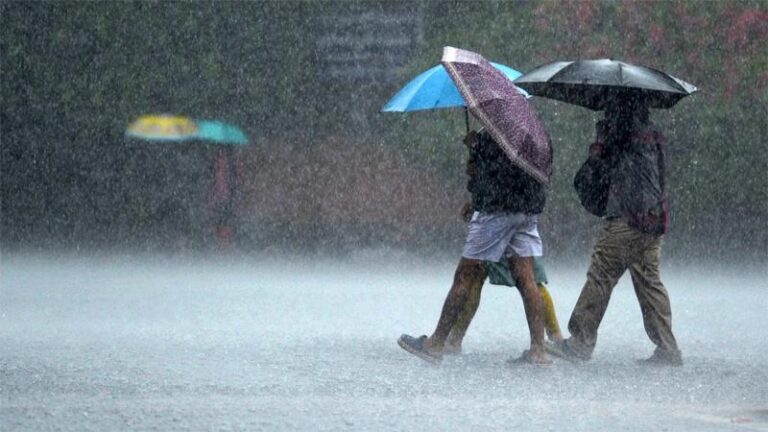
Meanwhile, prevailing showery condition over the south western parts of the island is expected to continue, the Department said in its daily weather forecast, elaborating that showers will occur at times in Western, Sabaragamuwa, Central and North-Western provinces and in Galle and Matara districts.

Heavy showers above 100 mm are likely at some places in the Sabaragamuwa province and in Kandy and Nuwara-Eliya districts, and fairly heavy showers above 75 mm are likely at some places in the Western province and in Galle and Matara districts.

Few showers are likely in the Northern province as well, it added.

Showers or thundershowers may occur at a few places in the Uva province and in Ampara and Batticaloa districts during the evening or night.

Fairly strong winds about (40-45) kmph can be expected at times in western slopes of the central hills, North-Central province and in Puttalam, Hambantota and Trincomalee districts.

General public is kindly requested to take adequate precautions to minimise damages caused by temporary localised strong winds and lightning during thundershowers.

Marine Weather:

Condition of Rain:
Showers or thundershowers will occur at times in the sea areas off the coast extending from Puttalam to Hambantota via Colombo and Galle.  A few showers will occur in the other sea areas around the island.
Winds:
Winds will be south-westerly and speed will be (30-40) kmph. Wind speed may increase up to (50-60) kmph at times in the sea areasoff the coast extending from Trincomalee to Pottuvil via Kankasanthurai, Mannar, Colombo, Galle and Hambanthota.
State of Sea:
The sea areasoff the coast extending from Mannar to Pottuvil via Colombo, Galle and Hambanthota will be rough at times. The sea areasoff the coast extending from Trincomalee to Mannar via Kankasanthurai will be fairly rough at times. Temporarily strong gusty winds and very rough seas can be expected during thundershowers.

Sri Lanka’s duplicity proved in the UNHRC

0

By S. V. Kirubaharan, France

The 53rd session of the United Nations Human Rights Council – UN HRC started on the 19th June and continues until 14th July 2023. It is meeting under the Presidency of Mr. Vaclav Balek, the UN representative of the Czech Republic.

In brief, the HRC’s main concern is accountability issues in the member states. In other words, human rights violations, war crimes, and the beginnings of ethnic cleansing are scrutinised through this council. The reality is that many different committees, working groups and experts on human rights, work under the HRC to examine the situation in member countries.

On this basis, eight resolutions have been passed by the HRC on Sri Lanka.

(UN Human Rights Council resolutions on Sri Lanka – 19/2, 22 March 2012; 22/1, 21 March 2013; 25/1, 27 March 2014; 30/1, 1 October 2015; 34/1, 23 March 2017 ; 40/1, 21 March 2019; 46/1, 23 March 2021; 51/1, 12 October 2022. We should also remember the resolution s11/1, 27 May 2009).

The agenda of the 53rd session states two important issues to be discussed on Sri Lanka. One is the report of the UN High Commissioner for Human Rights – HCHR with regard to HRC resolution 51/1 on Sri Lanka. The other one is about the Universal Periodic Review – UPR which will be discussed on 6th July.

HCHR and duplicity of Sri Lanka

The High Commissioner for Human Rights – HCHR, Mr. Volker Turk addressed the council on June 19th and spoke about the situation in Sri Lanka. He said: InSri Lanka, although the Government has regrettably rejected aspects of the Council’s resolutions related to accountability, it has continued to engage with our presence on the ground. Sri Lanka has received a dozen visits by mandate-holders in the past decade, and I encourage the authorities to implement their recommendations.”

Following the HCHR’s speech, the representative of Sri Lanka expressed their views. In brief: “We note the High Commissioner´s acknowledgement of Sri Lanka’s continued engagement including with the special procedures during the presentation of his Report.

We have repeatedly mentioned in the Council the reasons for our categoric rejection of resolutions 46/1 and 51/1, that set up the external evidence gathering mechanism”.

Sri Lanka’s double standards must be noted, especially since a President who sponsored the HRC resolutions in 2015 and 2017 categorically rejects all subsequent resolutions based on them.

At least now, the international community and also India realises how smartly Sri Lanka moves in the international arenas!

The Sri Lankan representative continued her speech, saying that: “In the meantime, work related to truth and reconciliation continues to progress in the country with the assistance of bilateral partners.

The Government also continues its support to the domestic institutions on missing persons, reparations and national reconciliation and unity to carry on their work steadily.

Consultations continue on the draft Anti Terrorism Bill to ensure its compliance with international standards while catering to domestic needs.

Sri Lanka will continue to engage constructively in those aspects of the Council’s work that have been productive and beneficial to our people.”

Core Group on Sri Lanka

At the same time, the Core Group of Sri Lanka in the HRC, which includes the United States, Britain, Canada, Montenegro, North Macedonia and Malawi, has said the following: “We welcome Sri Lanka’s initial steps towards addressing  concerns around land returns, long-term detentions and corruption.

These steps can provide a basis to begin a process to protect the rights of all Sri Lankans, from all ethnic and religious communities. We remain concerned by the continued use of the Prevention of Terrorism Act.  We acknowledge an ongoing effort to replace the PTA and urge the Government to ensure that terrorism legislation is consistent with Sri Lanka’s international obligations.

We also call on the government to protect freedoms of expression and association. As Sri Lanka takes forward its stated commitment to reconciliation, we stress the importance of transparency, accountability, inclusivity, and of building meaningfully on past work and recommendations that address the root causes of conflicts and impunity.

It is crucial that Sri Lanka safeguards its representative democracy by maintaining voters’ confidence in the country’s electoral systems and ensuring the independence of its institutions and commissions. We call onSri Lanka to work with the HCHR and his office and we remain ready to support Sri Lanka in addressing HRC resolution 51/1”.

Meanwhile, Amnesty International said on 20th Tuesday that, In Sri Lanka, state response to the right to peaceful assembly, as well as to truth, justice and accountability continues to be concerning. The government’s new Anti-Terrorism bill doesn’t meet international human rights standards, and the renewed use of the domestic ICCPR Act curtailing the right to expression is deeply worrying”.

Oral report on Sri Lanka

On Wednesday, the 21st, the UN Deputy HCHR Ms. Nada Al Najeeb delivered the report of the HCHR on Sri Lanka. She stated: “The oral update, which I am honoured to present today, highlights some key developments and trends from our close monitoring of the situation in Sri Lanka, ahead of the full written update that will be presented to the Council at its 54th session.

It is also vital to address the underlying factors of the crisis, including corruption, an essential demand of the protests in 2022.

Twelve months on, the full potential for the historic transformation that would address long-standing challenges has yet to be realized. Our Office urges the Government and political parties in Sri Lanka to use this opportunity for democratic renewal, deeper institutional reforms and to advance accountability and reconciliation as well as the promotion and protection of human rights.

We encourage the dialogue that President Wickremesinghe has initiated with Tamil political parties and welcome his promise to stop land acquisition for archaeological, forestry or security purposes – an increasing source of local conflicts and tension.

However, these intentions now need to materialize into new laws, policies and practices that will indeed bring about tangible changes.

The announcement of plans for a Truth Commission or similar reconciliation mechanisms requires attention, as Sri Lanka has witnessed too many ad hoc commissions in the past that failed to ensure accountability.

The Office of Missing Persons has not achieved the results that provide satisfaction to victims. What is needed is a coherent plan that connects the different elements of truth, redress, memorialisation, accountability and creates the right enabling environment for a successful transitional justice process.

Accountability remains the fundamental gap in attempts to deal with the past. As long as impunity prevails, Sri Lanka will achieve neither genuine reconciliation nor sustainable peace.

I am pleased to report that the project team established in our Office to advance accountability has continued to make progress pursuant to resolution 51/1. It is in the process of providing concrete support to several jurisdictions that have ongoing criminal justice investigations.

It is conducting proactive investigative work on key cases and collecting, consolidating and analysing information and evidence from a variety of UN and other sources, which is preserved in a repository so as to be used for future accountability initiatives. Victims continue to be placed at the heart of this work, including through our active engagement with victim organisations and civil society more broadly.

Fundamentally, it is and remains the responsibility of the Sri Lankan authorities to directly acknowledge past violations and undertake credible investigations and prosecutions, alongside other accountability measures. However, as long as an “accountability deficit” remains, the international community can – and should – play complementary roles. Means to do so include use of accepted principles of universal and extraterritorial jurisdiction to investigate and prosecute alleged perpetrators, and support to the relevant accountability processes in third States, as well as fair application of targeted sanctions against credibly alleged perpetrators.

Human Rights Committee

Recent arrests over statements made during comedy performances and of members of parliament engaged in protests exemplified this concern. In March 2023, the Human Rights Committee expressed deep concern about the misuse of the Covenant on Civil and Political Rights Act against journalists, human rights defenders and other civil society actors.

The Government has committed to replacing the Prevention of Terrorism Act with legislation that adheres to international standards, but the new “Anti-terrorism” Bill gazetted in March contained sweeping provisions that would limit freedom of expression, peaceful assembly and even labour rights.

The Office stands ready to provide support to the Government and people of Sri Lanka in order to advance reconciliation, accountability and human rights for all”.

As a concerned country, the representative of Sri Lanka immediately responded to the Deputy Commissioner’s report on Sri Lanka. The summary is as follows:–

“In parallel and despite ongoing fiscal challenges, the Government is continuing its focus on the long-term measures towards reconciliation and accountability within the framework of the Constitution.

Sri Lanka has always remained open for dialogue and constructive engagement with its international partners on human rights and reconciliation. The Government is determined to safeguard peace and harmony amongst all communities and enforce the rule of law, while respecting the fundamental freedoms enshrined in the Constitution, and in keeping with our international obligations. 

South Africa is in the propaganda

In March this year, the Ministers of Foreign Affairs and Justice undertook a working visit to South Africa, for a preliminary study of their experience on truth and reconciliation. The concept of a mechanism that would suit Sri Lanka, has received Cabinet approval and an advisory committee has been appointed to hold discussions with all stakeholders and facilitate drafting of the required legislation. As of May 2023, the Office on Missing Persons (OMP) has concluded preliminary inquiries on 3170 complaints as part of its verification process leading to in-depth investigations. As of June 2023, 1,283 families have been assisted in getting Certificates of Absence (CoA) while the validity of their provisions was extended by another two years from 2021 to 2023”.

It is to be noted that the conflict in South Africa was not the same as what is happening, and what has happened, in Sri Lanka. The South African conflict was based on minority rule against the majority. The Sri Lanka problem is between two nations who experienced different kingdoms in the island. In other words the aggressive rule by the numerically larger nation is based on ethnic cleansing, land grab, religious domination, etc of the other nation. Sri Lanka highlights the South African experience for propaganda, without learning from the South African process of taking seriously the voice of the victims.

“By the beginning of this year, 92% of the private lands in the Northern and Eastern Provinces that had been retained by the military had been released to the legitimate civilian owners. An additional 100 acres in Palaly in the Northern Province were released on 3rd February.

Further, the Government has continued with the resettlement process and has established a special unit under the Presidential Secretariat with the objective of resolving the prolonged issues of the people of the Northern and Eastern Provinces and restore the normalcy with improved living conditions of the remaining IDPs who are at welfare centres.

Sri Lanka has reiterated its categoric rejection of the external evidence gathering mechanism established following Resolution 46/1, which will have wide-ranging legal and political implications for all countries.

Let me conclude by reiterating Sri Lanka’s continued cooperation and constructive engagement with this Council and the United Nations, in keeping with our Constitution and our international obligations voluntarily undertaken”.

UPR

The fourth cycle of the UPR regarding Sri Lanka was discussed in the 42nd session of the UPR held in Geneva on February 1, 2023. The report will be presented in the 53rd session on 6th of July. Britain, Algeria and Qatar acted as the ‘Troika’.

This report A/HRC/53/16, consists of 24 pages. It includes statements and proposals submitted by one hundred and six (106) countries. There are about two hundred and ninety four (294) different opinions stated on Sri Lanka.

If 106 out of 193 UN member countries made remarks, this shows where Sri Lanka stands on its promises and lack of progress on Human Rights.

Of course some countries which babysit Sri Lanka made some positive remarks. The following are some of the important remarks:

Luxembourg, Austria, Botswana, Ecuador, Estonia, East-Timor and a few other countries requested Sri Lanka to sign and ratify the Rome Statute of the International Criminal Court. Also Colombia requested Sri Lanka to accede to the additional protocols to the Geneva Conventions.

While Switzerland insisted on pursuing efforts for the decentralization of power, India spoke about policy measures to strengthen the Sri Lankan economy and combat poverty and its impact on the vulnerable segments of the population, including Indian-origin Tamils; and measures to ensure that the fundamental freedoms and human rights of all its citizens, in particular all Tamil-speaking citizens, are fully protected.

New Zealand, East-Timor and France wanted Sri Lanka to establish a moratorium on the use of, with a view to abolishing, the death penalty. France also wanted full leverage of the assistance provided by the Office of the United Nations High Commissioner for Human Rights to support the national reconciliation process.

Australia, Austria, Belgium and Canada wanted Sri Lanka to repeal the Prevention of Terrorism Act and ensure that any replacement legislation conforms to the best practices of international human rights standards. Also Austria wanted Sri Lanka to review its counter-terrorism legislation, in particular the Prevention of Terrorism Act, to bring it into line with international human rights standards and release those detained under the Act.

United States wanted Sri Lanka to end impunity for human rights violations, abuses and harassment, especially against members of ethnic and religious minority communities, by holding those responsible to account, including security forces and government officials, and implementing commitments under HRC resolutions.

Germany requested Sri Lanka to refrain from imposing undue limitation on non-governmental organizations and ensure that the planned non-governmental organization law is in line with international obligations.

In the meantime Netherlands urged Sri Lanka to ensure that the rights to freedom of expression, association and peaceful assembly are guaranteed and that everyone, including journalists and human rights defenders, are allowed to express their opinion without fear of repercussion, through the disproportionate use of legal instruments or repressive actions.

The United Kingdom addressed concerns around land expropriation in the north and east by government departments, including the archaeological department, and related restrictions on access to land.

Paraguay wanted Sri Lanka to establish a permanent national mechanism for implementation, reporting and follow-up, regarding human rights recommendations, considering the possibility of receiving cooperation for this purpose. Also to take administrative, legislative and other measures to guarantee Indigenous Peoples their fundamental rights, including the recognition of their legal status, access to land, linguistic identity, access to health, education and other fundamental rights.

Some countries and representatives of NGOs will make their interventions regarding this report following its presentation to the HRC on 6th July.

If one analyses the 53rd session of the HRC, it is obvious that Sri Lanka is being heavily scrutinised and seriously warned by the World’s Highest Authorities on Human Rights – the HCHR and the HRC.

India’s rich Buddhist Heritage showcased at the sacred Gangaramaya Temple on Esala Poya

0

          High Commission of India, Colombo is organising a Special Exhibition showcasing India’s rich Buddhist heritage to mark the sacred Esala Poya Day at Gangaramaya Temple, Colombo on 3 July 2023. This day coincides with the Indian festival of Guru Purnima, which is celebrated to honour the guru or spiritual mentor who imparts knowledge, guidance and enlightenment. It was on this Poya day that The Buddha preached his First Sermon at Sarnath in India.

2.     The Exhibition showcases a series of photographs depicting significant episodes from the life of The Buddha and some of the prominent Buddhist pilgrimage sites in India. Photographs of over centuries-old sculptures and carvings in India are also exhibited. Ven. Dr. Kirinde Assaji Thera and High Commissioner of India H.E Gopal Baglay took a walk-through of the Exhibition.

3.       High Commission organises several such exhibitions on India’s Buddhist heritage, the most recent being the ones on the occasions of Vesak and Poson Poya this year at Seema Malakaya and Homagama Poson Zone respectively. 

***

Colombo
03 July 2023

Railway and bus service undergoes restructuring to bring in private investment

0

By: Staff Writer

Colombo (LNW): Sri Lanka’s public transport system is to be developed to cater to the growing demand by changing the railway and bus regulatory model, to bring in private investment so that the infrastructure can be modernized and deliver higher service quality, transport ministry sources said.

The government is exploring the option of re-negotiating with Japanese International Cooperation Agency (JICA) to divert financing for a light rail transit (LRT) that may again come Sri Lanka’s way towards bus infrastructure development, and railway electrification and modernization.

This proposal aimed at restoring Sri Lanka’s credibility within the international community was approved by the cabinet of ministers recently to resume the Colombo LRT project, which was abandoned during the tenure of former President Gotabaya Rajapaksa.

Sri Lanka’s bus transportation system has been plagued by many issues including overcrowding, inadequate fleet and maintenance, poor service frequency and reliability, limited coverage, inefficient route planning, lack of accessibility, poor enforcement of safety measures, and lack of standardized ticketing system and fare collection practices over the years.
The transport ministry is looking at these issues and devise innovative strategies to tackle it one one by within a couple of years, Minister Bandula Gunawardene disclosed.

Government spent Rs. 13.5 billion for this sector in 2022, of which Rs. 11.3 billion was spent as recurrent expenditure. Meanwhile, Rs. 6.4 billion was spent by the government as recurrent expenditure in order to provide season tickets to school and higher education student.

Rs. 3.3 billion was spent on other relief services such as an operating of Sri Lanka Transport Board(SLTB) buses on unremunerated routes in rural areas, contribution to maintaining a socially obligatory bus service and providing armed forces bus passes.

The recurrent expenditure in 2022 declined by 10 percent to Rs. 11.3 billion in 2022 compared to Rs. 12.5 billion in 2021, finance ministry report revealed.

A sum of Rs. 2,224 million was spent as capital expenditure including the purchase of 500new buses for the Sri Lanka Transport Board, improvement of the bus fleet and printing of driving licenses.it added.

In light of the limited operations of private bus services owing to the economic crisis and subsequent rise in fuel prices, there was a surge in demand for railway transportation in 2022, finance ministry observed.

A sum of Rs. 23.5 billion was incurred as recurrent expenditure on the railway sector in 2022 whereas Rs. 21.6 billion was spent as capital expenditure including the expenditure on Colombo Suburban Railway Efficiency Improvement Project implemented with the aim of providing comfortable and uninterrupted railway services to the public.

In this context, the railway administrative and operational costs increased by 61 percent in 2022 compared to the year 2021.

Despite the increase in recurrent expenditure, due to the slowdown in construction activities, the total expenditure on the railway transport sector in 2022 was Rs. 45.2 billion, a 7 percent decline compared to the total expenditure of Rs. 48.7 billion in 2021.

Government guarantees adequate funds for fiscal management

0

By: Staff Writer

Colombo (LNW): Government treasury cash flow management has ensured the availability of adequate funds to operationalise government fiscal policy during the first quarter 2023 through implementing agencies efficiently and effectively, finance ministry sources confirmed.

The finance ministry’s total receipts to the treasury in the form of revenue and other sources amounted to Rs. 650 billion in the first quarter 2023 with the tax revenue realization of Rs 578 billion, an increase of 56 percent from Rs 370 billion in the same period last year.

The increase came partly from tax hikes and stringent expenditure controls in accordance with spending-based fiscal consolidation agreed upon with the International Monetary Fund (IMF), a senior official of the ministry disclosed.

The expenditure was Rs .602 billion even amidst finance ministry’s strict guidelines to control capital spending and curtailment of cash outflow for both recurrent expenses and public investment, he pointed out.

Sri Lanka has recorded a primary budget surplus of Rs 48 billion in the first quarter of 2023, treasury’s fiscal department data indicated.

However the government is in urgent need of tackling Treasury cash flow issues as its monthly collection of Rs. 141 billion in tax revenue is insufficient to pay Rs. 88 billion for salaries, Rs. 30 billion for pension and Samurdhi welfare, Rs. 6.5 billion for fertilizer, Rs. 8.7 billion for medicine, and Rs. 154 billion for other administration costs including transport.

Treasury cash flow management process transforms the Annual Budget approved by Parliament for a particular financial year into an implementable cash flow.

The fund flows include cash inflows in the form of revenue and borrowings and cash outflows in the form of expenditure, which comprise of both recurrent and capital payments including debt service payments.

The total receipts to the Treasury cash flow in the form of revenue and other sources amounted to Rs. 1,876.8 billion in 2022 with the realization of 78 percent from the revenue estimate of Rs. 2,383.7 billion in 2021.

Meanwhile, the cash outflow for both recurrent expenses and public investment in 2022 amounted to Rs. 4,233.4 billion including interest payment of Rs. 1,366.2 billion and excluding debt repayment as against the estimate of Rs. 4,741.5 billion representing 89.0 percent from the estimate in 2021 .

The net borrowings amounted to Rs. 2,961.3 billion in 2022 which was used to finance the net cash deficit, mainly the interest payments. In addition, part of the bank overdraft was also settled during the year in 2022, finance ministry report highlighted.