Colombo (LNW): Sri Lanka’s tourism industry continues to thrive as arrivals have exceeded 600,000, showcasing the resilience and appeal of the country as a travel destination.
Despite being the off-peak season, the daily average of tourist arrivals has shown remarkable improvement, exceeding 3,200 visitors. This upward trend in tourist footfall further underscores the growing interest in Sri Lanka as a preferred destination among global travellers.
During the first 26 days of the month, 84,003 visitors have arrived in the country, with only 3,518 arrivals required to achieve the monthly target of 87,521.
“The surpassing of the 600,000 tourist arrival milestone signifies the resilience of Sri Lanka›s tourism sector and its ability to bounce back from the challenges faced in recent years. It is a testament to the concerted efforts made to revitalize the industry, showcasing Sri Lanka›s immense potential as a top travel destination,” Tourism Minister Harin Fernando said.
India takes the lead with 22,388 tourist arrivals or 28 percent of total visitors so far, followed by Russia with 7,179 tourists (9 percent), the UK with 6,597 tourists (8 percent), Australia with 5,444 guests (6 percent), Germany with 4,341 tourists (5 percent) and China with 4,240 (5 percent).
According to the recently released provincial data by the Sri Lanka Tourism Development Authority (SLTDA), tourists were from other countries like Canada, the Maldives, the United States, and France.
He said the sustained growth in tourist arrivals reflects the successful efforts made by Sri Lanka Tourism in attracting visitors from around the world. The collaborative initiatives between tourism authorities, hoteliers, and other stakeholders have played a crucial role in promoting the country›s unique attractions and ensuring a memorable experience for travellers.
“This diverse mix of international visitors highlights the global appeal of Sri Lanka›s rich cultural heritage, scenic beauty, and warm hospitality,” Fernando added.
With the positive momentum in tourist arrivals, Sri Lanka Tourism earlier this week expressed confidence in the industry’s potential to welcome two million arrivals and generate $ 3.7 billion in income this year, whilst setting its sights on increasing arrivals to 5 million and earning an impressive $ 21.6 billion by 2030.
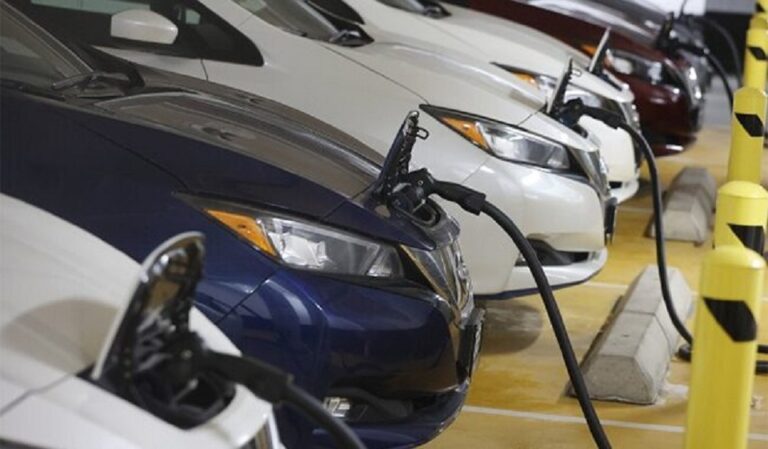
Colombo (LNW):Sri Lanka is now importing electric vehicles for local migrant workers working overseas following the the government’s approval to further extend the time line issued for importation till September 15 2023 violating global manufacturers recommendations , motor traders alleged.
This was the third time the Government decided to extend the timeline of the electric vehicles import scheme for migrant workers to encourage their remittances with good intension but it has turned to a racket by a set unscrupulous vehicle importers in hand in glove with corrupt officials , several leading motor traders complained.
The global manufacturers and authorized representatives were consulted to formulate a sustainable roll out of Electric Vehicles to SL considering the missteps of the past and failures of over 5,000 Nissan leaf vehicles which were imported against manufacturer recommendations.
This proposal was accepted and the first circular [MFE/DEV/HOB/03/ vol ii] was issued on 31st August 2022 by the Ministry of Labour and Foreign Employment Circular No; 02/2022).
However 09 days later, ALL of the global manufacturer recommendations benefiting consumers were suddenly reversed in a circular No; 02/2022 dated September 9 2022.
In this new circular Manufacturer warranty of 3 years was changed to a 3rd party warranty. Manufacturer recommendations of suitability to a country or region were completely ignored.
Today the electric vehicles are being imported by unauthorized parties totally against manufacturer recommendations, they pointed out.
The earlier wording limited the vehicle CIF value to a maximum of US $65,000 which still allowed vehicles from medium to luxury categories to be imported.
However, the altered circular has eliminated the maximum limit on the CIF which now enables ultra-luxury vehicles to be imported.
Such a change supported by the other alterations on the latest circular, clearly enables the ultra-rich living in Sri Lanka to import electric vehicles for their personal usage utilizing the migrant worker scheme, motor traders charged.
The cost of the High-voltage (HV) battery is about 50 percent of the total value of the EV. Hence, if the battery of the vehicle is faulty and needs replacement, the consumer and the country will have to bear almost 50 percent of the cost of the vehicle to import the battery.
This is due to the fact that almost all the EVs which have come through this scheme are used vehicles which does not carry the warranty of the manufacturer.
They asked as to why is this scheme not being opened for petrol, diesel or hybrid vehicles as those vehicles have better market acceptance, have ample spare parts available in the country even now and the technical skills are freely available for maintenance.
The CIF of an Electric Vehicle is about 30-40 percent higher than a similar petrol vehicle. Therefore, the country can import about 1300 to 1400 petrol vehicles with the quantum of forex used to import 1000 EVs, several leading motor traders pointed out.
At a time when the country is low on foreign reserves and the people are deprived of vehicle imports, wouldn’t it make better sense to allow petrol and diesel vehicles to be imported through such a scheme instead of EVs? , they asked.
A majority of migrant workers are from the lower and middle class income families. The vehicles they can afford would be motorcycles, scooters and small compact cars for themselves and their families in Sri Lanka.
As of now, nearly 100 permits for four wheelers have been issued. There seems to be mostly high end luxury vehicles being imported under this scheme, which does not represent the majority of the migrant workers who are toiling hard in foreign lands, they complained.
The President of the Democratic Socialist Republic of Sri Lanka, Hon. Ranil Wickremasinghe, in his capacity as the Commander in Chief of the Armed Forces, has promoted Air Vice Marshal Udeni Rajapaksa to the three star rank of Air Marshal with effect from today (30 June 2023) and appointed him as the 19th Commander of the Air Force.
Air Marshal Rajapaksa Appuhamilage Udeni Priyadarshana Rajapaksa, a distinguished military officer, was born on 29 January 1969, in Ihalagama, Gampaha District. He received his primary education at Parakrama Vidyalaya, Bandarawatta and Bandaranaike College, Gampaha. Continuing his academic journey, he pursued his secondary education at Ananda College, Colombo. Displaying a strong commitment to serving his country, he joined the General Sir John Kotelawala Defence Academy in Ratmalana as an Officer Cadet on 6 October 1988, as part of the 6th Officer Cadets’ Intake.
Air Marshal Rajapaksa underwent Basic Combat Training and pursued undergraduate studies as a Bachelor of Science in Electrical Engineering at the Kotelawala Defence Academy. Afterward, he successfully completed Basic Flying Training at No. 1 Flying Training Wing, Sri Lanka Air Force Base Anuradhapura, where he excelled and was recognized as the Best Flight Cadet in the 33rd Flight Cadets’ course. Following this achievement, he progressed to No. 2 Squadron, Sri Lanka Air Force Base Ratmalana, for Advanced Flying Training. On 5 October 1990, he was commissioned with the rank of Pilot Officer in the General Duties Pilots Branch.
Air Marshal Rajapaksa’s expertise as a pilot extends to a remarkable range of aircraft. He holds the distinction of being a VVIP Captain Pilot and is qualified to fly ten types of aircraft, including the CESSNA-150, HARBIN Y-12, HS-748, SF-260TP, IA-58 PUCARA, B-200T, AN-32 and C-130. Throughout his career, he has accumulated over 7000 flying hours, encompassing both combat and transport missions. His exceptional skills are underscored by holding the highest Instrument Rating, the “Master Green Rating,” as well as a civil Air Transport Pilots Licence (ATPL). Notably, he demonstrated his resilience and ingenuity during a night ejection from a Pucara aircraft in 1997, while on an operational bombing mission. Additionally, he has been commended for his outstanding handling of a serious emergency situation during a combat mission, earning him recognition from Martin-Baker Aircraft Co. Ltd. and fortunate to join the esteemed “Ejection Tie Club.”
Air Marshal Rajapaksa, in his pursuit of professional development, successfully completed the Junior Command and Staff Course at the Command and Staff Training Institute in Bangladesh. Additionally, he actively participated in the Flight Safety Officers Course in Pakistan and the Advanced Security Cooperation Course in the United States. Displaying his commitment to academic excellence, he obtained a Master of Science in Defence Studies in Management from General Sir John Kotelawala Defence University, achieving a “Merit Pass.” Moreover, he holds a Master of Science in Military Operational Art from the Air University in Alabama, USA, and a Master of Arts in International Security and Strategy from King’s College, London, UK, both with a “Merit Pass” distinction. Furthermore, he is a distinguished alumnus of the Air Command and Staff College, Air University, Alabama, USA, where he was awarded the “pass staff college (psc)” distinction. He also attended the Royal College of Defence Studies (rcds) in the United Kingdom, specializing in International Security & Strategy.
In recognition of his gallant and selfless contributions during humanitarian operations, Air Marshal Rajapaksa has been awarded the prestigious gallantry medal “Rana Sura Padakkama” on three occasions. Moreover, due to his exemplary and unblemished service, Air Marshal Rajapaksa has been honoured with the “Vishishta Seva Vibhushanaya” and the “Uttama Seva Padakkama” medals.
Throughout his career, Air Marshal Rajapaksa has assumed various significant appointments. He served as the Base Commander at SLAF Base Hingurakgoda from 1 May 2011 to 8 June 2012. Subsequently, he undertook the crucial role of Sri Lankan Defence Attaché to the Sri Lanka Embassy in the Russian Federation from 2012 to 2014. Following his tenure in Russia, he was appointed as the Senior Air Staff Officer (SASO) on 21 April 2014. Later, on 1 September 2015, he assumed the role of Base Commander at Sri Lanka Air Force Base Vavuniya. Additionally, he served as Air Secretary to the 16th Commander of the Air Force, Air Chief Marshal Kapila Jayampathi, from 12 September 2016 to 23 August 2017 and again from 7 August 2018 to 30 June 2019.
Air Marshal Rajapaksa’s leadership continued to flourish as he assumed command of various Air Bases. Notably, in 2020, he held the appointment of Commandant at the Sri Lanka Air Force Academy in China Bay and subsequently took on the role of Eastern Air Commander. Later, he assumed responsibilities as the Base Commander of Sri Lanka Air Force Base Katunayake, Southern Air Commander and Overall Operations Commander (Air Defence) during his tenure at Sri Lanka Air Force Base Katunayake. Progressing further, he became a Member of the Air Force Board of Management as the Director Air Operations from 14 February 2022 to 26 September 2022 and subsequently, he shouldered the esteemed appointment of Chief of Staff in the Air Force Headquarters from 27 September 2022 to 29 June 2023 before being appointed as the Commander of the Air Force.
Beyond his military achievements, Air Marshal Rajapaksa is an avid sportsman who has represented the Sri Lanka Air Force in Table Tennis, Tennis and Golf. He also held the Chairmanship of Sri Lanka Air Force Athletics. His prowess in golf was particularly noteworthy, earning him the Championship at the Commander’s Cup Golf, Eagles’ Challenge Trophy, in 2021. Furthermore, his exceptional performances in Golf at the 11th and 12th Defence Services Games in 2021 and 2023, respectively, brought him considerable recognition. In acknowledgment of his sporting achievements, he was awarded SLAF Colours for Tennis and Golf. Air Marshal Rajapaksa is married to Enoka and is the loving father of Miyuni and Inura.
CB Governor Nandalal Weerasinghe assures that EPF funds already accumulated would not be touched: also says EPF Members are “guaranteed” a minimum 9% interest for EPF: analysts point out that the EPF management has only credited 9% out of the likely 29% earnings of the EPF in the year 2022, thus already depriving them of a sum of about Rs.600 bn: analysts also point that the EPF Members are due to earn at least 20% this year, although the EPF management is attempting to credit an interest of 9% only.
CB Governor Nandalal Weerasinghe says that under the domestic debt restructuring process, only Treasury Bills held by CB will be converted to Treasury Bonds with the new interest rate of 12.4% until 2024, 7.5% until 2026, and 5% until maturity: analysts point out that “hot-money” investors who have made enormous returns through their recent investments in Sri Lanka’s T-Bills will therefore be spared any re-structuring losses, unlike the EPF Members who have been made to suffer massive losses.
SJB General Secretary Ranjith Madumma Bandara says the SJB will vote against the Govt’s proposal to Re-structure Domestic Debt: Senior Presidential Advisor Sagala Ratnayake says the Parliamentary debate on the proposed domestic debt restructuring programme is to be confined to a single day, as most of the issues pertaining to it have been resolved.
President Ranil Wickremasinghe appoints Justice L T B Dehideniya (retired Supreme Court Judge) as Chairman of the Human Rights Commission & Mr. R M A L Rathnayake (former Additional Commissioner General of Elections) as the Chairman of the Elections Commission.
Lanka Private Bus Owners’ Association Chairman Gemunu Wijerathne says there is no need for an annual bus fare revision this year.
Former NPP MP Dr. Nalinda Jayatissa says the country’s health sector is facing a dire situation now where 300 out of 1,400 medical graduates who had completed the internship in April this year, have not obtained appointments as doctors: also says 1,500 to 1,700 medical doctors out of 18,600 have left their jobs while 748 doctors will be retiring by next month.
Sri Lanka Tourism Development Authority says Tourist arrivals increased in the first half of 2023, in comparison to last year: 608,489 tourists visit Sri Lanka between January 1 and June 26: only 719,978 tourists arrived in 2022.
Senior Consultant Physician Dr. Ananda Wijewickrama charges that the National Medicines Regulatory Authority requires the expertise of professors and specialists in each field of medicine when making decisions concerning public health: laments that over the past few months, there were no professors from the Pharmacology field appointed to the authority.
Air Marshal Udeni Rajapaksa to be appointed as the new Commander of the Air Force and set to assume duties as the 19th Commander.
Top fast bowler Dilshan Madushanka to be included in the Cricket squad in place of Dushmantha Chameera who is unavailable for selection for the Super Six Round games, due to injury.
PMD: During a special press briefing held at the Presidential Media Centre on Domestic Debt Optimization (DDO), Dr. Nandalal Weerasinghe, the Governor of the Central Bank, emphasized the importance of relieving the burden on the banking system caused by the already excessive 50% taxes. This measure aims to safeguard the treasury, strengthen the economy, and ensure the protection of the 57 million public and private bank deposits in Sri Lanka.
The Governor highlighted the severe repercussions that would result from a collapse in the country’s banking sector. To prevent such a scenario, Friday, June 30th, was declared a bank holiday until the Parliament approves the restructuring of local debt.
Furthermore, Dr. Nandalal Weerasinghe assured the public that the existing Employee Provident Fund (EPF) would remain untouched. Additionally, he guaranteed a minimum interest rate of 9% for the EPF.
In attendance at the press conference were Dr. R.H.S. Samaratunga, the Senior Advisor to the President on Economic Affairs, Mr. Mahinda Siriwardena, the Secretary of the Finance Ministry, Mr. A.K. Seneviratne, the Deputy Treasury Secretary, as well as heads of media organizations and media representatives.
Dr. Nandalal Weerasinghe, the Governor of the Central Bank, further commented on the DDO;
In order to achieve a sustainable level of the government’s domestic debt, we must work towards stabilizing the current criteria within a 10-year timeframe, as agreed upon with the International Monetary Fund (IMF). For instance, by the end of 2022, the public debt as a percentage of the Gross Domestic Product (GDP) stood at 128%. However, our target is to reduce it to below 95% by 2032, which is the first criterion. The second criterion involves reducing the government’s total financing requirement, currently at 34.6% of the GDP annually, to an average level of 13% or lower during the 5 year period of 2027-2032.
The third criterion pertains to foreign debt servicing, which currently accounts for 9.4% of the GDP. Our aim is to bring it down to 4.5% during the period of 2027-2032. Achieving these goals will lead to a reduction of $16.9 billion in the relief required to bridge the external financing gap. Additionally, there are three other tasks that need to be accomplished in order to attain these three objectives.
There are three key aspects to address in the debt restructuring process. Firstly, discussions are underway regarding the restructuring of official bilateral debts. Secondly, there are on-going discussions regarding the money borrowed through sovereign bonds in commercial markets. Thirdly, there is a focus on optimizing domestic debt. The optimization of domestic credit plays a significant role in this overall process.
Through the restructuring of local debts, the aim is to reduce the government’s gross debt burden and meet its financial needs. If the proposed measures are implemented, it is projected that the gross financial need will decrease to 12.7, aiming for a value below 13. If successfully implemented, this would result in a reduction of public debt as a percentage of the gross domestic product, bringing it down to 90%.
Currently, there are 4.1 trillion in treasury bills, with 62.4% held by the Central Bank. Conversion of treasury bills into long-term treasury bonds has been proposed previously. However, additional measures are required, prompting consideration of treasury bonds to fulfil the remaining financial requirements. Presently, there are 8.7 trillion in treasury bonds, with 36.5% held by the superannuation fund and approximately 36% held by banks. The remaining portion is owned by insurance companies and private individuals.
As the Central Bank, our primary concern is to find the best solution to ensure the stability of the banking system and the well-being of the Employee Provident Fund (EPF). The Central Bank, being the custodian of the EPF, actively participates in discussions and supports the proposed measures to safeguard deposits and protect public funds such as the EPF from any potential harm.
According to the proposal, the banking system has already made a significant contribution to reducing the government’s indebtedness. Currently, banks pay over 50% of their income as taxes, including 30% as company tax, 18% as VAT and financial services tax, and 2.5% as social security contribution. Therefore, more than 50% of the banks’ earnings are already allocated to taxes and contribute to the government’s revenue. In comparison, superannuation funds have a lower tax rate of 14%.
Hence, the first point to note is that the banking system is already making a considerable contribution.
Secondly, the banking system has incurred losses due to non-payment of loans resulting from economic challenges and grace periods provided. In the past, grace periods with a value of 1.6 trillion were granted, indicating that the banking system has already contributed to the economy.
Protecting the banking system and ensuring the safety of depositors’ funds are crucial responsibilities. The banking system plays a vital role in the economy, as evidenced by the 57 million bank accounts holding deposits from a population of around 20 million. Any harm to these funds would have a severe impact on the banking system. As the Central Bank, our primary objective is to safeguard the banking system and the currency. Recently, there were rumours about bank collapses, and concerns were raised regarding the safety of deposits. Withdrawing deposits from banks would lead to an economic collapse.
Therefore, the foremost effort is to protect the funds of depositors in the 57 million accounts without harming the banking system, as it would have the greatest social impact. Consequently, the banks should not be further burdened.
Moving on to the superannuation funds, which include the Employee Provident Fund (EPF) and the Employees’ Trust Fund (ETF), they are subject to a 14% tax rate, which is lower than the tax rate imposed on banks. The proposal suggests retrieving all existing treasury bonds from these funds and issuing new bonds in return. These bonds will earn 12% interest until 2025 and 9% interest thereafter. Importantly, the amount in the EPF will not decrease, as the government guarantees a future benefit of 9% interest. The government assures that if there is any deficit, the treasury will cover it.
Those who choose not to participate in the Treasury bond exchange have the option of paying a 30% tax instead of the standard 14% tax.
We aim to complete the bond exchange within a few weeks and finalize this process in July.
Finance Ministry Secretary Mahinda Siriwardena;
The domestic debt restructuring proposal has been officially submitted to the Cabinet and subsequently approved. Currently, it is being processed for submission to Parliament and is expected to receive approval by Saturday. It is widely acknowledged that public debt restructuring is a crucial matter, especially considering the International Monetary Fund’s declaration of Sri Lanka’s unsustainable debt. This restructuring involves both domestic and foreign loans. Although the foreign debt restructuring program is underway, significant emphasis has been placed on prioritizing the completion of the domestic debt restructuring program in a timely manner.
President’s Senior Economic Advisor Dr. R.H.S. Samaratunga
“Following the government’s decision to seek support from the International Monetary Fund (IMF), a staff-level agreement was reached in September of the previous year. However, the IMF has stated that the proposal cannot be implemented until Sri Lanka’s debt sustainability is established.
As a result, extensive discussions took place between the government and international creditors from September 1st to March 20th. The primary objective was to obtain a financing certificate from these lenders, and we successfully completed this process in the second week of March. Consequently, by March 20th, the IMF agreed to accept our request and proceed further.
This program is designed to run for a period of four years and consists of five key elements. Firstly, there is a focus on revenue-based fiscal consolidation, particularly due to the significant drop in the country’s gross domestic product to 8% in 2020-2021. This element involves enhancing tax collection and addressing related issues.
Secondly, debt restructuring is a critical aspect as highlighted by the IMF, which has raised concerns about Sri Lanka’s debt sustainability. The third element pertains to establishing price stability within the country. Fourthly, it is crucial to preserve the stability of the financial sector. Lastly, the government needs to adopt an anti-corruption policy. These goals require the implementation of structural reforms.
With regard to these elements, the government has already implemented policies on various matters apart from debt restructuring. The total domestic debt discussed today amounts to 42.1 billion US dollars, out of which 19.8 billion will be allocated for restructuring. This includes debt owed to the Central Bank of Sri Lanka, commercial banks, other banks, the Employees Provident Fund, and four other institutions that have provided loans to the government.
While debt restructuring among these institutions will occur through different methods, the ultimate aim is to provide the government with some relief through a mixed program.”
In addition, journalists raised several questions regarding the Domestic Debt Optimization measures to which the officials responded.
Question;
There are varying opinions within the country concerning the Employee Provident Fund and how the funds received are handled at the end. Some advocate for the funds to be managed under the existing Treasury bill system, while others support the proposed 30% tax system, in either situation what happens to the funds?
Dr. Nandalal Weerasinghe
At present, the amount received by the beneficiaries of the Employee Provident Fund remains unaffected, and they continue to earn a 9% interest on their investments. Consequently, there is no disparity between the current scenario and the proposed future arrangement. However, if the 30% tax is not paid, it might hinder the ability to provide the 9% interest. In such a situation, a lower interest rate of 7% or 8% might be applicable.
Therefore, it is crucial to make the most optimal decision for the members of the Employee Provident Fund. We firmly believe that it is feasible to sustain the 9% interest rate while ensuring the fund’s collection remains intact.
Question
Given the varying opinions surrounding the debt restructuring program, it is inevitable that differing perspectives will arise. In response to this, has the government developed a program to effectively communicate the accurate situation and foster a sense of social awareness?
Mr. Mahinda Siriwardena;
Taking action today to educate and inform the public about the current situation is crucial. Many questions are being raised, including concerns about the potential collapse of the banking system and the adverse impact on the country. This is a distressing situation for me personally, as the nation is facing significant challenges that are yet to be resolved. It is imperative to implement programs that can help overcome these challenges.
Our priority is to safeguard both the banking system and the Employee Provident Fund, ensuring fairness for all. It is essential to disseminate information widely about these programs, particularly reaching out to impoverished individuals in remote villages who may be unaware or unable to participate actively. Furthermore, it is crucial to understand that without restructuring domestic debt, foreign debt restructuring will not be feasible.
Currently, we have entered into a program with the International Monetary Fund, and failing to pursue debt restructuring will have repercussions on this program. The consequences for the future of our country under such circumstances are unimaginable. Therefore, it is vital to recognize the sensitivity of this issue and address it accordingly.
Question
For several years, there has been an acknowledgment of the lack of debt sustainability in Sri Lanka. In light of this, it raises questions as to why there was an increase in investments in bonds issued by the Employee Provident Fund.
Dr. Nandalal Weerasinghe;
In 2020, even the International Monetary Fund acknowledged the lack of debt sustainability in Sri Lanka. Subsequently, in 2021, the proposal for debt restructuring was introduced.
Considering the investments within the country, there arises a question regarding alternative investment options for the funds allocated to the Employee Provident Fund. Approximately Rs. 500 million is contributed to the Employee Provident Fund annually. It is not only the Employee Provident Fund but also the insurance fund that should be invested in Sri Lanka. As such a substantial amount cannot be solely invested in the stock market. When the government faces difficulties in repaying its debts, it unfortunately resorts to using treasury bills.
This situation highlights the need to address the existing challenges and find sustainable solutions for prudent investment management.
Question
Can individuals access the Employee Provident Funds upon retirement?
Mr. Nandalal Weerasinghe
Certainly. There are no obstacles in availing the funds. Once the Employee reaches retirement, they are eligible to receive the EPF funds owed to them.
Colombo (LNW): The registration fees charged at the Foreign Employment Bureau from those travelling overseas for employment have increased, effective from July 01, 2023.
Every Sri Lankan leaving the country for overseas employment should be registered with the Bureau as a mandatory requirement, and foreign employment agency licence renewal fees have also been increased.
Colombo (LNW): Showers will occur at times in Sabaragamuwa province and in Galle and Matara districts, and several spells of showers will occur in Western and North-western provinces and in Kandy and Nuwara Eliya districts, announced the Department of Meteorology in its daily weather forecast today (30).
Showers or thundershowers may occur at a few places in Uva province and in Ampara and Batticaloa districts during the evening or night, the statement added.
Fairly strong winds about (40-45) kmph can be expected at times in Western slopes of the central hills, Northern and North-central provinces and in Puttalam, Hambantota and Trincomalee districts.
General public is kindly requested to take adequate precautions to minimise damages caused by temporary localised strong winds and lightning during thundershowers
Marine Weather:
Condition of Rain:
Showers or thundershowers will occur at several places in the sea areas off the coast extending from Puttalam to Matara via Colombo and Galle.
Winds:
Winds will be south-westerly and speed will be (30-40) kmph. Wind speed may increase up to (50-55) kmph at times in the sea areas off the coast extending from Hambantota to Pottuvil and sea areas off the coast extending from Trincomalee to Puttalam via Kankasanthurai and Mannar.
State of Sea:
The sea areas off the coast extending from Hambantota to Pottuvil and sea areas off the coast extending from Trincomalee to Puttalam via Kankasanthurai and Mannar will be rough at times. The sea areas off the coast extending Puttalam to Hambantota via Colombo and Galle will be moderate. Temporarily strong gusty winds and very rough seas can be expected during thundershowers.
Colombo (LNW): Eran Wickramaratne M.P. said that it is ridiculous that Rajapaksa followers are going against their own government and standing up for the people who are protesting against the government, for being omitted from the new welfare benefit scheme Äsvasuma.
Mr. Wickramaratna, who addressed the press conference at the opposition leader’s office in Colombo on Wednesday, said that the Rajapaksa rule bankrupted the country during its tenure with their ignorance in policy and governance, has resulted in the number of poor people in the country, approx. 4 million in 2019, to now exceed 7 million. Further commenting, Mr. Wickramaratne said that the poor had become poorer when Janasaviya, meant to eradicate poverty, was turned into a project that would sow votes for them.
Government MPs who gained power by selling poverty through the Samurdhi scheme are now using various tactics to get closer to the people – they brag about coming to power again. Mr. Wickramaratna said that the people will never forget the destruction caused to the country by Rajapaksa’s. For the first time in the history of Sri Lanka, coconuts were sold by measuring the girth and eggs were sold by weight – by the Rajapaksa government.
A key failure of Samurdhi was the selection process. The opposition’s standpoint is that a selection process must not be involved and that a scientific approach must be adopted. A selection process by default is politicised and the absence of a ‘selection process’ results in 80% of the job-done. A scientific approach and one that is being proposed by the opposition is assessment based on electricity consumption devoid of manual intervention.
The government says that Aswasuma will be given to 2 million people, but, it is yet to be known how this will be achieved.
“Samagi Jana Balawegaya is ready for any election – the government could hold any election, if the country is on the path of development as the government claims” he said.
Eran Wickramaratne emphasised that Rajapaksas who bankrupted the county are now giving direction on how best to move the country forward and that it is clear that those speaking against people being deprived of Samurdhi benefits, are pursuing their own agenda for power.
Colombo (LNW): Textile exports from the island nation by 5.9 per cent year-on-year to US $88.9 million during the first quarter of 2023 amidst economic crisis and other internal challenges.
The exports of other made-up textile articles stood at $26.1 million during the same period, down 19.6 per cent, according to the central bank’s ‘External Sector Performance’ report.
Textiles, garment, and other made-up textile articles’ exports together accounted for 53.62 per cent of all industrial exports from Sri Lanka during the period under review, the report showed.
The exports of all textile products totalled $1,273 million in January-March 2023, while Sri Lanka’s total industrial exports stood at $2,374.7 million in the first quarter of the current year.
In March 2023, all textile products exports from the nation declined by 10.2 per cent year-on-year to reach $417.2 million.
Category-wise, garment exports decreased by 10.7 per cent to $379.5 million, while textile exports eased 0.3 per cent to $28.5 million. The exports of other made-up textile articles were down by 15.6 per cent to $9.3 million.
On the other hand, imports of textiles and textile articles eased 31.3 per cent to $604.6 million, while clothing and accessories imports were down by 36.6 per cent to $45.7 million during January-March 2023.
Economic expert and SJP MP Harsha de Silva highlighting the challenges faced by Sri Lanka’s textile and apparel export sector emphasised the crucial role the textile and apparel industry played during the economic crisis, lending crucial support to keep the country afloat and providing employment opportunities to hundreds of thousands of people.
The COVID-19 pandemic has led to a decrease in global demand for clothing, resulting in domestic wardrobe inventory build-up.
This reduction in demand has affected the textile industry, particularly as big brands, anticipating a post-COVID surge, now face inventory build-up in their warehouses.
As a consequence of the challenging market conditions, several factories have closed down, and others have been forced to place their workers on furlough.
The competitive landscape in the textile industry has intensified as brands dictate cheaper prices, turning it into an auction-like scenario among countries in the region.
De Silva stressed the importance of protecting the vital textile industry, as the problem is expected to persist for another 6-12 months.
He urged the government to take immediate action, including a reevaluation and amendment of the 30 percent taxes on exports to alleviate the financial burden faced by exporters.
De Silva highlighted the significant increase in spending power among Indians, particularly in states like Tamil Nadu, Karnataka, Telangana, Andhra Pradesh, and Kerala.
He called for measures to attract India’s growing middle class and suggested renegotiating the existing Free Trade Agreement to remove barriers that restrict exports above $8 million.
With corporations and foreign direct investments moving out of China and relocating to countries like Vietnam, Singapore, and India, De Silva urged the government to establish mechanisms similar to India to attract these investments.