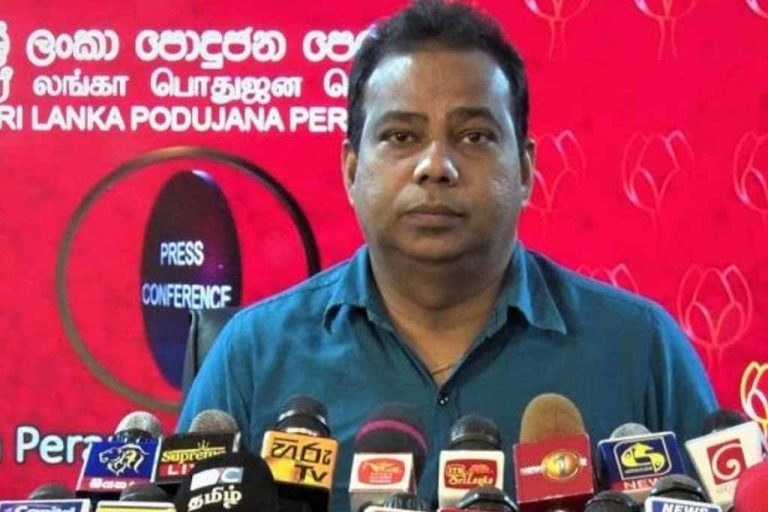
Colombo (LNW): Former MP Ranjan Ramanayake has completed his Bachelors in Arts (BA) in Youth and Community Development from the Open University of Sri Lanka (OUSL).
The popular Sri Lankan actor confirmed the completion of his degree in a Social Media remark.
Ramanayake has always been vocal about and an advocate for education and him wanting to become academically competent in order to serve the people of his country.
Colombo (LNW): A gazette notification is expected to be issued this week relaxing restrictions imposed on import of vehicles used for public transport, revealed Finance State Minister Ranjith Siyambalapitiya.
Accordingly, import restrictions on lorries, trucks and buses may be relaxed withe the move, the Minister assured.
The move comes in regardless of the warnings from a number of economic analysts that such a relaxation would contribute to the weakening of the foreign exchange rate.
BBC: All migrants have been removed from the Bibby Stockholm barge after traces of Legionella bacteria were found in the on-board water system.
The Home Office said all 39 migrants on board the vessel in Dorset were disembarked as a precaution.
The Legionella bacteria can cause Legionnaires disease – a type of pneumonia.
The barge is part of the government’s migration policy intended to cut the cost of housing asylum seekers.
One resident who spoke to the BBC said the migrants had been transferred to a new hotel and all had received a letter saying they will be moved back to the barge after a week.
The Home Office told the BBC “it does not recognise this claim” about the timeframe for returning to the vessel, adding that it would “remain in close contact with our partners and will adhere to all advice provided by relevant authorities over the coming days”.
The resident also said a few of those who had been on board had sore throats, and he himself had been coughing and having breathing problems.
Most people who contract Legionnaires disease make a full recovery but it can be deadly – around 10% of cases are fatal. People with underlying health conditions, the over 50s and smokers are at risk of serious illness.
The government eventually plans to house up to 500 men aged 18-65 on the barge moored in Portland Port, while they await the outcome of asylum applications.
A Home Office source has told the BBC that results showing “low levels” of Legionella in the water system on the Bibby Stockholm were received by a contractor on Monday.
It is understood the local council informed the Home Office on Wednesday evening, but at this stage the results being discussed were still “low levels”.
On Thursday further results “changed the picture”. There was a discussion with the UK Health Security Agency (UKHSA) who advised that the six newly-arrived asylum seekers should be disembarked.
Further testing has been done – by Dorset Council’s environmental health team – and it is expected that migrants will be moved back only if and when the water supply is completely clear of contamination.
The council added that the samples related “only to the water system on the vessel itself, not the fresh water entering the vessel”. It said there was “no risk for the wider community of Portland”.
To get rid of the Legionella bacteria, the water system needs to be flushed through with hot water.
In a letter, seen by the BBC, migrants were told it was “necessary to temporarily relocate” them “as a precautionary health and safety measure”.
“We are not aware of any individuals onboard with clinical signs of Legionnaires’ disease,” the letter said.
Ministers have said the barge would help cut the cost of housing asylum seekers being accommodated in hotels and described the barge as “perfectly acceptable”.
However, the initiative had already suffered a shaky start after delays over safety concerns and legal challenges had frustrated ministers’ attempts to ramp up the numbers of people boarding the barge.
Government sources have said they are complying with the UK Health Security Agency guidance and have gone “above and beyond” what has been recommended by removing people from the barge temporarily.
A Home Office spokesman said: “No individuals on board have presented with symptoms of Legionnaires’, and asylum seekers are being provided with appropriate advice and support. Legionnaires’ disease does not spread from person to person.”
Labour’s shadow immigration minister Stephen Kinnock said the government had turned itself “into a laughing stock this week”.
“They clearly haven’t completed the safety checks properly,” he claimed, saying the latest issues added to “a very clear sense that the government is in a state of shambles”.
Campaigners were also quick to hit out at the government over the development.
A charity representing asylum-seekers, Care4Calais, said its concerns over the safety of the barge had been justified. The charity is supporting a number of asylum seekers in legal challenges against being moved to the barge.
Alex Bailey from the Say No To The Barge campaign group said the news was “another example of the haphazard, incompetent way our government has approached this scheme from start to finish”.
Immigration minister Robert Jenrick is understood to have been chairing meetings about the situation.
Earlier this week he described accommodation on board the barge as “decent” but said there was “not a menu of options” for those seeking state-funded help as they sought asylum.
“We’ve got to be fair to the taxpayers as well as decent and compassionate to the individuals concerned.”
What are the risks of Legionella bacteria?
Legionella bacteria can cause a serious infection called Legionnaires’ disease
The bacteria are normally found in rivers and lakes, but can grow inside water tanks and plumbing systems
Problems emerge when people breathe in infected water and the bacteria get into the lungs
Showers that create a mist of water carrying the Legionella bacteria would pose a risk
Once in the lungs, the bacteria lead to pneumonia and symptoms can include a cough, shortness of breath and a fever
People infected will need antibiotics and, in more severe cases, oxygen support
Colombo (LNW): The number of new cases positive for Covid-19 has increased by 80 per cent around the world, disclosed the World Health Organisation (WHO).
The new reading appears despite the WHO’s previous declaration in May that the pandemic was no longer a global health emergency.
The continuous prevalence of the virus leading to mutation was already warned upon, and about 1.5 million new infections were discovered from July 10 to August 06, indicating a rise in the prevalence of about 80 per cent.
Colombo (LNW): In a significant development, the Sri Lanka Tourism Development Authority (SLTDA) announced that the much-anticipated National Tourism Policy has received approval from the Cabinet of Ministers.
SLTDA Chairman Priantha Fernando revealed on Thursday that the policy is set to be officially launched in the near future, marking a crucial step in the country’s efforts to enhance its tourism sector.
He further elaborated that the National Tourism Policy serves as the blueprint for a dynamic and sustainable growth path for the tourism sector.
Notably, the policy is expected to play a pivotal role in ensuring the sustainability and resilience of the sector, providing a clear direction for its evolution over the coming two years.
“One of the key outcomes resulting from the implementation of the Tourism Policy is the finalisation of the Tourism Strategic Plan that charts the course of the industry’s development until 2025, he said.
In addition to the short-term strategic plan, Chairman Fernando also unveiled ambitious long-term goals for Sri Lanka’s tourism industry. He outlined the forthcoming unveiling of a comprehensive 10-year Master Plan, expected to span up to the year 2035.
“This plan is envisioned to provide a roadmap for sustainable growth, encompassing a range of initiatives and strategies to propel the industry forward,” he said.
He expressed his confidence in the solidity of the strategic plans, emphasising their resilience even in the face of potential governmental changes.
“We know exactly what we are planning to do leading up to 2035. With a solid plan in place for the industry, irrespective of Government changes, it will remain unchanged,” he added.
By adopting a comprehensive and future-oriented approach, he said Sri Lanka Tourism aims to create an ecosystem that is not only resilient, but also capable of realising its full potential over the next decade and beyond.
Tourism Minister Harin Fernando said that the much-awaited 10-year National Tourism Policy is being finalised and will be unveiled during the second half of the year.
“It is being reviewed by various experts and committees. Thereafter, we will submit a Cabinet paper for approval for immediate implementation. This will help the industry have a clear vision of the industry objectives and goals,” he added.
The 10-year National Tourism Policy comprises a comprehensive strategy covering the entire industry including; regional development, increasing female participation, identifying new tourist attractions, markets and so on.
Colombo (LNW): The Sri Lankan government has unveiled an ambitious plan aimed at revolutionizing Sri Lanka’s agricultural sector.
The proposed initiative involves the establishment of an Agricultural Modernization Task Force, which is set to encompass all crops and sectors within the industry, according to President’s Media Division (PMD).
Addressing the critical need for collaboration between the government and the private sector, the task force is expected to pave the way for comprehensive agricultural reforms.
The task force will include representatives from respective government departments and selected private sector entities, reflecting the need for a multifaceted approach.
PMD says President Ranil Wickremesinghe’s vision extends beyond crop cultivation to encompass Ranimal husbandry in due course.
In the pursuit of this ambitious agricultural modernization program, the President has highlighted the critical importance of modernizing the Agricultural Support System as a foundational step.
He also underscored the importance of a comprehensive overhaul of the support mechanisms to achieve the envisioned transformation in the agricultural sector.
PMD says the President’s call for modernization extends to various facets of the agricultural support system, including technical expertise, market linkages, and the adoption of advanced technologies.
He acknowledged that a re-imagined support system would play a pivotal role in empowering farmers to embrace modern practices and technologies, thereby boosting productivity and sustainability.
An integral aspect of this initiative is said to be the incorporation of resources and expertise from the Ministries of Agriculture, Plantations, and Irrigation as well as Mahaweli Authority.
This consolidation, combined with the participation of nine provincial councils, seeks to address challenges comprehensively with the assistance of the respective Governors.
PMD noted that the involvement of the private sector will further diversify expertise and resources. President Wickremesinghe’s plan extends beyond governmental agencies, and seeks to integrate universities and research institutions into the modernization endeavour, it added.
The Head of State has emphasized the importance of breaking down barriers and forming specialized groups within the task force.
The goal is to address specific subjects such as paddy cultivation, Mahaweli development and vegetable production. Expertise from individuals will be instrumental in guiding these efforts.
The President has articulated this sweeping agricultural modernization strategy which aimed at transforming Sri Lanka’s farming sector during an agriculture modernisation meeting held at the Presidential Secretariat on Thursday.
Colombo (LNW): The Embassy of Sri Lanka in Moscow says it has initiated direct employment opportunities for Sri Lankan skilled migrant workers in the Russian Federation for the first time in the history.
The employment opportunities are provided in collaboration with the Sri Lanka Foreign Employment Agency (SLFEA), a fully state-owned organization in Sri Lanka.
Under this initiative, the first group consisting of 58 seamstresses arrived in the Russian Federation on August 02, 2023, to be employed at two renowned textile manufacturing plants located in Nizhny Novgorod region.
The embassy has facilitated the said employers to enter into agreements with the SLFEA to recruit these 58 seamstresses without the involvement of intermediate agencies.
The embassy said discussions are underway in a progressive manner with the regional government authorities in Nizhny Novgorod to make 700 more employment opportunities available for Sri Lankan skilled seamstresses.
Moreover, the embassy, in liaison with relevant authorities, is in the process of devising a mechanism in order to create more employment opportunities for Sri Lankan skilled migrant workers in the Russian Federation and other countries of accreditation, under a number of technical categories.
Under this initiative, the first group consisting of 58 seamstresses arrived in the Russian Federation on August 02. They will be employed at two renowned textile manufacturing plants located in Nizhny Novgorod region.
The Embassy facilitated the said employers to enter into agreements with the Sri Lanka Foreign Employment Agency to recruit these 58 seamstresses without involvement of intermediate agencies.
Discussions are underway in a progressive manner with the regional government authorities in Nizhny Novgorod to make more 700 employment opportunities available for Sri Lankan skilled seamstresses.
Moreover, this Embassy in liaison with relevant authorities is in the process of devising a mechanism in order to create more employment opportunities for Sri Lankan skilled migrant workers in the Russian Federation and other countries of accreditation, under a number of technical categories, the Foreign Ministry said.
Colombo (LNW): A Chinese Navy warship capable of surveillance has docked at the Colombo port, nearly a year after another spy vessel berthed at a strategic port in the country and raised concerns in India.
The Chinese People’s Liberation Army Navy warship HAI YANG 24 HAO arrived at the port of Colombo on Thursday, the Sri Lankan Navy said. The vessel is to leave on Saturday.
“The 129 metre-long ship which arrived in Colombo is manned by a crew of 138 and it is commanded by Commander Jin Xin.
The ship p is scheduled to depart the country today,” the Navy statement said. According to media reports on Friday, Sri Lanka delayed its arrival upon concerns raised by India. “The Chinese authorities sought permission for it earlier, but Sri Lanka delayed permission because of resistance from India, local media reported.
Despite a briefing by Sri Lanka to Indian officials, the latter remained concerned about the research ship’s visit to the island nation.
In August last year, a similar visit by the Chinese ballistic missile and satellite tracking ship, ‘Yuan Wang 5’, which arrived in the southern Sri Lankan port of Hambantota elicited strong reactions from India.
There were apprehensions in New Delhi about the possibility of the vessel’s tracking systems attempting to snoop on Indian defence installations while being on its way to the Sri Lankan port.
India is keeping an eye on the Chinese warship which docked at the Colombo Port this week.
The Indian External Affairs Ministry spokesperson Arindam Bagchi said that India carefully monitors any development that bears on the country’s security interests. He also said that India takes all necessary measures to defend its security interests.
“I am not sure whether it is a warship or not. Having seen these reports, I would emphasise that the government carefully monitors any development having a bearing on the country’s security interests and takes all necessary measures to defend them,” Bagchi said in his weekly press briefing.
Sri Lanka has increasingly come under pressure from world powers such as the United States and India not to allow docking of Chinese military vessels in its ports.
President Ranil Wickremesinghe has maintained that Sri Lanka stands for a neutral Asia-centric foreign policy without being caught in super-power rivalry. Also, he said the conflict involving Taiwan should not allow to be played out in the waters of Indian Ocean.
Currently Sri Lanka is in an exercise to manage equally good relations both with New Delhi and Beijing because both the powers are crucial in restructuring the country’s external debts.
The President visited New Delhi recently and held talks on numerous connectivity projects between the two countries including land connectivity. India is skeptical whether Sri Lanka has the necessary strength to maintain a neutral foreign policy.
State Minister of Finance Ranjith Siyambalapitiya says the 2nd IMF tranche of about USD 350 mn (Rs.120 bn) is likely to be received following the 1st review scheduled for Sept’23: asserts “we had agreed on 9 conditions required to be fulfilled before the review & we have done that”: analysts point out that the amount receivable is even less than one month’s public servants’ salary bill of the beleaguered Govt.
Japan’s Ambassador to India Hiroshi Suzuki lauds the robust collaboration between Tokyo and Colombo in navigating Sri Lanka’s debt restructuring: asserts Japan places the highest priority to transparent and equitable debt restructuring where the principle of equitable treatment is applied among all creditor countries, organisations and entities.
President Ranil Wickremesinghe emphasizes the importance of capital, particularly financial and human, for driving growth: notes that Sri Lanka’s historical capital formation efforts had been disrupted over the years, leading to current financial struggles: since April’22, the economy has recorded massive negative growths of 8.4%, 11.8%, 12.4%, & 11.5% in 2Q22, 3Q22, 4Q22, & 1Q23, respectively.
COVID-19 Coordinator Dr. Anwar Hamdani says the existing stock of Sinopharm Covid vaccines will expire on August 24: asserts that there is still some time for anyone to be vaccinated: over 8 mn people have been so far vaccinated against Covid-19 with boosted shots.
Govt amends the existing licence fee chargeable from any person or entity applying for public exhibition of any foreign or local films, stage dramas, musical or performing shows, under the Public Performance Act.
Water Supply & Drainage Board requests the public to use water sparingly due to the dry weather conditions.
State Minister of Finance Ranjith Siyambalapitiya says the Govt expects to shortly relax restrictions on import of lorries, trucks and buses used for public transport: analysts expect the exchange rate to be further impacted negatively as a result.
Newly appointed Deputy Indian High Commissioner in Colombo, Dr. Satyanjal Pandey assures fullest support in furthering defence cooperation between the 2 countries.
Navy rescues 7 fishermen from a fire-hit fishing trawler in the Southern waters, about 58 nautical miles (approx. 107 km) off Galle: the distressed trawler ‘Ruhunu Kumari 6’ had been at sea on a routine fishing expedition, having left from Wennappuwa.
Sri Lanka to host Afghanistan’s 3-match ODI home series against Pakistan from 22 to 26 August, ahead of the 2023 Asia Cup.
Colombo (LNW): President Ranil Wickremesinghe and Minister of Water Supply and Estate Infrastructure Development Jeevan Thondaman concluded a pivotal meeting at the Presidential Secretariat on Friday (11), in a significant step towards advancing the well-being of the plantation community.
The meeting underscored the government’s commitment to address pressing issues and introduce ‘transformative solutions to plantation communities,’ Thondaman tweeted.
The decisions made at the meeting are as follows;
Strategic Utilisation of Indian Grant: The President and the Minister are in complete agreement that the generous Rs. 3 billion Indian Government grant should catalyse substantive and sustainable changes within plantation communities. The aim is to move beyond superficial modifications and steer towards impactful transformations that uplift communities on multiple fronts.
Deed Programme: Recognising the importance of property rights, the government is initiating a comprehensive deed programme for the 44,000 homes built since 1972 within these communities. It is unacceptable that residents who have received homes over decades still lack valid property deeds. The focus is resolute – swift action to ensure rightful ownership and security for homeowners.
Land Ownership Mechanism: The two agreed on establishing a transparent mechanism for land ownership that reinforces property rights for plantation communities. The government will introduce a mechanism that will empower individuals to gain rightful ownership over the land they have live in for generations. It is a pivotal step towards rectifying the housing crisis in plantation communities.
Address Wage Disparities and a New Revenue Sharing Model: With a pragmatic understanding of last year’s inflation crisis, Minister Thondaman is embarking on pursuing a wage hike for estate workers. The Rs. 1000 daily wage is grossly inadequate and pushes plantation workers deeper into poverty. The government will also commence crafting a new revenue-sharing model that strikes a balance between workers’ livelihoods and the sustainability of companies. Collaborative prosperity will be the government’s objective.
Resolve unpaid EPF & ETF by JEDB and SPC: The President agreed to resolve the pending EPF and ETF payments owed by Government-owned plantations to estate workers. The Minister said he is confident that his commitment will addresses a long-standing concern of workers.
Equitable Access to Services: With a dedication to equity, the government will re-evaluate GN division boundaries in plantation regions. The ratio of Grama Niladharis to families in plantation regions is unacceptable. The Minister wishes to rectify disparities for plantation communities in accessing basic Government services, making these services equally accessible to all.
Enhancing Education: Recognising the integral role of education, the President and the Minister agreed to resolve teacher shortages in upcountry regions. This involves both new teaching appointments and tailored training programmes, thereby elevating the quality of education available to plantation communities.
Presidential Task Force: The President will establish a Task Force to address the multifaceted challenges faced by plantation communities. This task force embodies the President’s commitment to developing well-rounded, effective solutions that span various aspects of development for the plantation community.
Ethical Lease Extensions for RPCs: The President underscored his dedication to ethical tea trade practices, and this will extend to lease extensions for Regional Plantation Companies (RPCs). The government’s commitment to sustainability and fair practices is resolute.
Unifying Voices for Collective Progress: As all opposition upcountry MPs skipped the meeting on Friday to attend another event, Thondaman proposed to the President to convene another meeting that will involve upcountry MPs from all parties and communities to address issues faced by the plantation community.
In a significant step towards advancing the well-being of plantation communities, President @RW_UNP and I, concluded a pivotal meeting at the Presidential Secretariat yesterday. This meeting underscored our shared commitment to address pressing issues and introduce transformative…