Former Central Bank of Sri Lanka (CBSL) Governor Ajith Nivard Cabraal and Lalith Weeratunga have been acquitted of charges in a case filed by Ven. Thiniyawala Palitha Thero. The Thero had alleged that Cabraal and Weeratunga provided public funds to a US national.
The court has quashed the case, effectively clearing Cabraal and Weeratunga of the charges brought against them. This legal development marks a significant outcome for the individuals involved in the case.
Sri Lankan cricketer Danushka Gunathilaka, who was recently acquitted of a sexual assault case in Australia, has announced his intention to file a civil case against the Australian State. Gunathilaka arrived in Sri Lanka after spending 11 months facing trial in Sydney.
According to Gunathilaka, Australian law prevents him from seeking compensation from the woman who accused him, but he can pursue a civil case against the Australian State to recover his legal fees incurred during the trial.
Gunathilaka expressed regret over missing out on participating in the Asia Cup and World Cup during his legal ordeal. Nevertheless, he remains determined to continue his cricket career and plans to return to training soon.
The cricketer’s decision to file a civil case against the Australian State is a legal strategy to address the financial burden he faced as a result of the trial and to seek compensation for the expenses incurred.
Colombo (LNW): Sri Lanka’s tourism industry is witnessing an encouraging resurgence in the first nine months of 2023, with the number of tourist arrivals showing a marked increase in comparison to the previous year, according to the Sri Lanka Tourism Development Authority (SLTDA).
Tourism earnings in the first eight months of 2023 were over US$ 1.3 billion, reflecting a 56.7% increase from the corresponding period of last year, whilst August earnings stood at $ 210.5 million, as per latest Central Bank data.
June alone accounted for 84,003 of these arrivals. An interesting insight from SLTDA’s data revealed that the majority of tourists in June were Indian nationals, with their count standing at 22,388. This influx from the neighboring country underscores the strong cultural and historical ties shared by India and Sri Lanka.
Sri Lanka has attracted 111,938 tourists in September, missing the monthly target of 120,201 and marking lowest figure since June though the country saw cumulative performance crossing the important 1 million mark for the first time in three years.
Over the first nine months of the year, arrivals reached 1.01 million, a remarkable rebound of 275.6% from the crisis-hit year of 2022, which saw only 29,802 arrivals, tourism development authority divulged.
However, the performance remains 25% lower compared to the same period in the benchmark year of 2018. September figure is also the lowest since June’s 100,388. In July and August arrivals amounted to 143,039 and 136,405 respectively.
In September, India emerged as the leading tourist-generating market with 30,063 visitors, constituting 27% of the total arrivals. Following closely were China with 8,445 arrivals, the UK with 7,504, Germany with 7,231, and Russia with 7,163.
Additionally, visitors from Australia, Israel, the Netherlands, France, and Canada contributed to the influx.
Notably, there was a significant surge in tourists from China, possibly attributed to the Golden Week holidays, which last for eight days from 29 September to 6 October, with bookings up nearly 20 times compared with last year.
According to the report released by the Golden Holidays period. Israel also played a role in this surge as its national carrier commenced direct flights to Colombo securing the seventh place.
In terms of year-to-date arrivals, India remained strong as the top market with 200,310 tourists, followed by Russia with 132,300 and the UK with 90.843.
The rise in tourist arrivals signals a promising development for Sri Lanka›s tourism industry, which faced successive challenges due to the Easter Sunday bombings in 2019, followed by the COVID-19 pandemic, and the economic crisis in 2022.
Sri Lanka Tourism authorities are cautiously optimistic about the prospects of continued recovery in the forthcoming winter season, with aspirations to welcome 1.55 million visitors by year’s end.
Colombo (LNW): The US government said a bondholder’s lawsuit against Sri Lanka over the country’s historic debt default should be put on hold.
In a statement of interest filed ON Monday (2) in New York federal court, the US backed the Sri Lankan government’s request to delay a lawsuit by Hamilton Reserve Bank Ltd. seeking full payment and accrued interest on more than $250 million in bonds that came due in July 2022.
The US said the delay would help with ongoing restructuring talks between the South Asian country and other creditors.
Sri Lanka fell into default in May 2022 after the expiration of a 30-day grace period for missed interest payments on two of its sovereign bonds, the first debt default by the country since it gained independence from Britain in 1948. Hamilton Bank sued Sri Lanka in July 2022.
Sri Lanka in July asked US District Judge Denise Cote to put the case on hold for six months. Cote had put her decision on hold until the US decided whether or not to file a statement of interest.
The French and UK governments previously asked the court to put the suit on hold.
The two countries said in a Sept. 6 letter that they were writing as members of the Paris Club, an informal group of official creditors that help coordinate repayments for struggling debtor nations.
They said delaying the case was “key to ensuring the success of the International Monetary Fund supported assistance program” for the nation.
Sri Lanka recently announced the completion of its local debt restructuring plan and is now engaging with other holders of Sri Lanka’s foreign debt, including China and India.
Hamilton Reserve has opposed the bid to postpone the proceedings, saying that putting them on hold “would be both contrary to US policy interests and an exercise in futility.”
The case is Hamilton Reserve Bank v. Sri Lanka, 22-cv-5199, US District Court, Southern District of New York (Manhattan).
Colombo (LNW): Turning the tide: Sri Lanka’s remarkable investment renaissance in Abu Dhabi and Dubai attracting investors’ attention on the country’s investment potential of Colombo Port City.
Sri Lanka’s economic and financial prospects, long neglected and recently marred by default, witnessed a remarkable resurgence in Abu Dhabi and Dubai on 26 September.
The most influential Chairmen and CEOs from approximately 90 corporations, accompanied by 300 potential investors, property developers, hotel owners, and leaders in the hospitality and real-estate industry, converged in the iconic settings of the Ritz Carlton in Abu Dhabi and the Armani Hotel at Burj Khalifa in Dubai.
This elite gathering took place in the august presence of the ruling families of UAE, united by a common purpose: to explore, understand, and assess the investment potential of Sri Lanka, with particular emphasis on the transformative Port City Colombo project.
The distinguished gathering had the distinct privilege of participating in a meticulously orchestrated dialogue, guided by the Right Honourable David Cameron, the erstwhile Prime Minister of the United Kingdom. Cameron eloquently expounded upon the compelling rationales that underscore the imperative of directing investments towards the nation of Sri Lanka.
David Cameron, the former Prime Minister of the United Kingdom, assumed the role of a true luminary.
With magnificent enthusiasm, an unwavering grasp of every detail, and an unshakeable conviction in the success of the Port City, he brought an indefatigable energy of purpose that radiated goodwill and warmth to all the investors he encountered.
Cameron’s presence at both events was nothing short of awe-inspiring. His commitment to the Port City project was palpable, and his energy was infectious. He approached every interaction with investors, whether one-on-one or in group discussions, with the same level of enthusiasm and dedication.
One of the most memorable moments of the events was the exchange of views between David Cameron and Niraj Deva.
Deva, a former British and European Member of Parliament and a key organiser of the events, served as the interlocutor during this captivating dialogue.
The stage came alive with their dynamic conversation, characterised by insightful questions and thought-provoking responses.
The UAE Roadshow was a watershed moment, thrusting Sri Lanka into the limelight of the UAE investor community.
This community, known for its global wanderings in search of the most competitive investment opportunities, suddenly found its focus squarely on Sri Lanka.
The unique and pioneering rules and regulations governing the Port City, overseen by an all-Sri Lanka Commission, captured their attention. These regulations were hailed for their transparency, efficiency, and accountability, qualities often elusive in other jurisdictions.
Colombo (LNW): The World Bank revised up its forecasts for Sri Lanka’s economy on Tuesday, noting the crisis-hit nation had made strides in reducing inflation and had benefited from tourism revenue as well as an appreciation in its currency.
The bank now expects the economy to expand 1.7% in 2024, up from an earlier forecast of 1%. It also said the economy is likely to shrink 3.8% this year, less than its earlier prediction of a 4.2% contraction.
In the last six months, Sri Lanka has seen runaway inflation drop to 1.3% in September, its currency appreciate by about 12% and foreign exchange reserves improve. It has also benefited from an increase in remittances.
But the World Bank also noted Sri Lanka’s outlook was still clouded by significant uncertainty and there were downside risks.
“Growth prospects will depend on progress with debt restructuring as well as continued implementation of growth enhancing structural reforms,” Richard Walker, a World Bank senior economist told a media briefing.
“We see further monetary loosening and potential exchange rate pressures, which could counter this downward inflationary trend,” he added.
Sri Lanka struck an agreement for a $2.9 billion bailout package from the International Monetary Fund in March but a potential shortfall in government revenue has meant that a second tranche of funds from the package may be delayed.
In contrast to the World Bank, Sri Lanka’s central bank has predicted a milder 2% contraction this year and growth of 3.3% in 2024. The economy shrunk 7.8% in 2022.
For South Asia as a whole, the global lender predicts growth of 5.8%, led by India which is seen expanding 6.3% in fiscal 2023/24.
But it added that regional growth was still slower than its pre-pandemic pace.
“While South Asia is making steady progress, most countries in the region are not growing fast enough to reach high-income thresholds within a generation,” Martin Raiser, World Bank Vice President for South Asia said in a statement.
Monetary operations are the money printing operations carried out by the CB on a daily basis in order to keep the inter-bank daily liquidity conditions consistent with the monetary policy decisions.
Monetary policy decisions are made on policy interest rates and other instruments. Such decisions show 2023 as the year of the peak of the supper tight monetary policy cycle as well as a sudden reverse cycle.
Therefore, this short article is presented to shed some light on the nature and outcomes of the CB’s monetary operations during first three quarters (nine months) of 2023. In this period, 14 September is a historic point of the transition of the monetary policy and operations from the 73 year-long Monetary Law Act to a new legislation, Central Bank of Sri Lanka Act enacted as required by the IMF.
The target group of the article is the economists conversant with concepts and practices on the monetary policy. The objective is to make them tend to ask themselves what the real purpose of the monetary policy operations for the economy and people of the country at large is.
The article is presented in two sections, i.e., monetary policy decisions taken in first three quarters of 2023 and highlights of underlying monetary operations and market outcomes.
I. Monetary policy decisions taken in 2023Six major policy decisions have been reported as shown below.
07 January 2023 – restricting the access of commercial bank to the CB’s overnight standing financial facilities for each bank:
Standing deposit facility only up to 5 days a month
Standing lending facility only up to 90% of the statutory reserve requirement of the bank
03 March 2023 – policy interest rates hike by 1% to 15.5% (SDFR) and 16.5% (SLFR)
01 June 2023 – policy interest rates cut by 2.5% to 13% and 14%
06 July 2023 – policy interest rates cut by 2% to 11% and 12%
08 August 2023 – statutory reserve ratio (SRR) cut by 2% to 2% to release nearly Rs. 200 bn of liquid funds to the banking system
25 August 2023 – issuance of the monetary order imposing maximum interest rates on bank credit products in order to require banks to reduce interest rates in line with the monetary policy
Accordingly, monetary tightening peak ends on 1 June and now prevails a loose monetary policy cycle since then.
The next monetary policy decision being the first decision to be made by the newly constituted Monetary Policy Board under the provisions of the Central Bank of Sri Lanka Act is due on 5 October 2023. The decision most probably will be a nice story for a further cut of policy interest rates by 2%-3% in consideration of inflation falling towards zero or negative faster than expected and the urgent need to stimulate credit flows now at low inflation/price stability for the fast recovery of the economy from the worst contraction encountered in the history.
II. Monetary operations
Monetary operations are carried out to maintain the inter-bank market liquidity conditions consistent with the monetary policy decisions. The operation instruments are the standing lending facility (SLF), standing deposit facility (SDF), reverse repo auctions (overnight and term basis) and CB’s direct purchase of Treasury bills.
Al these operations will have direct and indirect impact on money printing and inter-bank liquidity conditions.
In general, like in other central banks, the CB has numerical estimates over the aggregate amount of liquidity in the banking sector on a daily basis and the preferred amount of liquidity in line with monetary policy targets. Accordingly, monetary operations are carried out in a manner to fill the liquidity gaps, i.e., money printing (injection) to fill the liquidity deficit and cut the money printing (absorption) to remove the liquidity surplus.
The overriding objective of such monetary operations is to keep the volatility of overnight inter-bank interest rates around the levels preferred by the CB within the policy interest rates corridor (SDFR and SLFR). However, the monetary policy rhetoric on inflation control/price stability, promotion of growth, financial stability, stable exchange rate, etc., everything under the sun, beyond such monetary operations is highly conceptual and controversial.
Therefore, this article only provides highlights of monetary operations and their immediate outcomes on the surrounding money market with the support of suitable graphics.
1. Monetary operation instruments
Standing Facilities – SDF and SLF operations
From 16 January 2023, the use of standing facilities has collapsed due to restrictions or rationing imposed by the CB (see Chart 1 below). As a result, bank liquidity management through standing facilities has confronted an usual volatility forcing banks to look for other options. On the other hand, policy interest rates corridor-based monetary policy model also has collapsed due to the rationing of these overnight facilities.
Chart 1
Reverse repo auction/operations
Consequent to CB’s restriction on SLF, the CB had to inject liquidity through regular reverse repo auctions to prevent the rise in inter-bank interest rates. As a result, unlike in the past, the conduct of reverse repo auctions on both overnight basis and term basis have become a regular operation during the reference period.
Accordingly, nearly 168 auctions offered Rs. 9,850 bn and accepted bids of Rs. 7,537 bn (77%) out of total demand for Rs. 9,500 bn.
Overnight reverse repo auctions became a daily routine with 86 auctions offering Rs. 6,990 bn or 93% of all auctions (see Chart 2 below).
Average auction amount was Rs. 80 bn with the acceptance rate of 76.7%.
A fast reduction in overnight reverse repo volumes is seen from the mid-August possibly consequent to significant contraction in bank credit operations.
Chart 2
The determination of overnight reverse repo auction interest rates is questionable on several grounds (see Chart 3 below). First, reverse repo rates have been lower than SLFR although credit quality is same for both types of lending. Second, reverse repo rates have been mostly lower than overnight call money rates. Therefore, overnight reverse repo rate has been the de facto policy interest rate used by the CB to drive the inter-bank market as the policy rates corridor has collapsed consequent to the rationing of standing facilities.
Chart 3
7-day reverse repo auctions also were used frequently to inject short-term funds so that the pressure on overnight inter-banks rates is pushed down (see Chart 4 below).
Accordingly, 44 auctions offered Rs. 1,605 bn with the acceptance rate of 78.6% (Rs. 1,261 bn).
The significantly higher demand for 7-day reverse repo funds has been a general feature and, therefore, the CB has misjudged the demand by offering lower amounts.
Chart 4
Holding 7-day reverse repo rates at the level of SLFR is highly questionable as to why banks were offered funds cheaper than the overnight SLFR by restricting the SLF unnecessarily (see Chart 5 below). However, the last week of September is seen reducing reverse repo rates well below the SLFR, which has no economic rationale.
Chart 5
It is observed that long-term reverse repo auctions of several tenures from 10 days to 89 days have been conducted in an irregular manner targeting identified dealers. Nearly 32 such long-term auctions have been conducted offering Rs. 1,135 bn and accepting Rs. 821 bn (72%). The basis and levels of determination of reverse repo rates at these auctions are seen highly questionable as to what the monetary policy relevance is.
CB’s direct purchase of Treasury bills
The customary practice of the CB has been to subscribe to weekly Treasury bill auctions through the post-auction placements in order to control the short-end of the yield curve/yield rates of government securities in line with the monetary policy. In fact, the de facto short-term policy interest rate has been the Treasury bill auction yield. This practice of direct purchase of Treasury bills by the CB is known as the money printing to fund the government or monetary financing. Such money printing also serves as an indirect source to bank liquidity management outside the direct injection of liquidity by the CB.
It is observed the the CB has been managing the monetary system broadly with the holding of government securities in the range of Rs. 2,500 bn and Rs. 2,600 bn on a daily basis during the reference period while several bumps above Rs. 2,500 bn to Rs. 2,800 bn were also reported (see Chart 6 below).
The bump reported on 21 September is specific due to the conversion of outstanding provisional advances made by the CB to the government into government securities under the domestic debt optimization concept. Accordingly, such conversion amounting to Rs. 344.7 bn as at that date has resulted in raising the CB holding of government securities to historic Rs. 1,901 bn (face value).
Chart 6
Overall, the CB’s liquidity injection (net) has declined on overnight basis due to the impact of drastic restrictions/rationing on CB’s standing facilities (see Chart 7 below). However, the liquidity injection on outstanding basis has remained higher than overnight liquidity injection levels due to the cumulative effect of term reverse repo auctions especially introduced to push the inter-bank interest rates arterially down. Therefore, the reduction in liquidity injection by the CB and its high volatility during monetary policy easing cycle is highly questionable.
Chart 7
2. Money market outcomes
Overnight inter-bank volumes and interest rates
The objective of the CB to restrict standing facilities in mid-January is to activate the inter-bank market funds (overnight call money and overnight repos) and to drive interest rates down without changes in policy interest rates. However, data do not support this monetary policy hypothesis.
First, inter-bank market volumes have not surged as expected (see Chart 8 below). Instead, market volumes have been highly volatile and remained at lower levels.
Chart 8
Second, inter-bank overnight rates (call money and repo rates) have been mostly around the SLFR, the upper bound of the policy rates corridor (see Chart 9 below). A downward movement is observed from overnight call money rates only since August after 4.5% cumulative cut in policy rates since June. However, a parallel reduction is not observed from overnight market repo rates.
The ease of the market liquidity due to a release of Rs. 200 bn from statutory reserves consequent to the SRR cut by 2% in August could be an important factor to push down call money rates. However, there is a market aberration as market repo rates have not declined parallelly.
Chart 9
Treasury bill auctions and yield rates
The acceptance of bids worth more than offered amounts and rising access to post-auction private placements without bidding risk have been regular features of weekly Treasury bill auctions (see Chart 10 below).
A significant reduction in the offer to Rs. 50 bn is observed from the last auction held on 26 September as there was no rollover of Treasury bills held by the CB consequent to the conversion of the CB’s total Treasury bill portfolio of around Rs. 2,556 bn (face value) into 10 new medium and long-term Treasury bonds (maturing from 15 March 2029 to 15 June 2038) on 21 September. Therefore, the government will have a significant space for fiscal operations through borrowing from Treasury bill market at future auctions.
Chart 10
The market demand has been primarily for 91-D maturity bills, given market uncertainties amid the debt restructuring issues and concerns (see Chart 11 below). The significant volatility across accepted maturities is a grave concern over the market behaviour.
Chart 11
As in the past, the manipulation of yield rates to serve the requirements of the monetary policy, given the limited scope available with policy interest rates-based monetary policy model, continued to be observed during the reference period (see Chart 12 below). Both conduct of auctions and underwiring of auctions by the CB have been instrumental in this manipulation.
Further, the CB’s reluctance to reduce Treasury bill yield rates during the last two months despite the monetary policy thrust on lower interest rates is questionable. Given the significant reduction in the offer at the last auction to Rs. 50 bn as compared to recent auctions of mostly above Rs. 100 bn to Rs. 180 bn, the cut in yield rates is seen too marginal and not commensurate.
Chart 12
However, as the new legislation permits the CB to subscribe to auctions of Treasury bills up to the total outstanding at 10% of Treasury bill borrowing limit within a period of 18 month from 14 September, the CB will continue to use auctions to manipulate short-term market interest rates as usual.
Concluding Remarks
The short presentation made above shows that the country’s monetary operations during the reference period have been a set of wholesale trades of short-term money by the CB with a set of profit-seeking money dealers.
Consequent to new central bank legislation effective from 14 September 2023, the new CB is to admit private securities and shadow banks (finance and leasing companies) also into the wholesale fund/monetary trading equation whereas the purchase of government securities is prohibited for the new CB after a period of 18 months from 14 September.
The monetary order issued on 25 August to prescribe maximum interest rates on bank credit product has now seized to operate as the new central bank legislation on 14 September does not provide for such monetary powers. As such, new CB has to depend on wholesale money trades with the dealers to drive market interest rates.
As per IMF 1st review released last week, the CB has to implement a roadmap for addressing banking system capital and liquidity shortfalls and improving the bank resolution framework to ensure financial stability, given bankrupt status of the fiscal front. In that context, these monetary operations are only ad-hoc, micro management of bank liquidity conditions and serve no purpose to address the financial system stability issues.
Therefore, it is in the utmost national interest if economists and national leaders are prepared to question the real purpose of the present mode of monetary operations for the bankrupt economy and people of the country at large in the current context as nobody except wholesale money dealers seems to benefit from such monetary operations despite the fact that money is a highly regulated public good.
(This article is released in the interest of participating in the professional dialogue to find out solutions to present economic crisis confronted by the general public consequent to the global Corona pandemic, subsequent economic disruptions and shocks both local and global and policy failures.)
P Samarasiri
Former Deputy Governor, Central Bank of Sri Lanka
(Former Director of Bank Supervision, Assistant Governor, Secretary to the Monetary Board and Compliance Officer of the Central Bank, Former Chairman of the Sri Lanka Accounting and Auditing Standards Board and Credit Information Bureau, Former Chairman and Vice Chairman of the Institute of Bankers of Sri Lanka, Former Member of the Securities and Exchange Commission and Insurance Regulatory Commission and the Author of 12 Economics and Banking Books and a large number of articles published.
The author holds BA Hons in Economics from University of Colombo, MA in Economics from University of Kansas, USA, and international training exposures in economic management and financial system regulation)
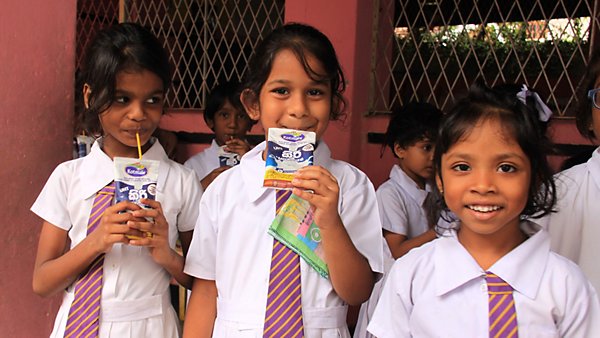
The Ministry of Health in Sri Lanka has reported an increase in the percentage of underweight school children from 21% last year to 19.5% this year. In addition, the Family Health Bureau has observed a rise in obesity among school children, which has increased from 1.4% to 2.7%.
According to the Family Health Bureau, the economic challenges faced in recent times have contributed to the inadequate nutrition of children, leading to an increase in the number of underweight children. The lack of access to proper nutrition has become a concerning issue.
Dr. Chithramalee De Silva, the Director of the Family Health Bureau, highlighted the importance of raising awareness about the nutritional status of children, especially in light of School Health Promotion Month. This annual event aims to focus on the well-being and health of school-aged children.
The theme for this year’s School Health Promotion Month is “Suwa diviyai – Sathutu sithayi,”- “A healthy life – A happy mind.” Dr. Chithramalee De Silva emphasized that parents play a significant role in ensuring that their children receive proper nutrition and called upon them to fulfill this responsibility.
Addressing the nutritional needs of school children is essential for their physical and mental development, and efforts to combat both underweight and obesity are critical for the well-being of the younger generation in Sri Lanka.
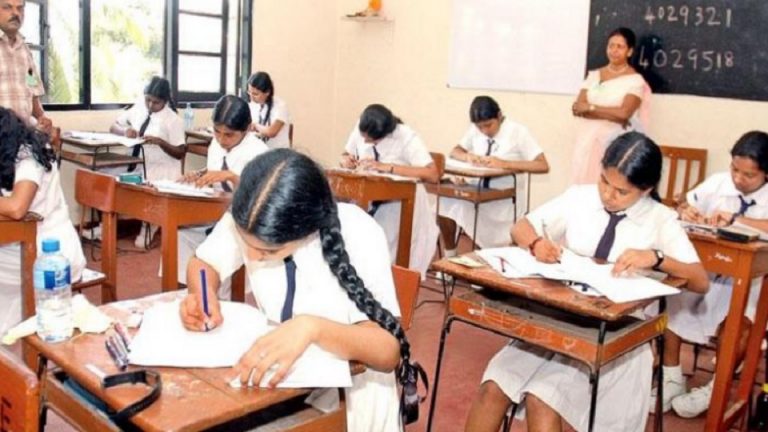
The Department of Examinations has issued a notice announcing the prohibition of lectures, seminars, tuition classes, and workshops related to the Grade 5 Scholarship Examination from midnight on October 11th until the conclusion of the exam.
Strict measures will be taken against individuals or entities found in violation of this ban.The Grade 5 Scholarship Exam is scheduled to take place in 2,888 centers on October 15th.
The second paper of the exam is set to be administered from 9:30 AM to 10:45 AM, followed by the first paper from 11:15 AM to 12:15 PM.
Annual Report 2023 of Advocata in conjunction with Canada’s Fraser Institute places SL at the 116th rank out of 165 countries in the Economic Freedom Index: the placing represents a decline from the 104th rank in 2020.
Colombo University’s Dean of the Dept of Economics & (reportedly) new Member of the Central Bank’s Governing Board Dr Priyanga Dunusinghe says there is no use talking about 2048 if the authorities can’t even make realistic predictions about matters such as GDP & Tax revenues for the next 6 months: urges the authorities to prepare more accurate estimates in the future.
President Ranil Wickremesinghe sternly admonishes an interviewer of Deutsche Welle TV, Germany: insists the Govt will not carry out an “International inquiry” on any issue including the Easter Sunday attacks: also says his Govt rejects the report of the UN Human Rights Commission.
Top Opposition Spokesperson & former Foreign Minister Professor G L Peiris says the Govt must take full responsibility for the suspension of the USD 2.9 bn IMF bailout because of its failure to achieve the anticipated revenue: blames the Govt for granting tax concessions to investors and failing to collect taxes, in spite of reaching an agreement with the IMF in that regard.
Cabinet approves proposal to construct 1,996 housing units in the Western Province for people residing in low-facility housing, using a grant of CNY 552 mn (USD 77 mn) from the Chinese Govt.
SL welcomes 111,938 tourists in September’23, but misses the target of 120,201: marks the lowest arrivals figure since June’23 though the cumulative arrivals crossed 1 mn tourists for the 1st time in 3 years.
Reports say SL’s major creditors, Japan (with a 24% share), India (15%) & France (4%) are likely to reach a broad agreement this month on debt reduction steps including extending repayments: China, the largest single creditor accounting for 42% of SL’s overall external debt, is yet to agree.
US Govt files a statement of interest in the New York Federal Court, backing the SL Govt’s request to delay a lawsuit by Hamilton Reserve Bank, which is seeking payment on more than USD 250 mn in sovereign bonds that fell due in July’22: says the delay would help on-going restructuring talks between SL & other creditors: previously, the French & UK Govts had also asked the Court to put the case on hold, saying that delaying the case was “key to ensuring the success of the IMF-supported assistance program” for SL: HRB has opposed the bid to postpone the case, saying that putting the case on hold “would be both contrary to US policy interests and an exercise in futility.”
Chairman of Litro Gas Muditha Peiris says the new increased prices of Gas will be announced very soon: Litro Gas previously increased its prices on the 4September’23.
Former SL Cricket Captain Kumar Sangakkara has been appointed as the new Chairman of the Marylebone Cricket Club (MCC) Cricket Committee.