By Adolf
As the case involving a former President is due to be taken up on 28 January, unresolved questions surrounding expenditure incurred during an official visit to the United Kingdom continue to attract public attention. These questions are not about personalities; they are about accountability, financial propriety, and the integrity of public office.
Expenditure
The controversy centres on expenses reportedly amounting to between £33,000 and £35,000—approximately Rs. 16 million—incurred during a single day’s stop in the UK, following the former President’s participation in the United Nations sessions in New York. The visit included a call at a UK university where the former President’s spouse was awarded a PhD.
UK High Commission
According to available records, the Sri Lanka High Commission in the UK requested around £35,000 to cover costs associated with the former President, his wife, a private secretary, a medical officer, security personnel, and a media officer. However, documentation reportedly accounts for expenditure of only about £18,000, leaving a discrepancy of approximately £17,000 that has yet to be clearly explained. Several individual expenses have also raised eyebrows. Reports indicate that nearly £10,000 was spent on hiring two vehicles, despite the fact that the daily hire cost of a high-end vehicle in the UK is estimated to be around £250. Additionally, approximately £5,000 was reportedly paid for access to a VIP lounge, while hotel accommodation costs are said to have amounted to about £3,000 for one night. These figures naturally prompt legitimate questions. Why was such a substantial amount spent on transport? And most critically, how does one account for the apparent gap between the funds requested and the expenses officially recorded? Was the balance shared?
Money Unaccounted
Equally troubling are questions surrounding institutional follow-up. It has been alleged that a file relating to possible misuse of funds was submitted to the then Secretary to the President, yet no action followed. Furthermore, concerns have been raised as to why audit observations were reportedly ignored by the then Foreign Secretary. If audit findings were indeed flagged, the failure to act on them represents a serious governance lapse that extends beyond any individual visit or office-holder. It is important to state clearly that these matters remain allegations and questions, not judicial findings. The former President, the officials involved, and the institutions concerned are entitled to due process. However, due process does not preclude transparency. On the contrary, timely and credible explanations are essential to maintain public confidence—especially when public funds are involved. As the court date approaches, there is a compelling case for these questions to be addressed openly and comprehensively. Doing so would not only clarify the specific expenditures under scrutiny, but also reaffirm the broader principle that no public office, however high, is exempt from financial accountability. In a country striving to restore trust in governance and public institutions, silence or ambiguity serves no one. Clear answers—before 28 January—would serve both justice and the public interest.
Did Saroja’s Team in UK Misuse Public Funds?

New Markets Rewrite Sri Lanka’s Tourism Industry Growth

By: Staff Writer
January 26, Colombo (LNW): Sri Lanka’s tourism sector delivered a record-breaking performance in 2025, welcoming more than 2.36 million international visitors, but the headline numbers only tell part of the story. Beneath the surface, a notable shift is underway as non-traditional and emerging markets post sharper growth than long-established source countries, reshaping the industry’s future trajectory.
While India, the UK, and Russia continued to dominate in absolute arrival numbers, year-on-year (YoY) growth data reveals a changing hierarchy. Pakistan emerged as the fastest-growing source market, recording an exceptional 65.75% YoY increase. Despite ranking just 20th in total arrivals, the surge underscores Pakistan’s untapped potential and its growing relevance to Sri Lanka’s tourism mix.
Bangladesh followed closely, registering a 50.58% YoY rise and ranking second in growth performance. Although it placed 10th in total arrivals, the momentum highlights strengthening regional travel demand within South Asia. Italy also stood out, posting a robust 30.27% growth rate and ranking third among the fastest-growing markets, reaffirming its position as a key European contributor.
Sri Lanka Association of Inbound Tour Operators (SLAITO) President Nalin Jayasundera noted a visible shift in traveller profiles. He said Pakistan has shown strong interest in both leisure travel and Meetings, Incentives, Conferences and Exhibitions (MICE), while Bangladesh’s growth is largely driven by leisure visitors. He also attributed Malaysia’s 29.71% YoY increase to Sri Lanka’s free-visa policy, while highlighting Italians’ growing appetite for experiential travel across the island.
Other markets posting solid growth included the Netherlands (28.03%), India (27.46%), Japan (25.38%), France (22.83%), Australia (22.23%) and Spain (21.38%). Jayasundera stressed that Australia and Japan remain high-potential markets, particularly with the entry of new budget airlines and expanded air connectivity. Spain, he noted, could deliver even stronger numbers if direct flights are introduced.
In contrast, traditional strongholds recorded more modest gains. The UK grew by 19.03%, Germany by 8.73%, while China posted marginal growth of just 0.26%. Russia, despite being the third-largest source market with 186,580 arrivals, saw an 8.22% YoY decline. Israel and the Maldives also recorded contractions.
Industry analysts say the rise of diverse markets such as Poland, Switzerland, the US and Canada signals a healthier, more resilient tourism base. Reduced dependence on a handful of countries lowers vulnerability to geopolitical, economic, or travel disruptions.
Looking ahead, diversification is expected to accelerate in 2026 with the planned rollout of a free-visa regime for over 40 countries and the launch of a unified national tourism brand. Sri Lanka is targeting three million arrivals and $5 billion in revenue this year, with long-term ambitions of five million visitors and $8 billion in earnings by 2030.
Cyclone Shock Exposes Fragility of Sri Lanka’s MSME Backbone

By: Staff Writer
January 26, Colombo (LNW): As Sri Lanka grapples with the aftermath of recent cyclone disasters, micro, small and medium enterprises (MSMEs) are emerging as one of the most severely affected yet least resilient segments of the economy. These enterprises already weakened by years of economic turbulence now face mounting losses from damaged infrastructure, disrupted supply chains, and shrinking access to finance.
MSMEs account for over 75 percent of registered businesses in Sri Lanka and provide nearly 45 percent of national employment. In cyclone-hit regions, particularly those dependent on agriculture, fisheries, and informal trade, thousands of small businesses have seen operations grind to a halt. Flooded workshops, destroyed inventories, power outages, and logistics breakdowns have translated into immediate income losses and long-term recovery challenges.
Access to affordable credit has become the central bottleneck. Even before the disaster, many MSMEs struggled to secure formal financing due to weak collateral, limited credit histories, and high borrowing costs. Post-cyclone, the risk perception surrounding small businesses has intensified, making lenders more cautious at a time when liquidity is most urgently needed.
Against this backdrop, the International Finance Corporation’s (IFC) newly announced $166 million high-impact investment program takes on added significance. The financing package channeled through Nations Trust Bank, Commercial Bank of Ceylon, and National Development Bank aims to expand access to finance for small and medium enterprises, with a focus on women-owned businesses and agri-based enterprises that are disproportionately affected by climate shocks.
The IFC support includes a $50 million loan, $80 million in risk-sharing facilities, and $36 million dedicated to trade finance. By sharing risk with local banks, the program is expected to unlock lending to MSMEs that might otherwise be excluded, particularly in disaster-affected regions where recovery capital is critical for restarting operations and preserving jobs.
IFC officials describe the initiative as counter-cyclical designed to stabilize the private sector when traditional capital retreats. This approach is crucial in a climate-vulnerable economy like Sri Lanka’s, where extreme weather events are becoming more frequent and costly. Strengthening MSMEs is not just an economic imperative but a resilience strategy, helping communities absorb shocks and rebuild livelihoods.
However, analysts caution that financing alone will not be sufficient. Faster insurance payouts, disaster-responsive loan restructuring, and targeted government relief are needed to complement multilateral funding. Without coordinated policy support, many micro and small enterprises risk permanent closure, deepening unemployment and slowing regional recovery.
As Sri Lanka moves from economic stabilization toward sustainable growth, the cyclone’s impact on MSMEs underscores a hard lesson: climate resilience, financial inclusion, and private-sector recovery are now inseparable. How effectively this financing reaches the ground may determine whether small businesses survive the next storm or are swept away by it.
Solar Setbacks Reveal Gaps in Sri Lanka’s Energy Coordination

By: Staff Writer
January 26, Colombo (LNW): Sri Lanka’s transition toward renewable energy, particularly solar power, is widely recognised as both an economic and environmental necessity. With abundant sunlight and rising electricity demand, solar energy is expected to play a central role in reducing fuel imports and stabilising long-term power costs. However, recent developments reveal that policy execution, rather than resource scarcity, is emerging as the sector’s most pressing challenge.
Cabinet-approved battery energy storage tariff, announced in mid-2025, was intended to address a known limitation of solar power: its concentration during daytime hours. Battery systems would allow excess energy to be stored and dispatched during night-time peak demand, easing pressure on the grid. While the policy decision signaled intent, delays in issuing implementation guidelines and Power Purchase Agreement (PPA) amendments have prevented developers from acting on it.
In the absence of storage infrastructure, the Ceylon Electricity Board has increasingly relied on curtailing solar power generation to maintain grid stability. Initially limited to weekends and holidays, curtailment has since extended into weekdays, resulting in energy wastage and reduced revenue for developers. Although curtailment is a technically valid short-term response, its continued use highlights the lack of synchronisation between planning, regulation, and system operations.
Industry representatives argue that regulatory certainty is critical for infrastructure investment. Battery energy storage systems require months of preparation, financing arrangements, and procurement. Without formal guidelines or clear tariff mechanisms, even willing investors are unable to proceed. This has created a policy bottleneck where approved decisions remain inactive, while operational risks are transferred to private sector participants.
Another challenge lies in institutional coordination. Energy sector experts note that effective renewable integration depends on close collaboration between policymakers, grid engineers, financial planners, and procurement specialists. When decision-making is concentrated or rushed, the system risks overlooking technical constraints and long-term cost implications. A broader consultative process within the Power and Energy Ministry could improve outcomes by aligning policy ambition with operational feasibility.
Encouragingly, steps such as reducing import taxes on battery storage equipment indicate awareness of the cost barriers involved. However, isolated measures are insufficient without a comprehensive framework that includes competitive procurement, standardised contracts, and transparent timelines. Large-scale battery projects, as demonstrated by recent tenders, may offer cost efficiencies, but these too require clear direction from authorities.
Sri Lanka’s solar industry remains supportive of national renewable energy goals and continues to advocate solutions rather than confrontation. With timely guidelines, structured tenders, and inclusive decision-making, the current challenges can still be converted into an opportunity to strengthen the power system.
Ultimately, bridging the gap between policy decisions and implementation will determine whether Sri Lanka’s solar potential becomes a cornerstone of energy security or a missed opportunity shaped by avoidable delays.
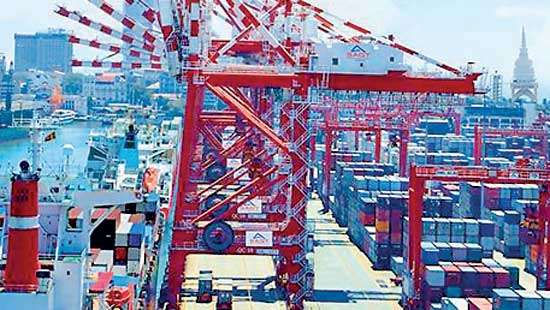
Equipment Delays Drain Colombo Port Revenue and Container Efficiency
By: Staff Writer
January 26, Colombo (LNW): Operational delays at the Colombo East Container Terminal (CECT) are increasingly translating into measurable losses in container handling efficiency and port revenue, threatening Sri Lanka’s standing as a regional maritime hub. While the terminal was envisioned as a future-ready, green facility, prolonged equipment procurement failures have left capacity underutilized during a critical growth phase for regional shipping.
Between 2025 and early 2026, Colombo Port recorded steady growth in vessel calls and transshipment demand. However, container handling at CECT remained limited to partial operations, forcing shipping lines to rely heavily on older terminals. Industry data indicates that thousands of containers experienced longer dwell times due to yard congestion and restricted internal movement an issue directly linked to the absence of straddle carriers.
Port officials privately acknowledge that without these machines, container clearing and repositioning cannot keep pace with incoming volumes. Containers awaiting customs clearance have reportedly accumulated at the terminal, increasing storage costs and slowing vessel turnaround. This congestion undermines Colombo’s competitiveness, particularly against regional ports offering faster clearance and predictable handling timelines.
The Sri Lanka Ports Authority has attempted multiple procurement processes since 2021, yet none have resulted in delivery of the required equipment. Shifting tender strategies from leasing to diesel, and later to hybrid technology reflect changing policy priorities but also expose weak execution and planning. Each failed tender cycle has pushed CECT further behind its original operational targets.
Port unions and employee associations argue that these delays are eroding confidence among global shipping lines. While demand for Colombo’s transshipment services remains strong, uncertainty over equipment readiness has discouraged some operators from committing higher volumes to CECT. One internationally reputed equipment supplier is reported to have withdrawn from the latest tender, citing concerns over transparency and evaluation standards.
Financially, the implications are significant. SLPA has continued to generate revenue through existing terminals and recently transferred approximately Rs. 5 billion to the Government Consolidated Fund. However, analysts suggest that full-scale CECT operations could substantially increase annual earnings, offset foreign exchange pressures, and create long-term cost efficiencies through automation and green technology.
The fifth tender has become the focal point of controversy. Revised eligibility criteria allow manufacturers with minimal production history to compete for a contract valued at around USD 50 million. Critics warn that installing unreliable or poorly supported equipment could lead to frequent breakdowns, higher maintenance costs, and operational disruptions further delaying revenue realization.
Employees stress that safeguarding port assets has been a long-standing priority. Their intervention in 2021 preserved national control over the East Container Terminal, and similar concerns are now being raised about CECT’s procurement integrity. As containers continue to pile up and shipping schedules tighten, the cost of inaction grows daily.
Unless decisive, transparent procurement action is taken, CECT risks becoming a symbol not of progress, but of missed opportunityat a time when regional competition has never been fiercer.
Fashion Bug Triumphs in Retail Service Excellence at People’s Pinnacle Awards 2025

Rashika Hennayake
January 26, Colombo (LNW):
Fashion Bug has been honoured with the People’s Pinnacle Retail Textile Service Excellence Award 2025, reaffirming the brand’s long-standing commitment to customer satisfaction and service excellence. The award was presented at the People’s Pinnacle Awards 2025, held at the Shangri-La Colombo, Sri Lanka’s largest award ceremony, recognising over 300 leading companies for excellence.
The award reflects the trust customers have placed in Fashion Bug over the past three decades and stands as a testament to the brand’s consistent focus on delivering meaningful, people-first retail experiences.
Remarking on this prestigious recognition, Fashion Bug Chief Executive Officer Shabier Subian said, “This award belongs to our customers as much as it does to our team. For over 30 years, our customers have trusted Fashion Bug to deliver not just fashion, but service excellence at every touchpoint. Their continued loyalty inspires us to raise the bar and exceed expectations every single day.”
Fashion Bug remains committed to continuously enhancing its service standards, going beyond industry practices to deliver the best possible experience throughout the customer’s shopping journey. Central to this promise is the brand’s young, energetic, and experienced customer service team, who serve with dedication, confidence, and care, ensuring seamless support across all interactions.
“Customer satisfaction has always been our key focus. The friendly and welcoming vibe customers experience under the Fashion Bug roof is no coincidence; it is the result of deliberate effort, continuous training, and a shared passion for service excellence across our teams. Every interaction is designed to make our customers feel valued and confident,” said Dr. S. H. M. Faraaz, Deputy General Manager, Marketing and Sales.
As the brand celebrates this milestone, Fashion Bug invites customers to experience the award-winning service that has earned the trust of generations. Visit any store or explore its latest collections online at www.fashionbug.lk.
National Drive to Restore Cyclone-Damaged Religious Sites Launched Tomorrow

January 26, Colombo (LNW): A new nationwide initiative to rebuild religious and heritage sites damaged by Cyclone Ditwah is set to be formally launched tomorrow under the patronage of President Anura Kumara Dissanayake, the President’s Media Division has announced.
The programme, titled Godanagamu Adhisthanaye Sanhinda, is intended to address the widespread destruction caused by the cyclone, which affected more than 1,000 places of religious, cultural and archaeological significance across the country. Many of these sites remain unusable for regular worship and community activities.
The restoration effort will be carried out under the guidance of the Ministry of Buddhasasana, Religious and Cultural Affairs, with an emphasis on accelerating reconstruction work while preserving the historical and spiritual value of the affected locations. Officials say the initiative aims not only to repair physical damage but also to help communities regain access to spaces central to their religious and cultural life.
Foreign Investment Surges as Sri Lanka Sees Strong Rebound in 2025

January 26, Colombo (LNW): Sri Lanka experienced a significant upswing in foreign direct investment in 2025, with inflows climbing to US$ 1.06 billion, marking a year-on-year increase of more than 70 per cent, according to figures released by the Board of Investment.
Officials attributed the sharp rise to renewed confidence among international investors, helped by improving economic conditions, greater policy clarity and more efficient investment approval procedures. They noted that sentiment towards Sri Lanka has strengthened as macroeconomic stability has gradually taken hold.
During the year, 188 companies channelled foreign capital into the country. Of these, 24 were entirely new ventures, together accounting for US$ 134 million, while the bulk of inflows — approximately US$ 923 million — came from expansions and reinvestment by firms already operating in Sri Lanka.
Manufacturing emerged as the leading recipient, drawing nearly half of total investment, followed by port and logistics-related projects and the tourism sector. Investors from Singapore, India, France, the Netherlands and Luxembourg featured prominently among the top contributors.
In parallel, the BOI approved 146 new investment proposals in 2025, with a combined project value close to US$ 1.9 billion. Almost US$ 900 million of this amount is expected to enter the country as foreign capital over the implementation period.
Building on this momentum, the BOI has set an ambitious target of US$ 1.5 billion in FDI for 2026 and plans to roll out around 20 structured investment opportunities aimed at attracting high-value and export-oriented projects. Authorities say ongoing efforts to streamline procedures and improve coordination across government agencies are helping position Sri Lanka as a more competitive and reliable destination for global investors.
213 New Public Health Management Assistants to Receive Appointments

January 26, Colombo (LNW): Appointment letters are due to be issued tomorrow to 213 successful candidates selected for the post of Public Health Management Assistant, marking a significant step in strengthening administrative support within the health sector.
The recruitment followed an open competitive examination held in 2025, which had been delayed for several years after originally being scheduled in 2021. Health officials said the process was completed after necessary clearances were obtained to fill long-standing vacancies.
While approval had been granted to recruit 226 candidates, interviews were conducted for 246 applicants who met the required qualifications. Following the selection process, 213 candidates were confirmed for appointment.
At present, the approved cadre for Public Health Management Assistants is 2,617 positions. Of these, 1,906 posts are currently filled, with authorities noting that the latest appointments will help reduce staffing gaps and improve administrative efficiency across public health institutions.
GMOA Defends Industrial Action, Blames Authorities for Unmet Commitments

January 26, Colombo (LNW): The Government Medical Officers’ Association (GMOA) has said it was left with no alternative but to resort to professional action after assurances given by the Minister of Health during earlier discussions were not honoured, despite being formally recorded in writing.
Speaking to the media, GMOA Secretary Dr Prabath Sugathadasa insisted that responsibility for any disruption to routine patient services rests squarely with the Ministry of Health, the Health Minister and the government. He argued that the situation could have been avoided had the authorities acted on the commitments they themselves had made.
Dr Sugathadasa recalled that during the national budget debate, the Minister of Health had pledged to formally recognise medical professionals as a specialised service category — covering specialist consultants, medical officers across grades and administrative doctors — along with the introduction of a separate salary structure. However, he said this proposal has yet to receive Cabinet approval.
He also noted that several related matters, including revisions to duty allowances, converting additional duty payments into permanent allowances and absorbing them into basic salaries, were due for discussion with Treasury officials by January 05, 2026. According to the GMOA, no meaningful response has been forthcoming, even after repeated reminders.
Against this backdrop, and following what the association described as an unsatisfactory outcome from a recent two-day token strike, the GMOA decided to move ahead with a series of five trade union actions. Dr Sugathadasa stressed that emergency care would not be affected and that doctors would not take any action that could place patients’ lives at risk.
The measures announced include refraining from issuing prescriptions for medicines unavailable at hospital clinics or outpatient departments that must be purchased from private pharmacies; declining to recommend laboratory tests that cannot be carried out within the state hospital system; withholding approval for the establishment of new hospital units where the required number of doctors has not been sanctioned; withdrawing participation from clinics or health camps organised for political purposes; and stepping away from duties in hospitals, clinics and OPDs where doctors are not provided with adequate assisting staff to support patient examinations.
The GMOA maintains that these steps are intended to highlight systemic shortcomings and compel authorities to act on long-standing commitments, rather than to inconvenience patients.