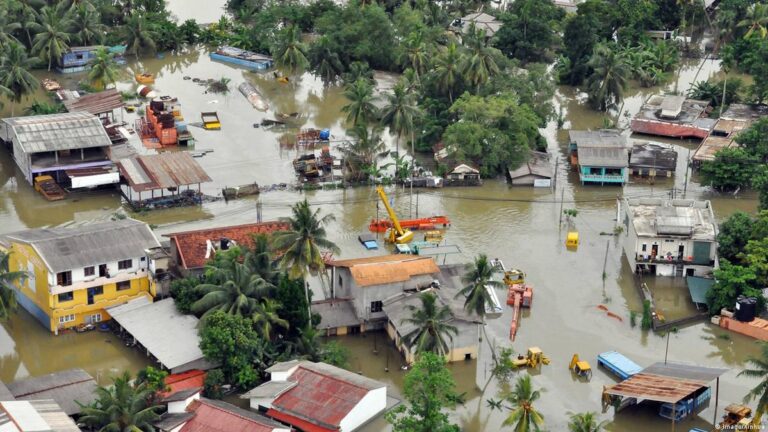
January 26, Colombo (LNW): Work is progressing on a nationwide housing programme aimed at resettling families who lost their homes during Cyclone Ditwah, with authorities now appealing to the public for support in securing land for construction.
The Department of Government Information announced that individuals and organisations willing to contribute land are being encouraged to come forward, as suitable plots are essential to delivering permanent housing for those displaced by the disaster. Officials said the initiative is designed to remove land shortages as a barrier to rebuilding efforts.
The programme forms part of a broader government commitment to provide long-term housing solutions rather than temporary relief, with the stated goal of helping affected families rebuild their lives under safer and improved living conditions.
Members of the public seeking further details can access information through the official website, www.rebuildingsrilanka.gov.lk, or by calling the dedicated hotline on 1800. Those interested in donating land may also submit their details by fax to 011 233 1246.
The government has reiterated that the recovery effort is guided by the principle that no disaster-affected family should be overlooked. Citizens across the country are being urged to support the ‘Rebuilding Sri Lanka’ initiative and contribute, where possible, to restoring stability and dignity to communities impacted by the cyclone.
Public Invited to Donate Land as Post-Cyclone Housing Drive Gains Momentum
Gold Prices Climb Sharply as Global Rally Lifts Local Market

January 26, Colombo (LNW): Gold prices in Sri Lanka have jumped noticeably, mirroring a strong upward surge in international markets, with traders reporting a steep rise in the value of gold sovereigns over the past few days.
Dealers at the Colombo Pettah gold market say the price of a sovereign has increased by roughly Rs. 12,000, reflecting renewed investor demand for the precious metal.
Based on current market rates, a 24-carat gold sovereign is trading at around Rs. 362,200, while a 22-carat sovereign is being quoted close to Rs. 397,000, depending on craftsmanship and market conditions.
The local increase follows a significant global rally, with gold prices crossing the USD 5,000 mark per ounce for the first time. Analysts attribute the surge to ongoing economic uncertainty, geopolitical tensions and continued demand for safe-haven assets.
Market observers expect the upward momentum to continue, with some forecasts suggesting that gold could climb beyond US$ 5,500 per ounce before the end of the year if current global trends persist. This outlook has further fuelled interest among both investors and traditional buyers in the domestic market.
GMOA Begins Continuous Trade Union Action Over Health Sector Shortcomings

January 26, LNW (Colombo): The Government Medical Officers’ Association (GMOA) announced yesterday that it will begin continuous trade union action from 8.00 a.m. today (26), citing critical shortcomings in facilities and staffing across the state health sector.
Speaking to the media, GMOA Media Spokesperson Dr. Chamil Wijesinghe said the action will be implemented through five specific measures, while doctors continue to provide services within the limits of available resources.
Under the action, doctors will not issue prescriptions for medicines that are unavailable at hospital clinics or outpatient departments and would otherwise need to be purchased from external pharmacies. Similarly, they will refrain from issuing prescriptions or recommendations for laboratory tests that are not available within the hospital system to be carried out at private laboratories or private hospitals.
The GMOA also stated that it will not support the establishment of new hospital units unless the approved number of doctors has been sanctioned and provided. In addition, the association will withdraw its support from certain clinics and health camps conducted for political purposes.
Dr. Wijesinghe further explained that doctors will withdraw from duties at hospitals, clinics, or outpatient departments if assistant officers required to support patient examinations are not provided.
Emphasising that this does not amount to a complete strike, Dr. Wijesinghe said doctors will continue to work, but only under conditions where essential facilities and support are available. He warned that a continued lack of resources could lead to the collapse of the free health service, placing responsibility on the Ministry of Health, the Health Minister, and the government.
He also announced that the GMOA Central Committee will meet on Wednesday, January 28, to determine future trade union action. The GMOA cautioned that the current action could be intensified and stressed that responsibility for any disruption to patient care would rest with health authorities and the government.
Three Arrested at BIA with Rs. 134 Mn Worth of Drugs Hidden in Luggage
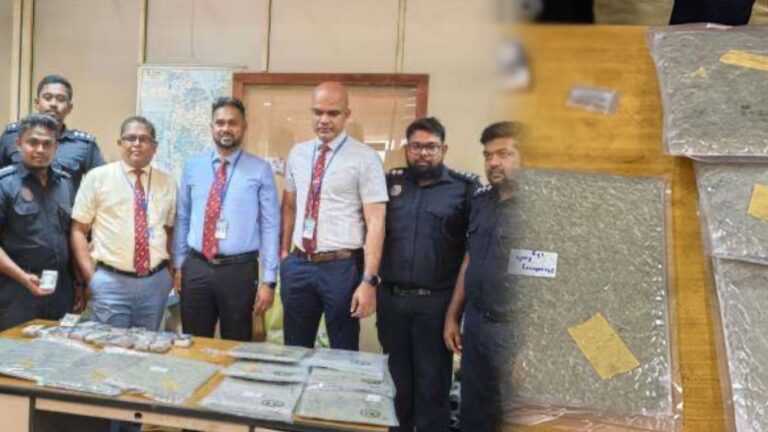
LNW (Colombo): Three passengers were arrested this morning (25) at Bandaranaike International Airport while attempting to smuggle Kush and Hashish worth approximately Rs. 133.94 million through the Green Channel.
The arrest was made by a joint team of Airport Customs officers and the Customs Narcotics Control Division as the suspects tried to exit the arrival terminal without declaring the drugs. Those arrested include two 29-year-old men from Nattandiya—a bricklayer and a businessman—and a 32-year-old businessman from Grandpass, Colombo.
The suspects arrived from Muscat, Oman, at around 4.00 a.m. on January 25 aboard Salam Air flight OV-437. Customs officials recovered 10.394 kg of Kush and 1.912 kg of Hashish, concealed in five suitcases.
The suspects and seized narcotics will be handed over to the Katunayake Airport Police Narcotics Bureau for further investigations.
When the ‘Enemy’ Was a Guest: The Strange Tale of Pakistan at India’s Republic Day Parade
By: Staff Writer
January 26, World (LNW): In the long and often bitter history between India and Pakistan, there were two remarkable moments when diplomats from Pakistan were honoured as chief guests at India’s Republic Day parade – and both came at times when relations were tense and distrust ran high. These gestures were not ordinary state visits.
They were deliberate diplomatic acts aimed at easing hostility and even steering relations toward peace, even as deeper differences persisted.
The Republic Day celebrations in India on January 26 mark the day in 1950 when the nation’s Constitution came into force. It is the country’s most important annual ceremony, with a grand military and cultural parade down what is now Kartavya Path in New Delhi. Since 1950, India has regularly invited a leader or dignitary from another country to be the chief guest, symbolising friendly relations and diplomatic goodwill.
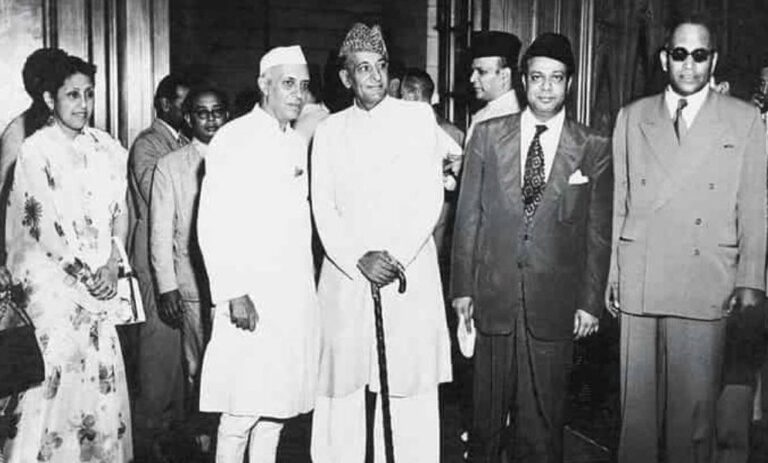
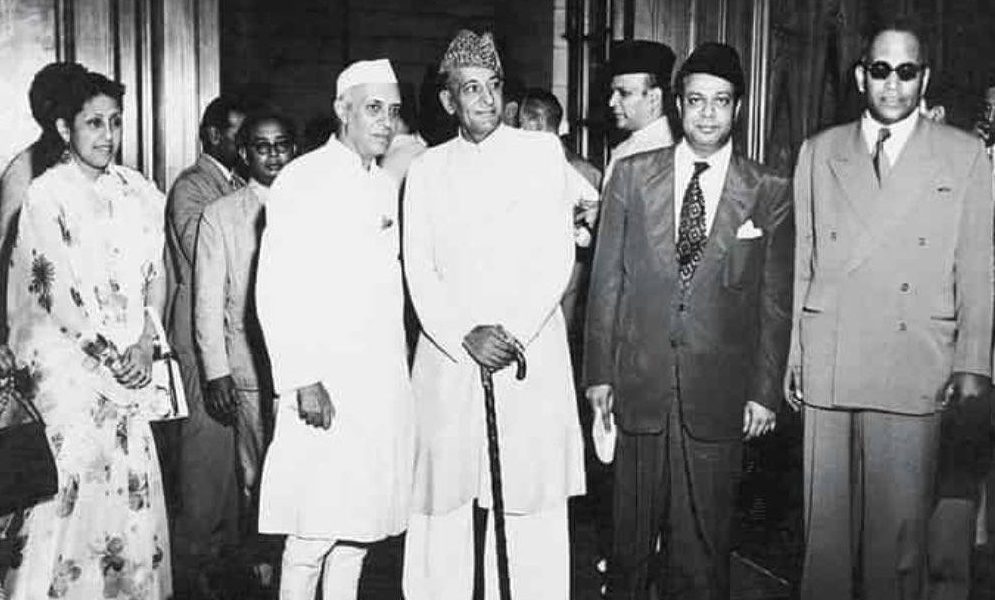
Yet Pakistan, India’s neighbour and long-standing rival, was accorded this honour only twice. The first occasion was in January 1955, when Sir Malik Ghulam Muhammad, the then Governor-General of Pakistan, was invited as the chief guest. This was a bold choice. India and Pakistan were still scarred by the traumatic partition of British India in 1947 and the first war over Kashmir in 1947-48.
Borders were tense and mutual mistrust was deeply entrenched. Inviting Malik, an influential figure in Pakistan’s early political history, was a calculated gesture by India’s then prime minister, Jawaharlal Nehru, who hoped that opening a space for ceremony and symbolism could help thaw relations.
Malik had once served in the Indian Civil Service before partition and held senior financial and administrative roles in Pakistan. But his time as Governor-General was controversial: he dismissed Pakistan’s prime minister in 1953 and dissolved its constituent assembly, moves later criticised for weakening democratic governance in Pakistan and empowering the military. The decision to host him in New Delhi was therefore significant, both politically and symbolically.
A decade later, in January 1965, another Pakistani leader was chief guest at the parade: Rana Abdul Hamid, then Pakistan’s Minister for Food and Agriculture. He came from a well-connected Punjabi landowning family with roots spanning Sindh and Rajasthan, and his visit occurred during the short tenure of Indian prime minister Lal Bahadur Shastri. Once again, India extended an olive branch in public view, hoping that visible engagement might encourage dialogue and confidence-building between two countries quietly sizing each other up militarily.
Yet just months later, the attempt at rapprochement unraveled. In April 1965, Pakistan launched Operation Desert Hawk, a military incursion in the Rann of Kutch, followed by a broader conflict with the Indian Army. A ceasefire in June offered only a brief respite. Pakistan then initiated Operation Gibraltar in August, an unsuccessful attempt to infiltrate Jammu and Kashmir and spark a rebellion, which ultimately helped trigger the full-scale India–Pakistan war of 1965.
At the time, opinions in India varied over the wisdom of inviting Pakistani figures to such a high-profile national event. Some Indian politicians and commentators saw these invitations as worthwhile gestures – “soft bridges” that could foster conversation and reduce hostility. Others warned that ceremonial warmth might be misread as political concession or fail to translate into meaningful diplomatic progress, especially without concrete policy engagement.
Despite these early efforts, the broader trajectory of India–Pakistan relations remained fraught. Deep disagreements over Kashmir, repeated military clashes and, over the decades, cycles of hostility and uneasy ceasefires largely defined the bilateral relationship. Symbolic gestures, both large and small, have often struggled to bridge the deep strategic and ideological divides between the two nuclear-armed neighbours.
These two Republic Day invitations – unique in the long list of chief guests that India has extended to foreign dignitaries from around the world – stand out not just for their rarity but for what they represented: attempts to use diplomatic courtesy and ceremonial recognition as tools for peace, even when political and security realities were hardening. In hindsight, they remind us how fragile and challenging peacemaking can be between states with overlapping histories of conflict and mistrust.
Today’s Republic Day celebrations continue that tradition of foreign engagement, showcasing India’s place on the world stage with leaders from many nations attending as guests. Yet the memories of 1955 and 1965 linger as rare examples of India publicly honouring a neighbour with whom it has shared one of the most complex and contested relationships in modern history.
*With inputs from The Wire
Showers, Thunderstorms and Strong Winds Expected Nationwide. (Jan 26)

LNW (Colombo): Several spells of showers will occur in Northern, North-central, Eastern, North-western and Uva provinces and in Matale and Nuwara-Eliya districts.
Showers or thundershowers may occur at several places elsewhere after 2.00 p.m. Fairly heavy falls about 50 mm are likely at some places in Western and Sabaragamuwa provinces and in Galle and Matara districts.
Fairly strong winds of about (30-40) kmph can be expected at times over Eastern slopes of the central hills, Northern, North-central, North-western and Eastern provinces and in Matara, Hambantota and Monaragala districts.
Misty conditions can be expected at some places in Western, Sabaragamuwa, Central and Uva provinces and in Galle and Matara districts during the early hours of the morning.
The general public is kindly requested to take adequate precautions to minimize damages caused by temporary localized strong winds and lightning during thundershowers
Tourism Rebounds amid Cyclone Fallout as New Markets Rise
By: Staff Writer
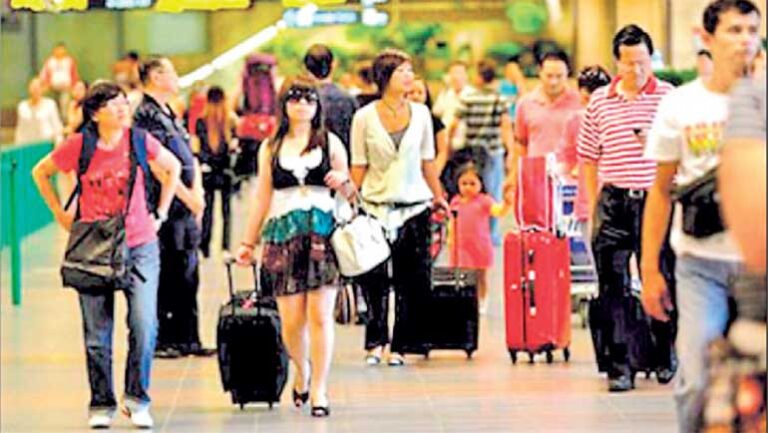
January 25, Colombo (LNW): Sri Lanka’s tourism industry entered 2026 under pressure from extreme weather, yet early data suggests the sector is displaying a surprising level of resilience. The recent cyclone and subsequent landslides that devastated parts of the Central Highlands disrupted travel routes, damaged infrastructure, and forced temporary closures of popular hill-country attractions. However, arrivals data from January 2026 and evolving market dynamics indicate that tourism demand remains steady, albeit increasingly uneven across regions.
Provisional figures show that Sri Lanka welcomed 194,553 visitors in the first 22 days of January 2026, reflecting a 10% year-on-year increase compared to the same period last year. This growth comes despite adverse weather conditions that particularly affected Nuwara Eliya, Badulla, and parts of Kandy, areas traditionally reliant on nature-based and scenic tourism.
Industry analysts note that the continuity of arrivals—averaging nearly 8,850 tourists per day—signals confidence among international travellers, even as domestic authorities grapple with post-disaster recovery. The consistency across the first three weeks of January suggests that demand is not limited to peak holiday spillover but reflects deeper market strength.
India continues to dominate as Sri Lanka’s largest source market, contributing over 35,000 arrivals, followed by Russia and the UK. However, a closer look at recent trends reveals that non-traditional markets are increasingly shaping the industry’s growth trajectory, a shift that may prove crucial during periods of disruption.
In 2025, Sri Lanka recorded a historic 2.36 million tourist arrivals, with standout growth from South Asian and European secondary markets. Pakistan and Bangladesh posted year-on-year growth exceeding 50%, while Italy, Malaysia, and the Netherlands also registered strong gains. This diversification has reduced reliance on a narrow group of traditional markets, helping cushion the impact of unforeseen shocks such as natural disasters.
Tourism stakeholders argue that this broader source base enhances resilience, allowing the industry to recover faster when certain regions or products are temporarily compromised. While arrivals from China and Germany grew modestly, markets such as Australia, Japan, and Spain continued to expand steadily, supported by improving air connectivity and niche travel demand.
Against this backdrop, the Government has reiterated its commitment to long-term expansion, targeting 3 million arrivals and $5 billion in revenue in 2026, even as restoration work continues in disaster-affected areas. Plans to introduce a free-visa regime for over 40 countries and roll out a unified national tourism brand are expected to further strengthen demand.
As climate-related disruptions become more frequent, Sri Lanka’s evolving tourism landscape—anchored by market diversification and steady regional demand may prove to be its strongest defence.
Relief Promised, Relief Delayed: MSMEs Trapped in Red Tape

By: Staff Writer
January 25, Colombo (LNW): When the government announced fresh relief measures for disaster-affected businesses, the message was clear: livelihoods would be restored, economic activity revived, and affected communities helped back to normalcy. Yet for thousands of micro, small and medium enterprises (MSMEs), particularly those hit by recent cyclones and floods, the promised relief remains frustratingly out of reach.
The new circular, issued as an extension of Budget Circular No. 08/2025, outlines a structured grant scheme ranging from Rs. 25,000 to Rs. 200,000 depending on business registration status. On paper, the framework appears inclusive, covering registered businesses, unregistered domestic commercial units, manufacturers, greenhouses, and even temporary trading operations. In reality, navigating this framework has proven to be a daunting task for small entrepreneurs already struggling to recover.
One of the biggest hurdles lies in bureaucratic procedures. MSME owners report being sent back and forth between Divisional Secretariats, Industry Ministry offices, and local authorities to verify registration status, disaster impact assessments, and eligibility categories. Minor documentation gaps often caused by disaster-related losses have led to delays or outright rejection of applications.
Banking regulations further complicate matters. While grants are intended to help businesses “become fit for resumption,” many MSMEs are also required to regularize existing loans or open specific bank accounts before receiving funds. Entrepreneurs with prior loan defaults often the result of disaster-related income loss find themselves excluded from additional credit or even grant-linked facilities. For micro-entrepreneurs operating on daily cash flows, these requirements are unrealistic.
Cyclone-affected traders operating from temporary structures or mobile units face additional barriers. Although the circular allocates Rs. 25,000 for such units, officials often demand proof of permanence or prior registration, contradicting the very definition of temporary businesses. As a result, some of the most vulnerable traders are left without support.
The “one grant per unit” rule has also generated confusion. Businesses registered with both the Industry Ministry and Divisional Secretariat are entitled to only a single allowance, but inconsistent interpretations by local officials have led to processing delays and disputes.
Despite the government’s stated commitment to coordinated recovery and funding through the Defence Ministry, the absence of streamlined procedures has weakened the program’s impact. For MSMEs battling damaged assets, disrupted supply chains, and mounting debt, relief delayed is relief denied. Without urgent simplification of processes and flexibility in banking rules, the government’s well-intentioned measures risk remaining mere policy statements rather than meaningful lifelines.
Rising Wages, Tight Margins: Tea Industry at a Policy Crossroads
By: Staff Writer
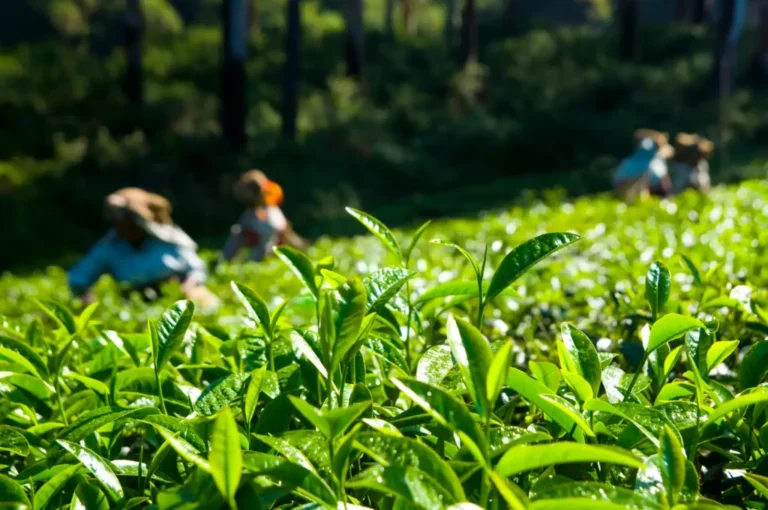
January 25, Colombo (LNW): Sri Lanka’s tea industry recorded a notable improvement in export earnings in 2025, but beneath the positive headline figures lies a sector under growing strain. As the JVP-led National People’s Power (NPP) government moves to increase payments to workers in state plantation companies, industry stakeholders warn that policy decisions, while socially driven, could further tighten already thin margins across the tea value chain.
Export earnings rose 6% year-on-year to $1.51 billion, supported mainly by higher volumes rather than stronger prices. Total exports reached 257.44 million kilograms, reflecting an 11.65 million kilogram increase from 2024. However, average Free On Board prices remained largely stagnant, underscoring the industry’s vulnerability to cost escalations.
The government’s decision to enhance wages in state-owned plantations has been welcomed by trade unions and worker collectives long burdened by rising living costs. Yet tea producers argue that the timing is challenging. Plantation companies are grappling with declining bulk tea exports, subdued global prices, and increasing competition from lower-cost producers such as Kenya and Vietnam.
Bulk tea, which still accounts for over 40% of total exports, contracted by 4.27 million kilograms in 2025. This segment delivers the lowest margins and is most exposed to rising labour costs. With wages forming a substantial portion of plantation expenses, companies fear that higher mandated payments without corresponding productivity gains could erode profitability further.
The export growth narrative is largely driven by value-added segments such as packeted tea, tea bags, instant tea, and green tea. Packeted tea volumes surged to 116.25 million kilograms, accounting for nearly half of total exports. However, these segments require greater investment in branding, marketing, and compliance areas where state plantation companies remain structurally weaker than private exporters.
December 2025 figures reveal additional warning signs. Export volumes fell sharply year-on-year, highlighting ongoing volatility in demand. While prices improved temporarily during the month, analysts caution that price recoveries remain fragile and insufficient to absorb rising cost pressures.
Under the NPP government’s broader economic agenda, the wage increase is positioned as a corrective measure to decades of worker deprivation. However, industry analysts argue that wage reform must be accompanied by estate modernisation, mechanisation, and productivity-linked incentives. Without such measures, higher labour costs may push some plantations deeper into losses, reducing reinvestment capacity and long-term sustainability.
The challenge for policymakers is balancing social justice with commercial viability. While Sri Lanka’s tea exports remain resilient, the sector’s future will depend on whether policy reforms strengthen competitiveness or inadvertently accelerate decline.
Sri Lanka Digital Agriculture Push Aims to Empower Farmers, Drive Innovation
By: Staff Writer
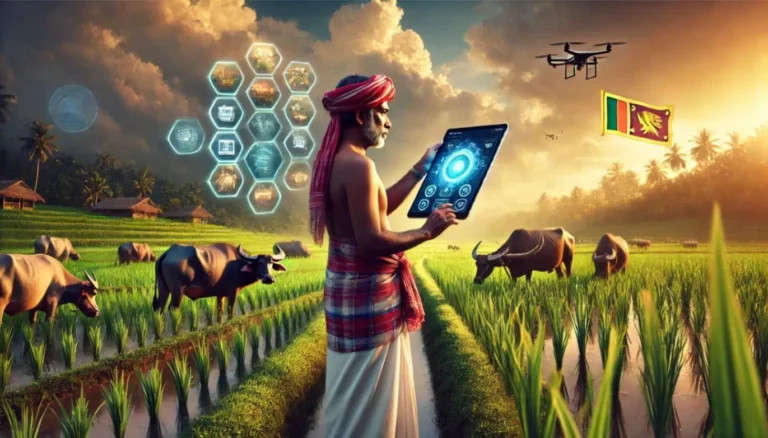
January 25, Colombo (LNW): Sri Lanka’s latest digital agriculture initiative marks a shift from traditional governance toward a technology-enabled, farmer-centric ecosystem designed to improve productivity, resilience, and innovation across the sector. The launch of CROPIX alongside national data frameworks signals a move to place accurate, near real-time data at the heart of agricultural planning and service delivery.
Unveiled at a high-level event hosted by the Ministry of Agriculture, Livestock, Land and Irrigation and the FAO, with funding from the Gates Foundation, the initiative introduces a unified digital foundation for agriculture. It brings together enterprise architecture, interoperability standards, and data-sharing policies to overcome years of fragmented systems and disconnected databases.
For farmers, the most visible outcome of this transformation is CROPIX, a national digital platform that consolidates crop, land, and production data while linking farmers directly to extension services, forecasts, and market-relevant information. Accessible through web and mobile platforms, CROPIX is expected to improve access to timely advice, reduce information gaps, and support more responsive government services.
Deputy Minister of Digital Economy Eng. Eranga Weeraratne said the lack of reliable data has long limited innovation in agriculture. He noted that the unified, API-based platform now enables precision farming, agritech solutions, and digital marketplaces creating opportunities for entrepreneurs while delivering tangible value to farmers.
Agriculture Minister K. D. Lalkantha said the initiative represents a strategic shift from isolated data collection to coordinated, evidence-based decision-making. He emphasised that the new systems will help policymakers respond faster to emerging challenges such as climate variability, input shortages, and food security risks.
The Agriculture Enterprise Architecture Framework ensures that future digital investments across the sector follow a common structure, preventing duplication and enabling scalability. Meanwhile, the Interoperability Framework and Data Sharing Policies establish trust, security, and accountability in how agricultural data is exchanged between institutions.
Chief Adviser to the President on Digital Economy Dr. Hans Wijayasuriya said extending digital public infrastructure to agriculture ensures that transformation delivers results on the ground. He explained that connecting farmers to institutions and data to decisions creates an ecosystem where policy intent translates into measurable outcomes.
FAO Representative Vimlendra Sharan highlighted that the initiative strengthens Sri Lanka’s capacity to manage climate risks and meet dynamic market demands. He said FAO’s partnership reflects a shared commitment to ensuring that no farmer is left behind as the sector modernises.
As institutions adopt these tools, near real-time data is expected to guide planning, investment, and policy formulation placing farmers at the centre of Sri Lanka’s digital agriculture future.