Home Blog Page 156

Cabinet Approves Legal Framework to Ratify ILO Convention on Workplace Violence and Harassment

0

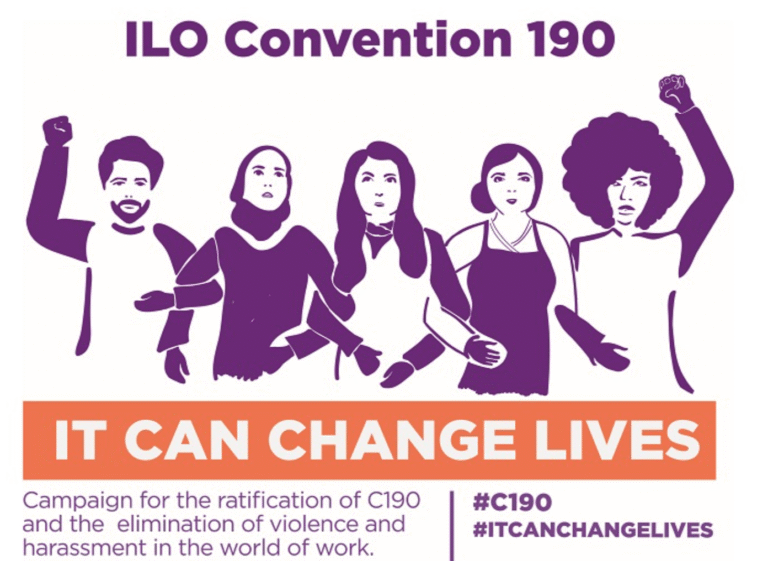
The Cabinet of Ministers has approved a resolution to introduce the necessary legal provisions to enable Sri Lanka to ratify and implement the International Labour Organization (ILO) Convention on Eradicating Violence and Harassment in the World of Work (Convention No. 190).

Adopted at the 108th Session of the International Labour Conference in 2019, Convention 190 is the first international labour standard to specifically address violence and harassment in the workplace.

The convention was presented to Parliament in May 2021, following a Cabinet decision taken earlier that year.

According to the government, ratification and implementation of the convention will contribute to the elimination of violence and harassment in both the formal and informal sectors, promote safer and more secure working environments, and encourage greater participation of women in the workforce.

Accordingly, the Cabinet of Ministers approved the proposal submitted by the Minister of Labour to take the necessary steps to introduce the required legal provisions for the ratification and implementation of the ILO Convention.

Govt Warns Media Against Unverified Reporting on Cyclone Ditwah

0

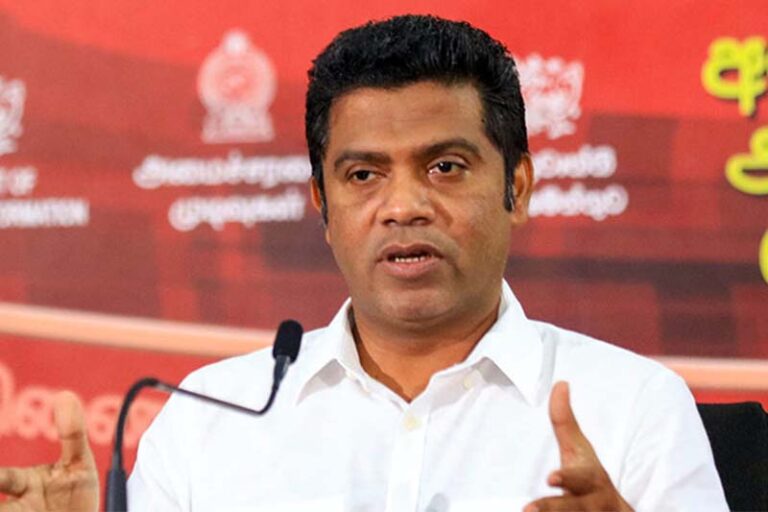
Cabinet Spokesman and Minister of Mass Media Nalinda Jayathissa on Tuesday cautioned media institutions against disseminating unverified information, as the government rejected allegations that it failed to act on early warnings related to severe weather conditions caused by Cyclone Ditwah.

Speaking at a media briefing following Cabinet decisions taken on December 15, Jayathissa defended the accuracy of official information released to the public and dismissed opposition calls for a parliamentary select committee to investigate the matter.

“They are free to go to court if necessary. Then we can demonstrate how certain media institutions edited and distorted these clips,” he said.

Jayathissa said the government had already provided detailed explanations through multiple television discussions and a comprehensive statement in Parliament, maintaining that allegations circulating in sections of the media were misleading and inaccurate.

He reiterated that the Department of Meteorology formally issued information on critical weather conditions on November 25, rejecting claims that authorities were alerted significantly earlier.

The minister dismissed allegations broadcast by some television channels that the government had received information about the cyclone as early as November 12, describing such claims as false and irresponsible.

“These are completely false allegations,” Jayathissa said.

Responding to claims that authorities were informed through 23 red notices, Jayathissa said official records showed that 19 of those notices were issued after November 27, a timeline he said could be verified via the Disaster Management Centre’s website.

He also criticised reports based on an article published by India’s Indian Express, which some Sri Lankan media outlets cited as evidence that Indian meteorological authorities had warned of the cyclone from November 12. Jayathissa said the Ministry of Foreign Affairs, in coordination with the Ministry of Defence, had sought clarification on the issue.

Jayathissa said Sri Lanka’s Department of Meteorology confirmed on the morning of November 25 that the weather system had weakened into a deep depression, and stated only on November 27 that it had the potential to develop into a cyclone.

“All of this can be verified through archives and online sources,” he said, adding that repeatedly revisiting the issue was unnecessary.

The minister warned that the government would not hesitate to take action if false reporting continued, cautioning that misinformation could lead to public unrest, social conflict and threats to national security.
Seven Sri Lankan Cricketers to Feature in IPL 2026

0

Seven Sri Lankan cricketers will take part in the Indian Premier League (IPL) 2026 season, with three players securing contracts at Tuesday’s mini-auction, while the remaining four were retained by their respective franchises.

At the auction, Pathum Nissanka was signed by Delhi Capitals, while Wanindu Hasaranga was picked up by Lucknow Super Giants. Fast bowler Matheesha Pathirana was also bought at the auction, with Kolkata Knight Riders securing his services.

The other four Sri Lankan players will return to the tournament after being retained by their teams. Delhi Capitalsretained Dushmantha Chameera, while Royal Challengers Bengaluru opted to retain Nuwan Thushara.

Meanwhile, Sunrisers Hyderabad retained two Sri Lankan players — Kamindu Mendis and Eshan Malinga — continuing the franchise’s confidence in Sri Lankan talent ahead of the upcoming season.

Japan Extends $2.5 Million Emergency Grant to Cyclone-Hit Sri Lanka

0

The Japanese government has decided to provide an emergency grant of US$2.5 million to Sri Lanka in response to the severe humanitarian situation caused by recent cyclone-related disasters, Japanese Foreign Minister Toshimitsu Motegiannounced on Tuesday.

The grant will be channeled through international aid agencies to support humanitarian assistance efforts, including the provision of food, daily necessities and other essential relief items for affected communities.

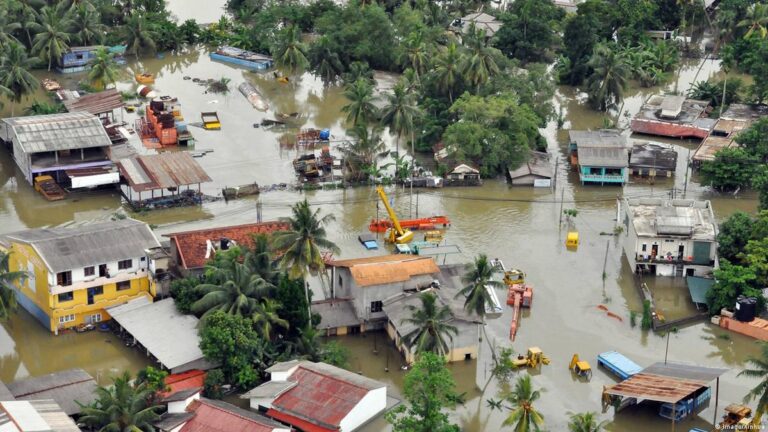
Landslides and flooding triggered by a cyclone that struck Sri Lanka in late November have resulted in the deaths of more than 600 people, causing widespread damage and displacement across several parts of the country.

Speaking at a press conference, Minister Motegi said Japan would continue to extend “seamless support to our long-time friend, Sri Lanka” to ensure the earliest possible recovery and reconstruction of the disaster-affected areas.

He also noted that a Japanese disaster relief medical team returned home earlier on Tuesday after providing approximately 1,250 medical treatments over a period of about two weeks in Sri Lanka.

RDA Suffers Rs. 75 Billion Loss Due to Disaster Damage; Rs. 190 Billion Needed for Rehabilitation

0

Sri Lanka’s Road Development Authority (RDA) has incurred an estimated loss of Rs. 75 billion following widespread damage to roads and bridges caused by recent disaster conditions across the country, officials revealed before a parliamentary committee.

Officials from the Ministry of Transport and Highways and Urban Development informed the Sectoral Oversight Committee on Infrastructure and Strategic Development that preliminary assessments show damage to 316 roads and 40 bridges under the RDA’s authority. They said approximately Rs. 190 billion would be required to fully rehabilitate the affected infrastructure.

The disclosures were made at a committee meeting held on December 11 at Parliament, chaired by MP S.M. Marikkar, which focused on reviewing the disaster’s social, economic and environmental impacts.

The committee chair noted that assessments of damage to railway lines and regional roads are yet to be completed and stressed the need for the ministry to take the lead in establishing a proper mechanism to allocate funds for the rehabilitation of regional road networks.

Officials also said plans are underway to secure a Rs. 2 billion loan from the World Bank, with additional funding expected from other institutions to support recovery efforts.

Meanwhile, the Ceylon Electricity Board (CEB) reported losses of around Rs. 20 billion due to disaster-related damage. CEB officials said discussions are ongoing with the World Bank to obtain funding assistance. However, the committee chair urged the board to seek grant funding instead of loans, warning that borrowing could eventually lead to increased electricity tariffs.

The Lanka Electricity Company (Pvt) Ltd. reported losses of approximately Rs. 252 million, stating that repair costs could be met through existing budgetary allocations without the need for additional external funding.

The National Water Supply and Drainage Board estimated losses at around Rs. 5.6 billion, with damage reported to 156 water supply schemes. Officials said all affected schemes have since been restored following maintenance work. The Ministry of Housing, Construction and Water Supply added that efforts are underway to obtain grant assistance from the Asian Development Bank for rehabilitation work.

Emphasizing the importance of disaster preparedness, the committee chair said the Sectoral Oversight Committee remains ready to support relevant ministries and institutions in strengthening resilience against future disasters.

The meeting was attended by MPs Nalin Bandara Jayamaha, Ajith P. Perera and Asitha Niroshana Egoda Vithana, along with senior government officials.

WEATHER FORECAST FOR 17 DECEMBER 2025

0

Under the influence of the Easterly wave, the prevailing showery conditions over the Northern and Eastern parts of the island are expected to continue further during the next few days.

Showers will occur at times in Northern, North-Central, Eastern, Uva and Central provinces. Heavy falls above 100 mm are likely at some places in Eastern and Central provinces and in Badulla and Polonnaruwa districts.

Showers or thundershowers may occur at several places in the other areas of the island after 1.00 p.m. Fairly heavy falls above 75 mm are likely at some places in these areas.

Strong winds of about (40-50) kmph can be expected at times over Eastern slopes of the central hills, Northern, North-central and North-western provinces and in Trincomalee, Hambantota and Monaragala districts.

Misty conditions can be expected at some places in Sabaragamuwa and Central provinces and in Galle and Matara districts during the early hours of the morning.

More Visitors, Less Value: Tourism’s Earnings Dilemma Deepens

0

By: Staff Writer

December 16, Colombo (LNW): Sri Lanka’s inbound tourism sector is recording steady gains in arrivals, but provisional November–December 2025 data suggests the industry remains caught in a structural earnings dilemma. Despite a visible post-crisis recovery in visitor numbers, foreign exchange inflows are struggling to regain the momentum seen before 2020.

SLTDA provisional estimates show that total arrivals for the final two months of 2025 exceeded 465,000, marking a modest improvement over the same period in 2024. Europe, Russia and India remain the dominant source markets, while long-stay travellers continue to account for a growing share of arrivals.

Yet tourism earnings for the period are estimated at US$ 760–800 million, only marginally higher than last year and well below pre-crisis seasonal benchmarks. Central Bank trend data indicates that this gap is largely driven by declining per-visitor spending rather than demand weakness.

The average tourist now spends approximately US$ 148 per day, reflecting a shift toward backpackers, regional travellers and remote workers who prioritise affordability and lifestyle experiences. While this demographic supports occupancy and length of stay, it compresses margins for operators and limits tax and foreign exchange yields for the economy.

Geographically, spending patterns are shifting decisively. Colombo’s dominance as the primary tourism transaction hub has eroded, while leisure destinations particularly in the south are capturing a rising share of visitor expenditure. Ella has emerged as the second-largest tourism spending hub, while Ahangama and Weligama have recorded some of the fastest growth rates nationally.

This decentralisation has accelerated in the aftermath of the 2025 cyclone and floods, which disrupted parts of the southern coastline. Rather than deterring travellers long-term, the disaster prompted a reorientation toward sustainable and community-led tourism. Small operators leveraged social media, flexible pricing and experience-based packages to restore demand within weeks.

Economists argue that this trend presents both opportunity and risk. On one hand, the spread of tourism income beyond Colombo supports small businesses, rural employment and external stability. On the other, the continued erosion of spending power raises questions about the sector’s ability to finance infrastructure, debt servicing and climate adaptation.

To address this imbalance, industry stakeholders advocate a recalibration of promotion strategies. Instead of focusing primarily on arrival targets, Sri Lanka must reposition itself as a value-dense destination, promoting premium wellness tourism, curated nature trails and heritage-based experiences with higher pricing power.

With GDP growth forecast to ease in 2026, tourism remains a key buffer for the balance of payments. Whether it can deliver meaningful economic returns will depend not on how many visitors arrive but on how much value each visitor brings.

Beyond Aid: India’s Sri Lanka Relief as Strategic Neighbourhood Policy

0

By: Staff Writer

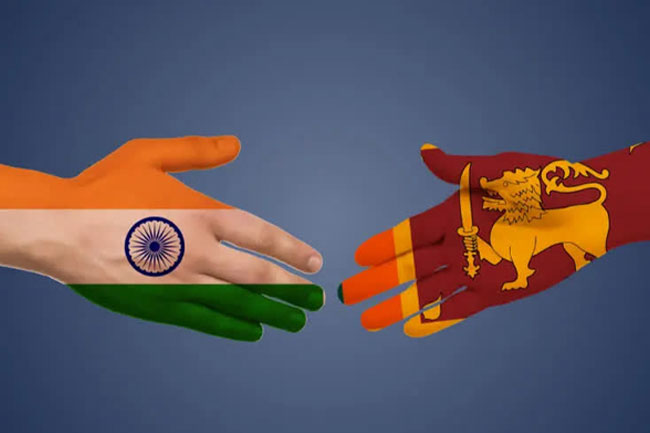
December 16, Colombo (LNW): India’s swift disaster relief operation in Sri Lanka following Cyclone Ditwah illustrates how humanitarian assistance has become a cornerstone of New Delhi’s regional strategy. While the medical and material support delivered under Operation Sagar Bandhu addressed urgent needs, the operation also signalled India’s intent to institutionalise its role as South Asia’s primary crisis responder.

The centrepiece of the mission was the deployment of a full-fledged mobile field hospital with a 78-member Indian Army medical and logistics team to Mahiyanganaya. Equipped to function independently, the hospital filled a critical gap as local facilities struggled with patient surges, damaged infrastructure, and supply shortages. The Indian High Commission noted that the hospital was configured to deliver rapid, high-volume care in disaster-hit zones, reflecting lessons drawn from earlier regional emergencies.

The medical outcomes were significant: over 7,000 patients treated, hundreds of procedures completed, and complex surgeries performed in a temporary setup. Yet the operation’s broader significance lay in its integration of medical, logistical, and technical assistance. The repair of Sri Lanka’s damaged fibre-optic backbone by Indian Army specialists restored communication links essential for emergency coordination, governance, and economic activity.

India’s decision to combine personnel withdrawal with the delivery of 25 tonnes of relief supplies including medicines and dry rations highlighted a layered assistance model that prioritises continuity even after frontline teams depart. Sri Lankan authorities publicly acknowledged the scale and efficiency of the support, reinforcing perceptions of India as a dependable partner rather than a transactional donor.

From a geopolitical perspective, the operation aligns with India’s “Neighbourhood First” and “Security and Growth for All in the Region (SAGAR)” doctrines. In a region increasingly shaped by strategic competition, disaster response has emerged as a soft-power instrument that builds influence through trust and responsiveness rather than financial leverage alone.

For Sri Lanka, the assistance provided immediate relief at a time of fiscal stress and climate vulnerability. For India, it reinforced strategic depth in the Indian Ocean and demonstrated operational readiness unmatched by other regional actors. As extreme weather events become more frequent, such interventions may increasingly define regional leadership not through rhetoric, but through boots, beds, and bandwidth delivered when it matters most.

Record Remittances Strengthen Reserves but Expose Economic Dependence

0

By: Staff Writer

December 16, Colombo (LNW): Sri Lanka’s record-breaking remittance inflows have emerged as a crucial stabiliser for its external sector, even as they expose the economy’s growing dependence on overseas labour. With US$7.2 billion received in the first 11 months of 2025, migrant workers have once again become the country’s financial lifeline, cushioning pressure on reserves and supporting currency stability.

The rebound reflects both policy correction and social reality. After the Central Bank normalised exchange rate policy and tightened monetary conditions from April 2022, the incentive to remit through informal channels faded. As interest rates rose sharply, credit demand slowed and money printing declined, restoring confidence in formal banking channels. This shift alone redirected a significant share of remittances back into the official system.

At the same time, outward migration accelerated. Thousands left the country amid inflation, tax hikes, and limited job prospects following the crisis. While this expanded the remittance base, it also entrenched a pattern where domestic consumption and external payments are increasingly funded by incomes earned abroad rather than productivity at home.

The government’s strategy now focuses on institutionalising this inflow. Proposals in the 2026 Budget to offer housing finance and pension benefits to migrant workers aim to lock in remittance loyalty. However, critics argue that incentives cannot offset deeper concerns such as weak growth, slow private investment, and skills erosion.
Looking ahead, remittance inflows are expected to remain resilient in the near term, particularly during festive periods and as more professionals migrate. But the longer-term outlook depends on global labour demand and Sri Lanka’s ability to retain talent. A sudden slowdown in remittances would quickly expose structural weaknesses, underscoring the need to convert this temporary cushion into a bridge toward sustainable, export-led growth

Emergency Aid vs Reform Reality: IMF Weighs Sri Lanka’s Resolve

0

By: Staff Writer

December 16, Colombo (LNW): Sri Lanka’s latest request for rapid IMF financing has reopened an uncomfortable debate over whether the country is relying too heavily on crisis-driven bailouts while struggling to honour reform commitments tied to long-term recovery. As the IMF prepares to consider a US$200 million Rapid Financing Instrument, questions are mounting over the government’s ability—and willingness to deliver on the Extended Fund Facility programme.

The Fund has signalled flexibility in light of cyclone-related devastation, acknowledging the urgent need for liquidity to fund humanitarian assistance, reconstruction, and balance-of-payments support. Yet this flexibility has limits. The decision to push the Fifth Review of the EFF into 2026 underscores the IMF’s caution, as it seeks clarity on economic damage, fiscal adjustments, and reform continuity.

Sri Lanka’s EFF programme is anchored on tight fiscal discipline, revenue mobilisation, and politically difficult structural changes. These include electricity tariff rationalisation, stronger tax administration, public finance transparency, and governance reforms. Progress has been mixed, with several benchmarks either delayed or partially implemented.

The transition to the NPP-led government has added another layer of uncertainty. While the administration has publicly reaffirmed commitment to IMF engagement, policy signals have occasionally diverged from agreed reform paths. Mixed messaging on energy pricing, state intervention, and fiscal consolidation has unsettled both investors and development partners.

The IMF has made clear that emergency funding should not dilute reform momentum. The postponed December 2025 Board meeting served as an implicit warning that programme credibility matters as much as crisis response. The upcoming IMF mission in early 2026 will scrutinise whether Sri Lanka has met quantitative targets set throughout 2025 and complied with structural benchmarks extending into the New Year.

Central to this assessment will be the 2026 Budget, expected to demonstrate alignment with IMF parameters on spending control, electricity cost recovery, and revenue performance. Failure to meet these benchmarks could weaken the case for future disbursements, even if short-term emergency aid is approved.

For Sri Lanka, the challenge is no longer just economic stabilisation but trust restoration. Repeated appeals for flexibility, without corresponding reform delivery, risk donor fatigue. The IMF’s decision on the RFI may offer short-term relief but sustained international support will depend on whether reform promises finally translate into action.