Home Blog Page 1572

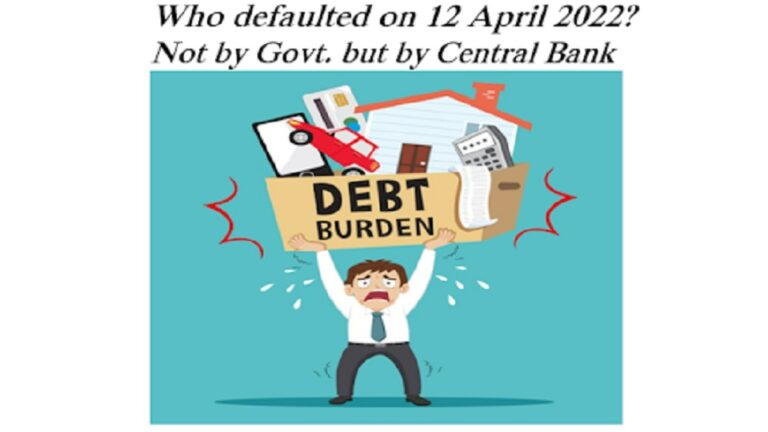
Sovereign States do not have to default. Then, who defaulted Sri Lankan debt? What is the punishment?

0

The purpose of this article is to shed light on the daylight public finance fraud that took place in Sri Lanka on 12 April 2022 by defaulting of foreign currency payment on foreign debt of the government by unauthorized public officials.

The debt both private and public is part and parcel of the country’s monetary system which primarily operates on public debt as the core. Modern monetarists prove that the governments with sovereign currency powers do not have to default on their debt unless they purposely do it for unknown or reckless motives. This position has no exception to Sri Lankan too.

Governments’ sovereign currency and spending powers – Facts

Except in countries whose legal tender is the foreign currency, monetary and currency systems in all other countries are based on state or fiat currencies where the whole monetary system including the issuance of currencies is regulated by the governments through their agents being central banks/monetary authorities.

Therefore, sovereign governments have imposed various liabilities to the public in sovereign currencies such as payment of taxes, state fees and legal payments and receipt of government payments. This shows that the public is legally binding on the acceptance and use of sovereign currency operating on the fiat currency in all economic transactions in the country.

This has created a commanding position for the governments to spend in the sovereign currency without restrictions. Therefore, the budget is only an internal accounting programme for the fiscal discipline. In Sri Lanka, the budget, i.e., preparation and implementation, is under the control of the Parliament which is called the public finance control.

However, the budget does not imply any fundamental limitation on the ability of governments to spend in respective sovereign currencies outside the budget. The fundamental reasons are as follows.

  • The government does not require tax revenue or pre-collected borrowings to spend. It can issue checks and pay orders as it wishes and its banks including the central bank will never default on honoring such payments. Those banks will create credit in bank books to the government and honor the payments. If government banks fail to do it, they will not survive in banking business where some other banks will easily takeover the profitable government’s banking business.
  • The government can service all debt through the rollover of same as banks and investors are prepared to accept it as part of their risk free asset portfolio. Therefore, domestic debt does not have to be defaulted in any circumstance. Even in financial and economic crisis times, public invests in government debt while reducing private sector investments. The fine example is the investment in Sri Lankan Treasury bills about Rs. 150 bn – 225 bn each weak, despite so called debt optimization risks.
  • Banking system lends to the government by creating book entries in modern monetary economies and, therefore, banks do not require external currency funding from the private sector for lending business.
  • The government raises debt in the sovereign currency. It does not borrow in foreign currency as it is easy to deal in domestic currency. The sale of government debt to foreigners is a secondary debt market activity created as a part of business by investors, banks and central bank. Most central banks carry on debt trade programmes to foreign investors in order to boost their foreign currency reserves while exposing the economies unduly to foreign currency risks. Therefore, the foreign debt default in Sri Lanka since 12 April 2022 is only a foreign currency default by the central bank and not a default of debt by the government.
  • Therefore, government budget, i.e., spending, tax, budget deficit and borrowing/debt, presented by old monetarists as sins of all macroeconomic and sectoral imbalances and instabilities including currency and BOP crises is only a macroeconomically unfounded concept used by them to deceive political leaders and general public. The central banks are in the forefront of this monetary myth to cover-up frequent failures of their public mandates such as the price stability and financial stability.
  • In fact, central banks carry out their monetary policies through the trade of government debt. For example, nearly 92% of the US central bank’s assets created in the monetary policy is government/state debt. In the case of Sri Lanka, it is nearly 68% and, therefore, the country’s monetary system could have collapsed unless the central bank acquired government debt.
  • The most part of private businesses prevails on sale of goods and services to the government where only governments are able to implement national projects because of their sovereign spending and currency powers. Therefore, a sizable growth of economic activities and living standards is not possible without the government spending and connected money creation although the present government with the advice of the IMF and central bank believes the opposite that has pushed the economy and living standards into decades of poverty.

Sri Lankan default not by the government but by unauthorized public officials – Facts

As highlighted above, the fact according to modern monetarists against old monetarists (who think they are monetary priests) is that, given the sovereign spending and currency powers in modern monetary economies, governments do not have to default unless they purposely do it. Therefore, a grave public issue arises as to why Sri Lanka defaulted foreign debt on 12 April 2022.

However, a careful review of facts along with the modern monetarists’ view shows that it is not a default by the government but by a concerted act of few public officials who had debt management responsibilities without the authority. Further, the default entails a series of conspiracies to enable them to earn and hold their positions unlawfully. Key events are listed below.

  • Debt under default was raised in foreign currency to build the foreign currency reserve of the central bank in order to manage the exchange rate and finance the balance of payments in terms of statutory responsibilities under the Monetary Law Act.
  • The government received only sovereign currency from the banking system for such foreign debt. Therefore, such debt is de-facto debt in sovereign currency and serviceable in same sovereign currency which does not encounter any repayment problem. The national budget for 2022 had been duly approved by the Parliament in terms of the Constitutional provisions and, therefore, its implementation was at the hand of relevant high ranking public officials.
  • However, it is the central bank who confronted repayment difficulties as it could not hold a sufficient level of foreign currency reserve required by the Monetary Law Act due to its fundamental failure of the monetary policy.
  • The new Treasury Secretary and central bank Governor who assumed duties on 7 April 2022 are long standing central bank officials of the Deputy Governor rank. Therefore, both knew their public responsibilities as they had hands on experience in debt management, foreign reserve management and monetary policy. As such, they assumed new responsibilities with the prior knowledge of the statutory responsibilities of the posts as well as the chronic situation of foreign currency of the central bank awaiting a currency crisis at any movement. It was reported that the liquid foreign reserve of the central bank at that time was below US$ 50 mn. Therefore, their duties were to resolve the situation as they knew very well.
  • However, they defaulted on their duties by defaulting the foreign payment of government debt that has been raised by the central bank as the official debt manager. In the evening of 11 April 2022, they held a national press conference to declare the non-payment as a soft default looking for debt restructuring. Further, the Treasury on 9 April 2022 had requested for proposals from international experts to serve as legal and financial advisors in respect of debt management. Immediately after assuming duties, the Governor also unlawfully urged the international humanitarian aid to help the general public suffered from the chronic shortage of foreign currency. The media information shows that the new Governor agreed to assume the post on the condition imposed to the then President that his colleague central bank Deputy Governor being appointed as the Treasury Secretary. At that movement, both posts were vacant as the predecessors had stepped down. Therefore, it was very poor public policy governance that the Treasury, the financial apex of the country, was brought de-facto under the central bank and, therefore, the government lost its financial sovereignty and currency powers to old monetary priests.
  • As such, it is clear that both public officials assumed duties with well-established plans to default foreign payments on government debt collected by the central bank itself in the past for its foreign reserve management. On the macroeconomic management front, the only reason for default was the central bank running out of the mandatory foreign currency reserve. The government did not have any inability to provide the central bank with sovereign currency to the central bank for the underlying foreign currency payment at what ever the exchange rate managed by the central bank. Therefore, both officials by acting in concert defaulted foreign payments so that they can continue in public seats without any difficulty in fulfilling due responsibilities.
  • Parliamentary sources reveal that the Treasury/Central Bank had not sought any amendments to the national budget already approved to facilitate the default. Anyhow, the Parliamentary approval is not required as this is not a default in sovereign currency/debt by the government but a foreign currency default (central bank finance and not public finance) by the central bank which does not come under the purview of the Parliament due to its monetary autonomy. Therefore, the approval reported to have been taken from the then Minister of Finance has no force of law to cover up the default.
  • The grave public issue here is that they have assumed public duties with the intension of continuing in the posts without fulfilling their responsibilities under the cover of debt restructuring and fiscal reform through the IMF. This position was created by approaching the IMF immediately after the default. They cite the default and the economic crisis as the result of the chronic fiscal problems in the budget (deficits and debt) and political governments whereas the monetary policy has been prudent, the position always taken by old monetarists. I fact, the problem was not connected with the sovereign fiscal spending powers but connected with the fundamentally flawed monetary policy in violation of the relevant provisions of the Monetary Law Act whereas the blame is passed to the fiscal powers under the myth of the old monetarism.

Concluding Remarks

  • Overall, the default declared on 12 April 2022 was not a default of debt by the government but a default of foreign currency payment by the central bank.
  • The macroeconomic catastrophe that the public confronted immediately after the foreign currency default by the central bank needs no analysis as everybody is well aware of and it will spread across the society for several decades to come.
  • Therefore, the state authorities are recommended to make a special investigation into circumstances including undisclosed conspiracies behind and the national impact of the default in foreign currency by the central bank on 12 April 2022. So-called debt restructuring and optimizations after default or before default are seen to be another under-cover financial market business on the global front.
  • In the context of the default stated above and the default of public duties on a going basis by complaining about ailing debt restructuring and national Treasury management difficulties, they are deemed to be not fit and proper persons to continue in the relevant public posts, given their professional profiles, because any educated persons can simply hold the posts without fulfilling the public duties assigned to the two posts as they do now. They do not seem to pursue any innovative policy actions to resolve the situation, other than resorting to old monetarist actions encrypted in their office files. They must either fulfil their duties or leave the posts without killing the public times of years to give the opportunity to others who can do the job.
  • Therefore, the country will not be abele to get out of the macroeconomic and social mess created by the above default by the central bank until the government activates its spending powers in sovereign currency by discarding the old monetarist and IMF psychiatry because it is this spending and not the monetary policies of central banks that has shaped the development and stability of the economies and living standards.

(This article is released in the interest of participating in the professional dialogue to find out solutions to present economic crisis confronted by the general public consequent to the global Corona pandemic, subsequent economic disruptions and shocks both local and global and policy failures.)

P Samarasiri

Former Deputy Governor, Central Bank of Sri Lanka

(Former Director of Bank Supervision, Assistant Governor, Secretary to the Monetary Board and Compliance Officer of the Central Bank, Former Chairman of the Sri Lanka Accounting and Auditing Standards Board and Credit Information Bureau, Former Chairman and Vice Chairman of the Institute of Bankers of Sri Lanka, Former Member of the Securities and Exchange Commission and Insurance Regulatory Commission and the Author of 12 Economics and Banking Books and a large number of articles published. 

The author holds BA Hons in Economics from University of Colombo, MA in Economics from University of Kansas, USA, and international training exposures in economic management and financial system regulation)

Source: Economy Forward

President envisions massive development project in Eastern Province akin to Mahaweli development project

0

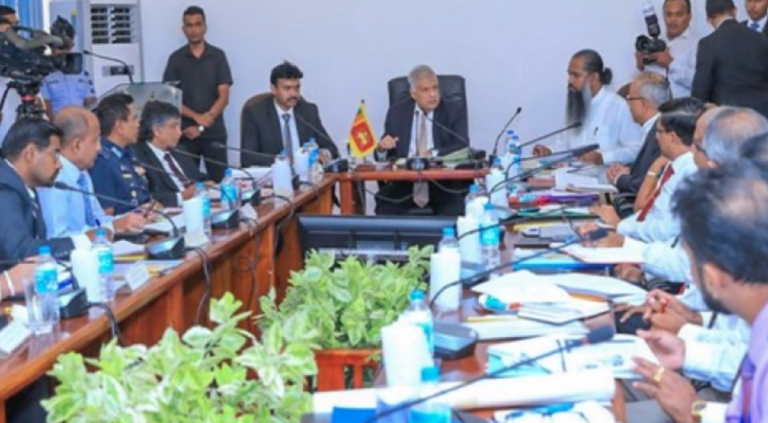
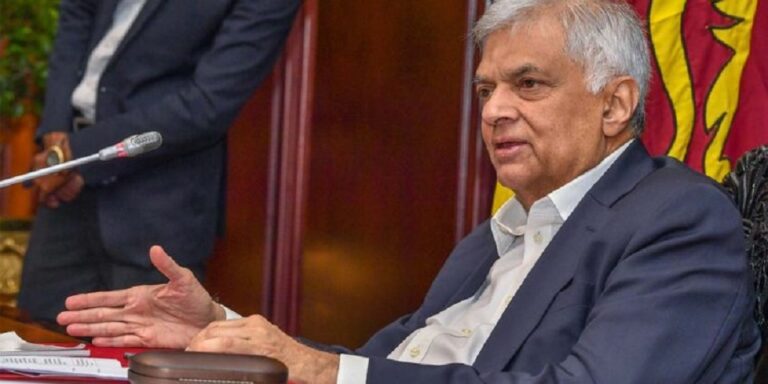
President Ranil Wickremesinghe addressing a special Committee meeting drew parallels to the successful implementation of the Mahaweli Development Project during the 1980s, affirming a similar commitment to expediting the Eastern Development Project. He emphasized the imperative of fostering a conducive environment that reinvigorates the nation’s economy, stressing on the need to engage India’s assistance for this endeavour.

Highlighting the strategic importance of the endeavour, President Wickremesinghe underscored the comprehensive vision for Trincomalee’s transformation into a multifaceted hub encompassing energy, transportation, maritime commerce, naval operations, aviation, industry, and tourism. He underscored the collaborative role of India in realizing this strategic program.

These remarks were made during a special meeting presided over by President Wickremesinghe at the Trincomalee Air Force Base (24).

The session prominently addressed the meticulous administration of government and Mahaweli-designated land within the district. The President duly instructed officials to provide him with a comprehensive report encompassing land allocations spanning the period 2019 to 2023.

President Wickremesinghe asserted that land stands as the essential factor of the development trajectory. He highlighted the importance of vigilant management for the achievement of desired developmental objectives.

In addition, the President provided explicit guidance to cease the competitive establishment of religious sites. He advocated for a consultative approach in future undertakings concerning religious structures within the Trincomalee district. Decisions in this regard he said, should be reached in coordination with the governor, district political leaders, and relevant governmental authorities.

President Ranil Wickremesinghe further commented,

The convened meeting today was dedicated to deliberating upon the developmental initiatives within the Eastern Province, with particular emphasis on the Trincomalee district. Presently, a comprehensive plan formulated by Surbana Jurong pertains to the Trincomalee district’s development, supported by an established agreement between Sri Lanka and India. It is vital that this accord is executed.

The development strategy entails a meticulously crafted program aimed at the enhancement of the Kumana coastal stretch extending from Verugalaru to Panama. This expanse is envisioned to be harnessed for the advancement of the tourism sector. Simultaneously, a blueprint is in place for the establishment of modernized agriculture within this vicinity and this model is intended to be extended to other areas within the Eastern Province. The active involvement of both the Mahaweli Authority and the Land Department is envisaged in these pursuits.

Anticipating an evolution in Trincomalee’s fishing, agriculture, and tourism sectors, the strategic goal is to elevate Trincomalee to a prominent commercial centre. Subsequent to this, the trajectory of development is envisaged to extend to Batticaloa and Ampara.

The resolution of land-related issues, particularly concerning Mahaweli-designated land, is pivotal for the advancement of these endeavours. Pertinently, the execution of the Trincomalee Development Plan encompasses the acquisition of land in accordance with the 1985 Mahaweli scheme. However, there have been instances of land parcels within the Eastern Province being gazetted without the requisite approval of the Cabinet.

Observations have indicated an allocation of land to various religious sites. Consequently, there is a directive to halt the competitive proliferation of such establishments. It is paramount to engage in comprehensive discussions with the province’s political leaders and religious dignitaries to reach judicious decisions in this regard.

Recalling the Mahaweli Development Scheme’s implementation in 1985, certain lands bestowed by the Duke of Edinburgh have been designated as forests by the Ministry of Wildlife. While preserving the forested area at 32 per cent, it is envisaged that remaining lands should be harnessed for the country’s developmental pursuits.

In the contemporary global landscape, nations such as Singapore and Dubai have strategically harnessed extensive land resources to propel their developmental pursuits. My recent visit to Singapore highlighted their interest in procuring rice from Sri Lanka. Notably, we had imported rice from them last year, and this year they are seeking rice from us. This underscores the need to establish modernized agricultural practices within our nation, thereby leveraging agricultural products as a means to fortify our global economic presence.

The expeditious realization of our development objectives hinges on the prompt execution of the Eastern Development Plan. I hold the expectation that unwavering dedication to this cause will be demonstrated by all stakeholders, including government officials.

In attendance at this crucial discourse were distinguished individuals, including President’s Secretary, Mr Saman Ekanayake, Mr. Sagala Ratnayake – Senior Adviser to the President on National Security and Chief of Staff to the President, Senthil Thondaman- Governor of the Eastern Province, Kapila Athukorala – Member of Parliament for the Eastern Province, Air Force Commander, Vice Air Marshal Udeni Rajapaksa, as well as other esteemed public representatives of the province and various provincial government officials.

Piriven teachers’ pension problem will be resolved soon

0

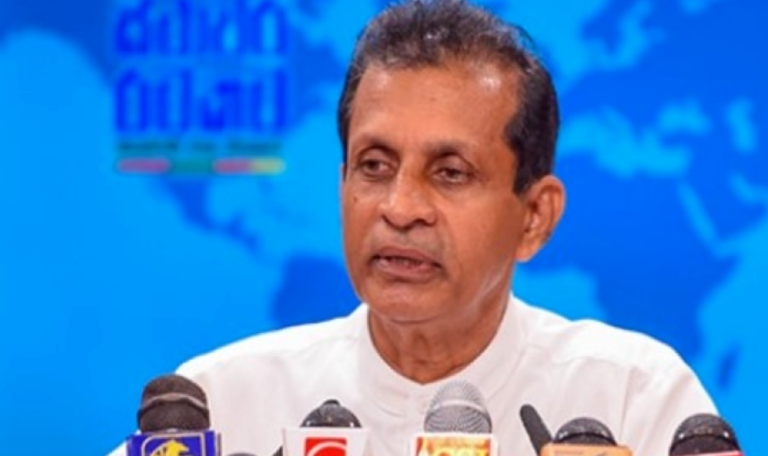
The issue regarding the pension for Piriven teachers is on the verge of resolution, according to State Minister of Piriven Education, Mr. Vijitha Beirugoda.

He emphasized the necessity of amending the Pension Act and the Piriven Education Act. The recommendations provided by the Department of Pension, Department of Attorney General, and the Department of Legal Draftsman are currently undergoing the approval process by the Cabinet Ministers.

During his participation in a press conference at the Presidential Media Centre (PMC) yesterday (24) under the theme ‘Collective Path to a stable country’ Minister Vijitha Berugoda underscored the deep-rooted connection between villages and temples. He praised Piriven education, rooted in the Maha Vihara education system, for its historical significance in nurturing learned and mature Maha Sangha, who are considered as the guardians of the nation.

There are 822 piriven spanning five main sections across 22 out of the 25 districts of the country. With more than 8,000 staff members, including 7,591 teachers, these institutions serve 40,941 novice priests and 36,990 lay students.

Despite the current economic challenges, President Ranil Wickremesinghe has played a significant role in advancing education within the nation. This has enabled the Ministry of Education to actively address issues faced by the Piriven education system.

The Piriven system collects 12% of teachers’ monthly salaries for pension, a practice not applied to other school teachers or government employees. Efforts are underway to rectify this disparity.

However, the Ministry of Public Administration has stressed the need to amend the Pension Act and the Piriven Education Act due to significant inconsistencies. Collaboratively, the Ministry of Public Administration and the Ministry of Education are in the process of submitting a joint Cabinet Paper, adhering to the recommendations from relevant departments.

Efforts for infrastructural development are also on-going across all districts, supported by Annual budget as well as from the Embassies of the Buddhist Countries and philanthropists from Sri Lanka and other Buddhist countries. Along with that a Piriven Fund has been initiated to strengthen Piriven education. The Ministry has ensured that Piriven institutions receive essential facilities similar to regular government schools and are introduced to a novel “Smart Education System”.

Moreover, the concept of the village and the temple, which may have grown distant, is being addressed through a program called “Sil Suwadai – Hela Diviyai” with the aim of reuniting these vital components. This initiative is expected to bolster the education system by preserving the tradition of novice monks.

Gem Exports Projected to Yield a $2 Billion Annual Income by 2025   

0

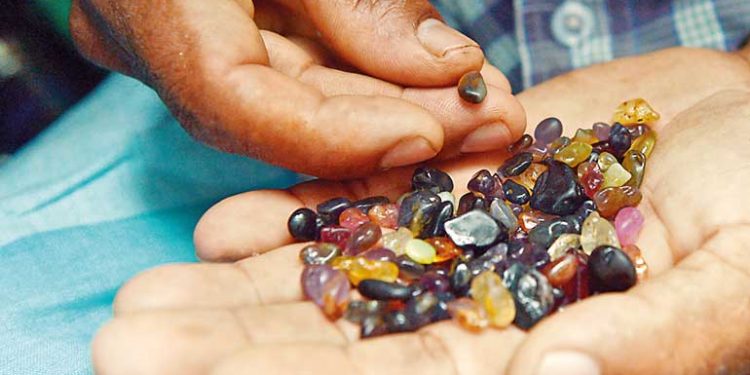
The President and Chief Executive Officer of the National Gem and Jewellery Authority Mr. Viraj de Silva stated that they anticipate generating annual revenue of US$ 2 billion by the year 2025 through the export of gems.

The chairman highlighted that during the initial 7 months of this year, they have already amassed a revenue of US$ 312 million through gem exports. They further project that by the end of this year, the earnings will reach US$ 500 million.

He also focussed attention to the implementation of a programme in accordance with President Ranil Wickremesinghe’s directives, aimed at curbing the illegal export of gems. This illegal export has posed a significant challenge to achieving the US$ 2 billion target.

Consequently, Mr. Viraj de Silva indicated that necessary measures will be promptly taken to facilitate direct gem purchases by foreign buyers through auctions within the country.

These insights were shared by Mr. Viraj De Silva, the Chairman of the National Gem and Jewellery Authority, during his participation in the 101 Katha’ programme produced by the Presidential Media Division.

Expressing his views further Mr de Silva said;

The Gem and Jewellery Authority Act governs a range of regulatory tasks, spanning from authorizing mining permits to overseeing the export of gemstones. Our regulatory responsibilities encompass processes such as auctions, sales and international shipments. All of these endeavours are geared towards benefiting the nation. Furthermore, we undertake both local and international promotional initiatives, with a strong emphasis on maximizing foreign exchange inflow into the country.

With six regional offices scattered across the nation, the Gem and Jewellery  Authority actively monitors activities through these branches. Notably, gems discovered within mines cannot be sold arbitrarily; rather, they must be presented at public auctions in accordance with the nation’s legal stipulations. This practice ensures transparency and adherence to the law.

From the proceeds of gemstone sales, the government receives a share amounting to 2.5%. Recent events have showcased a substantial growth in mining activities, resulting in the sale of a gem worth a remarkable Rs. 400 million. This upsurge in mining efforts has contributed to a notable increase in the revenue generated from gem sales.

Stringent conditions are placed on the operation of gem mines. Any engagement in illegal mining activities can lead to the revocation of licenses. Furthermore, the exportation of gemstones is subject to specific protocols. Following the discovery of a gemstone, it must undergo a process of polishing and subsequent auctioning under the auspices of the Gem and Jewellery Authority.

Currently, an investigation is underway to identify instances where activities are being conducted without the approval of the Gem and Jewellery  Authority. President Ranil Wickremesinghe has also issued directives to delve into this matter, reflecting the seriousness with which these issues are being addressed.

Between January and July of this year, the export of gems has generated a substantial income of US$ 312 million. However, there exists untapped potential for even greater financial gains.

In contrast to other sectors, the Gem and Jewellery  Authority has achieved an impressive export growth rate of 34%. Notably, this growth rate surpasses that of the tea and garment industries, as evidenced by reports from the Central Bank.

Gems discovered in this manner are the collective property of the entire nation. It is imperative that the country receives their rightful value. This could prove invaluable in alleviating the current economic challenges.

The export of gems has the potential to yield an average annual income of US$ 2 billion. Sri Lanka should aspire to become a prominent hub for gem trade on the global stage. Our on-going efforts reflect this ambition, with the projected income from the gem industry expected to reach US$ 500 million by year’s end.

Expanding the number of exporters engaged in these activities is a crucial endeavour. Presently, everyday citizens participate in this industry. We have initiated a program aimed at expanding the gem export process, inviting those interested in the field to join us in this endeavour. Our primary objective is to identify buyers and cultivate new markets.

Furthermore, proactive measures have been implemented to prevent irregularities within the Gem and Jewellery Authority. To address the potential for financial improprieties arising from long-term officer tenure, a formal transfer policy has been introduced. Additionally, the integration of accounting software has effectively eliminated any room for financial misconduct.

It is also within our institution’s responsibility to validate the quality of gold items owned by Sri Lankan citizens. Thus, individuals have the option to visit our office and assess the quality of their gold possessions. The certification bestowed by the Gem and Jewellery Authority significantly enhances the value of one’s gold items.

Dutch State Secretary to sign ownership transfer of colonial-era treasures

0

By: Staff Writer

Colombo (LNW): A Dutch cultural delegation is scheduled to visit Sri Lanka from August 27 – 31 to sign the legal document transferring the ownership of the cultural artifacts that will be returned to the island nation later this year.

The delegation will be led by Gunay Uslu, the State Secretary for Cultural and Media in the Netherlands.

The official delegation will consist of Barbera Wolfensberger, Director General Culture and Media in the Netherlands; Lilian Gonçalves-Ho Kang You, Chairperson of Dutch Colonial Collections Committee; and Dr. Alicia Schrikker, a Member of the Committee.

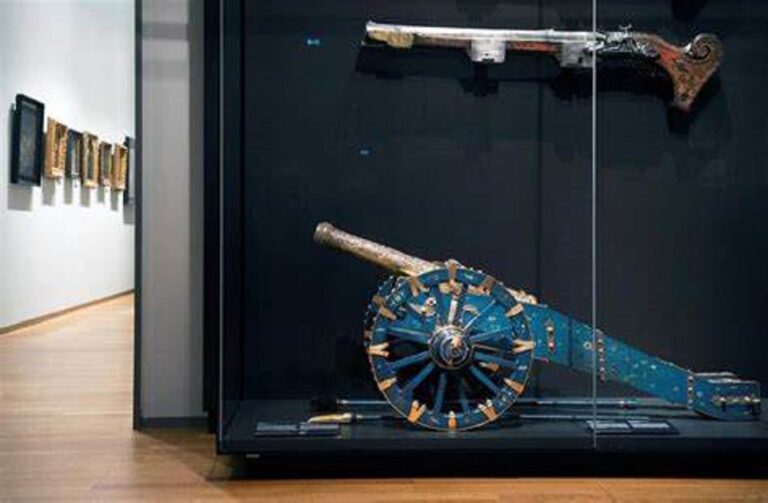
The objects planned to be returned include the famous Lewke’s canon, two Gold kastanes (ceremonial swords), a Sinhalese knife, a Silver kastane and two guns.

(A 1765 cannon looted from Sri Lanka displayed at the Rijksmuseum in Amsterdam, Netherlands)

The Embassy of the Kingdom of the Netherlands in Colombo said the visiting State Secretary is expected to meet with the senior officials of the Sri Lankan government to mark this historic moment.

The legal transfer of ownership will be signed at the Ministry of Buddhasasana, Religious & Cultural Affairs of Sri Lanka on August 28 (Monday). The delegation will visit a few places with religious and Dutch historic value in Sri Lanka.

With regard to the return of cultural artifacts, the embassy said the Netherlands, while acknowledging both the tangible and intangible heritage of Dutch colonial times in Sri Lanka, is critically looking at its own role in history.

In 2021 the Dutch government approved the policy for the return of cultural heritage objects that are in the possession of the Dutch State. The indigenous populations of colonial territories were served an injustice through the involuntary loss of objects that formed part of their cultural heritage, says the Dutch government.

Therefore Dutch government is keen to help rectify this historic injustice by returning cultural heritage objects to their country of origin and by strengthening international cooperation in this area, the embassy said further.

In December 2022, the Dutch government appointed an independent commission, the Advisory Committee on the Return of Cultural Objects from Colonial Context, chaired by Lilian Gonçalves-Ho Kang You, to assess and facilitate the return of colonial objects to their respective countries of origin.

At the request of Sri Lanka, this committee decided in July this year to advise to return 6 objects of cultural significance that were wrongfully brought to the Netherlands during the colonial period.

In 2021, researchers from both countries studied the provenance (background) of these objects extensively. In 1765, these items were taken as loot by the Dutch from the Kandyan Kingdom during the siege of the Palace.

The embassy said the people of the Netherlands feel a moral obligation to return looted or otherwise wrongfully acquired objects to their rightful owners.

“Righting the wrongs of the past is needed to heal the historic wounds. The return process is expected to form the basis for further cooperation between the two countries and the cultural institutions concerned.

The cooperation will mainly be focused on the exchange of technical expertise, knowledge sharing and education.”

President congratulates PM Modi on Chandrayaan-3 success

0

In a letter addressed to His Excellency Narendra Modi, Prime Minister of the Republic of India, President Ranil Wickremesinghe extended his heartiest congratulations to the Prime Minister, the Indian Space Research Organisation (ISRO) and the people of India, on the remarkable achievement of Chandrayaan-3’s successful soft landing on the lunar south pole, and that being the first time in history.


The President upheld that Sri Lanka having India as the closest neighbour sharing a robust timeless relationship and with both countries being members of the South Asian family, and observed that, it is with immense pride that the nation is celebrating this historic and momentous achievement.


President Wickremesinghe underscored the global significance of Prime Minister Modi’s magnanimous gesture of dedicating this success to all of humanity, which he noted would inspire generations to pursue the advancement of scientific and technological progress. He bestowed best wishes for success in India’s endeavours to attain its future vision of exploring other planets in the solar system.

How the DDR created Billionaires?

0

The situation in the country, particularly with regard to the economy and politics, can be described as stable but stagnant. The economy is stable in that it has not experienced further economic collapse in comparison to the kind witnessed last year when international bankruptcy was admitted.

pasted-image.png

But the economy still continues to contract, with a contraction of over 11 percent taking place in the beginning part of the year. The shortages of goods and power sources that brought the people on to the streets in angry protest have not recurred. The government’s ability to bring down the rate of inflation and eliminate shortages is recognized, though the shrinking demand due to price increases is continuing to debilitate living standards. The much hyped Domestic Debt Restructuring was a damp squib bordering on fraud.

The Debt restructuring should have been extended for all to improve debt sustainability and equity. No educated business analyst can fathom why they left out even those outside the banking sector for they are going to make a killing. Overnight several bond kings have now been created . What was the crazy reason to raise 10 year bonds and issue them at 30 percent? People were jailed for doing it at doing 5 y bonds at 11% .

The yields the buyers expected to be reprofiled but they have been left out ( unbelievable )- on what grounds is this justified? Someone must go to court . The sorry saga started with the CBSL default. That made Sri Lanka a bankrupt nation . To date no action has been taken against Nandalal Weerasinghe for this arbitrary decision . Further, the differential tax justification does not make any sense – epf being taxed at 14 percent hence they needed to be reprofiled makes no sense. Banks paying 50 percent is incorrect – corporate tax rate is 30 percent and financial vat is 18 percent. So banks are not excessively taxed as implied.

As for moratoriums they did accommodate many borrowers but what other choice did they have – if they foreclosed the recovery value would be very low for liquidation yields lower recovery and if such a large number of businesses were to be foreclosed on the asset sales would have crashed the collateral market – land, cars and businesses.

Interest Rate
The CBSL in a crazy way doubled borrowing rates overnight one year ago . SMEs we’re forced borrow at over 30% . In addition penalties we’re charged . People were willing to stomach it because they expected a haircut on the coupon or deposit rates because of the crazy interest rate policy of CBSL. It was done Nandalal publicly said to control inflation . When we were effectively importing inflation . The inflation creation was not within the country. The DDO therefore very surprisingly did not touch the TBs or the Bonds. Now imagine the money a few people will make at the expense of the tax payers, SMEs and the public. CBSL interest policy has effectively destroyed the livelihoods of over 500000 people according to estimates and destroyed over 25% of the SMEs, all for nothing.

The opposition was hanged publicly for unfair bond trading . What do you call this stupidity ? Who is behind this? They must be named and shamed. The crazy interest policy of the CBSL starting from the sovereign default last year to the crazy interest rates to DDR . These actions must be investigated by a commission. The 2022 interest rate policy of the CBSL was the craziest policy intervention in the history of the CBSL. populist . The domestic debt restructuring should have been part of a broader policy package that effectively addressed the underlying economic problems and debt vulnerabilities. At least now whilst the banks, primary dealers and individuals savor their windfalls ( First Capital Holdings PLC (the Group) announces its outstanding financial performance for the first quarter ended June 30, 2023. The Group reported an impressive Profit after Tax of Rs. 2.81 billion, marking a remarkable leap from Rs. 96 million recorded in the same period last year.7 days ago ) In the absence of any common sense at least the government should bring the borrowing rates to manageable levels given that the 1 year deposit rates are now 9-10% .

Adolf

Central Bank to issue circular pertaining to market lending rates today

0

By: Staff Writer

Colombo (LNW):Sri Lanka kept its key interest rates unchanged in a surprise move on Thursday but announced caps on lending rates in some segments to ensure policy loosening done so far filters through to the economy.

Analysts had predicted a 100 basis point reduction but the Central Bank of Sri Lanka (CBSL) kept its standing deposit rate and standing lending rate unchanged at 11 per cent and 12 per cent respectively. CBSL had cut rates by a total 450 basis points over June and July.

The bank however said in a statement that interest rates on certain lending products remain “excessive” and downward adjustment in some sectors was “inadequate”.

“The Board was of the view that the downward rigidity in lending interest rates of certain financial institutions needs to be addressed through administrative measures,” it said.

“Such administrative measures would also ensure the swift transmission of previous monetary policy easing measures to all sectors of the economy”.

CBSL imposed an interest rate cap of 18 per cent per annum on pawning facilities, 23 per cent on pre-arranged overdrafts and 28 per cent on credit cards for all banks. It also said penal interest rates should be capped at 2 per centage points over the regular rate.

A circular focusing on measures to accelerate the fall in market lending rates is due to be issued by the Central Bank of Sri Lanka on Friday (25 Aug).

Accordingly, a circular is due to be issued tomorrow focusing on methods to ensure that the lending rates reflect the recent Monetary Policy relaxation, CBSL Governor Dr. Nandalal Weerasinghe explained.

He further added that the expectation of at least a 3% reduction in interest rates by December will also be reflected in these methods.

Dr. Weerasinghe made these remarks during a press conference held at the Central Bank this afternoon.

In late July, the CBSL governor had urged the licensed commercial banks to take immediate measures to adequately reduce lending rates in view of the policy interest rate cuts, stating that “Such rigidity of lending rates would be counterproductive in the process of envisaged economic recovery.”

Dr. Nandalal Weerasinghe, in a letter directed to the Sri Lanka Banks’ Association (SLBA) chairman, had emphasized that the Central Bank would be compelled to take administrative measures in the event the banking and financial sector fails to take adequate and expeditious adjustments in this regard.

Explaining that the central bank recently dropped the policy interest rates by 450 bps on two occasions with a view to enabling the economy to reach its potential while stabilizing inflation at mid-single digit levels in the medium term and easing pressures in the financial markets.

The governor said it is thus expected that market interest rates – particularly lending rates – will adjust downwards “adequately and swiftly”.

He further noted that such efforts would enable individuals and businesses to re-commence or continue the repayment of credit facilities and improve the sustainability of borrowers which will lead to a positive impact on the real sector resulting in the banking sector performance to improve.

Sri Lankan Rupee Holds Steady Against US Dollar in Local Banks

0

On August 25, the Sri Lankan Rupee maintained its stability against the US Dollar at commercial banks within Sri Lanka, consistent with the rates observed on the previous day.

At Peoples Bank, the buying and selling rates for the US Dollar remained consistent at Rs. 315.56 and Rs. 330.38, respectively.

According to Commercial Bank, the buying rate for the US Dollar experienced a slight decrease, moving from Rs. 315.70 to Rs. 314.73, while the selling rate remained unchanged at Rs. 328.

At Sampath Bank, the buying and selling rates for the US Dollar remained steady at Rs. 317 and Rs. 328, respectively.

SL Treasury Bill yields up after 4 weeks of consecutive declines

0

By: Staff Writer

Colombo (LNW): This week’s Treasury bill auction saw weighted average rates increasing across the board, breaking the trend of a four-week streak of continuous declines. The increases were registered at 42, 16 and 12 basis points on the 91-day, 182-day and 364-day maturities respectively to record weighted averages of 17.97%, 15.03% and 13.31%.

A total of Rs. 124.79 billion was accepted as against a total offered volume of Rs. 130 billion at the 1st phase of the auction, while an additional amount of Rs. 15.85 billion was raised at the 2nd phase of the auction. Given below are the details of the 1st phase of the auction.

The secondary bond market saw an increase in activity levels ahead of the Monetary Policy Announcement due today at 7.30 a.m.

The Central Bank of Sri Lanka was seen reducing its Standard Deposit Facility Rate (SDFR) and Standard Lending Facility Rate (SLFR) by 200 basis points at its previous announcement on 5 July.

Trades were seen on the liquid maturities of 01.07.25, 15.09.27, 01.05.28 and 15.05.30 as it changed hands at levels of 13.65% to 13.75%, 13.02% to 13.20%, 12.75% to 12.90% and 12.50% respectively.

The total secondary market Treasury bond/bill transacted volume for 22 August was Rs. 15.88 billion.

In money markets, the DOD (Domestic Operations Department) of Central Bank inject liquidity by way of an overnight reverse repo auction for a volume of Rs. 102.85 billion at a weighted average rate of 11.51%.

A sum of Rs. 60.09 billion was withdrawn from Central Banks SLFR (Standard Lending Facility Rate) of 12.00%. The net liquidity deficit stood at Rs. 162.94 billion yesterday.

The weighted average rates on overnight call money and repo were registered at 11.54% and 12.00% respectively.

In the Forex market, the USD/LKR rate on spot contracts traded within the range of Rs. 324.00 to Rs. 324.75 yesterday before closing the day at Rs. 324.00/324.25. The total USD/LKR traded volume for 22 August was $ 38.20 million.