Home Blog Page 1580

President’s Secretary seeks public’s assistance in locating missing Coats of Arms from the Presidential Palace

0

PMD: The President’s Secretary, Mr. Saman Ekanayake, has made a request for the return of any Coats of Arms with archaeological or artistic value that belonged to Sri Lanka’s former governors and presidents. These items are sought to be handed over to the Presidential Secretariat by July 31st.

During the occupation of the Colombo Fort Presidential Palace by protesters from July 9th to July 14th, 2022, various valuable artifacts and archaeological items went missing, including coats of arms associated with former governors and presidents of Sri Lanka.

Mr. Saman Ekanayake, the President’s Secretary, has emphasized that retaining possession of these official insignia beyond the specified period will result in legal consequences, as the unlawful possession of state property is a punishable offence.

If anyone has information pertaining to these missing items, the President’s Secretary kindly requests that the Presidential Secretariat be contacted via the telephone number 0112354354, adding that the public’s assistance is crucial in locating these coats of arms of significant national importance and their assistance is deeply appreciated.

New Anti-Corruption Act would establish a truly independent commission: Ex Director General, CIABOC

0

PMD: Former Director General of the Bribery or Corruption Investigation Commission Mr. Sarath Jayamanna PC, announced during his appearance on the ‘101 Katha’ program produced by the Presidential Media Division, that the new anti-corruption act would establish a truly independent commission. He emphasized that any attempts to suppress this commission would be met with strong resistance from the people.

Mr. Sarath Jayamanna further urged the public to encourage government leaders and officials to embrace this change and move away from empty slogans such as “thieves were not caught, if we came to power we would catch thieves.” He highlighted that bribery and corruption are not just issues faced by Sri Lanka but affect economies worldwide. He said leaders who genuinely care about their country’s development and its people are actively working to combat corruption.

“In 2004, the global community united to develop a charter against bribery and corruption, acknowledging the detrimental impact of corruption on a nation’s economy. While Sri Lanka signed this charter, it has not been effectively implemented. Consequently, the perception persists that our government and private sectors are rife with bribery and corruption.

To address this, we must study the experiences of countries that successfully tackled corruption. Asian nations like Singapore, Hong Kong, Bhutan, Indonesia, Malaysia, as well as Scandinavian countries, have made significant progress in eradicating bribery and corruption. These societies inherently reject such practices. As we lack this ingrained mind-set, we must adopt and nurture these values, beginning with a complete overhaul of the education sector.

These are pivotal times in our country’s history, and the introduction of a new bill brings us pride. However, it is crucial to acknowledge that eliminating bribery and corruption overnight is unrealistic. Nevertheless, the existence of an anti-corruption act is a crucial step forward.

The Bribery Act of 1954 was amended in 1994, leading to the establishment of the Bribery Corruption Commission. Unfortunately, for nearly 30 years, no substantial progress has been made. Despite our affiliation with the United Nations for two decades, an anti-corruption act has only now been proposed to combat bribery and corruption effectively.

The commission has historically comprised police officers who have passed the General Certificate of Education. However, investigating complex crimes like bribery and corruption requires expertise beyond policing. Individuals knowledgeable in mathematics, engineering science, forensic auditing, and forensic accounting should be recruited to work in this field.

Countries like Hong Kong and Bhutan do not rely on police officers for these investigations. Instead, they employ officials recruited in a manner similar to civil administrators. The new act grants the commission the authority to hire expert investigators. Their contracts may not be extended if their performance is unsatisfactory. Consequently, this act enables the hiring of skilled investigators without the need to navigate the Ministry of Finance or the Treasury for funding.

Funding for the commission will be provided directly from the treasury through the Parliament, empowering it to address conflicts of interest, prevent bribery and corruption, and fulfil its obligations to the private sector. For the first time in history, the assets and liabilities of government executive officers will be electronically submitted to the Bribery Commission. Moreover, provisions have been established to investigate and penalize past offenses, ensuring a smooth transition from the old laws.

It is generally challenging to apply laws retroactively. Therefore, the commissioners are selected by the Constituent Assembly. The President’s discretionary appointment of the Director General is also subject to consultation with the Commission.

In summary, the new anti-corruption act will establish an independent commission in the truest sense of the word. Any attempts to undermine its authority will face strong resistance from the people. It is the duty of the citizens to motivate government leaders and officials to embrace this change and move away from the previous empty slogans.”

Sri Lanka Original Narrative Summary: 09/07

0

01. The Dutch government said it is returning 478 objects looted during colonial times to Indonesia and Sri Lanka: Following multiple claims from Indonesia, SL and Nigeria, Dutch State Secretary for Culture and Media Gunay Uslu asserted the decision to repatriate objects including the “Lombok treasure,” consisting of 335 objects from Lombok, Indonesia, the Pita Maha collection, a key collection of modern art from Bali and the 18th-century Cannon of Kandy, a ceremonial weapon from Sri Lanka made of bronze, silver and gold and inlaid with rubies.

02. “Aragalaya” People’s Protest, the biggest people’s movement in the recent history of Sri Lanka since the Hartal Movement in 1953 and the first one ever to actually oust a Sri Lankan Head of State, marks its first anniversary today: On July 09, 2022, hundreds of thousands of citizens from all over the country marched towards Colombo and demanded the stepping down of ex President Gotabaya Rajapaksa and his Regime: The protesters then raided the Presidential Secretariat, Temple Trees and the President’s House.

03. Govt sources say a special meeting will be held between President Ranil Wickremesinghe and Public Security Minister Tiran Alles today on appointing the new IGP: President meanwhile tasked Minister Alles with deciding whether ex IGP C.D. Wickramaratne should be given another tenure extension or an Acting IGP should be appointed.

04. Time period given to ex President Maithripala Sirisena and other accused by the Supreme Court to pay compensation to the victims of the 2019 Easter Sunday Massacre to expire on July 12: Bench ordered Sirisena to pay Rs. 100 mn, ex IGP Pujith Jayasundara and head of SIS Nilantha Jayawardena to pay Rs. 75 mn each, ex Defence Secretary Hemasiri Fernando Rs. 50 mn, and head of NIS Sisira Mendis Rs. 10 mn in compensation to the aggrieved from their personal money.

05. Eight suspects arrested in connection with the assault on a Buddhist monk and two women in Bomiriya area, an event which came to attention upon a viral video on Social Media: Suspects remanded till July 12 as ordered by the Kaduwela Magistrate Court: Suspects will also be produced for an ID parade on the same date.   

06. Tourism State Minister Diana Gamage requests Police’s Cyber Crimes Investigation Division to take necessary actions to remove an audio clip of her allegedly abusing a man over the phone: The audio clip supposedly revealing a telephone conversation between the Minister and civil activist Shan Ganegoda allegedly reveals that Gamage loses her temper and scolds the activist in foul language.

07. Speaker Mahinda Yapa Abeywardena expresses his gratitude to “trustworthy friend” India for saving Sri Lanka and preventing a “bloodbath” during its unprecedented economic crisis last year; adds not a single nation has extended that kind of assistance to Colombo as done by New Delhi.

08. Chairman of the State Engineering Corporation Rathnasiri Kalupahana says 1,100 employees of the Corporation have volunteered to retire; adds however, an amount of Rs. 2.6 billion is required to compensate them; laments there is a problematic situation with regard to acquiring the necessary funds for compensating employees who wish to retire voluntarily.

09. The SLBFE General Manager Gamini Senarath Yapa says the Bureau expects that nearly 300,000 people would register this year for overseas employment; asserts more than 150,000 persons have registered with the Bureau and left Sri Lanka within the 1H23; adds Kuwait, Qatar, Saudi Arabia and the UAE would be the four countries that they wish to migrate to most; reveals there is a very high tendency for more Sri Lankans to leave the island.

10. CB Governor Nandalal Weerasinghe says there will be more rate cuts to come, despite the CB lowering its policy rate for a second consecutive month to 11% from 12%: adds Sri Lanka should need “further reduction in interest rates on the basis of forward-looking inflation, forward looking output gap.”

“Aragalaya” People’s Protest that ousted a Sri Lankan Head of State marks 01 year!

0

By: Staff Writer

Colombo (LNW): “Aragalaya” People’s Protest, the biggest people’s movement in the recent history of Sri Lanka since the Hartal Movement in 1953 and the first one ever to actually oust a Sri Lankan Head of State, marks its first anniversary today (09).

The people of Sri Lanka who were beyond exhausted amidst the worst economic crisis befallen the island nation since Independence took their voice to the streets and assembled themselves as the “Aragalaya” People’s Movement, and on a historic day, July 09, 2022, hundreds of thousands of citizens from all over the country marched towards Colombo and demanded the stepping down of former President Gotabaya Rajapaksa and his Regime. The protesters then raided the Presidential Secretariat, Temple Trees and the President’s House.

The voice of the people of the “Aragalaya” was so powerful that Gotabaya Rajapaksa the ex President not only had to announce his resignation but also was driven to flee the country on a ship the very next moment.

Assault on monk and two women: Suspects remanded

0

By: Isuru Parakrama

Colombo (LNW): Eight persons apprehended over the assault on a Buddhist monk and two women in Bomiriya area have been remanded till July 12, as the suspects were produced before the Kaduwela Magistrate Court yesterday (08).

The Court has also ordered that the suspects be produced for an ID parade on the same date.

Public Security Minister Tiran Alles issued a directive to the Police, ordering them to apprehend those responsible for the assault, following the surfacing a video allegedly featuring the event hit headlines on Social Media.

Previous reports:

Showers to indicate a gradual decline

0

By: Isuru Parakrama

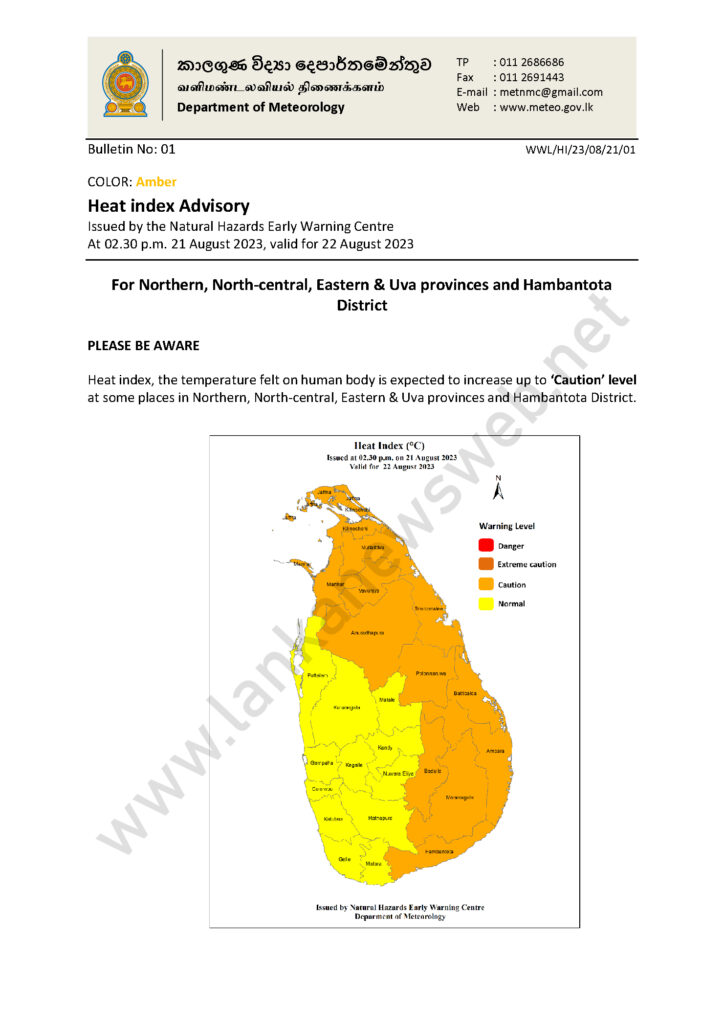
Colombo (LNW): Several spells of light showers will occur in Western, Sabaragamuwa and North-western provinces and in Kandy, Nuwara-Eliya, Galle and Matara districts, and showers or thundershowers may occur at a few places in Uva and Eastern provinces during the evening or night, the Department of Meteorology said in its daily weather forecast today (09).

Fairly strong winds about 40 kmph can be expected at times in North-Central province, and in Puttalam, Hambantota and Trincomalee districts, it added.

Marine Weather:

Condition of Rain:
Showers or thundershowers will occur at a few places in the sea areas off the coast extending from Chilaw to Matara via Colombo and Galle.
Winds:
Winds will be south-westerly and speed will be (20-30) kmph. Wind speed may increase up to (40-50) kmph at times in the sea areas off the coast extending from Hambantota to Pottuvil.
State of Sea:
The sea areas off the coast extending from Hambantota to Pottuvil will be fairly rough at times. Temporarily strong gusty winds and very rough seas can be expected during thundershowers.

Netherlands to return 478 looted objects to Sri Lanka, Indonesia

0

By: Staff Writer

Colombo (LNW):The Dutch government is returning 478 objects looted during colonial times to Indonesia and Sri Lanka.

Following multiple claims from Indonesia, Sri Lanka and Nigeria, the Dutch Secretary of State for Culture and Media Gunay Uslu announced the decision Thursday to repatriate objects including the “Lombok treasure,” consisting of 335 objects from Lombok, Indonesia, the Pita Maha collection, a key collection of modern art from Bali and the 18th-century Cannon of Kandy, a ceremonial weapon from Sri Lanka made of bronze, silver and gold and inlaid with rubies.

“This is a historic moment,” Uslu said in a press statement. “It’s the first time we’re following recommendations… to give back objects that should never have been brought to the Netherlands. But more than anything, it’s a moment to look to the future. We’re not only returning objects; we’re also embarking on a period of closer cooperation with Indonesia and Sri Lanka in areas like collection research, presentation and exchanges between museums.”

In 2020, a Dutch Council for Culture report produced by a committee chaired by human rights lawyer Lilian Gonçalves-Ho Kang You recommended that the country should “unconditionally” return objects it was reasonably sure were lost involuntarily by countries under its colonial authority.

Many of the objects to be returned are in the National Museum of World Cultures. Six other colonial artifacts claimed by Sri Lanka are currently in the collection of the Rijksmuseum, the Netherlands’ national museum of arts and history; this is the first repatriation of such artifacts from the museum following provenance research that began in 2017. The Cannon of Kandy, for instance, was looted by troops from the Dutch East India Company during the 1765 siege and plunder of Kandy, and it was later gifted to William V, Prince of Orange.

Valika Smeulders, head of the Rijksmuseum’s department of history, told The Art Newspaper there has been a clear shift in perspective.

“I think the way that the museum world used to look at this debate in the 20th century was very much about the concern to preserve objects for generations to come, and obviously museums in Europe have the facilities to do that,” she said. “But what changed is our viewpoint: these objects are to tell the stories of our countries, of our shared history of peoples. So what we see now as our mission is to have the objects in the places where they are best able to tell the stories that are important.”

She dismissed concerns that the new policy would mean European museums losing collection highlights — which until recently played a role in considering restitution claims on Nazi-looted art in the Netherlands.

“I don’t really think that is going to happen, because I expect countries of provenance and museums here in Europe will have a discussion about which objects will go back, and not all of them will be,” Smeulders said. “But what we will gain, all of us, is more knowledge about these objects, how they came into our possession, their background, what stories are we able to tell. So in the end we’ll have an enrichment of what we do instead of empty galleries.”

The collection of objects repatriated to Indonesia will not include human remains of the “Java man,” which are displayed at the Naturalis Biodiversity Center in Leiden as some of the earliest specimens of the extinct early human, Homo erectus.

A spokesperson for the Dutch government told The Guardian Thursday that no decision regarding the “Java man” remains had been reached.

“Nothing has been declined, but some things take longer than others,” the spokesperson said.

Gert-Jan van den Bergh, a specialist in art law at the law firm Bergh Stoop & Sanders, told The Art Newspaper that the repatriation effort was “an important first step, but just a first step.”

“Don’t forget, we have 300,000 colonial objects that are the property of the central state in the Netherlands alone,” Van den Bergh said, adding that there should be more scrutiny of privately-owned colonial objects as well, including at major auction houses.

A ceremonial handover of objects to the National Museum of Indonesia in Jakarta will take place at the Museum Volkenkunde Leiden on July 10.

COPA unveils Zoological Gardens irregular purchasing of birds at high prices

0

By: Staff Writer

Colombo (LNW): Fears of revenue loss have led Sri Lanka’s key zoological gardens to consider selling and releasing animals to downsize animal population to a manageable level, a top Zoological Department official said, amid the island nation’s worsening economic conditions.

“There are excess population of certain animals in the zoos including deers. And we are discussing with the Wildlife Department to see the possibilities to see whether we can release some of those animals back to the wild. In that way we can reduce some of the expense,” the official said.

“And also there are some domestic animals such as rabbits and birds. If there are excessive population in those animals, we will take actions to sell them. through this, we can reduce the number of animals and cost.”

Sri Lanka has around 5,000 animals under three zoological gardens in Dehiwala, Pinnawala, and Safari Park in Hambanthota.

The official said precautions are being taken to increase the income of the zoological gardens and reduce the costs at the moment including cultivating short term crops to add to the feed supply and purchasing plant based feed from third parties have also been considered.

The daily feed cost of Sri Lanka’s all zoological gardens is around 250,000 rupees.The official said other innovative options are also being considered to prevent the starvations at zoo.

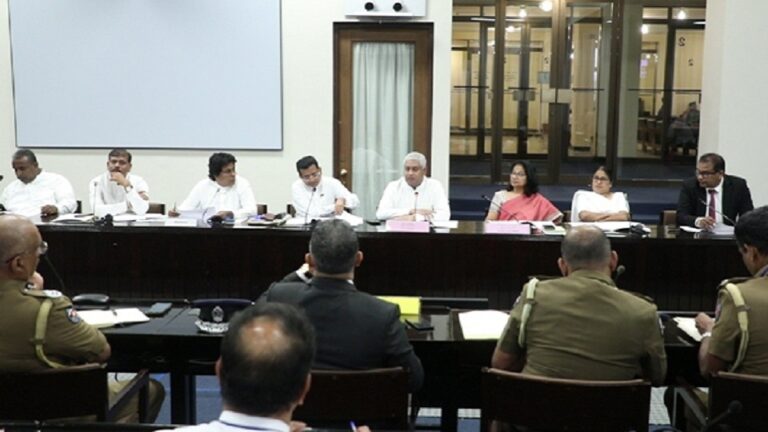
“The Committee on Public Accounts (COPA) has slammed the officials of Department of National Zoological Gardens for spending ‘outrageously high’ amounts of money to purchase certain species of birds.

During its recent meeting, the COPA revealed that between 2018 and 2020, the Zoological Gardens Department had purchased some species of birds for approximately Rs. 1.5 million despite the estimated amount being Rs. 50,000.

The difference between the estimated amount and the purchased amount was thus disclosed to be 3,000%, which the COPA deemed ‘problematic’.

In this procurement, due to the condition that the supplier should provide 32 types of birds, the COPA drew its attention to the loss of nearly Rs. 17 million as the birds had to be purchased at exorbitant rates.

The Committee emphasized the need for an urgent amendment to the Act as matters including the incorporation of the new zoological parks in to the Act.

COPA Chair directed to complete the work within the next month post coordination with the Compilation Department and submit a report on this before August 5th, 2023.

The need for proper classification of the income of the Zoological Department was pointed out at the Committee meeting held. Accordingly, the Auditor General instructed that the income from tickets and other activities should be presented separately.

As it is observed that there is no proper program for the conservation of endangered animals, the Committee Chair informed that the Ministry of Wildlife and Forest Resources Conservation, the Ministry of Environment, the Department of Wildlife Conservation and the Department of National Zoological Gardens should jointly appoint a committee and prepare a program.

The need to regularly update the information on endangered animals in the country as per the IUCN Red Data Book was also pointed out. Accordingly, it was emphasized that a comprehensive national survey should be conducted in this regard.

Workers’ remittances regain momentum in first half of 2023

0

By: Staff Writer

Colombo (LNW):Hundreds of thousands of people are leaving Sri Lanka not just to better themselves but out of sheer necessity as the state of the economy is so bad that every day many youths are seen in long queues forming outside the Department of Immigration in Colombo to seek greener pastures.

The Sri Lankan government, hell bent on increasing remittances as a source of foreign currency, is fueling this growing exodus.

It has lowered the minimum age at which at women can migrate for work from 25 to 21. It has relaxed the age guidelines so that children as young as 2 years old can be left behind to be looked after by relatives or carers.

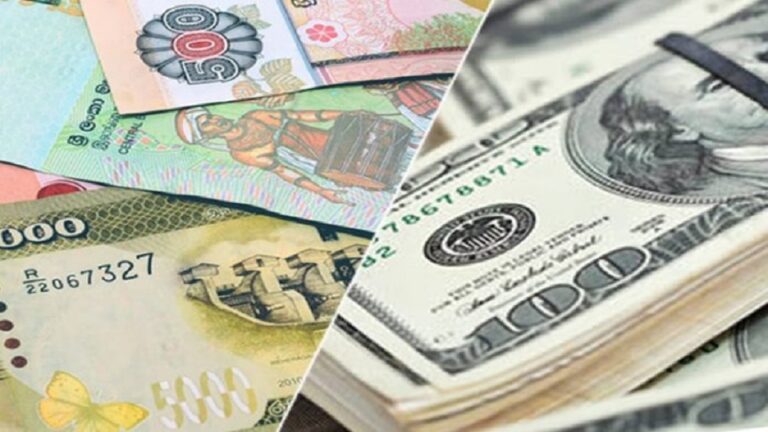
Under this set up Sri Lanka’s workers’ remittances in the month of June 2023 were recorded at US$ 475.7 million, according to the latest figures from the Central Bank of Sri Lanka (CBSL).

Accordingly, the cumulative figure for the first six months of the year (Jan – June 2023) is USD 2,822.6 million, which is an increase of 75.3% from the corresponding period of the previous year.

Workers’ remittances have been a key pillar of Sri Lanka’s foreign currency earnings providing a substantial cushion against the widening trade deficit and thereby enhancing the external sector resilience of the country.

Sri Lanka Foreign worker remittances was recorded as US$ 480 million in May 2023, Minister of Labour and Foreign Employment Manusha Nanayakkara said.

With the May figures, total value of remittances recorded for the year 2023 was recorded as US$ 2.347 Bn compared to US$ 1.335 Bn received in 2022 during the same period.

The Minister further said that a further US$ 150 million is required monthly as remittance to reach the pre-crisis levels. He further said that the government is working towards making Sri Lanka a high skill export hub.

The Bureau of Foreign Employment said more than 200,000 people had left for jobs abroad – compared last year with 120,000 for the whole of 2021 – many of them following the well-worn path to the Middle East.

Host countries are poised to take advantage of Sri Lanka’s economic crisis by lifting their migrant intakes. Saudi Arabia recently announced it would lift its intake of skilled Sri Lankan workers to 400,000 from the current 180,000.

Now Malaysia has said it is ready to welcome Sri Lankan workers. Even universities in Japan and South Korea have got in on the act by offering incentives to bright young Sri Lankan students.

The talk of a brain drain is now a reality. The Association of Government Medical Officers sounded the alarm by announcing that 500 doctors had left the country in 2022, some without due notice, leaving huge gaps in the health and hospital system.

CB governor staunch defender of interest rate hike says rate cuts needed for economic revival

0

By: Staff Writer

Colombo (LNW): Sri Lanka’s Central Bank Governor Nandalala Weerasinghe has reversed the previous monetary policy stance of maintaining policy interest rate to tame the ever increasing inflation with its declining trend at percent.

In early this year, Despite the increase in rates, the central bank expected market rates to continue to reduce, while, on the currency front, the country expected to gradually move towards a market-driven exchange rate regime, Weerasinghe added.

Sri Lanka has to restructure its debt before IMF disbursements can begin. As part of that process it has increased interest rates, taxes, and electricity prices, among other measures, generating protests from citizens who were already struggling to make ends meet.

Nandalal Weerasinghe, governor of the Central Bank of Sri Lanka noted that that there will be more rate cuts to come, even after the central bank lowered its policy rate for a second consecutive month from 12% to 11% on Thursday.

Asked if additional rate cuts will be needed, the governor answered: “Of course.” He pointed to falling inflation rates in the Sri Lankan economy.

“We should need further reduction in interest rates on the basis of forward-looking inflation, forward-looking output gap. This shows we made the right decision,” Weerasinghe said.

Sri Lanka negotiated a nearly $3 billion bailout from the International Monetary Fund last year, after thousands of protesters drove out the president from power, raiding his official residence and office on outrage over the government’s economic mismanagement.

Stocks listed in its capital Colombo jumped earlier in the week after parliament approved a domestic debt restructuring plan last weekend.

Colombo’s CSE All Share Index jumped by about 8% this week after parliament passed the plan required for the IMF’s bailout package.

Sri Lanka’s total debt has exceeded $83 billion, the Associated Press reported, including foreign debt of $41.5 billion and $42.1 billion of domestic debt.

Prices in Sri Lanka rose 12% in June, the latest government data showed – a steep decline from the recent peak inflation rate of nearly 70% seen in September last year.

The central bank governor was optimistic about the economy’s path forward. He predicted inflation could fall to single-digit figures and the economy could turn from contraction to growth by next year.

“If you look at the future, forward-looking inflation, we see very clearly, end-of-July inflation will be 7% by single digit and by end of the year, [inflation] will be low single-digit,” he said

Weerasinghe said further policy support from the central bank could help economic revival in the nation.

“We hope that [rate cuts] can be some sort of support for the recovery for the second half of the year. And obviously for the next full year, we expect the country to bounce back to positive territory,” he said.

The Sri Lankan economy contracted by 11.5% year-on-year in the first quarter of 2023, gross domestic product figures released last month showed.The economy’s GDP has stayed in negative territory since the first quarter of 2022.