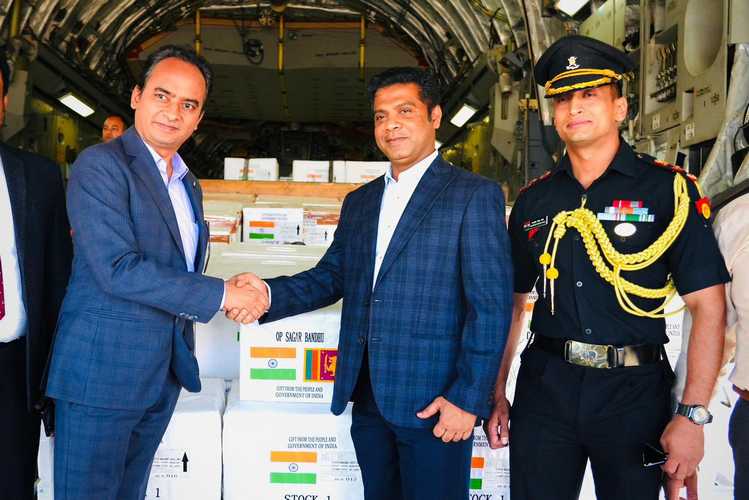
December 15, Colombo (LNW): The Government of India has provided a fresh consignment of humanitarian supplies to Sri Lanka, comprising essential medicines and dry food items, as part of ongoing support to the country.
The shipment, which includes 17 types of critical pharmaceuticals along with more than 14,200 kilogrammes of dry rations, was formally handed over at Bandaranaike International Airport. Indian Deputy High Commissioner Dr Satyanjal Pandey presented the supplies to Sri Lanka’s Minister of Health, Nalinda Jayatissa.
Officials said the assistance was arranged in response to a request from the Sri Lankan Health Ministry and is expected to strengthen healthcare services and support vulnerable communities during the current recovery period.
India Extends Medical and Food Assistance to Sri Lanka
Prime Minister Emphasises Values-Based Education at National Student Recognition Event
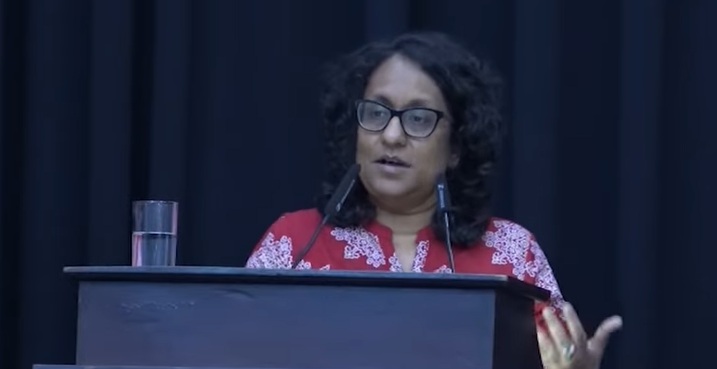
December 15, Colombo (LNW): Prime Minister Dr Harini Amarasuriya has said the Government is committed to shaping a generation that is socially responsible, environmentally conscious and deeply rooted in democratic values.
She made these remarks while speaking at a ceremony held at Temple Trees to mark the ninth phase of a nationwide initiative that honours high-achieving GCE Advanced Level students. The programme is conducted through the Presidential Fund and aims to recognise academic excellence across the island.
Addressing the gathering, the Prime Minister described the Presidential Fund as a public trust, noting that the Government is working to ensure it is widely understood and experienced as a fund that genuinely serves the people.
She stressed that investments in education and youth development are central to national progress. The objective, she said, is not only academic success but the cultivation of individuals who show leadership, act with compassion, value collective responsibility and actively protect the environment, while respecting democratic principles.
According to the Prime Minister, building such human capital is essential for the country to move forward with resilience and unity in an increasingly complex world.
Cyclone Ditwah Death Toll Rises to 644: Recovery Efforts Continue
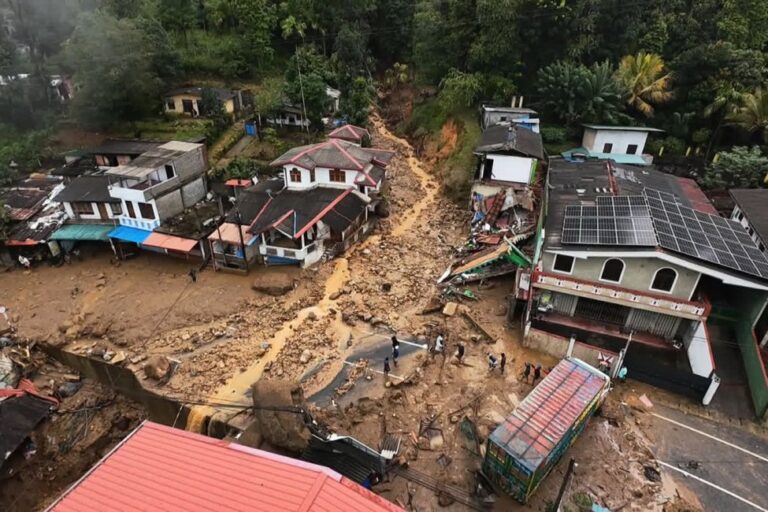
December 15, Colombo (LNW): The number of fatalities associated with Cyclone Ditwah has continued to rise more than two weeks after the storm struck Sri Lanka, according to the latest update issued by the Disaster Management Centre.
The DMC confirmed that 644 deaths have now been linked to the severe weather, while 183 people are still reported missing as search operations and assessments proceed in affected areas.
Kandy District has recorded the highest number of fatalities, with 237 deaths attributed to the cyclone and its aftermath. Nuwara Eliya and Badulla districts have also been heavily impacted, reporting 89 and 88 deaths respectively.
The extreme weather has affected all 25 districts across the country, disrupting the lives of nearly 1.35 million people from more than 385,000 families. At present, over 70,000 individuals representing 22,638 families remain in 766 temporary relief centres.
Housing damage remains extensive, with 6,163 homes completely destroyed and a further 112,171 suffering partial damage. Authorities say relief, resettlement and reconstruction efforts are ongoing, as communities continue to grapple with the long-term consequences of the disaster.
Schools to Reopen Nationwide After Cyclone Disruptions
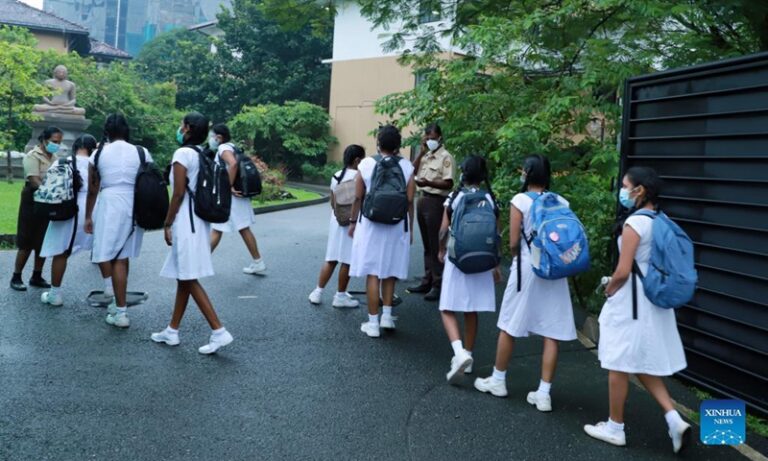
December 15, Colombo (LNW): Schools closed in the wake of Cyclone Ditwah are set to reopen across the country tomorrow (16), marking a key step towards restoring normalcy in the education sector.
The Ministry of Education has instructed school principals, teaching staff and non-academic employees to report today to carry out essential preparations ahead of the reopening.
However, the Ministry confirmed that 147 schools which sustained severe damage will remain closed until further notice, as repairs and safety assessments continue.
In consideration of families affected by the disaster, authorities have announced a flexible approach to school uniforms for both students and staff in impacted areas. This temporary measure aims to ease the burden on households still recovering from losses.
To support students returning to school, the Sri Lanka Transport Board has extended travel concessions, allowing schoolchildren to use their November season tickets throughout the current month. Deputy Minister of Transport and Highways Prasanna Gunasena said the facility can be accessed by simply presenting the previous month’s ticket.
In a show of solidarity, Deputy Minister of Labour Mahinda Jayasinghe revealed that teachers have agreed to contribute one day’s salary in January to a fund dedicated to restoring education facilities and resuming disrupted academic activities.
Showery conditions influenced by easterly wave expected to enhance (Dec 15)
December 15, Colombo (LNW): Under the influence of an Easterly wave, showery conditions are expected to enhance to some extent over the island from tomorrow (16), the Department of Meteorology said today (15).
Several spells of showers will occur in Northern, North-Central, Eastern, Uva and Central provinces.
Showers or thundershowers may occur at several places in the other areas of the island after 1.00 p.m.
Fairly strong winds of about (30-40) kmph can be expected at times over Eastern slopes of the central hills, Northern, North-central and North-western provinces and in Trincomalee, Hambantota and Monaragala districts.
Misty conditions can be expected at some places in Sabaragamuwa, Central provinces and in Galle and Matara districts during the early hours of the morning.
The general public is kindly requested to take adequate precautions to minimise damages caused by temporary localised strong winds and lightning during thundershowers.
Marine Weather:
Condition of Rain:
Showers will occur at several places in the sea areas off the coast extending from Kankasanthurai to Pottuvil via Trincomalee. Showers or thundershowers may occur at a few places in the other sea areas around the island during the evening or night.
Winds:
Winds will be north-easterly. Wind speed will be (30-40) kmph. Wind speed can increase up to (50-55) kmph at times in the sea areas off the coast extending from Kaluthara to Trincomalee via Puttalam and Kankasanthurai and from Hambantota to Pottuvil.
State of Sea:
The sea areas off the coast extending from Kalutara to Trincomalee via Puttalam and Kankasanthurai and from Hambantota to Pottuvil will be rough at times. The other sea areas around the island will be moderate.
Temporarily strong gusty winds and very rough seas can be expected during thundershowers.
CEB Losses Rekindle Tariff Tensions under IMF Watch hitting consumers
By: Staff Writer
December 14, Colombo (LNW): Sri Lanka’s power sector has once again come under strain, with the Ceylon Electricity Board’s (CEB) latest financial results revealing a sharp deterioration that is reigniting concerns over electricity tariffs, IMF benchmarks, and the burden placed on consumers.
Interim accounts for the nine months ended September 2025 show the CEB sliding into a Rs. 9 billion loss, a dramatic reversal from the Rs. 152 billion profit recorded in the same period last year. The September quarter alone saw profit after tax collapse by 98% year-on-year to just Rs. 466 million, underscoring how rapidly margins have eroded.
Revenue for the nine-month period fell by 30% to Rs. 321.7 billion, largely due to tariff reductions, while costs remained stubbornly high. Cost of sales edged up to Rs. 322.9 billion, pushing the utility into a gross loss. Administrative expenses climbed 20%, further squeezing operating performance despite lower finance costs.
Quarterly data shows a steady decline throughout 2025. A Rs. 16.9 billion loss in the March quarter, followed by sharply weakened profits in June, culminated in near-breakeven results by September. While hydropower conditions helped moderate generation costs, they were insufficient to offset the revenue shock caused by aggressive tariff cuts.
Two revisions in 2025 a 20% reduction in January and a 15% increase in June — have left the tariff framework under scrutiny. According to the Finance Ministry, average revenue per unit sold dropped to Rs. 24.64 per kWh, compared to nearly Rs. 42 a year earlier, even as electricity demand rose modestly. This gap has turned the CEB into the largest loss-making state-owned enterprise in the first half of the year.
These developments carry direct implications for Sri Lanka’s IMF Extended Fund Facility. The IMF has repeatedly stressed that cost-recovery tariffs and energy-sector reforms are critical to preventing a return to taxpayer-funded losses. Mission Chief Evan Papageorgiou has warned that predictable tariff-setting is essential for long-term price stability and fiscal discipline, with tariff methodology revisions set as a key benchmark.
However, energy analysts argue that the headline losses mask deeper structural issues. Analyst Dr. Vidhura Ralapanawe points to inconsistencies in tariff filings, delayed clawback adjustments, and accounting mismatches particularly around the Bulk Supply Transaction Account that have distorted both profits in 2024 and losses in 2025. Political intervention in tariff decisions, he says, has further weakened transparency and investor confidence.
For consumers, the dilemma is stark. While lower tariffs offered short-term relief amid a cost-of-living crisis, the CEB’s renewed financial stress raises the risk of future sharp hikes, undermining the very predictability the IMF framework seeks to ensure. With retained losses exceeding Rs. 361 billion and restructuring underway under the Electricity Amendment Act, the utility’s outlook remains fragile.
Unless governance, data accuracy, and tariff discipline improve alongside unbundling reforms, Sri Lanka risks repeating a cycle where temporary consumer relief today translates into deeper financial and tariff shocks tomorrow.
When Disaster Recovery Meets Corporate Power
By: Staff Writer
December 14, Colombo (LNW): The “Rebuilding Sri Lanka” Fund, launched in the wake of Cyclone Ditwah, has been promoted by the government as a bold public private partnership to accelerate national recovery. Yet for many civil society groups, it represents something far more troubling: the corporatisation of disaster governance.
The fund, now holding nearly Rs. 1.9 billion, is overseen by a powerful management committee blending senior state officials with some of the country’s most influential corporate leaders. While business participation in fundraising is not unusual during crises, critics argue that granting sweeping authority over national reconstruction to corporate executives crosses a critical line.
A prominent civil society organisation has issued a sharply worded warning, arguing that private-sector committee members are legally and professionally obligated to maximise shareholder wealth, creating what it calls an “imminent and unavoidable conflict of interest.” Unless these individuals step away from their corporate roles, the organisation says, public trust in recovery decisions will remain compromised.
The concern is not theoretical. Reconstruction inevitably involves large-scale infrastructure, procurement, and commercial projects. Roads, ports, housing, and irrigation systems translate into lucrative contracts. If companies linked to committee members stand to benefit directly or indirectly the risk of preferential tenders and misuse of state compensation funds becomes acute.
Equally contentious is the lack of inclusivity. The committee is entirely male and overwhelmingly Colombo-centric. There is no representation from women, disaster-affected communities, environmental specialists, agricultural experts, or grassroots humanitarian actors who work directly with victims.
This exclusion contradicts both the government’s stated commitment to citizen participation and the principles of the Sendai Framework for Disaster Risk Reduction, which Sri Lanka has formally endorsed. That framework emphasises inclusive, community-based recovery yet the current structure centralises decision-making among a narrow elite.
Supporters of the fund argue that private-sector expertise brings efficiency, credibility, and access to international donors. In a fiscally constrained state, they say, such partnerships are unavoidable.
But critics respond that efficiency without accountability is a dangerous bargain. They argue that disaster recovery must prioritise equity, gender justice, environmental sustainability, and social cohesion not speed alone.
The fear, as one activist put it, is that Sri Lanka is being transformed into “Sri Lanka Inc.,” where national trauma becomes an opportunity for elite-driven reconstruction rather than people-centred recovery.
As rebuilding moves from emergency relief to long-term development, the unresolved questions surrounding governance, conflicts of interest, and representation may prove just as consequential as the cyclone itself.
Strategic Promises, Trade Silence: Sri Lanka Awaits US Clarity
By: Staff Writer
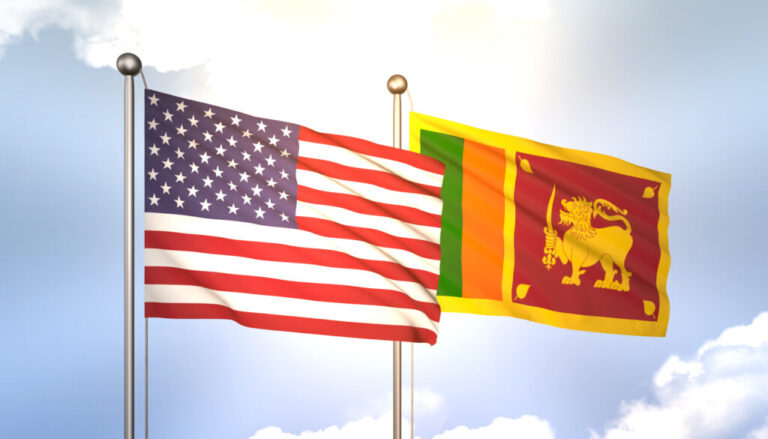
December 14, Colombo (LNW): The United States’ stated priorities for Sri Lanka maritime security, economic reform, and countering China’s influence were laid out clearly by President Donald Trump’s nominee for ambassador, Eric Meyer.
Eric Meyer’s testimony before the US Senate painted Sri Lanka as a strategic partner rather than a fragile post-crisis state. Yet beneath the language of partnership lies an imbalance: Washington’s security-driven agenda appears far clearer than its economic commitments, particularly on trade.
The nominee’s focus on maritime security reflects Washington’s broader Indo-Pacific calculus. With US Navy vessels and global energy shipments routinely passing Sri Lanka’s shores, the island is increasingly viewed as a security asset. Defence cooperation, port security, and maritime surveillance were presented as mutually beneficial, positioning Sri Lanka as an emerging regional security partner rather than merely a recipient of aid.
Economic recovery was addressed, but largely through the lens of reform discipline. Meyer tied Sri Lanka’s independence directly to IMF-backed reforms, arguing that fiscal stability and structural change would naturally attract US investors. This framing places responsibility squarely on Colombo while offering limited insight into what Washington is prepared to deliver in return.
The silence surrounding tariff relief is particularly striking. For Sri Lanka, access to the US market especially for apparel remains a cornerstone of export earnings. Reducing tariffs from 40 percent to 20 percent could significantly boost competitiveness, employment, and foreign exchange inflows. Yet despite being central to Sri Lanka’s recovery narrative, tariffs did not feature in the hearing.
China’s role dominated the political undertones. US lawmakers openly criticised Beijing’s involvement in Sri Lanka’s port infrastructure, describing it as a warning to other nations. Meyer stopped short of confrontational language but stressed sovereignty and transparency. The implicit message was clear: Sri Lanka is expected to lean away from China. However, without tangible trade or financial incentives, such a shift becomes economically risky.
Humanitarian assistance, including cyclone relief, showcased US soft power and was widely welcomed. Still, emergency aid and strategic cooperation do not substitute for sustained economic engagement. Sri Lanka’s policymakers face a delicate balancing act meeting IMF targets, managing debt, and navigating great-power competition while exporters wait for signals that trade barriers will ease.
Ultimately, Meyer’s testimony reflects a US approach that prioritises security alignment and reform compliance over immediate economic relief. For Sri Lanka, the challenge lies in translating strategic importance into concrete economic gains. Until Washington addresses tariffs directly, the promise of a “strong and enduring partnership” will remain incomplete.
Dollar Bond Fund Gains, But Regulatory Questions Persist

By: Staff Writer
December 14, Colombo (LNW): Sri Lanka’s once-distressed dollar bond market is showing renewed signs of life, but the resurgence is also reviving scrutiny over the legality and regulatory boundaries governing dollar-denominated investment funds.
At the centre of attention is the Ceylon Dollar Bond Fund (CDBF), which has delivered a robust 12.3 percent return in U.S. dollar terms year-to-date by mid-September 2025, riding on the recovery of restructured sovereign debt.
Managed by Ceylon Asset Management (CAM) and supported by Deutsche Bank as trustee and custodian, the fund’s performance reflects a gradual restoration of investor confidence following Sri Lanka’s successful debt restructuring in December 2024.
A senior official at Sri Lanka Insurance Corporation (SLIC), a key stakeholder in CAM, said the fund’s gains signal cautious optimism toward Sri Lanka’s sovereign instruments after years of default-induced pessimism.
CDBF is an open-ended unit trust regulated by the Securities and Exchange Commission of Sri Lanka (SEC). Its mandate limits investments to Sri Lankan International Sovereign Bonds (ISBs) and select dollar-denominated securities backed by bank guarantees and listed on international exchanges.
The structure offers investors protection from rupee depreciation while enabling repatriation of capital and income in foreign currency features that have made the fund particularly attractive to overseas Sri Lankans amid aggressive digital marketing campaigns.
CAM attributes the fund’s rally to improving macroeconomic fundamentals. The rebuilding of foreign reserves to around US$6.2 billion, moderating inflation, and relative currency stability have underpinned renewed interest in Sri Lanka’s restructured debt. Yield compression in sovereign bonds—from roughly 15 percent in early 2025 to near 10 percent by October—has further reinforced perceptions of reduced default risk.
Still alongside optimism, regulatory caution remains firm. The Central Bank of Sri Lanka (CBSL) has reiterated that while foreign-currency funds can help attract capital, it does not endorse individual investment products. Crucially, the central bank has clarified that funds held in Personal and Business Foreign Currency Accounts cannot be directly invested in CDBF, and banks have been instructed to enforce this restriction strictly.
This clarification has raised questions among investors over compliance and marketing practices, particularly as the fund targets diaspora and regional investors. Regulators warn that strong returns should not obscure inherent risks, including global interest rate movements, geopolitical shocks, and renewed market volatility.
Analysts note additional upside from new GDP-linked Macro Linked Bonds, which could deliver attractive returns if economic growth exceeds projections. However, authorities stress that systemic stability and investor protection take precedence over performance narratives.
For many market participants, CDBF has become a symbol of Sri Lanka’s tentative return to financial credibility. Still, its success underscores the need for clear regulatory guardrails to ensure that renewed confidence does not outpace compliance in a fragile post-crisis environment.
UNFORGIVABLE SHARP BUSINESS PRACTICE CALLS FOR IMMEDIATE ACTION & FORENSIC ANALYSIS ON INSURER, PERPETRATORS, AND GOVT. ANALYST

FARAZ SHAUKETALY
The recent investigation by CIABOC – Bribery Commission – into alleged fraudulent activities by an insurance company has triggered a deep sense of disgust at what is alleged.
This disgust is heightened due to the inherent trust policyholders have in their chosen insurance company. When a motorist takes out a motor insurance policy, trust and integrity play a significant role. The motorist trusts the insurance company to provide coverage and financial protection in case of accidents or damages. They rely on the insurer to handle claims fairly and efficiently.
The insurance company is expected to act with integrity, providing clear policy terms, transparent claims processes, and fair settlements.
In Sri Lanka, insurance companies are regulated by the Insurance Regulatory Commission of Sri Lanka (IRCSL), which aims to promote fair practices and protect policyholders’ interests.
The allegation is that compromised Government Analyst reports were used to deny claims made by policyholders.
It is absolutely essential that a full forensic audit be engaged in to fully investigate the insurer, its officers, the role of the insurance regulator IRCSL, and other drivers of this significant fraudulent activity which has brought the industry into disrepute – costing policyholders huge sums of monies along the way.
It goes without saying that the Insurer in question must be held accountable and be forced to pay up on all claims that have been compromised by the purported use of compromised Analysts’ reports.
The alleged actions of this insurer – setup by a commercial tycoon of yesteryear, Harry Jayawardena – honestly, beggars’ belief.
It is alleged that the company sought to financially benefit and inter alia deliver outstanding results. Except of course that they allegedly did so by inducing an officer of the state – a government analyst – to provide blatantly false analyst reports to unlawfully gain advantage and intentionally defraud the policyholders.
A robust investigation and a trial thereafter may reveal that on these two counts alone, those responsible must be given the maximum custodial sentences provided under the law.
Corporates cannot simply blame it on the paid help. It too must be made to pay significant reparations, be given a compulsory suspension, be subject to a forensic audit of claims rejected using the compromised Analysts’ reports and a refund of premium plus compensation of several multiples of the original claim. If such action leads to the winding up of the company – then so be it and let the controlling shareholder pay up.
In all of these we must also ask what pro-active role the regulator has been playing or not. This is why we ask for a full forensic analysis of this alleged major fraud, major departure of due process.
It appears that even in death the questionable legacy of Harry Jayawardena continues to haunt and adversely impact the people of Sri Lanka. Harry had a penchant for being the lead editor of calling people names often without basis. We wonder how he would brand the implementer of this dastardly and heinous act? Especially as it was Harry who co-founded the company along with the man now remanded.
The crimes and or questionable acts raised here are all allegations. Collectively we look forward to a comprehensive and robust investigation, including a full forensic analysis in which not only ‘small fish’ will be in the net and held accountable but the ‘sharks and whales will also face the full force of the law and corporate sanctions and penalties also be levied. The range of the crime – if found guilty – is comprehensive. Were personal taxes paid, were all and any assets gained declared to the IRD. In essence with this government of change committed to accountability and upholding the law, we can but look forward to an unchallenged, definitive legal conclusion.