Home Blog Page 159

Atmospheric conditions favourable for evening thundershowers (Sep 07)

0

September 07, Colombo (LNW): Atmospheric conditions are getting favourable for evening thundershowers in the Northern, North-Central, Eastern and Uva provinces during the next few days.

Showers or thundershowers may occur at several places in Northern, North-Central, Eastern and Uva provinces after 2.00 p.m. Fairly heavy falls above 50 mm are likely at some places.

A few showers may occur in Western and Sabaragamuwa provinces and in Galle, Matara, Kandy, and Nuwara-Eliya districts.

The sun is going to be directly over the latitudes of Sri Lanka during August 28 to September 07 due to its apparent southward relative motion. The nearest places of Sri Lanka over which the sun is overhead today (07) are Mirissa, Kamburugamuwa, Matara, Dondra, Gandara and Talalla about 12.08 noon.

Marine Weather:

Condition of Rain:
Few showers may occur in the sea areas off the coast extending from Colombo to Matara via Galle.

Winds:
Winds will be westerly to south-westerly and wind speed will be (30-40) kmph.

Wind speed can increase up to (50-55) kmph at times in the sea areas off the coast extending from Matara to Pottuvil via Hambantota.

State of Sea:
The sea areas off the coast extending from Matara to Pottuvil via Hambantota will be rough at times.


Ranil and AKD: A Tale of Two Presidencies, Courtesy of the Constitution

0

By Adolf

Sri Lanka’s politics has always been shaped by its Constitution, but rarely has that been more evident than in the rise of its two most recent presidents. Both Ranil Wickremesinghe and Anura Kumara Dissanayake ascended to the highest office not through sweeping electoral mandates but through the workings of constitutional mechanics. That fact alone is a reminder of the fragility of political legitimacy in today’s Sri Lanka.

Ranil Wickremesinghe assumed the presidency in July 2022 at the lowest point in the nation’s modern history. The economy had collapsed. Foreign reserves were nearly depleted. People were queueing for fuel, gas, and food. Electricity cuts were paralyzing daily life. Public anger spilled into the streets, forcing a sitting president to flee. At that point, Parliament turned to Ranil — a man without a significant parliamentary group but with decades of political and administrative experience.What followed was, by any measure, a remarkable rescue operation. Ranil navigated debt negotiations with international creditors, re-established ties with the IMF, restored basic supplies, stabilized the currency, and prevented the complete breakdown of state institutions. For all his flaws — and there are many — it is undeniable that Ranil delivered at the very worst point in our history. His presidency may not have carried the strength of a popular mandate, but it carried the weight of responsibility. Anura Kumara Dissanayake, by contrast, comes to power at a very different moment. His election as president, like Ranil’s, was not the result of a landslide victory by the people but the product of the constitutional process. He enjoys a wave of expectation, particularly from younger generations and those disillusioned by decades of failed leadership. Yet, unlike Ranil, he has not yet had to prove himself in the crucible of crisis.

Anura Presidency

This is why his approach matters. Instead of focusing on reforms, institution-building, and credible governance, Anura has so far leaned heavily on rhetoric and threats directed at political opponents. Such a strategy may work in rallies, but it is dangerous in governance. Politics built on vengeance will not only distract from the urgent reforms the country needs, but could also backfire. By targeting rivals, Anura runs the risk of drawing attention to the darker chapters of his own movement’s past.

The Janatha Vimukthi Peramuna (JVP) is not without baggage. Its insurrections in the 1970s and 1980s left scars on Sri Lankan society — from killings and disappearances to widespread fear. While Anura represents a newer generation of leadership, the shadow of those atrocities has never fully disappeared. If his presidency becomes about settling scores, he could end up reawakening painful memories that undermine both his credibility and his ability to unify the country.

Governing

There are also immediate governance issues that cannot be swept aside. Allegations about the 300 containers, questionable land acquisitions, the misuse of vehicles by senior staff, and controversial imports of essentials such as potatoes and onions are serious. For a leader who campaigned on a platform of transparency, anti-corruption, and accountability, these issues are tests. They will determine whether his government is genuinely different from those that came before or just another administration weighed down by scandal. Ranil Wickremesinghe now stands at the twilight of a long political career. Whatever his shortcomings, he has been a central figure in Sri Lankan politics for over four decades. If he chooses to retire gracefully, offer guidance to the next generation, and play the role of elder statesman, he can secure a legacy of resilience and leadership during crisis. Clinging to politics , on the other hand, will only diminish his contributions. Anura Kumara Dissanayake, in turn, has an opportunity — and a warning. He has the chance to show that his brand of politics can move beyond confrontation and vengeance to constructive leadership. But he must also recognize the dangers of overreach. Spending more time talking and threatening opponents, rather than governing and delivering, will not only stall progress but may expose him and his party to renewed scrutiny over their past. Sri Lanka is at a crossroads. The Constitution may have been the vehicle through which both Ranil and Anura ascended to power, but constitutions do not bestow legitimacy. That must come from conduct in office, from humility, integrity, and delivery. Ranil has already proven that he could steady the ship when it was on the verge of sinking. Anura, with the benefit of calmer seas, must now prove that he can steer it toward a better future. The people of this country have heard enough promises. They want action. Ranil has already written his chapter. He should work  with the next generation like Sajith Premadasa and Namal Rajapaksa. It is now Anura’s turn to decide whether his will be a story of transformation and decency — or just another missed opportunity in the long, weary history of Sri Lankan politics.

Cashew Industry Stumbles amid Policy Hurdles and Supply Shortfalls

0

Sri Lanka’s ambitions to transform cashew into a major cash crop for both domestic use and export markets are facing severe challenges, with industry stakeholders blaming bureaucratic hurdles, policy ambiguities, and weak production for stunting growth.

Cashew has long been a household favorite among Sri Lankans and is increasingly popular with foreign tourists, especially in hotels and resorts where it is served as a premium snack. With tourist arrivals on the rise in 2025, demand for cashew has surged.

 However, the country’s annual output remains far below requirements. Officials at the Ministry of Plantation Industries confirmed that current production stands at just 12,500 tonnes, falling well short of national demand, which is estimated at nearly double that figure.

To bridge this gap, the previous government introduced a controlled cashew importation system that allowed imports only between December and April, the off-season for domestic harvests. A multi-ministerial committee monitored this window to protect local farmers.

Yet industry insiders now warn that the mechanism has collapsed, leaving a vacuum in policy and creating uncertainty for both producers and importers.

The situation has been further complicated by the introduction of the National Imports Tariff Guide 2025 (NITG-2025), which restructured Harmonised System (HS) codes and taxes.

Traders complain that the new framework has made import procedures cumbersome, resulting in shipment delays, order cancellations, and rising costs. Each permit now carries only a three-month validity, making them ineffective if approvals are delayed a common occurrence under the new system.

In addition, exporters point to new requirements such as foreign laboratory certification and extended customs verification processes, which they say have crippled efficiency. “By the time approvals are completed, the market demand has shifted, and shipments are either lost or arrive too late,” one exporter lamented.

The Sri Lanka Cashew Corporation (SLCC), which oversees balancing imports with domestic supply, faces its own hurdles. Sudden weather swings often reduce yields, forcing reliance on imports. However, approval bottlenecks prevent timely replenishment of stocks, leading to shortages and price spikes in the local market.

Beyond regulatory snags, the industry struggles with outdated processing facilities, low levels of mechanisation, and limited investment in modern farming techniques. Neighboring countries like India and Vietnam have developed cashew into billion-dollar export earners through mechanised processing, contract farming, and aggressive marketing areas where Sri Lanka lags significantly.

Analysts warn that unless swift reforms are made such as digitising import approvals, streamlining customs checks, and supporting farmers with improved technology—the industry could lose its potential to become a valuable export earner.

 For now, the cashew sector remains trapped between growing demand and systemic inefficiencies, a situation that risks turning a promising crop into a bitter harvest

Government Fast Tracks Reforms Targeting Corporate Transparency

0

The government is swiftly pushing new legislative reforms to overhaul the corporate registration and oversight system—part of a broader push to modernise corporate governance and align with global anti-financial crime norms.

Comprehensive Re-Registration to Renew Records

A centerpiece of the reform is a plan to re-register over 200,000 active companies, mandating that all must update and verify their information with the Registrar. This move is designed to bring months- or years-old company data up to date, enabling authorities to maintain more accurate and reliable corporate records.

New Beneficial Ownership Registry to Boost Disclosure

Another pillar of the reform agenda is the creation of a Beneficial Ownership Register. Under the proposed Companies (Amendment) Bill, businesses will be required to collect and disclose comprehensive personal details for anyone owning or controlling at least 10 percent of a company.

 This includes full name, birth details, nationality, addresses, and identification numbers. Companies must keep this register at their registered office for at least 10 years and submit updates within 14 working days of any change to the Registrar of Companies

Failure to complyor knowingly supplying false information—could trigger serious penalties, including fines and up to 10 years’ imprisonment

 Select informationsuch as names and extent of ownershipwill be accessible to the public upon request, while authorities like the Attorney-General, Financial Intelligence Unit, customs, revenue authorities, and others can access full details

While these reforms mark an alignment with Financial Action Task Force (FATF) standards and are part of meeting IMF benchmarks, non-governmental organisations have flagged concerns over exemptions.

 Specifically, offshore and overseas companies may be exempted from these disclosure rules raising fears that such loopholes could undermine transparency and accountability

.Offshore Registrations within Port City Soar

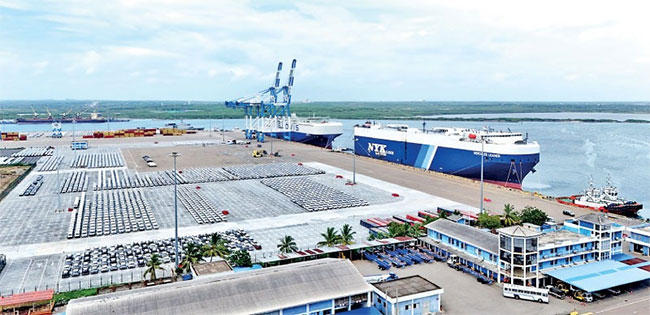
In contrast, the Port City offshore registration system remains fully operational and efficient amid ongoing digital hurdles at the national company registry. Governed under the Port City Economic Commission Act No. 11 of 2021, its process operates independently of the troubled eROC system

Companies can obtain “Authorised Person” (AP) status necessary for operating offshore in the Port City within just three working days, provided documentation is in order

 As of August 2024, over 100 companies spanning IT, finance, shipping, healthcare, tourism, real estate, and professional services had been registered as APs; 22 of those have also earned Business of Strategic Importance (BSI) designation, securing massive tax and investment incentives

Civil Society Calls for Digital and Legislative Overhaul

Public-interest groups are urging authorities to address long-standing weaknesses in national digital infrastructure calling for a fully functional e-registry system (eROC), swift passage of the new legislation, and full implementation of the beneficial ownership regime without exemptions. They argue these reforms are vital to restoring trust and enhancing resilience within the corporate governance framework.

Sri Lanka’s Duty-Free Car Permit System Faces Scrutiny 

0

Sri Lanka’s long-standing duty-free vehicle permit scheme, originally designed to reward senior public servants and reduce state costs on official transport, has come under fresh criticism after revelations that thousands of permits were issued despite a strict vehicle import ban.

Since 2020, the Finance Ministry has issued 25,508 duty-free permits to government employees, a senior official confirmed. These permits, which offer tax concessions of up to Rs. 3.6 million, were distributed even after the government suspended vehicle imports to conserve foreign exchange. However, recipients remain unable to use them, as no decision has been made to allow imports under the scheme.

Finance Ministry records reveal fluctuating distribution numbers over the years: 5,373 permits in 2020, 2,972 in 2021, 3,340 in 2022, 5,718 in 2023, 6,062 in 2024, and 2,043 so far in 2025. While the ministry insists the scheme remains suspended, questions are mounting over why such permits continued to be issued during a period of severe import restrictions.

Critics argue that the scheme has strayed far from its original purpose. Instead of serving as an incentive to retain skilled public servants and cut official vehicle costs, it has allegedly become a privilege for parliamentarians and senior officials. Public interest groups claim many permits have been sold or transferred to third parties for profit, effectively turning a state benefit into a tradable commodity.

The lack of transparency and accountability has only deepened public frustration. At a time when Sri Lanka is struggling to rebuild foreign reserves and manage external debt, issuing permits that could eventually trigger further foreign currency outflows is seen as poor fiscal management.

Activists stress that the government must urgently explain how it intends to manage the existing stock of permits. “This is not just a question of vehicle imports, but one of trust in how public resources are handled during economic crises,” one watchdog group observed.

The Finance Ministry is reportedly reviewing reforms to restore credibility to the system. Proposals under discussion include digitising the permit process, enforcing strict non-transfer rules, restricting eligibility to essential service roles, and introducing alternatives such as transport allowances or vehicle subsidies.

Analysts argue that a thorough audit and public disclosure of all permit holders is essential to ensure accountability. Without such measures, they warn, the system risks continuing as a loophole for privilege rather than a genuine incentive for long-serving public servants.

President’s Fund to Provide Rs. 1 Million Compensation for Ella–Wellawaya Bus Crash Victims

0

The President’s Fund has announced that Rs. 1 million will be granted as compensation to the families of those who lost their lives in the tragic bus accident on the Ella–Wellawaya main road last night (04), the President’s Media Division (PMD) confirmed.

The accident occurred at around 9:00 p.m. near the 24th kilometre post, when a bus carrying employees of the Tangalle Urban Council and their families, returning from a trip, veered off the road. The bus first collided with an oncoming SUV and then struck a metal barrier before plunging nearly 1,000 feet down a precipice.

Fifteen people, including Tangalle Urban Council Secretary T.W.K. Rupasena, 12 council employees, two children, and the bus driver, were killed in the tragedy.

Eighteen others, among them several children, sustained injuries and are currently receiving treatment at the Badulla Teaching Hospital.

District-Level Review Meeting Highlights Progress of Prajashakthi and Key Development Programmes

0

A district-level progress review meeting on major government development programmes, including the national Prajashakthi initiative, was held yesterday (04) at the Presidential Secretariat under the chairmanship of Secretary to the President Dr. Nandika Sanath Kumanayake, the President’s Media Division (PMD) announced.

Extensive discussions focused on the implementation of Prajashakthi at district level and its future direction. Officials emphasised that the programme should not be treated merely as another poverty alleviation scheme but as a transformative initiative aligned with the national vision of building a prosperous and inclusive Sri Lanka.

District Secretaries were informed that, going forward, all development projects must originate from village-level committees, ensuring that priority is given to actual community needs rather than budgetary convenience. Funding will be channelled through the relevant ministries, departments, provincial councils, and local authorities to maintain a cohesive approach to national objectives.

The meeting also noted that the private sector is expected to play an active role in the framework of rural development under Prajashakthi. Highlighting the significant responsibility of District Secretaries, Dr. Kumanayake urged them to bring forward innovative proposals to advance the initiative as a comprehensive national programme.

In addition, the review covered directives on the implementation of the Clean Sri Lanka initiative and progress of other key government efforts, including the Mid-Year Budget Programme, District Development Programmes, Rural Roads Development, Estate Community Infrastructure Development, Disaster-Resilient Housing for plantation areas, facilities for identified schools and sports schools, measures to mitigate human-elephant conflict, and initiatives for persons with disabilities.

Attention was also drawn to government programmes targeting healthcare, education, poverty reduction by 2030, and the decentralisation of the President’s Fund to improve accessibility and impact.

It was agreed that future progress reviews will incorporate inputs from both line ministries and District Secretaries to strengthen accountability and coordination.

Among those present were Secretary to the Ministry of Rural Development, Social Security and Community Empowerment Sampath Manthrinayake; Secretary to the Ministry of Public Administration, Home Affairs, Provincial Councils and Local Government S. Aloka Bandara; Senior Additional Secretaries to the President Kapila Janaka Bandara and Roshan Gamage; Legal Adviser to the President J.M. Wijebandara; Additional Secretaries to the President Eng. S.P.C. Sugeeshwara (Clean Sri Lanka Programme) and N. Wanasingha (Food Security and Policy); and Director General of the National Budget Department Jude Nilukshan.

Duchess of Kent Dies Peacefully at 92

0

Buckingham Palace has announced with “deep sorrow” the death of the Duchess of Kent at the age of 92. She passed away peacefully on Thursday night at Kensington Palace, surrounded by her family. Flags on royal residences, including Buckingham Palace, have been lowered to half-mast as the Royal Family enters a period of mourning.

Katharine, Duchess of Kent, the wife of Prince Edward, Duke of Kent and first cousin of the late Queen Elizabeth II, was the oldest member of the Royal Family. She will be remembered for her lifelong devotion to public service, her passion for music, and her enduring empathy for young people.

The King, Queen, and members of the Royal Family paid tribute, recalling her “life-long devotion to all the organisations with which she was associated, her passion for music and her empathy for young people.” Prime Minister Sir Keir Starmer praised her “compassion, dignity and human touch,” while tennis legend Martina Navratilova said the duchess had touched “millions of people around the globe in a positive way.”

A familiar figure at Wimbledon, the duchess became known for consoling athletes and presenting trophies — most memorably comforting Czech player Jana Novotna in 1993, and later handing her the winner’s trophy in 1998.

Born Katharine Worsley in Yorkshire, she married the Duke of Kent in 1961 at York Minster, with Princess Anne as a bridesmaid and Queen Elizabeth II among the congregation. In 1994, she became the first member of the Royal Family in more than 300 years to convert to Catholicism, describing it as a deeply personal decision.

Beyond royal duties, she carved out an individual path through music and social service. She supported numerous music charities, sang in the Bach Choir, and taught music anonymously in a Hull primary school, where pupils knew her simply as “Mrs Kent.” She later set up a charity to help disadvantaged young people access instruments and music education, saying: “Music has the power to give confidence and self-belief.”

The Duchess and Duke of Kent had three children, though one son was stillborn in 1977, an experience that left her struggling with “acute depression” at a time when mental health was little discussed. Her openness in later years brought attention to the issue.

Her funeral arrangements have not yet been announced, though it is expected to follow Catholic rites in line with her faith.

She is survived by her husband, the Duke of Kent, aged 89, and their two sons and daughter.

CAA Seizes Unsafe Sweets and Dates in Pettah Raid

0

Consumer Affairs Authority (CAA) officials have seized a stock of candy, chocolates, jelly products, and dates from a shop in Pettah after finding them unsuitable for consumption.

During the raid, carried out on a tip-off, officials discovered that the sweets had been imported without proper documentation or labelling and did not display expiry dates. Some products also lacked details of origin, while others had labels deliberately removed.

“ Nobody knows what is included in these products,” officials said, warning of the potential health risks.

Packetted dates deemed unfit for consumption were also confiscated. Legal action has been initiated against the vendor, the CAA confirmed.

PM Harini Amarasuriya Holds Talks with Italian Under Secretary Maria Tripodi at Temple Trees

0

Prime Minister Dr. Harini Amarasuriya met with Maria Tripodi, Under Secretary of State for Foreign Affairs and International Cooperation of Italy, on Thursday at Temple Trees for discussions aimed at strengthening bilateral ties.

Talks focused on advancing political consultations, expanding trade and investment cooperation, promoting tourism, and enhancing cultural and educational exchanges. The Prime Minister emphasized Sri Lanka’s commitment to building a resilient economy, upholding public trust, and advancing a corruption-free, stable nation. She also underscored the importance of relations with the European Union, expressed appreciation for Italy’s longstanding friendship, and reaffirmed Sri Lanka’s support in international forums.

Tripodi commended Sri Lanka’s recent progress and reiterated Italy’s continued support.

The meeting was attended by senior officials from both delegations. The Italian side included Damiano Francovig, Ambassador of Italy to Sri Lanka, along with senior officers. The Sri Lankan delegation comprised Pradeep Saputhanthri, Secretary to the Prime Minister; Sagarika Bogahawatta, Additional Secretary to the Prime Minister; Sugeeshwara Gunaratna, Director General of the Europe and North America Division; and Isurika Karunarathna, Director of the Europe and North America Division, Ministry of Foreign Affairs, Foreign Employment and Tourism.