Home Blog Page 160

Showers or thundershowers may occur at a few places in Uva, eastern and Northcentral provinces

0

A few showers may occur in Western, Sabaragamuwa and Northern provinces and in Galle, Matara, Kandy, and Nuwara-Eliya districts.Showers or thundershowers may occur at a few places in Uva, eastern and Northcentral provinces after 2.00 p.m.

Mainly fair weather will prevail elsewhere of the island.

The sun is going to be directly over the latitudes of Sri Lanka during 28th of August to 07th of September due to its apparent southward relative motion. The nearest places of Sri Lanka over which the sun is overhead today (06) are Ahungalla, Elpitiya, Amugoda, Thawalama, Deniyaya, Urubokka, Embilipitiya, Suriyawewa, Beralihela and Galkaduwa about 12.08 noon.

Update: Jeep Driver Arrested After Deadly Ella–Wellawaya Road Accident

0

Police confirmed that a horrific accident occurred last night on the Ella–Wellawaya road when a bus traveling towards Wellawaya collided with an oncoming jeep and a roadside iron barrier, before plunging nearly 1,000 feet into a ravine.

The driver of the jeep has been arrested in connection with the crash. According to police, further investigations are underway, and an official statement has been issued regarding the incident.

Banana Tissue Culture Lab Boosts North Central Farmers

0

A state-of-the-art banana tissue culture laboratory has been established in Sri Lanka’s North Central Province, offering farmers easier access to high-quality planting materials for the first time.

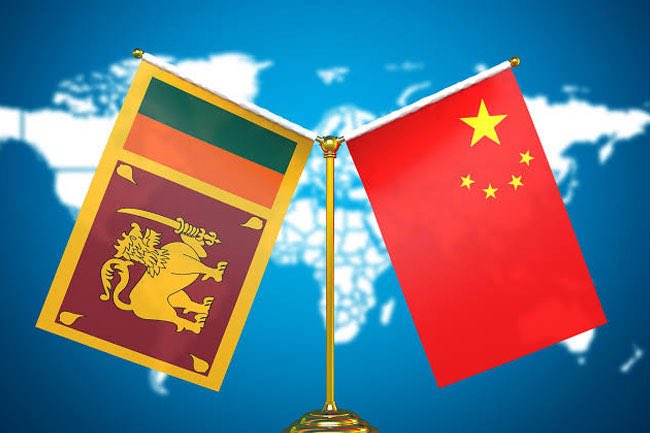
The facility, located at the North Central Provincial Agriculture Department’s In-Service Training Institute in Maha Illuppallama, was developed with technical assistance from the Food and Agriculture Organization (FAO) under the South-South Cooperation (SSC) Programme with China.

The new lab is expected to supply disease-free, high-yielding banana plants to farming communities in the North Central, Northern, and North Western Provinces. Until now, growers in these areas had to rely on supplies transported from the south, a process that was both expensive and prone to transport-related losses.

Officials said the lab would significantly reduce these challenges while improving farmers’ access to healthier planting material. “By combining Sri Lanka’s commitment to agricultural development with FAO’s technical expertise and China’s support through South-South Cooperation, we are ensuring that farmers have access to the quality planting material they need to increase productivity and incomes,” FAO Representative for Sri Lanka and the Maldives, Vimlendra Sharan, noted at the launch.

FAO has supported the project by financing the procurement of advanced laboratory equipment and chemicals, while also facilitating technical training to ensure smooth operations and adherence to international standards. The training enables staff to deliver high-quality tissue culture plants that meet the growing demand in the region.

Provincial leaders emphasized that the lab is more than just a facility—it is a tool for economic empowerment. “By improving farmers’ access to high-quality planting material, we are empowering our agricultural communities, reducing costs, and paving the way for greater competitiveness in local and international markets,” North Central Province Governor Wasantha Jinadasa said.

Banana is one of Sri Lanka’s most widely cultivated fruits, with growing demand both locally and for export. However, farmers have often struggled with pests, diseases, and inconsistent planting material. Experts believe that access to tissue-cultured plants will help overcome these barriers, improve yields, and enhance the overall quality of production.

 The initiative also underscores the value of international cooperation in strengthening local agriculture. By leveraging Chinese expertise through the SSC programme and FAO’s technical knowledge, Sri Lanka is investing in a more sustainable, resilient banana industry.

Officials said the facility will directly benefit thousands of farming families, helping them improve incomes while contributing to national food security. The lab is expected to become a model for future agricultural development projects across the country.

Sri Lanka Defers 18% VAT on Digital Giants Amid Exit Threats

0

Sri Lanka has decided to defer the implementation of its controversial 18% Value Added Tax (VAT) on digital services offered by non-resident companies, following pushback from global online platforms and travel service providers warning of possible withdrawal from the local market.

Originally slated to take effect from October 1, 2025, under the Value Added Tax (Amendment) Act No. 4 of 2025, the levy will now be introduced on April 1, 2026, Cabinet Spokesman Dr. Nalinda Jayatissa announced yesterday.

The tax targets international digital service providers offering services to Sri Lankan consumers, including Booking.com, Agoda, Expedia, Airbnb, Netflix, and Meta (Facebook and Instagram). Many of these firms, citing compliance difficulties and rising operational costs, have expressed concerns that the tax could make the Sri Lankan market less attractive. Some are reportedly reviewing their level of engagement, while smaller platforms have hinted at potential withdrawal if the policy is enforced without transitional measures.

According to industry insiders, Booking.com and Agoda have already flagged difficulties in integrating Sri Lanka’s VAT rules with their global billing systems, warning local hotel operators that additional costs may be passed on to end customers. Similarly, Airbnb is assessing whether compliance with the VAT regime is commercially viable given Sri Lanka’s relatively small market compared to regional tourism hubs.

For the travel and hospitality industry—currently on a revival trajectory after years of crisis—the move could not have come at a worse time. Tourist arrivals in 2025 have already surpassed 1.49 million by August, with the Government targeting 3 million visitors and USD 5 billion in revenue by year-end. Analysts warn that withdrawal or reduced engagement by global booking platforms would severely affect Sri Lanka’s international visibility and online accessibility.

Local hoteliers and tour operators fear that additional costs on digital services could ultimately be passed on to consumers, eroding competitiveness against regional rivals such as Thailand and Malaysia, where digital VAT regimes are either lower or more investor-friendly.

The Government, however, insists that the tax is necessary to ensure equity in revenue collection, arguing that domestic companies already bear VAT obligations while global digital giants earn significant profits without contributing to the Treasury. “The policy decision stands firm, but we are granting more time for non-resident providers to comply with VAT requirements,” Dr. Jayatissa said.

 While the deferral offers breathing space, stakeholders remain divided. Some welcome the delay as a chance to align systems and negotiate compromises, while others fear the looming deadline could still drive international service providers to scale back operations.

The next six months will be critical in determining whether Sri Lanka can balance much-needed revenue mobilisation with maintaining its appeal to international platforms vital for tourism, e-commerce, and digital connectivity.

Sri Lanka Moves to Revise Tourism Act amid Industry Revival

0

Sri Lanka has taken the first formal step toward revising its nearly two-decade-old Tourism Act, with Cabinet approval already granted to draft a new framework. The move comes as the sector records a strong revival in 2025, raising hopes of surpassing ambitious arrival and revenue targets.

Tourism Deputy Minister Prof. Ruwan Ranasinghe yesterday confirmed that the drafting process has begun, though he cautioned that reforms remain at an early stage. “The Cabinet approval to issue a new Act has been granted, and now it has to move through the legislative drafting process. It takes time, especially when many Government institutions are involved,” he told the Daily FT.

The 2005 Tourism Act has long been criticised as outdated, failing to address today’s challenges such as digitalisation, sustainable tourism, and streamlined promotion mechanisms. Industry stakeholders argue that structural inefficiencies particularly in procurement for overseas campaigns—have hindered Sri Lanka’s competitiveness against regional rivals.

Prof. Ranasinghe acknowledged these gaps, noting that Treasury procurement rules often delay marketing drives. “Currently, we must follow Treasury procurement guidelines, which add lengthy grace periods. What we are trying to do is minimise these steps and speed up the process,” he explained. He added that e-procurement and broader digitalisation are being considered as part of the reforms.

Another key element under review is governance. The Deputy Minister said private sector concerns would be addressed, with more representation for Small and Medium Enterprise (SME) associations on the Tourism Board. “We want to ensure their voices are heard. The revisions must be well thought out and cannot be rushed,” he stressed.

The overhaul comes at a pivotal moment. By August 2025, Sri Lanka had welcomed over 1.49 million visitors, a 15% year-on-year increase. Earnings for the first five months of the year reached USD 1.38 billion, putting the country on track toward its annual target of 3 million arrivals and USD 5 billion in revenue. This follows the 2024 performance of 2.05 million tourists generating USD 3.17 billion in income.

Tourism analysts argue that unless the Act is modernised, Sri Lanka risks falling short of its full potential despite the recovery. The current legal framework does not adequately support emerging segments such as high-end tourism, casino-driven investment, and eco-tourism, nor does it address widespread concerns over informal operators evading taxes.

 Prof. Ranasinghe, however, stressed that reforms would not stall ongoing campaigns. “We can’t afford to delay promotions while the Act is being developed. The work will continue,” he assured.With arrivals surging and global competition intensifying, the success of the new Tourism Act will be measured by how effectively it balances governance, speed, and innovation to keep Sri Lanka on a sustainable growth path

IPS Study Warns Rising Cigarette Smuggling Undermines Health, Revenue

0

A new study by the Institute of Policy Studies of Sri Lanka (IPS) has revealed that cigarette smuggling is widespread in the country, undermining both public health policies and government revenue collection. The report stresses the urgent need for stronger enforcement, digital tracking systems, and public participation to curb the illegal trade.

The study, titled “Tobacco Smuggling in Sri Lanka – A Scoping Study”, notes that despite high excise taxes imposed to discourage tobacco use, smuggling allows cigarettes to enter the market at significantly lower prices. This makes them more accessible to young people and low-income groups, eroding the effectiveness of anti-tobacco measures.

“Smuggled cigarettes bypass health warnings and taxes, making them cheaper and more dangerous,” said the study’s lead author, IPS Research Fellow Dr. Erandathie Pathiraja.

Co-authors Nishamini Ihalagedara and Ruwan Samaraweera added that the illegal trade not only heightens healthcare costs but also robs the state of badly needed revenue. “This is a double blow—the health sector bears the rising burden while the Treasury loses billions in potential income,” they noted.

The IPS report challenges the common view that higher cigarette taxes directly fuel smuggling. Analysis of customs seizure data shows no consistent correlation between excise tax hikes and volumes of seized contraband. Instead, factors such as corruption, gaps in enforcement, and porous borders play a more decisive role.

Sri Lanka’s tobacco industry is heavily taxed, with excise duties accounting for the bulk of cigarette prices. While taxation is seen as a key tool to reduce consumption, the IPS study cautions that weak enforcement leaves loopholes that smugglers exploit. The result is a parallel market that both undermines official policy and exposes vulnerable groups to unregulated products.

To address the problem, IPS draws on international best practices. Recommendations include introducing digital excise tax stamps to track products, offering incentives for public reporting of smuggling activities, and tightening border control measures. Greater transparency and stronger institutional coordination are also highlighted as priorities.

The report warns that unless decisive action is taken, Sri Lanka risks losing both the health and revenue battle against illegal tobacco. “Technology, enforcement, and public engagement must go hand in hand to tackle smuggling effectively,” the authors stressed.

IPS argues that the country cannot afford to overlook the issue, as unchecked cigarette smuggling threatens to undo years of progress in reducing tobacco use while simultaneously weakening fiscal stability.

Sri Lanka Debt Fears in 2028 Overstated, Says Arutha Research Think Tank

0

Colombo-based think tank Arutha Research has dismissed concerns that Sri Lanka faces a looming debt servicing cliff in 2028, when capital repayments on restructured foreign loans resume.

Arutha Research Director of Debt Research, Umesh Moramudali, told the Debt and Tax Dialogue forum yesterday that the country’s repayment obligations in 2028 would rise by only about $1 billion compared to 2026 and 2027, countering widespread fears of a sudden repayment shock.

In 2028, Sri Lanka will begin capital repayments on bilateral loans to Japan, India’s EXIM Bank, and China’s EXIM Bank, while bullet payments on new macro-linked bonds will also fall due. Yet, annual servicing costs will remain broadly in line with earlier years: $2.12 billion in 2026 and $2.09 billion in 2027, versus a projected $3 billion in 2028.

“This is a manageable increase, not a cliff,” Moramudali stressed. He argued that Sri Lanka’s debt trajectory is improving faster than International Monetary Fund (IMF) baseline forecasts. The IMF projects the debt-to-GDP ratio to fall to 96.8% by 2030, but Arutha Research estimates it could decline to 85–87% by 2032, well below the Fund’s benchmark.

Slides presented at the forum highlighted progress on all four IMF debt benchmarks: falling debt ratios, gross financing needs under 13% of GDP, foreign currency debt service capped below 4.5% of GDP, and a fully bridged $17.1 billion external financing gap through 2032.

Fiscal consolidation has supported this path. Government revenue rose to 13.5% of GDP in 2024, from just 8.4% in 2022, while the primary budget surplus reached 2.2% of GDP. “We have overperformed on our fiscal targets,” Moramudali said.

Debt restructuring agreements are already in place with all major bilateral creditors, including China, India, Japan, the UK, and private bondholders. Multilateral institutions such as the World Bank and ADB continue to be repaid in full.

However, Moramudali warned that successful debt management will depend on institutional reform. Responsibility for managing external borrowings is shifting from the Central Bank and Department of External Resources to a new Public Debt Management Office, due to be operational in 2026. “Debt management is not the Central Bank’s role. It requires a dedicated office with technical expertise,” he said, questioning whether the new office will have the capacity.

Since Sri Lanka’s default in 2022, all fresh financing has come from multilaterals, with no new bilateral loans. Meanwhile, China’s role is moving from lending to investment. Sinopec has signed a $3.7 billion MoU for a Hambantota refinery—potentially the country’s largest foreign direct investment—while Chinese firms are competing for ADB-backed infrastructure projects.

Moramudali cautioned that without stronger institutional safeguards, Sri Lanka risks repeating past mistakes in external borrowing, despite progress under the IMF program.

Sri Lanka’s Official Reserves Edge Up to USD 6.17 Billion in August

0

Sri Lanka’s official reserve assets recorded a slight increase of 0.3 per cent in August 2025, rising to USD 6.166 billion from USD 6.147 billion in July, according to data released by the Central Bank of Sri Lanka (CBSL).

Sri Lanka, Italy Hold First Round of Political Consultations; MoU on Structured Dialogue Signed

0

The first round of Political Consultations between Sri Lanka and Italy concluded yesterday (Sep 4) in Colombo, co-chaired by Deputy Minister of Foreign Affairs and Foreign Employment Arun Hemachandra and Italy’s Deputy Minister for Foreign Affairs and International Cooperation Maria Tripodi.

Prior to the discussions, the two Deputy Ministers signed a Memorandum of Understanding on the Establishment of a Political Consultations Mechanism, providing a formal and structured framework for dialogue between the two countries, the Ministry of Foreign Affairs, Foreign Employment and Tourism said.

During the consultations, both sides identified areas for expanded cooperation in workforce mobility, trade, investment, tourism, defence, energy, food security, culture, and education. They also discussed the recent revival of the Italy–Sri Lanka Parliamentary Friendship Association and explored ways to enhance inter-parliamentary collaboration.

Particular emphasis was placed on expediting the conclusion of pending bilateral instruments, including the Memorandum of Understanding on Migration and Mobility Partnership—aimed at ensuring safe and sustainable migration—and the renewal of the Agreement on Mutual Recognition of Driving Licences.

Deputy Minister Tripodi also met with Prime Minister Dr. Harini Amarasuriya and Foreign Affairs, Foreign Employment and Tourism Minister Vijitha Herath for further discussions. The Sri Lankan side expressed appreciation for Italy’s continued support to Sri Lankan migrant workers, while Tripodi in turn commended the contribution of Sri Lankan professionals in Italy, who now form the country’s 12th largest non-EU migrant labour force.

She assured that she would personally engage with Italian authorities at the highest level to expedite the renewal of key bilateral agreements.

This marks the first high-level Italian visit to Colombo since 2016. Italy is Sri Lanka’s fifth-largest export market and an important source of investment and tourism.

Govt to Complete All Pending OMP Investigations by 2027

0

The Government has decided to launch a special project to conclude all pending investigations under the Office on Missing Persons (OMP) by the end of 2027, Cabinet Spokesman and Health and Mass Media Minister Dr. Nalinda Jayatissa announced yesterday.

The Cabinet of Ministers approved the initiative following a proposal presented by the Minister of Justice and National Integration. The project will see the appointment of 25 sub-committees comprising 75 qualified individuals, including retired judges, senior administrative officers, and lawyers.

Speaking at the weekly Cabinet press briefing, Minister Jayatissa noted that the OMP was established under Act No.14 of 2016, with its primary mandate being the investigation of cases of missing or disappeared persons and the issuance of reports to their families.

“Of the 16,966 complaints received by the OMP to date, 10,517 remain under investigation. To expedite the process, the Government will appoint 25 sub-committees consisting of 75 qualified individuals to ensure justice is delivered to the affected families,” the Minister said.