Colombo (LNW): The Consumer Affairs Authority (CAA) is set to launch crackdown operations on persons who are demanding money from business outlets impersonating CAA officials, News1st reported citing Authority Chief Shantha Niriella.
The move comes in following a number of complaints that certain individuals are demanding money from business outlets claiming that they are from the Authority, Niriella pointed out, adding that such impersonators are making threats to business owners via phone and demanding money.
The CAA urged the business community and overall the public to immediately inform the nearest Police station and the Authority via the 1977 hotline, had any businessperson received such a phone call.
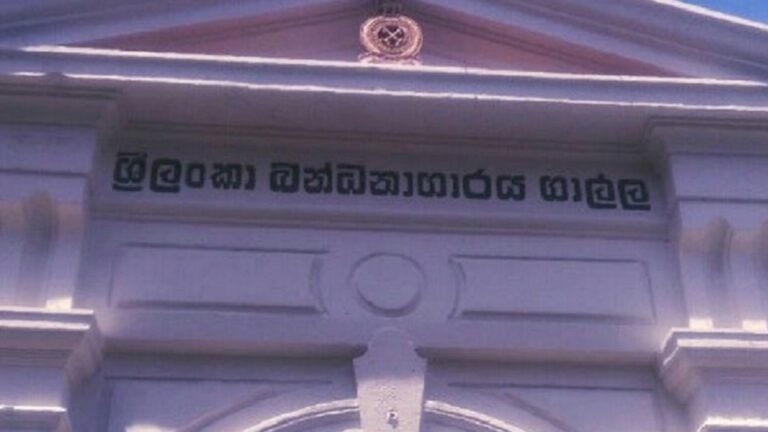
Colombo (LNW): The Ministry of Health has provided a clarification on the recent health hazard occurred at the Galle Prison leading to the death of two inmates and five others being hospitalised, stating that the ‘unidentified illness’ was Meningococcal disease.
The two inmates had died due to the infection of Meningococcus bacteria which led to the disease, the Ministry clarified, adding that as of now sixteen inmates are receiving treatment for the infection.
The infectees had shown symptoms of fever and phlegm, according to the Prisons Department.
The deceased inmates were among 1,023 prisoners placed at the Galle Prison, the Dept added.
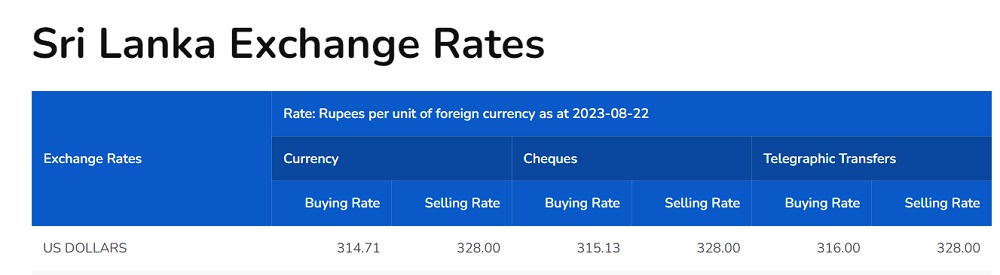
Colombo (LNW): The Sri Lankan Rupee indicates a slight fluctuation against the US Dollar as revealed by leading commercial banks in the country today (22).
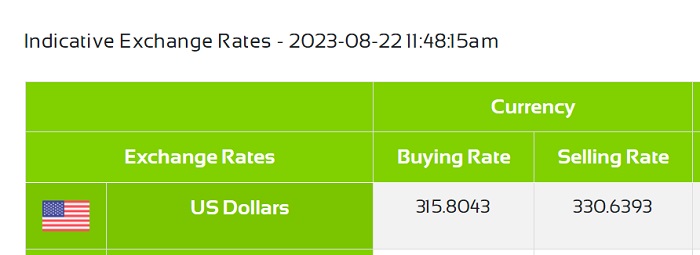
Accordingly, Peoples Bank reveals the buying price of the US Dollar has increased to Rs. 315.80 from yesterday’s Rs. 315.31, and the selling price to Rs. 330.63 from Rs. 330.82.
At Commercial Bank, the buying price of the US Dollar has increased to Rs. 314.71 from Rs. 312.75, and the selling price remains steady at Rs. 328.
At Sampath Bank, the buying and selling prices of the US Dollar remains unchanged at Rs. 317 and Rs. 328, respectively.
Colombo (LNW): The Inland Revenue Department is set to take stern action against condominium management companies for evading taxes
This action has been taken at a time where Sri Lanka’s once thriving luxury condominium facing an unprecedented crunch this year with no new projects coming up in the next three months several leading developers cautioned.
Further, taxes imposed on condominium sales including VAT and social security contribution levy as well as the high level of interest rates that prevailed during the quarter have contributed towards the adverse market conditions.
In terms of price categories, exactly half of the transactions reported were in the price category between Rs. 25 Mn—Rs. 50 Mn, the Central Bank report revealed.
The Inland Revenue Department has written to apartment management companies seeking information regarding owners and residents of the condominium properties to identify individuals who might be evading taxes and avoiding due process to collect such data.
The move to request information from apartment management companies about condominium property owners and residents in Colombo has sparked controversy and raised ethical concerns.
According to sources, the Inland Revenue Department sent formal letters to apartment management companies in the city, asking for details about the owners and residents of the condominium properties, to identify individuals who may not be fulfilling their tax obligations and ensure their inclusion in the tax net.
The department has claimed that boosting tax revenue is crucial to navigating the current economic crisis, prompting them to seek out individuals who might be evading taxes.
However, this move has drawn criticism from communities who deem it ‘unethical’.
They argue while increasing tax revenue is important for the country’s recovery, the methods deployed by the department raise concerns about privacy and due process.
Some have expressed worries that the request for individual information might infringe upon citizens’ rights.
The Inland Revenue Department defended its actions, stating that the information request is aligned with administrative provisions outlined in section 123(1) of the Inland Revenue Act No. 24 of 2007.
The move has called for a broader debate about the balance between effective tax enforcement and respecting citizens’ rights to privacy.
This section likely pertains to the department’s authority to collect and use data for tax-related purposes. Nonetheless, individuals and privacy advocates remain wary of the potential misuse of personal data.
The move is also to shore up tax revenue in line with targets set by the International Monetary Fund (IMF) under its $ 3 billion Extended Fund Facility program.
During the six months ending June 2023, the Government revenue and grants had increased to Rs. 1,317 trillion in comparison to Rs. 919.5 billion recorded in the corresponding period of 2022, the Central Bank has announced.
Tax revenue amounted to Rs. 1.19 trillion as against Rs. 799 billion in 1H of last year. However non-tax revenue was down to Rs. 116 billion from Rs. 120 billion.
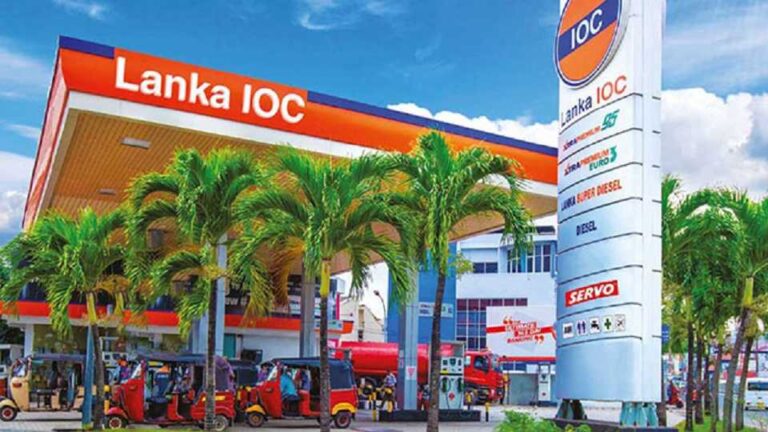
Colombo (LNW): The stage is set for a long-drawn India-China fuel duel in Sri Lanka as Chinese major Sinopec begins retailing automotive fuels in the island nation from next month, challenging the position of Lanka IOC — the wholly-owned arm of Indian state-run giant Indian Oil Corporation.
Lanka IOC has responded by mobilising expansion of its retail network and has floated expressions of interests for adding 30 new petrol pumps to its existing network of 250 outlets over the coming months.
Significantly, Sri Lanka IOC is operated through the Indian company India Oil. Significantly, Sri Lanka IOC has invited bids for 30 new petrol pumps to expand its retail network.
At present there are 250 petrol pumps in Sri Lanka. Sri Lanka IOC arrived in Lanka in 2003. The company deals in 16% petrol and about 35% diesel in Sri Lanka alone.
Lanka IOC entered Sri Lanka in 2003 and cornered 16% of petrol and diesel sales as well as 35% of lubricants, bitumen and bunkering (marine fuel) last year in a duopoly with CYPETCO. Sinopec is the first of the three companies, chosen by Colombo.
Lanka IOC PLC, the smaller and private sector player in Sri Lanka’s fuel supply duopoly, said it has received the approval from the Sri Lankan government to open 50 new fuel stations in the country.
Lanka IOC Managing Director Manoj Gupta had said the company would invest about Rs.2 billion to expand its fuel station network, which already has 216 fuel stations, by 50 new stations.
“State-owned Ceylon Petroleum Corporation (CPC) operates about 1,190 fuel stations throughout the country.
The Cabinet of Ministers in June approved a proposal to allow more companies from oil-producing nations to import oil and start retail operations in Sri Lanka.
At present, 90 percent of Sri Lanka’s fuel supply is through CPC and the remaining 10 percent is by Lanka IOC.
Troubled by India’s strictness on the Line of Actual Control (LAC), China is now trying to create a new mess in Sri Lanka.
Actually, fuel is sold in Sri Lanka through a subsidiary of the Indian oil company Indian Oil. But now China is also trying to sell oil in Sri Lanka.
China’s Sinopec Company is one of the three companies that Sri Lanka has selected to set up petrol pumps. Australia’s United Petroleum and US’s RM Parks are two other companies.
Under Sri Lanka’s liberalization policy, Sinopec will get the right to operate 150 of the 1,200 retail outlets operated by the National Oil Company of Sri Lanka for 20 years.
RM Parks will get 150 more retail outlets. It will take 3-4 months for all these companies to start their operations in Sri Lanka. However, information about the plan of United Petroleum is not yet available.
Colombo (LNW): The Government has decided to draw up legislation to prevent the unilateral revocation of bilateral or multilateral agreements made for national development.
The proposal to this effect submitted by President Ranil Wickremesinghe for the legal draftsman to prepare a comprehensive Bill aimed at bolstering the enforcement of these agreements was approved by the Cabinet of Ministers on Monday.
“Sri Lanka’s credibility and international repute are tarnished after cancelling agreements instantly without consulting the other parties involved.
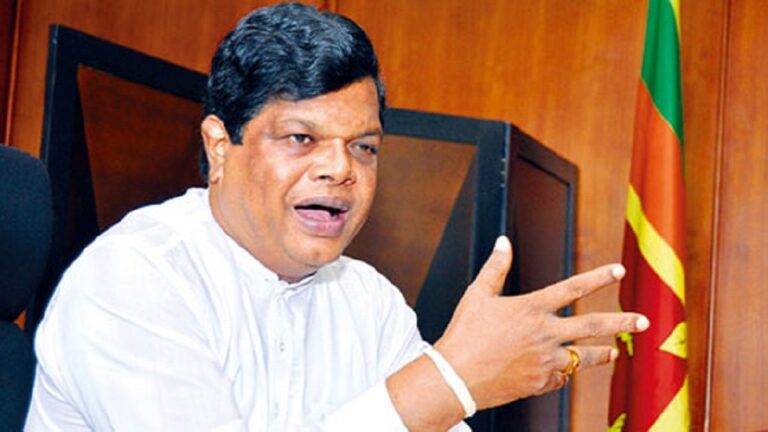
By enacting laws that reinforce these commitments, the Government aims to foster an environment of trust and reliability on the global stage once again,” Cabinet Co-Spokesman and Minister Bandula Gunawardena said at the post-Cabinet meeting media briefing yesterday.
The proposal underscores the need for a robust legal framework to instil a sense of accountability and responsibility among all stakeholders involved in bilateral and multilateral agreements.
On 22 May 2023, the Cabinet approved that laws should be enacted to prevent deviation from bilateral and multilateral agreements that are determined to be essential for national development without the consent of the relevant parties.
In May this year, the Cabinet of Ministers decided to enact laws to prevent deviations from bilateral and multilateral agreements without the consent of relevant parties as the country faced a diplomatic backlash following the cancellation of several international agreements including East Container Terminal (ECT) and Light Railway Transit (LRT) projects.
Back tracking on Sri Lanka-Singapore Free Trade Agreement by the previous government led by former President Gotabaya Rajapaksa is also a case in point.
Cabinet Spokesperson Minister Bandula Gunawardena emphasised that such arbitrary decisions without consulting other parties had damaged the country’s credibility in the global stage.
At present, Sri Lanka is in the process of entering into a number of new bilateral trade agreements along with plans to join the Regional Comprehensive Economic Partnership (RCEP).
In addition, the government has also requested the Japanese government to revive the canceled Light Railway Transit (LRT) project.The proposed legislation is expected to restrict future governments from arbitrarily canceling or deviating from bilateral and multilateral agreements without obtaining the consent of the other party and thereby restoring Sri Lanka’s credibility globally.
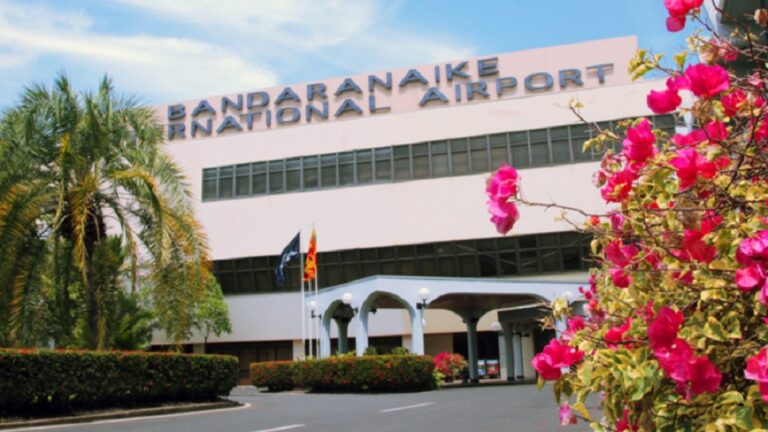
Colombo (LNW): A Safe Migration Promotion Unit (SMU) to prevent illegal emigration on forged visas through the Bandaranaike International Airport (BIA) has been established at the departure terminal of the airport by Labour and Foreign Employment Minister Manush Nanayakkara.
The minister said several individuals had left for Oman, Malaysia and the United Arab Emirates on forged visas and it has created serious issues.
He said the Safe Migration Unit was established on the recommendations of the Ministry of Defense and the National Task Force to Prevent Human Smuggling to prevent the movement of passengers on illegal travel documents.
The SMU comprises officers of the Sri Lanka Foreign Employment Bureau, the CID, the Department of Immigration and Emigration and the State Intelligence Service.
Minister Nanayakkara said it would function as a pilot project for three months and will be further improved thereafter.
Human trafficking and smuggling of migrants are global and widespread crimes that use men, women and children for profit. Criminal networks involved in these activities operate across different jurisdictions, taking advantage of gaps and differences in legal frameworks.
International cooperation is therefore an imperative to strengthen law enforcement responses. By joining forces, countries can pool resources, share vital intelligence, and coordinate their efforts more effectively.
As the Chair of the National Anti-Human Trafficking Task Force (NAHTTF) of Sri Lanka, the Ministry of Defence announced that Sri Lanka remains in Tier 2 of the Annual Ratings of the recently released Trafficking in Persons (TIP) Report by the United States Department of State.
Known as the world’s most comprehensive resource of governmental anti-trafficking efforts, the US TIP Report also reflects the U.S. Government’s commitment to global leadership on this key human rights and law enforcement issue.
As per the 2023 US TIP Report, GoSL does not fully meet the minimum standard for the elimination of trafficking but is making a significant effort to do so; and demonstrates overall increasing efforts in comparison with 2022.
While highlighting that the Sri Lankan Government increased prosecutions and convictions of traffickers, cooperated with foreign officials, reformed some restrictive migration policies, blacklisted more agencies, expanded the regulation of sub-agents and supported the repatriation of Sri Lankans after identifying more victims; the 2023 US TIP Report makes 12 prioritized recommendations for stronger counter-trafficking efforts in the country.
Among the said recommendations are ensuring that victims are not inappropriately penalized solely for unlawful acts committed as a direct result of being trafficked, increasing efforts to address child sex tourism, including proactive identification of victims and investigation of complicit establishments, formalizing the domestic work sector
Ministry of Defence, will be putting in place several strategies to implement these recommendations.
Sri Lanka remaining in Tier 2 is a testament to the strong perseverance of all the members of the NAHTTF in following a holistic and collaborative approach to curb human trafficking, recognized currently as one of the fastest growing criminal industries in the world.
01. President Ranil Wickremesinghe during his official visit to Singapore meets with Singapore’s President Halimah Yacob, Defence Minister Dr. Ng Eng Hen and Sustainability and Environment Minister Grace FU Hai Yien: holds bilateral talks with the Singaporean authorities involving food security, renewable energy, regional economic cooperation, and security and defence collaboration between the two nations.
02. The Disaster Management Centre says it has taken proactive measures to intensify the distribution of water amidst the growing water scarcity triggered by the ongoing arid weather conditions: Director Maj. Gen. Sudantha Ranasinghe says the Centre has deployed nearly 100 bowsers to distribute water across the country, with a primary focus on hospitals and social service institutions in need: asserts around 202,500 people across 15 districts affected by dry weather have already benefited from this initiative so far.
03. Sri Lanka settles the first tranche of $50 million of a $200 million debt obtained from Bangladesh in September, 2021: Executive Director and Spokesperson for the Bangladesh Bank Md Mezbaul Haque says the first instalment from Sri Lanka was received on August 17: adds Sri Lanka is expected to settle another instalment by August 30 and the BB foresees the repayment of the entire $200 million loan by September, 2023.
04. The overall inflation rate measured by the NCPI drops to 4.6% in July, 2023: The figure appears to have declined in comparison to the 10.8% recorded in June, 2023: Food inflation decreases to (-2.5)% from the 2.5% recorded in the month before: Non-food inflation drops to 10.9% from the 18.3% recorded in the month before.
05. The Sri Lankan Rupee further depreciates against the US Dollar as of Monday in comparison to last week: The buying price increases to Rs. 316.72 from last week’s Friday’s Rs. 316.28, and the selling price to Rs. 329.59 from Rs. 329.49.
06. The PSC appointed to look into and identify the mechanisms to be implemented to control and eradicate the drug menace chaired by Public Security Minister Tiran Alles discusses measures taken to control the crisis: The Sri Lanka Police, National Dangerous Drugs Control Board and the National Authority on Tobacco and Alcohol summoned: Alles notes a special committee has been appointed headed by SDIG Deshbandu Tennakoon, to control the drug menace in this country.
07. Two inmates of the Galle Prison have reportedly died with five others being hospitalised due to what it was described as an ‘unidentified illness’: The Prison Spokesperson says investigations are currently underway to identify the nature of the infection, and as a safety precaution, face masks are being worn by all individuals inside the premises.
08. Power and Energy Minister Kanchana Wijesekara instructs the CEB regarding the obtaining of the Ministry’s approval for the promotions of senior management at the Board, following reports that the CEB had promoted a woman official at the Board one day prior to her retirement: adds the reform process of the CEB, power generation plans, assets management, reducing administrative and operating costs and related issues were also discussed.
09. Estate Infrastructure Development Minister Jeevan Thondaman responds to a video footage circulating on social media of him using abusive language and threatening an official at an estate in Matale, saying that he as the Minister responsible demanded swift action against the mistreatment of a poor plantation worker family who together with its two-months old infant was violently and illegally evicted by an assistant estate manager.
10. Mumbai Indians announces the signing of eight cricket players, including two Sri Lankan players, taking their squad size up to 20, ahead of the second edition of ILT20, that is set to begin on 13th January 2024: Kusal Perera and Vijayakanth Viyaskanth join the squad ‘OneFamily.’
Colombo (LNW): Several spells of showers will occur in Western and Sabaragamuwa provinces and in Galle and Matara districts.
Showers or thundershowers may occur at a few places in Central, Uva and Eastern provinces and in Mullaitivu district during the evening or night.
Mainly fair weather will prevail elsewhere over the Island.
Fairly strong winds about (40-45) kmph can be expected at times in North-Central and North-Western provinces, and in Hambantota district.
Marine Weather:
Condition of Rain:
Showers may occur at a few places in the sea areas off the coast extending from Colombo to Matara via Galle.
Winds:
Winds will be south-westerly and speed will be (25-35) kmph. Wind speed may increase up to (45-55)kmph at times in the sea areas off the coast extending from Hambantota to Pottuvil, and from Puttalam to Kankasanthurai via and Mannar.
State of Sea:
The sea areas off the coast extending from Hambantota to Pottuvil, and from Puttalam to Kankasanthurai via Mannar can be rough at times.
Colombo (LNW): Two inmates of the Galle Prison have reportedly died with five others being hospitalised due to what it was described as an ‘unidentified illness’ at the Prison, according to the Prison Spokesperson.
Investigations are currently underway to identify the nature of the infection, and as a safety precaution, face masks are being worn by all individuals inside the prison premises, he added.