
Home Blog Page 1651

Tax authorities to crack down on evaders as SL misses revenue targets

0

By: Staff Writer

Colombo (LNW): Sri Lanka’s Inland Revenue Department is considering action against those who do not pay their tax dues despite being eligible after the latest tax reforms, a top official said.

Ranjith Hapuarachchi, the Commissioner General of IRD said the number of tax files have not increased in line with the latest tax reforms.

Sri Lanka has met all interim targets agreed with the International Monetary Fund (IMF) in return for the Extended Fund Facility (EFF) secured in March this year except for the revenue targets which are still falling behind, according to Central Bank officials.

Sri Lanka had to accede to a slew of steep targets which covered fiscal and monetary sides, external sector, state-owned enterprises (SOEs), independence of the Central Bank and take measures to reduce corruption vulnerabilities to get the IMF officials to unlock the much-needed US$ 3 billion facility.

But the government is lagging behind in terms of revenue targets despite the massive hike in taxes and the market pricing of electricity and fuel to strip the state-run utilities from relying on the Treasury for funds.

This in fact sparked a debate during last week surrounding additional revenue measures which could well become one of the main discussion points with the IMF when they come down for the programme’s first review scheduled for September.

More taxes in whatever the form will further suffocate the economy, which is still struggling to find some footing.

What is required instead is a targeted stimulus to revive the new and old enterprises which will generate new jobs and restore lost ones from which the government will be able to rake in more taxes from increased business and consumer spending.

Failure by the government to take appropriate action would result in the consolidation of power among large corporations, leading to the formation of oligopolies.

Simultaneously, this would push small businesses out of the market, causing an imbalance in the economy. Such a scenario is detrimental to both consumers and the spirit of entrepreneurship.

If officials continue to push through the IMF prescription premised predominantly on the revenue based fiscal consolidation, the economy will continue to remain undermined and will never realise its full potential.

The still disappointing tax revenue compared to the target is why the Central Bank has recommended the Treasury to relax the remaining controls on imports which have long been a strong source of tax revenues.

The Central Bank a fortnight ago said that the country now has the capacity to stretch its import bill to around US$ 1.6 -1.7 billion a month from the current US$ 1.4 billion.

In addition, tax authorities have intensified their efforts to crack down on tax evaders, especially in light of recent tax increases, including income tax.

However, these tax hikes have not resulted in the expected influx of new taxpayers into the system. Last week, tax authorities expressed surprise over the fact that the number of tax files remained largely unchanged despite the implementation of these measures.


SL Tourism attracts over 55,000 tourists in July targeting 1.5 million in 2023

0

By: Staff Writer

Colombo (LNW): Sri Lanka hopes to double tourist arrivals to 1.5 million next year and bring in US $ 5 billion in vital foreign exchange the tourism minister said as the country seeks ways and means to tackle its worst economic crisis in seven decades.

Sri Lanka would likely end this calendar year with 750,000 tourist arrivals and about $2 billion in earnings, Fernando said, adding his ministry would be targetting high end tourists and introducing new products in 2023.  

Sri Lanka’s tourism industry is experiencing a notable surge in tourist arrivals, with the first 13 days of July welcoming a total of 55,566 tourists, whilst pushing the cumulative number of visitors to 680,440.

Leading the influx of tourists for the month so far is India, with 8,169 arrivals accounting for 18% of the total, followed by the United Kingdom with 4,474 visitors (10%), while China has made significant progress by securing the third spot with 2,893 tourists (6%). Germany and Russia also contribute to the tourist traffic, with 2,824 (6%) and 2,599 (5%) arrivals, respectively.

China’s rapid ascent to the top three source markets is noteworthy, attributed to the resumption of operations by its national carrier, Air China, with three weekly flights. In 2018, before the Easter Sunday terror attacks,

China had been the second-largest source of tourists for Sri Lanka, with 265,965 arrivals. However, this figure dropped to 167,863 in 2019 due to the aftermath of the attacks.

Post-COVID pandemic, China included Sri Lanka in a pilot program to resume outbound tourism, and on 1 March, the first batch of Chinese tourists arrived after a hiatus of three years.

Encouraged by the positive trend in arrivals, Sri Lanka Tourism has set an ambitious target of welcoming 137,594 tourists for the entire month of July.

According to the provincial data released by the Sri Lanka Tourism Development Authority (SLTDA), tourists from other countries like the Maldives, France, Australia, Canada and the United States have also contributed to the recent influx.

Analysing the year-to-date figures, India remains the dominant source market, accounting for 126,187 arrivals (19%). Russia closely follows with 112,993 arrivals (17%), while the United Kingdom, Germany, and France contribute 56,439, 48,541, and 30,318 arrivals, respectively.

In a recent statement, Sri Lanka Tourism Promotion Bureau Chairman, Chalaka Gajabahu, identified India and China as primary source markets for the foreseeable future, citing Europe’s ongoing economic recession as a contributing factor to this strategic decision.

Building on the positive momentum, Sri Lanka Tourism has expressed confidence in the industry’s potential to welcome two million arrivals and generate $ 3.7 billion in income this year. Looking ahead, the country has set ambitious goals of increasing arrivals to 5 million and generating an impressive $ 21.6 billion in revenue by 2030.

The rise in tourist arrivals is not only a positive sign for Sri Lanka’s tourism industry but also signifies the country’s growing appeal as a travel destination.

With its rich cultural heritage, scenic landscapes, and warm hospitality, Sri Lanka aims to solidify its position as a top choice for global travellers in the coming years.

Progress of the government in fulfilling IMF commitments slowed down

0

By: Staff Writer

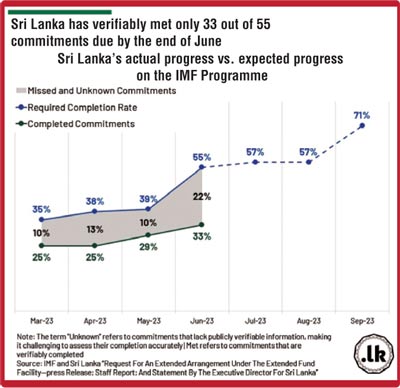
Colombo (LNW): Sri Lanka has already met 33 of the around 100 commitments of the International Monetary Fund (IMF) programme at present and it has fulfilled all prior actions to obtain EFF and fulfilled follow up actions that should be completed before September this year, a former finance ministry secretary who was involved in previous IMF negotiations said.

He added that the government is determined to strictly adhere to this IMF economic reforms program or bypassing economy to save the dying economy at present.

One commitment, the establishment of an online fiscal transparency platform, was still to be met.

Another unmet commitment was parliamentary approval of the new Central Bank Act, prepared in consultation with IMF staff. Even though a bill was published on 7 March, an amendment to the act has not been made.

“IMF welcomes the authorities’ ongoing efforts in meeting key commitments under the Fund-supported program. Performance under the program will be formally assessed in the context of the first review of the Extended Fund Facility arrangement, which is expected to be undertaken in September 2023”, IMF sources said.

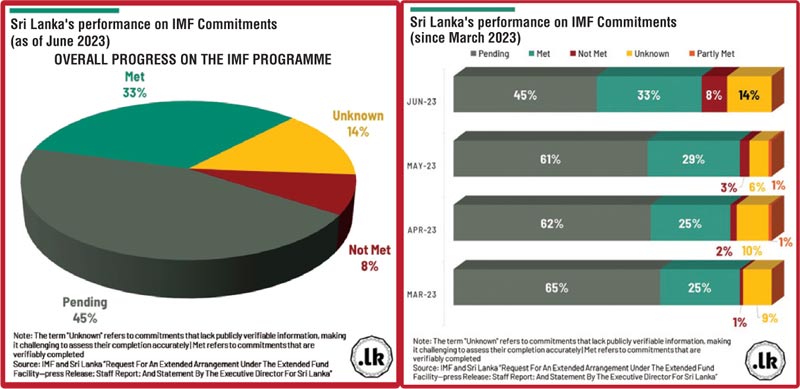
Sri Lanka had verifiably met 33 of the trackable program commitments of the International Monetary Fund (IMF) program as at the end of June 2023 but had failed eight, according to the ‘IMF Tracker’, an online tool launched by Verité Research.

Growing number of failed commitments, the number of unfulfilled commitments doubled from four (including one partially met) in May, to eight in June 2023.

These include, obtaining Cabinet approval for the restructuring plan of key State-Owned Enterprises (SOEs), enacting new anti-corruption legislation, publishing the annual reports of all 52 major SOEs for 2022, and preparing a plan to gradually eliminate import restrictions.

Sri Lanka is mostly failing in two areas: the passage of legislation, and information dissemination. Between March and June, the country committed to enact three significant laws: a revision of betting and gaming levies, enactment of the Central Bank of Sri Lanka Act, and a new Anti-Corruption Act. Drafts of these Bills were published on the website of the Printing Department on 4 April, 7 March, and 27 April 2023, respectively. However, these drafts are still pending Parliamentary approval and enactment.

On the information dissemination front, three primary commitments remain unfulfilled. The first is the establishment of a fiscal transparency platform, to semi-annually publish significant public procurement contracts, a list of firms receiving tax exemptions through the Board of Investment, and a list of individuals and firms receiving tax exemptions on luxury vehicle imports. This remains undone.

The second commitment pertains to the publication of annual reports for all 52 major SOEs up to 2022. A recent infographic by publicfinance.lk revealed that only 11 out of the 52 key SOEs have published their annual reports up to 2022. This lack of information dissemination can also be seen in the non-publication of a plan to phase out import restrictions.

Lack of Information is also a concern. As at end June, the commitments classified as “unknown”, where the information required to make an assessment was not available, had risen to 14%, more than double the percentage of the previous month (6%).

President’s visit to India: Sampanthan writes to Modi urging fulfillment of commitments with regard to sharing powers of governance

0

By: Isuru Parakrama

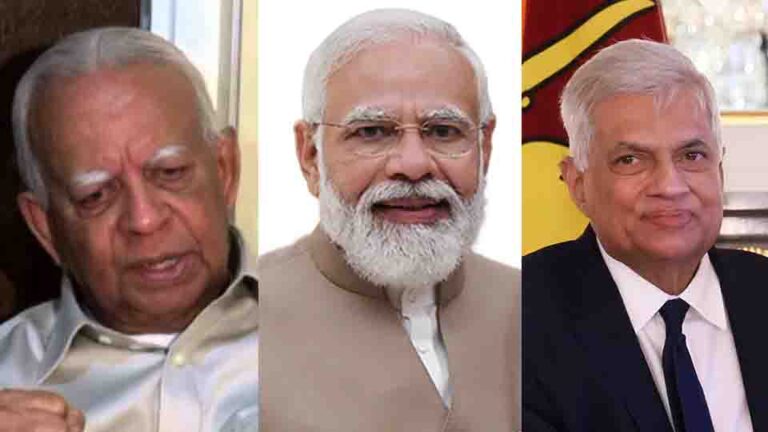
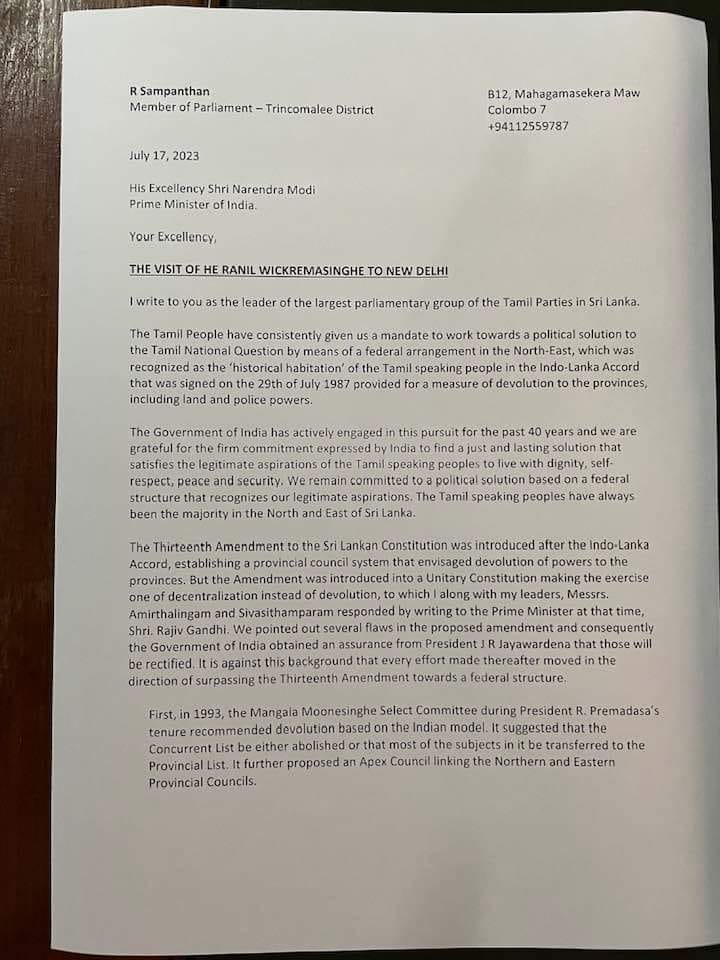
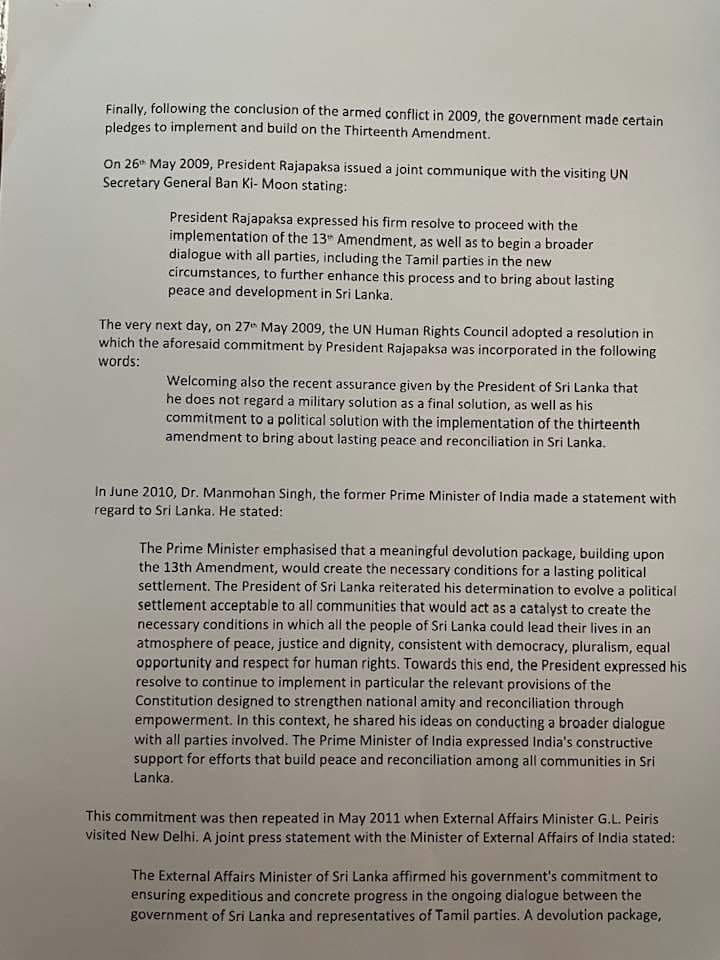
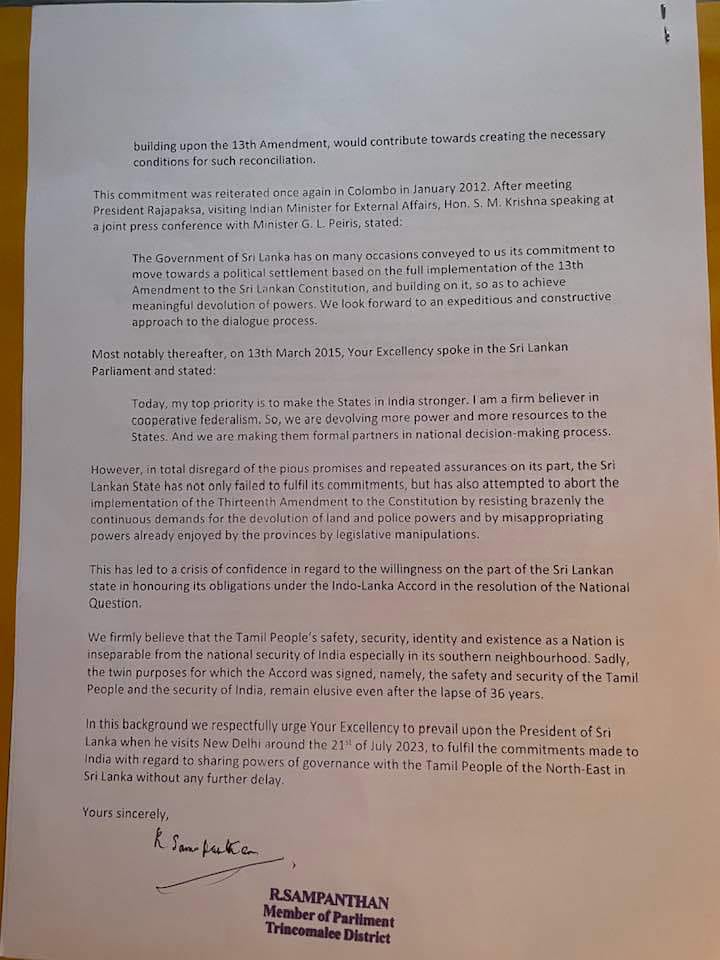
Colombo (LNW): Leader of the Tamil National Alliance (TNA) MP R. Sampanthan urged Indian Prime Minister Narendra Modi to fulfill the commitments made to India with regard to sharing powers of governance in the North-East provinces in Sri Lanka, subsequent to Sri Lankan President Ranil Wickremesinghe’s pending arrival in New Delhi on July 21, 2023.

In a letter dated 17.07.2023, Sampanthan wrote that they firmly believe that the Tamil people’s safety, security, identity and existence as a Nation is inseparable from the national security of India, especially in its southern neighbourhood. Sadly, the twin purposes for which the Indo-Lanka Accord was signed, namely, the safety and security of the Tamil people and the security of India, remain elusive even after the lapse of 36 years, the TNA Leader emphasised.

“The Thirteen Amendment to the Sri Lankan Constitution was introduced after the Indo-Lanka Accord, establishing a provincial council system that envisaged devolution of powers to the provinces. But the Amendment was introduced into a Unitary Constitution making the exercise one of decentralisation instead of devolution, to which I along with my leaders, Messrs,” Sampanthan wrote.

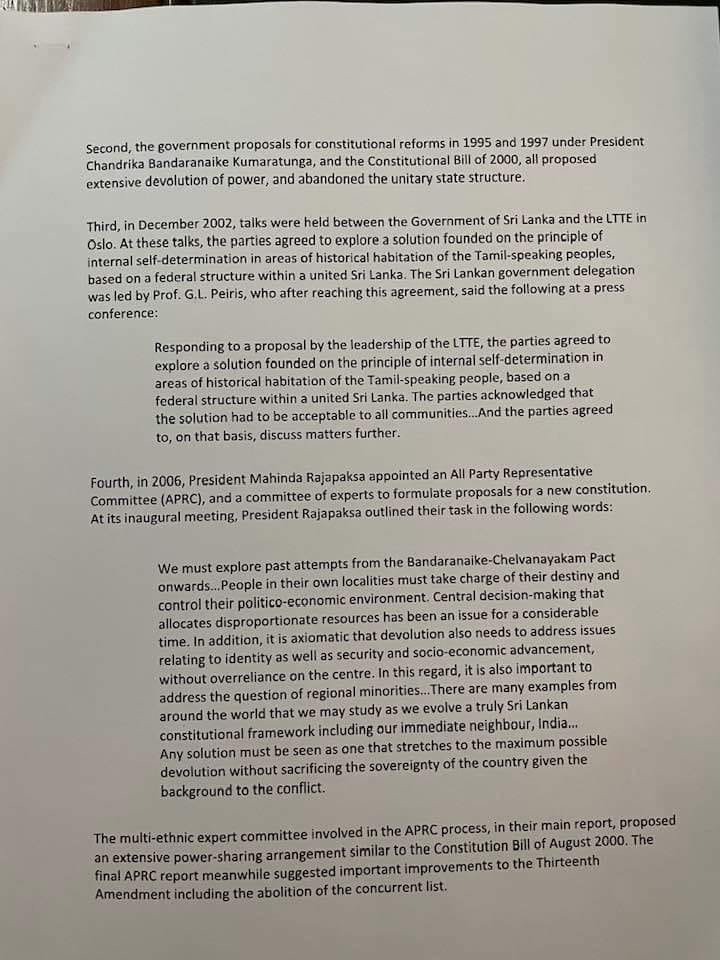
In total disregard of the pious promises and repeated assurances on its part, the Sri Lankan State has not only failed to fulfill its commitments, but has also attempted to abort the implementation of the Thirteenth Amendment to the Constitution by resisting brazenly the continuous demands for the devolution of land and police powers and by misappropriating powers already enjoyed by the provinces by legislative manipulations, he pointed out.

Accordingly, Sampanthan urged the Indian Prime Minister to prevail upon the President of Sri Lanka when he arrives in New Delhi on July 21, to fulfill the commitments made to India with regard to sharing powers of governance with the Tamil people of the North-East in Sri Lanka without any further delay.

Expert Committee appointed to probe incidents at Peradeniya and Kandy hospitals

0

Colombo (LNW): An Expert Committee has been appointed to probe the recent events at the Peradeniya Teaching Hospital and Kandy National Hospital where several patients experienced allergic reactions after they were administered with antibiotics.

The Committee chaired by Dr. Chandima Jeewandara, Head of the Allergy Immunology and Cell Biology Unit at the University of Sri Jayawardenapura will probe into the root cause of the said events and prepare a report on the matter, according to Health Minister Keheliya Rambukwella.

Meanwhile, many concerned parties are pressuring the government to improve the government health service, whilst others demand that the Health Minister should step down from his position.
 

Sri Lanka meets 33 IMF commitments by end-June, fails to meet 08: Verité Research

0

Sri Lanka had verifiably met 33 of the trackable program commitments of the International Monetary Fund (IMF) program as at the end of June 2023 but had failed eight, according to the ‘IMF Tracker’, an online tool launched by Verité Research.

Growing number of failed commitments, the number of unfulfilled commitments doubled from four (including one partially met) in May, to eight in June 2023. These include, obtaining Cabinet approval for the restructuring plan of key State-Owned Enterprises (SOEs), enacting new anti-corruption legislation, publishing the annual reports of all 52 major SOEs for 2022, and preparing a plan to gradually eliminate import restrictions.

Sri Lanka is mostly failing in two areas: the passage of legislation, and information dissemination. Between March and June, the country committed to enact three significant laws: a revision of betting and gaming levies, enactment of the Central Bank of Sri Lanka Act, and a new Anti-Corruption Act. Drafts of these Bills were published on the website of the Printing Department on 4 April, 7 March, and 27 April 2023, respectively. However, these drafts are still pending Parliamentary approval and enactment.

On the information dissemination front, three primary commitments remain unfulfilled. The first is the establishment of a fiscal transparency platform, to semi-annually publish significant public procurement contracts, a list of firms receiving tax exemptions through the Board of Investment, and a list of individuals and firms receiving tax exemptions on luxury vehicle imports. This remains undone.

The second commitment pertains to the publication of annual reports for all 52 major SOEs up to 2022. A recent infographic by publicfinance.lk revealed that only 11 out of the 52 key SOEs have published their annual reports up to 2022. This lack of information dissemination can also be seen in the non-publication of a plan to phase out import restrictions.

Lack of Information is also a concern. As at end June, the commitments classified as “unknown”, where the information required to make an assessment was not available, had risen to 14%, more than double the percentage of the previous month (6%).

Verité Research notes that timely progress on the IMF program has two benefits. First, there are the material benefits that can result from many (not all) of the actions. Second, it can improve confidence in Sri Lanka’s governance, which then helps negotiations to restructure the burden of past debt and speed up the path to future economic recovery.

‘The IMF Tracker’ is currently tracking 100 identified commitments recorded along with Sri Lanka’s Letter of Intent to the IMF on the program approved on 20 March 2023. The platform will assist the Government and people of Sri Lanka, as well as the IMF, to better understand and track Sri Lanka’s progress and timeliness on meeting these commitments.

The IMF Tracker is now available to the public on manthri.lk – an online platform run by Verité Research – tracking the actions and performance of Sri Lanka’s Parliament. For more information, please visit: https://manthri.lk/en/imf_tracker

Source: DailyFT

Activists and concerned individuals demand improved Health Service (PHOTOS)

0

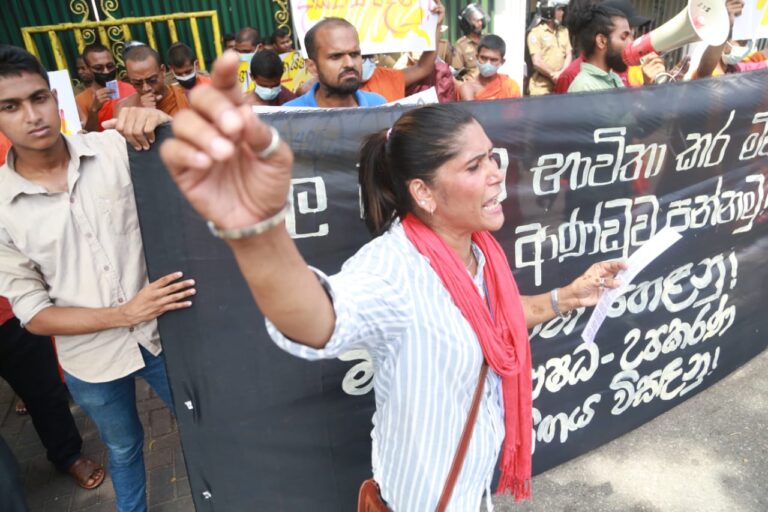
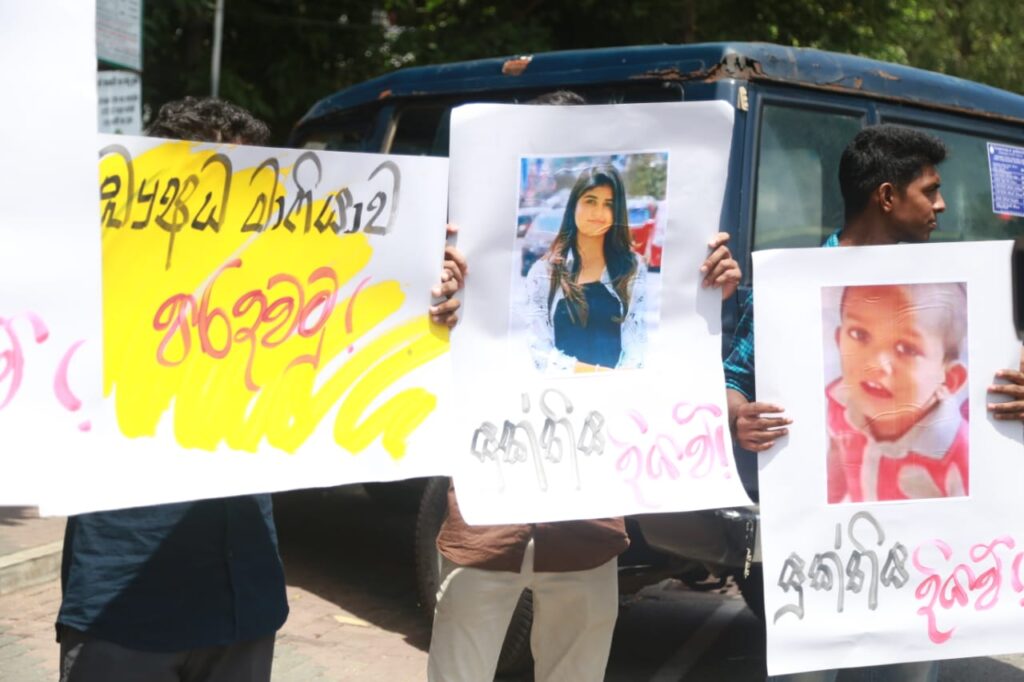
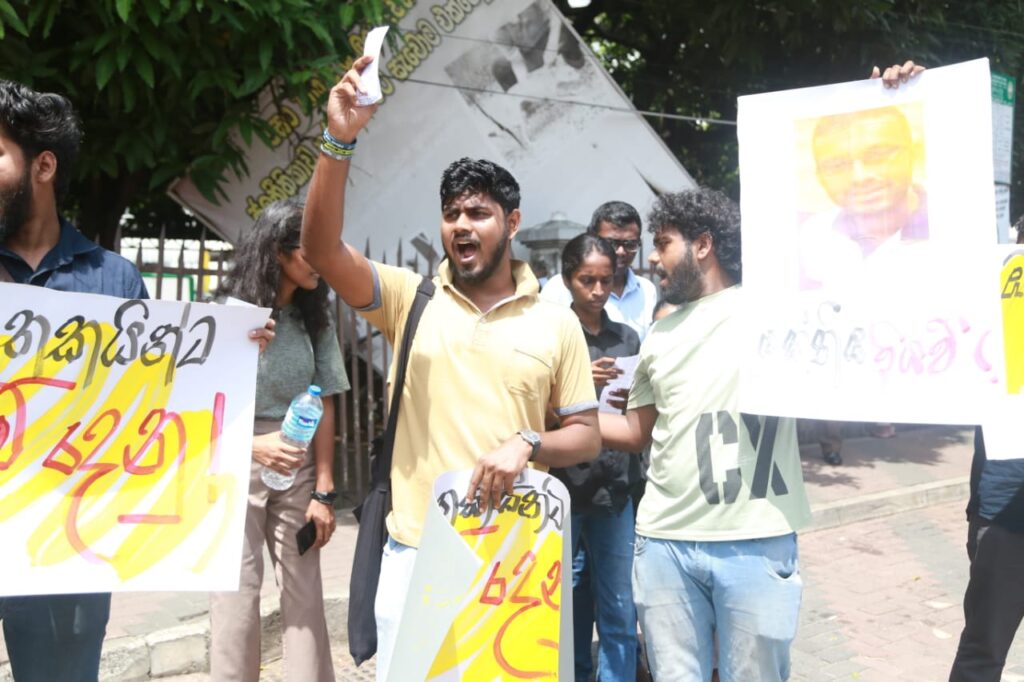
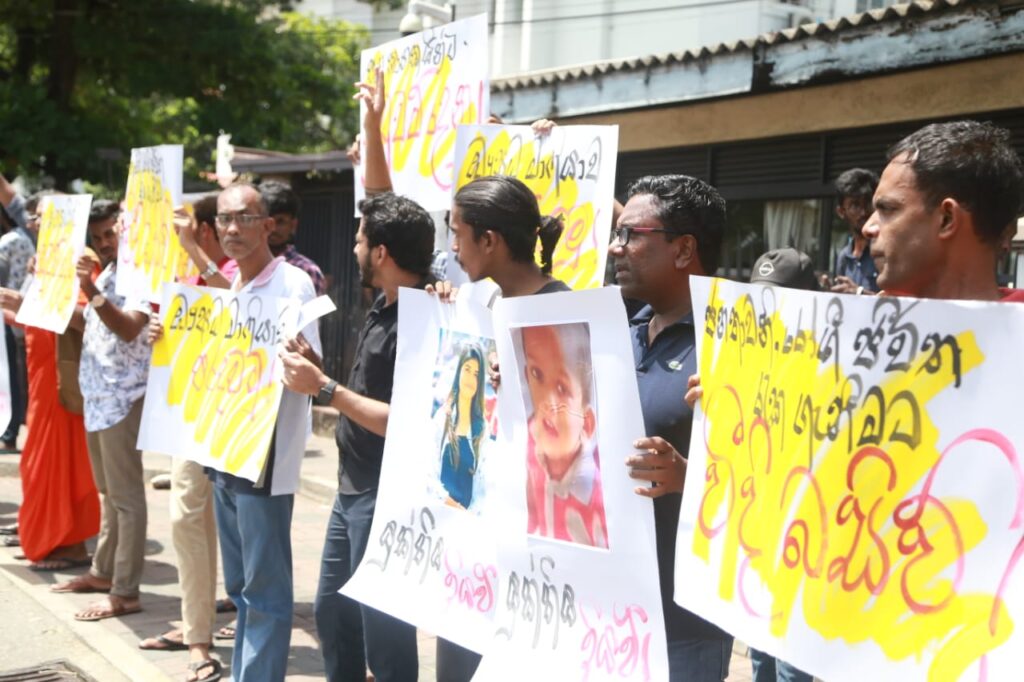
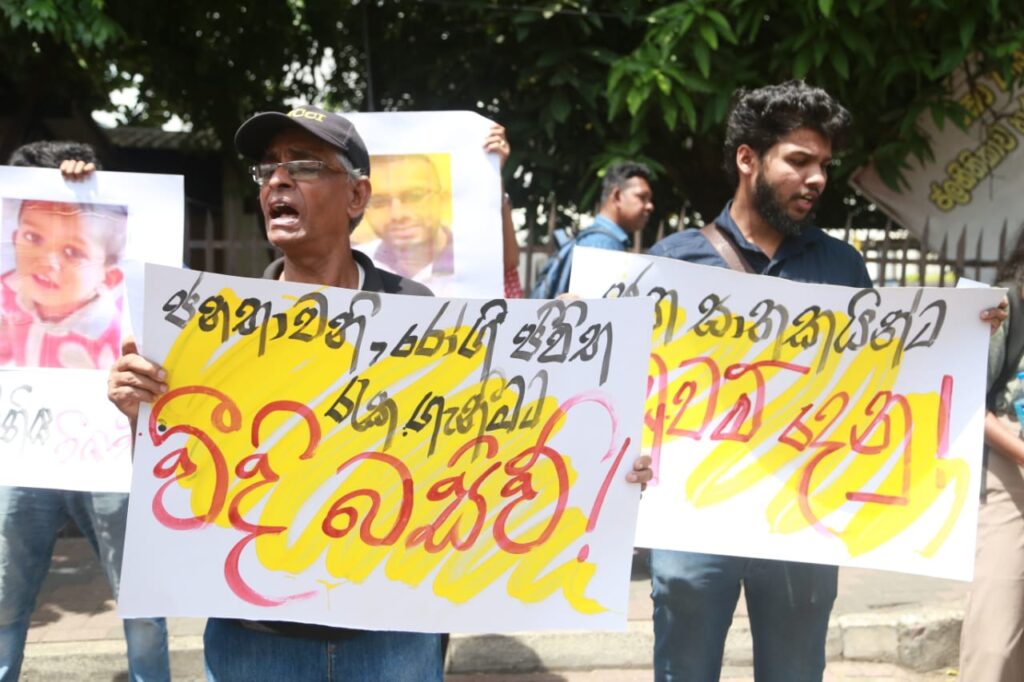
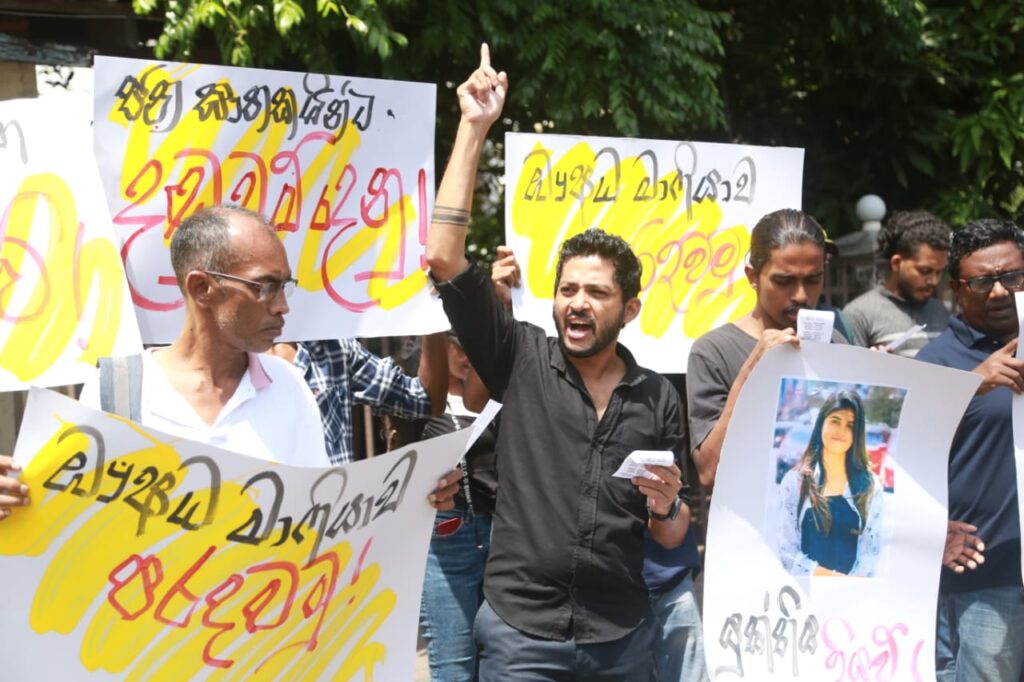
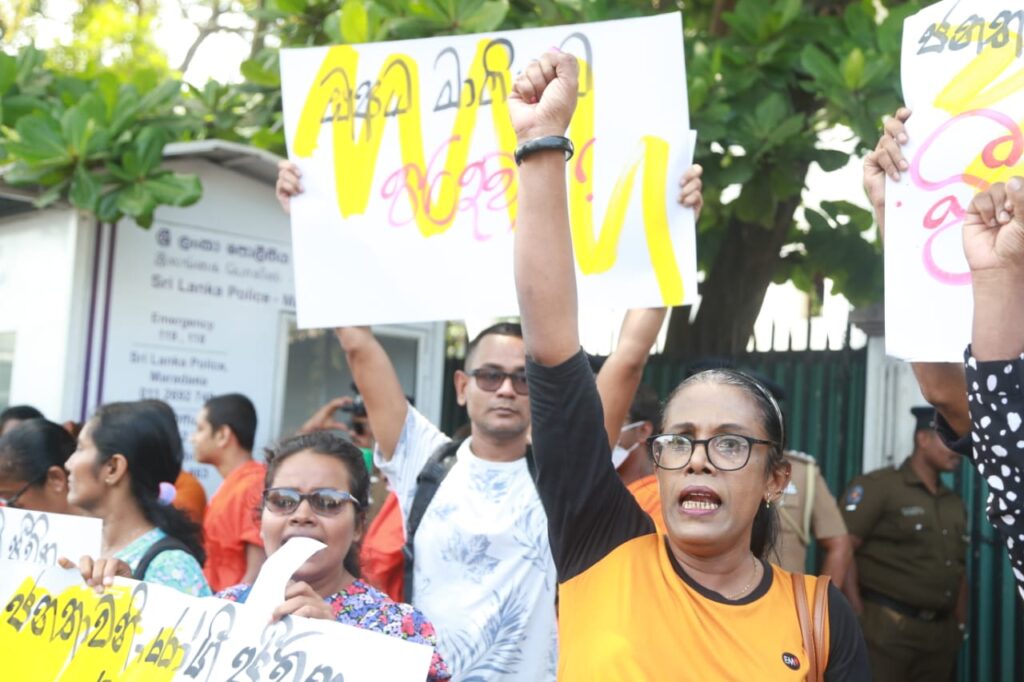
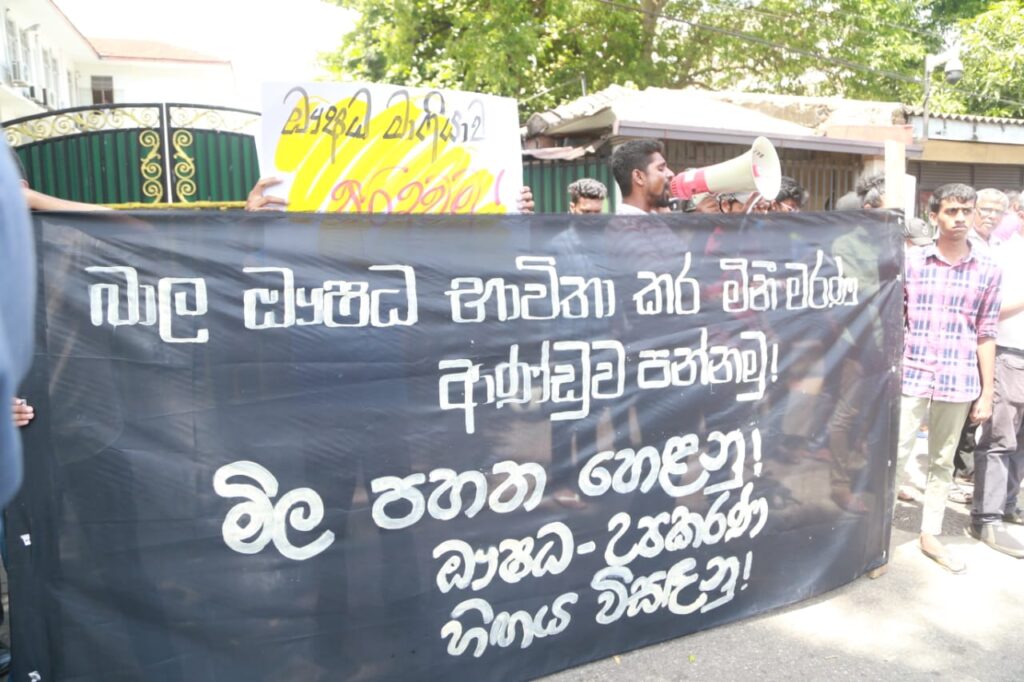
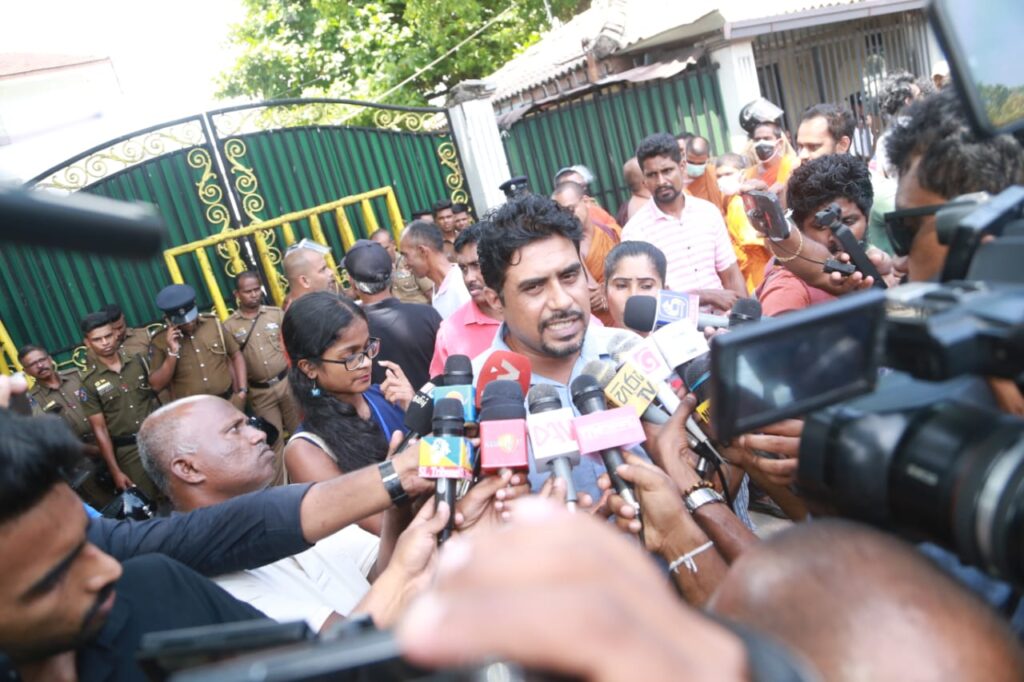
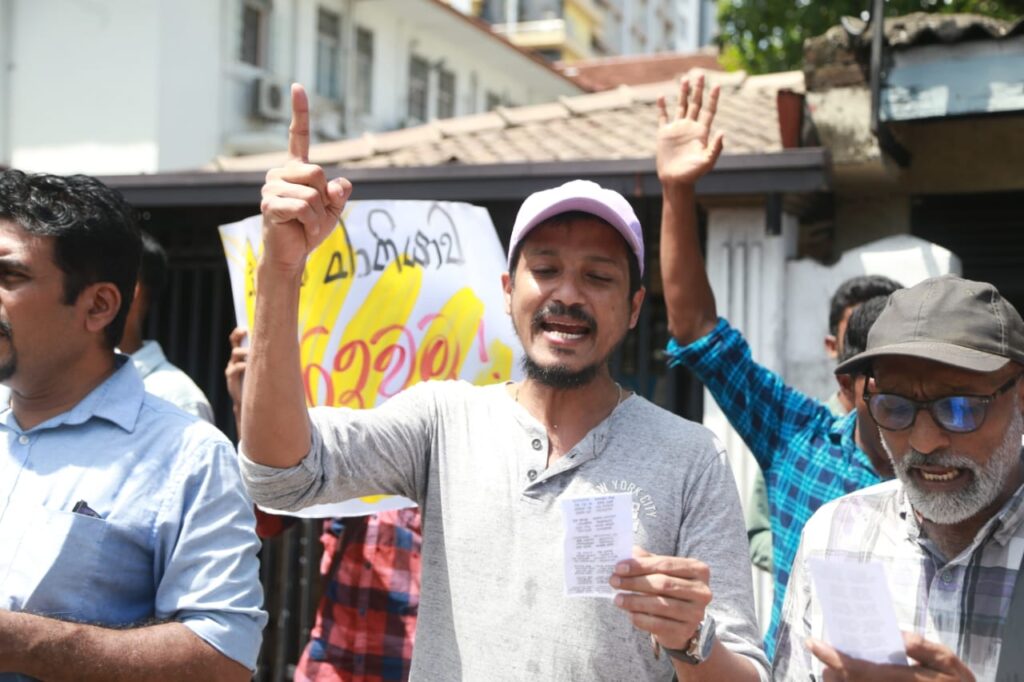
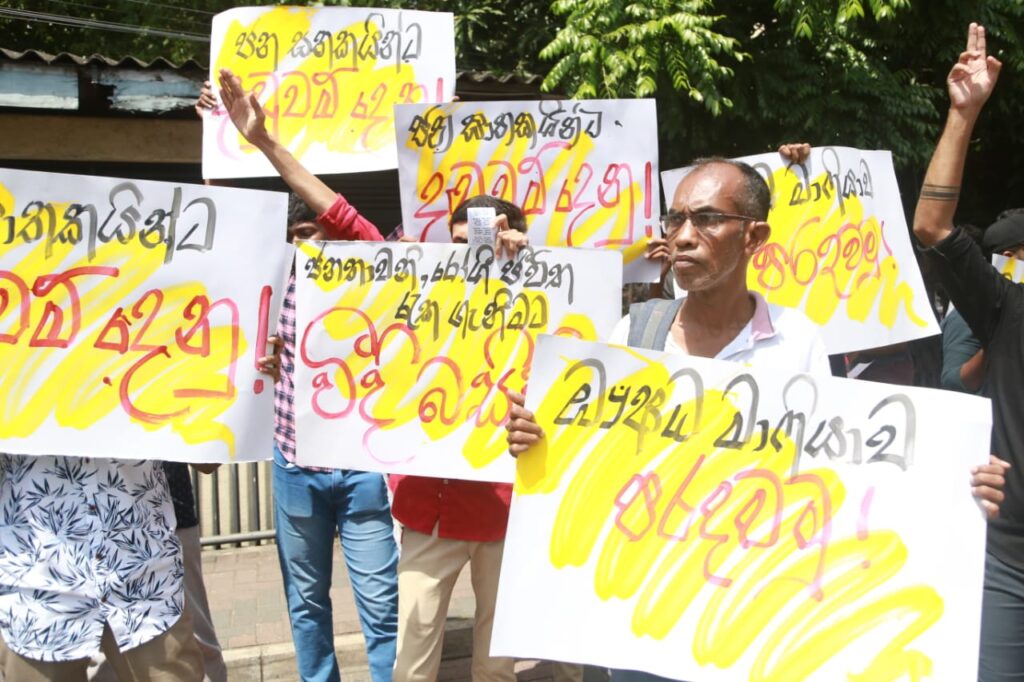
Colombo (LNW): Activists and concerned individuals staged a protest in front of the Ministry of Health in Colombo this (17) afternoon, demanding an improved Health Service, in response to recent events, including a number of fatalities induced by substandard medicines, at the Sector surrounding controversy.

The protesters demanded that the prices of medicines be slashed, the shortcoming of drugs and medical equipment be solved, and the ‘murderous regime resorting to substandard medicines’ be sent home.

The demonstration was organised in a joint effort by many trade unions, civil movements, multi-people organisations, activists and other concerned individuals.

Photo Courtesy: Ajith Senevirathne

To view full photos, visit READPHOTOS.

Pakistan’s PM thanks SL President for support over IMF deal

0

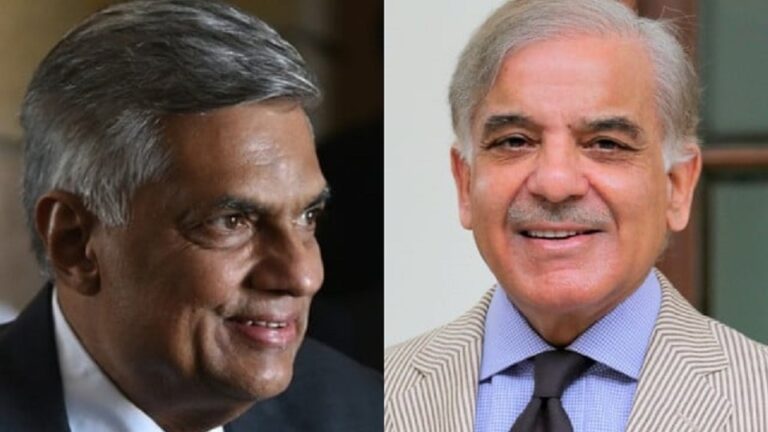
Prime Minister Shehbaz Sharif on Monday expressed his gratitude to Sri Lanka for supporting and helping Pakistan in reaching an agreement with the International Monetary Fund (IMF).

During a telephonic conversation with Sri Lankan President Ranil Wickremesinghe, PM Shehbaz acknowledged the role played by Sri Lanka as a friend and well-wisher of Pakistan.

The PM said both Islamabad and Colombo are close and reliable friends and commended the island nation’s role in regional peace and prosperity.

PM Shehbaz also expressed confidence that the two nations will soon come out of the vortex of current economic difficulties.

Reciprocating the PM’s sentiments of goodwill, the Sri Lankan president said Pakistan is a close friend and helping friends is friendship.

Wickremesinghe appreciated Shehbaz’s efforts in steering the country out of a difficult situation and felicitated him on reaching an agreement with the IMF.

On the occasion of PM Shehbaz’s meeting with Managing Director IMF Kristalina Georgieva, the Sri Lankan President stressed that the IMF should help Pakistan.

The Sri Lankan president had informed the MD IMF about the problems faced by his country due to default and stressed that Pakistan should be saved from this situation.

With sky-high inflation and foreign exchange reserves barely enough to cover one month of controlled imports, analysts had warned that Pakistan’s economic crisis could have spiralled into a debt default in the absence of an IMF deal.

The IMF said that Pakistan’s new SBA-supported programme would provide a policy anchor for addressing domestic and external imbalances and a framework for financial support from multilateral and bilateral partners.

The programme would focus on the implementation of the fiscal 2023-24 budget to facilitate Pakistan’s needed fiscal adjustment and ensure debt sustainability, while protecting critical social spending, the IMF added.

Notably, after receiving another $3 billion in the next nine months under the standby arrangement, Pakistan is set to become the fourth-largest IMF borrower in the world.

On the other hand, the IMF board has conveyed its concerns about Pakistan’s past poor record and advised it to complete the new programme to reduce the trust deficit.

Last week, the premier had also held a telephonic conversation with IMF Managing Director Kristalina Georgieva and assured her that Islamabad was serious this time to bridge the trust deficit.

Source: Tribune

Official exchange rates reveal further LKR depreciation

0

By: Isuru Parakrama

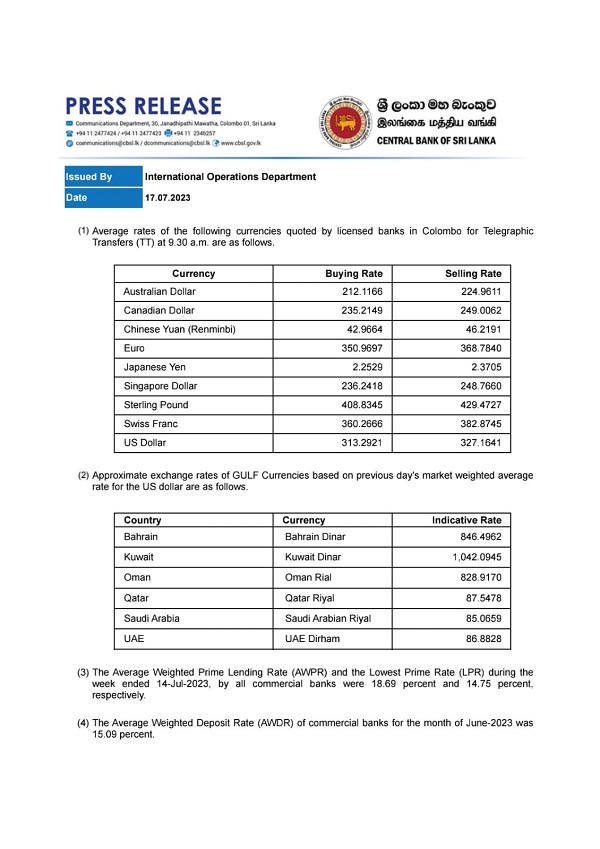
Colombo (LNW): The Sri Lankan Rupee indicates further depreciation against the US Dollar as revealed by the official exchange rates list issued by the Central Bank of Sri Lanka (CBSL) today (17).

In comparison to last week, the buying price of the US Dollar has surged to Rs. 313.29 from Rs. 310.49, and the selling price to Rs. 327.16 from Rs. 324.67.

The Sri Lankan Rupee also indicates depreciation against several foreign currencies, including Gulf currencies.

Finance State Minister asserts SL won’t need IMF after 2027

0

By: Staff Writer

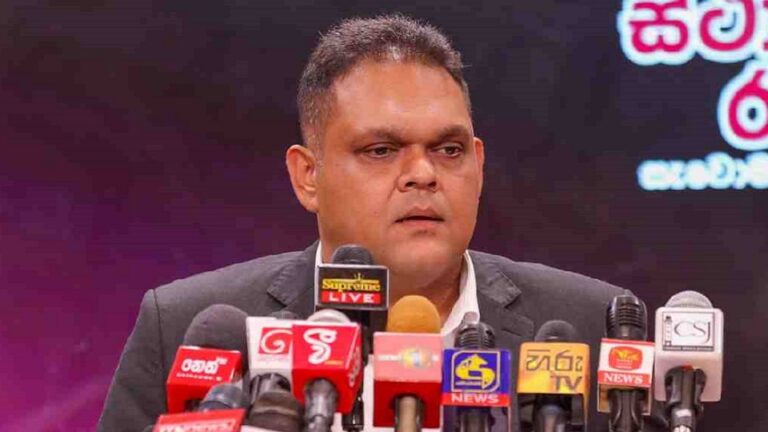
Colombo (LNW): Sri Lanka will not be needing the assistance of the International Monetary Fund (IMF) after 2027, in the backdrop where the economy of the country indicates growth, setting an example to the international community as a country that has emerged from a meltdown, said Finance State Minister Shehan Semasinghe.

The Minister made these remarks addressing a programme held at the Presidential Secretariat to inform trade union representatives about the government’s programme for local debt optimisation.

He added that Sri Lanka’s foreign reserves have now increased to US $3.5 billion, and the inflation will come down to the level of 7 per cent to 8 per cent by next month.

However, statistics indicate that “hot money” investors in government treasury bills and bonds continue with their fore-warned exodus after gaining enormous profits at the government’s expense, incurring a drop of about US $40 million in Sri Lankan forex investment in treasury bills and bonds, from approximately US $604 million to US $564 million last week.

Meanwhile, the Sri Lankan Rupee in 24 days (from June 23 to July 17) has been depreciated by 4.1 per cent against the US Dollar, indicating a drop of Rs. 12.79, thereby surging the selling price of the US Dollar up to Rs. 327.16.

The State Minister’s comments about “positive economic growth” come in on the sidelines of the government of Sri Lanka seeking Parliament approval to increase the borrowing limit by a further Rs. 9,000 billion.