Colombo (LNW): A number of low-lying areas in the Matara and Galle districts have severely been affected by flooding caused by the overflowing of Nilwala and Gingganga rivers due to adverse weather conditions yesterday (14).
Low-lying areas of Thawalama, Neluwa, Morawaka, Akuressa, Athuraliya, Pitabeddara and Kotapola have been inundated by the flooding, correspondents said.
Traffic was disrupted on the Deniyaya – Akuressa route due to the collapse of several mounds, and bus services were also temporarily suspended.
A similar situation followed in Alapaladeniya of Neluwa – Morawala route, disrupting traffic.
The Akuressa – Thawalama main road was inundated in Thangalla area.
Meanwhile, traffic was disrupted in Mapalagama – Malamura route due to the flooding caused by the overflowing of Gingganga river.
In the backdrop, electricity was also disrupted in a number of areas including Thawalama, Neluwa, Morawaka, Opatha and Weerapana.
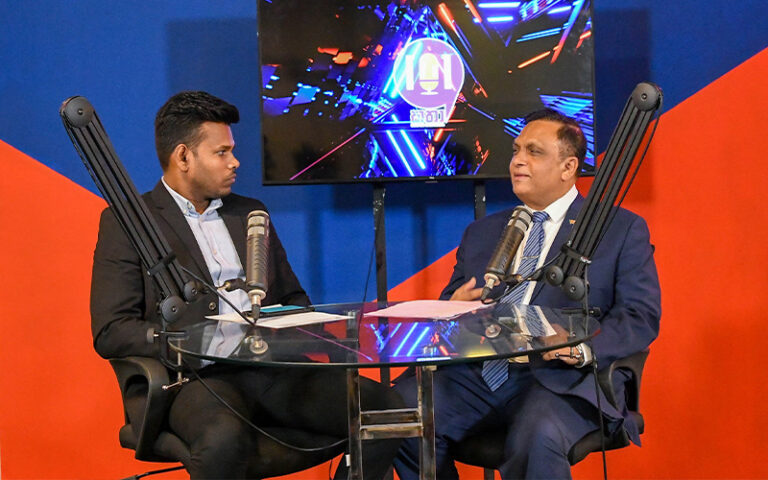
Colombo (LNW): The foreign exchange crisis leading to the decline of imports and subsequently the decline of income via customs duty has stemmed the increase of taxes, hence the problems with the current tax system, said MP Dhammika Perera, speaking to reporters after the opening ceremony of the “DP Coding School and Robotics Campus” at Sri Sumangala Piriven in Middeniya yesterday (14).
“Why is there a situation with Sri Lanka’s tax system? With the dollar shortage, the imports have dropped. Subsequent to the decline of imports, income by customs duty has also dropped. Taxes have increase to cover the lost income. This is the main reason. The prime concern is the shortage of dollars, isn’t it? So far, there is no programme evident to recover dollar,” he said.
PMD: The Australian Government has announced that it will gift a former Royal Australian Air Force Beechcraft KA350 King Air aircraft (registration A32-673) to the Sri Lankan Government. The aircraft will be used to enhance Sri Lanka’s sovereign aerial maritime surveillance capability.
This was conveyed to President Ranil Wickremesinghe when an Australian delegation led by the Australian High Commissioner HE Paul Stephens met the President at the Presidential Secretariat May(12).
The gift of the aircraft is part of the Australian Government’s commitment to strengthening and enhancing the cooperation and collaboration that is the foundation of the strong bilateral relationship between Australia and Sri Lanka. A key focus of this relationship remains the continued cooperation on countering all forms of transnational crime, including drug smuggling, as well as strengthening border management through intelligence sharing and the deterrence, disruption, interception and return of maritime people smuggling ventures under the border security operation known as Operation Sovereign Borders.
The Australian Government greatly values this cooperation, which has led to the disruption of a significant number of maritime people smuggling ventures, and has protected the lives and livelihoods of vulnerable people by preventing criminal exploitation, dangerous sea voyages and loss of life at sea.
Following the Australian Minister for Home Affairs’ visit to Sri Lanka in June last year, the Department of Home Affairs has driven forward a number of new initiatives in these areas, in partnership with a number of Sri Lankan Government departments. In pursuing these initiatives, Australia has emphasised the importance of supporting Sri Lanka to develop sovereign capabilities.
As part of the gift of the aircraft, the Australian Government will also provide sustainment support for a period of 12 months, after which sustainment will become the sole responsibility of the Sri Lanka Government.
The Australian Government is confident that this gift will further strengthen the strong bilateral relationship between Australia and Sri Lanka, and will help to enhance Sri Lanka’s ability to counter transnational crime and protect its borders.
Deputy High Commissioner Ms Lalita Kapur, First Secretary Mr Brett Zehnder and Defence Advisor Captain Ian Cain were also present at this meeting.
During a recent press conference, Opposition MP Harsha de Silva warned against the potential risks of domestic debt optimization, stressing the need for extreme caution. De Silva cautioned that if not managed carefully, domestic debt optimization could become a burden rather than a relief for the economy.
Citing the net debt relief Laffer curve, de Silva stated that the more we increase the haircut on banks, the more likely we are to hit the curve’s negative impact zone, where debt restructuring becomes counterproductive, thus leading to a negative impact on the economy. Harsha provided another example of this phenomenon: taxes on wine and spirits. High taxation has resulted in a drop in consumption, which, in turn, has substantially reduced the expected revenue for the Excise Department. Therefore, de Silva emphasized that the risk of capital adequacy in banks could result from debt optimization, which is when a bank’s capital falls below the recommended levels, raising questions about its stability.
Harsha emphasized the need for discussions on this complex issue to occur in the Committee on Public Finance. By summoning relevant officials and utilizing data to work the numbers, the committee could help avoid potential blame down the road.
Furthermore, Harsha proposed the establishment of a Financial Sector Support Fund to ensure macro-stability. He suggested that multilateral organizations like the World Bank and ADB would lend money to establish this fund, as over 1 billion dollars would be needed.
Another issue raised by Harsha concerns the Employees Provident Fund (EPF), where hard-earned people’s pension money lies. Harsha questioned whether the EPF, established to provide positive real interest rates, as envisioned by Minister Illangaratne when bringing in the act, had fulfilled its mandate. Harsha believes that people ought to get a positive interest rate that has been adjusted for inflation, as opposed positive nominal interest rate. However, as per current statistics, this has not been the case. The real interest rate has been declining since 2015, with the rate being -47.2% in 2022. The EPF has already been subjected to a 32% haircut in US dollar terms, as the value of the fund in 2021 was $15.8 billion, and by the end of 2022, it was $9.5 billion due to the rupee crashing and the impact of inflation. Harsha proposed that if the interest rate given to the recipient is less than 2.5%, the Central Bank should be given a loan from the Treasury to give the recipients a minimum of 2.5% interest. Harsha hopes that this proposal would be discussed in Parliament and that necessary legislation would provide relief to the already suffering middle class.
Harsha reiterates support for the IMF program but suggests tweaking it to make it more bearable for the people. Additionally, if Sri Lanka needs to undergo domestic debt restructuring, Harsha proposes extending a warrant, a domestic debt restructure warrant, in other words, a derivative or put option, to creditors subjected to domestic debt restructuring. Harsha suggests that since the government has promised the people stability and an increase in GDP growth to 3% by 2027, the people have agreed to tough measures like high taxes and a reduction in subsidies. Therefore, if the economy grows beyond expectations, the extra growth should be extended to the people to honor their sacrifices. Harsha expressed support for establishing discussions on this topic. Finally, the SJB believes that the government ought to treat both foreign and domestic creditors equally and non-discriminately, with the primary goal being to stabilize the country’s debt while minimizing its impact on the EPF and banks.
Colombo (LNW): Intensified by rainy conditions, a major increase in the number of dengue cases can be expected in Sri Lanka, and the record in 2023 so far is three times higher than that of the corresponding period of the last two years, revealed Deputy Director of Medical Services Dr. G. Wijesuriya.
The majority of cases are from the Colombo and Gampaha districts, and the people are advised to take measures such as destroying habitats available for mosquitoes, using mosquito repellents, not letting water stagnate and wearing protective clothing, Dr. Wijesuriya told media.
He added that a total of 45 children are currently receiving treatment for dengue at the Lady Ridgeway Children’s Hospital, and a majority of children infected are between the ages 05 – 14.
Despite any congestion being non-existent in normal hospital wards, minor congestion could be observed at Intensive Care Units in several hospitals, he went on, adding that in the case of children, there are several children being treated for dengue haemorrhagic fever.
Colombo (LNW): showers or thundershowers will occur at times in Western, Sabaragamuwa, Central and North-Western provinces and in Galle and Matara districts, the Department of Meteorology said in its daily weather forecast today (15).
Strong winds about (40-45) kmph can be expected at times over the Island, the statement added.
General public is kindly requested to take adequate precautions to minimise damages caused by temporary localised strong winds and lightning during thundershowers.
Marine Weather:
Condition of Rain:
Showers or thundershowers will occur at several places in the sea areas off the coast extending from Puttalam to Matara via Colombo and Galle.
Winds:
Winds will be south-westerly over sea area around the island and speed will be (30-40) kmph. Wind speed may increase up to (55-60) kmph at times in the sea areas around the island.
State of Sea:
The sea areas around the island will be fairly rough to rough, very rough at times. Temporarily strong gusty winds and very rough seas can be expected during thundershowers.
Meanwhile, the extremely severe cyclonic storm “Mocha” located over North-East Bay of Bengal has landed in-between southeast Bangladesh and north Myanmar coasts yesterday noon (14), and it is very likely to weaken into a depression and then into a low-pressure area during the next 24 hours, announced the Natural Hazards Early Warning Centre of the Department.
Naval and fishing communities, therefore, are requested to be vigilant while engaging in fishing and naval activities in the sea areas of the Bay of Bengal and in the sea areas around the island, it added.
Colombo (LNW): Public servants will be required to resume the scanning of their fingerprints, a logging system that was suspended on January 3, 2022 due to the Covid-19 pandemic, starting from Monday (15) as a mandatory move.
Accordingly, public servants will be required to scan their fingerprints when reporting for duty and leaving the offices.
The system that was suspended last year has been reactivated now, and therefore, it will be mandatory for state sector employees to log in, starting from Monday.
Foreign Minister Ali Sabry during his visit to Stockholm to participate in the 2nd EU – Indo Pacific Forum, had cordial bilateral discussions with his Swedish counterpart Tobias Billström, committing to strengthen engagement in all spheres of the bilateral relationship.
While recalling the decades-old, multi-faceted, partnership between the two countries and peoples, the two ministers agreed to suitably commemorate in 2024, the 75th Anniversary of diplomatic relations, which were established in 1949.
Ministers Sabry and Billström discussed all areas which straddle the long-standing engagement, including in the political, economic, development spheres.
The two ministers placed strong emphasis on economic cooperation between the two countries, and agreed to work together in several areas, including investment, trade, IT, climate and environment.
Foreign Minister Sabry briefed his Swedish counterpart on the trajectory of the economic recovery, following the Extended Fund Facility (EFF) with the IMF. He appreciated Swedish support within the Paris Club, during the IMF negotiations with Sri Lanka.
Discussions on the economic relations focused on improving trade, diversifying production bases for Swedish supply chains, further enhancing business linkages in the IT sector, manufacturing, tourism, and investment particularly taking into account Sri Lanka’s strategic location and the emergence of the financial hub within the Colombo Port City. He also spoke of the opportunities for diversification of supply sources for Swedish and global supply chains.
The Sri Lankan Minister also briefed the Swedish side on the progressmade in the reconciliation process, including the significant steps taken on judicial and legislative reform, release of land and highlighted the importance of economic advancement, and livelihood sustenance in the process. Discussions also focused on early the convening of the bilateral political consultations.
The two Ministers also exchanged views on international developments, including their impact on economic stability and progress in different parts of the world.
At the second EU-Indo Pacific Ministerial Forum Minister Sabry co-moderated the 1st roundtable discussion on “Building more sustainable & inclusive prosperity together” and will continue his bilateral consultations with several other visiting European and Asian countries on the sidelines of the main forum.
Colombo (LNW): Despite the decision to slash the price of milk powder by Rs. 200 per kilo with effect from May 15, the existing price will remain till May 23, as there is a delay in shipments, announced the Milk Powder Importers Association.
Accordingly, with the new shipments, the price reduced milk powder packs will be distributed from May 23, said Union member Prof. Lakshman Weerasuriya.
Earlier, a decision was taken to slash the prices of imported milk powder by Rs. 200 per kilo following discussions between Trade Minister Nalin Fernando and milk powder importers.
Fair Trials: Today (11), members of the European Parliament voted for a landmark ban on predictive policing and criminal prediction systems in the EU AI Act. The ban will be the first of its kind in Europe.
MEPs in IMCO-LIBE, the two Committees in charge of the flagship AI Act, voted to finalise the text of the act, in advance of the whole Parliament vote in June.
Fair Trials has been calling for a ban on these systems since 2021, on the basis that they reinforce and reproduce structural discrimination, and infringe upon fundamental rights.
Today, the European Parliament has taken an important step towards protecting people from harmful AI systems in law enforcement and criminal justice settings.
The road to a ban
Fair Trials first called for a ban in 2021 and has since built a coalition of more than 50 rights, lawyers and other civil society organisations across Europe, including European Digital Rights (EDRi), Access Now, Amnesty Tech, the Council of Bars and Law Societies of Europe. Following Fair Trials’ campaigning, many MEPs also publicly supported a ban. Co-rapporteur of the AI Act, Dragos Tudorache, said: “Predictive policing goes against the presumption of innocence… We do not want it in Europe.”
‘Predictive policing’: Discrimination, surveillance and infringements on rights
There are numerous predictive AI systems currently used by law enforcement and criminal justice authorities across Europe. These systems can and have exacerbated existing structural discrimination, resulting in Black people, Roma and other minoritised ethnic people being disproportionately surveilled, stopped and searched, arrested, detained and imprisoned.
Fair Trials’ research found that attempts to ‘predict’ criminal behaviour with AI and automated-decision making systems: infringe fundamental rights, including the right to a fair trial, the presumption of innocence and the right to privacy; legitimise and exacerbate racial and ethnic profiling and discrimination; and result in the repeated targeting, surveillance and over-policing of minoritised ethnic and working-class communities. These discriminatory practices are so fundamental and ingrained that all such systems will reinforce such outcomes. This is an unacceptable risk. They must be banned.
Prohibition text and other amendments
The full text of the prohibition is below, within Article 5 of the Act, which comprises of a list of ‘prohibited practices’: “(da) the placing on the market, putting into service or use of an AI system for making risk assessments of natural persons or groups thereof in order to assess the risk of a natural person for offending or reoffending or for predicting the occurrence or reoccurrence of an actual or potential criminal offence based on profiling of a natural person or on assessing personality traits and characteristics, including the person’s location, or past criminal behaviour of natural persons or groups of natural persons;”
Fair Trials also supported several other amendments to the Act, which it was also pleased to see pass, including: a ban on remote biometric identification systems, such as face recognition surveillance, and measures to ensure transparency and accountability for other AI systems.
Next step, plenary vote.
The vote today is a landmark result, but the fight is not yet over. The AI Act will be subject to the plenary vote of the whole European Parliament in June.