Home Blog Page 1680

Preparations underway to reinstate Mahinda Rajapaksa as the PM on the 09th?

0

A rumor is spreading in the political field that former Prime Minister Mahinda Rajapaksa is preparing to be sworn in as Prime Minister again on May 09.

According to political sources, this work is to be done at the strong request of the Sri Lanka Podujana Peramuna with the aim of giving a respectful farewell to Mahinda Rajapaksa and the current Prime Minister Dinesh Gunawardena has also agreed to this.

Mahinda Rajapaksa had to resign from the post of Prime Minister on May 9, 2022 due to the public protest in the country. On the 9th of May, his supporters who came to Araliyagaha Mandir launched an attack on the Galle Face protest site and the frustrated protestors launched a massive counter attack against the Rajapaksa and the Ministers of Pohottuwa in Colombo as well as in many areas across the island.

Sources said that in order to appease the severe humiliation caused to Rajapaksa and Pohottuwa by that incident, it has been proposed to re-appoint Mahinda Rajapaksa as Prime Minister on May 09 and they are currently preparing the necessary auspicious times for that.

Meanwhile, sources added that there has been no agreement or approval from President Ranil Wickremesinghe for this powerful request coming from Pohottuwa.

In this regard, when Lanka News Web asked two high-ranking politicians related to the government, they said that there is no truth in the news of preparations to reinstate Mahinda Rajapaksa as Prime Minister.

They said that this news had been advertised on many occasions in the past with different dates from time to time, but that did not happen.

Sri Lanka Original Narrative Summary: 06/05

0
  1. President Ranil Wickremesinghe attends the Commonwealth Leaders Meeting held at the Commonwealth Secretariat in London: meets Rwandan President Paul Kagame and discusses potential areas of cooperation on agriculture and healthcare between the two countries.
  2. Health authorities say influenza & dengue are on the rise: also say it’s vital to wear face masks as safety precautions: adds cases of “leptospirosis” (rat fever) are increasing with 2,600 cases of rat fever reported so far in 2023: with 13 new cases of coronavirus being identified, total number of corona cases rises to 672,207: Corona deaths stands at 16,844.
  3. Most wanted terrorist in Pakistan, Iqbal alias Bali Khayara, who was involved in the attack on the Sri Lanka cricket team at Lahore in March 2009, killed by Pakistan Police.
  4. Flights from Melbourne, Male & Dammam to Colombo diverted to the Mattala Rajapaksa International Airport due to bad weather conditions at Katunayake.
  5. MP Udaya Gammanpila charges that MP Patali
    Champika Ranawaka is lying with his comments regarding MP Wimal Weerawansa’s recent book, to protect the interests of the USA: asserts it is clear that Ranawaka has not even read the first page of the book.
  6. MP Professor Ranjith Bandara says the leader of the SLPP was “presented” at the May Day rally amidst public acclamation: also says he is glad that members of the media have understood that the next leader and Presidential candidate of the SLPP will be Basil Rajapaksa.
  7. Leading global supplier of tea, coffee and botanical ingredients, Finlays says it will sell its James Finlay Kenya tea estates business to Sri Lanka’s Browns Investments: in December 2021, Browns acquired Finlays’ Sri Lankan tea estate business.
  8. Chairman of the Federation of University Teachers’ Associations says there is a need for new legal provisions to prevent the titles of “doctor of philosophy” and “professor” from being misused by certain individuals.
  9. National Building and Research Organization issues Landslide Early Warnings in Badulla, Matara, Matale, Galle and Kegalle Districts.
  10. Wildlife and Forest Resources Conservation Minister Pavithra Wanniarachchi says Sri Lanka’s wildlife resources can be used to bring in foreign exchange: also says people of most countries live hard lives due to cold climates, but people of Sri Lanka are fortunate to live without such conditions.

Showers to occur at times in several provinces today

0

Showers or thundershowers will occur at times in Western, Sabaragamuwa, North-Western and Southern provinces and in the Kandy and Nuwara-Eliya districts.

Showers or thundershowers will occur at several places in Northern, Eastern and Uva provinces during the afternoon or night.

Strong winds about (40-50) kmph can be expected at times over western and southern coastal areas.

General public is kindly requested to take adequate precautions to minimize damages caused by temporary localized strong winds and lightning during thundershowers.

IMF Director Says Proper Implementation of Program Can Lead Sri Lanka to Sustainable Debt and Prosperity

0

The Director of Asia & Pacific Department of the International Monetary Fund (IMF), Krishna Srinivasan, has stated that Sri Lanka can achieve sustainable debt and prosperity by properly implementing the IMF-supported program. Speaking at a press briefing on the Regional Economic Outlook on Asia and Pacific, Srinivasan highlighted that Sri Lanka had a quintessential problem with twin deficits, which put pressure on external accounts and resulted in falling reserves and exchange rates.

To address these challenges, Sri Lanka approached the IMF for a relief program, which was recently approved by the global lender’s Executive Board. The 48-month extended arrangement under the EFF program of SDR 2.286 billion (approximately USD 3 billion) for Sri Lanka opens doors for the country to access financing up to USD 7 billion from the IMF, international financial institutions, and multilateral organizations.

Srinivasan explained that the IMF-supported program is a revenue-based consolidation that provides stability to Sri Lanka’s economy and aims to rein in inflation, which went through the roof. He also emphasized that the program addresses governance and corruption issues in Sri Lanka and has a floor on how the country should support the poor and vulnerable.

Furthermore, Srinivasan noted that Sri Lanka needs to make good faith efforts to reach a debt agreement with its private, official, and other creditors. When restructuring Sri Lanka’s domestic debt, it is essential to safeguard financial stability as debt sustainability remains a significant challenge in the country.

In conclusion, Srinivasan urged Sri Lanka to properly implement the IMF-supported program to achieve sustainable debt and prosperity. The program provides a comprehensive approach to address the country’s economic challenges and supports the poor and vulnerable while tackling governance and corruption issues.

Sri Lanka expects cash infusion from 1.5 million tourists in 2023 for crisis-hit economy

0

Sri Lanka expects to host 1.55 million visitors and earn 2.7 billion Sri Lankan rupees ($8.4 million) in much-needed tourism revenue this year, as it maps a road to the recovery of its tourism sector amid its worst economic crisis in decades.

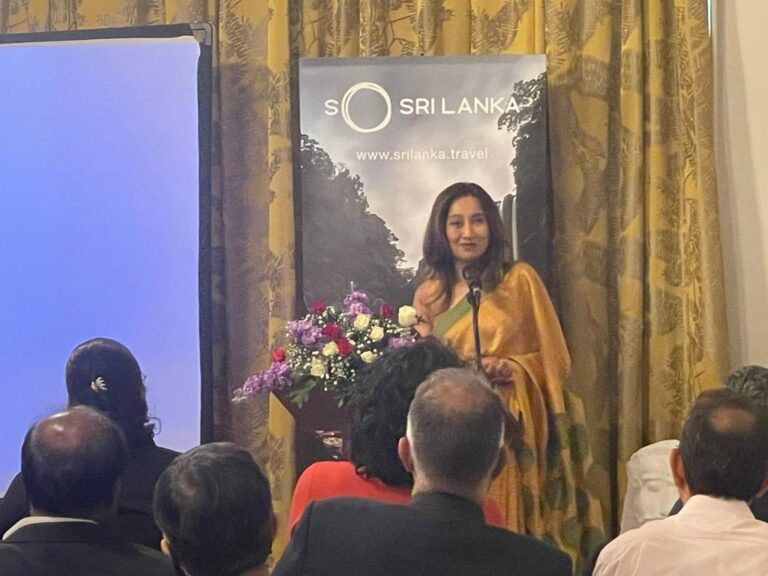
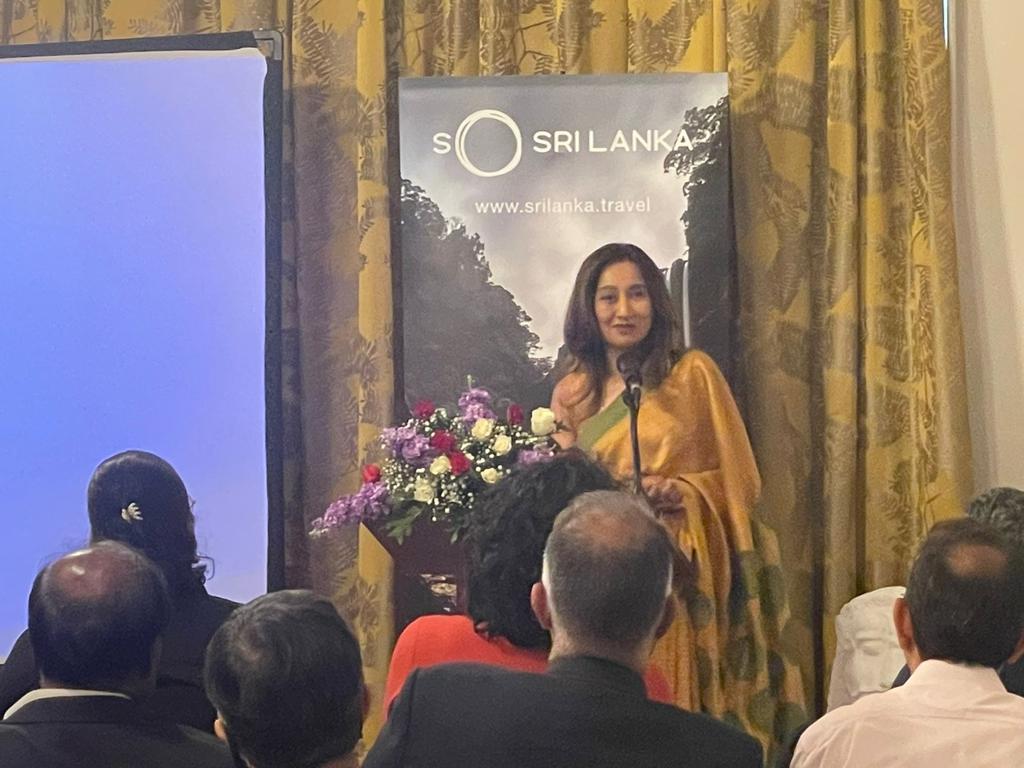
This is up from the 720,000 tourists it welcomed in 2022, but still below the record 2.3 million visitors that flocked to the country in 2018, Padma Siriwardana, managing director of the Sri Lanka Tourism Promotion Bureau, told The National on Thursday on the sidelines of the Arabian Travel Market in Dubai.

The sector is on target to achieve its annual goal after receiving 450,000 visitors this year to the end of April, she said.

“We are back on track for recovery. We are coming out stronger because our industry is very resilient,” Ms Siriwardana said.

The recovery comes after the country’s tourism sector suffered several setbacks: the Easter attacks in 2019, the two-year Covid-19 pandemic and widespread street protests in 2022 in response to an unprecedented economic crisis that led to severe shortages of food, medicine, fuel, cooking gas and electricity.

Sri Lanka’s economy contracted by 8.7 per cent in 2022 and is forecast to shrink by another 3 per cent this year.

Inflation hit an average of 46.4 per cent in 2022, affecting mostly the poor and vulnerable, but is expected to come down to 28.5 per cent this year, the International Monetary Fund said.

READ MORE

IMF approves $3bn bailout loan for Sri Lanka

Etihad flights from Abu Dhabi to Sri Lanka to fly via Maldives

Underpinning recovery in the tourism sector are Sri Lanka’s efforts to promote “niche” offerings to attract high-spending visitors from countries such as Japan, Ms Siriwardana said.

Beckoning tourists to the island are marine explorations to discover more than 100 shipwrecks along its coast, a 22-day hike through the mountains on its Pekoe Trail and wellness programmes.

“The post-Covid traveller is into new experiences,” she said. “We started a campaign targeting our main wellness markets, France and Germany, to promote authentic Sri Lankan wellness.”

In March, the IMF approved a $3 billion bailout loan to help the island nation of 22 million people to restructure its debt and address its crisis-hit economy.

Asked if the tourism industry will be one of the beneficiaries of the incoming funds, Ms Siriwardana said: “Part of it will be for the tourism industry. Some of the donors have committed to giving more funds for tourism investment.”

While the tourism board has sufficient funds to launch international promotional campaigns, it had difficulty last year with marketing spend abroad due to the country’s foreign currency shortage, but “now it’s definitely getting better”, she said.

The tourism board is increasingly localising the creative, marketing and public relations work it commissions so that it spends money within the country, she said.

A man appears in traditional Sri Lankan dress at the Arabian Travel Market in Dubai. Chris Whiteoak / The National
A man appears in traditional Sri Lankan dress at the Arabian Travel Market in Dubai. Chris Whiteoak / The National 

While the devaluation of its currency has made Sri Lanka a cheaper place to visit for tourists, the country has also worked on campaigns after last year’s protests to address concerns about its safety and stability as a tourist destination, she said.

“This is basically the recovery phase and we’re looking at negating negative perceptions,” she added.

“We are launching a mega influencer campaign called ‘Seeing is Believing’ because you have to come and see now — it’s all under control and everything is back to normal.”

Sri Lanka’s severe foreign currency crisis has made it more expensive to import basic goods. However, import restrictions for the tourism industry have been relaxed, inflation has dipped and the sector has adopted a strategy to source local produce, she said.

“Sri Lanka is very safe. We have a lot of unique authentic experiences for tourists. It’s a beautiful country — we have good weather all year round and amazing landscapes, so do visit us,” she said.

Richard Nuttall, chief executive of SriLankan Airlines. Photo: SriLankan Airlines
Richard Nuttall, chief executive of SriLankan Airlines. Photo: SriLankan Airlines 

Meanwhile, national airline SriLankan, which operated under tough conditions last year amid scarce jet fuel supplies, travel advisories that curtailed tourist inflows and lack of access to funding, is now starting to soar, the airline’s chief said.

It reached break-even point in the fiscal year ended March 2023 for the first time in 15 years, Richard Nuttall, the airline’s chief executive, said at the Arabian Travel Market.

This came amid constrained capacity, travel demand from the Sri Lankan diaspora and transit traffic from the Indian market.

The airline group is expected to turn a profit in its next fiscal year as travel bans lift and jet fuel supplies normalise, he said.

The debt-laden airline as well as several other state-owned entities have been proposed for sale to raise foreign exchange and boost the country’s external reserves.

The government is keen to accelerate the airline privatisation process and aims to secure an investor by year’s end, the airline’s boss said. He declined to name interested parties, the size of the stake sale or the ownership structure.

However, there are “clear strategic benefits”, given Sri Lankan airline’s proximity to India, where it flies to 10 cities.

SriLankan Airlines has reached a break-even point in its fiscal year ended March 2023, Richard Nuttall said. Photo: SriLankan
SriLankan Airlines has reached a break-even point in its fiscal year ended March 2023, Richard Nuttall said. Photo: SriLankan 

SriLankan issued a request for proposals earlier this year to lease used aircraft as it seeks to boost capacity in response to higher travel demand.

It is looking to lease five Airbus A320-family jets and five A330 aircraft, Mr Nuttall said. It is currently evaluating the bids received and aims to grow its fleet to 27 jets by mid-2024.

NATIONAL NEWS

Shanghai Cooperation opens Economic Multi-Functional window in Sri Lanka

0

By: Staff Writer

Colombo (LNW): The Shanghai Cooperation Organization (SCO) of China’s, Eurasian political, economic, international security and defence Association has agreed to open Trade and Economic Multifunctional Platform in Sri Lanka.

This was announced by the head of a senior delegation of the Shanghai Cooperation Organisation’s Trade and Economic Multifunctional Platform when they called on Prime Minister Dinesh Gunawardena at the Temple Trees on Wednesday (3) to discuss ways and means of establishing cooperation.

The Prime Minister urged the delegation to support Sri Lanka to upgrade suburban transport services in the country using modern technical know how.

He also requested to facilitate e-commerce modules for Sri Lanka to enter into online trade with the member countries of the Shanghai Cooperation Organisation (SCO).

He also asked to establish cooperation between Shanghai City and Colombo City under the MoU signed in 2002.

Think Tank of the Trade and Economic Multi-Functional Platform for SCO Member Countries Executive Director Chen Tao said Sri Lanka would immensely benefit from this SCO window.

“The SOC-TEM Platform has the potential to help third world countries by providing access to trade and economic opportunities within the SCO member countries,” he said.

“They include increased market access for which the platform’s trade information module can help businesses in Sri Lanka to identify new export markets and make informed decisions about their trade activities. This can lead to increased market access and greater economic opportunities.”

He added that the logistics module can help businesses in Sri Lanka to streamline its supply chain management, reducing costs and improving delivery times. This can help these businesses to compete more effectively in international markets.

The financial module can provide access to financing options such as loans and credit facilities, which can help businesses in Sri Lanka to grow and expand. This can lead to increased investment and job creation in these countries, Chen Tao said.

He added that another opportunity is to get E-commerce opportunities. “The e-commerce module can provide a platform for businesses in third world countries to sell their products online, either within the SCO countries or internationally.

This can help these businesses to reach new customers and expand their markets, even if they have limited resources for marketing and distribution.

The Shanghai Cooperation Organisation (SCO) is a Eurasian political, economic, international security and defence organization.

It is the world’s largest regional organization in terms of geographic scope and population, covering approximately 60% of the area of Eurasia, 40% of the world population. Its combined GDP is around 20% of global GDP.

IMF compels SL to diagnose governance and corruption as Asia’s first country

0

By: Staff Writer

Colombo (LNW): The International Monetary Fund sponsored economic reform program instrumental in the unlocking of US$3 billion for Sri Lanka has compelled the island nation to undergo a deep diagnostic on the issue of governance and corruption as the first country in Asia to do so.

This was emphasized by IMF Asia and Pacific Department Director Krishna Srinivasan when he addressed at an event on Wednesday on May 03 adding that the Sri Lankan government is working on resolving some of these socio economic issues and will “flesh out a strategy.”

The outcome of this diagnosis on governance and corruption issues will feed into the program going forward.

It’s also a program where we have a floor on how the country should support the poor and the vulnerable, he pointed out.

And to make sure that the fiscal support they provide is temporary and targeted to the people who need it most. So it’s a very comprehensive program and the fiscal consolidation by itself will not be enough, he claimed.

The next step for Sri Lanka is to make good faith efforts to reach a debt agreement with their creditors — private creditors, official creditors and so on.

In terms of growth outlook itself, we had a contraction of 8.7 percent 2022. We have growth contracting at 3 percent in 2023 and then making a mild recovery.

But the issue will be for Sri Lanka to implement the program well so that debt can be made sustainable, which is a big difference from previous programs, and the country can be put on the path to prosperity, he disclosed.

Sri Lanka is a country with a quintessential problem where it had a twin deficit, a large increase in the fiscal deficits, putting pressure on the external accounts, reserves falling, and exchange rate falling.

And so the government has approached the IMF for an Extended Fund Facility supported program, which was approved by the Board not too long ago, he revealed.

And that places the emphasis on one macroeconomic stabilization, bringing inflation down. Again, the fiscal consolidation is based on revenue-based consolidation.

That’s partly because Sri Lanka has among the lowest in terms of revenue mobilization, tax collection, and that goes back to the policy mistake they made pre-pandemic, wherein they cut taxes across the board, whether it’s VAT, corporate tax, and personal income tax.

So the Fund supported program is a revenue-based consolidation which provides stability to the economy.

It also wants to rein in inflation, which went through the roof. It addresses governance and corruption issues in Sri Lanka.

Sri Lanka’s inflation has come down, albeit from high levels. So this is again work in progress. Inflation has to come down durably because, inflation is the worst kind of tax on the poor, and the poor and the vulnerable are hurting the most.

In order to bring inflation under control in terms of monetary policy with support of fiscal policy, the Central Bank has to bring inflation down to levels which are reasonable.

In terms of debt restructuring, it has to restructure debt of all creditors — private creditors, official creditors, and to some extent, domestic debt, for the simple reason that debt sustainability is quite a big challenge in Sri Lanka.

James Finlay sells its Kenya tea business to Sri Lanka investors

0

By: Staff Writer

Colombo (LNW): James Finlay Limited a leading global supplier of tea, coffee and botanical ingredients and solutions, has reached an agreement to sell its James Finlay Kenya tea estates business to Browns Investments PLC.

.James Finlays has stepped out of the Kenyan market in a deal that will see a Sri Lankan Company carry on its operations.

Browns Investments PLC, a tea-producing company in Sri Lanka has entered into an agreement to purchase James Finlay Limited, making this the company’s first investment in Kenya.

Browns Investments, in a press release, said the company will continue to operate James Finlay Kenya as a leading global supplier of Kenyan tea.

The purchase will be completed in the next few months and will include all parts of James Finlay Kenya Ltd except the Saosa tea extraction facility, which will remain under Finlays’ ownership and will continue to source leaf tea, timber, and other services directly from James Finlay Kenya.

“We’re proud to be moving a business with such a proud heritage into a new phase of sustainable growth,” said Kamantha Amarasekera, Director of Browns Investments PLC.

Browns Investments PLC was selected as the approved buyer because of its strong legacy of guiding its tea estates to continued growth, but also its focus on doing so sustainably while supporting its workforce and local communities.

Browns is a highly successful diversified conglomerate and part of the LOLC Holdings PLC group companies which is one of the largest and most profitable listed corporation in Sri Lanka. Headquartered in Colombo, the company has a proud heritage in operating plantation businesses, owning Maturata Plantations, Hapugastenne Plantations PLC, and Udapussellawa Plantations PLC.

It is one of the largest tea producing companies in Sri Lanka consisting of 49 individual estates that stretch across an area of over 30,000 hectares and employs over 10,000 individuals.

James Finlay Kenya is Brown’s first investment in the Kenyan tea industry which it sees as an exciting opportunity for growth.

In December 2021, Browns acquired Finlays’ Sri Lankan tea estates business, which has gone from strength to strength, demonstrating Browns’ successful commitment to sustainable growth.

Throughout the sale process Finlays has at all times prioritized the interests of James Finlay Kenya as a business and its workers.

As part of the sale agreement, Browns and Finlays have mutually agreed to acknowledge the long-standing support of the local community by selling 15% of shares in James Finlay Kenya to a locally-owned co-operative. Finlays has identified a preferred third party which it is currently in discussions with.

While the sale process is concluded, operations for James Finlay Kenya will be business as usual, and a full plan is under development to ensure a smooth transition with no customer disruption.

On completion of the sale, Browns intends to continue to run the business as it has been operated until now, as a leading global supplier of Kenyan tea, under a new name. There will be no change in the employment arrangements for current employees of James Finlay Kenya.

Finlays has a long heritage in owning tea estates, however after a strategic review in 2022, it decided that a new strategic investor in James Finlay Kenya would continue to guide this unique business towards long-term sustainable growth for the benefit of the whole community and the Kenyan economy at large.

Leaf tea will continue to be a critical part of Finlays’ portfolio, in which it has a strong global presence across the UK, Sri Lanka, Dubai, Kenya, Argentina, the US and China.

Why China got population control wrong; India got it right

0

In the poem The Road Not Taken, Robert Frost described the dilemma of standing at the intersection of two divergent paths. Both looked inviting, but he had to choose one. “I took the one less travelled by/And that has made all the difference,” he wrote.

Half a century ago, India and China stood at a similar point. Their fertility rates – at 5.6 and 5.5 children per woman – were neck and neck and way more than what is regarded as replacement level fertility of 2.1, at which the population stabilises. They also faced similar social and developmental challenges as they sought to build their nations after suffering the devastation of long colonial and imperial humiliations and war.

However, their journeys towards population control took vastly different routes, shaped by vastly different policies and approaches. Today, as India’s population passes China’s amid a mix of hope and apprehensions about its implications, it’s important to recall those journeys so societies and policymakers draw the right lessons from them.

Slow and steady India

India has been running its family planning programme since 1952 and chose to travel on a path that was slow, steady and winding. It provided reproductive health services, choices for couples on contraception and the freedom to decide how many children they wanted.

The strategy wasn’t an obvious success right away. The population growth rate increased initially, from 21.6 percent in 1961 to 24.8 percent in 1971, and the population rose from 439 million to 548 million, largely as the result of increased life expectancy — up from 45 to 49 years in that decade.

Frustration about these rising numbers was palpable. So much so that after then-Prime Minister Indira Gandhi imposed a state of national emergency in 1975 and suspended many civil liberties, the government used coercion to sterilise people, especially men.

With the lifting of the emergency in 1977, India returned to its old path focused on the provision of reproductive health and family planning services as the means to a stable population.

Under India’s federal structure, state governments set their own priorities with southern states like Kerala and Tamil Nadu emphasising socioeconomic development and women’s empowerment.

India’s population growth rate began to decline from 1981, a trend that continues. By 1991, India’s total fertility rate had declined to 4, falling to 3.3 by 2001 and 2.5 in 2011. Finally, in 2020, India achieved replacement-level fertility, a significant milestone in its demographic transition.

Fast but tumultuous China

As India was marking that momentous occasion in 2020, China was facing a population crisis very different from the one it was staring at in the 1970s. Its fertility rate had dropped so much that it was far below replacement levels at 1.3 and was forcing the country into a series of policy about-turns in the hope of actually increasing the birth rate as it faces the reality of an ageing society, a shrinking workforce and a slowing economy.

But how did China go from one extreme to the other?

Even though post-1948 Communist China has invested in infrastructure and health services in a major way, it was keen to achieve lower fertility fast. Very fast. In the 1970s, the country set new age limits for marriage: Women needed to be at least 23 years old and men 25. Couples in the cities were encouraged to delay marriages even more. The fertility rate plunged from 5.5 births per woman in 1971 to 2.7 births in 1979.

But that wasn’t enough for China. So in 1979, it brought in a one-child norm, fining couples who gave birth to two or more children. Additionally, forced sterilisations and abortions were also carried out in the zeal to achieve lower fertility.

The 1980s witnessed fluctuating fertility rates, mostly hovering slightly above the replacement level of 2.1 births per woman. However, the early 1990s marked a turning point when fertility dropped below replacement level, and it has continued to decline since then.

China has now realised how that policy has backfired, leading to a skewed sex ratio of more men than women and a rapidly ageing population. It changed its policy in 2016 to let families have two children and raised the bar to three in 2021.

However, the decades-long punitive restrictions have interfered so fundamentally with the country’s demographics that the effects will not be easy to mitigate — leave alone reverse.  In 2022, for the first time in 60 years, China’s population shrunk — and by nearly a million people.

The road ahead

Today, India and China are poised to encounter very different demographic landscapes in the years ahead.

China is ageing rapidly. The proportion of its population that is older than 65 has almost doubled since the turn of the century from 7 percent to 13 percent. The country’s earlier restrictive policies have also created another legacy, a severe gender imbalance with 1,123 male births per 1,000 female births in 2020. Faced with these challenges, China will need innovative solutions to sustain economic growth and provide for the needs of the elderly.

Conversely, India’s youthful population – half of which is younger than 30 — offers tremendous opportunities for the country. Successive governments have invested in girls education and women’s social and economic empowerment instead of more draconian steps like the ones China previously adopted.

India’s development-centric approach is in keeping with the United Nations-organised International Conference on Population and Development in Cairo in 1994, which called for making investments in people’s lives and discouraged coercion as a strategy to reduce fertility. Several Indian states such as Kerala, Tamil Nadu and Andhra Pradesh achieved low fertility levels early, setting an example for others. India has additionally targeted 146 high-fertility districts in seven states with a series of initiatives from enhanced supplies of contraceptives to campaigns on family planning.

Still, India has an unfinished agenda. As its population continues to grow, its large young population is available to work and accelerate the country’s economic progress, but it needs to be educated and trained to do so.

India needs to make sure that it adapts its education and professional skills programmes to meet the needs of the job market. In the success of its youth lies India’s success.

India must also work towards leveraging its gender dividend, defined as the increase in economic growth that can be realised by greater investments in women and girls. According to recent data, China has among the world’s most skewed sex ratios at birth.

India’s sex ratio at birth was observed at 1,079 male births per 1,000 female births in 2020. Going forward, the country must invest in gender equality initiatives that focus on changing patriarchal norms with an invigorated focus on promoting secondary school education and female workforce participation.

The country must also plan ahead for an ageing population, putting in place social security systems and geriatric care facilities. Lessons from China underscore the need for an empowerment-based approach to population stabilisation with the interests of the people at the centre.

Sri Lanka’s farmers learn lessons from organic debacle

0

When former president Gotabaya Rajapaksa abruptly banned chemical fertiliser imports in mid-2021, he turned Sri Lanka into a case study for how not to do organic farming. The restrictions — which caught agricultural officials and farmers by surprise — sparked chaos in the agricultural sector. The lack of alternatives led to sharp drops in output, with harvests of rice and other crops falling. This, in turn, stoked a severe economic crisis, which culminated in the country’s default on $40bn in foreign debt last year. The once-fertile island is now dependent on food grants and imports to manage a hunger crisis. Even though Rajapaksa reversed the ban about six months later, fertiliser supplies in Sri Lanka never normalised. Russia’s invasion of Ukraine in 2022 pushed up prices globally, while a lack of foreign currency in Sri Lanka led to severe shortages and rationing of imported fertiliser.

A bag of urea that cost Rs1,500 ($4.65) shot up to as much as Rs40,000 before falling to a subsidised price of Rs10,000 ($124), says Ahilan Kadirgamar, a sociologist at the University of Jaffna. Farm organisers and agricultural experts in Sri Lanka say that — even if many farmers have no intention of ever going “organic” again — the disruption to chemical fertiliser supplies has highlighted the importance of finding alternatives to help insulate them from future shocks. And a number of small-scale initiatives and pilots to explore those alternatives are now under way across the country. “What farmers are doing on the fertiliser front is they’re experimenting,” says Kadirgamar, who is also chair of a rural co-operative federation. “They’re trying to use less fertiliser, or a mix of organic compost and fertiliser, but there’s no sort of conclusive direction in terms of how they’re going to go forward.”

A Sri Lankan farmer works in a paddy field. Volatile prices for chemical fertilisers have spurred cautious interest in organic alternatives © Ishara S Kodikara/AFP via Getty Images Some of these schemes predate Rajapaksa’s fertiliser ban. Kadirgamar says that four co-operatives in Sri Lanka’s north started running small organic compost factories from 2018 onwards, using ingredients such as dried leaves and cow dung to create natural fertilisers. The idea was never to replace chemical fertilisers, Kadirgamar says, but to reduce dependence on them. He adds, however, that demand form alternatives is trending higher as farmers try to offset the high cost of fertiliser, and some co-operatives are considering producing more organic compost. “From the farmers’ point of view, it’s just about survival,” he says. While on the campaign trail to become president in 2019, Rajapaksa had railed against the dangers of chemical fertilisers to human health and the environment.

But few expected the import ban, which some critics say was motivated not by environmental concerns but by an ill-advised attempt to stem falling foreign currency reserves. If that was the aim, it failed, and the country’s bankruptcy fuelled mass protests that forced Rajapaksa out of office in July last year. The turmoil attracted worldwide attention, and was seen in some quarters as a cautionary tale about the risks of rethinking farming — with Tucker Carlson, then a host on Fox News in the US, calling Sri Lanka a “victim of ESG”. Farmers didn’t know how to do organic agriculture and they were seeing a drop in yield. Due to this experience, they don’t believe in organic agriculture Shamila Rathnasooriya, Monlar JM Soorasena, who grew up in a farming family and is now president of the country’s Agriculture and Environment Professional’s Cooperative Society, acknowledges Rajapaksa’s move was damaging for advocates of sustainable farming methods, like himself.

“They didn’t have any good plan, they didn’t have any infrastructure,” he says of the government, adding that officials still “don’t know how to practice” organic farming. Shamila Rathnasooriya, a co-ordinator with rural non-profit organisation Movement for National Land and Agricultural Reform (Monlar) says that, after the ban: “Farmers didn’t know how to do organic agriculture and they were seeing a drop in yield. Due to this experience, farmers don’t believe in organic agriculture.” Monlar is now trying to change that, and works with about 2,000 farmers across the country to teach them alternative farming methods. It distributes seeds for crops such as suwandel, an indigenous variety of rice, and green gram or vegetables that Rathnasooriya says are well suited to the country’s climate. It then trains farmers in organic farming methods such as preparing jeevamrutham, a fertiliser made from cow dung, cow urine, sugar and flour that is used in neighbouring India. Rathnasooriya says Monlar encourages participants to start by testing the techniques on half an acre of their land, and to expand it if they see good results.

If successful, he says, farmers enjoy a “similar amount of harvest, and they see the multiplication and improvement of micro-biodiversity”. Ultimately, though, these efforts remain small scale. Kadirgamar says there is little sign that industrialised agricultural businesses in Sri Lanka are following suit, even if the ban also showed “they need to be much more careful in [fertiliser] use”. Either way, Soorasena says the future of fertilisers in Sri Lanka will be tied not to sustainability, but to politics. With nearly a third of the country’s workforce engaged in agriculture, subsidising chemical fertilisers is a useful vote winner, he argues. “It’s not economical, but political.”

FINANCIAL TIMES