Center for Lean Excellence (CLE), one of the leading training and consulting providers for process innovations, is offering the Profit & Culture Unlock Program (PCUP), an organization-wide collaborative approach in unlocking a significant bottom-line dollar saving while developing a sustainable continuous improvement lean culture.
The main highlight of the PCUP facilitated by CLE is its result-based payment scheme which comes with the assurance of a guaranteed 20 percent increase in profits within 12 months, else CLE steps up to work at zero cost till the expected results are achieved. The program has received tremendous success among numerous manufacturers in Sri Lanka and Bangladesh, achieving significant recurring cost-saving benefits.
CLE uses a homegrown breakthrough hybrid approach that not only delivers results but also develops internal teams through a systematic management system implementation, using Jishuken and Gemba Kaizen, both of which are proven lean approaches implemented globally to enable total lean transformation.
The top-down approach is facilitated through the Jishuken methodology, a leadership-driven cross-functional project execution mechanism, with all projects being validated against the financial bottom-line impact and supported by A3 thinking and visual management approaches. The bottom-up approach is governed by Gemba Kaizen and Quality Circles, which fosters a continuous improvement mindset.
Some of the proven benefits of PCUP includes bottom-line cost savings with tangible financial and non-financial outcomes, improving capacities, establishing a culture of continuous improvement, aligning the vision to the grassroot levels, enhancing people’s lean leadership traits, optimizing work and capabilities, value stream collaboration, operational stability, among others.
This approach aims to develop sustainable solutions by addressing the root causes, rather than those on surface-level. It systematically explores and understand such causes, collaborate to develop countermeasures with proven lean methodologies, coaching teams on practical application, and creating that sustained culture to make a significant bottom-line impact. The PCUP begins with senior lean coaches at CLE understanding the high-level issues with the top leadership, deploying a team thereon to further analyze them, setup targets, assign Jishuken teams including project mapping, develop strategic A3s, validate the financial impact, activate shopfloor with lean, kaizen and quality circles, executive Jishuken project, comprehensively train and develop various teams on numerous areas.
Center for Lean Excellence strives to pioneer transformation for the good of individuals and enterprises. With a trio-service arm, it provides a holistic end-to-end service in enterprise excellence and process innovation, and a thought-leader in the fast-changing industry requirements such as Industry 4.0. Please visit www.centerforlean.com for further information.
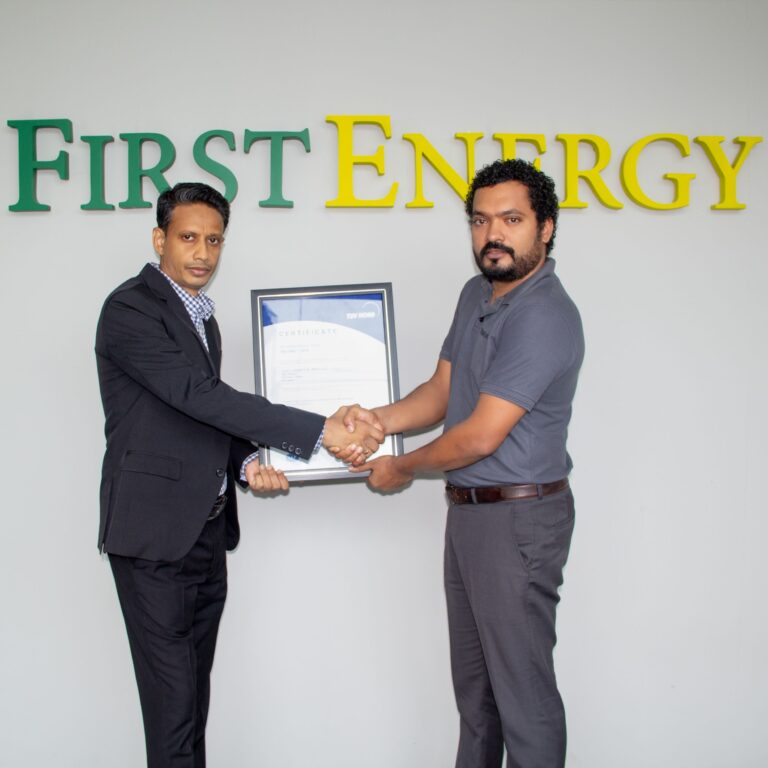
First Energy SL (Pvt) Ltd, one of the top five leading solar energy providers in the country with an undisputed track record of numerous successful projects in a short span of time, was recently bestowed with three international accreditations, reflecting its unwavering commitment to maintain and uphold the best quality and compliance standards. The company was certified with ISO 9001;2015 Quality Management Standard, ISO14001:2105 Environment Management Standard and ISO 45001:2018 Health & Safety Management Standard. First Energy has a number of policies aimed at ensuring ethical and responsible business and workplace practices towards its employees, stakeholders, environment, and society. These also include policies that encourage equal workplace opportunities, women empowerment, safety and protection, and social accountability.
First Energy SL also fully internalizes and lives up to such values, setting a benchmark for other organizations to follow suit. It is pursuing various company-wide initiatives to achieve zero-wastage such as minimizing paper usage for documentation purposes by transiting to digital assets and gradually a paperless office, encouraging employees to be carbon footprint conscious by working from home and having an optimal managed transportation schedule for those who prefer to come to work, with plans to also shift to electrical vehicles in the near future.
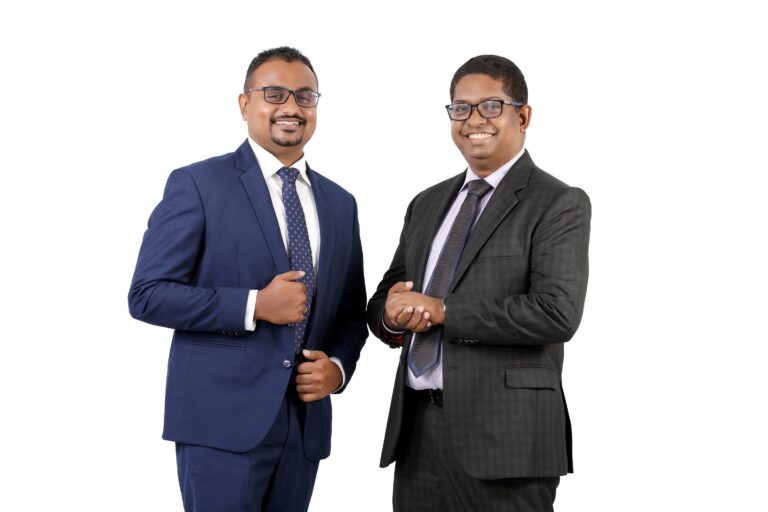
Its founders Prabath Wickramasinghe and Asanka Tennakoon, both of whom are electrical engineers by profession, were instrumental in the growth and success of First Energy SL since its inception in 2016. Backed by over two decades of experience, the duo strongly believes that embracing impactful social and environmental governance is of paramount to the company’s way forward in both the local and international markets amidst the stiff competition in delivering reliable and quality services to meet the increasing energy demands.
With the aim of contributing to Sri Lanka’s sustainability and energy conservation measures, First Energy SL provides various solutions such as design, supply and installation of solar PV systems including operation and maintenance services equipped with some of the most technologically advanced platforms, consultancy, project management, EPC services, among others.
These include domestic, commercial and industrial solar rooftop solutions including roof rental programmes, and utility scale ground mounted solar power projects for which it is a market leader with the largest number of clients. In 2020, it was awarded the largest one-of-a-kind solar rooftop project (3.2MW). First Energy SL also provides wholesale and retail sale of system components to other solar PV system integrators, with some of the world’s renowned brands under its portfolio.
As one of the most historic sayings that goes ‘Ask not what your country can do for you – ask what you can do for your country’, A. Baur & Co. (Pvt) Ltd, also more widely known as Baurs has been doing exactly the same uninterruptedly ever since its founder Alfred Baur stepped into this beautiful nation. Baurs are now a legacy with a presence in Sri Lanka for over 125 years and with an appetite to only grow stronger and more resilient than ever before.
Amidst the numerous challenges and evolving contexts over the many decades, Baurs has been contributing tremendously to the sustainable growth and wellbeing of the nation, going through the agri, industrial and knowledge-era together. Owned by its parent, a foundation, Alfred et Eugénie Baurs back at Geneva, Switzerland and with its values deeply rooted in its Swiss traditions, Baurs is truly Sri Lankan in every other way possible.
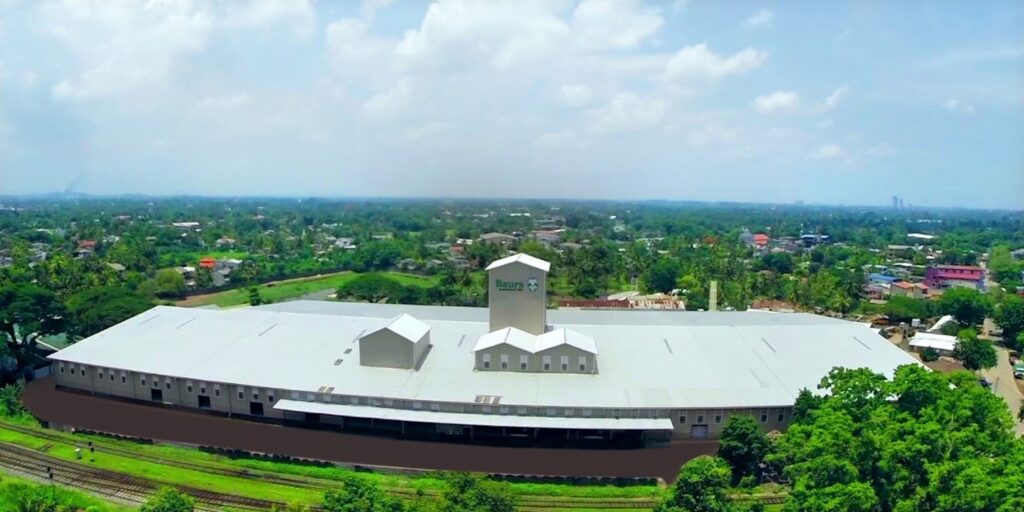
Being the pioneers in the agriculture industry of Sri Lanka, the track-record innovation and achievements of Baurs and its contribution goes without saying. It possesses one of the most advanced, high-tech fertilizer mixing facilities in the whole of Southeast Asia, with machinery and equipment imported from best-in-class industry players in the US.
When the deadly fall armyworm (FAW) entered, starting to take a toll in the country’s plantations in 2018, the team at Baurs quickly stepped in and began a rigorous R&D program where, two years later, it successfully registered the first ever bio pesticide for the nation to eradicate and control FAW.
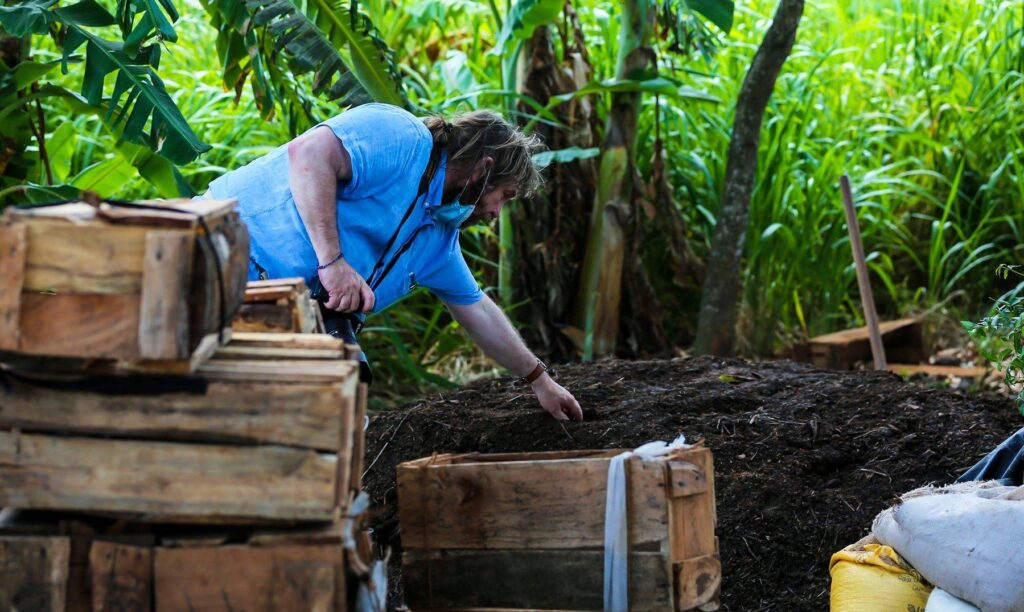
Ever since the country made its decision to ban chemical fertilisers and pesticides in 2021, Baurs took the lead initiative to bring down some of the most globally renowned scientific experts in the fields of organic and sustainable agriculture to Sri Lanka. And together with the participation of diverse stakeholder groups and proactive engagements ever since, Baurs is well positioned with its strong commitment towards a greener economy through sustainable agriculture, having significantly invested and developed a centre of excellence, with the support of leading research institutions and academia specialized in this area.
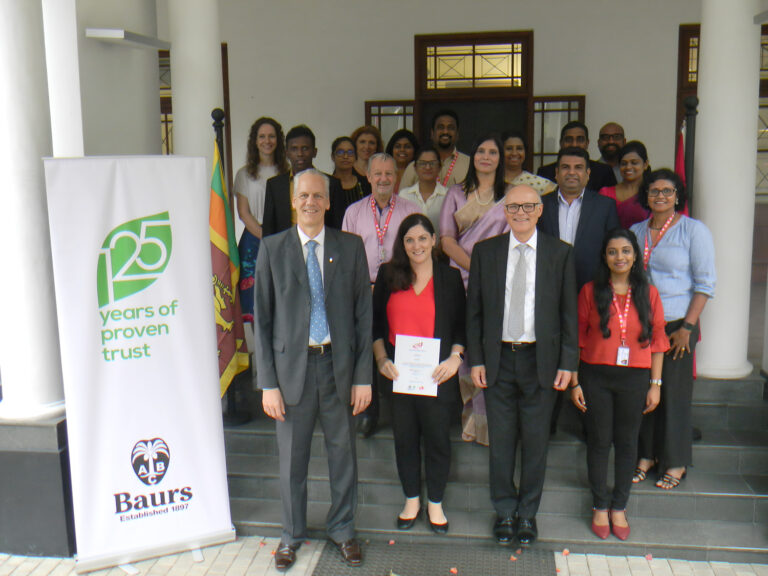
Baurs’ laboratory services also took the first step towards achieving the ISO certification for organic fertilizer and was recently awarded the same. This will further strengthen its journey in encouraging sustainable farming practices, improving crop yields and growth, ensuring healthier food for the community, and mitigating adverse ecological impact to both the farmers and society at large.
When world-class healthcare giants took measures to exit their offices and carefully handover their distribution in Sri Lanka, Baurs had the privilege of being the first choice partner. Being one of the top importers and representatives in the country with a vast distribution network supported by end-to-end supply chain and martech capabilities, Baurs ensured the continuation of the availability of medications and vaccinations for patients, for instance, by becoming the exclusive distributors of Sanofi and GSK in Sri Lanka and the Maldives. Various multinational pharmas such as Novartis, Roche, Merck, MSD, Takeda, Eisai to name a few continue to vest their utmost trust in Baurs.
With Sri Lanka experiencing one of the biggest brain drains for decades, Baurs brought the world’s proven apprenticeship-based model through its Swiss Hotel Management Academy (SHMA), which is licensed to deliver the VET by EHL program, from EHL Hospitality Business School founded as Ecole hôtelière de Lausanne and recognized as the world’s best hospitality management university.
As the economic challenges spiraled through the rural areas across the island, Baurs joined hands with the Swiss Agency for Development and Cooperation (SDC) to initiate and spur the Skills for Sustainable Growth (SSG) project which came about during the height of the pandemic. The project will go on to create 2,240 skilled young men and women within three years, and more so specially to increase female representation, training and upskilling them to become work-ready in the hotel management industry.
Through these activities, Baurs is also supporting the country’s tourism sector, including collaborations with others, such as with the VTA Sri Lanka and Nestle Lanka recently. Along similar lines, Baurs also contributes to inbound tourism by bringing Swiss tourists and travelers to Sri Lanka through its long-standing partnership with Edelweiss.
In recognition of its unwavering strategic direction and strong emphasis on ethics and governance, Baurs was selected by Transparency International as an anchor partner, bestowing the company to take initiatives in the business community, to reduce corruption in Sri Lanka. Baurs also strives to work towards the 17 Sustainable Development Goals (SDGs).
Baurs also donates school furniture under its social infrastructure development pillar, having so far donated to over 380 schools and over 280 institutions including religious establishments, across all 25 districts. It is also a principal donor to a school for children with hearing deficiencies. Baurs also provides training to underprivileged individuals and secures them with a six-month internship programme with prospects for full-time employment.
As can be seen, Baurs has a strong presence in Sri Lanka, bringing foreign products and knowledge that have helped the country through the good and bad times. It continues to build on the 125-year legacy initiated by Alfred Baur, improving its current business models and spreading into new fields in ways that will continue to bring benefits for the country.
By:Kris Krishnadasan (Retired Sri Lankan Police Inspector)
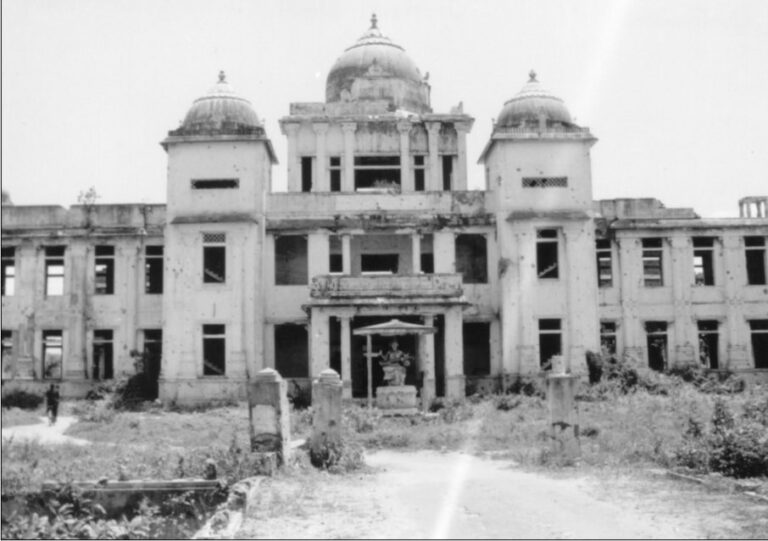
Ex-DIG Edward Gunawardena Challenged and questioned Over his “Version” of the Jaffna Library Burning by a former Police officer Mr. Krishnadasan (Following is the text of an open letter sent by former Sri Lankan Police officer K. Krishnadasan to senior DIG of Police Edward Gunawardena about assertions made by the retired DIG about the burning of the Jaffna public library in a book written by him. Mr. Krishnadasan who claims to be an eyewitness to the burning questions Ex-DIG Gunawardena about references in his book that the library was burnt down by the Liberation Tigers of Tamil Eelam (LTTE) organization.
Mr. Krishnadasan also poses some challenging questions to Mr.Gunawardena about the retired DIG’s role and conduct in Jaffna at the time of the Jaffna library incident) Herewith forwarding the reply I sent to Rtd S/DIG Mr Edward Gunawardena in response to the Book he launched in 2013. The book titled ‘Memorable Tidbits Including The Jaffna Library Fire’ in which he explains as to who was responsible for burning the Jaffna Public Library in 1981. This is a long awaited reply which I have with-held, and I have explained the reasons for the delay in my reply to Mr Edward Gunawardena. Rtd SSP Mr Tassie Seneviratne’s article to the news-paper appears below for your reference.
Rtd DIG Mr Edward Gunawardena
Subject Re: Burning of Jaffna Public Library
Hi Sir My name is K. Krishnadasan.
I served in the Sri Lanka Police Service from June 1967 until December 1986,and I migrated to Australia and have happily settled down with my family in Sydney. I did not have an opportunity to work under you during my career in the Police. You functioned as our ADT at the Echelon Square Police Training School In June 1967 until I passed out in December 1967 and was posted to Matara as my first station. My last major posting was HQI Batticaloa, from October 1983 to March 1986. Thereafter I served a few months at Police HQ 132 Rising from the Ashes Tragic Episode of the Jaffna Library when you were S/DIG Administration, before migrating to Australia.
By the way Sir, I am also an old Josephian like you. I am writng this in response to Rtd SSP Mr Tassie Seneviratne’s article which appeared in the Sri Lankan news-papers recently.Mr Tassie Seneviratne is a good friend of mine and he is currently holidaying in Sydney.
Since I was an eye witness to the burning of the Jaffna Public Library, he requested me to write to you giving details of my version of the event. I wish to relate to you the circumstances under which I was an eye witness to the burning of the library. From January 1980 to December 1982, I functioned as the Officer in Charge of the Divisional Crimes Detective Bureau (DCDB),directly under the supervision of SP Jaffna Division and ASP Crimes Jaffna.
I was the second most senior Inspector next to the HQI at the Jaffna Police Station. The HQI was Mr Lalith Gunasekera, at that time. Eye Witness – Burning of the Jaffna Public Library On the 31st of May 1981, at about 7.00 – 7.30 p.m. I was at the front compound of the Jaffna Police Station, in the company of DIG/NR Mr P Mahendran. From the station premises we noticed heavy smoke emerging from the Jaffna Public Library building, and we knew that the library building as been set on fire.
At that moment DIG instructed me to take a Police party and rush to the library building immediately. I then promptly rushed with a police party comprising of 2 Sub Inspectors and about 10 Constables on foot as the library building is only about 250 yards from the Police Station. As we approached within a few yards from the library building, I notice about 20 Army personnel in uniform inside the building. They were adding fuel to the fire by pulling down the books from the shelves and throwing them into the fire.
On seeing the police party one officer came out followed by a few other army personnel pointing their AK47 rifles towards us and shouted in a rough tone in Sinhala and ordered us to get back to the Police Station. I then immediately contacted the DIG and apprised him of the situation. DIG was constrained to advise us to get back to the Police Station.
Sometime after we came back to the Police Station, we noticed the whole building going up in flames. DIG tried his best to contact the Army top brass who were in Jaffna, to inform of the situation, but to no avail. Under the circumstances it was not at all prudent for the police party to take any action against the army personnel. It was a tragic scene I had to witness haplessly. The sight which I witnessed on that day cannot N.Selvarajah 133 be easily forgotten, and it will linger in my memory as long as I am alive. After my return to the Police Station, I made an entry in the RIB re what I had seen.
DIG/ NR too made his OVB entries to the effect. Unfortunately Mr Mahendran is not among the living today, otherwise he too would have supported my statement. But, Mrs Mahendran is still alive and domiciled in Sydney, Australia.
You may contact her to find out what Mr Mahendran has told her when he returned to his DIG’s quarters in Jaffna, after the fateful event. Please read Mr Tassie Seneviratne’s article to the news-paper that a Police Sergeant attached to the Jaffna Police had initially set fire to the library building, and that he has confessed to him and also to Rtd DIG Mr C L Ratnayake (batch mate of mine).
Whoever initiated the fire, what I have reported is what I saw. I only visited the scene after the fire has started to engulf the building. Recently I had the opportunity to read your book ‘Memorable Tidbits including the Jaffna Library fire’. You have attributed the blame for burning the Jaffna Public Library to the LTTE, due to the caste conflict prevailing among the Tamils.
It is highly unlikely that LTTE would have set fire to the library building to implicate the Forces and the Government. The precious Jaffna Library belongs not only to the Tamils, but also to the whole country. Burning of Jaffna Public Library is now history, and most sensible thinking people knows as who had done it. It’s high time the Government appoint a commission to go into the truth about burning of the Jaffna Public Library, by appointing a high level judicial panel even at this late stage. The truth will never be discovered unless the various stories are independently examined. It is not too late to revisit the scene independently and objectively, and establish the facts, taking into account the version of all concerned.
As you have gone public with your views on this episode, may I humbly seek from you the following information that will help to put the matter to rest:- (1) Was the special assignment on which you were sent by President Jayewardene, to do with Police duties or with the Government’s election campaign? (2) If it was in connection with police duties, how is it that you did not come to the Police premises to meet DIG/NR and the Jaffna Police and hold briefing / debriefing class as usually done in such important police assignments? Or, were your duties ‘under-cover’? Even so, how is it that you did not want to see or hear what everyone else knew? I wish to state that I never saw you at the Jaffna police premises on the day in question.
134 Rising from the Ashes Tragic Episode of the Jaffna Library (3) Were any other police officers associated with you in your assignment other than IP Sathiyan? If so who were they? (4) What made you to avoid CID officers who had come to Jaffna to make enquiries about the burning of the Jaffna Library, and reveal to them whatever you knew, because the CID too was sent on HE the President’s orders? (5) Was a report submitted by you to IGP / HE the President re matters pertaining to your special assignment in Jaffna? At this point I need to explain why I waited so long to come out publicly with what I saw and reported to DIG/NR immediately: The atrocities being committed by the military that dominated the country were such that it would have been suicidal to implicate the army.
Although I migrated to Australia I used to visit Sri Lanka frequently, my last visit being in June 2014 to attend our Police 67 batch get-together. I however have disclosed privately what I saw to whoever wanted to know it. The situation has now changed since the last Presidential election, and I am writing to you now because, now I can go public in this issue.
I shall be very grateful to you Sir if you could help to clarify the information that I am seeking with great respect.
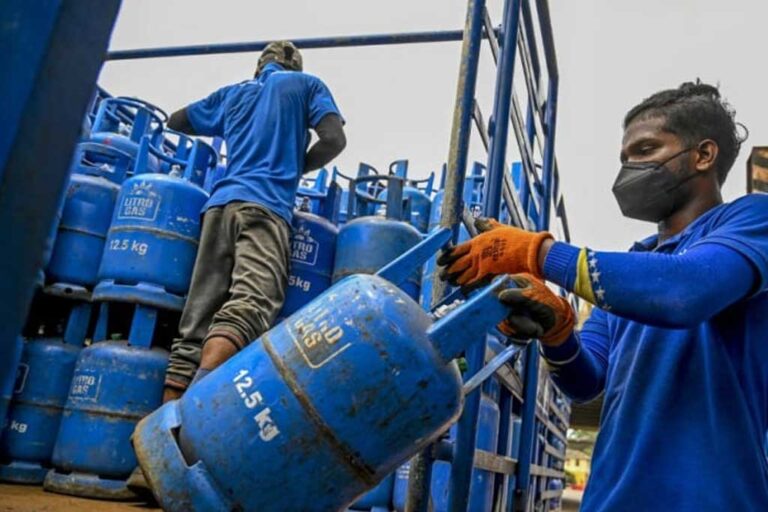
Colombo (LNW): The State’s LP gas distributor LITRO Gas said a price slash on domestic LP gas will be possible in July, consecutively for the fourth time this year.
According to LITRO Chairman Muditha Peiris, the price revision will take place at the beginning of July this year, in compliance with the pricing formula.
Colombo (LNW): An extraordinary gazette has been issued revising the prices of several medicines, dated June 15, 2023. The gazette has been issued by Health Minister Keheliya Rambukwella.
Accordingly, the prices of 60 types of medicines will be slashed by 16 per cent, and the price revision will be effective from today (26).
These medicines include Paracetamol, Amoxicillin, Aspirin, Thyroxine and Glipizide, and the Ministry stated that any drug manufacturer or importer shall not sell any type of medicines mentioned in the aforementioned gazette at a price more than the declared maximum retail price.
Colombo (LNW): The Appeal Court today (26) quashed the summons issued by the Colombo Fort Magistrate Court on Senior Deputy Inspector General (SDIG) in charge of the Western Province Deshabandu Tennakoon to appear before Court in connection with the large sum of money amounting to Rs. 17.8 million found at the President’s House during the July 09 ‘Aragalaya’ uprising last year.
The order was issued by the Appeal Court bench comprising Justices Nissanka Bandula Karunarante and A. Marikkar.
The Appeal Court also issued a writ order invalidating a letter issued by the Attorney General to cite the Tennakoon as a suspect in the assault allegedly committed by pro-Rajapaksa activists on peaceful protesters at the “GotaGoGama” agitation site in Galleface on May 09, 2023, which consequently led to a mass unrest across the country.
The Ministerial Consultative Committee on Plantation Industries decided to hold a discussing with President Ranil Wickremesinghe regarding the activities of private sector estate companies.
This decision was taken at the Ministerial Consultative Committee on Plantation Industries Chaired by Minister of Plantation Industries Ramesh Pathirana.
The Chair pointed out to the Members present that post leasing, the private sector plantation companies at present are showcasing more interest in other industries other than the plantation of tea, rubber etc, that they do not maintain the estates properly and are not interested in the welfare facilities of the employees. It was also discussed that the government does not have a proper mechanism to monitor the activities of such estate companies.
The Members brought the attention of the Committee that these big estate companies pay very little wages to the workers and even basic facilities are not provided in some estates. The Minister also stated that since these estates have been leased to the private sector under very weak lease agreements, it has become difficult to regulate the activities of these estate companies.
The Minister said that most of these companies do not develop infrastructure and it is observed that some companies, especially tea plantations, are far away from it. A large number of hectares under such companies have been identified as unused land without cultivation, he said.
The Minister said that he hopes to discuss the matter with the President and resolve the issues quickly. Meanwhile, the problems seen in plantation crops like coconut and the effects of pests were also discussed at the Committee meeting held. The Minister instructed the authorities to focus on resuming coconut cultivation in Matara district which had been stopped due to pest infestation.
State Minister Janaka Wakkumbura, MPs Mahindananda Aluthgamage, Dr. V. Radhakrishnan, M. Rameshwaran, Weerasumana Weerasinghe, Udayakantha Gunathilaka were present at the occasion.
Colombo (LNW): C.D. Wickramaratne, the current Inspector General of Police (IGP), will be met with the end of the service extension granted to him three months ago today (26).
According to standard procedure, a new IGP needs to be appointed following the expiration of the service extension of the incumbent one, and it is yet to be made public record who will be Wickramaratne’s successor.
Wickramaratne’s service extension of three months was granted by President Ranil Wickremesinghe, when his term as the IGP ended on March 26, 2023.
Early reports claimed that he had handed over the documents required for his retirement, but later it was announced that he will be serving in his position as the IGP for three more months.
Given the President’s return to Sri Lanka today, an update will soon be made on the appointment of a new IGP, considering the recommendations of the Constitutional Council.
PMD: State Minister of Health Dr. Seetha Arambepola, Chairperson of the Dengue Control Expert Committee, said that a special cleanliness program for dengue control will be undertaken in the Colombo Municipal Council area next weekend, and the public is requested to remain at home and support it.
The State Minister added that a week of larval inspections covering the Colombo and Gampaha districts will follow the initiative.
President Ranil Wickremesinghe recently took decisive action to combat the spread of Covid-19 and Dengue in the country by establishing both a Ministerial Committee and an Expert Committee. To facilitate the work of the Experts Committee, nine Provincial sub-Committees have been established. The involvement of these sub-Committees aims to enhance collaboration and coordination at the provincial level in the fight against Covid-19 and Dengue.
By designating specific days to inspect schools, places of worship, Government and private institutions, commercial premises, and abandoned plots as places where dengue mosquitoes breed the most, this program will be implemented in the Western Province. Meanwhile, other provinces are urged to identify their own challenges and implement specific programs, according to State Minister Dr. Seetha Arambepola.
State Minister Dr. Seetha Arambepola stated this at the press conference held today (25) at the Presidential Media Centre on the control of the spread of dengue.
The state minister mentioned that more than 47,000 dengue cases have been reported since January and 50% of them are reported from the Western Province. The minister mentioned that the spread of dengue disease has increased with climate change and if this situation is not controlled, the dengue disease can become fatal similar to Covid.
State Minister of Health, Dr. Seetha Arambepola, who spoke further, said:
“The spread of dengue has become a global situation. In the first half of this year alone, more than 47,000 dengue cases and 27 dengue deaths have been reported.
In view of this situation, President Ranil Wickremesinghe recently appointed both a Ministerial Committee and an Expert Committee to combat the spread of Covid-19 and Dengue in the country. Nine Provincial sub-Committees were established to facilitate the work of the Experts Committee.
This Committee comprises Mr. S. Janaka Sri Chandraguptha – Secretary, Ministry of Health, Ms. M Kodippiliarachchi – Additional Secretary (Local Government & Provincial Councils), Dr. Asela Gunawardena – Director General of Health Services, Dr. S. M. Arnold – Deputy Director General (Public Health Services – I), Dr. Samitha Ginige – Director, Epidemiology Unit, Dr. Nalin Ariyarathne – Director, National Dengue Control Unit, Dr. Ananda Wijewickrama – Senior Consultant Physician, Dr. Lakkumar Fernando – Pediatrician, Prof. Neelika Malavige – Professor, Department of Immunology and Molecular Medicine and Dr. Upul Dissanayake – Consultant Physician, as members of this Committee.
Preventing the breeding of the mosquito and preventing the mosquito from getting the virus is very important in controlling dengue. The vector can be reduced by identifying the places where the water collects during the rainy season and preventing the breeding of mosquitoes. People need to be educated in order to lower their risk of getting bitten by a mosquito. In densely populated areas, the chance of dengue transmission from one mosquito to a large number of people is high.
A series of urgent programs are being implemented through the Dengue Control Sub-Committees appointed in the provinces. In the coming months, we will try our best not to reach the capacity of the patients who will be admitted to the hospitals.
Accordingly, a special cleanliness program will be implemented in the city of Colombo with the support of the Tri forces during the next weekend. The National Dengue Control Unit (NDCU), Provincial Department of Health Services and the Local Government authorities will also join and the office of the Medical Officer of Health (MOH) will make relevant notifications. Accordingly, I request the people to stay at home this coming weekend and support it.
After that program, schools, religious places, government and private institutions, commercial premises as well as abandoned plots of land where dengue mosquitoes are most likely to be bred will be inspected for larvae on specific days in Colombo and Gampaha districts for a week.
At the same time, specific programs are being implemented in all other provinces as per the instructions of the Provincial Health Officer. The dengue patient should be aware of this and take precautions to prevent spreading the illness to others. Especially at this time, the media can play a significant part in that.
Control of dengue focuses more on primary health. This circumstance arises every year, thus in my opinion, widespread awareness-raising efforts at the school level are necessary. And I believe that this is a special circumstance that should be included in the educational curriculum.”
Meanwhile Dr. Ananda Wijewickrama while joining the ‘101 Katha’ program produced by the President’s Media Division noted; The Ministry of Health is working to adopt a number of strategies to prevent the spread of dengue in the upcoming period. Implementing dengue control measures by the Government, the private sector, and the public is also crucial. The possibility of controlling dengue fever exists, if this program is sustained for a considerable amount of time. With the upcoming monsoon season, there is a risk that dengue cases would increase. In general, the months of June and July see an upsurge in dengue patients. Therefore, all parties should work with utmost care to control the dengue virus.
Dengue can affect any age group. 75% of reported cases involve people older than 15 years. Nowadays, young people are more likely to contract the disease than small children, despite the fact that it used to spread among them more frequently. Dengue is a virus. As a result, there is a strong likelihood that dengue can be easily transmitted via mosquitos from one infected person to another. Eliminating mosquito breeding places is vital. The dengue mosquito typically exists in in areas where clean water gathers. Anywhere, including waste plastic, used tires, flower pots, coconut and king coconut shells, serves as a breeding ground for dengue mosquitoes. Such areas should receive as much attention as possible, and should be removed immediately. In addition, precautions should be made to avoid mosquito bites.
It is important to take precautions against mosquito bites in order to avoid spreading the dengue virus to others. For that, the body might be covered with clothing. Additionally, there are mosquito repellents. It can also control mosquito bites. But none of these approaches is completely effective.
The Local Government authorities, Public Health Inspectors, Health Departments, and Security Forces have all stepped in to help control the disease by destroying mosquito breeding grounds. Special programs are being implemented focusing on the provinces where dengue is spreading most. Within the coming week, a special initiative will begin, with a focus on the Colombo and Gampaha districts, where the majority of cases are reported. There will be a clean-up of the garbage in such areas. It has been agreed to provide the labor contribution of Army for this purpose.
Even if water is removed from containers full of water, mosquito larvae can remain. Therefore, they should be cleaned thoroughly and water should not be allowed to collect again. The typical lifespan of a mosquito is five to six days. Therefore, weekly cleaning of the surroundings is crucial. Keeping your surroundings clean is a must. Controlling dengue cannot be done by one person alone. And it cannot be done only by a few institutions. This requires the support of everyone in the country.
A person suffering from dengue should not work hard. Rest is essential. If not, the chances of complications are high. Any fever patient should only receive Paracetamol, it has been advised. Paracetamol may occasionally fail to entirely bring down fever. However patients should not be afraid in such cases. Having a fever does not escalate to a major issue. Complications can be minimized through physical rest. Meanwhile, it is vital that fluid intakes are given to patients to keep them hydrated. King coconut water, orange and lime juice, and Jeevani are generally recommended for this purpose.