
Amidst Sri Lanka’s worst economic crisis since independence, the UN recently revised its joint Humanitarian Needs and Priorities (HNP) Plan, appealing for more life-saving assistance to aid 3.4 million people.
Canada has become the latest donor for UN humanitarian assistance for Sri Lanka poorest of the poor people countrywide.
It has provided US$ 3 million (approximately Rs 817 million) to help address the needs of the most vulnerable communities in Sri Lanka.
This contribution comes in response to the humanitarian appeals launched by the United Nations (UN) and the International Federation of Red Cross & Red Crescent Societies (IFRC).
It is expected to help address the needs of the most vulnerable communities in Sri Lanka, the Canadian High Commission in Colombo said in a press release.
It will be delivered through the UB and the IFRC, in collaboration with their local partners to support the provision of emergency food assistance, health and nutrition services, access to safe water and other essential services to those who need it the most.
In addition, Canada has provided ongoing international assistance projects to address immediate needs and help respond to the economic crisis in Sri Lanka, including the procurement of essential medical equipment and supplies.
The Canadian government has pledged to continue to stand with all Sri Lankans in these difficult times and to remain committed to supporting an inclusive, prosperous Sri Lanka.
Since June 2022, the UN team in Sri Lanka and NGOs have used the HNP to respond to the Government’s request for more support to alleviate the impact of the country’s debt and food crisis, and shortages of medicines.
Governments and donor agencies have helped the humanitarian community reach over one million of the country’s most vulnerable with cash, food, school meals, medicine, protection, and livelihood support.
“We are immensely appreciative of the solidarity the international community has shown with the people of Sri Lanka, including through their generous contributions to the HNP”, said UN Resident Coordinator in Sri Lanka, Hanaa Singer-Hamdy.
Aligned with appeals from other UN agencies, the HNP has raised $79 million for Sri Lanka through various countries and organizations).
The HNP revision, which extends the plan through 2022, requires $70 million in additional funds to reach a total of $149.7 million.
In response to the humanitarian community’s updated estimates on the number of people in need across all 25 of Sri Lanka’s districts, the extended appeal will improve nutrition for children, pregnant women, and breastfeeding mothers; secure safe drinking water; and protect vulnerable farming and fishing households.
Canada provides humanitarian aid of US$ 3 Mn for vulnerable SL communities
Colombo Lotus Tower records revenue of Rs268 million in 3 months
Colombo Lotus Tower project incurs Sri Lanka US$113 million in maintenance reportedly huge and annual revenue is estimated at present at around $8.2 million.
The opening of the Colombo Lotus Tower, South Asia’s tallest structure, to the public on September 152022, has revived focus on the nature of Chinese lending practices in Sri Lanka.
The mega scale project has generated a revenue of Rs. 268 million since September 15 2022, an official said.
Built at an estimated cost of $113 million, the Lotus Tower project was constructed on an $88 million loan from the EXIM Bank of China, with the Sri Lankan government bearing the balance costs.
Often portrayed as a symbol of the unproductive excessive spending of the Mahinda Rajapaksa regime, the tower project underscores the importance of transparency in development finance.
Work on the project commenced in 2012 and was plagued by delays. The Rajapaksa administration said that the purpose of the project was to improve Sri Lanka’s telecommunications infrastructure and provide leisure activities for the public.
In the first fortnight of its opening to the public, over 100,000 people visited the tower. The average daily income from ticket sales has been around $5,500 and the expected annual revenue is about $8.2 million.
The CEO of the newly-formed Colombo Lotus Tower Management Company Maj. General (retired) Prasad Samarasinghe said that the bulk of this revenue would come from entertainment ventures.
A Singaporean company called Go Bungy, which will be initiated in the second quarter of 2023 and it is expected that 130 jumps will take place per day. Around 17,000 tourists are expected this year for bungee jumping alone
The tower which is still not fully opened attracted half a million visitors within the first three months of its opening, the official said, adding that a plaque and a gift voucher were presented to the milestone visitor who had travelled from Matara.
The tower is now open to small boutiques by the Lake Edge. Selected bidders are currently being signed on for the retail and restaurant outlets, the official added.
The controversial telecommunication tower has attracted a bungee jumping offer, with a, the official said.
‘Among the 500,000 visitors to the Tower, there had been 4,083 foreign tourists, according to official data.
The main activities for now are the observation deck and a revolving restaurant, for which bids are still underway. Facilities were to be opened in the next two to three months, based on the tenders expected to be offered to shops and retailers, out of which many are still in the tendering procedure.
A statement from the President’s Media Division (PMD) said that the Colombo Lotus Tower Private Company is engaged in negotiations with 58 investment companies and has expressed interest in entering into agreements with 22 of them.
The tower, said to the tallest in South Asia, triggered controversy when Indian government raised concerns over its purpose as China was behind the construction amid concerns over spying, Sri Lanka government officials claimed.
The contract to build the $104.3 million tower – 80 percent of which was funded by Exim Bank of China – had been awarded in 2012 to China National Electronics Importers and Exporters Corporation (CEIEC) and Aerospace Long March International Trade Co. Ltd, (ALIT) by the Cabinet of ministers.
Former president Maithripalaa Sirisena after inaugurating the tower in 2019 alleged that ALIT had been misappropriating some Rs. 2 billion ($11 million) deposited with it by Sri Lanka’s state-run Telecommunication Regulatory Commission (TRC).
Government calls for tenders to import eggs to tackle steep price rice
The Government has taken difficult but essential action to import eggs calling tenders from today (Monday 09) to bring down a steep rise in the price unbearable for low and middle income consumers amidst divergent views and bickering of producers and suppliers to the local market.
The international tenders for the importation of eggs will be called from Monday (Jan 09), the Sri Lanka State Trading (General) Corporation has assured.
Accordingly, the invitation for the tenders, the quantity of eggs due to be imported and the selection of suitable importers will be decided upon by next week, Chairman of the Corporation Asiri Walisundara stated.
The responsibility of the importation of eggs and all related activities have been assigned to the Sri Lanka State Trading (General) Corporation by Trade Minister Nalin Fernando, Walisundara added.
He further noted that subsequent to the importation of eggs, it is expected for eggs to be sold at a price of Rs. 45, or less.
On 02 January, Minister Nalin Fernando explained the need to import eggs owing to the burden caused to consumers following the rapid increase in the price of eggs after the relevant Gazette notice was suspended.
Thus, it was then agreed upon by the Cabinet that Sri Lanka will begin importing eggs, in an attempt to resolve the matter of concern.
Meanwhile, the All Ceylon Egg Producers’ Association has announced that eggs will be supplied to all economic centers in Colombo at Rs. 53.
A stock of 800,000 eggs is due to be brought to Colombo today for this purpose, Chairman of the Association S. Ratnayake stated.
Moreover, Ratnayake added that free eggs are being distributed to the Lady Ridgeway Children’s Hospital in Colombo commencing from Sunday o8.
The Sri Lankan government gave the green light last week to import eggs amid a shortage as poultry farmers have abandoned farms after a price control regime.
Official spokesperson Minister Bandula Gunawardena said the government discussed the shortage and soaring prices with stakeholders before allowing the egg import.
The government in August capped the maximum price of a white egg at 43 Sri Lankan rupees and 45 rupees for a brown egg.The government removed the cap last month.
The price control regime forced several poultry farmers to give up the trade, causing a dire shortage that experts say would take at least two years to normalize.The market is facing an estimated 40 percent shortage of eggs.
The price of an egg in December 2022 was around 60 rupees, which is more than double the price in the same month in 2021 when it cost 25 rupees.
SLFP MPs meet with former President CBK on Party Founder’s birthday
Members of the Sri Lanka Freedom Party (SLFP) and the group of SLFP MPs who joined the government held a special discussion with former President Chandrika Bandaranaike Kumaratunga at her official residence yesterday (08).
The group held the discussion paying attention on a number of thematic areas, including the current political situation in the country and future measures to be taken, after attending the ceremony organised to celebrate the 124th birthday of Party Founder and former Prime Minister late S.W.R.D Bandaranaike. The event was held by the ‘Bandaranaike Gunasamaru Foundation’ near the Bandaranaike Statue in Galleface yesterday.
Ministers Nimal Siripala de Silva and Mahinda Amaraweera, State Ministers Lasantha Alagiyawanna and Jagath Pushpakumara, MP Duminda Dissanayake and other SLFP members are said to have joined the occasion.
MIAP
Proposal on electricity tariff hike to meet Cabinet today
The proposal on the most argued electricity tariff hike is set to be presented at the Cabinet of Ministers today (09).
The proposed tariff hike, which has already met with a severe backlash from a number of parties, including civil movements, political parties in the Opposition and those of the Electricity Field, was presented to the Cabinet last week, and it was concluded that a final decision be made in this regard a week after, hence the tabling today.
Accordingly, it is believed that a final decision be made in this regard today.
The proposed electricity tariff hike demonstrates an increase in the amount of money charged per power unit and the fixed tariff.
MIAP
Sri Lanka Original Narrative Summary: 09/01
- Global group of 182 economists and experts warn that some of the world’s most powerful hedge funds and other investors are holding up vital help for Sri Lanka by their “hardline” stance in debt-relief negotiations.
- Elections Commission requests Attorney General to appear for it when the Supreme Court takes up 2 petitions calling for LG elections in March’23: elections hang in the balance with divisions within the EC re. decision to call nominations.
- Sri Lanka State Trading (General) Corporation says international tenders will be called to import eggs: quantity and selection of suitable importers to be decided this week.
- Delegations from SLPP and UNP discuss “fast-tracking economic recovery and uplifting lives of people”: SLPP group – Basil Rajapaksa, Sagara Kariyawasam, Rohitha Abeygunawardena, Mahindananda Aluthgamage, Johnston Fernando & Sanjeeva Edirimanna: UNP group – Wajira Abeywardana, Sagala Ratnayake, Range Bandara, Akila Viraj, Ravi Karunanayake & Ruwan Wijewardene.
- Sri Lanka & Thailand FTA negotiations (3rd round) to commence today under 7 themes: namely, Trade in Goods, Trade in Services, Investments, Rules of Origin, Custom Cooperation, Trade Facilitation & Economic Cooperation.
- President Ranil Wickremasinghe says a new holding company will be set up this month to hold shares of SOEs that are to be reformed/privatised: also says a key concern of those providing “financial assistance” to Sri Lanka is that funds provided to the country should not be used to fund losses.
- Central Bank says from 16th January, the Central Bank’s Standing Deposit Facility (SDF) – the overnight deposit facility that allows Banks to park excess liquidity with the Central Bank and earn interest – will be limited to 5 times per calendar month.
- CB Governor Dr Nandalal Weerasinghe says the only refinery in the country is operated with Iranian oil and that Sri Lanka had to stop operations following US sanctions on Iran: also says the country pays high prices for fuel due to the inability to make direct purchases from Russia.
- Kurunegala District Secretary R M R Ratnayake says those behind the “fake” Dalada Maligawa under construction at Pothuhera have not obtained a letter of recommendation from the District Secretariat to get it registered under the Buddha Sasana Ministry.
- Public Utilities Commission Chairman Janaka Ratnayake says Sri Lanka will successfully avoid 10-hour powercuts in 2023 after securing a continuous supply of coal: asserts it is now a favourable situation as around 25 coal shipments for this year have been secured.
Several provinces to meet showers or thundershowers
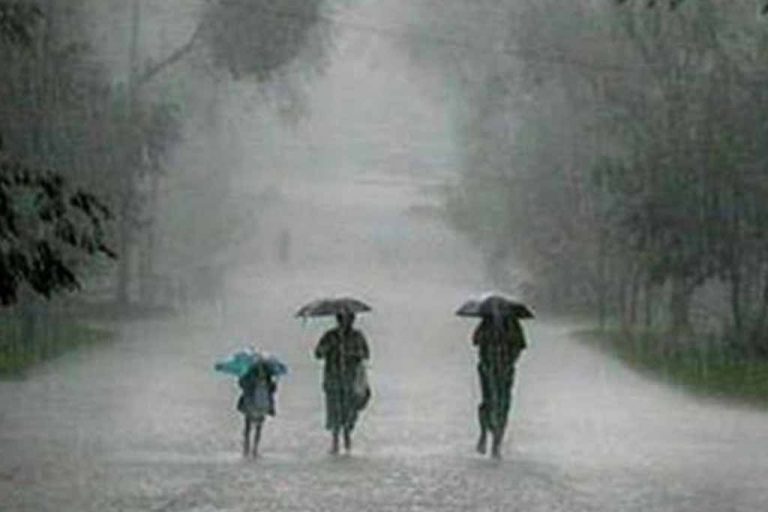
Several spells of showers will occur in North-Central, Eastern and Uva provinces and in Matale district, and showers or thundershowers will occur at several places in Western and Sabaragamuwa provinces and in Galle, Matara, Kandy and Nuwara-Eliya districts during the afternoon or night, the Department of Meteorology said in a statement today (09).
Fairly heavy showers above 50mm can be expected at some places in Sabaragamuwa province and in Kaluthra and Galle districts.
General public is kindly requested to take adequate precautions to minimise damages caused by temporary localised strong winds and lightning during thundershowers.
Marine Weather:
| Condition of Rain: |
| Showers or thundershowers will occur at several places in the sea areas off the coast extending from Kankasanthurai to Pottuvil via Trincomalee and Batticaloa. Showers or thundershowers will occur at several places in the other sea areas around the Island during the afternoon or night. |
| Winds: |
| Winds will be north-easterly and wind speed will be (25-35) kmph. It may increase up to (45-55) kmph at times over the sea areas off the coast extending from Trincomalee to Colombo via Kankasanthurai, Mannar and Puttalam and the sea areas off the coast extending from Hambantota to Pottuvil. |
| State of Sea: |
| Sea areas off the coast extending from Trincomalee to Colombo via Kankasanthurai, Mannar and Puttalam and the sea areas off the coast extending from Hambantota to Pottuvil will be rough at times. The other sea areas around the island will be moderate. Temporarily strong gusty winds and very rough seas can be expected during thundershowers. |
MIAP
Third Round of Sri Lanka – Thailand FTA negotiations scheduled to commence today
The third round of negotiations between Sri Lanka and Thailand on the proposed Free Trade Agreement (FTA) will be held on January 9 and 10th, 2023, in Colombo, with the participation of 26 official delegates from Thailand headed by Ms. Auramon Supthaweethum, Director General of the Department of Trade Negotiations, advancing the government’s agenda of expanding the market access for Sri Lankan exports. Seven theme areas – trade in goods, trade in services, investments, rules of origin, custom cooperation, trade facilitation, and economic cooperation will be the focus of the negotiations.

The start of the negotiations will take place against the backdrop of a significant trade imbalance in Thailand’s favor. In 2021, Sri Lanka imported goods from Thailand worth USD 355 million, but only sent USD 59 million to Thailand. Thus, from the perspective of Sri Lanka, the negotiations will be aimed at enhancing access to our exports not only in the Thai market but also in markets in other ASEAN (Association of Southeast Asian Nations) countries through Thailand’s gateway and lowering current non-tariff trade obstacles to trade. According to market potential assessments, Sri Lankan exports of precious stones, black tea, and other goods have a lot of promise. Sri Lanka is hopeful that via successful discussions, doors can be created to offer opportunities in both the new industries and for the two nations’ current trade frameworks.
The National Trade Negotiating Committee (NTNC), whose members primarily represent the Ministries of Foreign Affairs, Trade, Commerce, and Food Security, the Department of Trade & Investment Policy of the Treasury, and the Department of Commerce, will participate in the negotiations on behalf of Sri Lanka under the leadership of Mr. K.J. Weerasinghe, Chief Negotiator, and the Presidential Secretariat. In the first quarter of 2024, the government plans to put this agreement into operation. The NTNC will give the specific requests made by the regional business associations/chambers considerable consideration during the negotiations.
The government’s objective of entering the Regional Comprehensive Economic Partnership, which represents 30% of the global population and economy, will be advanced by this agreement. Since trade is a growth tool that is relevant to both countries, the government of Sri Lanka is eager to strengthen the bilateral relationship with Thailand. Thailand and Sri Lanka have formal diplomatic relations that date back 68 years, and Thailand’s economy was especially boosted by the rapid growth of manufactured exports.
PMD
Hedge funds holding up vital debt relief for crisis-hit Sri Lanka, warn economists
Exclusive: 182 experts say only debt cancellation offers chance of recovery but private investors are playing hardball
Some of the world’s most powerful hedge funds and other investors are holding up vital help for crisis-hit Sri Lanka by their hardline stance in debt-relief negotiations after the Asian country’s $51bn (£42bn) default last year, according to 182 economists and development experts from around the world.
In a statement released to the Guardian on Sunday, the group said extensive debt cancellation was needed to give the economy a chance of recovery and that Sri Lanka would be a test case of the willingness of the international community to tackle a looming global debt crisis.
The group – including the Indian economist Jayati Ghosh, Thomas Piketty, the author of the bestselling book Capital, and Greece’s former finance minister Yannis Varoufakis – said private sector creditors such as investment companies and hedge funds were preventing a deal.
“Debt negotiations in Sri Lanka are now at a crucial stage,” the statement says. “All lenders – bilateral, multilateral, and private – must share the burden of restructuring, with assurance of additional financing in the near term.”
Private creditors own almost 40% of Sri Lanka’s external debt stock, mostly in the form of international sovereign bonds, although the higher interest rates levied on the bonds mean they receive more than 50% of external debt payments.
“Such lenders charged a premium to lend to Sri Lanka to cover their risks, which accrued them massive profits and contributed to Sri Lanka’s first ever default in April 2022. Lenders who benefited from higher returns because of the ‘risk premium’ must be willing to take the consequences of that risk.”
Negotiations have been under way since an economic crisis forced the Sri Lankan government to default for the first time in the country’s history last spring.
A loan from the International Monetary Fund will only be provided once the Washington-based organisation is confident Sri Lanka’s debts are sustainable, but the 182 economists fear the tough stance adopted by private creditors will result in a poor deal for Colombo.
The campaign group Debt Justice said Sri Lanka was one of several countries which had defaulted on, or were seeking debt restructuring, since the Covid pandemic began.
Ghana became the latest country to suspend many of its external debt payments last month, following Lebanon, Suriname, Ukraine and Zambia.
“With global interest rates increasing and widespread recessions expected in 2023, many more countries could follow,” Debt Justice said, noting that two-thirds of lower-income countries were vulnerable to a debt default.
The statement by the 182 economists and development experts said: “The Sri Lankan case will provide an important indicator of whether the world – and the international financial system in particular – is equipped to deal with the increasingly urgent questions of sovereign debt relief and sustainability; and to ensure a modicum of justice in international debt negotiations.
“It is therefore crucial not only for the people of Sri Lanka, but to restore any faith in a multilateral system that is already under fire for its lack of legitimacy and basic viability.”
Statement by academics on dealing with Sri Lankan debt, January 2023
Sri Lanka, along with many other low- and middle-income countries, has experienced a series of financial shocks due to both external and internal factors. Global forces have caused food and energy import costs to soar and interest rates to rise, even as the currency has devalued significantly. These shocks, along with a history of policy mismanagement—and specifically the deregulation and openness that encouraged irresponsible borrowing, enabled illicit financial flows out of the country and assisted political corruption—have intensified external debt and balance of payments crises.
Over the last decade of liquidity expansion and low interest rates in the world economy, private lenders provided loans to low- and middle-income countries, at higher interest rates than for advanced countries. These higher rates were purportedly due to greater risk exposure that could make debt repayment more difficult in such countries. That risk has now materialised, firstly through a global pandemic, and then the price shocks and interest rate increases of 2022.
Private creditors own almost 40% of Sri Lanka’s external debt stock, mostly in the form of International Sovereign Bonds (ISBs), but higher interest rates mean that they receive over 50% of external debt payments. Such lenders charged a premium to lend to Sri Lanka to cover their risks, which accrued them massive profits and contributed to Sri Lanka’s first ever default in April 2022. Lenders who benefited from higher returns because of the “risk premium” must be willing to take the consequences of that risk. Indeed, ISBs are now trading at significantly lower prices in the secondary market. In this context, giving private bondholders an upper hand relative to sovereign debtors in the Paris Club and the IMF’s required debt negotiations violates the basic principles of natural justice.
In addition, the lack of transparency of the debt negotiation process and accountability of the holders of ISBs underscores the concern that risky lending to corrupt politicians (leading to what is now recognised as “odious debt”) was a significant element in generating the current debt crisis. Apart from revealing the identity of ISB holders, it is also important to disclose how ISBs were deployed, and the use of those funds.
Debt negotiations in Sri Lanka are now at a crucial stage. All lenders—bilateral, multilateral, and private—must share the burden of restructuring, with assurance of additional financing in the near term. However, Sri Lanka on its own cannot ensure this; it requires much greater international support. Instead of geopolitical manoeuvring, all of Sri Lanka’s creditors must ensure debt cancellation sufficient to provide a way out of the current crisis.
The role of multilateral organisations, particularly the international financial institutions (IFIs), such as the IMF and the World Bank, is also significant. They were founded to assist sovereign nations, particularly in contexts in which financial markets would not deliver, to ensure financial stability and prevent or reduce the impact of financial crises, and to provide resources for crucial investments required to meet social and developmental needs.
The IFIs are not currently living up to these responsibilities, at a time when they are most urgently required. In Sri Lanka they encouraged the very policies of more open capital accounts and deregulation that have led to the current crisis. They have been slow to respond to the crisis, and are apparently requiring onerous policy and fiscal conditionalities, such as moving to a primary fiscal surplus in a very short time, even as the economy continues to plunge.
The implications are already evident in the recent Budget of the Sri Lankan government, which has unrealistic revenue assumptions that are unlikely to be met. Revenue shortfalls would then necessitate further “austerity” and likely cuts in essential public spending. The Budget also proposes public asset stripping and privatization of strategic lands, marine resources, energy, transport and telecom infrastructure and public enterprises. These policies will harm the most vulnerable groups in Sri Lanka, exacerbate poverty and inequality, and lead to further economic decline. Instead the focus should be on legal and regulatory changes to stem the illicit outflow of capital through transfer pricing and trade mis-invoicing over the past 15 years, which is estimated to be far more than the aggregate foreign debt of Sri Lanka, and on taxation of wealth and consumption of the super-rich.
The Sri Lankan case will provide an important indicator of whether the world—and the international financial system in particular—is equipped to deal with the increasingly urgent questions of sovereign debt relief and sustainability; and to ensure a modicum of justice in international debt negotiations. It is therefore crucial not only for the people of Sri Lanka, but to restore any faith in a multilateral system that is already under fire for its lack of legitimacy and basic viability.
- Jayati Ghosh, Professor of Economics, University of Massachusetts-Amherst, USA and India;
- Dani Rodrik, Ford Foundation Professor of Political Economy, Harvard University, USA;
- Thomas Piketty, Professor of Economics, Ecole d’economie de Paris/Paris School of Economics, France
- Ravi Kanbur, T. H. Lee Professor of World Affairs, Professor of Economics, Cornell University, U.S.A.;
- Atul Kohli, David Bruce Professor of International Affairs, Princeton University, USA
- Sakiko Fakuda-Parr, Professor of International Affairs, The New School, USA;
- Gary Dymski, Professor of Applied Economics, University of Leeds, UK.
- Robert H Wade, Professor of Political Economy and Development, London School of Economics, U.K.;
- Jomo Kwame Sundaram, Professor of Malaya, Malaysia; and former UN Assistant Secretary-General for Economic and Social Affairs.
- Jean Dreze, Professor of Development Economics, Delhi School of Economics, India;
- Guy Standing, Professorial Fellow, SOAS – University of London, U.K.;
- Yanis Varoufakis, Professor of Economics, University of Athens, Greece;
- Irene van Staveren; Professor of Economics, Erasmus University of Rotterdam, The Netherlands;
- Jane Humphries, Centennial Professor/Professor Emerita of Economic History, London School of Economics/Oxford University, U.K.
- Daniela Gabor, Professor of Economics and Micro-Finance, University of West England, U.K.;
- Ha-Joon Chang, Research Professor of Economics, SOAS – University of London, U.K.;
- Alfredo Saad Filho, Professor of Economics, Kings College – London, U.K.;
- Sanjay Reddy, Professor of Economics, New School for Social Research, NY, USA;
- Rolph van der Hoeven, Professor of Employment and Development Economics, International Institute of Social Studies, The Netherlands;
- Jungi Tokunaga, Professor of Economics, Dokkyo University – Tokyo, Japan;
- Yavuz Yasar, Professor of Economics, University of Denver – Colorado, USA;
- Ben Fine, Professor of Economics, SOAS – University of London, U.K.;
- C. P. Chandrasekhar, Professor and Senior Research Fellow, Political Economy of Research Institute, University of Massachusetts-Amherst, USA
- Alicia Girón, Professor and Director University Studies Program on Asia and Africa, UNAM-Mexico
- Costas Lapavitsas, Professor of Economics, SOAS – University of London, U.K.;
- Juan Pablo Bohoslavsky, Professor and Researcher – CONICET, Argentina, former UN Independent Expert on Debt and Human Rights.
- Ipek Ilkkaracan, Professor of Economics, Istanbul Technical University, Istanbul, Turkey;
- Sergio Cesaratto, Professor of Economics, University of Sienna, Italy.
- Lawrence King, Professor of Economics, University of Massachusetts-Amherst, USA;
- Mahalya Chatterjee, Professor of Economics, Calcutta University, India;
- Nancy Folbre, Professor Emerita of Economics, University of Massachusetts-Amherst, USA;
- Ravi Bhandari, Professor of Economics, Skyline Community College, USA;
- Utsa Patnaik, Professor Emerita of Economics, Jawaharlal Nehru University, India;
- Sudip Chaudhuri, Professor of Economics, Centre for Development Studies – Trivandrum, India;
- Yana Rodgers, Professor of Economics, Rutgers University, NJ, USA;
- Gunseli Berik, Professor of Economics, University of Utah, USA;
- Prabhat Patnaik, Professor Emeritus of Economics, Jawaharlal Nehru University, India;
- Lucas Chancel, Professor and Co-Director – World Inequality Lab, Paris School of Economics.
- Lee Badgett, Professor of Economics, University of Massachusetts-Amherst, USA;
- Radhika Balakrishnan, Professor of Economics & Women and Gender Studies, Rutgers University, USA;
- Randy Abelda, Professor Emerita of Economics and Public Policy, University of Massachusetts-Boston, USA;
- David F Ruccio, Professor Emeritus of Economics, University of Notre Dame, USA;
- Heidi Hartmann, Professor of Economics and International Development, American University, USA;
- Gerald Epstein, Professor of Economics, University of Massachusetts-Amherst, USA;
- Smriti Rao, Professor of Economics, Assumption University, USA;
- Naila Kabeer, Professor of Gender and Development, London School of Economics, U.K.
- Barbara Harriss-White, Professor Emerita of Development Studies, Oxford University, U.K.;
- Aaron Schneider, Professor and Leo Block Chair – Development, University of Denver, USA;
- Kanchana N Ruwanpura, Professor of Development Geography, University of Gothenburg, Sweden;
- Raj Patel, Research Professor, Lyndon B Johnson School of Public Policy, University of Texas-Austin, USA;
- Muthucumaraswamy Sornarajah; Professor Emeritus of Law, National University of Singapore, Singapore;
- Vinay Gidwani, Professor of Geography, Environment and Society, University of Minnesota, USA;
- Vasuki Nesiah, Professor of Practice in Human Rights and International Law, New York University, USA;
- Page Fortna, Harold Brown Professor of U.S. Foreign Security and Security Policy, Columbia University, USA.
- Shirin Rai, Research Professor of International Development, SOAS – University of London, U.K.;
- Suzanne Bergeron, Helen M Graves Professor of Women’s Studies and Social Sciences, University of Michigan-Dearbon, U.S.A.;
- Kanishka Goonewardena, Professor of Human Geography, University of Toronto, Canada;
- Dia da Costa, Professor of Social Justice and International Studies, University of Alberta, Canada;
- Kanishka Jayasuriya, Professor of Politics and International Studies, Murdoch University, Australia;
- Kevin Gallagher, Professor of Global Development Policy, The Frederick S Pardee School of Global Studies, Boston University, USA;
- Arjun Guneratne, Professor of Anthropology, Macalster College, USA;
- Pasuk Phonpaichat, Professor Emerita of Economics, Chulalongkorn University, Bangkok, Thailand;
- Roger Jeffrey, Professor of Development Sociology, University of Edinburgh, U.K.;
- Ben Selwyn, Professor of International Development, University of Sussex, U.K.;
- Jennifer Olmstead, Professor of Economics, Drew University, U.S.A.;
- Parthapratim Pal, Professor of Economics, India Institute of Management – Calcutta, India;
- S. Charusheela, Professor of Economics and Interdisciplinary Studies, University of Washington, USA;
- Philip McMichael, Professor Emeritus of Development Sociology, Cornell University, USA;
- John Harriss, Professor Emeritus of International Development, Simon Fraser University, Canada;
- Kendra Strauss, Professor of Labour Studies, Simon Fraser University, Canada;
- Mritiunjoy Mohanty, Professor of Economics, Indian Institute of Management – Calcutta, India;
- Pablo Bortz, Professor of Economics, Universidad Nacional de San Martín, Argentina and Researcher at CONICET.
- Padraig Carmody, Professor of Economic Geography, Trinity College – Dublin, Ireland;
- John Morrissey, Professor of Geography, National University of Ireland, Ireland;
- Michele Gamburd, Professor of Anthropology, Portland State University, USA;
- Elizabeth Dean Herman, Professor of Urbanism and Landscape, Rhodes School of Design, USA;
- Jonathan Walters, Professor of Religion and Bill Hudson Chair of Humanities, Whitman College, USA;
- Dip Kapoor, Professor of International Education, University of Alberta, Canada;
- Maggie Leung, Professor of International Development, University of Amsterdam, The Netherlands;
- David Hulme, Professor of Development Studies, University of Manchester, U.K.;
- Adil Najam, Professor of International Relations, Earth and Environment, Boston University, USA;
- Patrick R Ireland, Professor of Political Science, Illinois Institute of Technology, USA;
- Rainer Kattel, Professor of Innovation and Public Governance, UCL, U.K.;
- Roar Høstaker, Professor of Sociology, Inland University of Applied Sciences, Norway;
- Gustavo Indart, Professor Emeritus of Economics, University of Toronto, Canada;
- Nirmala Salgado, Professor of Religion, Augustana College, USA;
- Jonathan Goodhand, Professor of Conflict and Development Studies, SOAS – University of London, U.K.
- S Subramanian, former Professor and Independent Scholar, India;
- Ann Blackburn, Old Dominion Professor in the Humanities, Cornell University, USA;
- Sunanda Sen, Levy Economics Institute – Bard College, USA;
- Namika Raby, Professor of Anthropology, California State University – Long Beach, USA;
- Maria Heim, Crosby Professor of Religion, Amherst College, USA;
- Christian Barry, Professor of Political Philosophy, Australian National University, Australia;
- Alicia Puyana, Professor of Economics, Latin American Faculty of Social Sciences, Mexico;
- R Ramakumar, Professor of Developing Societies, Tata Institute of Social Sciences – Mumbai, India;
- Venkatesh Athreya, former Professor of Development Economics, India;
- Rahula Mukhherji, Professor and Head of Political Science, South Asia Institute, University of Heidelberg, Germany;
- Kalinga Tudor Silva, Emeritus Professor Sociology, University of Peradeniya, Sri Lanka;
- Ruvani Ranasinha, Professor of Post-Colonial Studies, Kings College – University of London, U.K.;
- Sushil Khanna, Professor Emeritus of Economics, India Institute of Management – Calcutta, India;
- Ishac Diwan, Director of Research – Finance for Development Lab, Paris School of Economics, France;
- Devaka Gunawardena, Research Scholar, USA;
- Sirisha Naidu, Associate Professor of Economics, University of Missouri-Kansas City, USA;
- Karna Basu, Associate Professor of Economics, Hunter College and The Graduate Centre, City University of New York, USA;
- Mwangi wa Githinji, Associate Professor of Economics, University of Massachusetts – Amherst, USA;
- Gabriel Zucman, Associate Professor of Economics, University of California – Berkeley, USA;
- Dean Baker, Senior Economist, Centre for Economics and Policy Research, USA;
- Mary Wrenn, Senior Lecturer – Economics, University of West England, U.K.;
- Gabriela Koehler, Economist, UNRISD, Switzerland;
- Surbi Kesar, Lecturer – Development Economics, SOAS – University of London, U.K.;
- Lynda Pickburn, Associate Professor of Economics, Hampshire College, USA;
- Abena Oduro, Associate Professor of Economics, University of Ghana, Ghana;
- Smita Ramnarain, Associate Professor of Economics, University of Rhode Island, USA;
- Susan Randolph, Emerita Associate Professor of Development Economics, University of Connecticut, USA;
- Vamsi Vakulabharanam; Associate Professor of Economics, University of Massachusetts-Amherst, USA;
- Grieve Chelwa, Inaugural Post-Doctoral Fellow, Institute on Race and Political Economy, New School University, USA;
- Eduardo Strachman, Associate Professor of Economics, Sao Paolo State University, Brazil;
- Ingrid Kvangraven; Lecturer – International Development, King College, U.K.;
- Jerome Roos, Fellow in International Political Economy; London School of Economics, U.K.;
- Paul R. Gilbert, Senior Lecturer – International Development, Sussex University, U.K.;
- Sheba Thejani, Lecturer – International Development, Kings College – London, U.K.;
- Joshua Gellers, Associate Professor International Affairs, University of North Florida, USA;
- Nachi Mani, Associate Professor of Economics, Erode Arts and Science College, India;
- Isabella Weber, Assistant Professor of Economics, University of Massachusetts-Amherst, USA;
- Ram Manikkalingam, Director – Dialougue Advisory Group, The Netherlands and Sri Lanka;
- Bengi Akbulut, Associate Professor of Geography, Planning and Environment, Concordia University, Canada;
- Madhumita Dutta, Assistant Professor of Geography, Ohio State University, USA;
- Alessandra Mezzadri, Reader in Global Development and Political Economy, SOAS – University of London, U.K.;
- Alicia Y Lamin; Lecturer in Law, Harvard University, USA;
- Chris Baker, Historian, Political Economist, Author, Bangkok, Thailand;
- Andres Arauz, Senior Research Fellow – Economics, Centre for Economic and Policy Research, USA;
- Caroline Shenaz Hossein, Associate Professor of Global Development, University of Toronto, Canada;
- Alexander da Costa, Associate Professor of Social Justice and International Education, University of Alberta, Canada;
- Jennifer Cohen, Associate Professor of Global and Intercultural Studies, University of Miami – Ohio, USA;
- Steven Jordan, Associate Professor of Integrated Studies, McGill University, Canada;
- Pratheep Kumar, Assistant Professor of Law and Economics, CVV, India;
- Sarah Small, Assistant Professor of Economics, University of Utah, USA;
- Darini Rajasingham-Senanayake, Anthropologist, Independent Researcher, Sri Lanka;
- Bart Klem, Associate Professor of Peace and Development Studies, School of Global Studies, University of Gothenburg, SWEDEN;
- Jesim Pais, Director – Society for Social and Economic Research, India;
- Lenore M Palladino, Assistant Professor of Economics and Public Policy, University of Massachusetts-Amherst, USA;
- Kalim Siddiqui, Senior Lecturer – Economics, University of Huddersfield, U.K.;
- Rajni Gamage, Post Doctoral Fellow, National University of Singapore, Singapore;
- Shanaz Akhatar, Postdoctoral Researcher – International Studies, University of Warwick, U.K.;
- Dina M Siddiqi, Clinical Associate Professor, New York University, USA;
- Geethika Dharmasinghe, Visiting Assistant Professor, Colgate University, USA;
- Eva Ambos, Research Fellow, University of Tubingen, Germany;
- Susan A Reed, Associate Professor of Women and Gender Studies, Bucknell University, USA;
- Sankar Varma, Research Scholar, Kerala Council for Historical Research, India;
- Narayani Sritharan, Fellow – Development Economics, Williams and Mary College, USA;
- Ayse Arslan, Assistant Professor of Development Studies, Haceteppe University, Turkey;
- Rohith Jyothish, Assistant Professor of Political Economy, O. P. Jindhal University, India;
- Giselle Thompson, Assistant Professor – Black Studies in Education, University of Alberta, Canada;
- Priyanthi Fernando, Executive Director – International Women’s Rights Action Watch-Asia Pacific; Sri Lanka;
- Deepta Chopra, Research Fellow, Institute of Development Studies, University of Sussex, U.K.;
- Heloise Weber, Senior Lecturer – International Studies, The University of Queensland, Australia,
- Bishop Akolgo, Director, International Social Development Centre, Canada;
- Gilad Isaacs, Lecturer – Economics, Institute of Economic Justice, University of the Witwatersrand, South Africa;
- Chirashree Das Gupta, Associate Professor – Economics and Political Economy, Jawaharlal Nehru University, India;
- Joeri Scholtens, Assistant Professor – Geography, Planning and International Development, University of Amsterdam, The Netherlands;
- Samuel Jamiru Braima, Senior Lecturer, Fourah Bay College – University of Sierra Leon, Sierra Leone;
- Charles Abugre, Executive Director, International Development Economics Associates, Accra, Ghana.
- Samanthi Gunawardana, Senior Lecturer – Gender and Development, Monash University, Australia;
- Stanley Chitukwi, Chief Executive Officer, AFRES, Malawi;
- Gregor Semieniuk, Assistant Professor of Economics, University of Massachusetts-Amherst, USA;
- Sudhanva Deshpande, Managing Editor, Leftword Books, India;
- Farah Mihlar, Senior Lecturer in Human Rights, Oxford Brookes University, U.K.;
- Kiran Grewal, Reader in Sociology, Goldsmiths College, U.K.;
- Himanshu, Associate Professor of Economics, Jawaharlal Nehru University, India;
- Ajit Zacharias, Senior Scholar, Levy Economics Institute, USA;
- Sree Padma Holt, Associate Research Fellow, Bowdoin College, USA;
- Dharshana Kasthurirathna, Senior Lecturer, Sri Lanka Institute of Technology (SLIT), Sri Lanka;
- Shyamain Wickramasinghe, Postdoctoral Research Fellow, Copenhagen Business School, Denmark;
- Nimanthi Rajasingham-Perera, Associate Professor of Women’s Studies, Colgate University, USA;
- Mythri Jegathesan, Associate Professor of Anthropology, Santa Clara University, USA;
- Bernard Anaba, Policy Analyst, The Integrated Social Development Centre, Ghana;
- Sharika Thiranagama, Associate Professor of Anthropology, Stanford University, USA;
- Amitav Ghosh, Novelist/Anthropologist, USA and India;
- Dhanusha Gihan Pathirana, Independent Economist, Sri Lanka;
- Agustina Calcagno, South Feminist Futures, Argentina;
- Roman Rafael Vega Romero, Global Coordinator, People’s Health Movement, Columbia;
- Iratxe Perea Ozerin, University of the Basque Country, Basque Country, Spain;