Colombo (LNW): President Ranil Wickremesinghe announced that the agreement with the International Monetary Fund (IMF) would be presented to Parliament for a vote on whether to support it. Following this, the key points of the agreement would be enacted into law. The President also indicated that the Prevention of Terrorism Bill, the Truth and Reconciliation Commission, and the Anti-Corruption Bill would be submitted to Parliament by June. He shared these updates with university professors and heads of economic departments as part of a discussion about the IMF program at the Ministry of Finance Auditorium yesterday (02).
During the same discussion, President Ranil Wickremesinghe also urged universities to send ten of their most talented economics students to engage with government officials and provide their opinions on the International Monetary Fund program. He also proposed that a group of students be awarded scholarships to attend recognized foreign universities.
The President highlighted the need for automation in production and services in order for the country to remain competitive with nations like India and Bangladesh. He emphasized that the education system must be reformed to achieve this goal. However, he made it clear that he did not intend to approach the International Monetary Fund for the 18th time.
At the meeting, the President was joined by State Ministers of Finance, the Governor of the Central Bank, the Secretary of the Ministry of Finance, Vice-Chancellors of universities, and lecturers from economic departments. They all shared their thoughts on the IMF program, and their opinions and responses are as follows;
President Ranil Wickremesinghe,
First and foremost, it is anticipated that the agreement with the International Monetary Fund (IMF) will be presented to Parliament for a vote on whether or not to support it. We encourage everyone to take a stance on this matter. We propose to support the program, but understand that some may wish to remain neutral. In addition, the main points of the IMF agreement will be enacted into law, and any necessary changes will be presented to Parliament. We aim to present the basic aspects of the agreement in May, with information about the program being disseminated to rural sectors after the New Year.
Secondly, we plan to introduce our programs, including the green economy. However, we first need to assess the response to these programs. The anti-corruption law will be out very soon, maybe by May. There are three important bills that are coming out, Anti-terrorism Bill, Truth and Reconciliation Commission and Anti-Corruption. The Minister of Justice and the Chief Justice has asked that all three bills not be brought together because it is difficult for the Supreme Court to go into it and there will be a shortage of lawyers. Therefore, one bill will come out towards the end of April, followed by the other two and somewhere by June all three bills will come.
The goal of our modernization program is to enhance production while maintaining competitiveness, which will require cooperation from all sectors. To this end, we are exploring the possibility of establishing an Agricultural Technical University by merging government research institutes and other institutions. Post-graduate courses could also be established if deemed necessary. This will strengthen the research process and facilitate the incorporation of technology. Let’s unite all sectors and implement this program together.
The IMF agreement has been thoroughly reviewed, and those present are knowledgeable enough to provide further explanation. However, any proposed solutions must adhere to the framework established by the International Monetary Fund. We have been given six months to work within this framework, and it is crucial that we do so. The majority, including farmers and tourism business owners, believe that this is necessary. While trade unions argue against privatization, if one-third of the money spent on these loss-making institutions was directed towards universities and the education sector, there would be greater progress. Addressing salary issues could also be a part of this effort. Trade unions cannot dictate our policies. We cannot afford to fall behind Afghanistan again; reforms are necessary. Even the opposition acknowledges the need for reform in the country.
Despite bringing a bill and appointing a commission to create industries, we failed to advance industrialization. Our focus was on achieving peace after the war, but we still spent a significant amount of money on war efforts, especially the war from 1983-1987. Instead of industrialization, we pursued programs in the construction sector. If we had prioritized industrialization in 2009, we could have attracted a lot of investments. However, if we set conditions for foreign investors, they may not come. In fact, our local investors who have money in foreign bank accounts will be the first to invest if the situation is favourable.
During President JR Jayawardane’s tenure, the Mahaweli scheme, which was supposed to be completed in 30 years, was finished in 10 years. All institutions involved in the project were brought to Sri Lanka at the same time, which established methods of obtaining money for the people of Sri Lanka. This has led to some groups improving and investing in other projects.
Currently, people are afraid that the economy will collapse and their businesses will fail, so they keep their money in London or Dubai. It’s crucial for them to bring that money back to Sri Lanka. We propose to select ten talented final year students studying economics in universities to participate in discussions with officials and ministers. In addition, we aim to provide four talented students with foreign scholarships to renowned universities such as Harvard, Cambridge, Oxford, and Stanford.
Minister of State for Finance, Mr. Ranjith Siyambalapitiya;
Today, I am talking to economic experts along with the President, who also studied at a Sri Lankan university. Our country has had ministers who left the cabinet when they proposed going to the International Monetary Fund in the past. Due to inflation, we had to increase bank interest rates and control imports which affected people from all levels of society. Consequently, we had to seek help from the International Monetary Fund, a decision the President had warned about twenty years ago. At that time, we were on the opposing side and went with the popular stand, but we now realize that it was a mistake. The President has announced that we will not seek assistance from the International Monetary Fund for the 18th time. We need to take responsibility for our economy, and I expect the contribution of the economic experts to achieve this goal.
Central Bank Governor Dr. Nandalal Weerasinghe;
A professional-level discussion is taking place here that goes beyond the topic of trade unions. Despite having gone to the International Monetary Fund 16 times, success was not possible due to some improperly implemented conditions. Negotiations were used to increase taxes, and it is now impractical for the country to remove the agreements made. There are two ways to remove the tax package, but both require time: either collect more taxes from people or increase the government’s income and salaries. The private sector has made some changes and if successful, could provide relief in the future. However, high-income earners are the ones criticizing the situation, saying they cannot afford it for six months.
The manufacturing economy is the economic advantage a country gains by producing goods. The production of goods and services increases income from gross domestic product. Value addition in the agricultural sector can lead to significant income, as has been shown during this discussion. However, for the younger generation to turn to agriculture, it must be made more efficient. Currently, young people going abroad are not working in agriculture but in the service sector. Although agriculture contributes only seven per cent to the economy, it employs 27 per cent of the workforce. People working in the service sector can earn income by improving agricultural production. The development of both the manufacturing and service sectors is necessary for the country’s growth.
Senior Professor Sampath Amaratunga, Chairman of the University Grants Commission
Inviting university professors to discuss the International Monetary Fund agreement is a great honour to the university system. Vice-chancellors, professors, lecturers, members of the University Grants Commission, and even young lecturers can benefit from participating in these discussions.
As a country, we are currently facing an economic crisis, and debt has been a topic of discussion for years. If there are alternative proposals or models, we should explore them. Those who oppose the current program in parliament should be asked to present an alternative model.
India recently privatized its airline, Air India, due to continuous losses. It begs the question, why should Sri Lanka keep an airline that is causing billions of losses, while India doesn’t? To overcome the current crisis, we should study the decisions made in the 1980s and how New Zealand managed to recover from a crisis. New Zealand implemented excellent policies to reduce the economic burden on the government and directed the private sector to do business. We should learn from their example.
Senior Professor Udith K Jayasinghe, Vice Chancellor of North West University
As a group of experts, we have prepared a policy on agri-food, using the correct scientific methods. If this policy can be implemented under a single program, a significant portion of the work can be accomplished. I believe that this will be crucial for the agreement made with the International Monetary Fund.
Professor Premakumar De Silva of the Department of Sociology at the University of Colombo –
There is a significant population of people living in rural areas of our country who are not connected to the global economy. I am interested in conducting research on these individuals. It is crucial to uplift the rural poor under the plan to develop the country. As a middle-class citizen, I am also impacted by the crisis, and we all must make some sacrifices.
Moreover, there is a substantial group of young people who are not involved in the economy, and they require professional knowledge and training. While there are several vocational training institutes in the country, their effectiveness is not widely known. We must continue on this journey with self-criticism and a willingness to improve.
Professor Shirantha Heenkenda –
It appears that the citizens of the country are still hesitant to proceed with taking out loans. As such, it is necessary to provide them with more information about the country’s development plans. We need to create confidence among the people regarding the program of developing the country through loans. If we expect people to be patient for six months, we must have faith in the tax system and ensure that there is transparency in the process.
Moreover, there needs to be a discussion about transparency in the loan process to help build trust among the people. We need to provide clear explanations about how the loans will be used to benefit the country and its citizens, which will help alleviate any fears or doubts that people may have.
Professor Priyanga Dunusinghe of the Colombo University
I appreciate your decisions regarding the country’s economy. As you rightly point out, restructuring the public sector and creating a competitive economy is crucial for our country’s economic development. However, I agree that there are also serious issues with private sector service providers in our country, and that the prices they set can have a significant impact on the economy.
In light of this, I fully agree with your request to focus on maintaining the competitiveness of the private sector and preventing market collapse. Borrowing from the International Monetary Fund is a necessary step, but we must also pay attention to finding low-cost sources of credit to minimize the burden on our economy.
As for the green economy, I believe that it is an important area for our country to focus on. We must work towards creating sustainable and environmentally friendly industries and promoting clean energy. This will not only help to protect our environment but also create new opportunities for economic growth and development.
Kelaniya University Professor Ajith Dissanayake,
The implementation of the past economy requires self-criticism. In addition, people have a negative attitude towards borrowing from the International Monetary Fund due to past experiences. The public questions the benefits of previous loans and whether they were properly invested. To address this, it is necessary to focus on creating a positive attitude towards borrowing and demonstrating the effective use of the loans for the betterment of the country.
Dr. Indrajith Aponsu – University of Colombo
I approach the debate over the International Monetary Fund from two perspectives. First, the challenges that people face as a result of IMF policies, and second, whether the IMF’s focus is on addressing our country’s long-term problems. The trade deficit, which was a major component of the balance of payments deficit, increased by more than 90 billion between 2000 and 2020. It is critical to address this issue.
Our small and medium-scale enterprises are now of high quality. They can join the value chain if we can get them to innovate and focus on exports. Tourism and remittances are important as well.
Peradeniya University Vice Chancellor Professor Mr. M. D. Lamawansa
Recognizing the challenges we face, we have made a number of decisions at the university level to reduce waste and eliminate backlogs despite staff shortages. The support provided by the staff and students to cope with this difficult period should also be appreciated. Our current emphasis is on international relations and the recruitment of international students. Currently, we have approximately 50 international students. I am hopeful that we will be able to recruit more students in the coming months.
Mr. Anas Cader, South Eastern University –
This is the first time we’ve seen a bottom-up policy approach. It is a very good initiative. We’ve all got good ideas. A good first step is to establish an institution where economic experts can develop and implement their ideas and policies.
Professor A. Rameez, from the South Eastern University
The people of the Eastern Province are optimistic that the President will do something to revitalize the country. The government was able to earn Rs. 100 billion through Payee Tax. On the other hand, losses of SriLankan Airlines and CEB cost the government around Rs. 113-117 billion in eight months. Ceylon Petroleum Corporation’s annual loss is close to Rs. 600 billion. As a result, there is an urgent need to reform all of the government’s enterprises. So, Mr. President, you’re on the right track, and I believe the people will back you up as you reform the state-owned enterprise.
Vice Chancellor of the Ruhuna University Senior Professor Sujeewa Amarasena –
I know that we are not going to have any tax concessions for the next six months and we are okay with that. But all the other academics are on trade union action believing that something will come with the trade union action. But, we know that it is not going to happen. When I asked our side, they have not had a written communication from trade union leaders that negotiations are unsuccessful. So, I think it’s good to be open and say we are not able to negotiate these proposals for six months, but we definitely promise to discuss these proposals in six months.
State Minister of Finance Shehan Semasinghe –
This was very clearly communicated that trade union actions will be discussed in six months and we have had different rounds of talks with officials and even the Presidential Secretariat. So, this has been communicated to the Trade Union Leaders but, it’s sad to see that they are just not willing to understand or they just pretend as if they don’t understand. I think that’s a sad situation. But, we will broaden the communication. Also, if these trade union leaders don’t communicate the proper message, can they be representatives of the trade unions?
Finance Ministry Secretary Mahinda Siriwardana –
I must admit that some parts of the country’s economy have had a negative impact. Our state finances have suffered a severe collapse, and it’s clear that decades of old habits cannot be changed overnight. To remedy this, we must adopt fiscal discipline and implement tax policies. Our President has advised us to use technology to expand the tax base, which may only have a temporary effect. However, as government revenue increases, the effect of these policies will gradually fade away.
Presidential Senior Adviser on National Security and Chief of Presidential Staff Mr Sagala Ratnayake, Presidential Adviser on Economic Affairs Dr. R.H.S. Samaratunga, and a group of scholars representing the university field attended the event.
This purpose of this article is to predict that the CB will keep policy rates unchanged at current levels of 15.5% and 16.5% at today’s Monetary Board meeting.
What should the CB really do?
In terms of the policy rates-based monetary policy model pursued solely for reducing inflation to the target of 4%-5% by contracting the economy at any cost, the CB should raise policy rates at least by another 100 bps. Key factors in this regard are as follows.
Central banks in advanced market economies raised rates in the third week of March on gloomy concerns over broad-based inflationary pressures, despite accelerated path of rate hikes in 2022.
Inflation in Sri Lanka also seems to be sticky around 50% despite the rapid hike of polcy rates so far by 1,100 bps so far since the begining of 2022. The decline in inflation March was only 0.30%, i.e., from 50.6% to 50.3%. For the first quarter 2023, it is marginal from 51.7% to 50.3%, despite the new CPI.
Therefore, there is no sign of being able to get the inflation down to a single digit by the end of 2023 as the CB predicts.
What will the CB actually do?
However, unless the IMF forces to raise the policy rates as part of remaining 150 bps of the IMF recommendation, the CB will keep policy rates unchanged by stating the following reasons.
Disinflation is continuously taking place in response to prudent fiscal and monetary policies pursued so far.
Remittances have doubled in February where the overall BOP balance has reported a surplus first time after February 2020 with gross official reserve surpassing 2 bn USD first time after February 2022.
Rupee is appreciating and its favourable effects to lower inflation through reduced cost of imports are expected in the period ahead.
The economy shows strong signs of stabilization over time consequent to prudent fiscal and monetary policies, confidence boosted by the IMF programme, external funding expected and debt restructuring in progress.
The transmission of the monetary tightening and other policies implemented so far needs further time to impact favourably on inflation as envisaged. The favourable impact of the policy rate increase of 100 bps effected on 3 March on inflation also is also being awaited.
Market interest rates led by Treasury bill yields also are seen stabilizing at favourable moderate levels as expected.
The cautious approach now being pursued by banks through tightening of lending standards also is expected to bring down inflation faster than envisaged where further tightening of the monetary policy may not be required at initially expected strength.
Therefore, disinflation is envisaged to move on a firmer path towards a single digit inflation rate by end of the year.
Concluding Remarks
Policy rate decision is a highly arbitrary decision with reasoning for a rate hike or cut or unchanged as the CB wishes. Nobody can prove or contradict the decision in monetary theory or statistics with certainty.
What ever the decision is, it will not have any effect on the prevailing level of hyper-inflation suffering the country around 50% being close to inflation of 50.5% in Turkey that has been suffering a currency crisis mostly since 2018 beause prices are the outcomes of markets that cannot be simply controlled by policy interest rates.
(This article is released in the interest of participating in the professional dialogue to find out solutions to present economic crisis confronted by the general public consequent to the global Corona pandemic, subsequent economic disruptions and shocks both local and global and policy failures.)
P Samarasiri
Former Deputy Governor, Central Bank of Sri Lanka
(Former Director of Bank Supervision, Assistant Governor, Secretary to the Monetary Board and Compliance Officer of the Central Bank, Former Chairman of the Sri Lanka Accounting and Auditing Standards Board and Credit Information Bureau, Former Chairman and Vice Chairman of the Institute of Bankers of Sri Lanka, Former Member of the Securities and Exchange Commission and Insurance Regulatory Commission and the Author of 10 Economics and Banking Books and a large number of articles publish.
The author holds BA Hons in Economics from University of Colombo, MA in Economics from University of Kansas, USA, and international training exposures in economic management and financial system regulation)
01. The document containing the auspicious times for the traditional Sinhala and Tamil New Year handed over to President Ranil Wickremesinghe: ‘Nekath Seettuwa’, the time table of New Year rituals presented by Buddhasasana, Religious and Cultural Affairs Minister Vidura Wickramanayake at the President’s Office: The Sinhala and Tamil New Year symbolises the transition of the Sun from constellations Pisces to Aries.
02. The first school term for 2023 ends today: Schools to reopen on April 17, 2023: The Education Ministry says school students will receive a holiday for the Sinhala and Tamil New Year.
03. The Election Commission is set to meet today on the holding of the LG Polls: Commission Chief Nimal Punchihewa says the date of the Polls will be decided after April 10, 2023; asserts if the necessary funds are provided before the 10th, there is a possibility of holding postal voting before April 25, 2023.
04. State-run LP Gas distributor LITRO announces the prices of domestic gas cylinders will drop from midnight today: Company Chief Muditha Peiris says the price of a 12.5 kg domestic gas cylinder will drop by about Rs. 1000.
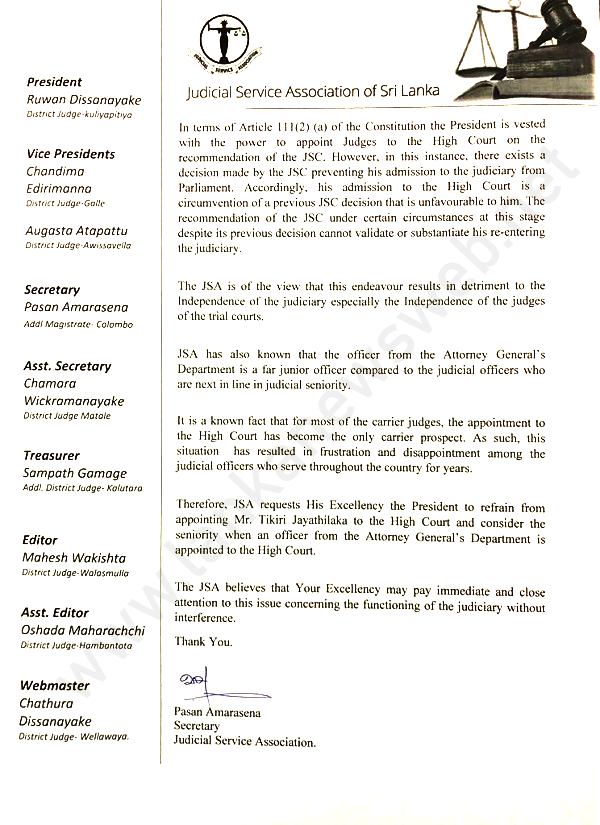
05. The Catholic Bishops’ Conference urges the government to uphold the Constitution and democracy of Sri Lanka and not to proceed with any “unwarranted measures to interfere with the independence of the Judiciary and preserve the Freedom of Speech and Expression of all its citizens.”
06. President Ranil Wickremesinghe says the agreement with the IMF would be presented to Parliament for a vote on whether to support it; adds following this, the key points of the agreements would be enacted into law.
07. Labour and Foreign Employment Minister Manusha Nanayakkara says the duty-free allowances given to migrant workers at the Airport will be increased from May 01, 2023; asserts migrant workers will be entitled to additional duty concessions based on the amount they spend.
08. The appeal filed by the Attorney General challenging the dropping of charges under the PTA against IUSF Convener Wasantha Mudalige by the Colombo Magistrate Court to be called in before the Colombo High Court on June 01, 2023.
09. A protest march organised by the Inter-University Students’ Federation in Colombo against the repression unleashed at state universities dispersed by Police: Tear gas and water cannons thrown at protesters.
10. Former Health Minister Rajitha Senaratne says the United National Party and the Samagi Jana Balawegaya have no difference in policy, and therefore must unite to rebuild the country under President Ranil Wickremesinghe.
Colombo (LNW): The United National Party (UNP) and the Samagi Jana Balawegaya (SJB) the main Opposition must unite in the mission to rebuild the country in the backdrop where the policies followed by the two political streams are alike, said MP Dr. Rajitha Senaratne.
Accordingly, the former Health Minister emphasised that the programme implemented by the President for economic recovery must be agreed upon.
Senaratne also noted that a visible and positive change is happening in the country since Mr. Wickremesinghe assumed Office as the President, for which he is grateful, adding that a common ground where the two political mainstreams discuss and work together, therefore, must be reached.
A three-day Workshop on “Cooperation for Maritime Security” organized by the Ministry of Foreign Affairs in collaboration with the Max Planck Foundation for International Peace and the Rule of Law and Indian Ocean Rim Association (IORA) concluded on 23 March.
The workshop provided an insightful analysis on IORA Member States to identify gaps between domestic legislation and United Nations Convention on the Law of the Sea (UNCLOS). The focal points of maritime safety and security of the IORA Member States, namely Australia, Bangladesh, France, India, Indonesia, Iran, Kenya, Madagascar, Malaysia, Maldives, Mauritius, Mozambique, Seychelles, Somalia, South Africa, Tanzania, Thailand, Yemen and officials from the Ministry of Foreign Affairs, Sri Lanka Navy and Sri Lanka Coast Guard attended the event. Participants from Dialogue Partners of IORA, Germany, Italy, Japan and USA also joined the workshop virtually.
Professor at the Faculty of Law of the University of New South Wales (UNSW) and President of the Australian Branch of the International Law Association Natalie Klein, Senior Research Fellow, Max Planck Foundation, Arron N. Honniball, Research Fellow, Max Planck Foundation, Egor S. Fedorov, Programme Support Officer, Global Maritime Crime Programme (GMCP) of United Nations Office on Drugs and Crime (UNODC), Asyura Salleh along with experts from Sri Lanka Navy and Sri Lanka Coast Guard conducted the session.
The Workshop was held on the sideline of the 3rd Meeting of IORA Working Group on Maritime Safety and Security on 20 March 2023 inaugurated by Foreign Secretary Aruni Wijewardane and attended by the Heads of Mission of IORA Member States and Dialogue Partner countries based in Colombo, Senior Officials of Ministry of Foreign Affairs, Ministry of Fisheries, Sri Lanka Navy, Sri Lanka Air Force, Sri Lanka Coast Guard, Sri Lanka Ports Authority, Merchant Shipping Secretariat, Disaster Management Center and Marine Environment Protection Authority, the UNODC, and officials of the Max Planck Foundation as well as representatives of the GIZ.
Sri Lanka is recreating the Ramayana trail. This trail includes several popular attractions such as Sigiriya, Ashok Vatika, And Divurumpola Temple, among others. The famous temple town of Trincomalee also has a number of temples related to the epic. There is a possibility of allowing the Indian Rupee for transactions on the island as well.
Times of India (Travel): Sri Lanka has a rich cultural and historical connection with the Indian epic, Ramayana. According to Hindu mythology, Sri Lanka was the kingdom of Ravana, the ten-headed demon king who abducted Sita, the wife of Lord Rama, the hero of the Ramayana.
Lord Rama, with the help of Hanuman and an army, fought a great battle to rescue Sita and defeat Ravana.
As per reports, Sri Lanka is in the process of recreating the Ramayana trail and also a separate Sita trail for those interested. Not only that, the possibility of allowing the Indian Rupee (INR) for transactions on the island is also being discussed.
There are several places in Sri Lanka that are believed to be associated with the Ramayana. Some popular Ramayana trails in Sri Lanka include Sigiriya, an ancient rock fortress believed to be the palace of King Ravana.
It is said that Ravana kept Sita captive in a nearby cave, around the Sigiriya Rock. It is one of the most photographed landmarks in Sri Lanka!
Ashok Vatika, a garden in the city of Nuwara Eliya, is another popular attraction. It is believed that this was the place where Ravana kept Sita captive. It is said that Hanuman met Sita here and gave her Lord Rama’s ring as a symbol of his presence.
Next up is Ravana Ella Falls. This waterfall, in the town of Ella, is believed to be the place where Ravana hid Sita after abducting her. And Divurumpola Temple, a temple near the town of Bandarawela, is believed to be the place where Sita underwent a trial by fire to prove her purity.
The famous temple town of Trincomalee has a number of temples that, one way or another, play a part in the Ramayana Trail. Koneswaram Temple is one such temple. This temple is believed to have been built by Lord Rama in honor of Lord Shiva.
These are just a few examples of the many Ramayana-related sites that can be visited in Sri Lanka. The Ramayana has left a deep imprint on Sri Lankan culture, and many locals take pride in sharing their knowledge of the epic with visitors.
fl360aero: The authorities of Sri Lanka plan to sell the national carrier SriLankan Airlines, the buyer may be from Russia, the country’s Minister of Transport Bandula Gunawardana said in an interview with Russian agency RIA Novosti.
“Yes, I can confirm that the Sri Lankan authorities are planning to sell SriLankan Airlines, but a buyer has not yet been found. There are many business opportunities here, and the buyer could very well be any Russian company,” Gunawardana said.
The Minister also noted that the country’s authorities want to find a good buyer for the carrier. He also explained why SriLankan Airlines does not fly to Russia now: because of insurance problems.
“The airline has problems with insurance: as soon as they solve it, they will try to resume flights to Russia. I think this will happen in the future.
On March 30 , Country’s President Ranil Wickremesinghe had said that the country’s resources are wasted on the Ceylon Electricity Board (CEB), Ceylon Petroleum Corporation (CPC), and SriLankan Airlines.
Things were never this bad for the carrier — SriLankan Airlines is the award-winning national carrier of the Island country Sri Lanka. Launched in 1979, and formerly known as Air Ceylon, SriLankan once became a major player in South Asian aviation establishing a reputation for service, comfort, safety, reliability, and punctuality. SriLankan had joined the oneworld airline alliance in 2014 as the first carrier from the Indian Sub-continent.
However, time is tough for the airline business now, there is not an airline in the world over that has not faced difficulties in the wake of Covid-19. Fuel costs have also been a challenge for everyone.
Srilankan Airlines case is unique , as the carrier was emerging from these challenges with a strong return to operations and profit, Sri Lanka was also on the brink of an economic crisis , multiple factors affected the recovery process.
“Fuel has gone from 25% of our costs to over 50% of costs at one stage last year. Obviously, that makes a big difference in a low-margin industry,”says Richard Nuttall, CEO of the airline.
Shortly thereafter, Sri Lanka defaulted on its foreign debt, prompting discussions with the IMF for a package to address the shortage of foreign currency in the country. There is nowhere the airline can borrow from, while its existing loans are at a high-interest rate.
Sri Lanka has also been in talks with Washington-based International Finance Corporation to help re-structure SriLankan Airlines and two other firms listed for divestiture.
World (LNW): The United Nations said many countries around the world are falling short when it comes to investing in public education.
Citing its 4th Sustainable Development Goal for Quality Education, the United Nations today (03) reiterated in a statement that quality education is “not a luxury, but a human right.”
“Providing quality education for all is fundamental to creating a peaceful and prosperous world,” the UN’s Sustainable Development Goals read, adding that “Education gives people the knowledge and skills they need to stay healthy, get jobs and foster tolerance.”
Estimatedly 147 million children miss more than half of their in-class instruction over the past two years, and this generation of children could lose a combined total of US$ 17 trillion in lifetime earnings in present value, the UN emphasised.
School closures have affected girls, children from disadvantaged backgrounds, those living in rural areas, children with disabilities and children from ethnic minorities more than their peers.
Colombo (LNW): President Ranil Wickremesinghe spell out the short-term plans of the Government to develop tourism down south at a time where the island nation is regaining momentum in the covid-19 and economic crisis hit the tourism industry.
Government wants to take the whole stretch from Bentota to Hungama and the interior about seven to eight miles and make it one tourist zone and a special economic area, he claimed. .
Sri Lanka can develop tourism both for low rise closer to the beach and high rise buildings at the back,” he said during an inspection visit down south to inspect tourist hotels and challenges faced by the tourism industry stakeholders last Friday.
Sri Lanka tourism has rebounded at present from its set back since 2020 due to the covid -19 epidemic and it has recorded over 335,000 arrivals for the three months from January to the end of March.
Noting that the short-term plans to develop the tourism industry down south have already been discussed with MP Vajira Abeywardena, Ministers Kanchana Wijesekera, Dr. Ramesh Pathirana and Manusha Nanayakkara, he said Galle town, Balapitiya and Koggala will be developed for high rise buildings.
“There will have different committees and we want your help. The Government intends to get it off by the end of the year and go ahead in the next two years,” the President added.
As part of promoting Sri Lanka, he said the Government has decided to have Andree Bushell singing in Colombo next year and then to hold what is called the ‘Galle Consorto’, Galle Literary Festival, Modern Art and Jazz in Matara, fashion week and music in Unawatuna, beach disco in Hiriketiya and a baila carnival in Hikkaduwa in the early part of 2024.
“We can stretch it all out for over two weeks. The Government is keen on your ideas and support to take it further,” he told the tourists and industry stakeholders.
Tourist arrivals to Sri Lanka have exceeded 50,000 in the first 13 days reinforcing the industry’s optimism.
From 1 to 13 March, Sri Lanka received a record 53,838 tourists, whilst also pushing the year-to-date arrivals to 264,022 which is a significant rebound from 2022.
As per the latest data released by the Sri Lanka Tourism Development Authority (SLTDA), a total of 27,573 travellers arrived in the first week, and 26,265 in the second week, the provisional data released by the Sri Lanka Tourism Development Authority showed.
The boost in arrivals was largely influenced by the Russian tourist, maintaining the lead ahead of India. Daily arrivals have also reached 4,141 compared to over 3,800 levels last year showing a significant improvement.
Russia accounted for 12,762 or 24% of the total tourists, followed by India with 7,348 or 14%, Germany with 4,289 or 9%, the UK with 3,937 or 8%, and the US with 2,716 or 5%.
The tourism industry has also managed to rebound with earnings exceeding $ 330 million in tandem with the boost in arrivals in 2023. Sri Lanka Tourism will soon launch its promotions on focused markets to make the country a year –round destination.
Against this backdrop, Sri Lanka will likely meet its arrivals target of 105,000 for March, whilst expressing confidence that the set target of 1.55 million visitors by the end 2023 is possible with an income of $ 2.88 billion.
Originally for 2023, Sri Lanka Tourism set an ambitious target of 1.5 million arrivals and an income of $ 5 billion by attracting high-end travellers who spend over $ 400 per day from the current $ 200.