Home Blog Page 1738

Ambassador Mahinda Samarasinghe visits the Boston Museum of Fine Arts

0

Ambassador Mahinda Samarasinghe visited the Boston Museum of Fine Arts (MFA) on  24 March 2023 and met with Museum Director Matthew Teitelbaum, Chief of Curatorial Affairs and Conservation and Matsutaro Shoriki Chair, Art of Asia, Christina Yu Yu, and senior staff.

He discussed the commemoration of Sri Lankan former curator of the Museum, Ananda Coomaraswamy, in conjunction with celebrations connected with 75 years of Sri Lanka – United States diplomatic relations in 2023.

Ananda Coomaraswamy, born in Ceylon (now Sri Lanka) to a Ceylonese father and an English mother, was educated in England. Upon his graduation from University College, London, he moved to Ceylon, where he worked and earned a PhD, and studied and collected Sinhalese art. He returned to London in 1906, where his conception of Indian art and modernity shared much with the flourishing Arts and Crafts movement and where modern artists began to find much of value in his thought. When he moved to Boston in 1917 to become the first Keeper of Indian Art (Curator) at the MFA, his collection became the core of the first significant collection of Indian art in America. In 1933, he took up the position of Fellow for Research in Indian, Persian, and Mohammedan art at the MFA, a position he held until his death in 1947. He is described as “the groundbreaking theorist who was largely responsible for introducing ancient Indian art to the West.”

Ambassador Samarasinghe discussed the various initiatives by the MFA to commemorate this distinguished personality and stated that the Embassy was pleased to associate itself with the efforts to celebrate the life’s work of Coomaraswamy and his service to the MFA, in particular.

Embassy of Sri Lanka

Washington D.C.

30 March 2023

Sri Lanka expects to finalise domestic debt rework by May

0

By Jorgelina Do Rosario and Uditha Jayasinghe

LONDON/COLOMBO, March 30 (Reuters): Sri Lanka will kick off a reworking of part of its domestic debt next month and aims to finalise it by May, central bank and treasury officials told creditors during a virtual presentation on Thursday.

The financially strapped South Asian country will also start formal negotiations for the debt it owes to bilateral creditors and overseas bondholders after the domestic debt operation, aiming to complete those parallel debt talks by September.

Central bank and treasury officials said they expected that “exploring options for a domestic debt operation” will help achieve much-needed liquidity relief, including both local currency T-Bills and T-Bonds.

Government officials told investors that only T-Bills held by the central bank would be considered for a debt rework, while a voluntary domestic debt operation was expected for the holders of $24 billion of T-Bonds. Sri Lanka’s total local currency debt is equivalent to $36.6 billion, according to the presentation.

The Indian Ocean island nation of 22 million people owes international bondholders over $12 billion, while external debt with bilateral creditors such as the Paris Club, China and India totals $7.1 billion.

“The government will engage with all T-bills and T-bonds holders,” Central Bank Governor P. Nandalal Weerasinghe said.

Treasury Secretary Mahinda Siriwardena also participated in the presentation, along with representatives of financial and legal advisers Lazard and Clifford Chance.

Sri Lanka is struggling with its worst economic crisis in more than seven decades. It has led to shortages of essentials and the ouster of a president.

EYES ON ‘QUALITY’ OF SPENDING

The International Monetary Fund’s executive approved in March a nearly $3 billion bailout for Sri Lanka that is expected to catalyse additional support from other multilateral lenders.

To that end, Sri Lanka has already frozen public recruitment and has hiked taxes and power tariffs by 66% this year. It will continue to restrict government spending to keep public finances on an even keel and meet primary balance targets outlined by the IMF, Siriwardena told creditors during the online presentation.

Siriwardena added that the country will start looking at ways to improve the quality of its expenditures.

“The most important aspect of this will be tax policy – we see huge potential to increase the tax base and also revenue. On the expenditure side we are also looking to improve the quality of expenditure and extend more to areas like healthcare.”

Weerasinghe said the economy could perform better that the 3% GDP contraction the IMF forecasts for 2023, though he provided no other projections for the period.

He added that the tourism sector, a significant source of revenue, is rapidly reviving though “still hasn’t reach pre-COVID levels (seen) in 2019. However, we hope for a strong recovery in tourism next year”.

Source: REUTERS

SLTB says special bus services will operate for Sinhala and Tamil New Year

0

By: Isuru Parakrama

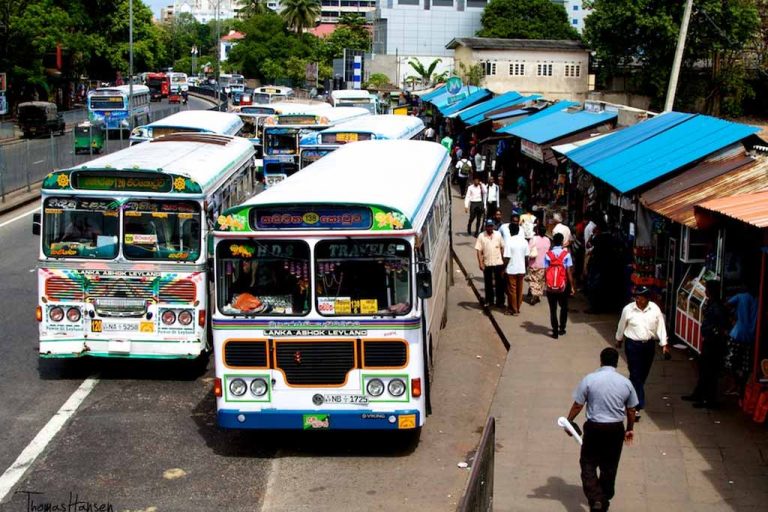
Colombo (LNW): A special bus service will operate from April 08 to April 17 in consideration of the upcoming Sinhala and Tamil New Year season, the Sri Lanka Transport Board (SLTB) said.

Enabling this special service, people will be able to go to their villages during the festive season, it added.

According to SLTB Chairman Lalith De Alwis, plans are in place to operate long-distance buses during the day and night. Passengers commuting on long-distance journeys will also be able to reserve seats, he added.

These services will operate from Colombo to places outside the metropolitan area, as well as from other main stations, including Anuradhapura, Polonnaruwa, Jaffna, Galle, Matara, and Hambantota, to the Western Province.

Silva added that passengers can reserve seats by calling the SLTB hotline 1315, through the mobile app, or by logging on to sltb.eseat.lk

‘Historic moment’: Politicians of South Asian descent set to lead Scotland, Britain and Ireland with Yousaf victory

0

(CNN): When Humza Yousaf took his oath of allegiance in Scottish parliament in 2016, he wore a gold embroidered sherwani – a traditional South Asian jacket – and a kilt.

“I, Humza Yousaf, swear with honesty and a true heart,” he proudly said in Urdu, “that I will always be faithful and bear true allegiance to Her Majesty Queen Elizabeth, so help me God.”

He is now expected to make history by becoming the first non-White head of the Scottish government, following his election as leader of the Scottish National Party (SNP) on Monday.

The triumph of British-born Yousaf, whose family trace their ancestry to Pakistan, is just the latest reflection of how times have changed as people of South Asian descent occupy leadership roles in the British, Scottish and Irish parliaments.

Humza Yousaf smiles as he walks down stairs after the Oath and Affirmation ceremony the Scottish Parliament in Edinburgh, Scotland May 11, 2011.
Humza Yousaf smiles as he walks down stairs after the Oath and Affirmation ceremony the Scottish Parliament in Edinburgh, Scotland May 11, 2011. David Moir/Reuters/File

Yousaf, 37, joins British Prime Minister Rishi Sunak, a Hindu, who secured the role last October and whose Indian parents came to the UK from East Africa in the 1960s.

And across the Irish Sea is the Republic of Ireland’s Prime Minister Leo Varadkar, whose father is an Indian-born doctor.

Ad Feedback

India and Pakistan were once the jewel of a British empire that stretched so far across the globe it was often said the sun would never set on it. But 75 years since the end of the British Raj, many commentators have remarked at how history has come full circle.

Sunder Katwala, director of think tank British Future, called Yousaf “the history maker” in a post on Twitter.

“The Empire strikes back,” quipped Jelina Berlow-Rahman, a human rights lawyer in Scotland, on the social media platform. “Historic moment for British politics.”

‘Bhangra with Bagpipes’

Yousaf’s father was born in the Pakistani city of Mian Channu, in the country’s sprawling Punjab province that borders India. His mother was born in Nairobi, Kenya, also to a family from Punjabi descent.

Both migrated to Scotland in the 1960s.

Since 1999, Scotland has had a devolved government, meaning many, but not all, decisions are made at the SNP-led Scottish Parliament in Holyrood, Edinburgh.

In a 2018 interview with Scotland’s Holyrood newspaper, Yousaf explained in detail how his mother’s family faced racial discrimination in the East African city for being seen as taking away jobs from the local population. The hardship reached a breaking point when his grandmother was attacked with an axe, he said. She survived, but the family had had enough.

“It was time to get away and again, it made sense because there was a British call for people from the Commonwealth to come and take on industrial jobs,” Yousaf said.

Born in Glasgow in 1985, Yousaf was one of two ethnic minority pupilsto attend his elementary school.

Destined by family expectations to be either an accountant, a doctor or a lawyer, Yousaf recalled the “scariest” moment was when he broke the mold by telling his parents about his desire to venture into politics.

Humza Yousaf speaks after being elected as the new SNP party leader, at Murrayfield on March 27, 2023 in Edinburgh, Scotland.
Humza Yousaf speaks after being elected as the new SNP party leader, at Murrayfield on March 27, 2023 in Edinburgh, Scotland. Jeff J Mitchell/Getty Images

“My dad, who really had so much foresight, said that we were living at a time when we [in our community] needed more representation and we didn’t really have anything,” he told Holyrood.

Yousaf joined the SNP while he was a student at the University of Glasgow and rose through the ranks of the party, becoming a member of parliament in 2011 – the first Muslim and non-White cabinet minister to serve in the Scottish Government.

He has often noted that his own background is an example of Scotland’s socially liberal and ethnically diverse landscape, even referring to himself as coming from a “bhangra and bagpipes” heritage.

Bhangra is the traditional folk music of the Punjab while bagpipes are the quintessential instrument of Scotland.

Yousaf’s party victory was confirmed after a six-week campaign where he and two other candidates squared off against each other.

On Tuesday, the Scottish Parliament will vote to elect the country’s sixth first minister, a position Yousaf is expected to claim as the head of the party with the most lawmakers.

He takes over a party with an overriding objective to end Scotland’s three-centuries-long union with England – something his predecessor Nicola Sturgeon wasn’t able to achieve after the British government repeatedly blocked a way to a fresh vote on independence.

“We will be the generation that delivers independence for Scotland,” he said in a victory speech. “Where there are divisions to heal, we must do so quickly because we have a job to do.”

The success of the South Asia diaspora

News of Yousaf’s victory dominated headlines in Pakistan, with messages and swirling on social media about the historic moment. It comes as most of the 270 million strong population observes Ramadan – Islam’s holiest month, where communities come together to fast, pray and reflect.

Noor Ahmed, from the Citizen’s Archive of Pakistan, a non-profit organization dedicated to cultural and historic preservation, described the journey Yousaf has taken as a “Pakistani story that is moving and aspirational, and will be lauded locally.”

“Humza Yousaf’s appointment is part of a wider movement taking shape globally that previously was acknowledged only informally – that members of the Pakistani diaspora have long played a vital role in global history,” she told CNN.

When Sunak similarly made history by becoming Britain’s first Prime Minister of Indian descent, many in the South Asian nation were quick to congratulate him – with some media channels even claiming him as their own.

Irish prime minister Leo Varadkar after being nominated as Taoiseach at Leinster House in Dublin, Ireland on December 17, 2022.
Irish prime minister Leo Varadkar after being nominated as Taoiseach at Leinster House in Dublin, Ireland on December 17, 2022.Charles McQuillan/Getty Images

British Prime Minister Rishi Sunak leaves Downing Street on March 8, 2023.
British Prime Minister Rishi Sunak leaves Downing Street on March 8, 2023.Chris J Ratcliffe/Getty Images

Just under 10% of the United Kingdom’s population are of South Asian descent, according to government statistics.

The leader of Scotland’s main opposition, Anas Sarwar, is also the child of Pakistani immigrants. Britain’s Home Secretary Suella Braverman also has Indian roots, while London mayor Sadiq Khan was born to a working-class Pakistani immigrant family.

But while political representation of minorities in Britain has improved, racism is far from vanquished. Yousaf’s victory was greeted with racist comments on social media by members of the far right.

Others have noted that Sunak and Yousaf were also both selected by their parties and have yet to face a general election.

The path forward

The Indian subcontinent won independence from the British empire in August 1947 and the bloody Partition that followed hastily divided the former colony along religious lines – sending Muslims to the newly formed nation of Pakistan, and Hindus and Sikhs to newly independent India.

An estimated 15 million people were uprooted and between 500,000 and 2 million died in the exodus, according to scholars. It remains etched into the memories of many who experienced it, and their descendents.

Observers have been quick to point out the irony that Yousaf, a Muslim of Pakistani origin, will go against Sunak, a Hindu of Indian origin, to deliver his promise of Scottish independence.

Young voters cast their vote on Scottish independence in Edinburgh, Scotland, on September 18, 2014.
Young voters cast their vote on Scottish independence in Edinburgh, Scotland, on September 18, 2014. Russell Cheyne/Reuters/File

In 2014, Scotland voted against independence by 55%. Two years later, Britain voted to leave the European Union when a majority of Scots wanted to stay, setting the country on a path it hadn’t agreed to and re-energizing the fight for independence.

Last November, Britain’s Supreme Court ruled that Scotland’s government cannot unilaterally hold a second referendum on whether to secede from the UK – a blow to independence campaigners battling against Westminster’s pro-union establishment.

Shortly after winning, Yousaf tweeted about the messages coming in.

“From Punjab to Pollok, people from across the world and here at home have been offering me their good wishes,” he wrote.

But in the meantime he said he had a more pressing immediate task.

“For now, after a long day I have promised a very sleepy three year old I will be telling her tonight’s bed time story.”

Source: CNN

Bentlage Chief meets with BOI counterpart

0

By: Isuru Parakrama

Colombo (LNW): Christopher Hettlage, President of Bentlage, met with his counterpart at the Board of Investment of Sri Lanka (BOI) Dinesh Weerakkody yesterday (29), to discuss investment opportunities in the island nation.

Bentlage is one of the world’s renowned labelling solution companies offering services from offset printing to in-mould labelling.

Seven companies to submit EOI for the proposed Hambantota oil refinery

0

By: Staff Writer

Colombo (LNW): Foreign Direct Investment will be bringing foreign direct investment for the oil refinery project in Hambantota,which is channeled through the approved local banking system through Inward Investment Accounts (IIA) as per the Foreign Exchange Act and its Regulations in Sri Lanka, the Board of Investment (BOI) said.

Responding to criticism of the project and also possible money laundering claims, the BOI said that in the case of the oil refinery project at the Mirijjiwila Export Processing Zone, Hambantota, all finance

cial transactions by the investor are routed through a reputed commercial bank of Sri Lanka. All commercial banks have their own AML/CFT regulations, which are also carefully monitored by the Financial Intelligence Unit of the Central Bank of Sri Lanka, it said.

Seven companies have submitted Expressions of Interest (EOI) for the proposed refinery in Hambantota.

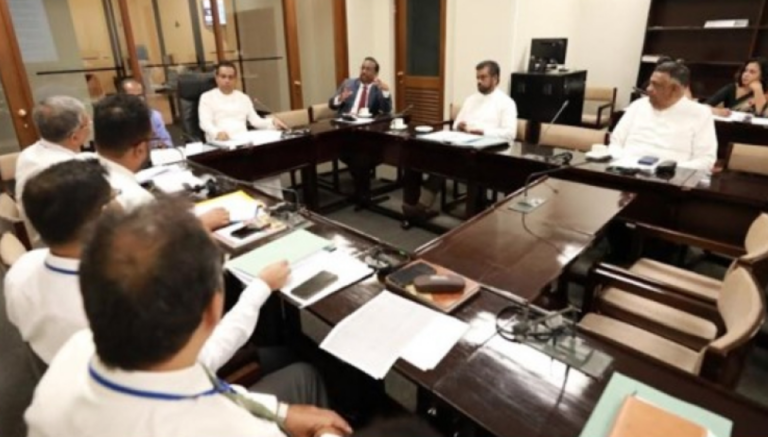
Power and Energy Minister Kanchana Wijesekera said that the 7 companies submitted EOIs for the proposed new refinery in Hambantota by the deadline yesterday.

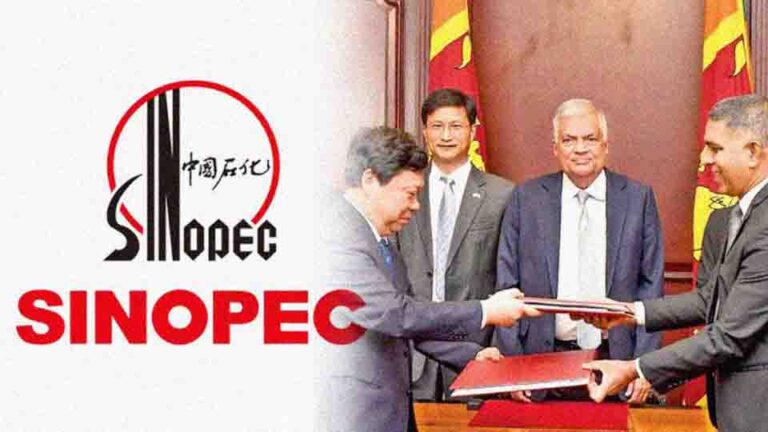
The seven companies are Grant & Shearer Ltd. of Nigeria, Sinopec of China, Petrichor Capital Sbn. Bhd. of Malaysia, Vitol Group of Singapore, Matin Tejarat Co. of Iran, Harree Management Services (Pvt.) Ltd. with Marka Invest of Sri Lanka and the UAE, Deniyaya Engineering Sales and Service Syndicate of Sri Lanka.

The technical evaluation committee and other procurement committees will evaluate the EOIs and issue the Request For Proposals (RFP) to the suitable applicants.

Earlier, the Cabinet approved a proposal to enter into agreements with Sinopec of China, United Petroleum Company of Australia and M. Parks Company of the United States of America for the importation, storage, distribution, and sale of petroleum in Sri Lanka.

The Government said that 26 companies had submitted proposals for the importation, storage, distribution, and sale of petroleum in Sri Lanka on long-term contracts.

Among these, 13 eligible companies had been recommended by the special committee appointed by the Cabinet and seven companies had submitted detailed proposals.

Accordingly the Cabinet of Ministers approved the proposal presented by the Minister of Power and Energy to enter into a contract with the 3 companies on long term contracts as per the provisions of the Petroleum Products (Special Provisions) (Amendment) Act No 33 of 2022, based on the recommendations made by the Technology Appraisal Committee, the Cabinet Appointed Special Committee and the Procurement Appeal Board

Meanwhile The Cabinet of Ministers has approved a proposal put forward by the Minister of Power and Energy Kanchana Wijesekera to establish a solar power plant at Sampur, Trincomalee by a joint venture company of Ceylon Electricity Board (CEB) and National Thermal Power Corporation (NTPC) of India.

The National Thermal Power Corporation of India and the Ceylon Electricity Board have inked an agreement last year for the joint implementation of a 135 MW solar energy project in two phases at the same site where the Sampur Coal Power Plant was planned to be built earlier.

Under the first phase of this project, it is expected to implement a 50 MW solar power project with a total investment of US$ 42.5 million and to construct a 40 km long 220 KV transmission line from Sampur to Kappalthurai at an estimated cost of US$ 23.6 million.

Skill Verification Program provide more benefits for workers in Saudi Arabia

0

By: Staff Writer

Colombo (LNW): Saudi Arabia and Sri Lanka signed a new agreement on the employment of workers, opening up more opportunities in the Kingdom for professionals from the crisis-hit island nation.

The Skill Verification Program aims to improve the professional competence of employees in the Saudi labor market, easing the recruitment process of skilled workers from Sri Lanka.

The agreement, signed by Sri Lanka’s Tertiary and Vocational Education Commission and Saudi Arabia’s Takamol, which operates under the Kingdom’s Ministry of Human Resources and Social Development, covers 23 professions, including electricians and auto mechanics.

Sri Lankans are hopeful that a new employment scheme with Saudi Arabia will help ease their country’s economic crisis, professionals and labor officials told Arab News, as they expect it to boost the nation’s manpower exports to the Kingdom.

Saudi Arabia and Sri Lanka recently signed an agreement on the Skill Verification Program which aims to improve the professional competence of employees in the Saudi labor market and streamline the recruitment process of skilled workers from the island nation.

Under the deal — which covers 23 professions, including electricians and auto mechanics — Saudi employers will recognize accreditations issued by Sri Lanka’s Tertiary and Vocational Education Commission.

“The TVEC has embarked on the assessment process where Saudi Arabia would tell us their manpower needs and Sri Lanka would choose the right candidates for the right courses,” commission director, Dr. Lalithadheera K. Arachchige, elebotated

.For many years, Sri Lankan professionals have been working in Saudi Arabia without recognition of their professional certification and often enrolled in jobs below their qualifications. The new deal is expected to change that.

Abdul Nazar, managing director of Colombo-based recruitment company Air Kings Group who used to work in Jeddah, said Saudi Arabia had previously not recognized professionals from Sri Lanka “unless they have gone through the technical skill tests processed by the Saudi government.”

He said “The new facility will enable the migrant workers to claim their salaries according to their professional qualifications which will help our country to earn increased volume of foreign exchange to our national coffers.”

The deal coincides with the Kingdom’s launch of various megaprojects and its growing need for foreign workers.

“In Saudi Arabia, because of Vision 2030, there is a dearth for skilled workers where we can creep in and get the needed foreign exchange to Sri Lanka,” Nihal Gamage, president of the Sri Lanka Cultural Forum in Riyadh, told Arab News. “This is a God-sent opportunity.”

The program was also expected to encourage more Sri Lankans to look for jobs in the Kingdom, due to the extra perks they would receive.

“Both countries will benefit. Saudi Arabia is getting more qualified people and at the same time we are getting the high perks,” Senarath Yapa, spokesman of the Sri Lanka Bureau of Foreign Employment, told Arab News.

Only around 40 percent of Sri Lankan migrant workers departing for the Kingdom are recognized as skilled workers, Yapa said.

H.P.A. Kumarasinghe, a Sri Lankan professional who works as a chief accountant at Riyadh-based ABV Rock Group, expected the agreement to help ease the economic crisis in his home country.

Sri Lanka has been seeking foreign employment opportunities for its professionals as it is facing its worst financial crisis since gaining independence in 1948 and is in desperate need of foreign currency.

Pope Francis in hospital with respiratory infection

0

Pope Francis has a respiratory infection and will need to spend a few days in hospital in Rome, the Vatican says.

BBC: The 86-year-old had breathing difficulties in recent days but does not have Covid, a statement said.

It said he would need “a few days of appropriate hospital medical therapy”.

“Pope Francis is touched by the many messages received and expresses his gratitude for the closeness and prayer,” the statement added.

His closest staff, including security, are expected to stay the night at the Gemelli Hospital, a person with direct knowledge told the BBC.

This is the busiest time of the year for Pope Francis, with many events and services scheduled ahead of Easter weekend.

A Palm Sunday Mass is scheduled this weekend, and Holy Week and Easter celebrations next week.

He is also scheduled to visit Hungary at the end of April.

On Wednesday morning, he presided over his weekly general audience in St Peter’s Square. He appeared in good spirits but was seen grimacing as he was helped into his vehicle.

The Vatican initially said the Pope had gone to hospital for a previously scheduled check-up, but Italian media have questioned this account after a television interview was cancelled at short notice.

Reacting to the news, President Joe Biden asked people to make an “extra prayer” for the Pope’s recovery.

Mr Biden, who is only the second Roman Catholic to be elected leader of the US, also described the pontiff as one of the “most Christ-like figures I’ve ever met”.

People in the Pope’s home city of Buenos Aires, Argentina, shared their feelings with Reuters news agency. One man, Daniel Saco, said the pontiff “must ask himself whether he can continue”.

“It is very sad because, as a Latin American, I feel represented by this Pope, who is very open-minded and human,” said Victoria Veira, who is originally from Brazil.

Anibal Pizelle, who met the Pope when he was bishop of Buenos Aires, said she was optimistic for a recovery as Francis was “physically and mentally strong” and a “person with enormous faith”.

The Pope has used a wheelchair in recent months because of mobility problems related to his knee.

He also underwent surgery to treat a colon problem in 2021. In January, he said the condition had returned.

Despite his ailments, the Pope has remained active and has undertaken trips abroad. He visited the Democratic Republic of Congo and South Sudan in February.

In January, the Pope led the funeral of his predecessor Pope Benedict XVI – who was the first pope to step down voluntarily for centuries. He said this was due to ill health.

Pope Francis has previously indicated that he may also wish to follow in Benedict’s footsteps in the event that his health deteriorates.

Source: BBC

Former President CBK urges all citizens to combat “frightening” Anti-Terrorism Bill

0

By: Isuru Parakrama

Colombo (LNW): Former President Chandrika Bandaranaike Kumaratunga urged all citizens of Sri Lanka to unite to defeat the brand new ‘Anti-Terrosim Bill’ which she described as “frightening.”

“Let’s set aside our political differences and recognise that we all are social activists in this place. We must unite to defeat this frightening bill,” the former President noted addressing an event held in Colombo yesterday (29).

Adding, Mrs. Kumaratunga emphasised that all the citizens of this country need to be alerted about this new bill and that such provisions will not let the people of this country speak freely like today.

Democracy will have no place and all will be arrested under the new bill, she noted.

SLPP rebel MP Prof. G.L. Peiris also attended the event.

Sri Lanka tourist arrivals hit 100000 mark on the eve of Sigiriya development

0

By: Staff Writer

Colombo (LNW): Sri Lanka is set to unveil a Master Plan and National Tourism Policy to attract more tourists in to the island nation while developing Sigiriya, as the country’s first sustainable tourist destination with the contribution of all relevant parties.

With arrivals surpassing the 100,000 mark in the first 26 days of March, Sri Lanka’s tourism industry has welcomed over 300,000 visitors in the first quarter, starting 2023 on a positive note.

Sri Lanka is expecting 1.55 million tourists in 2023 led by visitors from India, Chairman of Sri Lanka Tourism Development Authority Priyantha Fernando said.

“We are targeting almost 260,000 India arrivals this year,” Fernando disclosed adding that with the Chinese traffic opening up of this month there will be further increases.

“We are expecting 1.55 million tourist’s arrivals this year it is quiet promising. We ended with of 102,545 tourists in the month of January 2023.”

In this tourist promotion drive, Sigiriya, which is considered not only an important archaeological site in Sri Lanka but also a UNESCO world heritage, is a tourist destination with a high level of local and foreign tourist attractions.

The joint proposal to this effect submitted by the Tourism Minister Harin Fernando and the Buddhasashana, Cultural and Religious Affairs Minister Vidura Wickramanayake was approved by the Cabinet of Ministers at its meeting on Monday.

This is also the first time Sri Lanka’s tourism industry recorded over 100,000 tourist arrivals in three consecutive months after 2019.

Led by Russian travellers, during the first 26 days of March, a total of 105,714 tourists arrived in the country, propelling the cumulative figure to 315,898 continuing the growth momentum and boosting hopes for a good year.

The growth in the first quarter (with a few days remaining) of tourist arrival is over 10.7% compared to the same period last year, but still 55% lower than the first quarter of the benchmark year 2018.

Russia leads as the top source market, reflecting 21% or 22,038 of total arrivals during the first 26 days of March followed by India with 15% or 15,695, the United Kingdom with 8% or 8,555, Germany with 8% or 8,256, and the US with 5%, provisional data released by the Sri Lanka Tourism Development Authority yesterday noted.

“Sri Lanka’s tourism industry has made a strong comeback in 2023 after a series of major setbacks from 2019. The respect and tribute of it should go to all stakeholders of the industry for all their dynamic and steadfast commitment to overcoming the challenges. I salute their dedication and efforts,” Tourism Minister Harin Fernando disclosed.

He also said that the National Tourism Policy blueprint will also be implemented soon to set out consistent policies and standards to boost Sri Lanka’s tourism industry to its next stage of growth in 2024.

“We are excited about 2023, as plans are underway to make Sri Lanka a year-round destination,” the Minister added.

Tourism accounts for close to 5% of Sri Lanka’s economy. The industry is hopeful of achieving 1.55 million visitors and an income of $ 2.88 billion in 2023.

With Sri Lanka Tourism not opting for a global communication blitz in 2023, however, it will focus on nine key markets identified as India, Russia, China, the UK, France, Germany, the Middle East, and Nordic countries.

The MICE tourism segment is earmarked as a key segment Sri Lanka looks to explore this year to push the numbers and earnings.

Analysis opined that the continuous positive publicity at the global level was also a major factor for the boost in arrivals post-political instability just last year.