
India and Sri Lanka have taken giant step towards the restoration of a significant connectivity with the resumption of direct flights between Chennai and Jaffna on Monday 12 offering many concession.
Alliance Air, a wholly owned subsidiary of AIAHL resumed its direct services connecting Chennai and Jaffna yesterday, after nearly three-year pandemic-caused break.
The inaugural flight from Chennai post-2020 landed at the Jaffna International Airport in Palaly round 11.25 a.m.on day before yesterday.
Sri Lanka is taking off landing and parking charges, slashing embarkation taxes and ground handling fees at these airports to draw South Asian carriers, Minister Bandula Gunawardana said.
The cabinet of ministers had cleared a proposal by the Civil Aviation and Tourism Minister to boost operations at the Mattala, Ratmalana and Jafna airports.
The new concesstions included the removal of landing and parking fees, the lifting of 60 dollar embarkation tax on passengers for two years, discounts for ground handling. And the slashing of the embarkation tax for passengers by 50 percent for a year.
“India remains the top source market year-to-date for Sri Lanka and the resumption of Chennai and Jaffna direct flight will indeed be a big boost to draw more travelers from the neighbouring giant,” Tourism Minister Harin Fernando said.
As per the provisional data by the Sri Lanka Tourism Development Authority, India remains strong as the top tourist source market for year-to-date with a cumulative number of arrivals at 110,077.
The airline is all set to expand globally and commence commercial flight operations from Jaffna International Airport to Chennai International Airport with direct flight operations on Monday, Tuesday, Thursday and Saturday.
The Palaly airport was reopened as Jaffna International Airport on 11 November 2019, following the completion of the redevelopment project, with the support of India.
However, its operational activities were suspended from 15 March 2020 again, as a result of the COVID–pandemic.
At present, the JIA runway can only accommodate 75-seater flights and it is learned that the runway is expected to be redeveloped to accommodate larger aircrafts in future.
Being an island nation, Minister Fernando emphasized it was important to prioritize the tourism industry and change the overall attitude to develop the sector, as the third largest foreign exchange earner for the overall economy.
Sri Lanka has welcomed 25,024 tourists during the first 11-days of the month, pushing the YTD figure to 653,041.
Direct flights between Chennai and Jaffna resume with tax bonanza
Govt to take final decision on SLT restructuring after committee report
The final decision on restructuring Sri Lanka Telecom (SLT) will be decided upon, when the report of the Finance Ministry’s state institutions restructuring unit comes out, State Minister of Finance Shehan Semasinghe disclosed.
“A special unit has been appointed to look into the restructuring of state institutions as per the budget, he said adding that this unit will look into how each institution should be restructured. Therefore, the final decision on how SLT is to be restructured will be made after the report is submitted.
Also he assured that the government will not negotiate with country’s security and the approval of the parliament would be sought for restructuring of state institutions.
National telecommunications services provider, Sri Lanka Telecom PLC (SLT), has decided to restructure two of its subsidiaries and its ride-hailing venture, SLT muve,(multi- user virtual environments )after evaluating the past performances and considering the opportunities and challenges in the post-COVID-19 environment.
After extensive discussions, SLT director board recently decided to restructure SLT Human Capital Solutions (Private) Limited and Sri Lanka Telecom (Services) Limited as well as SLT muve venture, which comes under SLT Digital Info Services (Private) Limited.
Accordingly, the SLT management has already commenced the restructuring process on SLT Human Capital Solutions (Private) Limited, which would be soon followed by Sri Lanka Telecom (Services) Limited. Meanwhile, the operations of its ride-hailing venture, SLT muve, remain suspended since late March.
Although the board of directors of SLT has given the nod for the restructure of the venture, SLT also needs the approval of its strategic partner in this venture, Australia-based Technology
Network Australia, to move ahead with the restructuring process. Some SLT employees have also raised concerns on the credibility of Technology Network Australia.
An SLT official noted that SLT is now looking for new investors to expand the ride-hailing service, which was launched last year.
However, Technology Network Australia and SLT are yet to reach an agreement on the future operations of the venture while discussions are continuing, as both parties are revisiting the business case for the venture.
The performance of the ride-hailing industry remains eroded due to COVID-19-related restrictions in Sri Lanka and globally.
Further, the SLT group is also increasingly looking at providing innovative solutions to its cooperate clientele, which include both state and private sector institutions.
It is also currently revisiting the entire business plan for SLT and its key subsidiary Mobitel.
Sri Lanka seeks to engage with the G20 during India’s presidency.
Sri Lanka has sought India‘s support to engage with the work of the G20 and its assistance to overcome the economic crisis.
This request was made by Sri Lanka’s High Commissioner to India Milinda Moragoda when he met with the Chief Coordinator for India’s G20 Presidency for 2023, Harsh Vardhan Shringla in New Delhi.
The discussion especially focused on various avenues through which Sri Lanka could engage with the G20 during India’s presidency of the Group and also the possibility of understanding G20 approach towards international financial cooperation and debt restructuring.
High Commissioner Moragoda and the Chief Coordinator discussed the opportunities available to Sri Lanka, as a neighbouring country of India, to engage with the work of the G20.
India assumed the presidency of the G20 on 01 December 2022 for a period of one year. Under its Presidency, India is expected to host over 200 G20 meetings in 56 cities across the country, beginning December 2022.
The G20 Leaders’ Summit at the level of Heads of State / Government is scheduled to be held on 09 and 10 September 2023 in New Delhi.
The G20 or Group of Twenty is an intergovernmental forum comprising 19 countries and the European Union, which works to address major issues related to the global economy, such as international financial stability, climate change mitigation, and sustainable development.
Before assuming office as the Chief Coordinator for India’s G20 Presidency, Harsh Vardhan Shringla was the Foreign Secretary of India. An officer from the Indian Foreign Service, he had previously served as India’s envoy to Thailand, Bangladesh and the United States.
U.N. chief Antonio Guterres sought India’s support in mobilizing G20 nations to help out developing countries saddled with debt, with three of India’s neighbours Sri Lanka Pakistan and Bangladesh already seeking IMF loans as their economies struggle.
India has taken over the G20 presidency from Indonesia for a year from Dec 1. India’s neighbours Sri Lanka, Pakistan and Bangladesh have in recent months sought IMF loans as high oil prices complicate efforts to recover from the economic damage of the COVID-19 pandemic.
“I count on India’s support in mobilizing G20 countries around debt relief,” Guterres said adding that many developing countries are at or near debt distress and require multilateral action, including the expansion and extension of the G20 Debt Service Suspension Initiative.”
Established in May 2020 during the pandemic, the initiative allowed nearly 50 countries to suspend $12.9 billion in debt-service payments until the end of last year.
Guterres said climate change was “already a grave threat” to India’s economy, agriculture and food sector, and to the health, lives and livelihoods of hundreds of millions of people.
He said G20 countries were responsible for 80% of global emissions and must take the lead in cutting those. Rich countries should also financially help developing ones do so, he said.
Uma oya power connects to the national grid by June next year
The Uma Oya multipurpose development project is expected to be connected to the National Grid by June 2023, Minister of Power and Energy Kanchana Wijesekera said on Tuesday (13).
The Uma Oya Hydropower Complex is an irrigation and hydroelectric complex currently under construction in the Badulla District of Sri Lanka.
In a Twitter message, Minister Wijesekera said that a meeting was held on the Uma Oya project which will add 120MW of Hydropower to the National Grid.
“Officials of Farab Energy and Water projects of Iran and Farab International FZE, the construction and engineering company, have assured that the construction will be completed by end of April 2023,” he said.
The minister added that they have also assured that the Uma Oya project will be connected to the national grid by June 2023.
The agreement on the Uma Oya Project was signed in April 2008 between the Irrigation Ministry and the Farab Energy and water projects of Iran and Farab International FZE collectively with a 5-year contract period plus one year maintenance period.
The completion of the Uma Oya Multipurpose Development Project was delayed, due un availability of US$ 12mn required to complete the remaining five per cent of the scheme, a senior official said.
Funds were requested through the Power and Energy Ministry from the Treasury but there has been no response, said senior project officer . This will delay the possibility of adding a further 120 MW to the national grid.
The money was needed to pay for expertise, essential equipment and material for final testing. An additional Rs 1.5 billion was required for salaries of local employees and related matters. The project was due to be completed by May 25 this year.
But the financial matter is now settled and the work is progressing rapidly, he added.
An additional 120MW would ease the burden on the Ceylon Electricity Board to find fuel for thermal power plants, he said.
The Rs 1.5bn were for subcontractor payments. Farab Co of Iran was the principal contractor. If funding was released, the project could close by December, after which the plant could be commissioned.
“A cabinet memorandum on this has already been submitted, and we are hopeful that it would draw the attention of the government,” he said.
The project was to be commissioned in 2015 but delayed by a leak. The original agreement was signed in 2008, estimated to cost US$ 529mn — US$ 450mn from the Export Development Bank of Iran and the rest from Sri Lanka.
Due to sanctions imposed by the US on Iran, however, funding was affected and the Treasury had to take over a majority of the financing.
The project aims to provide drinking water to Moneragala, Badulla, Hambantota and Wellawaya; and irrigation to Wellawaya, Thanamalwila and Lunugamvehera in addition to generating power.
FDI flow into Colombo Port City retards due to regulations deferral
Foreign Direct Investment (FDI) into the Colombo Port city will be delayed due to non finalization of relevant regulations a top official of managing company said.
Foreigners are used to invest in infrastructure in Sri Lanka, for the long-term leaving the investment value permanently remain in the island, and it can continue to create even more value through trade and commerce, he claimed.
This helps to bridge the Balance of Payments gap and strengthen the local currency, while creating new economic opportunities for locals.
Port City Colombo is Sri Lanka’s biggest FDI project, with billions of dollars waiting to flow in, but investors are hesitant as the Port City Colombo Special Economic Zone regulations are not yet finalized, he disclosed
Speaking at the Sri Lanka Economic Summit 2022, held at the Shangri-La Hotel in Colombo recently Thulci Aluwihare, Deputy Managing Director at CHEC Port City Colombo (Private) Limited said, “They were unable to execute marketing strategies due to this reason.
It also cannot proceed with other matters of logistics and outreach until the regulatory framework, as provided for by the Colombo Port City Economic Commission Act, is finalized and published by the Government of Sri Lanka.
The company cannot make any official representations to any parties until this is completed, and until there is clarity over regulations related to taxation.
He said If these matters aren’t finalized soon, it may send the wrong signals to investors and cause them to become hesitant, which will impede the progress of development, which at present is proceeding exceedingly well.”
With infrastructure development slated for completion by Q3 of 2023, Port City Colombo is Sri Lanka’s biggest FDI-funded development project with US$ 1.4 Bn committed by the project company,$1.2 Bn already having been invested, and a further $1.5 billion expected to flow in during the vertical development phase, which will commence thereafter.
A $7-million Duty-Free Shopping Mall, the first of its kind in South Asia, and a magnet for shopping and tourism, is also expected to open doors at Port City Colombo in April 2023.
The Port City Colombo Special Economic Zone (PCC SEZ) is a game changer, especially for financial services, trade, IT/BPM, tourism, retail and many other sectors. This is because of its special status as an SEZ, governed by the Port City Economic Commission.
However, although the Port City Economic Commission bill was passed in Parliament on the 20th of May 2021, there are still some delays with regard to finalizing the regulatory frameworks.
This has resulted in a virtual standstill in terms of the actual moving in of businesses, and the development of the project to its full potential, as investors and others are unsure as to the legal and regulatory procedures and processes.
New record number of journalists jailed worldwide
A record total of 533 journalists are currently detained worldwide, according to the annual round-up of violence and abuses against journalists published by Reporters Without Borders (RSF). The number of those killed has increased again this year – to 57– while 65 journalists are being held hostage and 49 are missing.
Last year’s record has been broken again. The total of 533 journalists being held in connection with their work on 1 December was 13.4% higher than last year’s figure. RSF has also never previously seen so many women journalists in detention. A total of 78 are currently held, a record-breaking rise of nearly 30% compared to 2021. Women now account for nearly 15% of detained journalists, compared to fewer than 7% five years ago.
China, where censorship and surveillance have reached extreme levels, continues to be the world’s biggest jailer of journalists, with a total of 110 currently being held. They include Huang Xueqin, a freelance journalist who covered corruption, industrial pollution and the harassment of women. Also a sign of major repression, the Islamic Republic of Iran, with 47 detainees, became the world’s third biggest jailer of journalists just one month after the onset of massive protests. Among the first journalists detained were two women, Nilufar Hamedi and Elahe Mohammadi, who had helped draw attention to the death of the young Iranian Kurdish woman Mahsa Amini. They now face the death penalty.
“Dictatorial and authoritarian regimes are filling their prisons faster than ever by jailing journalists. This new record in the number of detained journalists confirms the pressing and urgent need to resist these unscrupulous governments and to extend our active solidarity to all those who embody the ideal of journalistic freedom, independence and pluralism.
Christophe Deloire
RSF Secretary-General
The number of journalists killed has also risen. A total of 57 paid with their lives for their commitment to report the news in 2022 – an 18.8% increase compared to 2021, after a two-year period of relative calm and historically low figures. The war that broke out in Ukraine on 24 February 2022 is one of the reasons for this rise. Eight journalists were killed in the first six months of the war. Among them were Maks Levin, a Ukrainian photojournalist who was deliberately shot by Russian soldiers on 13 March, and Frédéric Leclerc-Imhoff, a French video reporter for the TV news channel BFMTV, who was killed by shrapnel from an exploding shell while covering the evacuation of civilians.
Meanwhile, more than 60% of journalists killed lost their lives in countries considered to be at peace in 2022. Eleven were murdered in Mexico alone – nearly 20% of the overall number of journalists killed worldwide. Mexico’s figures, along with Haiti’s (with six killed) and Brazil’s (with three killed) helped turn the Americas into the world’s most dangerous region for the media, with nearly half (47.4%) of the total number of journalists killed worldwide in 2022.
The 2022 round-up also reports that at least 65 journalists and media workers are currently being held hostage. They include Olivier Dubois, a French reporter who has been held for more than 20 months by the Support Group for Islam and Muslims (JNIM), an armed group in Mali affiliated with al-Qaeda, and Austin Tice, an American journalist abducted nearly 10 years ago in Syria. Furthermore, two more journalists were reported missing in 2022, bringing the total number of journalists currently missing to 49.
The round-up also takes a look at some of the year’s most striking cases, including that of Ivan Safronov, one of Russia’s best investigative journalists, who was sentenced to 22 years in prison for revealing “state secrets” that were readily available online. This was the longest sentence recorded by RSF in 2022. It also mentions the case of Dom Phillips, a British journalist whose dismembered body was found in a remote part of the Brazilian Amazon, where he had gone to research the attempts by local Indigenous groups to combat poaching, illegal gold mining and deforestation.
Since 1995, Reporters Without Borders (RSF) has been compiling an annual round-up of violence and abuses against journalists based on precise data collected from 1 January to 1 December of the year in question. The 2022 round-up figures include professional journalists, non-professional journalists and media workers. RSF gathers detailed information that allows it to affirm with certainty or a great deal of confidence that the detention, abduction, disappearance or death of each journalist was a direct result of their journalistic work. Our methodology may explain differences between our figures and those of other organisations.
Even after 35 years, we still cannot implement the 13A – Rajitha
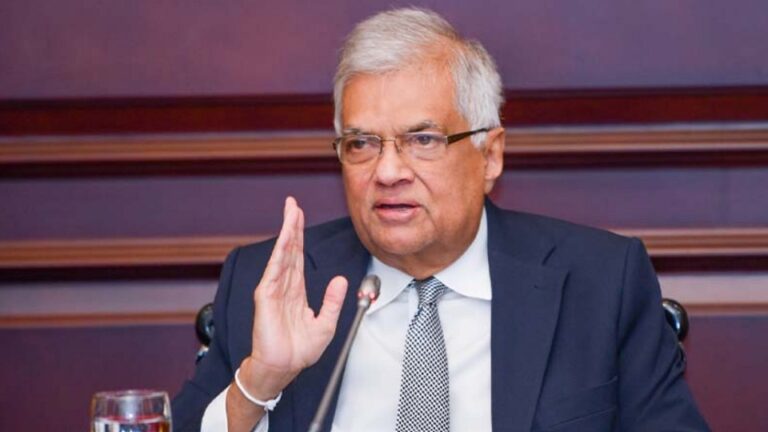
Parliament member Rajitha Senaratne emphasizes that all parties should be responsible that the discussion started by President Ranil Wickramasinghe regarding finding solutions to the national problem does not become another difficult effort like in the past.
Rajitha Senaratne stated this while replying to an inquiry made by Lanka News Web about the all-party discussion that started yesterday (13) under the chairmanship of the President.
He further commented that,
“It was in 1987 that the 13th constitutional amendment was signed. Now in the year 2022 we are still discussing the implementation of 13. Even after 35 years, we have not been able to implement this. That is the real situation in this country.
After the end of the war period, President Mahinda Rajapaksa told foreign countries that he would provide a ‘Thirteen Plus’ solution. He told Sri Lanka that it was ‘Thirteen Minus’. All the leaders have done since then is to pass the ball about the 13th amendment. We prepared documents about this in the government in 2015, but still it could not be implemented.
Now in yesterday’s discussion, we saw that this was going to be all mixed up with land issues and other issues. If 13 is fully implemented, there will be no land issue again.
The 13th amendment addressed two of the main issues of the people of the North and East. One is the police for their safety. The second one is the right to the land where they live. If you confirm those two, almost all other problems will be solved.
Those who held to a part of the 13th amendment and opposed it have now agreed. But when this is going to be fully implemented, someone will object again. That’s how things work in this country.
In yesterday’s discussion, everyone except Gevindu Kumaratunga agreed that this issue should be resolved. That’s a big thing.
Vijaya Kumaratunga was shot dead that day because he spoke in favor of 13A. The people who killed him have also entered the provincial councils today. Their leaders also said that the remote control of the provincial councils is in their hands. But they killed Vijaya Kumaratunga because they said that the country was divided by that provincial council, and they had to get a visa to go from one province to another. Now let’s see what they say when the 13th Amendment is going to be fully implemented.
If we make a lie that we will solve this, this time too, the youth of the north will go to a struggle like in the past. It is not an armed struggle but a peaceful struggle. But that will completely turn the politics of the north upside down. If that happens, then we will have to talk about this issue with a new group. Before that, we should definitely do it when we can talk to the people involved and solve it.”
Sooka paid a significant sum in legal costs and compensation by pro government Sinhalese diaspora activist and sets legal precedent in the UK.
London: Jayaraj Palihawadana, until recently the UK representative of the political party of the former Sri Lankan President, Gotabaya Rajapaksa, has apologised unreservedly in court to South African human rights lawyer and activist, Yasmin Sooka, for making false statements against her. Sooka initiated a data protection claim in the UK under the Data Protection Act 2018, challenging the publication of inaccurate personal information detrimental to her reputation. Jayaraj Palihawadana published a report which he sent it to 47 diplomatic missions in Geneva in 2021 falsely claiming that Sooka was biased in favour of a proscribed terrorist group.
In her witness statement to the High Court King’s Bench Division, Sooka said:
“Naturally these allegations are completely false and appear to be a calculated attempt to discredit me in my work as a human rights defender in Sri Lanka. The Court will probably be aware that it is well-worn tactic of repressive regimes around the world to denounce human rights defenders as terrorists, or supporters of terrorists, smearing them by association.”
A solicitor himself, Palihawadana failed to delete all the offending remarks or apologise at the outset, and instead attempted to file a counterclaim against Sooka, which the court dismissed. Eventually he agreed not only to pay substantial legal costs and compensation to Sooka but also agreed to retract his comments and publish an apology online in English and Sinhala. Additionally, as the defendant, Palihawadana agreed to make a Statement in Open Court today which said:
“The Defendant unconditionally retracts and apologises unreservedly for the aforementioned untrue allegations made against the Claimant in the Reports.To indicate the sincerity of this apology, the Defendant has agreed to pay the Claimant a substantial sum to compensate her for distress and harm to her reputation arising from the Reports. The Defendant has also agreed to bear the Claimant’s reasonable costs.”
Under the terms of the judgement, Palihawadana agreed to publish on his website a full apology, a copy of which is below in the Notes to Editors.
New Legal Precedent
Sooka’s legal team also established an important precedent by gaining permission for the first time from the UK High Court to make a Statement in Open Court in a Data Protection case.
“This brings to an end a long-running debate among practitioners about whether Statements in Open Court are available for other causes of action than libel, slander, malicious falsehood and misuse of private or confidential information,” said Sooka’s
counsel, Guy Vassall-Adams KC.
While the precedent will have implications for future data protection cases, the legal team hope the wider value will be to support human rights activists against repeated onslaughts.
“We are delighted to have upheld the reputation of our client against these sort of slanders that so many human rights activists around the world have thrown at them, attempting to silence them and prevent them from speaking the truth. It’s important that this court process acts as a deterrent and that’s why the financial penalties help drive home the point,” said Daniel Machover of Hickman and Rose, the solicitors for Sooka.
Yasmin Sooka says she is in discussions about establishing a scholarship fund for the children of political prisoners and families of the disappeared in Sri Lanka with her compensation money when she receives it.
Background
Yasmin Sooka is a well known international human rights lawyer and transitional justice expert who ran the Foundation for Human Rights in South Africa for nineteen years. She served on the South African Truth and Reconciliation Commission for eight years, the Sierra Leone Truth Commission and the UN Independent Review Panel for Central African Republic (CAR) in 2015 looking into Allegations of Sexual Abuse by Foreign Military Forces in the Central African Republic. In 2010, she was appointed by the UN Secretary-General to serve as a member of the three-member Panel of Experts advising the UN Secretary-General on accountability for war crimes committed during the final stages of the war in Sri Lanka (‘the Panel of Experts’). For the last six years she has headed the UN Commission on Human Rights in South Sudan.
The International Truth and Justice Project which she heads has focused on the collection and preservation of evidence pertaining to the final phase of Sri Lanka’s civil war in 2008-9 and post-war torture and sexual violence. It holds one of the most important archives of Sri Lankan testimony covering the last decade (400 case files) meticulously assembled by international human rights investigators, prosecutors and barristers who specialise in sexual violence documentation who have worked in international tribunals and courts. In 2017 the ITJP brought a series of universal jurisdiction cases in Latin America against a Sri Lankan General who was Ambassador there, Jagath Jayasuriya. In 2019 the ITJP assisted eleven torture victims to file a case against Gotabaya Rajapaksa in California under the Torture Victims Protection Act. In 2022, it sent a criminal complaint against Mr Rajapaksa to the Attorney General of Singapore after he fled there briefly, escaping anti-government protests in Sri Lanka calling for his removal as President.
Contact: Daniel Machover of Hickman and Rose +44(0)7773 341096 or Sophie Toumazis at tpr media consultants [email protected] +44(0)7974 428858
Notes to Editors
Online apology issued by Palihawadana:
“On 5 January 2021 we published a report entitled “Report of the Post-Conflict Accountability and Reconciliation in Sri Lanka”, (“the Report”). The Report was sent to the delegations of the 47 member states of the UN Human Rights Council in the run up to its 46th session in Geneva and published on this Facebook page and a Canadian website. This Report included an allegation that Yasmin Sooka and the organisation of which she is a director, the International Truth and Justice Project, support the Tamil Tigers terrorist group.
We accept this allegation is completely unfounded and ought never to have been published. We apologise unreservedly to Ms Sooka for the publication of this allegation and the distress that it caused her, and have agreed to pay her a substantial sum in damages and her legal costs.”
The President said a national policy would be introduced to ensure food security
President Ranil Wickremesinghe said that new laws are expected to be introduced in the future to ensure food security.
The president also said that plans are being made to present the related bills to parliament soon.
President Ranil Wickremesinghe said this while joining the discussion held today (13) at Temple Trees to brief the representatives of the Joint Mechanism Committee on Food Security and Nutrition.
The President also emphasized the need to obtain accurate data in establishing food security and the nutritional status of the people and stressed that there have been disparities in the data available at the national level and at the regional level which should be rectified immediately.
In order to make this program a success, the President stressed that the contribution of everyone from the national level to the divisional secretary and Grama Seva Niladhari officer level is necessary and pointed out that not only the public sector but the private sector too has a great role to play.
President Wickremesinghe added that a long-term program is needed to promote agriculture in the country, and the government has already focused on the agricultural modernization program.
Prime Minister Dinesh Gunawardena, expressing his views said that the program initiated by the President is very important for national food security. Pointing out that foreign exchange can also be saved by ensuring food security in the country, the Prime Minister said that he expects to produce all the food items needed by the people within the country and will work to provide government support for it.
The Prime Minister also said that due to certain decisions taken in the past, there was some setback in the country’s agriculture sector, but added that the background needed to face the upcoming monsoon season has currently been built in the country.
Agriculture Minister Mahinda Amaraweera said that today’s farmers are strong enough to produce all the rice required for Sri Lanka’s consumption within the country, adding that they will provide all necessary facilities for it.
Minister of State for Media Shanta Bandara and Member of Parliament Chamal Rajapaksa also expressed their views. Ministers Nimal Siripala de Silva, Kanchana Wijesekera, Ali Sabri, Nasir Ahmed, Keheliya Rambukwella, Wijayadasa Rajapakshe, Nalin Fernando, Douglas Devananda, State Ministers Sisira Jayakody, Sanath Nishantha, Mohan Silva, Pramitha Bandara Tennakoon, Jagath Pushpakumara, Anuradha Jayaratne, Kader Masthan, Janaka Wakkambura, Ashoka Priyantha, Chamara Sampath Dassanayake, Members of Parliament Duminda Dissanayake, S. M. Chandrasena, Rear Admiral Sarath Weerasekera, Nimal Lanza, Vajira Abeywardena, Dayasiri Jayasekara, Jagath Kumara, Ranjith Bandara, M. A. Sumanthiran, Chief of Presidential Staff and Senior Advisor to the President on National Security Sagala Ratnayake, Secretary to the President Saman Ekanayake, Secretary to the Prime Minister Anura Dissanayake, Senior Advisor to the President on Food Security Dr Suren Batagoda and a group of public officials attended the event.
SRI LANKA ORIGINAL NARRATIVE SUMMARY: 14/12
- UK issues updated travel advisory: says Sri Lanka is in a severe economic crisis with acute shortages of medicine, gas, fuel and food which are affecting transport, businesses and emergency services: warns hospitals and medical services may be affected: meanwhile, CB Governor Nandalal Weerasinghe claims the situation is now near normal after the debt default.
- All Ceylon General Employees’ Union says it would resist the sale of the East Container Terminal, to Japan: claims it fought to free the terminal from Indian control: urges President not to offer ECT to Japan: warns of trade union action if warning is not needed.
- Cabinet Spokesman Minister Bandula Gunawardane says Cabinet granted approval to upgrade Amparai and Mannar Urban Councils to Municipal Council status.
- Minister of Energy Kanchana Wijesekera says the Uma Oya project will add 120MW of Hydro power to the National Grid: also says officials have assured that construction will be completed by end-April and power connection to the national grid will be completed by June 2023.
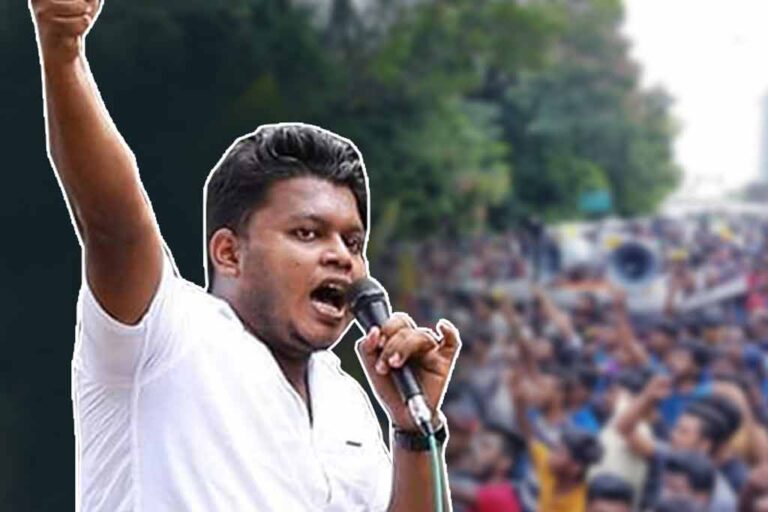
- Colombo Chief Magistrate’s Court further remands Convener of Inter University Students’ Federation Wasantha Mudalige till 17th January 2023 for alleged offences under Prevention of Terrorism Act: previously, he was detained under the PTA for 90 days via a Detention Order.
- Sri Lankan Accountant Vajira Jayasuriya receives Australia’s “Best Accountant” Annual Award: it’s the first time a Sri Lankan has won this award.
- Former CB Governor Ajith Nivard Cabraal says not a single dollar was used by the Monetary Board during his tenure of office as Governor to “defend” the Rupee: refutes such claims by State Finance Minister Ranjith Siyambalapitiya: asserts the identical policy re. the management of the Rupee is being followed by the present Monetary Board as well.
- SJB MP Harsha Silva calls on the Govt to reduce taxes on professionals to resolve the present brain-drain: says many in healthcare, IT, engineering & architecture sectors are seeking decreases in taxes: Silva has always been an ardent advocate for higher Govt revenue.
- Elections Commission Chairman S G Punchihewa says Nominations to elect 8,327 members for 24 Municipal Councils, 41 Urban Councils and 276 Pradeshiya Sabhas will be issued within 5 working days of the final week of December.
- Sri Lankan Senaka Weeraratna claims ownership of the widely used Decision Review System system in Cricket: requests ICC to accept his claim: says the DRS concept was conceived by him in 1997.