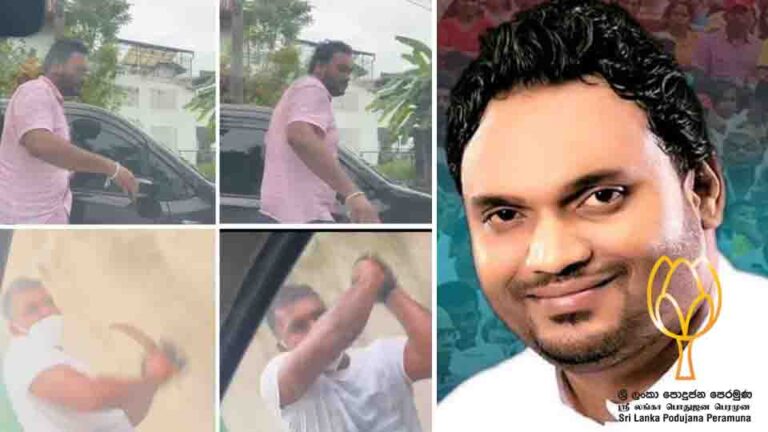
Colombo (LNW): The Police have released an official statement on the incident occurred in Koswatta, Thalangama yesterday (10), where ‘Aragalaya’ activist Piyath Nikeshala was assaulted by a group of assailants allegedly led by SLPP former Deputy Mayor of Kaduwela Chandika Abeyratne.
As Nikeshala was hospitalised, the ex Deputy Mayor was arrested by the Police and the social media activist thereafter.
The Police said an investigation has been launched based on a complaint claiming that the social media activist had been injured during a clash between two parties on Samagi Mawatha in Koswatte, Thalangama.
Nikeshala claimed that a group of assailants led by the ex Deputy Mayor had arrived in two vehicles and had assaulted him and damaged his vehicle.
A video footage streamed on Social Media reveals the activist being beaten, the ex Deputy Mayor appear on the scene, and a man holding a reaping-hook-like sharp object damage his car.
Nikeshala was admitted to the Thalangama Hospital with injuries, and the Police said that the activist has been transferred to the Colombo National Hospital for further treatment.
An arrest on Nikeshala was also made following a complaint by Abeyratne the ex SLPP Deputy Mayor, who was receiving treatment at the Mulleriyawa Hospital.
The two are currently under the observation of the Police.
Piyath Nikeshala was a prominent figure in the ‘Aragalaya’ people’s movement in 2022.
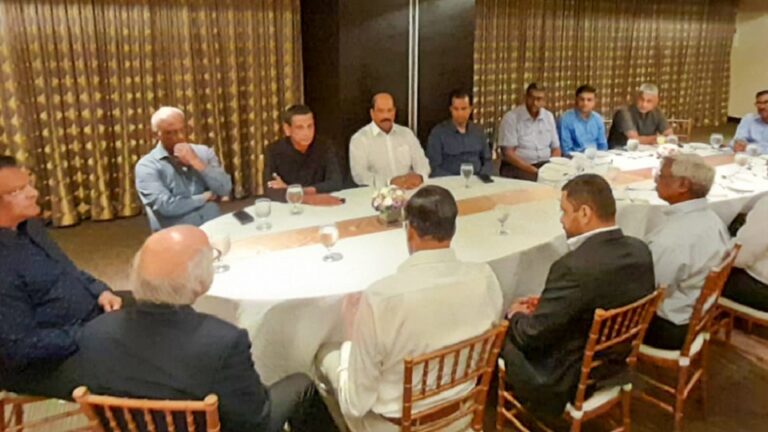
Colombo (LNW): Deputy Chairman of the International Cricket Council (ICC) Imran Khwaja has arrived in Sri Lanka to probe the alleged political interference in the administration of the Sri Lankan game of Cricket.
Khwaja is also a member of the three-member committee appointed by the ICC to probe into the alleged political interference in Sri Lanka Cricket.
During his visit, Mr. Khwaja is expected to conduct a fact finding mission pertaining to the said mandate, and as of now has held discussions with Shammi Silva, President of Sri Lanka Cricket (SLC), and the Exexutive Committee of the SLC.
The ICC Deputy Chief has reportedly inquired about issues faced by Sri Lanka Cricket involving the alleged political interference and the impact it supposedly has on administration.
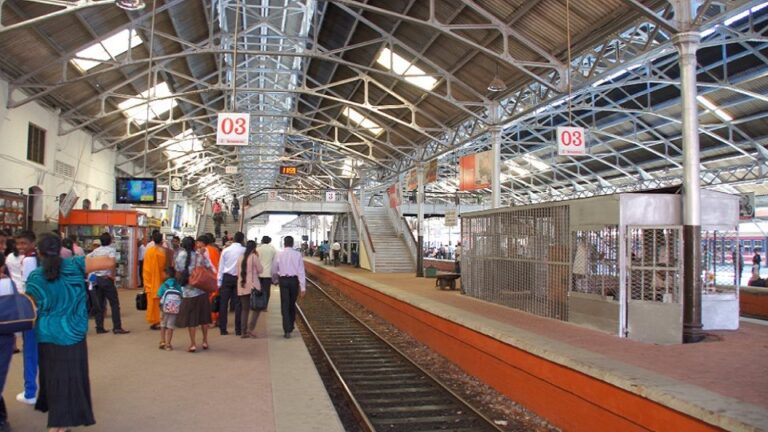
Colombo (LNW): The Sri Lanka Railway Station Masters’ Union said the 24-hour token strike initiated by the union was called off last (10) night.
The strike action was commenced on May 09 midnight over the government’s move of offering to appoint a Deputy General Manager (Commercial) who has a corruption record behind him, the union pointed out.
During the period of the token strike, over 40 trains, including long-distance and office trains were cancelled, and most of the ticket counters were closed.
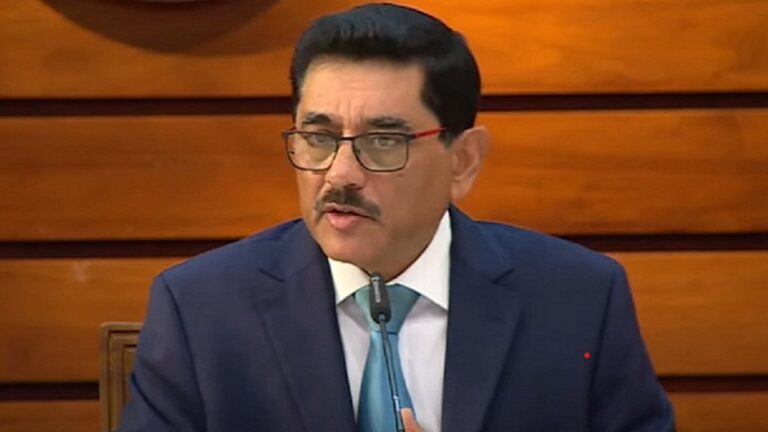
Colombo (LNW): Governor of the Central Bank of Sri Lanka (CBSL) assured that the stability of the country’s banking system will be safeguarded and the public deposits will be protected despite any proposed domestic debt optimisation pending conduction.
The CBSL Chief’s comments come in amidst numerous speculations that Sri Lanka’s banking system is collapsing due to the economic crisis, the worst suffered by the island nation since independence.
Weerasinghe assured that the safety of the public deposits will be guaranteed as “they have always been maintaining.”
“We will ensure any kind of domestic debt optimisation, we will ensure safeguard of the baking system stability as well as the protection of the public deposits,” he added.
The CBSL Chief went on: “I just want to make that statement. And also I think if you can see yesterday Sri Lanka Baking Association also confirmed on the basis of assurances we have given.
I think what is most important is the inflation, now which is coming down faster than we expected. With that we also see interest rates from the peak easing down especially after we announced the complete debt restructuring process we think specially the market interest rates will come down faster so that we are hoping in the second half, interest rates would be normalized in line with the inflation expectations prediction which is a single digit towards the end of the fourth quarter this year.”
He made these remarks during a public lecture on “State of the Economy: Challenges and Outlook as Reflected in the Central Bank Annual Report – 2022.”
Colombo (LNW): The Appeal Court yesterday (10) extended its interim order barring the arrest and recording of a statement from ex Attorney General Dappula De Livera over a comment he had allegedly made on the 2019 Easter Sunday Carnage until June 22, 2023.
The interim order was extended yesterday as the petition filed on behalf of the ex AG was taken up for consideration.
Livera dragged himself into controversy by a comment he had allegedly made suggesting that “there was a grand conspiracy with regard to the 2019 April attacks,” over which the Justice Minister directed the Terrorism Investigation Division (TID) to issue summons to the ex AG to collect a statement, calling the comment problematic.
In his defence, Livera claims that the Police are not vested with powers to question his activities during his time in Office, calling it a violation of the privileges given to an AG.
The government has withdrawn its draft Anti Terrorist law (ATA), but only temporarily. The Minister of Justice has said that he has decided to provide more time for proposals for reform to be submitted to it.
There have been a very large number of statements and protests made against the draft law from a wide swathe of society including the Bar Association, civil society organisations, trade unions and highest ranking religious clergy. The main cause of opposition to it has been its sweeping over-breadth which will enable the government to suppress public protests that are recognized as being democratic and legitimate the world over.
The problem of governments that seek to use the law or break it to protect their power and positions is not peculiar to Sri Lanka. It can be seen in other countries as dissimilar culturally and politically from Sri Lanka as Pakistan and Israel. They are at different levels of development with Israel being at the higher end. Increasingly it seems that for the preservation of democracy, people have to play a direct role. Citizens are taking to the streets non-violently to protect their fundamental right to speak, to be heard and also to be heeded in circumstances of great upheaval where the larger public feel that their wellbeing is of little consequence and is easily compromised.
In Pakistan, the government has refused to hold elections, defied the Supreme Court and now arrested the opposition leader, Imran Khan, on corruption charges. Over the past eighteen weeks, Israel has been witnessing mass protests like we once experienced and joined in Sri Lanka to protest against our sudden impoverishment and lack of accountability of our government that had wrecked the economy but continued to stay in power. Tens of thousands of people, largely secular, middle-class Israelis, have regularly joined mass protests against the plan. It is a sign of a democracy that its people feel they can come out on the streets to protest against their government.
Like we once had in Sri Lanka, tens of thousands of people have been protesting on the streets of Israeli cities. The Netanyahu government has the majority in parliament and has the power to pass laws that the protestors believe would undermine their democracy. The right to protest, even against the decisions of a majority, is a fundamental human right that is protected by the Universal Declaration of Human Rights to which Pakistan, Israel and Sri Lanka have all signed up to. So far the Israeli government has not infringed on that right to public protest.
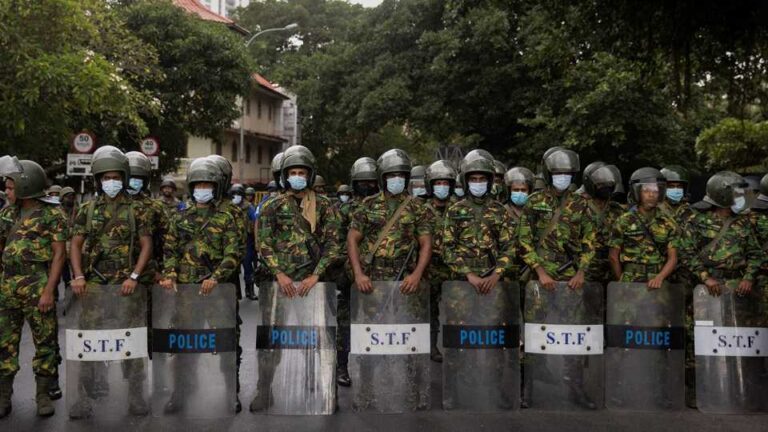
The main problem with the draft Anti-Terrorist Act in Sri Lanka is that it widens the range of offenses to include the people’s democratic right to protest and even criminalize it. Power to the police, military and coast guards had been increased extensively in the process. The draft law is intended to give the government additional power to quell public protests including trade union action by claiming that such acts of protest threaten the stability of the government and economy and are the equivalent of terrorism. This was the position that the government took in suppressing the Aragayala last year.
According to the World Bank, Sri Lanka’s ongoing economic crisis is estimated to have doubled the poverty rate from 13.1 percent to 25 percent and it is projected to remain above 25 percent for the next few years due to the multiple risks to households’ livelihoods. “The crisis reversed years of gains in poverty reduction and human capital development,” the update said, noting that the crisis had added an additional 2.5 million poor people.
In these circumstances, there are bound to be public protests and trade union action in the coming months for which the government is preparing the Anti-Terrorism Act. The government that destroyed the Aragalaya in a matter of days by utilizing the security forces and the Prevention of Terrorism Act, despite protests by the Bar Association, civil society organizations, trade unions and religious clergy, is unlikely to pay heed to their proposals for reform of the draft Anti-Terrorism Act.
Although the government has invited interested parties to make submissions pertaining to the proposed Anti-Terrorism Bill till May 31, it is unlikely that the government will be serious in listening to domestic parties, such as the Bar Association, civil society organizations, trade unions and religious clergy. Unlike in Israel’s democratic polity where people’s peaceful opposition is holding the government at bay, in Sri Lanka it will be international pressure such as the risk of losing the EU’s GSP Plus economic concession that will make the difference.
Jehan Perera is Executive Director of the National Peace Council of Sri Lanka (NPC) which works in all parts of the country with networks of partner NGOs and inter-religious groups. NPC focuses on building public support for a political solution to the ethnic conflict.
Colombo (LNW): The SAMURDHI allowance will be given to categories recognised as economically challenged from July 01, 2023, announced the Welfare Benefits Board.
These benefits can be obtained through any bank recognised by the Central Bank of Sri Lanka (CBSL), the Board said.
The survey to identify those eligible for SAMURDHI benefits ended on April 31 and is currently being checked by a committee consisting of divisional secretaries.
Accordingly, the SAMURDHI allowance will be given to four categories;
01. The National Police Commission is set to convene today under the patronage of Chairperson ex IGP Chandra Fernando: Complaints pertaining to transfers to be taken up for consideration.
02. SJB MP Harsha De Silva says the proposed ATA raises concerns that it violates fundamental rights guaranteed by the Constitution, potentially jeopardising its chance of regaining the GSP+ concession.
03. The Welfare Benefits Board says the Samurdhi allowance will be given from the 01st of July; asserts it can be obtained through any bank recognised by the CBSL: This allowance is given under two categories, ‘Extremely Poor’ and ‘Poor’: Categories ‘Vulnerable’ and ‘Transitional’ also to be benefitted from the allowance.
04. Speaker announces that he endorsed the certificate on the Inland Revenue (Amendment) Bill in accordance with Article 79 of the Constitution: The bill will come into effect as the ‘Inland Revenue (Amendment) Act” No. 04 of 2023.
05. The Appeal Court extends the interim order barring the arrest and recording of statements from ex AG Dappula De Livera over a comment he had allegedly made in reference to the 2019 Easter Sunday carnage until June 22, 2023.
06. ‘Aragalaya’ activist Piyath Nikeshala hospitalised after an alleged assault by SLPP former Kaduwela Deputy Mayor Chandika Aberatne: Ex Deputy Mayor arrested; Nikeshala also arrested over a complaint lodged by Aberatne: Exact reason for the assault not yet known.
07. Bandaranaike Memorial International Conference Hall (BMICH) celebrates its golden jubilee commemoration and the 50th anniversary: Event attended by President Ranil Wickremesinghe, Premier Dinesh Gunawardena, and former President Chandrika Bandaranaike Kumaratunga.
08. CBSL Governor Nandalal Weerasinghe assures the stability of the country’s banking system will be safeguarded and the protection of the public deposits, regardless of any kind of domestic debt optimisation to be conducted; asserts the CBSL has assured the financial system stability as “we have always been maintaining”: His comments come in amidst numerous speculations by analysts that the stability of the banking system is collapsing.
09. Political sources claim that a switching of parties from the SJB to the Ruling Party will take place today in Parliament in support for the government: MPs expected to switch parties have reportedly expressed their gratitude in view of the RW-led regime being able to attract FDIs and its economic programme.
10. Deputy Chairman of ICC Imran Khwaja, who is a member of the 3-member committee appointed to probe into the alleged political interference in administering the game of Cricket in Sri Lanka, arrives in the island; holds discussions with SLC President Shammi Silva and the Executive Committee of the SLC.
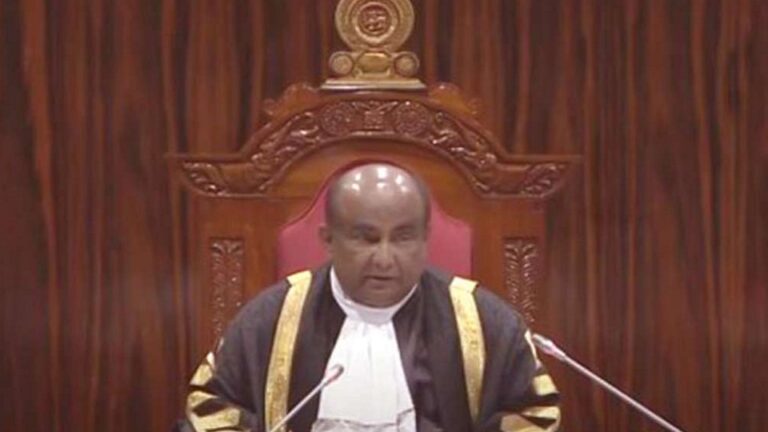
Colombo (LNW): Speaker Mahinda Yapa Abeywardena yesterday (10) announced that the certificate on the Inland Revenue (Amendment) Bill has been endorsed in accordance with Article 79 of the Constitution on May 08.
The said Bill was passed in Parliament on April 28, and with the Speaker’s approval, the Inland Revenue (Amendment) Bill will come into effect as the “Inland Revenue (Amendment)” Act No. 04 of 2023.
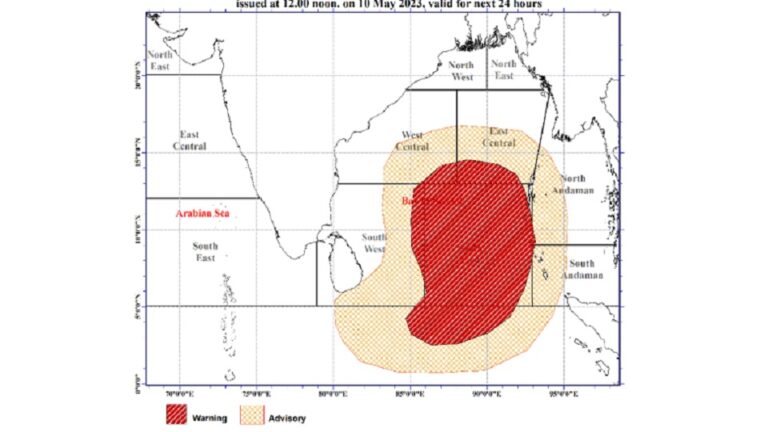
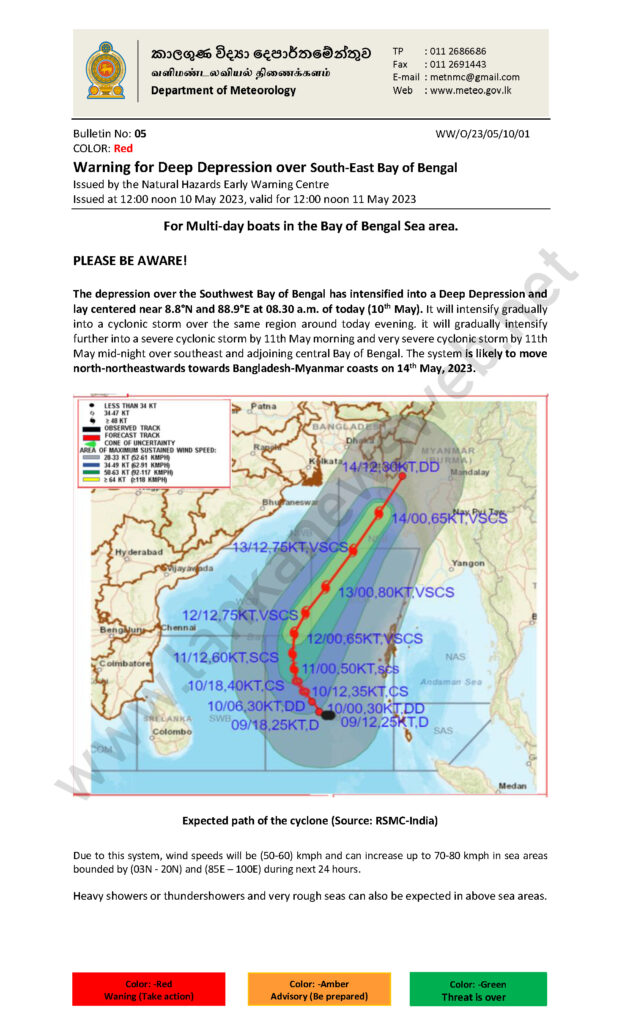
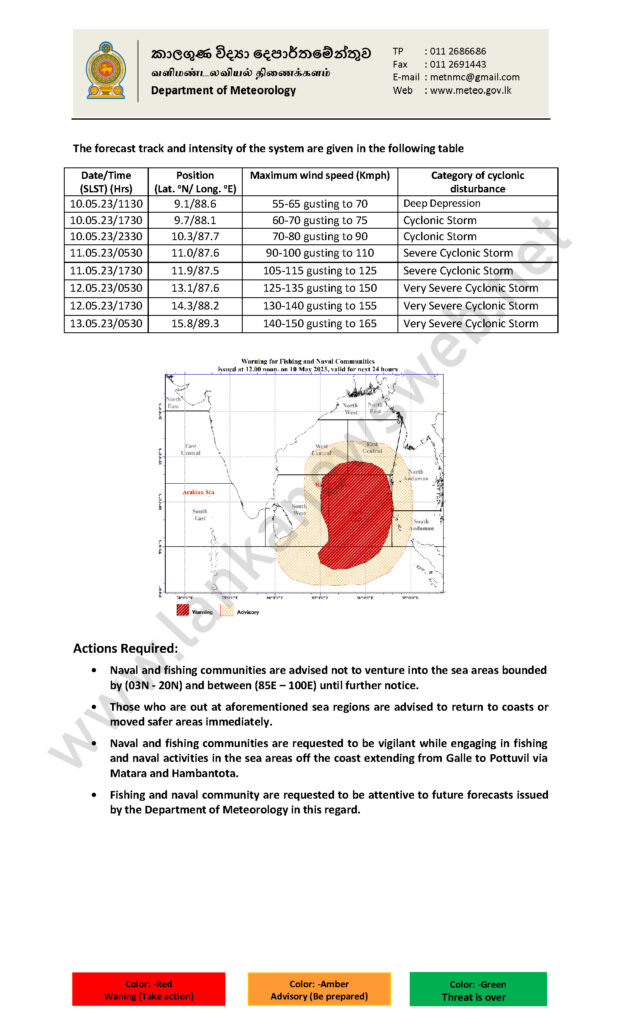
Colombo (LNW): The depression over the Southwest Bay of Bengal has intensified into a Deep Depression and lay centred near 8.8°N and 88.9°E at 8.30 am yesterday (10)m and will be further intensifying into a severe cyclonic storm by today (11) morning, spreading up to north-northeastwards towards Bangladesh-Myanmar coasts on May 14, warned the Natural Hazards Early Warning Centre of the Department of Meteorology.
Naval and fishing communities are advised not to venture into the sea areas bounded by (03N – 20N) and between (85E – 100E) until further notice, the Centre said, urging the naval and fishing communities to be vigilant whilst engaging in fishing and naval activities in the sea areas off the coast extending from Galle to Pottuvil via Matara and Hambantota. These communities have also been instructed to stay vigilant for future forecasts issued by the Dept.
Meanwhile, showers or thundershowers will occur at times in Western, Sabaragamuwa, Central, North-Western and Southern provinces, and fairly heavy showers about 75 mm are likely at some places in Western, Sabaragamuwa and North-Western provinces and in Kandy, Nuwara-Eliya, Galle and Matara districts, the Department said in its daily weather forecast today (11).
Several spells of showers will occur in the Northern province, and showers or thundershowers will occur at several places elsewhere over the island particularly during the afternoon or night.
Strong winds about (40-45) kmph can be expected at times over western and southern coastal areas and along the western slopes of the central hills.
General public is kindly requested to take adequate precautions to minimise damages caused by temporary localised strong winds and lightning during thundershowers.