December 04, Colombo (LNW): The main highway linking Kandy and Colombo has been closed once more at Pahala Kadugannawa, following renewed concerns over safety in the area.
Police confirmed that traffic will not be allowed to pass between Kadugannawa town and Ganetenne until further notice, citing instability along the affected stretch.
Despite the closure, vehicles carrying essential goods and those involved in ongoing relief efforts have been granted passage. Officials from the Road Development Authority (RDA) are on site, carrying out detailed inspections to determine whether the ground conditions have deteriorated after the recent spell of severe weather.
The Ministry of Transport, Highways and Urban Development had reported only yesterday that one lane of the previously blocked section had reopened to motorists, with movement permitted from 6 a.m. to 9 p.m.
The renewed shutdown has therefore come as an unwelcome development for commuters who rely heavily on the route.
In a wider update, the RDA announced that 159 roads affected by landslides, flooding and debris following the heavy rains triggered by Cyclone Ditwah have now been cleared and made accessible.
Engineering teams continue to operate on extended schedules to stabilise weakened embankments, repair damaged surfaces, and restore safe travel across the island.
Authorities say that the remaining closed roads will be reopened as soon as engineers deem them secure, stressing that public safety remains the foremost priority while recovery work continues.
Colombo-Kandy Key Arterial Route Shut Again as Authorities Assess Fresh Risks in Kadugannawa

President Directs Fast-Tracked Aid Delivery as Government Ramps Up Post-Disaster Response

December 04, Colombo (LNW): President Anura Kumara Dissanayake has reaffirmed his administration’s determination to ensure that assistance reaches every household struck by the recent calamity, stressing that no community should face setbacks due to bureaucratic or financial holdups.
According to the President’s Media Division, state officials have been instructed to submit all required information without delay so that compensation can be processed swiftly for those who meet the criteria. The directive also underscores the importance of gathering precise data, as accurate records will guide both immediate relief measures and longer-term recovery plans.
These comments came during a high-level discussion convened to speed up the delivery of support to families and businesses hit hardest by the disaster. The meeting, held at the Presidential Secretariat and chaired by the President, brought together ministry secretaries and senior figures from the Ministry of Finance to map out a streamlined approach.
In a bid to avoid the administrative bottlenecks that often emerge after large-scale emergencies, a dedicated team has been appointed to work outside the usual procedural boundaries. Officials say the unit will operate with an accelerated mandate, ensuring that verification and distribution processes proceed smoothly and without unnecessary red tape.
The President also called for meticulous assessments of those displaced, the number of affected schoolchildren, and the extent of damage to homes across impacted districts. Particular emphasis was placed on the agricultural sector, with instructions to document the losses in paddy fields, vegetable plots, livestock, and other vital rural assets.
During the discussion, participants outlined clear procedures and target timelines for channelling assistance to each affected group, with the aim of restoring stability and helping communities regain their footing as efficiently as possible.
ADB Unlocks Emergency Funds to Aid Sri Lanka and Neighbouring Nations after Cyclone Havoc
December 04, Colombo (LNW): The Asian Development Bank has unveiled a fresh package of emergency assistance for countries battered by the recent bout of extreme weather in South and Southeast Asia.
Sri Lanka is set to receive roughly US$3 million to bolster its disaster-response efforts in the wake of Cyclone Ditwah, while Thailand and Viet Nam have each been allocated around US$2 million to help them cope with widespread flooding and the disruption left in the storm’s wake.
ADB President Masato Kanda confirmed the support after regional governments appealed for urgent help. He expressed deep concern for communities whose homes and livelihoods had been swept away, noting that the bank would work hand-in-hand with national authorities to deliver immediate relief and to steady the path towards recovery.
According to Kanda, the priority is to ensure that affected families regain access to safe shelter, essential supplies, and a sense of security as quickly as possible.
The money will be channelled through the Asia Pacific Disaster Response Fund, a mechanism designed to release rapid-fire grants to developing members facing acute humanitarian needs following natural calamities.
Officials say the fund has been activated to accelerate life-saving interventions—ranging from temporary housing to emergency medical support—in areas where floodwaters have erased roads, damaged power lines, and isolated villages.
Cyclone Ditwah and the resulting floods have caused heavy casualties and widespread devastation across Sri Lanka and parts of Southeast Asia, with rescue teams continuing to navigate treacherous conditions to reach stranded residents.
Local authorities report that the scale of the destruction may take weeks to fully assess, and early estimates suggest significant rebuilding will be required in both urban centres and rural districts.
US Pledges Fresh Aid as Sri Lanka Reels from Cyclone Ditwah

December 04, Colombo (LNW): Washington has announced a new emergency package worth roughly $2 million to help Sri Lankans struggling in the aftermath of Cyclone Ditwah, which tore across the island with devastating force.
The support is intended to bolster urgent humanitarian work, including medical assistance, safe shelter, and basic supplies for communities left reeling.
According to a statement from the US State Department, officials will draw on the Department of War’s long-range airlift resources to speed up the wider American relief effort—an unusual move underscoring the scale of the crisis.
Diplomatic staff and disaster specialists are said to be liaising closely with Sri Lankan authorities, local volunteers, and international charities to ensure that help reaches isolated and heavily damaged districts without delay.
US representatives have also emphasised that this latest emergency package is just one part of a broader commitment to assist Sri Lanka as it embarks on a lengthy process of rebuilding shattered homes, restoring essential services, and supporting affected families.
In offering sympathies to those who lost loved ones or livelihoods, Washington noted that the destruction left by Cyclone Ditwah has been “deeply saddening”, adding that the United States stands ready to support Sri Lanka through both immediate relief and longer-term recovery.
Several spells of showers expected across Island (Dec 04)

December 04, Colombo (LNW): Several spells of showers will occur in Northern, North-Central, Eastern and Uva provinces and in Hambantota and Matale districts, the Department of Meteorology said in its daily weather forecast today (04).
Showers or thundershowers will occur in the other areas of the island after 1.00 p.m. Fairly heavy falls about 75 mm are likely at some places in Western and Sabaragamuwa Provinces.
Misty conditions can be expected at some places in Western, Central, Sabaragamuwa, Uva and North-central provinces and in Kurunegala and Vavuniya districts during the early hours of the morning.
The general public is kindly requested to take adequate precautions to minimise damages caused by temporary localised strong winds and lightning during thundershowers.
Marine Weather:
Condition of Rain:
Showers will occur at several places in the sea areas off the coast extending from Kankasanthurai to Hambantota via Trincomalee and Batticaloa.
Winds:
Winds will be North-easterly or variable in the sea areas around the island. Wind speed will be (25-35) kmph.
State of Sea:
The sea areas around the island may be slight to moderate.
Serviced Office Giant Kerner Haus Bets Big on Colombo Hub

Kerner Haus Global Solutions PLC has taken a decisive step in its turnaround efforts by entering Colombo’s serviced-office market, an industry increasingly critical to Sri Lanka’s slowly recovering business ecosystem. The company signed a Property Management Agreement with VKM Services Ltd. to operate a prime commercial building at No. 46/10, Nawam Mawatha, Colombo 2, marking the first execution phase of its “asset-light” expansion strategy.
On paper, the deal promises Rs. 12.6 million annually from existing leases alone. But behind the optimism lies a deeper strategic gamble: Kerner Haus is trying to rebuild credibility after years of financial distress, including a negative net asset value of Rs. 72 per share by September 2025. The firm’s majority ownership lies with Ekta Global Ltd., which controls 63.62%, while the public float remains just 27.4%.
The company’s plan revolves around developing a scalable property-management platform before venturing into selective acquisitions. This is a deliberate shift from capital-heavy real-estate models that contributed to its earlier instability. The Nawam Mawatha building—located in the heart of Colombo’s financial district will serve as its test case. With capacity for about 300 office seats, surrounded by major banks, corporate headquarters, and quick transport access, the property sits in one of the most commercially valuable zones in the country.
Under the Kerner Haus brand, the location will operate as a fully serviced office centre, offering plug-and-play workspaces, high-speed connectivity, maintenance, utilities, and on-demand support services. Such setups have become essential for startups, BPO and KPO operators, and internationally oriented SMEs seeking flexibility without the burden of long-term leases.
Industry analysts note that Sri Lanka’s outsourcing sector is expanding even amid macroeconomic uncertainty, fuelled by foreign firms seeking lower operational costs. As a result, demand for professionally managed, short-term office solutions is rising. However, the market is also highly competitive, with global operators, local coworking brands, and tech-park developers all vying for the same pool of tenants.
Kerner Haus’s challenge, therefore, is twofold: restoring investor confidence while proving its ability to manage premium-grade serviced-office facilities. Yesterday’s market response was favourable, its share price climbed from Rs. 656 to Rs. 780.50but sustaining momentum will require consistent operational performance, not just strategic announcements.
If executed effectively, the project could become a lifeline not only for the company but also for Colombo’s entrepreneurial community, offering much-needed modern workspace solutions at a time when startups struggle with overheads and economic volatility. But if mismanaged, it risks becoming yet another unrealised corporate promise in Sri Lanka’s fragile commercial property landscape.
Flood Crisis Threatens Sri Lanka’s Vital Export Sector Stability
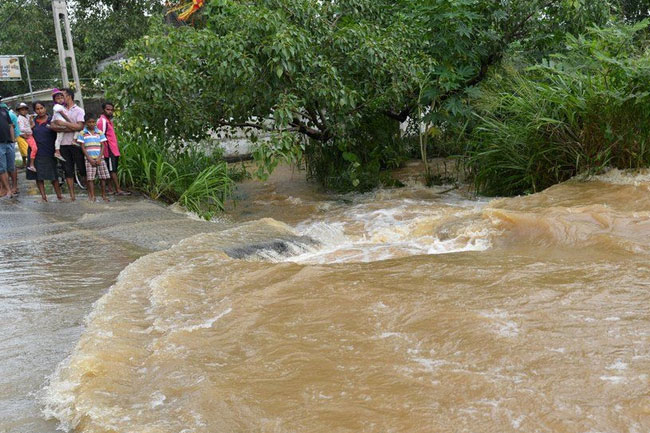
Sri Lanka’s export industry is facing one of its most serious setbacks in recent years as widespread flooding continues to disrupt production, damage facilities, and stall supply chains across multiple districts. The National Chamber of Exporters of Sri Lanka (NCE) warned that the impact on the sector considered the backbone of the economy—could be severe if urgent recovery measures are not implemented.
In a statement, the Chamber conveyed its solidarity with families affected by the floods and emphasised the growing anxiety among exporters whose factories, machinery, and stocks have suffered extensive damage. Initial assessments indicate that several production plants are submerged, halting operations entirely and raising fears that companies will struggle to meet international delivery schedules.
The NCE noted that the consequences extend beyond individual companies. Exports remain a critical source of foreign exchange and employment, and disruptions of this scale threaten national economic stability. With Sri Lanka still navigating a fragile recovery, any prolonged setback in export performance could weaken the country’s financial position, undermine global buyer confidence, and jeopardise thousands of livelihoods dependent on the sector.
The Chamber pointed out that transport breakdowns, inaccessible roads, damaged storage facilities, and labour shortages have compounded the crisis. Many small and medium-sized exporters particularly aspiring export startups—lack the financial reserves needed to absorb losses or replace damaged equipment. For them, the floods represent a profound and potentially long-term setback.
NCE President Indhra Kaushal Rajapaksa cautioned that the resilience of exporters is now being tested at a critical time. He stressed that the sector is not simply another economic component but the primary engine driving foreign exchange earnings. Any sustained disruption, he said, would have far-reaching economic repercussions, affecting everything from national revenue to investor confidence.
Rajapaksa affirmed that Sri Lankan exporters have historically shown determination during crises and expressed confidence that they will rebuild, provided they receive timely support. He urged the Government to prioritise the rehabilitation of export-oriented companies to safeguard the country’s reputation as a dependable trading partner.
NCE CEO/Secretary General Shiham Marikar added that early field reports from member companies reveal widespread damage, stalled production lines, supply chain breakdowns, and challenges in mobilising workers. He emphasised that MSMEs and new exporters depend heavily on the Chamber’s assistance and are struggling to evaluate the full scale of their losses.
The Chamber has requested its members to report damages so that it can coordinate with Government agencies and push for immediate relief measures, including financial support, faster repair processes, and facilitation for exporters facing shipment delays. According to the NCE, only a swift and coordinated national response can prevent Sri Lanka from losing market access and eroding its competitiveness in global trade.
Sri Lanka Customs Revenue Surges 65% despite Past Corruption Allegations
Sri Lanka Customs, long criticized as a state institution riddled with corruption and inefficiency, has delivered a startling turnaround in revenue collection this year, defying expectations and raising eyebrows across government and business circles. Official figures reveal that total revenue by the end of November has already reached 107 percent of the full-year target, a feat previously considered nearly impossible given the agency’s tarnished reputation.
The Customs set an ambitious target of LKR 2,115 billion for 2025 36.2 percent higher than last year’s LKR 1,553 billion. November alone was projected at LKR 210 billion, yet Customs managed to collect LKR 245 billion, despite a four-day operational halt due to Cyclone Ditwah. Overall, revenue from January to November reached LKR 2,260 billion, compared to LKR 1,367 billion in the same period last year, marking a dramatic 65.3 percent increase.
Experts suggest that this leap is not merely due to a recovery in trade but reflects a combination of tighter enforcement, stricter valuation practices, and heightened scrutiny of under-invoicing and misdeclaration. Following the 2022 economic crisis, import activity had plummeted as the government imposed foreign exchange restrictions. However, with stabilizing reserves, the easing of certain import controls, and a gradual rebound in consumer demand, Customs has tapped into previously under-reported revenue streams.
Observers note that the jump raises questions about prior years’ performance. If stricter monitoring and valuation practices can yield a 65 percent increase, critics argue, how much revenue was lost in the past due to inefficiency, mismanagement, and alleged corruption? Former officials and watchdogs have long accused the institution of systemic laxity, but current results suggest that rigorous enforcement, when implemented, can have immediate and significant fiscal impact.
Analysts also point to currency movements and rising import volumes as contributing factors. Import duties, excise, and other levies have surged, transforming Customs into one of the top revenue contributors to the Treasury this year. The agency’s performance provides a crucial buffer as Sri Lanka pursues fiscal targets under the IMF-supported economic program, potentially reshaping perceptions of a department once seen as a liability into a surprising engine of state revenue.
Rapid Emergency Repairs Push Sri Lanka Telecom Services toward Recovery

Sri Lanka’s catastrophic cyclone flood disaster has not only disrupted telecommunications it has exposed a deeper structural vulnerability in the national connectivity grid.
While the immediate focus has been on restoring damaged towers, optical-fibre routes, and power links, industry analysts warn that the crisis highlights systemic weaknesses in network design, regulatory preparedness, and climate-resilience planning that have long remained unaddressed.
The disaster knocked out fibre backbones in multiple provinces, triggering cascading failures across mobile and broadband networks.
With widespread power outages, even undamaged towers were rendered inactive, revealing the sector’s heavy dependence on the national grid.
Officials estimate that a significant number of towers nationwide remain offline due to power instability, despite accelerated generator deployment by operators.
Although emergency meetings led by the Telecommunications Regulatory Commission of Sri Lanka (TRCSL) brought Dialog Axiata, SLT-Mobitel, and Hutch into coordinated action, industry specialists argue that Sri Lanka’s regulatory approach remains largely reactive.
For years, the sector has lacked mandatory standards for climate-resilient infrastructure, flood-proof tower bases, standardised battery backup duration, and redundancy for critical fibre corridors. The cyclone merely exposed these gaps dramatically.
What is becoming increasingly clear is that Sri Lanka’s connectivity architecture was not built with modern climate risks in mind. Low-lying fibre routes, vulnerable microwave hops, and insufficient waterproofing of base stations left dozens of sites exposed.
Several ground-level switching centres crucial nodes in the national grid were overwhelmed by water, forcing engineers to reroute traffic through temporary links.
While telcos responded swiftly deploying field teams, stabilising damaged sites, and offering free connectivity for affected communitiesthe scale of disruption shows that rapid crisis response cannot compensate for foundational design flaws.
International partners such as Huawei have provided essential manpower, and Starlink’s emergency satellite connectivity has bridged communication gaps in areas where fibre is still submerged or towers remain inaccessible.
But these stopgap measures, though valuable, highlight the absence of a long-term resilience strategy.
The disaster’s economic implications are equally serious. Telecom outages disrupted digital payments, logistics planning, emergency alerts, and corporate operations across several industries.
For a country promoting digital transformation, the fragility of the communications grid presents a major risk to investment confidence.
Experts now argue that Sri Lanka must overhaul its network-resilience standards. This includes mandating elevated tower foundations, diversifying backup power sources, expanding dual-route fibre redundancy, and integrating satellite-link options into emergency protocols.
Public–private partnerships will also be essential for financing upgrades, especially in vulnerable districts repeatedly hit by floods.
The cyclone has therefore become a turning point not only in how telecom operators respond to natural disasters, but in how Sri Lanka must rethink its entire connectivity strategy. Without stronger regulatory frameworks and long-term infrastructure reform, the next extreme weather event could result in even greater disruption. The crisis has made one fact undeniable: resilience is no longer optional for the country’s telecom backbone.
PM: Resettlement, Relief, and Infrastructure Restoration Must Be National Priorities

Prime Minister Dr. Harini Amarasuriya stated that the resettlement of affected families, the provision of essential relief, and the restoration of disaster-damaged infrastructure must be treated as national priorities.
She also expressed appreciation for the dedicated support provided by the tri-forces, police, government officials, volunteer organisations, and members of the public during the emergency response efforts.
The Prime Minister made these remarks while addressing the Colombo District Disaster Management Committee meeting held at the Colombo District Secretariat.