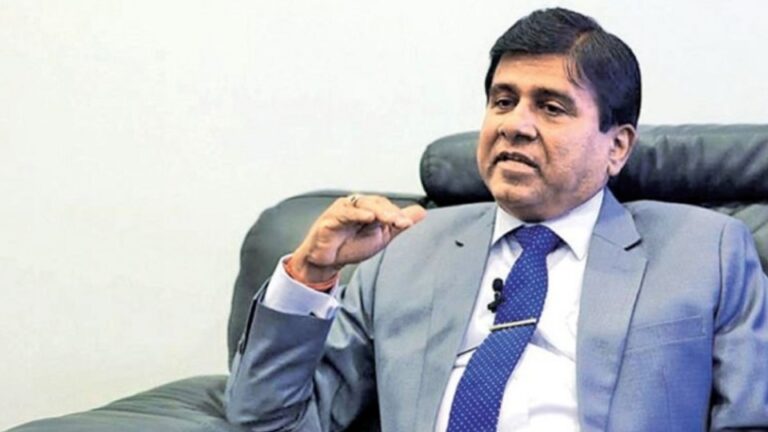
Colombo (LNW): Justice Minister Wijeyadasa Rajapakshe said the public’s opinion and their suggestions with regard to the proposed Anti-Terrorism Bill will be collected till May 30, 2023.
Accordingly, the public can submit their opinions and suggestions on the proposed bill to the Ministry before the deadline set by the Minister.
Any individual or political parties and civil movements are able to raise their concerns pertaining to the bill, Rajapakshe added, promising that measures will be taken to table the proposed bill after obtaining the opinion of all relevant parties including the public.
The announcement comes in two days after the controversial bill was delayed in being tabled in Parliament in response to severe backlash by a number of concerned parties.
Colombo (LNW): Sri Lanka is currently at the brink of facing a dengue high epidemic, warned Chairman of the Public Health Inspectors’ Association Upul Rohana, speaking to media yesterday (30).
“An unusual growth of dengue cases is currently visible. The public must be warned that there is a serious risk of a dengue high epidemic being occurred in the country in the near future. It is obvious that the National Dengue Control Unit lacking the implementation of a proper methodology is acting in a manner by which public funds are being wasted,” Rohana alleged.
The PHI Chief went on: “There is no need of a National Dengue Control Unit to inform the public when the number of dengue cases rises. The National Dengue Control Centre in particular believes that the general public can be used to control dengue by giving them a meal or a cup of tea. Such affair is not being done practically in the grassroots. If they believe that dengue can be controlled by the mere issuance of pages of circulars, that simply does not happen.”
“We, therefore, reiterate that the National Dengue Control Unit should begin to provide the officials the necessary gear of chemicals, fuel and other equipment via the implementation of a practical solution for dengue prevention, without wasting public funds. Instructing the people of this country to simply control dengue, on the other hand, would be useless,” he added.
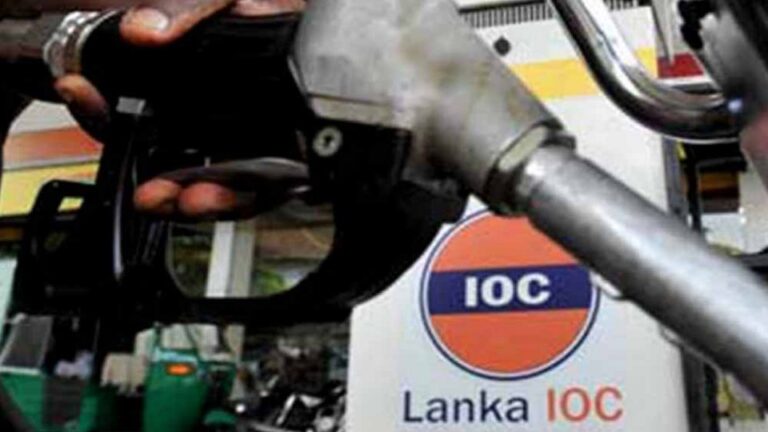
Colombo (LNW): Lanka Indian Oil Company (LIOC) has slashed the prices of fuel concurrent to the price revision by the Ceylon Petroleum Corporation (CPC).
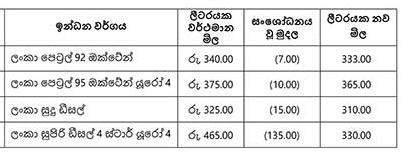
Accordingly, the LIOC’s price revisions on fuel are as follows;
92 Octane Petrol per litre: Rs. 333 (slashed by Rs. 7)
95 Octane Petrol per litre: Rs. 365 (slashed by Rs. 10)
Auto Diesel per litre: Rs. 310 (slashed by Rs. 15)
Super Diesel per litre: Rs. 330 (slashed by Rs. 135).
Meanwhile, the prices of kerosene and industrial kerosene remain unchanged.
On International Workers’ Day, it is important to recognize the significant role that the working people play in the economic progress of a country. In Sri Lanka, they have been a driving force behind the country overcoming challenges and leading the nation forward throughout history.
Last year, the country endured a severe economic collapse. The workers played a crucial role in patiently and courageously supporting the country as we waited to take the difficult initial steps in stabilizing the economy. As we celebrate this year’s May Day, we should take the opportunity to show the world the pride of the workers of Sri Lanka.
It is crucial that we put the country first and not fall prey to narrow political interests at this critical juncture. The government has always worked to secure the rights of the working public. By ensuring their rights and privileges, we hope to create a brighter future where the value of labour is recognized.
The government is committed to protecting the Employees’ Provident Fund, which was established for the benefit of the working people. Despite attempts by some parties to create undue fear regarding the Provident fund, I give my assurances that we will not allow it to be misused.
We invite all the working people of Sri Lanka to join hands as we undertake a new reformist path of building a prosperous Sri Lanka by 2048. We congratulate them on this meaningful International Labour Day where their rights are secured. The working people are a social force that can exert a stronger influence on the entire economic process of the country, and we must continue to value and support their contributions.
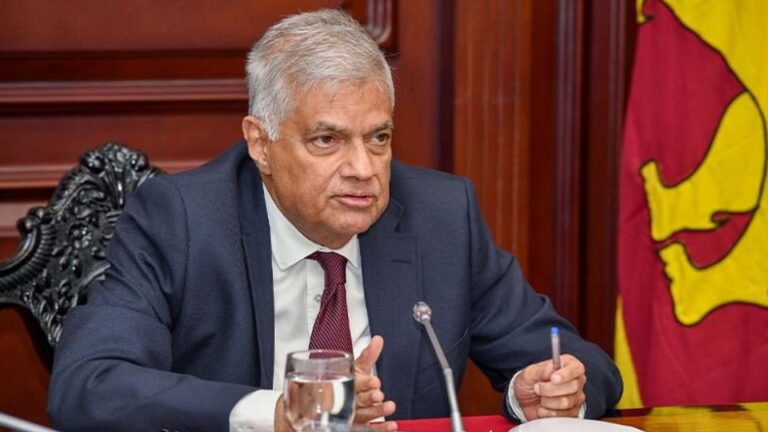
Ranil Wickremesinghe President Democratic Socialist Republic of Sri Lanka
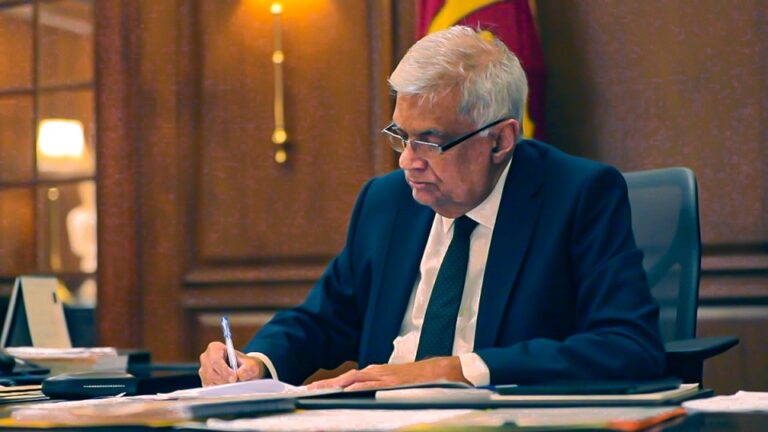
PMD: During a recent discussion at the President’s Office, President Ranil Wickremesinghe commented on the potential for Artificial Intelligence (AI) technology to contribute to the country’s development.
He instructed officials from the Ministry of Technology to form a presidential task force comprising AI experts and prepare a concept paper to promote AI usage in the country. The President highlighted the potential of Artificial Intelligence in various fields, including agriculture, education, health, fisheries, and industry.
The President noted that the current annual contribution to Sri Lanka’s gross national income through computer and information technology is around USD 1.9 billion, with no known amount from AI technology. He instructed officials to develop a system to track AI contributions. Additionally, he stressed the importance of taking prompt action to increase AI’s contribution to the gross domestic product in the coming years.
Expressing his views, the President further said,
“We have identified the modernization of agriculture and fisheries, tourism, and improvement of supply centers as urgent areas for development in our economic reforms. Additionally, we have placed a greater focus on the technology industry.
As we see the world progressing with artificial intelligence, it is crucial for Sri Lanka to focus on this technology and invest in it. The private sector needs to be involved in this initiative. I called for this discussion today to seek your opinions on how we can proceed with this. How can we kick-start these programs? What are the advantages and disadvantages of investing in AI? These are some of the issues I want to discuss with you. The government plans to allocate one billion rupees for AI technology next year. To develop this technology in the country, we need to create an appropriate environment, which requires an institution and data. So, I am eager to hear your suggestions on how we can develop these programs.
We are aiming to create a digital economy and it will require a lot of effort in the coming months. Fortunately, the government has already prepared the necessary plans. However, it is important to note that only 2500 engineers are produced in our country every year. I have suggested that we should aim to produce at least 10,000 engineers to meet the demands of the digital age. When it comes to artificial intelligence, we should consider Singapore and India as role models. It is true that East Asia, South Korea, Japan, and China are making progress in artificial intelligence, but no country in West Asia has reached that stage yet. This presents a clear opportunity for us, and we must have strategies in place to implement this program promptly. In order to achieve this, we should start by improving university research departments.”
During the discussion on the integration of AI technology into the wider model of digitization in Sri Lanka, the Minister of State for Technology, Mr. Kanaka Herath, and the Secretary of the Ministry, Mr. Niranjan Gunawardena, a Senior Professor, shared their views. The participants focused on the development of infrastructure necessary for related research activities and the latest trends in the field. The scholars who attended the discussion also expressed their views on future steps that need to be taken for the advancement of the field.
Mrs. Chandani Wijewardena, Senior Additional Secretary to the President for Strategic Affairs, along with representatives from the Sri Lanka Artificial Intelligence Association, universities, national innovation institutes, and experts in the field of information technology were among those who participated in the discussion.
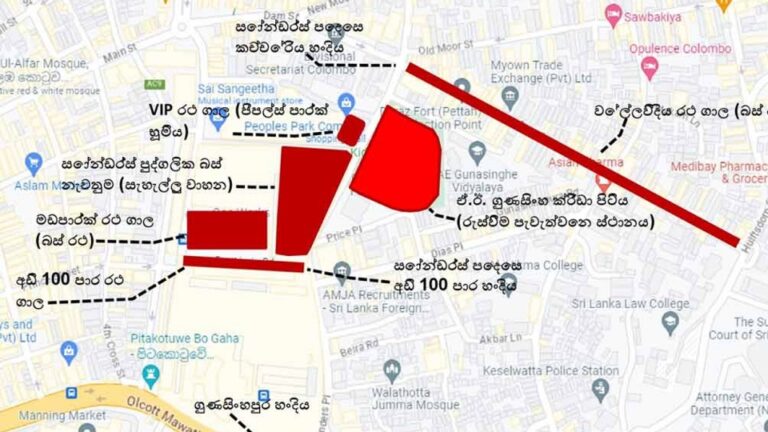
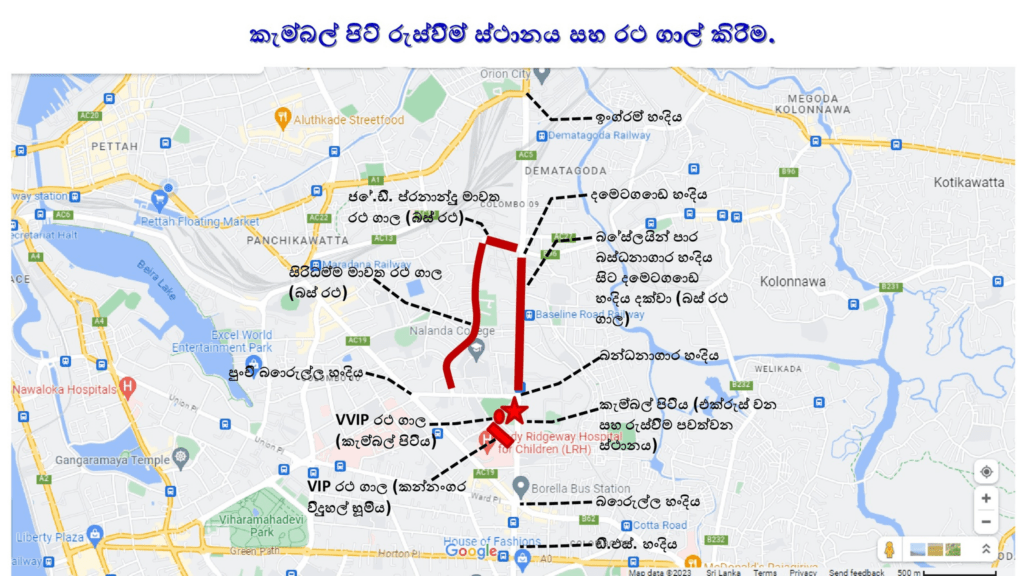
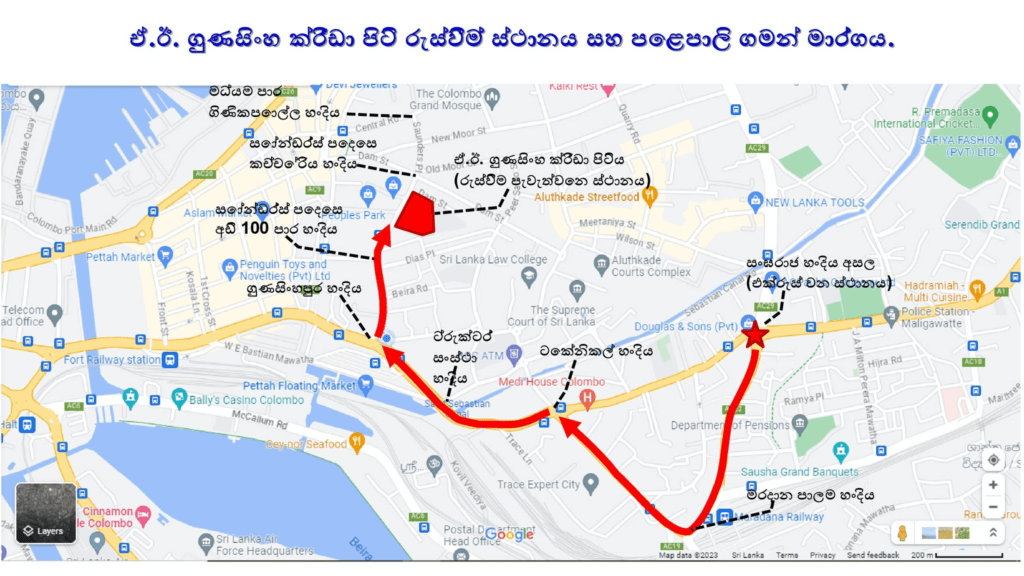
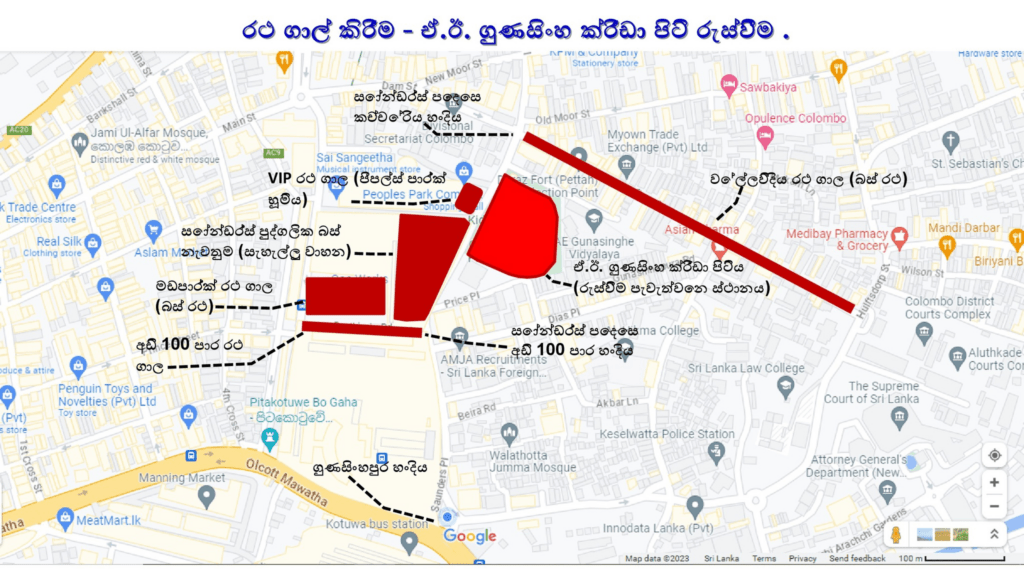
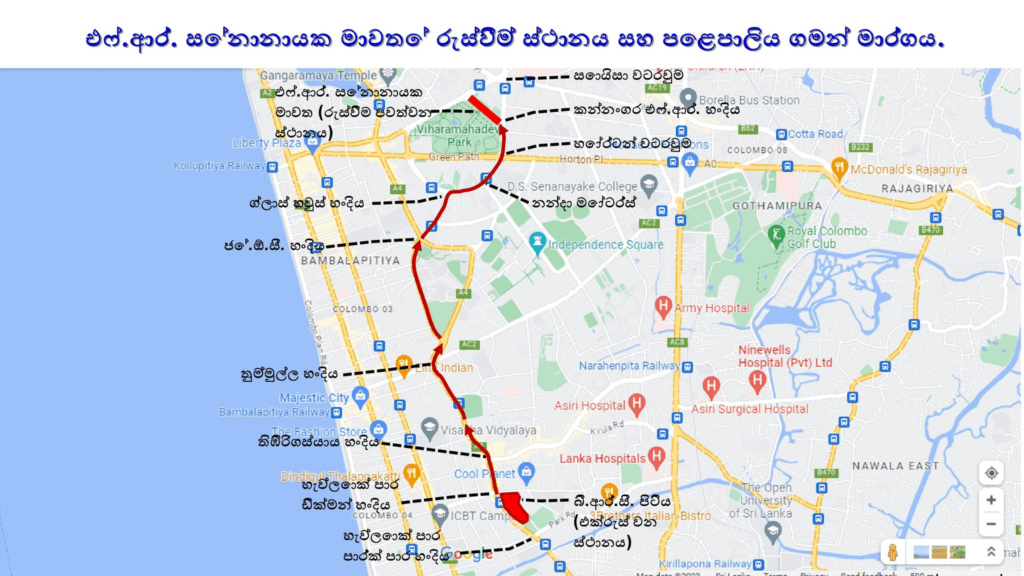
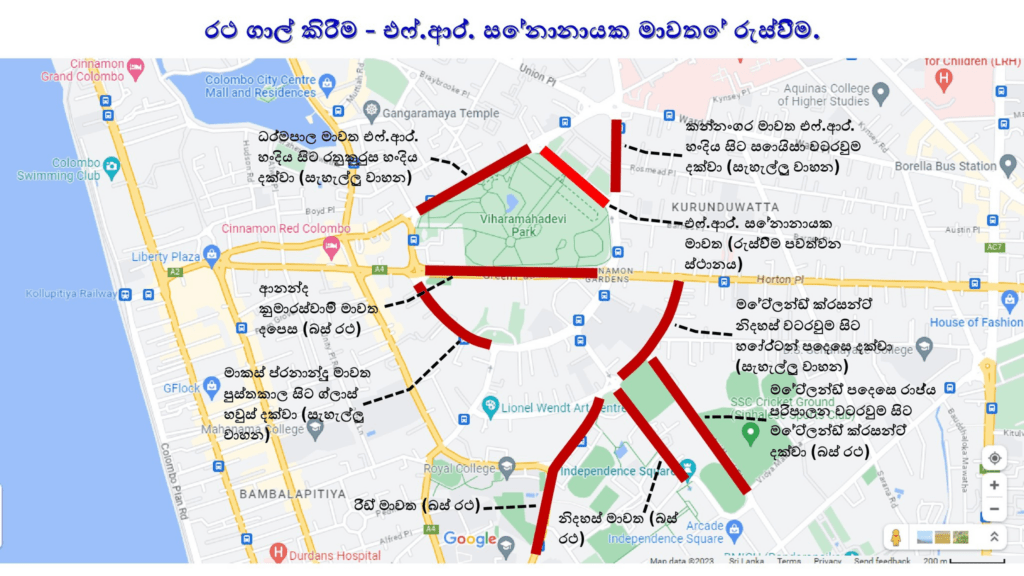
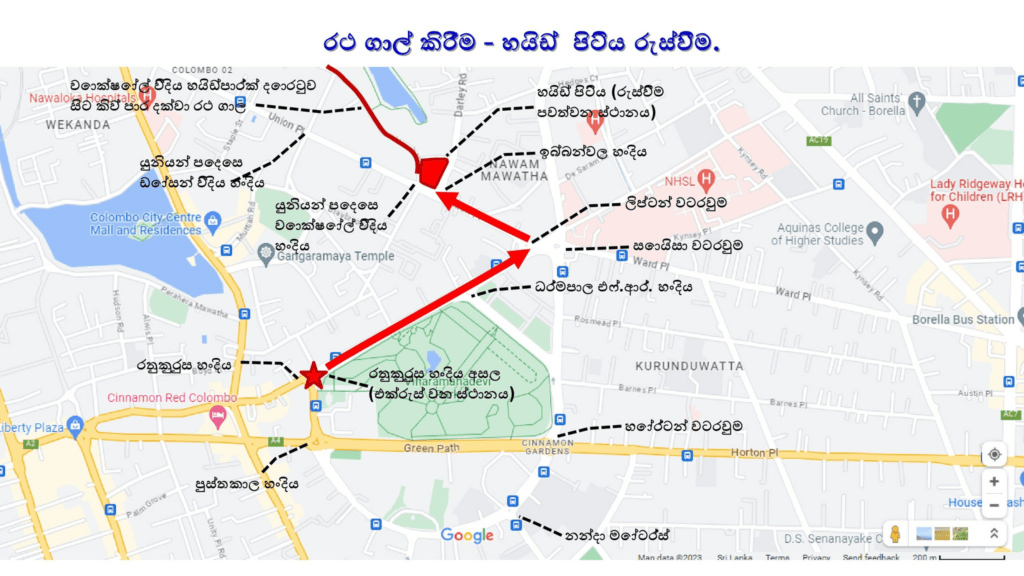
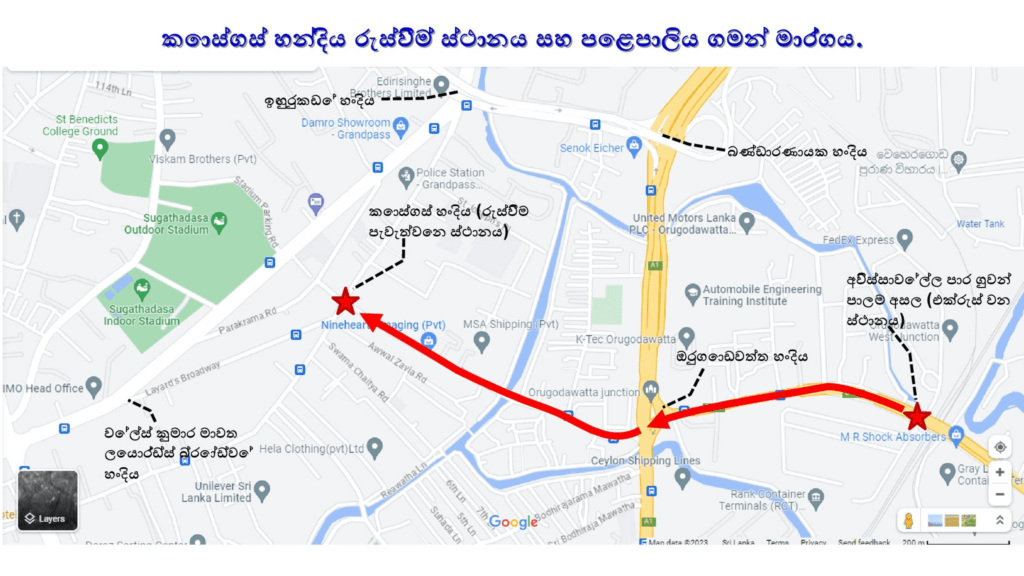
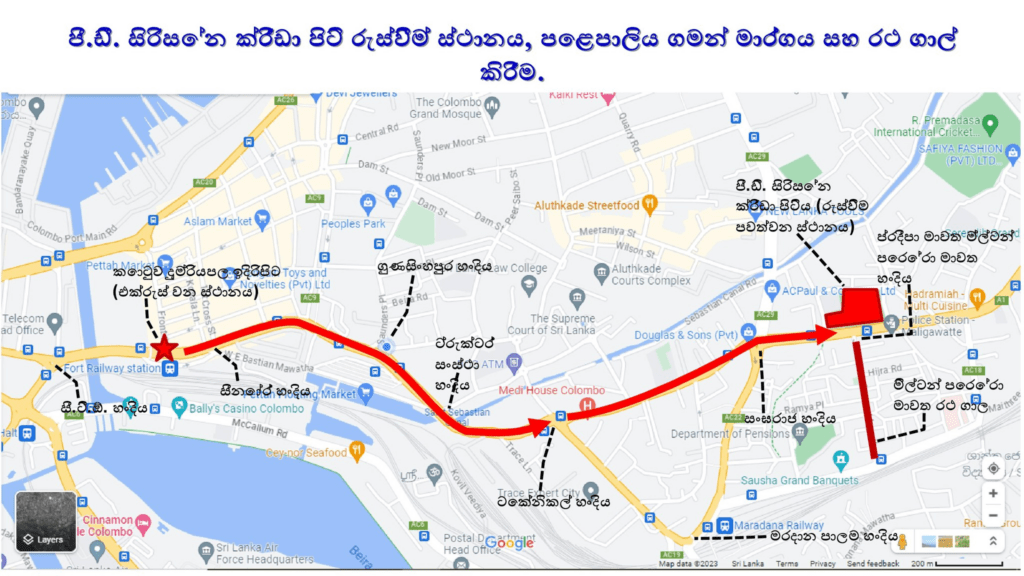
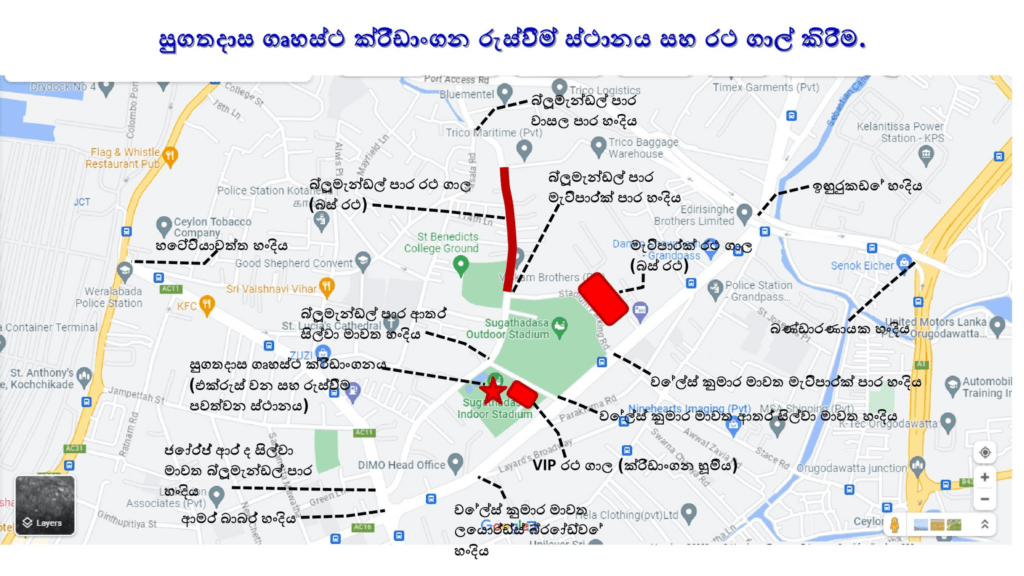
Colombo (LNW): A number of rallies and marches are set to be held in and around the city of Colombo organised by several political parties in celebration of the International Workers’ Day today (01).
Below are the maps on these rallies, parade routes and parking of vehicles:
May Day Rally by the Sri Lanka Podujana PeramunaMay Day Rally by the Samagi Jana Balawegaya May Day Rally by the Janatha Vimukthi PeramunaMay Day Rally by the United National Party
Colombo (LNW): The Natural Hazards Early Warning Centre of the Department of Meteorology today (01) issued an advisory for heavy rain for five districts in Sri Lanka, urging the public to be vigilant amidst the weather conditions.
Atmospheric conditions are favorable for evening thundershowers in most parts of the island, and showers or thundershowers will occur at several places over most parts of the island after 2.00pm, the Dept said in its statement.
Heavy showers above 100 mm are likely at some places in Western, Sabaragamuwa, Central, North-Western and Southern provinces, and showers or thundershowers may occur in Western and Southern provinces during the morning too.
General public is kindly requested to take adequate precautions to minimise damages caused by temporary localised strong winds and lightning during thundershowers.
Marine Weather:
Condition of Rain:
Showers or thundershowers will occur at several places in the sea areas around the island.
Winds:
Winds will be south-westerly over sea area around the island and wind speed will be (25-35) kmph.
State of Sea:
The sea areas around the island will be slight to moderate. Temporarily strong gusty winds and very rough seas can be expected during thundershowers.
Analysts say massive contraction in demand for fuel has prompted reduction in fuel prices: CPC’s 92 Octane Petrol reduced by Rs.7 per litre to Rs.333: 95 Octane Petrol by Rs.10 to Rs.365: Diesel by Rs.15 to Rs.310: Super Diesel by Rs.135 to Rs.330: Lanka IOC fuel prices also reduced in parallel.
Several political parties and trade unions to celebrate International Workers’ Day, today, with rallies and processions in towns across the country: UNP at Sugathadasa Stadium, Colombo North: SLPP at Campbell Park, Borella: SJB at P D Sirisena playground, Maligawatte: NPP in front of Viharamahadevi Park: FSP at Delkanda Junction: Uttara Lanka Sabhagaya at Hyde Park, Colombo: SLFP in front of Kandy Central Market: ‘Nidahasa Janatha Sandhanaya’ in front of the Sahas Uyana, Kandy.
Govt begins discussions with bi-lateral external creditors on debt restructuring of USD 7.1 bn out of the total USD 25.9 bn: separate talks with Paris Club members + India, and China: 3 baseline restructuring scenarios with 6-year maturity extension for all & haircuts ranging from 15% to 30%, and higher coupons, to be discussed: Govt had committed to submit the Debt Restructuring Plan to the IMF by yesterday.
Minister Mahinda Amaraweera requests the Animal Production and Health Department to permit eggs imported from India to be released to the local retail market: massive egg shortage in the country.
Pakistan’s former PM and Tehreek-e-Insaf Chairman Imran Khan warns “Pakistan would face a Sri Lanka-like situation” and that violent protests will break out in the country if elections are not held: asserts he has so far taken party decisions that did not hurt the fragile economy, but if the elections were delayed, the situation would get out of control.
Fishermen in Tamil Nadu say 109 fishing boats have been impounded by Sri Lankan authorities along with the fishermen on various charges, since 2018: Association leaders meet Tamil Nadu Chief Minister M K Stalin and request him to intervene for the release of the boats: also seek “Govt to Govt” intervention through the Indian External Affairs Minister S Jaishankar.
SL welcomes 14 Sri Lankans residing in Sudan who were evacuated due to the prevailing crisis in that country: evacuation facilitated by the Govt of Saudi Arabia.
King Charles III to host a special meeting of the Commonwealth Heads of State and Govt on May 5, the day before his Coronation, on a suggestion by President Ranil Wickremesinghe.
Met Dept says the Heat Index in the Western, North-Western, Northern, North-Central & Eastern Provinces, and Monaragala, Ratnapura, & Hambantota Districts, is expected to increase up to “Caution levels” of 39-45 Celsius.
Former JVP MP Sunil Handunnetti says the SJB has approved the destruction which would be caused to the country and the economy through the IMF fund facility agreement, by being absent during the time of voting in Parliament: claims the SJB did not have the backbone to oppose it.
Colombo (LNW): The International Workers’ Day, also known as the Labour Day, is globally celebrated on May 1 of every year remembering the labourers and the working class who contributed to the labour movement.
The International Workers’ Day is celebrated in memory of the labour struggle at Haymarket Square in Chicago, USA in May 1886 demanding that the working day be limited to eight (08) hours.
The significant reddish theme for the Labour Day marks the first march walked by labours who wore the shirts soaked with blood worn by protesters who were shot to death during the struggle.
The worker’s struggle is a ceaseless battle demanding better living conditions for the working class despite the world being throttled into a technologically advanced era driven by money.
In Sri Lanka, the mainstream political parties and trade unions are set to celebrate the International Workers’ Day by holding marches and rallies today.
This 10-room property is the perfect place to revel in the raw beauty of Sri Lanka’s central highlands
The National News (WEEKEND): Hidden high in the hills above Kandy, Sri Lanka, W15 Hanthana Estate is an early 20th-century tea planter’s bungalow that has been transformed into a boutique hotel.
Home to 10 individualised rooms, surrounded by expansive gardens, it harks back to colonial-era Ceylon, providing an evocative retreat in the heart of the central highlands.
The welcome
A central living room features sumptuous seating, a library and a baby grand piano. Photo: W15 Hanthana Estate
After a three-hour drive from Colombo airport and a dizzying 20-minute ascent up the mountain-hugging roads from Kandy, I am deposited in the heart of the Hanthana Tea Estate.
An unassuming, low-lying bungalow surrounded by a wide wraparound veranda, W15 Hanthana emerges slowly from the vegetation as we proceed up its wide driveway.
A barefoot, sari-clad butler is waiting to greet me and whisk away my luggage.
The check-in process is informal, completed as I settle into one of the comfortable rattan armchairs lined up along the property’s terrace.
The views captivate from the offset. The property is perched on the side of a mountain, offering uninterrupted vistas of Kandy’s jagged mountains, including the Knuckles range, so-named because its dramatic folds and peaks resemble the contours of a clenched fist.
W15 Hanthana feels wonderfully isolated. Kandy’s sites, including the Temple of the Sacred Tooth Relic, are a relatively short drive away, but this is really a spot for solitude and silence, interrupted only by birdsong and the sound of chanting from Kandy’s newest temple, Sandagiri Maha Seya, which sits on an adjacent mountain.
The room
The four-poster bed in a bungalow suite. W15 Hanthana Estate
Although it has been extensively restored, the property retains the intimate feel of a historic home.
At its heart is a central living room, decorated with plush sofas, a baby grand piano, an overflowing library and charming dark-wood writing desks.
Statement chandeliers resemble ancient candleholders, while artworks include old advertisements for Tetley Tea, historic maps and hand-drawn illustrations of local flora.
My bungalow suite is spacious yet cosy, with wooden floors, a four-poster bed, a three-seater sofa, sumptuous armchair and foot rest, and a writing desk.
It leads on to an enclosed terrace, which is lined with plants and affords plenty of privacy.
The service
Service is smooth and highly personalised. On my first night at W15 Hanthana, I am the only guest, and the small team of butlers and staff do a wonderful job of ensuring I feel entirely comfortable.
The property also has its own in-house naturalist who leads nature walks and other activities, and is constantly on-hand to share fascinating insights into Hanthana’s nature-laden surrounds.
The bungalow dates back to the early 20th century and has been completely restored. Photos: W15 Hanthana Estate
The scene
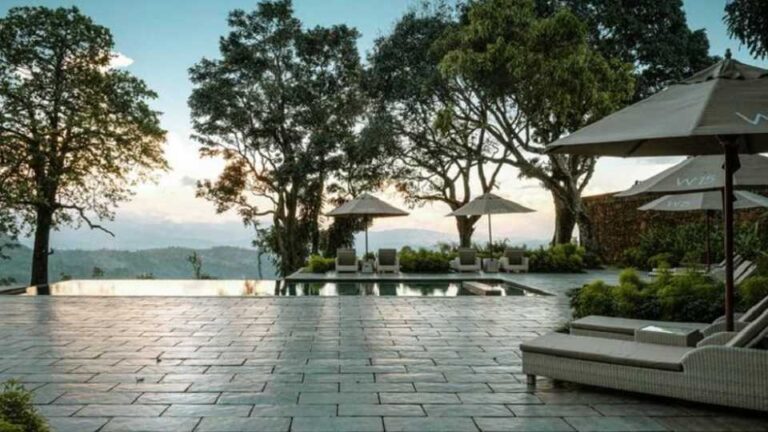
Facilities include a tennis court, an infinity pool and a sizeable lawn where you can play croquet and boules. Evenings can be whiled away playing board games or in the company of a good book from the library.
I am here because W15 Hanthana is the perfect starting point for exploring the Pekoe Trail, a new 300km network of hiking routes that snake through Sri Lanka’s tea country.
The first stage of the trail passes directly in front of W15’s gates.
The food
Dining at W15 Hanthana proves to be an exceptional experience. Meals are taken on the veranda, where the views can be appreciated at length.
I have a one-on-one chat with the chef before every meal, where he outlines what delicious three-course concoction he is planning and checks if I have any special requests.
Bountiful baskets of freshly baked bread come as standard, while one lunch consists of a shrimp salad with orange and pomelo, followed by seer fish with a bean stew.
My hearty evening meals include a perfectly cooked seafood platter brimming with lobster, seared tuna, red snapper, squid and prawns, and a traditional Sri Lankan curry, consisting of several small dishes paired with fluffy white rice.
Highs and lows
Expansive mountain views captivate at every turn. W15 Hanthana Estate
The entire set-up is designed to make you feel like you have been transported back in time, and have taken up residence in your own private home in the heart of the Sri Lankan hills. The views are a definite high point, as is the food.
W15 Hanthana does feel isolated, so this spot is better suited to those who are happy to stay put and revel in the solitude.
The Insider tip
Get your walking shoes on and explore the tea plantations, mountain tracks and rich natural biodiversity that surround this property.
The verdict
W15 Hanthana is the perfect place to reconnect with nature and sample the raw beauty of Sri Lanka’s central highlands, without forfeiting on luxury accommodation and excellent gastronomic experiences.
The bottom line
Room prices start from $480 on an all-inclusive basis. hanthana.w15.lk








:quality(70)/cloudfront-eu-central-1.images.arcpublishing.com/thenational/GLRLLTG7LZAP5M6D4JZCOY3OYE.JPG)
:quality(70)/cloudfront-eu-central-1.images.arcpublishing.com/thenational/JVAIMALHVNGD5LVPJGOT6AN2BM.JPG)
:quality(70)/cloudfront-eu-central-1.images.arcpublishing.com/thenational/CSI4BLWR2FGENEU5XVQGRVJRN4.jpg)
:quality(70)/cloudfront-eu-central-1.images.arcpublishing.com/thenational/27OWUDSQSNB7ZNSI3XLEV24RKQ.JPG)
:quality(70)/cloudfront-eu-central-1.images.arcpublishing.com/thenational/JDQU6KA2MNET5MMURZLENEEQRQ.JPG)
:quality(70)/cloudfront-eu-central-1.images.arcpublishing.com/thenational/WBATOCS7CJFDBIX7QSP4KI2Z2U.JPG)
:quality(70)/cloudfront-eu-central-1.images.arcpublishing.com/thenational/D6AHYAOYIVFNNBOWCP5ODPXSVA.jpg)
:quality(70)/cloudfront-eu-central-1.images.arcpublishing.com/thenational/6TLC3AR7ZZDBPKYYWKXVCWTW6U.jpg)