Colombo (LNW): The year-on-year (y-o-y) Gross Domestic Product (GDP) growth for 2022 indicates a negative growth of 7.8 per cent, Census Statistics data revealed.
The Census report reveals estimated GDP at the current price and at constant (2015) price in the production approach and other macroeconomic indicators for the fourth quarter of 2022, from 01st of October to 31st of December.
The GDP for the year 2022 at constant price (2015) has declined to Rs. 12,017,849 million from Rs. 13,037,934 million recorded in the previous year.
The y-o-y GDP growth rate for 2022 is reported to be a negative growth rate of 7.8 per cent.
The setback has also affected the three main economic sectors of Agriculture, Industry and Service activities, leading to a decline of 4.6 per cent, 16 per cent and 2 per cent in order in 2022.
The GDP for Sri Lanka for the fourth quarter of the year 2022 at the constant price (2015) has declined to Rs. 2,917,721 million from Rs. 3,331,073 million recorded in 2021, registering a negative growth rate of 12.4 per cent.
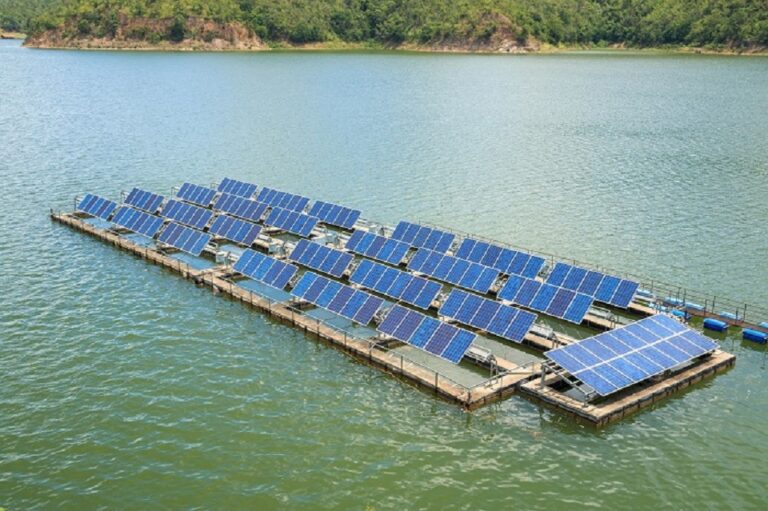
Government is to embark on a floating solar project as it can potentially work well with hydro power generation. Any new power generation also requires new power infrastructure but if solar puts near hydro, the same power infrastructure can be used, a World Bank expert said.
Sri Lanka has many water bodies that could potentially be used for floating solar,” said World Bank Senior Water Supply and Sanitation Specialist Kristoffer Welsien.
The Cabinet nod has been granted to install two floating solar plants as a pilot project with 6.83 billion Korean Won funding from the South Korean government.
The Minister of Power and Energy Kanchana Wijesekera on Monday sought the approval of the Cabinet of Ministers to sign the discussion paper with the Korea Institute for Advancement of Technology and the Department of External Resources to start and implement the pilot project.
Under the Framework Convention on Grant Aid signed between the Republic of Korea and Sri Lanka in 2009, the Minister of Trade, Industry and Energy of the Republic of Korea has agreed to provide a grant amounting 6.83 billion Korean Won for the floating solar power project.
The implementation of a pilot project is aimed to install floating solar panel power plants with 1 MW capacity on the surface of Kiriibban Wewa reservoir and Chandrika Wewa reservoirs in the Ratnapura District.
Korea Institute for Advancement of Technology is acting as the monitoring agency for the pilot project on behalf of the South Korean government.
Sri Lanka needs to add an estimated 11,000 MW to its power grid within the next two decades to meet growing demand. Adding large-scale floating solar plants would not only make electricity greener and affordable but improve Sri Lanka’s overall economic competitiveness as well.
By identifying large water bodies for floating solar, Sri Lanka also can tap into the multiple benefits of lower evaporation, higher solar panel efficiency due to cooling effect, complementarity with hydro power generation and, efficient management of peak hours.
While environmental and social impacts need to be carefully studied and managed, strategic, and well-managed floating solar projects could also improve water quality by limiting algae growth.
The synergies from combining floating solar with existing hydropower plants can be significant and can add much-needed diversity to Sri Lanka’s power generation mix, the World Bank expert said.
Sri Lanka’s power mix could potentially benefit from greater solar power generation during the day and a switch to hydro in the night. Seasonally, floating solar could produce power during the dry months while throughout the monsoon rains hydro could play a larger role in the energy mix.
Sri Lanka has also trialled a small pilot floating solar project, but its capacity is just some tens of kW. Experts believe that to reap economies of scale and for floating solar to make a significant contribution to power generation, projects need to be scaled up to about 100MW-200MW.
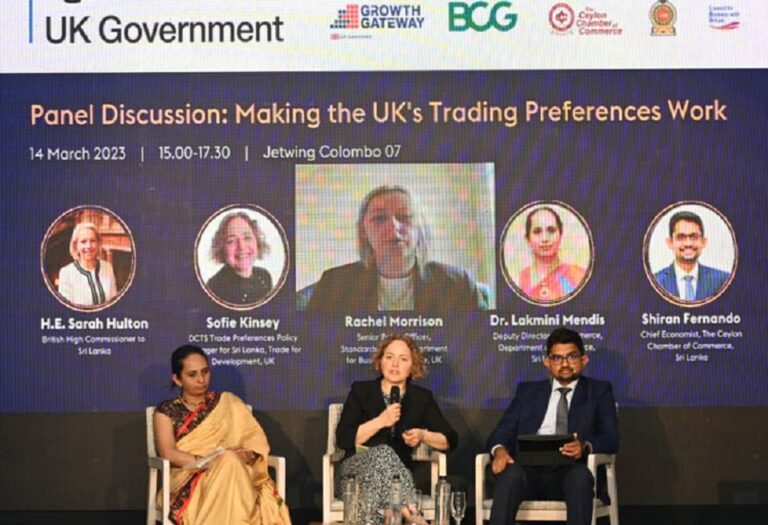
The UK Government has launched its new trade preferences scheme in Sri Lanka by holding a series of events in Colombo for the new trade preferences scheme – the Developing Country Trading Scheme (DCTS), which will come into force this year.
Total bilateral trade (goods and services) between the UK and Sri Lanka each year is £1.4bn between the UK and Sri Lanka each year.
Over 99% of goods exported from Sri Lanka were eligible for duty-free access to the UK and the £69million of tariffs saved on exports to the UK from Sri Lanka under UK trade preferences.
The Developing Countries Trading Scheme (DCTS) will replace the UK Generalised Scheme of Preferences and will come into force in 2023. Under the scheme, Sri Lanka is eligible for zero tariffs on 92% of products.
Over 150 additional products will be brought into scope of the new scheme, including milled grains, pet food products and dairy products.
“The UK’s new Developing Countries Trading Scheme provides Sri Lankan and UK businesses with a fresh opportunity to diversify and deepen supply chains and reduce the cost of exporting to the UK.
The UK government hopes businesses will take advantage of the great opportunities we have highlighted through our events this week,” British High Commissioner Sarah Hulton OBE said.
The main event was organized in partnership with the Council for Business with Britain –the UK-Sri Lanka bilateral trade association.
UK officials showcased high potential value chains and products that can benefit from the new scheme.
This was based on research into UK retailers’ and consumers’ buying considerations, as well as insights from Sri Lankan producers, trade programmes and policymakers.
While Sri Lanka exports numerous high value products to the UK including textiles, tea and rubber, there has been a steady decline in trade volumes between Sri Lanka and the UK since 2018.
Under UK trade preferences, Sri Lankan exports will benefit from generous tariff cuts and new products will be brought into scope, facilitating access to the UK market for Sri Lankan businesses across a wide range of industries.
“The Developing Countries Trading Scheme will support businesses by giving them the tools to export duty-free to the UK, opening up markets and boosting consumer choice.
The new scheme has been designed to grow free and fair trade with 65 countries, including Sri Lanka, thereby creating jobs and boosting their economies.
The DCTS offers one of the most generous sets of trading preferences in the world and demonstrates the UK’s commitment to building long term, mutually beneficial relationships with countries like Sri Lanka.
During the visit to Colombo, DCTS officials also met the Minister of Trade, Commerce, and Food Security, Nalin Fernando.
They additionally delivered further information sessions and engagements in partnership with the Ceylon Chamber of Commerce, Department of Commerce, EDB, and BOI, Joint Apparel Association Federation, European Chamber of Commerce Sri Lanka, AmCham Sri Lanka, and Rotary International.
The sessions focused on sharing insights including current trends, UK market purchasing criteria, barriers to trade and what can be done to unlock Sri Lanka’s trade and investment potential.
Forced by import restrictions and encouraged with the introduction of the Standard Operating Procedure (SOP) for Local Assembly of Vehicles, a Sri Lankan automotive company has stepped in to motor cycle assembly to cater to the present demand.
The Ministry of Industries has introduced the Standard Operating Procedure (SOP) for Local Assembly of Vehicles and Automotive Component Manufacturing in March 2021 to encourage world renowned brands to locally assemble vehicles.
Taking a cue from this SOP, Senero Motor Company Private Limited has started the GN 125 motor cycle assembling factory in Yakkala with an investment of Rs.1.5 billion
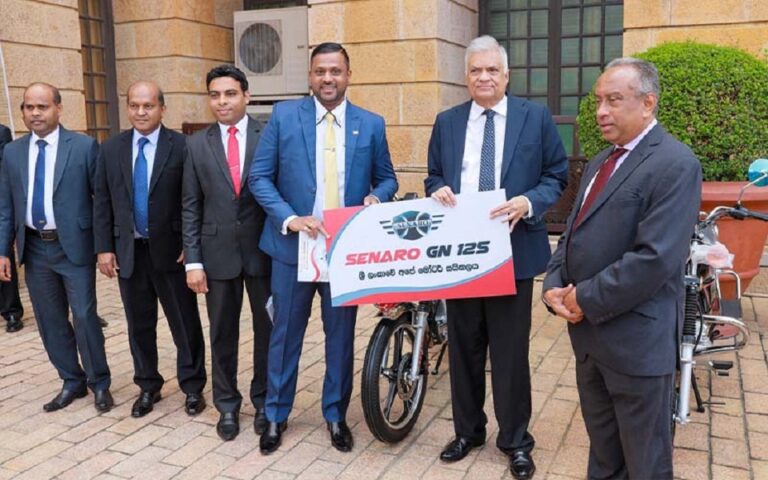
Brand new SENARO GN 125 motorcycles were donated to the President’s Office yesterday morning (15).
President Ranil Wickremesinghe was officially given the keys and accompanying documents by Senaro Motor Corporation Managing Director Roshana Waduge.
The newly built assembly factory in the Yakkala area has been producing the SENARO GN 125 motorcycle with 35% value addition through locally produced spare parts, due to efforts of Senaro Motor Company Pvt. Ltd and it will be increased to 50 percent soon, according to Roshan Waduge head of Senero Motors. .
The company has invested Rs. 1.5 billion in this venture, with the full financial support of the Bank of Ceylon. The goal is to increase the value addition to 50% in the near future and create more than 160 direct job opportunities.
The motor cycle assembly venture will create 160 employment opportunities for youths with necessary motor mechanic skills.
The company has already received orders for more than 160 motor cycles from prospective buyers up now and it has appointed dealers country wide to market the new GN 125, he said.
Orginal Suzuki brand GN 125 motorcycle is considered as the best learner/commuter motorcycle in Sri Lanka and many other countries, industry sources said.
This GN 125 motorcycle production was started by the Suzuki Company from the year 1994 (up to 2021).
After 2021 there was no message from the Suzuki about this four stroke engine fitted model’s availability in many parts of the world, a spokesman of the motor industry said.
Its 125 cc engine can produce 13 HP max power at 9500 rpm. Currently the Suzuki GN 125 Bike is available as second hand or used motorcycle in many countries.
Some motor traders say the production of Suzuki GN 125 motorcycle in Japan was discontinued.
In Sri Lanka due to Government’s vehicle import ban this motorcycle is not available officially. Although there are some of the Suzuki GN 125 motorbikes are available for sale as old stock.
They are available as unregistered motorcycles from the seller in Sri Lanka. Moreover there are many Chinese made fake Suzuki GN 125 Motorcycles are marketed in Sri Lanka. And people also buy this too, he claimed.
As there was no more official production coming from Japan, industry sources say that these bikes could be previously manufactured and kept in ware houses in India or in China.
Now they are being sold in Sri Lanka through paper advertisements by individuals. Newspaper advertisements claimed that they are Brand New Suzuki GN 125 motorcycles available for sale in the country.
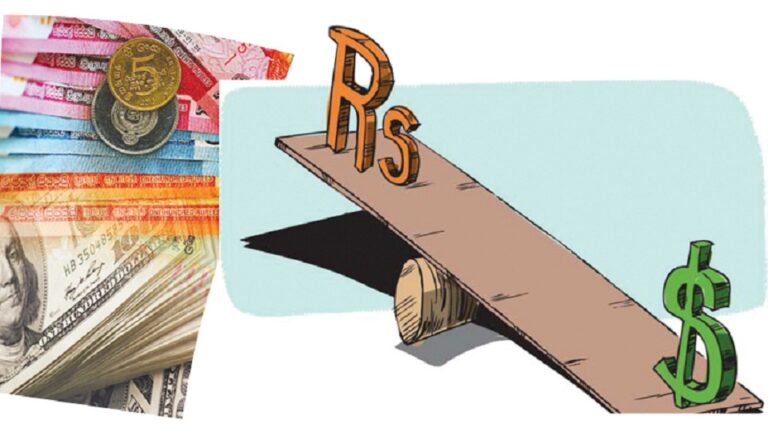
Sri Lanka’s rupee is set to decline and lose almost a fourth of its value against the dollar by end-2023, according to. Bloomberg report.
“Authorities have to remain committed to enacting tough reforms to stay on track with the IMF program. This might be politically challenging against the backdrop of a weakening economy and a local election likely on the horizon
The rupee is to weaken about 25%-23% to a record low of Rs.390 per dollar by year-end. The rupee advanced 0.5% to 316.8 per dollar on Thursday, taking its annual gain to 14%.
That’s after the IMF said it will decide on a $2.9 billion bailout for Sri Lanka on March 20 following China’s assurance that it will support the nation’s debt restructuring.
It has been predicted the rupee will rise further to 309 per dollar on last Thursday. Sri Lanka has increased taxes, cut energy subsidies and loosened its grip on the currency to secure the IMF loan.
The central bank recently lifted borrowing costs further to ensure that inflation which has slowed from nearly 70% doesn’t flare up.
“Sri Lanka still has significant external debt repayment needs and will need to build up its foreign reserve buffer over the coming months, which would put downside pressure on the exchange rate,” Bloomberg reported.
Sri Lanka needs further rate hike to contain monetary expansion and put the brakes on inflation but a rate hike is will also help support the rupee, W A Wijewardena, former Deputy Governor of the central bank said.
An overall plan covering interest rates, exchange rates, and the budget was needed.“We have to raise rates to contain the rising inflation in the country,” Wijewardene said.
“But it has a positive effect on the exchange rate. One reason very high demand for imports is the money available. The high aggregate demand is driving imports.”
Wijewardene said the 200 rate was could not be held and the day of reckoning had come.
He said the 7.50 policy rate was not enough because the Treasury bill yields have already gone above 10 percent.
Sri Lanka’s Central Bank’s intervention with dollar buying has prevented sharp appreciation of the rupee, dealers say, as the rupee is under upward pressure amid negative credit and the lifting of a surrender rule.
The rupee is trading between Rs 312-318 against the US dollar compared to Rs.360 level a week ago, showing a near 15 percent rise.
The sharp appreciation comes amid speculation over dollar inflows from International Financial Corporation amounting to US$400 million into three private banks and further inflows soon after the International Monetary Fund (IMF) Executive Board approval of a $2.9 billion loan later this month.
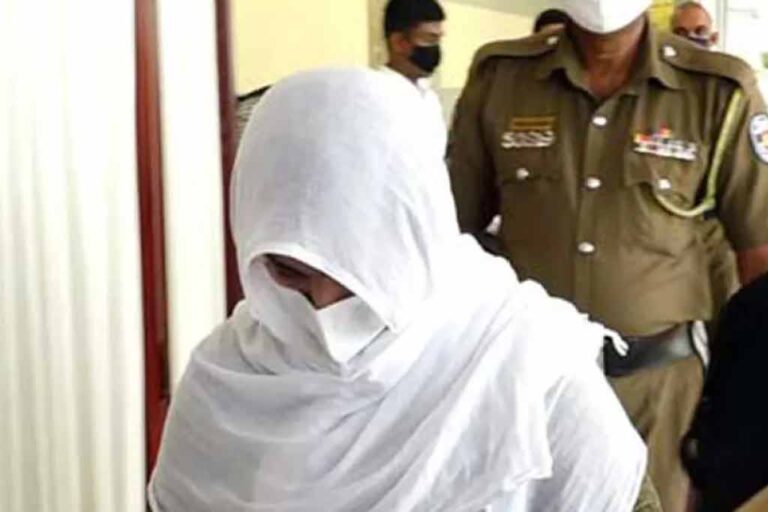
Colombo (LNW): Fathima Hadiya, also known as the wife of the prime suspect of the Easter Sunday genocide, Zahran Hashim, has been granted bail by the Kalmunai High Court after being detained under the Prevention of Terrorism Acti (PTA) for four years.
Hadiya was arrested by the Criminal Investigation Department (CID) on the allegation of not disclosing information pertaining to the carnage, and was kept under the CID watch and in remand custody thereafter for four years under the controversial PTA.
As the suspect was produced before the Court yesterday (15), she was released on a cash bail of Rs. 25,000 and two sureties of Rs. 2.5 million each. Hadiya is banned from travelling overseas and ordered to appear before the CID on the last Sunday of every month.
Colombo (LNW): The atmospheric conditions are getting favourable for afternoon thundershowers in most parts of the island, and therefore, showers or thundershowers will occur at several places in Western, Sabaragamuwa, North-Central, North-western and Uva provinces and in Galle, Matara, Kandy, Nuwara-Eliya and Mannar districts during the afternoon or night, the Department of Meteorology said in a statement today (16).
Fairly heavy rainfall of about 75mm are likely at some places in Sabaragamuwa province and in Kaluthra, Galle and Nuwara-Eliya districts.
A few showers may occur in the coastal areas of the Eastern province.
General public is kindly requested to take adequate precautions to minimise damages caused by temporary localised strong winds and lightning during thundershowers.
Marine Weather:
Condition of Rain:
Showers or thundershowers will occur at several places in the sea areas off the coast extending from Puttalam to Hambantota via Colombo and Galle.
Winds:
Winds will be easterly to south-easterly and wind speed will be (20-30) kmph.
State of Sea:
The sea areas around the island will be slight. Temporarily strong gusty winds and very rough seas can be expected during thundershowers.
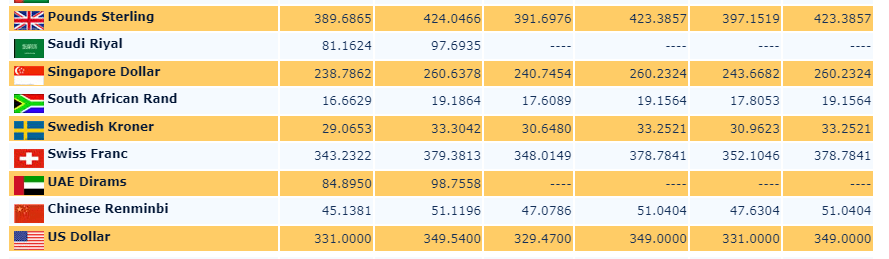
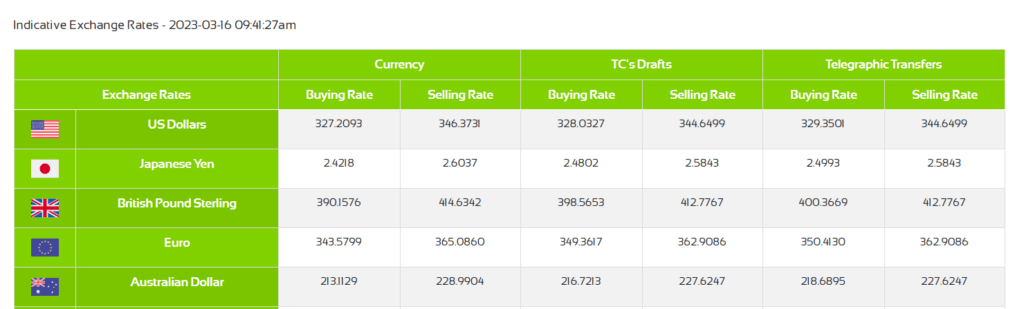
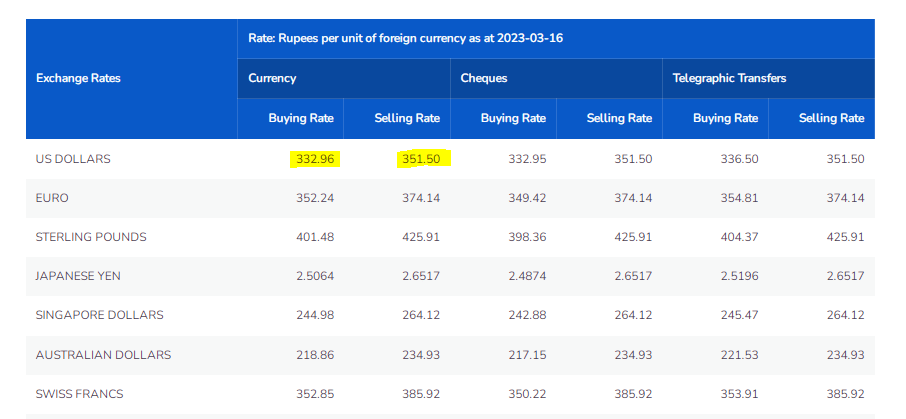
Colombo (LNW): The Sri Lankan Rupee indicates further depreciation against the US Dollar as revealed by today’s (16) exchange rate charts of a number of commercial banks in Sri Lanka.
Bank of Ceylon (BOC) yesterday (15) revealed the buy price of the US Dollar to be Rs. 326 and the sell price Rs. 344, only to indicate further depreciation as Rs. 331 and Rs. 349.54 today (16).
Yesterday, People’s Bank revealed the buy price Rs. 325.26 and the sell price Rs. 344.31, and today, Rs. 327.20 and Rs. 346.37.
The exchange rates of Sampath Bank remain unchanged.
The sell price of the US Dollar has exceeded Rs. 350 in Commercial Bank.
LKR selling rate crashes from 335.68 to 344.68 against the USD recording a massive depreciation of Rs.8.98 (2.7%) in a single day: LKR said to be trading in “grey” market at over 375.00 per USD: LKR also depreciates 8.7% from 387.11 to 420.68 against the GBP from 9th to 15th March.
Media Spokesperson of the GMOA Dr. Chamil Wijesinghe says the island-wide strike launched by the GMOA will be called off temporarily at 8.00am today.
Census Dept says the economy in 2022 suffered the worst ever contraction of 7.8%: 4th quarter contraction of 12.4%: all 3 major economic activities of Agriculture, Industry & Services suffer contraction: in 2021, growth was a positive 3.5%.
People’s Action for Free and Fair Elections Director Rohana Hettiarachchi says it is highly unlikely the LG election would be held on April 25 as announced by the Elections Commission: laments the Govt is ignoring Court decisions.
PM Dinesh Gunawardena says he will prevail on the President to submit a Cabinet proposal to rectify the British Crown’s decision to exile Ceylon’s national heroes of the Great Rebellion of Uva Wellassa: laments State Counsels and President’s Counsels have not come forward to correct that decision which betrayed the country’s national heroes.
IFC Country Manager Alejandro Alvarez de la Campa explains the modalities of the much-hailed “USD 400mn cross-currency SWAP” for 3 Sri Lankan commercial banks: says the agreement is to trade currencies where cash flows in one currency is exchanged for cash flows in another currency at defined rates: analysts point out there is no new Forex inflow due to the SWAP as initially believed by some persons.
Easter Sunday bomb attack main suspect Zaharan Hashim’s wife Fathima Hadiya granted bail by Kalmunai High Court after being detained under the PTA for 4 years: CID obtains detention order for 3 months under the PTA to detain & interrogate notorious drug dealers Nadun Chinthaka alias ‘Harak Kata’ & Salindu Malshika alias ‘Kudu Salindu’.
Tea exports in Feb’23 down by 13% YoY: main tea categories dip: Turkey, Iraq and Russia emerge as top 3 buyers: exports to Japan, Lebanon & Belgium improve significantly.
Cabinet Spokesman Dr Bandula Gunawardana warns “anyone who violates the essential services order will face the full force of the law”: however, due to yesterday’s strike, more than 90% of schools close: out-patient depts at hospitals close: dockers at the Colombo port stay away: air traffic controllers “go slow” for two hours.
Finance State Minister Dr. Ranjith Siyambalapitiya says the country loses Rs. 46 bn in earnings per day due to strikes: also says the damage to education due to the strike is too high to be calculated: asserts the country and economy can’t be prevented from collapsing again if such “baseless strikes” are carried out.
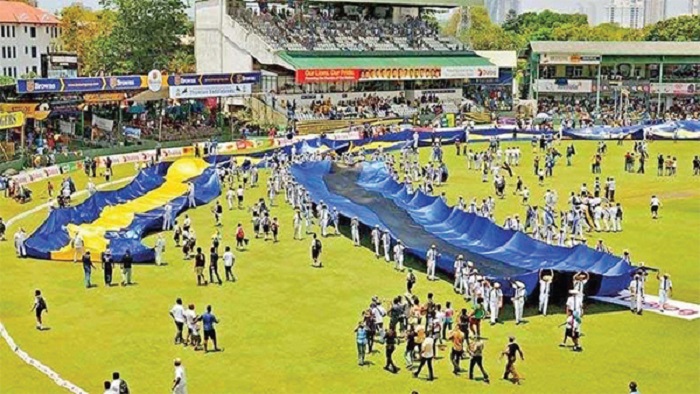
The season of big-matches is upon us. These cricket encounters are big for the respective schools, not for others. In fact as far as the particular schools are concerned they are huge. It’s THE event of the year.
Today there are big-matches in all parts of Sri Lanka, so many that few can escape them for the spectacle is not contained by the walls of the schools. It not only spills over to the streets but climb over the walls of other schools as well. Well, the girls’ schools at least. For history and spectacle, however, it can be argued that no match comes even close to the Royal-Thomian encounter. Royal College and St Thomas’ College, Mount Lavinia have played this annual encounter for over 140 consecutive years. That’s including the war years and the period of Covid-19 related lockdowns.
All good fun for the most part. And so, over the years we have come to expect phrases such as ‘Big Match Fever,’ and ‘Mad March Days.’ Today, several decades after leaving St Thomas’ I feel that it’s not a disease; the Big Match, the Battle of the Blues that is, is a healer. There’s nothing ‘mad’ about March; the Big Match provides sanity in a world of routine and grind marked by chaos, uncertainty and drudgery.
For me, like for countless Royalists and Thomians, the Roy-Tho is not only the oldest continuously played cricket series in the world but an extraordinary carnival that adds value to comradeship and friendship. It’s all about memories, traditions, sportsmanship and life in general. It is a holiday unlike any other. We walk into the SSC, where the big match has been played for decades except for the last two years when the venue was shifted to Suriyawewa due to containment protocols related to Covid-19, and we are suddenly in this incredible space where we just don’t have to guard our tongues or worry about perceptions being wrecked. We can be frank, open and basically ourselves without having to think twice before saying or doing anything. It’s not a shut up and sit down event but a get up and speak up one where everyone is equal.
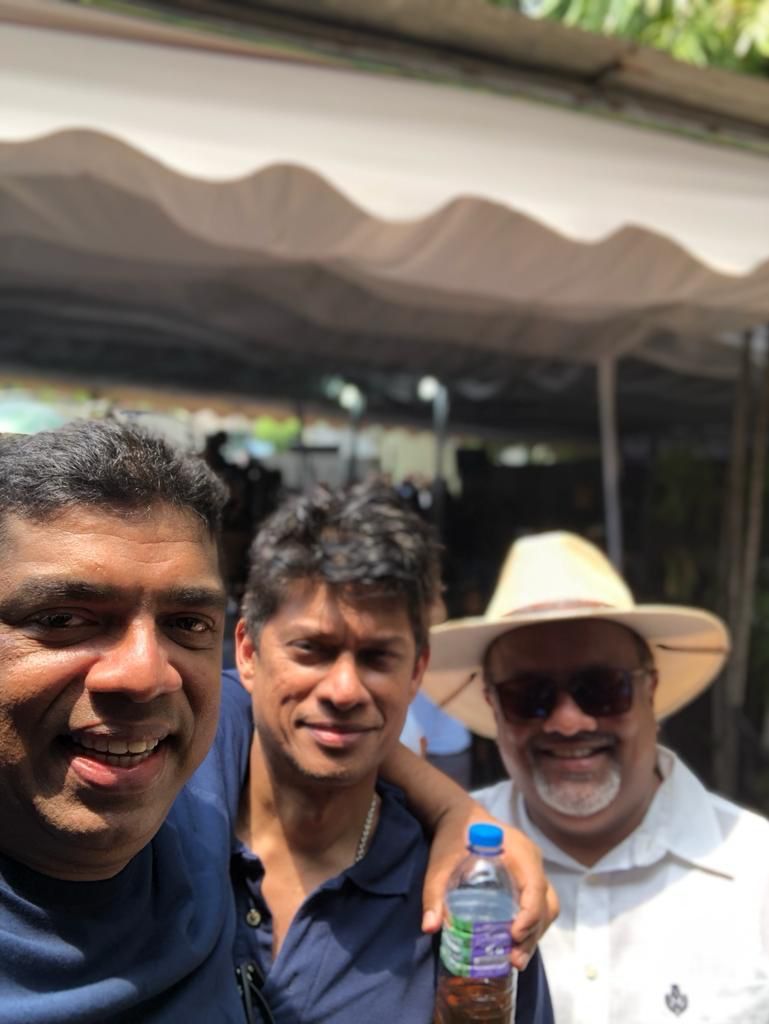
Prof Arjuna Desilva and Capt Rajind Ranatunge with Krishantha Cooray at the Royal – Thomian 2019
We all have school memories. Among them, those associated with the Royal-Thomian are the most precious. The truth is, as schoolboys we never thought about memories. We just had fun. Incredible fun. Little did we know that we were in fact creating memories that would stay with us and keep us warm when we are battered by the harsh and freezing winds of life.
It’s not just students and old boys. It’s everyone associated with the two schools including teachers, non-teaching staff, parents, friends, girlfriends and others who identify with each School for as simple a reason as living close by!
I still vividly remember the 1990 Big Match. Naresh Adikaram, the Thomian captain, lost his father a few days before the Roy-Tho. He attended the funeral, and a few hours later was at the SSC, leading his boys. He scored over 70 runs in that match. Such courage, such composure! I am sure it was appreciated and applauded by both Thomians and Royalists.
Of course, what happens in the middle of the ground is hardly what makes the Royal-Thomian so special. The carnival, so to speak, unfolds outside, in the stands, among friends, in the back-and-forth of reminiscences by old men whose firm belief they’ve not aged is a product of the amount of alcohol consumed, the papare bands, dancing in the tents, the supporters affirming yet once again that the only tune they can hold is that of the school song, and the occasions pitch-invasion.
It was not uncommon even back then for some of the most colourful personalities of our generation, from Varuna Botejue, Charya De Saram or Prasad Wimalasekara, to spend weeks before the Royal Thomian planning for the event. I remember being aghast, as a senior student, seeing my younger brother Nishantha running into the field, the college flag in hand. He was just about eight years old then. Such interruptions are expected, cheered or jeered, and looked back upon with a smile that says, ‘we were so much younger then, and we can only be as young again on the three days in March when we attend the Royal Thomian.’
And we graduated from the boys’ tent to the Stallions, the Colts, the Mustangs and other horse-enclosures that don’t have anything to do with age but nevertheless celebrate merry-making to the maximum, such as the Stables, set up by Krishan Perera and his team 19 years ago.
On the Thomian side, I still remember how seriously cricket legends like Michael Tissera and Anura Tennakoon would come and invest so much of their time and energy helping to advise, support and mentor our team. All this while the late Warden Neville De Alwis and Sub Warden former Bishop Duleep De Chickera would be warning the ‘yakos’ such as myself to kindly refrain from assaulting prefects during the match.
It’s a pilgrimage as holy as any other. This is why Royalists and Thomians time their visit to the ‘mother-country’ so that they can go to the Big Match. It’s a temple where there’s community worship of things that matter: friendship, camaraderie and memories that just don’t age.
The Sane March Days are here again. Let the Big Match healing begin!