Home Blog Page 1824

Gulf Airlines support “FIFA Zone “in Sri Lanka to boost tourism

0

The out-of-the-box plan to attract a fraction of the FIFA World Cup 2022 fan base to Sri Lanka will materialize, as key Gulf Airlines have committed to support the initiative, Tourism Minister Harin Fernando said.

Noting that Flydubai and Qatar Airways have agreed in principle to support the initiative with increased frequencies, he said the final plan will be announced by next week.

“Given the support we have received so far from all stakeholders, I am confident that the initiative will be successful,” Minister Fernando told the Daily FT.

Over 1.2 million football fans from around the world are expected to attend the FIFA World Cup 2022 from 20 November to 18 December. However, accommodation in Qatar has soared with increased demand for the 40,000 total room capacity.

The collective effort of Sri Lanka Tourism is to capitalize on the proximity, affordability, air connectivity and entertainment culture to seize a fraction of the visitors during the four to five-day break between the matches.

“Flydubai has assured support to the promotional packages discussed to attract global football fans to Sri Lanka. We are capitalizing on the codeshare partnership SriLankan Airlines has with Qatar Airways to get a higher frequency during the FIFA World Cup season. A final package on the initiative will be made available by next week,” he said.

With over 1,300 rooms within Negombo, Minister Fernando said all hotels and other stakeholders have stepped up their efforts to set up a FIFA Zone to accommodate and entertain the visitors from the third week of November to the end of December.

As per the Minister tour operators have already created packages for four days and three nights starting from $ 235 per person-sharing doubles to over $ 330 depending on the star classification of hotels.

“We have discussed modalities of this initiative at the recent meeting with the Tourism Committee to review the progress of the initiative and then announce the outcome by next week,” Fernando added.

This is the first Football World Cup ever to be held in the Gulf region and the second World Cup to be held entirely in Asia after the 2002 tournament in South Korea and Japan.

Cash strapped Sri Lanka introduces tax hike to enhance revenue

0

In light of the financial constraints placed on the government budget owing to 2019 tax relief granted to business stooges of the former President Gotabya Rajapksa regime under the guise of stimulating the economy ,Sri Lanka’s latest tax rate hike has been gazetted recently.

President Ranil Wickremesinghe as the Minister of Finance has increased personal income tax with an aim to double tax to GDP ratio by 2025 as the island nation is in the process to finds ways to come out of an unprecedented economic crisis.

– A person who earns more than 100,000 Sri Lankan rupees will have to pay taxes depending on the additional amount they earn. This means the annual threshold-free income is 1,200,000 rupees. This threshold level was 3,000,000 rupees earlier and now has been cut by 60 percent.

– The tax slabs of 3,000,000 after the threshold-free income is now reduced by over 83 percent to 500,000 rupees.

– For each 500,000 tax slab, there is an incremental 6 percent tax. If a person annually earns 3 million rupees, which was tax-free earlier, the first 500,000 rupees after the 1,200,000 rupee tax-free threshold, he will be changed 6 percent, next 500,000 at 12 percent, next 500,000 at 18 percent and the remaining 300,000 at 24 percent.

– A 1,200,000 rupee expenditure relief that was available for a resident individual under an earlier system is not available anymore. This relief was provided for children’s education, interest on housing and solar panel loans.

– Corporate tax rate is raised to 30 percent from earlier 24 percent.– A 10 percent Advance Income Tax is charged on an income made out of rent exceeding 100,000 rupees, while 5 percent is charged on an interest income or discount.

The gazette shows that a 15 percent AIT is applicable on dividend payments and 14 percent for any other payments.

– A 5 percent withholding tax rate is charged on the service fee of more than 100,000 rupees for teaching, lecturing, examining, invigilating or supervising an examination, service fee as a commission or brokerage to resident insurance, sales or canvassing agent.

The same 5 percent withholding tax is applicable for services provided by individuals in the capacity of independent service providers such as doctors, engineers, accountants, lawyers, software developers, researchers, academics or any individual service provider as may be prescribed by regulation.

Sri Lanka’s proposed tax hikes may lead to lower interest rates in the future as the expected increase in state revenue could reduce the dependency on treasury bills and bonds, dealers said.

The key changes include reducing the tax-free threshold for personal income tax to 1.2 million rupees from 3.0 million and raising the corporate tax to 30 percent from 24 percent.

Capital gains tax for companies has been proposed to be raised to 30 percent from 10 percent for investment assets.

Dealers said there was no significant reaction for the tax hike proposal yet, but however investors may seek on the best Return on Investment (ROI) opportunities such as real estate or the stock market, if the interest rates fall.

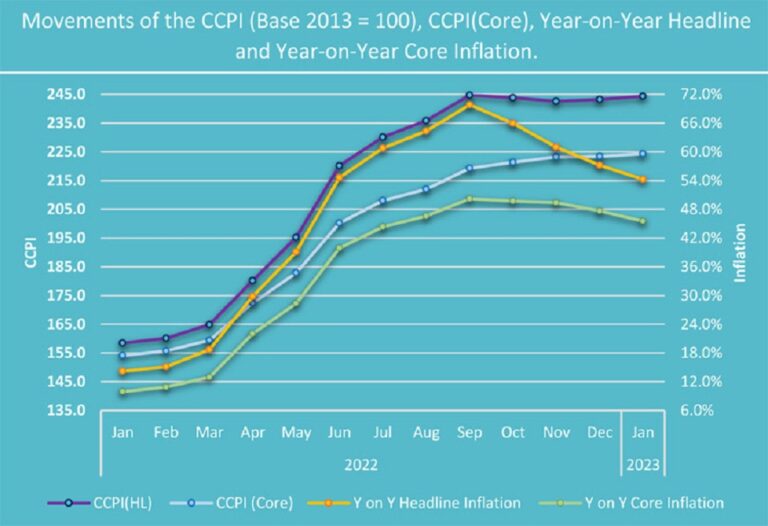
Sri Lanka’s risk free interest rates are hovering around 30 percent, but investors still see negative returns because the inflation has reached an unprecedented 70 percent.

The foreign borrowings have completely dried up in Sri Lanka after the island nation declared sovereign debt default in April this year. Since then the government has been heavily depending on local borrowing mainly through T-bills and T-bonds.

The yields in both government securities reached around 30 percent after the central bank raised its key monetary policy rates by an unprecedentedly higher amount to tame a skyrocketing inflation despite higher borrowing by the government.

51st SESSION UNHRC RESOLUTION ON SRI LANKA AND WAY FORWARD

0

Geo-politics Prevails the Humanity

Unquestionably the whole world knows that the Mullivaikkal genocidal intended Tamil massacre in Sri Lanka is the first and the worst in this 21st century. Despite the awareness of well-substantiated documents pertaining to Tamil massacre, the international community not only assisted Sri Lankan state to execute its purpose but continue to disregard Tamil peoples’ call for justice for the atrocity crimes inflicted on them by the Sri Lankan state.

Had the international community been considerate on humanities, rather than paying their geo-politics, many Tamil peoples’ lives could have been saved. It is not only the loss of lives, but several people have been maimed, lost their limbs, eyes, widowed, orphaned and have been living into destitute situation due to the destruction of their properties and belongings and also due to the occupation of concentrated Sri Lankan military in their lands. 

Had the world-leaders proactively set an example by intervening with the Sri Lankan government and stopped the massacre of Tamil people, that precedence could have saved many peoples’ lives in other countries too. A good recent example is Ukraine – Russian war.

Nevertheless, there are 1000s of well documented evidence are available the UN Member states continue to fail to acknowledge merits to establish an international criminal justice mechanism due to lack of political will and geopolitical interests. Had there been a drive, international community should have ensured the (a) reporting of these crimes to other UN mechanisms and (b) referring to the General assembly for an international criminal justice mechanism.

The Core Cause for Sri Lanka’s Economic Crisis

Majority of the countries were sympathetic with Sri Lanka’s pretence that imposition of stringent resolution against it, while it undergoes economic upheaval, is unfair without knowing the true cause for its current dilemma.  

These countries must understand and acknowledge that there is a disconnection between the current economic crisis and the seven decades of Sinhala Buddhist exclusivity, impunity, cycles of violence, conflict driven political agenda and highly centralised state institutions, 

We met the diplomats of several countries and internationally reputed NGOs to comprehensively explain them with facts and figures in convincing them that the root cause for Sri Lanka’s current economic problem has been its racial hegemony of Sinhala-Buddhist chauvinism since Sri Lanka became independence in 1948. 

Among the many things cited: 

·        the Sinhala-only Act followed by the premeditated deployment of more military camps in Tamil homeland from 1963 when the Tamil people were conducting nonviolent resistance, 

·        the prolongation of Prevention of Terrorism Act (PTA) as a temporary provision enacted in 1979 till to date, arbitrary arrest, detention, enforced disappearance, extra judicial killings, torture, sexual violence, vulnerability of the women & children and the effect of impunity, 

·        national budget spent for defence for 27 years, between 1983 and 2009 was $14 billion, whereas the post-war defence expenditure for the 10 years, from 2010 to 2019 has been $17 billion causing the frenzy borrowing led to $51 Billion foreign debt, and

·        the additional defence expenditure predominantly was to deploy 16 out of 19 military divisions in Tamil homeland with the increase of 318,000 military personnel in 2018 from 220,000 at the end of war in 2009.

Imposition of Leverages

The despotic nature of the Sinhala-Buddhist chauvinistic Sri Lankan state has proved over the past seven decades, by defying several negotiations & pacts for the devolution of powers to the Tamil people, that it is not going to fulfil the legitimate aspirations of Tamil people in the island for prospering through the process of peaceful coexistence. 

Undeniably, the international community is fully aware not only from the many cycles of violence staged against Tamil people, but also from disregarding the UNHRC Resolutions over the years, particularly A/HRC/RES/46/1 of March 2021 and A/HRC/51/L.1/Rev.1 of October 2022.

It is the time for the international community to take tangible actions, one of which is applying calibrated leverages against Sri Lanka avoiding the sufferings of innocent civilians. otherwise, it will continue its atrocities endlessly, leading the country further economic and political crisis. 

As Sri Lanka is totally depending on foreign aids and support such as the GSP+ privileges, applying leverages at this stage can bring significant changes to the political structure in the island. 

By using all the available leverages on Sri Lanka, when it is in weakest stage and fully dependant on the international community, particularly the USA, UK, India and EU should be able to prevail on the decision makers of Sri Lanka to arbitrate a power sharing arrangement based on the right to self-determination and the principles of federalism. Resolution 51/1 progressively included the political solution and devolution.

Implications of 51/1 UNHRC Resolution 

It is worth mentioning at this juncture that Sri Lanka, arrived with an arrogant attitude of defying the resolution as if the countries would extend their support on sympathy of its economic crisis and also demanding not to interfere with its sovereignty, severely lost with receiving only seven votes, which was four less than its position if 2021. India emphasised on the devolution of powers and the aspiration Tamil people for a lasting peace in Sri Lanka. 

Unlike Resolution 46/1 low allocation of budget, which was subsequently unduly curtailed by the friendly countries of Sri Lanka, Resolution 51/1 has allocated a moderate budget for the evidence collection, preservation and analysation of human rights violations and related crimes in Sri Lanka. 

Resolution 46/1 does not restrict the time limit for the evidence collection of atrocious deed inflicted on innocent victims. Thus, this permits us to collect evidence of all atrocity crimes including Genocide even up to the date Sri Lanka attained independence in 1948.

This implies that Tamil people, particularly the diaspora organisations, Victims & Witnesses and the human rights defending countries must work hard in providing and assisting the Sri Lanka Accountability Project, UNHRC with truthful and genuine evidence collections. 

Considering that “unity is strength” the Tamil diaspora organisations collectively must take responsibility to ensure the revelation of the unreported crimes especially the crime of Genocide in the future reports of the OHCHR. We call upon the like-minded Tamil organisations to join us to explore the avenues leading to international criminal justice mechanisms and mobilise the resources to establish such international mechanisms for Sri Lanka

Tamil political parties and civil society to work in unison towards finding a long-term political solution by involving India, the United States, The European Union, the United Kingdom and Canada to play as arbitrators of the devolution of power sharing mechanism. 

The Way Forward

Considering the foregoing, among the many other things stipulated in current resolution, 51/1, we must ensure to strengthen the Evidence Collection Mechanism by fully resourcing without further delay by enabling the team reach out to the victims and witnesses globally and to secure their evidence, prepare case files, share with relevant host countries and international justice mechanisms to initiate the judicial proceedings. More proactive we are, will result in strong reporting on the 53rd session validating the elements of genocidal intent and other atrocity crimes. 

In the interim, we request the states to address the underlying causes of the crisis, including impunity for human rights violations and economic crimes by pursuing a number of options to advance accountability at the international level, by helping the victims seek justice, reconciliation and human rights; and requests UNHRC to pursue the prosecution of the available emblematic cases through appropriate mechanisms and  also requests the council to refer through the General Assembly to establish an International criminal justice mechanism for Sri Lanka.

We also request the International Community to work towards a negotiated political solution for the Tamil people through international arbitration and to undertake to implement it in Sri Lanka.

Colombo Port City continues initiatives to uplift Sri Lankan communities

0

Continuing with its various initiatives to uplift communities and create opportunities in Sri Lanka, CHEC Port City Colombo (CPCC), donated 2,500 translated copies of its inspiring and educational Children’s Storybook, “City Rising from the Ocean”, which has been translated into the Sinhala and Tamil Languages, Shalaka Wijeyaratne, Assistant Executive Director – CIFC Development at CPCC told Times online

The book was originally published in English in 2021, when 2,000 copies of the book were donated to the National Library of Sri Lanka, with the intention of inspiring future generations through an engaging story about developing Port City Colombo as the first ever master planned city built on reclaimed land thriving to drive the economic and social development of Sri Lanka, he said. .

Alongside the book donation, CPCC also undertook the refurbishment of the Chinese Book Corner of the National Library to mark the occasion.

The donation of the translated copies this year, builds on CPCC’s efforts to make a positive impact within communities through promoting reading and igniting a passion for learning amongst young minds.

Incidentally, this occasion also serves to mark both PCC’s 8th anniversary, while also celebrating Children’s Day in Sri Lanka.The set of 2,500 translated copies of “City Rising from the Ocean” were officially handed over to. W. Sunil, the Director General of the National Library, by a delegation of Senior Officials representing CPCC, led by Mr. Shalaka Wijeyaratne, Assistant Executive Director – CIFC Development at CPCC.

(Bandula)

Dutch FMO offers US $ 10 m investment to Sri Lanka seafood exporter

0

Sri Lanka’s seafood exporters are targeting 200 million US dollars in sales from newly farmed king prawns within three years, an industry official said.

“We are hoping to get 200 million US dollars from vannamei (king prawn) exports by 2022,” said Dilan Fernando, President of Seafood Exporters’ Association of Sri Lanka (SEASL). Sri Lanka’s estimated shrimp exports for 2019 were US$20 million, a small fraction of the $ million in total seafood exports.
Export earnings from Seafood increased by 37.04% to US$ 25.53 Mn in August 2022 compared to August 2021. Except for shrimp & lobsters, export earnings from Frozen fish and Fresh fish increased by 69.88% and 56.39% respectively in August 2022.

In this back drop Dutch impact investor FMO has proposed a $ 10 million investment in one of Sri Lanka’s leading seafood exporters, which mainly employs underprivileged women including war widows.

Established in 2010, Taprobane Seafoods has one main processing facility and 14 smaller locations in the South Asian nation and employs over 2,000 people.

Taprobane processes blue swimming crab and white-leg shrimp, which it began farming two years ago.

It became the first Sri Lankan company to do so in response to a global shift in tastes for white-leg shrimp over black tiger shrimp.

Impact investors look to generate financial returns while also creating positive social and environmental impacts.

FMO said in a disclosure that the funds will be used for capital expenditure such as rehabilitating abandoned shrimp farms owned by Taprobane and third-party growers, investing in new farms and hatcheries and building a new processing facility.

“For us, the integrated ‘farm to fork’ business model is the main reason to partner with [Taprobane],” FMO said.

FMO last year provided a $ 40 million loan to long-term Sri Lankan client Nations Trust Bank, which supports smaller businesses.

The Bank serves over 600,000 customers and employs more than 3,000 people. FMO also provided a $ 15 million loan facility to LB Finance, a deposit-taking, non-banking financial institution.

The company offers purchase, finance lease and vehicle loan facilities in Sri Lanka and supports 600,000 midsize, small and micro clients.

SRI LANKA ORIGINAL NARRATIVE SUMMARY: 14/10

0
  1. SJB MPs Eran Wickremaratne, Harsha Silva and Kabir Hashim say the proposed tax increases is a death sentence to various groups: previously, the same MPs have severely criticised the tax decreases effected by end-2019.
  2. CB Governor Nandalal Weerasinghe rejects Russia’s MIR payments systems for the second time: Transport Minister Bandula Gunawardane had requested approval for this payment method to facilitate trade and tourism between the 2 countries.
  3. Central Bank able to accept only Rs.60.3 bn in T-Bill auction out of offer of Rs.90 bn: 91-day rate shoots up to 33.05%: 182-day rate jumps to 32.53%: government’s interest cost increase for the 6 months 1st April 2022 to 30th September 2022 records a staggering Rs.540 bn.
  4. Sri Lanka abstains in UN General Assembly vote to condemn Russia’s annexation of 4 regions of Ukraine: resolution supported by 143 countries: 35 states, including Sri Lanka, China, Pakistan and India, abstain.
  5. Analysts say IMF-driven tax hikes could hit investments into stock markets from small time investors: claim new levies wipe out a significant portion of disposable income: tax hikes show tax threshold reduced to Rs.1.2 mn from Rs.3 mn: corporate tax raised to 30% from 24%: exemptions removed.
  6. Sri Lanka to donate over 6 mn Pfizer vaccines valued at USD 40 mn to Myanmar: vaccines unuaed because many Sri Lankans reluctant to obtain booster doses: previously, 18 mn doses of Pfizer vaccines had been purchased for booster doses.
  7. Gunman who shot and injured a 3-wheeler driver in Ahungalla on Wednesday, shot dead by Police: suspect shot when he tried to shoot STF personnel with a pistol when they attempted to arrest him.
  8. Health Ministry says 59,317 dengue patients reported across the island so far this year: highest number reported from Colombo, Gampaha and Kalutara districts.
  9. Health Minister Keheliya Rambukwelle says more people are coming to the government hospitals because they can no longer afford private hospitals: also says there won’t be a lower middle class in this country anymore at this rate.
  10. Sri Lanka Women’s cricket team defeats Pakistan by 1 run in thrilling semi-final in the Women’s Asia Cup 2022: Sri Lanka Women 122/6 in 20 overs: Pakistan Women 121/6 in 20 overs.

UNDP says 54 poor nations, including Sri Lanka, urgently need debt relief

0

Cascading global crises have left 54 countries, including Sri Lanka, in dire need of debt relief, the UN said Tuesday (11).

In a new report, the United Nations Development Program warned that dozens of developing nations were facing a rapidly deepening debt crisis and that “the risks of inaction are dire”, AFP said.

UNDP said without immediate relief, at least 54 countries would see rising poverty levels, and “desperately needed investments in climate adaptation and mitigation will not happen”.

That was worrisome since the affected countries were “among the most climate-vulnerable in the world”.

The agency’s report, published ahead of meetings of the International Monetary Fund, the World Bank, and also of G20 finance ministers in Washington, highlighted the need for swift action.

But despite repeated warnings, “little has happened so far, and the risks have been growing,” UNDP chief Achim Steiner told reporters in Geneva.

“That crisis is intensifying and threatening to spill over into an entrenched development crisis across dozens of countries across the world.”

The poor, indebted countries are facing converging economic pressures and many find it impossible to pay back their debt or access new financing.

“Market conditions are shifting rapidly as a synchronized fiscal and monetary contraction and low growth are fueling volatility around the globe,” UNDP said.

The UN agency said debt troubles had been brewing in many of the affected countries long before the COVID-19 pandemic hit.

“The rapid build-up in debt over the past decade has been consistently underestimated,” it said.

The freeze on debt repayment during the COVID crisis to lighten their burden has expired and negotiations under the G20 Common Framework created during the pandemic to help heavily-indebted countries find a path to restructure their obligations have been moving at a snail’s pace.

According to available data, 46 of the 54 countries had amassed public debt totalling $ 782 billion in 2020, the report said. Argentina, Ukraine, and Venezuela alone account for more than a third of that amount.

The situation is deteriorating rapidly, with 19 of the developing countries now effectively shut out of the lending market — 10 more than at the start of the year.

A third of all the developing economies have meanwhile seen their debt labelled as being “substantial risk, extremely speculative or default,” UNDP’s chief economist George Gray Molina told reporters.

The countries at the most immediate risk are Sri Lanka, Pakistan, Tunisia, Chad, and Zambia, he said. Gray Molina said private creditors have so far been the biggest obstacle to moving forward with needed restructuring.

But he suggested that the current market conditions could pave the way for a debt deal, as private creditors see the value of their holdings plunge by as much as 60%.

“When emerging market bonds trade at 40 cents on the dollar, private creditors suddenly become more open to negotiation,” he said.

“The incentives are to now join a negotiation where you might accept the haircut of 20 cents on the dollar, 15 cents on the dollar, and 30 cents on the dollar.”

But willing creditors are not enough to actually nail down a much-needed debt-relief agreement, Gray Molina acknowledged.

“The missing ingredients at this moment are financial assurances from major creditor governments to clinch a deal.”

Steiner, who has repeatedly raised the alarm about the crisis, voiced hope the international community might finally recognize that action is in everyone’s shared interest.

“Prevention is better than treatment and certainly… much, much cheaper than having to deal with a global recession,” he said.

Apparel manufacturers express concern on recent tax policy

0

Sri Lanka’s apparel sector is currently witnessing a significant decline in orders, a pattern which the industry fears may continue indefinitely. The decline, which is attributed to a range of global factors, comes after impressive growth was seen in the first eight months of the year.

In an effort to steer away from the disturbing development, the Joint Apparel Association Forum (JAAF) stressed it is imperative for Sri Lanka to remain competitive, and offer potential and existing investors a competitive investor environment.

, JAAF urges the government to rethink the policy of increasing the corporate income tax rate by 100 percent, which would allow the apparel industry and all exporters to remain competitive and engage in business and investment in the region.

The JAAF noted that one of the recent policies that are impacting the apparel sector is the increased taxation on the industry.

It shared that it is deeply concerned by recent discussions for the removal of the concessionary rate granted to exporters, replacing this with a single rate of corporate taxation.

“This would mean the rate of corporate taxation doubling for exporters. The industry has been contributing 52 percent to export revenue continually throughout the crisis, a contribution that is critical to keep the economy afloat, despite challenging internal and external factors.

“An additional rate of taxation will make the apparel industry very uncompetitive when compared with regional peers,” said JAAF Secretary General Yohan Lawrence in a statement to the media.

Until September 2022, apparel exporters were liable to pay a concessionary corporate income tax rate of 15 percent (previously 14 percent).

However, aligned with the IMF staff-level agreement, the government tabled proposals in the 2022 interim budget to increase the standard corporate income tax rate to 30 percent from 24 percent, effective from the 1st of October 2022.

“JAAF is disturbed by this proposed increase as the apparel industry is already confronting a 25 percent decline in its order books for 4Q22 due to the softening of global markets,” Lawrence reiterated.

Speaking on behalf of apparel manufacturers, Lawrence said the forum fully understands and supports the need for the proposed tax reforms as the government is challenged with options to raise much-needed revenue.

According to JAAF, stakeholders are of the view that the industry is already heading into uncertainty in the next few months due to rising inflation in the biggest export markets, disruptions in global supply chains, and geopolitical tensions.

Sri Lankan banks brace for low credit growth amid high cheque returns

0

The Sri Lankan banks are bracing for low credit growth amid the rise in interest rates, rating downgrades, new taxes and the quality of the portfolio, all of which have impacted the banks’ capital growth.

A senior banker says that banks are forecasting single-digit credit growth this year, compared to last year’s 16%. Sri Lanka’s commercial banks provided a record amount of credit to the private sector in 2021, a reported SLRs810.5bn.

In 2022, the banking sector is wrestling with exposure to the country’s sovereign debt and economic vagaries. Apart from credit growth, analysts predict that these factors will weigh heavily on asset quality.

The Sri Lankan banking sector is slowly losing credibility on the international stage, with correspondent banks reluctant to guarantee transactions with the low credit ratings of the country and its inability to raise funds in the international markets.

The country’s bankers say that overseas banks are requesting a third-party guarantee to honour local LCs. This is quite similar to the situation in the 1970s when all LCs issued by Sri Lankan banks needed to be guaranteed by a third-party bank based in Singapore.

Banks are working on raising long-term debt with a view to meet FX liquidity requirements to support local currency lending demand at concessionary rates for specific economic sectors, but they are increasingly facing difficulties.

Many bankers say development finance institutions’ (DFI) credit lines are slowly tapering off. Amid the exchange rate issues, as well as lack of reserves and liquidity in the banking industry, some commercial banks were in discussion with DFIs to secure credit lines and beef up their foreign reserves.

On average, Rs. 1 billion worth of cheques have been returned on a daily basis in the second quarter of 2022, as the overall cheque returns in Sri Lanka rose by 30% in the second quarter of 2022 (2Q22) compared to 1Q22, with the economy contracting by 8.4% in 2Q22, Central Bank data showed.

According to the payments bulletin released by the Central Bank of Sri Lanka (CBSL) for 2Q22, a total of 251,400 cheques have been returned during the quarter, with a total value of Rs. 59.6 billion compared to the 192,300 cheques returned in 1Q, indicating an increase by 30.7%.

The report also showed that the volume of cheques returned (as a percentage of the total volume of cheques received for clearing) increased to 3.2% in 2Q22 from 2.1% in 1Q22, while the average volume of cheques returned per day was 4,335.

The average value of daily cheques returned increased to Rs. 1 billion in 2Q22 from Rs. 681.3 million in 1Q22

WindForce powers agro production with new 10MW solar power plant

0

WindForce PLC, the largest renewable energy developer in Sri Lanka, reinforced its commitment for greener energy choices by opening a 10MW solar power plant in Vavunathivu in May, and 15 MW Hiruras Wind Power Plant in Mannar.

Power and Energy Minister Kanchana Wijesekera was the chief guest at the opening ceremony .

The construction of the 10MW ground mounted solar power plant started in September 2021 and was commissioned 10 months later. Being an agrivoltaic plant, Solar Universe is the first of its kind for the company, as well as for Sri Lanka.

Agrivoltaic plants combine the growth of agricultural crops with solar power production, optimizing the use of land to increase its efficiency.

Seeing that both solar power plants and agricultural crops need to be located in areas with access to ample levels of sunlight, the concept of agrivoltaic plants caters to the needs of the two sectors.
The Solar Universe plant, located in Vavunathivu, will consist of plots of land allocated to local farmers.

After considering the climate and soil profile in the area, crops such as peanuts, green chillies, beans, turnips and watermelons are already in the process of being grown.

This agrovoltaic plant supports the company’s efforts towards normalizing the use of renewable energy and creating a sustainable environment, in addition to increasing food production and creating a livelihood for the local communities.

WindForce PLC holds 33.33 percent stake in the new Solar Universe plant, which will additionally increase the company’s solar portfolio to 134.6 MW.

The company is simultaneously in the midst of constructing their latest wind power plant, Hiruras Power, in Mannar.

This 15MW (10+5) wind power plant is expected to be completed by the end of December, 2022.

This will increase the company’s wind portfolio to 84.2 MW. Overall, with the addition of Solar Universe and Hiruras Power, WindForce’s total installed capacity will increase to 245MW by the end of FY22/23 with an effective capacity of 146.5MW.

In the third Quarter 2021/22 financial results, the Group recorded a consolidated revenue of Rs. 3.6 billion, with Profit After Tax posting an increase of 4% to Rs. 2 billion from Rs. 1.97 billion YoY.

WindForce, which debuted on the Colombo Stock Exchange in April 2021, has since declared an unprecedented dividend pay-out of Rs. 1.76 billion.

WindForce, one of the first companies in Sri Lanka to enter solar power generation saw its foresight reap astute results when the solar sector posted a significant growth of 22% in the comparable nine months.

This was due to notable contributions by the newly commissioned Tororo Solar Plant in Uganda in August 2020 and the newly acquired rooftop solar plant, Sky Solar Ltd., in September 2021.