Sri Lanka is now moving towards the lowest economic growth among 148 nations even below the economic growth of South Sudan, the World Bank global economic prospects report (published in Jan 2023) revealed.
According to the World Bank report Sri Lanka is expected to have the lowest economic growth of -4.2 percent in real GDP with unprecedented contraction.
Sri Lanka is followed by Russian Federation with -3.3 percent of GDP, Syrian Arab Republic -3.2, Equatorial Guinea -2.6, Belarus-2.3, Haiti -1.1, Chile -0.9 and South Sudan 0,the report indicated.
Sri Lanka’s economy is projected to register a real contraction of around 8.0 percent in 2022 and a gradual recovery from the second half of 2023, the Central Bank said.
Releasing the outlook for the economy for 2023, the Monetary Board of the Central Bank said that the headline inflation is expected to move along a disinflationary path with a deceleration in the first half of 2023 and reaching the desired levels of inflation towards the end of 2023.
According to the Central Bank, the monetary policy will remain focused on ensuring price stability over the medium term and inflation expectations to remain well anchored along the projected disinflation path.
Meanwhile, measures are underway to secure financing assurances from official creditors for the debt restructuring process aimed at ensuring medium-term public debt sustainability.
“With significant progress being made at present in relation to the interaction with the Sri Lankan creditors, the envisaged IMF facility is expected to materialize in early 2023,” the Central Bank said.
The sacrifice made by individuals and businesses during these difficult times would be meaningful only when economic stability is restored over the medium to long term.
“Towards that end, collective and coordinated efforts are needed from all corners of society to ensure that the economy makes a sustainable recovery.”
The excessively high levels of interest rates observed at present are expected to moderate in the period ahead as money market liquidity conditions improve and the risk premia attached to debt restructuring concerns assuage.
The Central Bank has already requested the banking and non-banking sector institutions to avoid unhealthy competition for raising deposits by offering high rates of interest, which has led to excessive adjustments in all market interest rates, including the lending rates, well above the adjustment of policy interest rates.
Sri Lanka, which in the 1970s was being hailed as a development success story for a low-income nation, is now mired in a financial and economic disaster, its worst yet since independence in 1948.
Despite notable investments in infrastructure projects, and a largely stable growth rate from 2013 to 2019, the Sri Lankan story was marred by a series of untimely and mismanaged economic measures that led to the current meltdown.
External factors have compounded the catastrophe, including the COVID-19 pandemic and the Ukraine-Russia conflict.
Six crucial economic issues that have led to the Sri Lankan crisis: Theyare the impact of the 2019 tax cuts on the domestic economy; successive BOP crises; a series of 17 IMF bailouts that went wrong; the sudden disastrous switch to organic farming; the downfall of the tourism sector following the 2019 Easter Sunday bombings; and soaring external debt.
Sri Lanka crashes to the lowest economic growth among 148 countries
Karu Jayasuriya awarded with the honorary Sri Lankabhimanya award
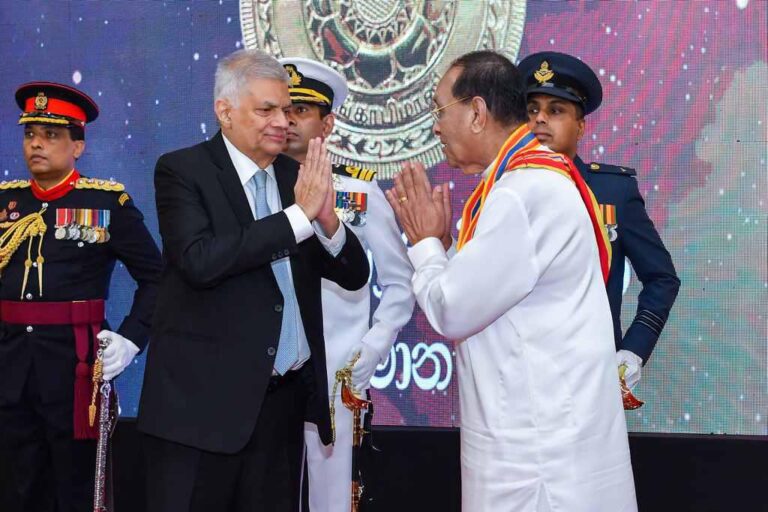
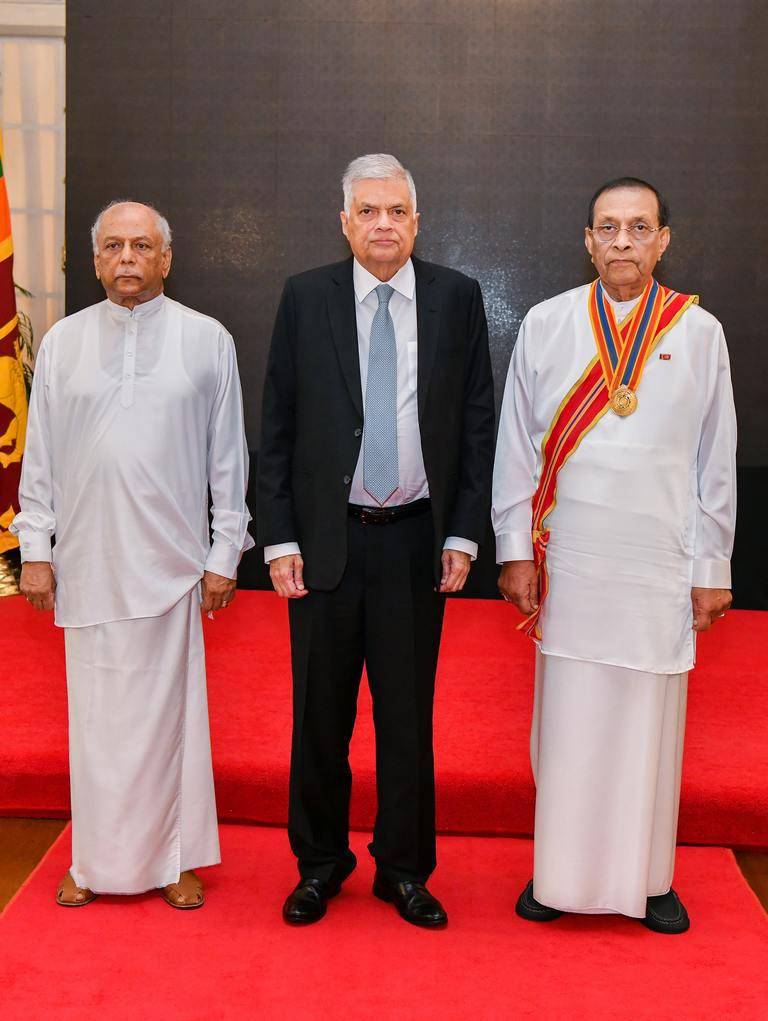
The ‘Sri Lankabhimanya’ Award, deemed the most prestigious lifetime award in the country, was conferred on Parliamentarian Deshabandu Karu Jayasuriya.
President Ranil Wickramasinghe presented the award to Jayasuriya this morning at the President’s Residence in Colombo.
It has been a tradition since 1986 to present a once-in-a-lifetime national award to Sri Lankan citizens and non-Sri Lankan citizens who have rendered outstanding service to the nation within the Democratic Socialist Republic of Sri Lanka. Accordingly, the Sri Lankabhimanya Award is the highest award given in this country.
It is also special that the ceremony held for the presentation of this award was the first state ceremony held there after the restoration of the President’s House in Colombo, which was severely damaged during the public protest on July 9.
SL-UK trade records £1.3 billion in 2022 before the new trading scheme
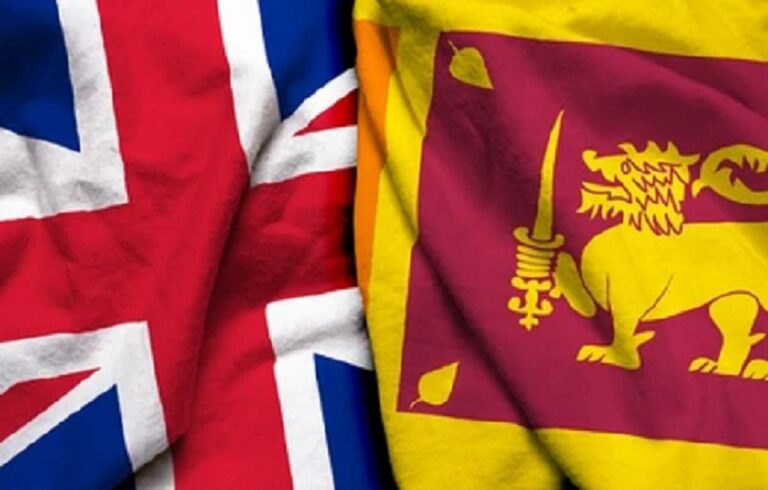
Sri Lanka is set to benefit from the UK’s new trade concessionary scheme Developing Countries Trading Scheme (DCTS) that will replace the GSP+ in that country and will be in force from 2023, finance ministry sources said.
The UK’s new Developing Countries Trading Scheme (DCTS) is one of the most generous sets of trading preferences of any country in the world, and will benefit Sri Lanka by boosting the economy and supporting jobs,as senior official of the ministry said.
Under the new scheme, Sri Lanka will continue to benefit from duty free exports to the UK on over 80 percent of export products while tariffs on over 150 additional products will also be removed.
According to the latest UK fact sheet on bilateral trade, total trade in goods and services (exports plus imports) between the UK and Sri Lanka was £1.3 billion, in current prices.
This was an increase in the four quarters to the end of Q3 2022, an increase of 10.2 percent or £124 million from the four quarters to the end of Q3 2021.
Of this £1.3 billion: total UK exports to Sri Lanka amounted to £336 million, in current prices, in the four quarters to the end of Q3 2022 (an increase of 10.2 percent or £31 million compared to the fourquarters to the end of Q3 2021).
Total UK imports from Sri Lanka amounted to £1.0 billion, in current prices, in the four quarters to the end of Q3 2022 (an increase of 10.2 percent or £93 million compared to the four quarters to the end of Q3 2021).
Sri Lanka was the UK’s 80th largest trading partner in the four quarters to the end of Q32022 accounting for 0.1 percent of total UK trade.
In 2021, the outward stock of foreign direct investment (FDI) from the UK in Sri Lanka was£309 million.
In 2021, the inward stock of foreign direct investment (FDI) in the UK from Sri Lanka was £11 million.
Sri Lanka’s access to the Generalized Scheme of Preferences (GSP) Plus was already under review for extension as the country failed to adhere to several of the commitments it made, mainly with regard to human rights.
GSP is an annual trade concession worth over US$ 500 million which has boosted Sri Lanka’s exports to EU member states mainly in the garments sector, a top forex earner.
The EU has stressed on several occasions that the island nation needs to uphold its commitments, particularly with regard to eradicating human rights violations in the country.
Recently Sri Lanka has fallen into trouble as it failed to implement several of the commitments undertaken including repealing the Prevention of Terrorism Act (PTA).
Can we celebrate the 75th Independence day of Ceylon when one community celebrates the other laments?
Dear Sinhala Brethren,
“We must learn to live together as brothers or perish together as fools” – Martin Luther King jr
We wish to live in a conflict-free Sri Lanka where we can join in to celebrate Island’s 75th Independence day as much as you do. Both communities lost thousands of lives and limbs and caused enormous pain and unimaginable suffering. We became poorer and beg the international community. Brothers and sisters, let us address our grievances and aspirations to end all conflicts. Let us rebuild our beautiful island where all feel equal and dignified.
Sri Lanka is our island too. How it has alienated the Tamils since Independence is a clear indication of that deliberate policy of discrimination that became constitutionalised and institutionalised. For us to celebrate independence as much as you do, we need our Sinhala brethren to address sincerely our longstanding grievances and aspirations now. Such acts of justice will not cause any harm to any other people. It will neither uproot anyone, restrict their freedom of movement nor deprive them of their rights in whatever form of devolution.
It is not at all about the separation of our beautiful island, but it is to ensure that the island celebrates undivided patriotism, powersharing is inevitable and reassuring the individual rights and collective rights of all the people through a plurinational democracy. Let us explore tried and tested models in the world that will be suitable for power sharing in Sri Lanka.
The conflicts were man-made in Sri Lanka. Worse when murder and mayhem took place in the name of peace & religion. Instead of addressing the underlying issues, the conflicts were allowed to deteriorate and then suppressed. Then it becomes a way of living and political culture. Let us be the ambassadors of goodwill. The pogroms and war have destroyed the country beyond repair. The effects of violence have not only bankrupted the country but brought the system to its knees. The state culture of violence permeated even those against violence. The mutual killings and destruction must end, apologies for the past atrocities endorsed and true acts of reconciliation shall prevail among all people. The politicians et al who robbed the people of their future are still at large, protected by the system.
The anger of future generations called for System Change and disposed of the most powerful despots from their positions. It could be regarded as the most peaceful revolution ever witnessed to dispose of the heads of government. It is the responsible conduct of those activists who stood by the people with lived experience at the forefront and pitched on peace and harmony that remains an admiration. In the same belief, we appeal to the peaceful, invigorating and generous communities to effect the necessary change peacefully on the Island.
The war-ravaged political doctrine has exposed the hegemony and lost its purpose. The same countries that supported the war efforts are calling for UN action because of the excesses that were carried out beyond International Humanitarian Law. Some countries the Sri Lankan called on to protect the sovereignty of Sri Lanka are violating our sovereignty and exploiting the economic situation. Let’s seek bilaterally acceptable universal solutions that can end unaccountability, violence, hunger and corruption with a new Social Contract that will address all past commissions and omissions. End the fear of persecution,
undemocratic governance and unacceptable expenditures. Whilst we starve we cannot allocate funds for a defence force that fights no enemy or a bloated government service sector that swallows all resources that are meant for people.
The remedies cannot be brought by the statutes alone. Devolution has been absorbed into the constitution but never implemented by the legislature or judiciary. Even agreements have been made since 1957 but all agreements and negotiations have been reneged or aborted and resulted in confrontations. The real change has to come from the hearts and minds of the people. History has documented the magnanimity of the Sinhalese people who stood firm risking their own lives to defend the people and their properties in 1958, 1977 and 1983 anti-Tamil pogroms though many hundreds and thousands were sadly maimed & massacred. The survivors and injured who were robbed of their dignity were sent by ships to Tamil Homeland from refugee camps in Colombo as the final solution for those victims. Their independence and identities are to be protected wherever they are and in the territory that has protected them. It is the essential element of the realisation of human rights, non-discrimination and equality. We believe in the new generation that Sri Lanka has produced beyond the ethnic divide to end
ethnic injustice.
Many of you have been visiting war-ravaged areas in the North-East and have seen for yourself the extent of the destruction the Tamil civilians were subjected to the brunt of the war. Mothers and fathers are still looking for their children. Children are still looking for their parents. Their lives have been destroyed but the Transitional justice and psychosocial support had been delayed for them. It’s a humanitarian crisis which needs an urgent and lasting solution addressing guarantees of non-recurrence. The delayed justice has taken the responsibility of justice to international fora as Sri Lanka remains the party to the crime.
It’s beyond any doubt that Sri Lanka is at a crossroad and need to be salvaged from its foundation i.e. politically and economically. We are ready, willing and able to work shoulder to shoulder with you all to salvage the country and it is high time we do away with the bloody past and overcome mistrust and hegemonic behaviour. Let’s come together to salvage this country, which was once a role model for many democracies around the world.
The injustice perpetrated over the years must be addressed to end the ongoing atrocity crimes, to embark on constitutional reforms to end the hegemony & unaccountability. The powersharing structure in the multi-ethnic and multi-national plural society of Sri Lanka is anticipated to address all ethnic conflicts. However, the power-sharing arrangement also demands a culture of impunity eradicated not only among the government but also among the people too. Sri Lanka also has to establish an independent judiciary and end state persecution by repealing the Prevention of Terrorist Act. The structure must be based on reparative justice that guarantees the non-recurrence of atrocity crimes and cannot be denied out of any absurd claims. The conflict resolution encompasses security sector reforms including vetting all defence forces that may have contributed to the mass atrocities of 1988-1990 among Sinhala and 2009 Mullivaikal massacre.
The People’s Struggle has created an opportunity for all the people to come together. The young generation has stood steadfastly for ethnic justice, accountability and reconciliation. The outside world demands inclusive democracy and constitutional and institutional formalities. This is an unmissable opportunity for the new agents of peace and democracy to accommodate the system change envisaged that can bring peace, prosperity and democracy. Their rights are guaranteed constitutionally through structural reforms, tax reforms, food security and most importantly physical security. Their independence and identities to be protected wherever they have been flourishing historically and the territory that has protected them. Let there be powersharing and collective sovereignty to unify the country!
Global Tamil Civil Society
([email protected])
04 passport fraudsters arrested
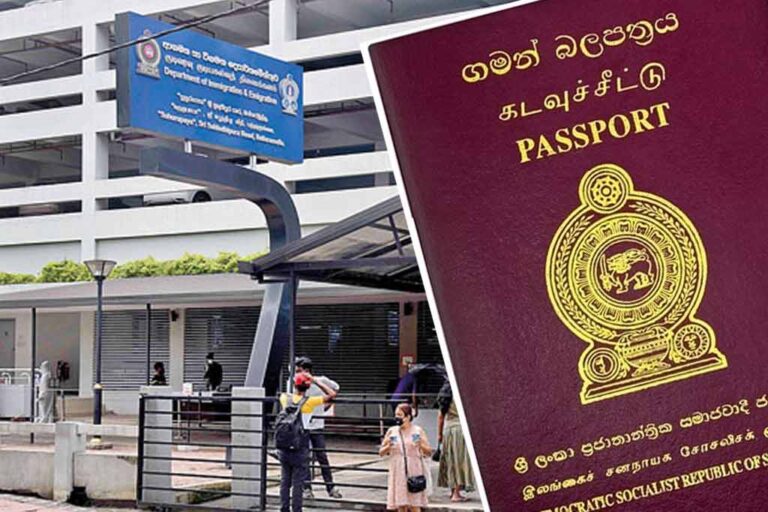
Thalangama police have arrested 4 people who are said to be brokers who were involved in deceiving people and obtaining fake documents by claiming that they can help people coming to get foreign passports from the Immigration Department’s foreign passport office in Battaramulla.
Four residents of Malambe, Wattala and Colombo 11 have been arrested.
It is said that they were arrested on February 1st under the charges of forging documents, extorting money from people and possessing foreign passports.
Talangama Police stated that operations will be continued to arrest brokers hanging around the Immigration Department.
Sri Lanka Original Narrative Summary: 03/02
- Venerable Mahanayakes of the Malwatte, Asgiriya, Ramanya and Amarapura Nikayas urge the President to desist from fully implementing the 13th Amendment to the Constitution, which would devolve police and land powers to Provincial Councils.
- Treasury Secretary instructs all Secretaries of Ministries, PCs, Heads of Departments, District Secretaries, Heads of State Corporations, Statutory Boards & Govt. owned companies to cut down a minimum of 6% from budgetary allocations for 2023.
- Chinese Foreign Ministry rejects US Under Secretary Victoria Nuland’s remarks that the terms given by China to SL for getting IMF debt relief are not sufficient: says the Exim Bank of China has already expressed support for debt sustainability and that Sri Lanka had responded positively and thanked China.
- Colombo Fort Magistrate Thilana Gamage releases Convener of Inter-University Students’ Federation Wasantha Mudalige on bail in connection with 3 cases.
- Reports emerge that India has allocated INR 150 crores or 1.5 bn (approx. LKR 6.7 bn) to Sri Lanka in its budget 2023, as “grants”: Sri Lanka’s estimated expenditure for 2023 is Rs.5,819 bn.
- CEB gives undertaking to Supreme Court that power cuts will not be implemented, until the petition filed by the Human Rights Commission is supported.
- President Ranil Wickremesinghe directs that 108 acres of land in the North which was under the custody of security forces, be released and distributed among 197 families on February 03: move said to honour pledge made by the President to release these lands prior to the 75th Independence Anniversary.
- Colombo Stock Exchange’s ASPI goes up by 72 points to close at 9,022: first time ASPI closed above 9,000 since 14th October 2022.
- Former Archbishop of Colombo, Most Reverend Dr. Oswald Gomis, 90, passes away.
- Sri Lanka Cricket appoints Olympic Silver medalist Susanthika Jayasinghe as the Consultant of Mentoring and Development of Women’s Cricket.
KBSL in partnership with VMware creates a vision for the future of work with VMware Workspace One
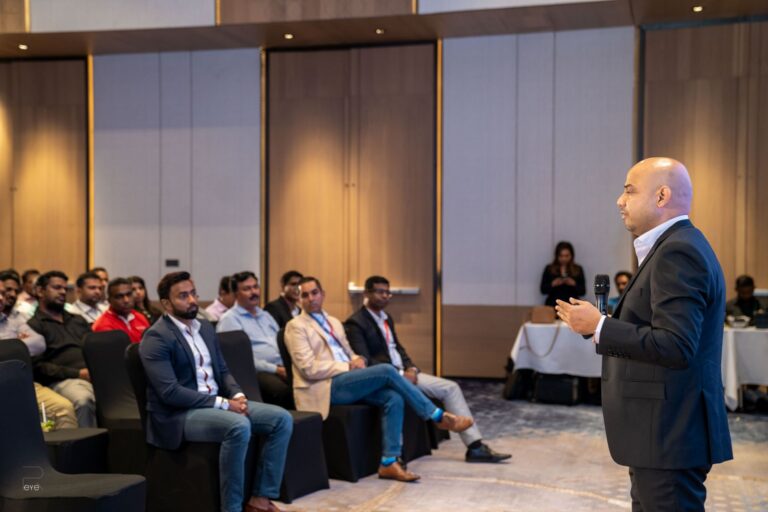
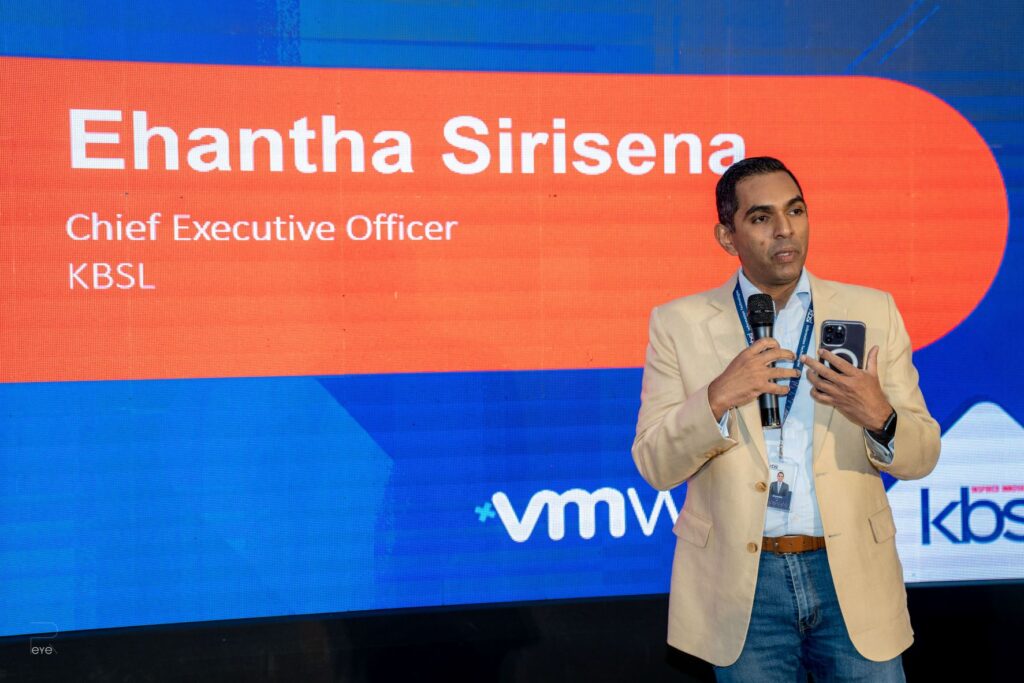
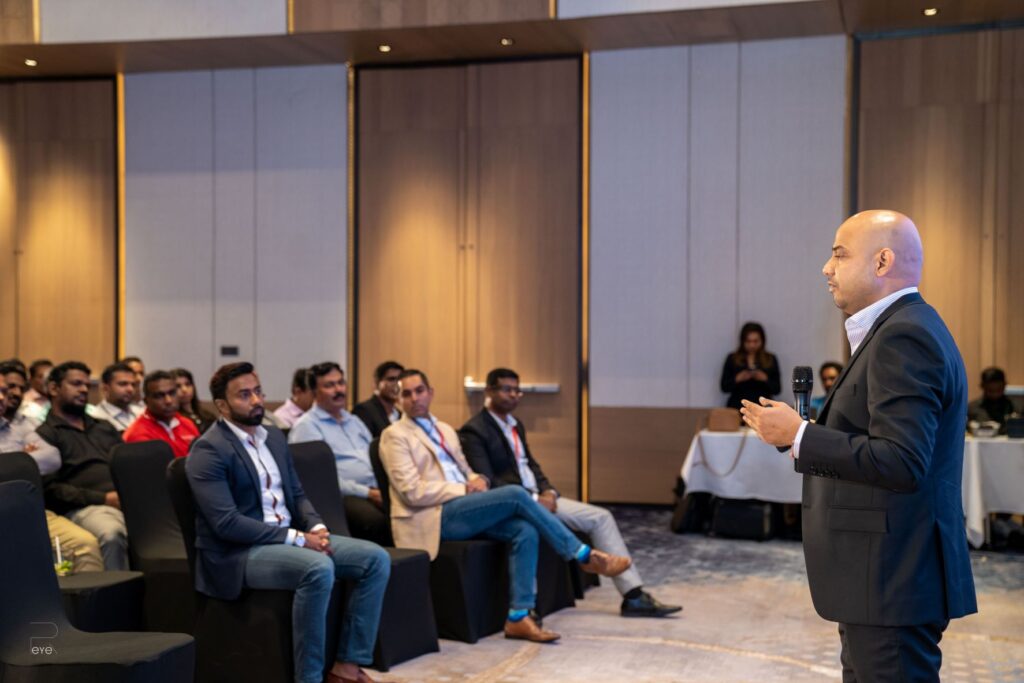
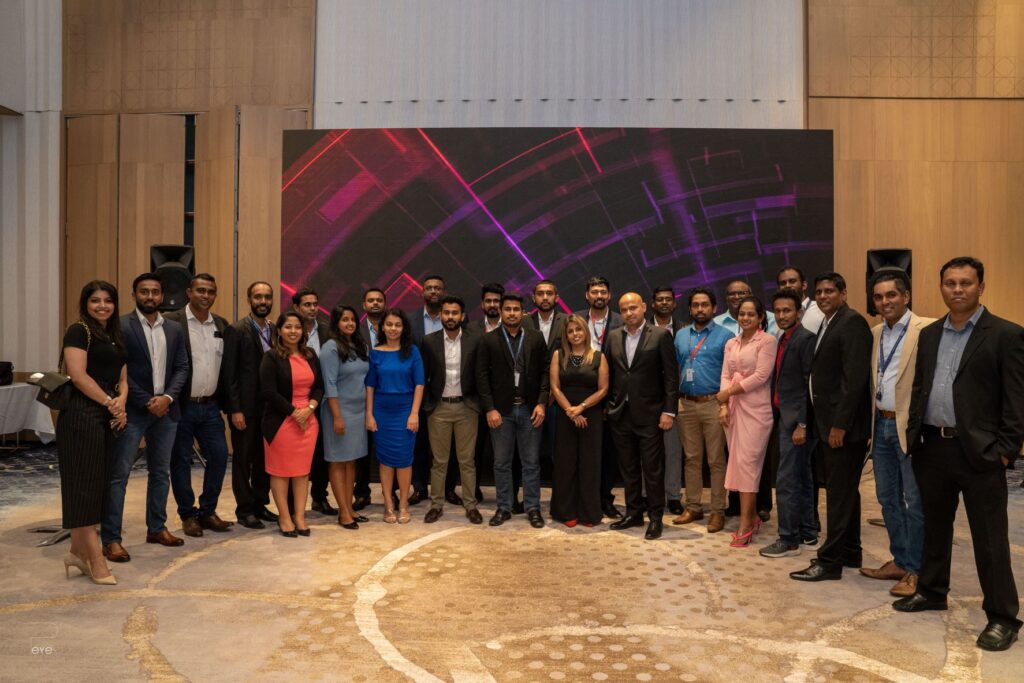
Photo Captions:
- Ehantha Sirisena – CEO of KBSL, welcomed the attendees and highlighted the importance of digital transformation in today’s business landscape.
- Asghar Reza – Regional Sales Manager for Digital Workspace in Asian Emerging Markets
- The team from KBSL Information Technologies and VMware.
KBSL Information Technologies (KBSL), a leading provider of IT solutions in Sri Lanka, collaborated with VMware to host an event focused on the latest advancements in VMware Workspace One. The event held on January 18th which was mainly targeting the BFSI, telco, government and education sectors was attended by a diverse pool of IT professionals and business leaders.
The event began with Ehantha Sirisena, CEO of KBSL, welcoming the attendees and highlighting the importance of digital transformation in today’s business landscape. He also spoke about the role of KBSL in helping customers to stay competitive and stay ahead of the curve by providing the latest IT solutions and technologies.
Next was the keynote presentation by Asghar Reza, Regional Sales Manager for Digital Workspace in Asian Emerging Markets, who provided an overview of the VMware Workspace ONE platform and its capabilities. He highlighted how the platform can help organizations to easily manage and secure all their end-user devices, apps, and data from a single console, while also ensuring that all data is secure and compliant with industry regulations.
M. S. Raj – CTO of KBSL, took the stage next and highlighted on KBSL’s expertise in implementing VMware Workspace ONE in various enterprise customers in Sri Lanka. He discussed the value it brings to the customer by providing a unified endpoint management solution, enabling employees to work from anywhere, and providing a secure environment for the customer’s data.
One of the major highlights of the event was the customer testimonials from the attendees who have already implemented Workspace ONE in their organization. They shared their experience of how it has helped them to streamline their IT operations, improve productivity, and increase security. The event also provided an opportunity for attendees to network and connect with other IT professionals and business leaders in the industry.
As a leading systems integrator in Sri Lanka with over 35 years of industry experience, KBSL has established themselves as the partner of choice for companies looking to enhance their business processes. Their team of experts, technical competence and professionalism are the key factors of success in the industry. KBSL is committed to providing equal opportunity and diverse work environment for their employees and believe that diversity is a strength.
The event held at Courtyard by Marriott was a great success and provided valuable insights into the capabilities and benefits of VMware Workspace ONE. KBSL plans to host more such events in the future to help educate and inform customers about the latest IT solutions and technologies available in their technology offerings.
Dates set for the postal voting
The Election Commission has announced the dates for the postal voting in the local government elections.
Accordingly, the Election Commission says that the postal votes can be held on February 22, 23 and 24.
11 Ambassadors and 6 High Commissioners presented credentials to the President
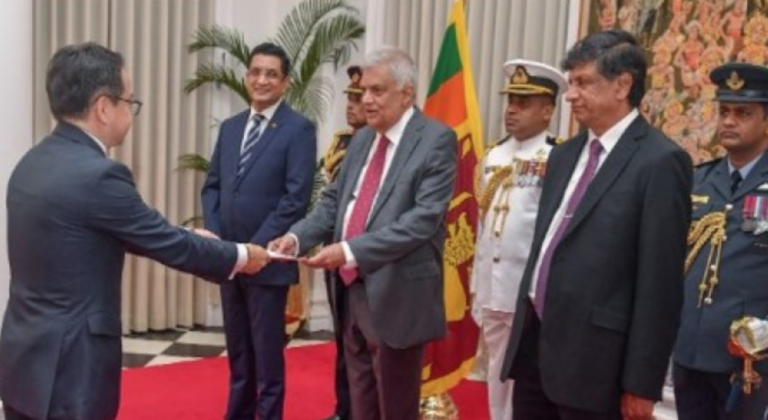
1 Ambassadors and 6 High Commissioners presented credentials to the President
Eleven newly appointed Ambassadors and six High Commissioners to Sri Lanka presented their credentials to President Ranil Wickremesinghe this afternoon (02) at the Presidential Palace in Kandy.
The Ambassadors have been appointed to Cote d’Ivoire, Uruguay, Mongolia, Serbia, Sudan, Armenia, North Macedonia, Slovakia, the Czech Republic, Sweden, and Ecuador, while High Commissioners have been appointed to Jamaica, Tanzania, Malawi, Canada, Malaysia, and the Maldives.
The complete list of the newly appointed Ambassadors and High Commissioners is listed below:
1. Mr. N’dry Eric Camille
Ambassador-designate of the Republic of Cote d’Ivoire based in New Delhi
2. Mr. Jason K. Hall
High Commissioner-designate of Jamaica based in New Delhi
3. Mr. Albeto Guani Amarilla
Ambassador-designate of the Oriental Republic of Uruguay based in New Delhi
4. Mr. Ganbold Dambajav
Ambassador-designate of Mongolia based in New Delhi
5. Ms. Anisa Kapufi Mbega
High Commissioner-designate of the United Republic of Tanzania based in New Delhi
6. Mr. Sinisa Pacic
Ambassador-designate of the Republic of Serbia based in New Delhi
7. Mr. Leonard Mengazi
High Commissioner-designate of the Republic of Malawi based in New Delhi
8. Mr. Abdalla Omer Elhusain
Ambassador-designate of the Republic of Sudan based in New Delhi
9. Mr. Eric Walsh
High Commissioner-designate of Canada based in Colombo
10. Mr Youri Babakhanian
Ambassador-designate of the Republic of Armenia based in New Delhi
11. Mr. Slobodan Uzunov
Ambassador-designate of the Republic of North Macedonia based in New Delhi
12. Mr. Robert Maxian
Ambassador-designate of the Slovak Republic based in New Delhi
13. Mr Badil Hashim Bin Adam
High Commissioner-designate of Malaysia based in Colombo
14. Dr. (Ms) Eliska Zigova
Ambassador-designate of the Czech Republic based in New Delhi
15. Mr. Jan Thesleff
Ambassador-designate of the Kingdom of Sweden based in New Delhi
16. Mr. Francisco Teodoro Guevara
Ambassador-designate of the Republic of Ecuador based in New Delhi
17. Mr. Ali Faiz
High Commissioner-designate of the Republic of Maldives based in Colombo
Minister of Foreign Affairs Ali Sabri and President’s Secretary Mr Saman Ekanayake were also present on this occasion.
Following the acceptance of their credentials, President Ranil Wickremesinghe engaged in cordial discussions with the new Ambassadors and High Commissioners.
Senior Advisor to the President on National Security and Chief of Staff to the President Mr Sagala Ratnayake, Secretary to the Ministry of Foreign Affairs Mrs Aruni Wijewardane and a group of Kandy District Parliamentarians were also present at the event.
President’s Media Division (PMD)
Sri Lanka gets ready to go solar with Indian and ADB credit lines

In a bid to overcome the energy crisis, the Government has decided to equip a total of 11,219 State properties including education, religious and other buildings with rooftop solar panels.
The Credit Line of $ 100 million extended by the Indian Government for Renewable Energy, will be used for this purpose, Power and Energy Minister Kanchana Wijesekera announced via Twitter. As per him, 827 sites have already been surveyed.
The sites include; 374 National Schools, 25 State Universities, 20 National Colleges of Education, eight Teacher Training Colleges, 20 Technical Colleges (VTA/NAITA), 25 District Secretariats, 331 Divisional Secretariats, 79 Information Technology and Distance Learning Hubs (ITDLHs), 220 Tri-Forces and Police buildings, and 824 Piriwens.
In addition, a 5Kv solar system each for 9,176 other religious institutes and other key Government buildings will be provided.
Minister Wijesekera also said a separate program is being implemented via the Provincial Councils and the Ministry of Health to include all the other schools and hospitals keeping in line with the solar panel initiative.
Asian Development Bank (ADB) is also supporting Sri Lanka’s bid to increase the use of solar power and other renewable energy sources in providing electricity to the whole country and meet its commitment to the Paris Agreement on climate change.
The government’s Battle for Solar Energy program envisions 1000 megawatts of solar power generation capacity by 2025—all from the rooftops of homes and businesses.
ADB approved a US $50 million loan for Sri Lanka’s Rooftop Solar Power Generation Project, which would finance the development of rooftop solar photovoltaic systems and support the government’s target to increase the share of nonconventional renewable energy generation in Sri Lanka’s power generation mix.
The project provided the credit line that would enable businesses and households to finance the installation of solar PV generation facilities atop their houses and building.
The Ministry of Finance is managing the credit line, in close collaboration with the Ministry of Power, and Sri Lanka Sustainable Energy Authority. Funds are channeled to the beneficiaries through selected participating financial institutions.
To ensure the smooth implementation of the investment project, ADB provided $1 million for project readiness activities. Financing came from ADB’s Asia Clean Energy Fund under the Clean Energy Financing Partnership Facility.
Project readiness activities included the preparation of technical guidelines and standards to be used in rooftop solar installations and the creation of a pipeline of bankable subprojects through the participation of financial institutions.