Home Blog Page 1832

CB SL still to evaluate the impact of high interest rates on banks

0

The Central Bank of Sri Lanka (CBSL) continues maintaining its increased high interest rates without compelling the government to implement economic reforms as soon as possible with the aim of minimizing their impact on the country’s production sector.

High interest rates usually have a negative impact on the stock market. Those who have a deep understanding of managing banks will know this very well.

The impact of these high borrowing rates will be seen in a few months. Meanwhile the Government is struggling to pay for imports of essential goods, including fuel, essential food and medicine. The high interest rates have had a huge impact on consumption and investment.

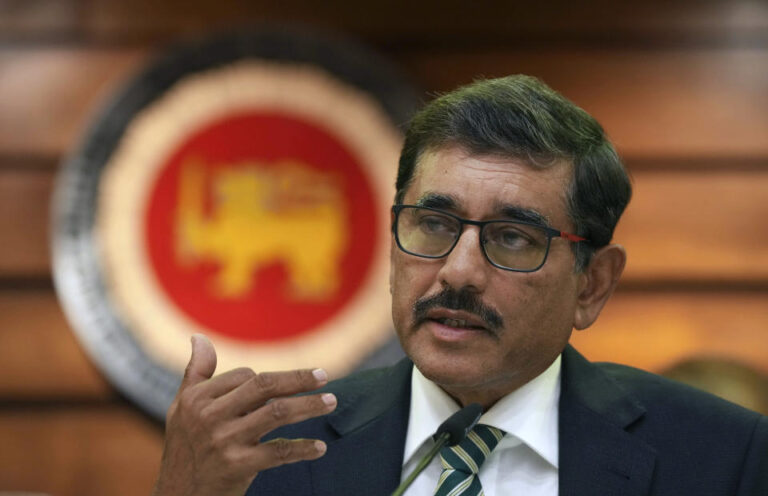
The Central Bank is still to evaluate the impact of high interest on the banking sector although its head,Nandalal Weerasinghe is talking big about it claiming high interest rates are aimed at controlling inflation.

Deputy Governor of the bank Yvette Fernando told journalists at the Monetary policy review media briefing last Thursday that currently because of the moratorium in place the Central Bank has not had a proper assessment of the banking system.

The central bank plans on conducting a diagnostic study on the big banks and if there is a requirement of capital, that they would have to re-capitalize.

The board of the Central Bank has permitted major banks to use their capital buffers and also to stagger impacts to the balance sheets because of interest rate changes.

The bank pledged to continue monitoring the changes in interest rates in order to prevent it from affecting the banking system

The financial sector has to be managed carefully given high exposures to the public sector Ms Fernando disclosed .

The necessary macroeconomic adjustments may initially adversely affect growth and poverty, but will correct the macroeconomic imbalances, help regain access to international financial markets, and build the foundation for sustainable growth. Mitigating the impacts on the poor and vulnerable remain critical during the adjustment.

Reductions in poverty will require an expansion of employment in industry and services and a recovery in the real value of incomes.

On the upside, a credible reform program supported by financing from international partners could enhance confidence and attract fresh capital inflows, she added.

However, several eminnt economists said , for a developing economy, the interest rates should be kept low, as taking loans at 20-25% will push businesses to maintain higher profit margins, which Sri Lanka is experiencing now.

They noted that reforms should be implemented with the aim of minimizing the impact of higher interest rates on the production sector of the country.

Moreover, based on the financial results of local banks for the second quarter of 2022, interest expenses of leading private banks grew by 25-50% for the first half of 2022 compared to the same period in 2021, while the State-owned Bank of Ceylon saw interest expenses increase by 65%.

In the update of the International Monetary Fund’s (IMF) World Economic Outlook, it asked central banks worldwide to raise interest rates, warning that the global economy is nearing a recession, as it forecasts the economy to slow down to 3.2% in 2022 and 2.9% in 2023, with major economies such as the US, China, and Europe stalling.

Motor traders cry foul over using used electric cars in Sri Lanka

0

The Ceylon Motor Traders Association (CMTA), the most senior automotive association in South Asia, have raised serious concerns about the importation of used Electric Vehicles to Sri Lanka. In order to minimize the negative impact to the consumer, environment, society, and the economy, it is imperative that the country imports EVs which are directly shipped by the manufacturer with the recommendation for this tropical climate.

EVs built for colder climates may not be suitable for tropical regions as they might not have the required HV battery cooling systems.

The CMTA further warns that EVs purchased and imported through importers who are not the agents for the respective brand, might not come with a proper warranty cover to protect the consumer.

Used EVs that are shipped over to Sri Lanka may have HV batteries which could have damages that is not visible externally. Manufacturers’ warranties are a minimum of 5 years for passenger cars and 3 years for two-wheelers, in order to protect the consumer’s interest.

Another one of the CMTA’s biggest concerns is the disposal High Voltage (HV) batteries, as it can be extremely hazardous to both the environment and ground water systems,

if not disposed of properly. Therefore, the CMTA recommends that EV importers should be signed up with a battery recycling/ re-exporting company Due to the impact that improper disposing of HV batteries and other components may cause, it is also important to establish a legal framework to prosecute people who do so.

It is important to note that the landed cost of an HV battery could vary from Rs.5 million upwards for most EVs, or approximately 50% of the CIF value of the vehicle.

It is therefore imperative that any EVs imported into the country must be imported within 6 months of manufacture, as it would negate the negative impacts HV batteries might have.

Charaka Perera, Chairman of the CMTA said, ‘It is imperative that we encourage the importation of Brand New EVs directly from the manufacturer as opposed to used ones.

Vehicle electrification will bode very well for Sri Lanka, and we must ensure that the necessary steps are taken to ensure these vehicles are imported properly and that they do not pose environmental or economic threat to the country.”

The CMTA is the only association in the country that has access to global manufacturers of EVs and represents them in Sri Lanka and urges the public to educate themselves of all aspects prior to purchasing an EV.

Such awareness will enable them from facing issues which were faced by consumers who bought certain EV models during the heavy influx of EVs in 2014. Additionally, CMTA has entered strategic partnerships with Sri Lanka Insurance Corporation (SLIC), HNB Leasing, and SLT-Mobitel as Annual Corporate Partners of CMTA for planned future initiatives

Sri Lanka Imports in August record a four-month high

0

Sri Lanka Imports in August have hit a four-month high and marked the fourth consecutive monthly gain despite restrictions and the forex crisis

As per Central Bank data imports in August amounted to $ 1.48 billion highest since the April figure of $ 1.7 billion.

Imports have also grown month-on-month since May. In July imports were $ 1.28 billion, $ 1.24 billion in June and $ 1.45 billion in May.

However, year-on-year, August imports were down by 12% and CBSL said it was the sixth consecutive month dip year-on-year.

CBSL said in August a decline in expenditure was observed in investment goods and non-food consumer goods, while an increase was recorded in imports of intermediate goods and food and beverages.

Import expenditure on a cumulative basis from January to August amounted to $ 12,801 million, which is a decline of 4.6% (y-o-y).

Considering the need to prioritize essential imports amidst a shortage of forex liquidity, the Government tightened import restriction measures on non-urgent imports during August, which, however, were partially relaxed in September.

“Import expenditure is showing a tendency to increase on a month-on-month basis, since bottoming out in June 2022, which prompted the Government to further tighten import restrictions in August 2022 in order to preserve forex for essential imports, although some of which were relaxed in September 2022,” CBSL said.

Expenditure on the importation of consumer goods declined by 28.7% in August, compared to August 2021, driven by a decline in expenditure on non-food consumer goods despite an increase in expenditure on food and beverages.

The decline in import expenditure on non-food consumer goods was observed in all subcategories, with a notable drop in imports of medical and pharmaceuticals (mainly, vaccines), telecommunication devices (mainly, mobile telephones) and home appliances (mainly, televisions).

In contrast, expenditure on the importation of food and beverages increased by 17.2% in August (y-o-y), with a substantial share of the increase being contributed by the imports of cereals and milling industry products (primarily, rice), and sugar.

However, expenditure on dairy products (mainly, milk powder), seafood (mainly, dried and fresh fish), oils and fats (mainly, coconut oil), vegetables (mainly, big onions) and fruits declined in August, compared to August 2021.

Expenditure on the importation of intermediate goods increased by 2.6% in August, compared to August 2021, mainly driven by fuel, textiles and textile articles (mainly, fabrics) and fertilizer (mainly, urea).

Further, import expenditure on chemical products; diamonds and precious stones and metals (primarily, industrial diamonds); paper and paperboard and articles thereof; and rubber and articles thereof also recorded an increase during August, compared to August 2021.

Meanwhile, many other types of intermediate goods recorded a notable decline, including base metals (mainly, iron and steel), wheat and maize, agricultural inputs (mainly, animal fodder), vehicle and machinery parts, etc.

However, import expenditure on fuel, which consists of crude oil, refined petroleum and coal, increased by 10.2% (y-o-y) to $ 389 million in August, and the increase was attributed to higher average import prices despite lower import volumes of crude oil and refined petroleum. The average import price of crude oil was $ 114.71 per barrel in August, compared to $ 74.88 per barrel in August 2021.

IMF compels Sri Lanka to comply with all of its applicable policies

0

The International Monetary Fund (IMF) is waiting for Sri Lanka to comply with all the applicable IMF policies before further steps can be taken.

an emailed response to Daily Mirror, Peter Breuer, Senior Mission Chief for Sri Lanka and Masahiro Nozaki, Mission Chief for Sri Lanka, said that on 1st September 1 the IMF reached a staff-level agreement (SLA) with Sri Lanka on a 48-month arrangement under the Extended Fund Facility of about US$2.9 billion.

“The SLA is ad-referendum i.e., subject to IMF Management and IMF Executive Board approval. Once all applicable IMF policies are complied with (including taking prior actions and restoring debt sustainability consistent with program parameters),

IMF management recommends to the IMF Executive Board to approve an IMF arrangement. Once the IMF arrangement is approved, the member will receive financing under in tranches subject to the IMF Executive Board’s regular review of the member’s policy implementation,” the IMF said.

The IMF also said that according to the IMF policies, the Memorandum of Economic and Financial Policies (MEFP), which describes the proposed policy measures in the SLA in detail, will be published shortly after the Board approval of the EFF arrangement.

Peter Breuer and Masahiro Nozaki said that in the interest of transparency, the IMF issued a press release on September 1, and held a press conference on the same day, to disseminate key elements of the SLA.

The Sri Lankan authorities disseminated further details in a presentation to creditors on September 23.

ri Lanka has decided to send a delegation for the annual summit of the International Monetary Fund and the World Bank.

The 2022 Annual Meetings of the International Monetary Fund (IMF) and the World Bank Group (WBG) will take place in person from Monday, October 10, through Sunday, October 16 in the IMF and World Bank Group headquarters, in Washington DC.

Sri Lanka’s delegation will be led by Acting Finance Minister Shehan Semasinghe.

He said the Governor of the Central Bank of Sri Lanka, the Finance Secretary and several others will accompany him.

The Acting Finance Minister said that the 2022 Annual Meetings of the International Monetary Fund (IMF) and the World Bank Group (WBG) will be of paramount importance for Sri Lanka to restructure its debt, and also obtain financial assistance from the IMF.

The recent IMF agreement requires debt restructuring with all external and private creditors.

Although the country is eyeing a December 2022 deadline for the bailout, the debt relief measures throw this timeline into doubt. Japan has been endowed with the responsibility of holding talks with Sri Lanka’s major bilateral creditors such as India and China.

However, the diplomatic coldness between India and China, along with China’s hidden loans and Belt and Road Initiative (BRI) ambitions in Sri Lanka, might dampen the debt restructuring process.

World Bank says economic reforms and debt restructure vital for Sri Lanka

0

Sri Lanka’s economic crisis is deepening with unsustainable debt and a severe balance of payment crisis on top of lingering scars of the COVID-19 pandemic. Debt restructuring and the implementation of a deep reform program are critical for Sri Lanka’s economic stabilization, says the World Bank in its twice-a-year update, underscoring the need for Sri Lanka to build resilience.

Released today, the latest South Asia Economic Focus,Coping with Shocks:Migration and the Road to Resilience, projects regional growth to average 5.8 percent this year – a downward revision of 1 percentage point from the forecast made in June.

This follows growth of 7.8 percent in 2021, when most countries were rebounding from the pandemic slump.

While economic distress is weighing down all South Asian countries, some are coping better than others. Exports and the services sector in India, the region’s largest economy, have recovered more strongly than the world average while its ample foreign reserves served as a buffer to external shocks.

The return of tourism is helping to drive growth in Maldives, and to a lesser extent in Nepal—both of which have dynamic services sectors.

The combined effects of COVID-19 and the record-high commodity prices due to the war in Ukraine took a heavier toll on Sri Lanka, exacerbating its debt woes and depleting foreign reserves

Plunged into its worst-ever economic crisis, Sri Lanka’s real GDP is expected to fall by 9.2 percent this year and a further 4.2 percent in 2023.

High commodity prices also worsened Pakistan’s external imbalances, bringing down its reserves. After devastating climate-change-fueled floods submerged one-third of the country this year, its outlook remains subject to significant uncertainty.

Also released today as a companion piece is the latest Sri Lanka Development which highlights the poverty and welfare impacts of the crisis and the role of social protection in protecting the vulnerable populations.

“Protecting the vulnerable is critical as Sri Lanka fast tracks deep reforms to navigate the deepening economic crisis.

The crisis calls for immediate action to protect the poorest and most in need while also focusing on strengthening the social protection system,” said Faris H. Hadad-Zervos, World Bank Country Director for Maldives, Nepal and Sri Lanka.

“In the face of the economic crisis, poverty estimates doubled to 25.6 percent between 2021 and 2022, increasing the number of people living in poverty by 2.7 million. Sri Lanka will need to expand employment in industry and services and recover real value of incomes to mitigate the impacts of the crisis, and build long-term resilience of its people. ” added Hadad-Zervos

He underscored the need for a coordinated approach to support the poor and vulnerable. The South Asia Economic Focus also put a spotlight on Sri Lanka’s economic crisis, drawing lessons from the Asian Financial Crisis of 1997.

New Direct taxes to collect more revenue from the rich to benefit poor

0

Sri Lanka’s cash-strapped government has announced a taxation overhaul to boost revenue amid the country’s crippling economic crisis, hiking value added taxes and corporate income tax, and slashing the relief given to individual taxpayers.

Cash starved government now strives to introduce more direct taxes on par with international practices with the aim of increasing tax revenue at least by 15 percent , Minister of State for Finance Ranjith Siyambalapitiya disclosed.

He added that the percentage of direct tax should be increased by 15 percent to 35 percent from the percent rate of 20 percent in the short term.

The Finance Ministry is working on this subject at present to introduce some direct taxes soon before or at the presentation of the upcoming 2023 budget, he revealed.

Minister Siymabalapitiya was of the view that at present rich or poor is paying the same amount of tax for goods and services and this should be changed even to some extent.

The short term solution would be the introduction of more direct taxes catching the rich into the tax net, he pointed out.

Finance Ministry’s budget department is exploring the possibility of introducing Wealth tax which was in the pipeline for several years, new super gain tax, new capital gain tax, modified surcharge tax and several other novel direct taxes.

Considering complaints and appeals of Small and Medium scale Enterprises and entrepreneurs, the State Minister for Finance Ranjith Siyambalapitiya has appealed to heads of state banks to provide some relief when recovering their loans or granting new loans under the present high interest rate regime while protecting the banks liquidity positions.

He made this request at a recent meeting of heads of state banks, senior treasury and other officials.

In an initial step towards the increasing of direct taxation , Sri Lanka’s budget for 2022 has proposed new taxes after a value added tax cut in 2019 for ‘fiscal stimulus’ devastated state revenues, triggering money printing which has resulted in a balance of payments crisis.

An increase in the standard corporate income tax rate to 30% (from 24%) has come into effect from 1 October 2022 and a hike in the concessionary income tax rate to 15% (from 14%)—effective has also imposed from that date.

Action has been taken to do away with of various tax holidays granted under the Inland Revenue (Amendment) Act No.10 of 2021 aqnd remove additional 100% deduction applicable for 2022/23 tax year granted for marketing and communication expenses effective 1 April 2023

Imposition of income tax on dividend payment by a resident company to a non-resident person was among the new proposals effective 1 April 2023.

Idalgashinna – Thotupola Kanda area temporarily prohibited for tourists

0

The Idalgashinna – Thotupola Kanda area, which has attracted a lot of local and foreign tourists, has been designated as a risk zone and it has been temporarily prohibited to visit it and pitch tents at night.

Sri Lanka Podujana Peramuna Member of Parliament Sudarshan Denipitiya stated that this decision was taken due to the continuous occurrence of illegal activities, fatal accidents, safe fires and environmental pollution by leaving non-biodegradable waste in the area.

All banks and the CSE closed on Monday

0

All banks & the Colombo Stock Exchange will be closed on Monday (10) in lieu of the bank holiday falling on Sunday (09)

SRI LANKA ORIGINAL NARRATIVE SUMMARY: 08/10

0
  1. World Bank says SL faces unsustainable debt and severe balance of payment crisis: also says it will have a negative impact on growth and poverty: warns implementation of a structural reform program is critical for economic stabilisation.
  2. Supreme Court grants “leave to proceed” in FR petitions filed by Transparency International and others regarding economic crisis: orders Auditor General to submit report on Monetary Board’s decisions regarding Rupee value, seeking IMF assistance, and settlement of ISBs: also directs Auditor General to submit Reports on Financial and Debt management.
  3. Colombo Lotus Tower and “Singapore Go Bungy” sign contract to start “bungee jumping” for the first time in Sri Lanka: jump from the Lotus Tower to be the world’s highest bungee jump.
  4. Government denies that notorious drug kingpin Nadun Chinthaka Wickramarathna alias “Harak Kata”, who was in the custody of Dubai Police was released due to the Defence Ministry’s delay in submitting file from Colombo to Dubai.
  5. CPC oil refinery to close from today: crude oil shipment delayed because of Forex shortage: order placed for 3 shipments but payments made only for 2: Energy Minister Kanchana Wijesekera says there’s no reason to panic as there are sufficient stocks.
  6. CB Governor Dr Nandalal Weerasinghe says business community is not affected by high interest
    rates: asserts finance cost of a business is at most 10% only: 3 month T-Bill rates are now over 32% per annum.
  7. Parliament debate on the 2nd reading of the 22nd Amendment Bill to Constitution to be on 20th and 21st October: dates agreed at the Consultative Committee on Parliamentary Affairs.
  8. Colombo Stock Exchange marks 3rd consecutive week of losses and highest in recent times: investor sentiment tumbles on macro issues: ASPI down 8.9%: daily turnover averages Rs.2.9 bn.
  9. August imports at USD 1.48 bn hit 4-month high: marks 4th consecutive monthly gain despite restrictions and forex crisis: however, YoY, imports down by 12%.
  10. CB Governor Dr Nandalal Weerasinghe refuses to give dates or particulars regarding IMF staff level agreement: says he is maintaining ‘radio silence’: also says discussions are going on with creditors.

A presidential election to be held next year?

0

Sources say that President Ranil Wickramasinghe is focused on holding a presidential election next year (2023).

Political sources stated that several rounds of discussions have already been held regarding the legal conditions and other related requirements.

It was also reported that the Sri Lanka Podujana Peramuna will not field a candidate for that presidential election.

Accordingly, it is said that President Ranil Wickramasinghe and Opposition Leader Sajith Premadasa will compete as the two main candidates.

Sources also said that Janatha Vimukthi Peramuna leader Mr. Anura Kumara Dissanayake and 43rd division leader Mr. Patali Champika Ranawaka will also appear as other main candidates for the presidential election.