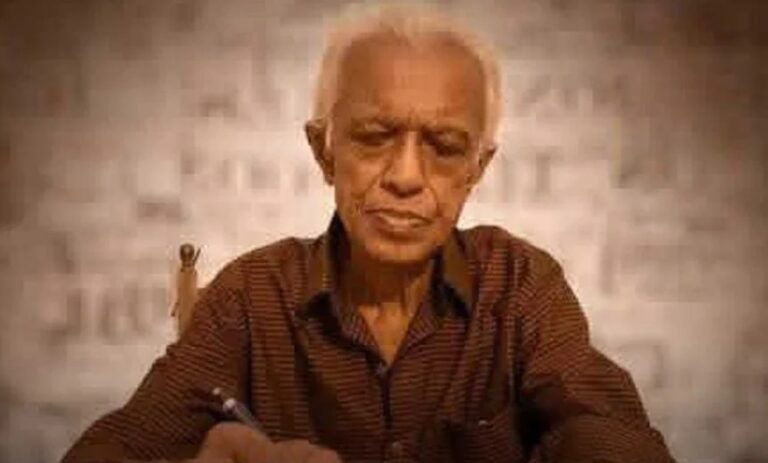
January 05, Colombo (LNW): Veteran journalist and acclaimed lyricist Chandrasena Thalangama passed away last night at the age of 71, leaving behind a distinctive legacy that bridged literature, journalism and modern Sri Lankan music.
Born in Thalangama in 1944, he entered the field of journalism in 1980, writing under the name Thalangama Chandrasena. For decades, his thoughtful prose and sharp observations earned him respect in media circles, even as another creative passion quietly took shape alongside his reporting.
Though he had been writing lyrics drawn from personal experiences and social realities for many years, they remained largely unnoticed until musician Charitha Atalage recognised their depth and musical potential. That collaboration marked a turning point, with his debut song Sansaraye Ma released in 2017, launching an extraordinary second career at a stage of life when many consider slowing down.
From that moment, Chandrasena Thalangama’s words struck a powerful chord with younger audiences. Songs such as Kuveni, Dura Akahe, Navum Kale, Dole and Duwe by Charitha Atalage, Soya Ava and Naadagam Gee by Ridma Weerawardena, and Radhavani by Supun Perera showcased his ability to move effortlessly between themes of love, history, identity and contemporary society.
He was particularly admired for refining lyrics that once relied on crude or dated language, reshaping them into thoughtful, poetic expressions without losing their popular appeal. His work demonstrated that meaningful songwriting could still thrive in modern music.
Chandrasena Thalangama’s journey stands as a rare example of a creative dream fulfilled later in life. His influence on Sri Lanka’s contemporary music scene endures, carried forward through songs that continue to resonate deeply with listeners across generations.
Renowned Journalist-Turned Lyricist Chandrasena Thalangama Passes Away
New School Term Begins With Revised Start Dates and Updated Teaching Guidelines
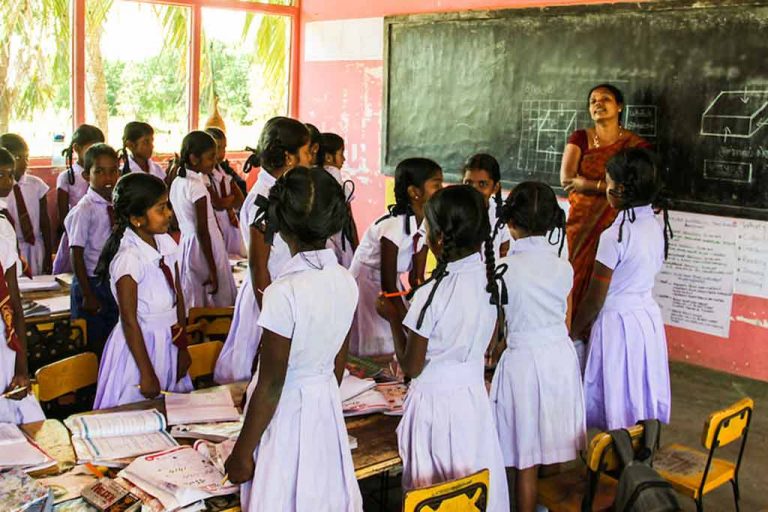
January 05, Colombo (LNW): Schools across the country resume the first term today (05) for most grades, though students in Grades 1 and 6 will begin under a staggered schedule introduced as part of recent education reforms.
The Ministry of Education announced that while the academic term opens for the majority of students, Grade 6 classes will commence later this month, on the 21st. For Grade 1 pupils, today will be limited to an orientation programme designed to help young learners settle into the school environment, with formal lessons set to begin on the 29th.
Alongside the revised term schedule, the Ministry has issued a new circular outlining changes to teachers’ workloads. Under the updated guidelines, teachers are expected to handle 35 periods per week in total, with at least 28 of those devoted to classroom instruction, excluding approved duty concessions.
Supervising teachers must conduct a minimum of 14 teaching periods weekly, while assistant principals and deputy principals are required to cover at least 10 and eight periods respectively.
In addition, adjustments have been made to the daily timetable for Muslim schools. These schools will continue to operate on Mondays from 7.30 a.m. to 1.30 p.m. From Tuesday to Thursday, classes will run until 2.15 p.m., with a short interval set aside around midday for religious observances. On Fridays, the school day will conclude at 11.15 a.m., allowing students and staff time to attend mosque, with only four teaching periods scheduled for the day.
Education officials say the changes are intended to better balance academic requirements, administrative responsibilities and religious considerations within the school system.
CID Asked to Furnish Details of UK Probe Into Alleged Misuse of State Funds
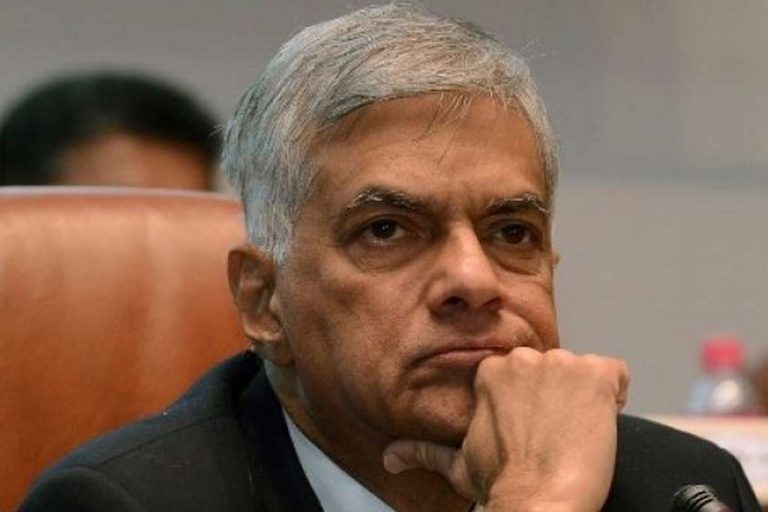
January 05, Colombo (LNW): The Criminal Investigations Department (CID) has been directed to provide updated information on follow-up inquiries carried out by a team that travelled to the United Kingdom as part of an investigation into the alleged misuse of public funds connected to a foreign visit by former President Ranil Wickremesinghe.
Media reports indicate that the Attorney General has requested the CID to submit relevant findings and extracts from the additional investigations undertaken in the UK, relating to allegations that state funds amounting to Rs. 16.6 million were improperly spent during the overseas tour in question. The request was conveyed through a formal letter issued to the CID Director and signed by Deputy Solicitor General Wasantha Perera.
It has also been noted that the Attorney General had earlier informed the Colombo Fort Magistrate’s Court of plans to seek the cooperation of British authorities through Mutual Legal Assistance, in line with the Mutual Assistance in Criminal Matters Act.
In his correspondence, the Attorney General has reportedly expressed concern that the officer leading the investigation failed to report to the AG’s Department despite being instructed to assist with the preparation of required documentation. The letter further highlights that the CID delegation proceeded to London without securing prior Mutual Legal Assistance approval from the UK, a procedural issue now under scrutiny as the investigation continues.
Nearly 500 Police Officers Face Sanctions Over Drug Offences
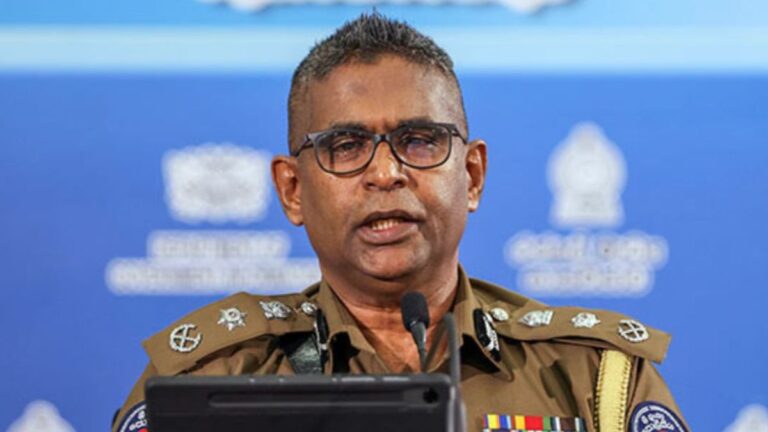
January 05, Colombo (LNW): Inspector General of Police (IGP) Priyantha Weerasuriya has revealed that disciplinary measures have been imposed on close to 500 police personnel in connection with drug-related misconduct, underscoring a renewed effort to clean up the force.
He stated that investigations have led not only to internal disciplinary action but also to the dismissal of a number of officers found to be involved in serious violations.
The IGP emphasised that the police service would not tolerate criminal behaviour within its ranks and that maintaining public trust remains a top priority.
Weerasuriya made these comments yesterday (04) while addressing a graduation ceremony for newly trained police officers at the Pahalagama Police Training College, where he urged recruits to uphold integrity, professionalism and the rule of law throughout their careers.
Indian Army Chief to Visit Sri Lanka
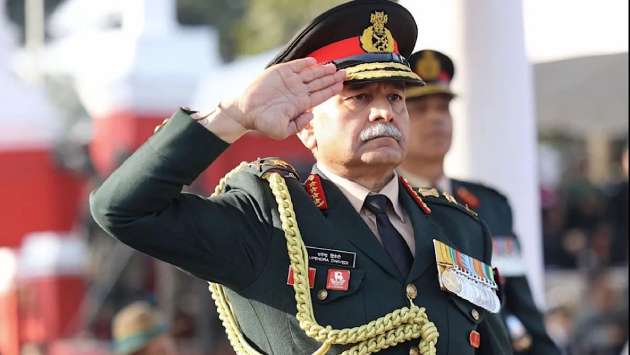
January 05, Colombo (LNW): Indian Army Chief of Staff General Upendra Dwivedi is due to arrive in Sri Lanka later this week on an official visit aimed at reinforcing defence and security ties between the two countries.
According to reports in the Indian media, the visit forms part of New Delhi’s broader efforts to deepen military cooperation with regional partners and enhance collective approaches to security challenges in the region.
During his stay, General Dwivedi is expected to hold discussions with several senior Sri Lankan figures, including the Army Commander, the Defence Secretary and the Minister of State for Defence. Talks are likely to centre on expanding joint training programmes, strengthening professional exchanges and addressing shared regional security concerns.
The Indian Army Chief is scheduled to conclude his visit and depart the island next Thursday, following a series of official engagements and meetings.
SL Foreign Affairs Minister Calls for Respect of Sovereignty Amid Venezuela Crisis
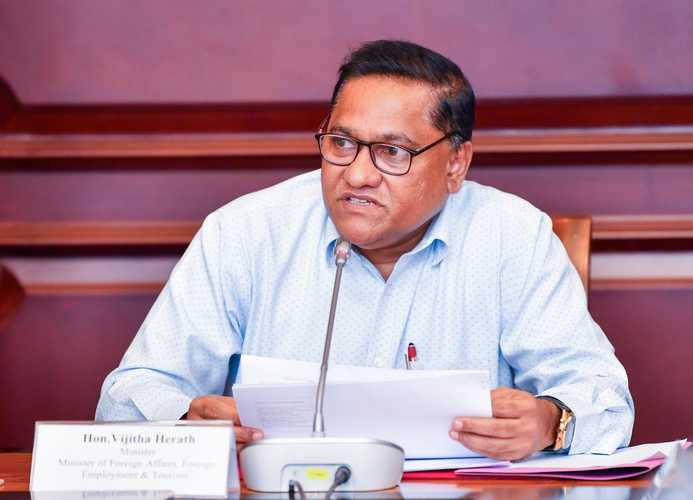
January 05, Colombo (LNW): Foreign Affairs Minister Vijitha Herath stressed that the independence of nations must be protected in accordance with the principles of the United Nations Charter and established international law, warning against actions that undermine state sovereignty.
He made the remarks in response to the unfolding situation in Venezuela, referring to reports of the Venezuelan President being detained by US forces and the subsequent military action carried out by the United States.
The Minister said such developments raise serious concerns about adherence to international norms and the rule-based global order.
Herath was addressing journalists at a media briefing held yesterday (04) at the Department of Government Information, where he reiterated Sri Lanka’s position that disputes between states should be resolved through dialogue and lawful international mechanisms rather than unilateral force.
Ex-Minister Johnston Fernando Appears Before FCID Over Sathosa Vehicle Inquiry
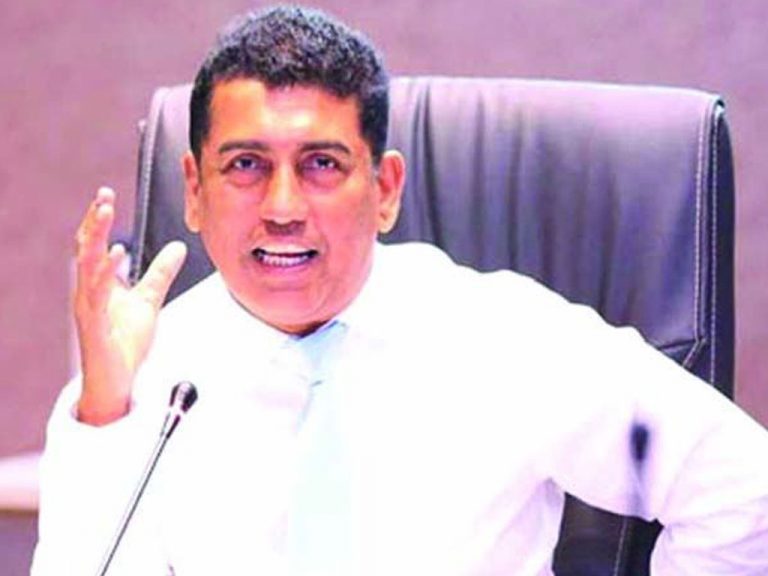
January 05, Colombo (LNW): Former cabinet minister Johnston Fernando presented himself before the Police Financial Crimes Investigation Division (FCID) today (05) as part of an ongoing inquiry into the alleged improper use of a state-owned Lanka Sathosa vehicle.
Fernando had been instructed to appear before investigators after preliminary steps were taken to secure his arrest in relation to claims that a Sathosa lorry was deployed for unauthorised purposes, resulting in a financial loss to the government. The inquiry centres on the period during which he held the portfolio of Cooperative and Internal Trade.
The investigation gathered momentum a day earlier with the arrest of Indika Ratnamalala, who served as Transport Manager at Lanka Sathosa during Mr Fernando’s tenure. After being produced before the Wattala Magistrate’s Court, Ratnamalala was remanded until January 09.
Authorities allege that forged documentation had been prepared to facilitate the use of the Sathosa lorry by a private ethanol company linked to the former minister, reportedly for the benefit of his son, Johan Fernando. Police say further statements and evidence are expected to be recorded as the investigation continues.
Sri Lanka Engages Diplomatically After Fishing Boat Destroyed Off Seychelles
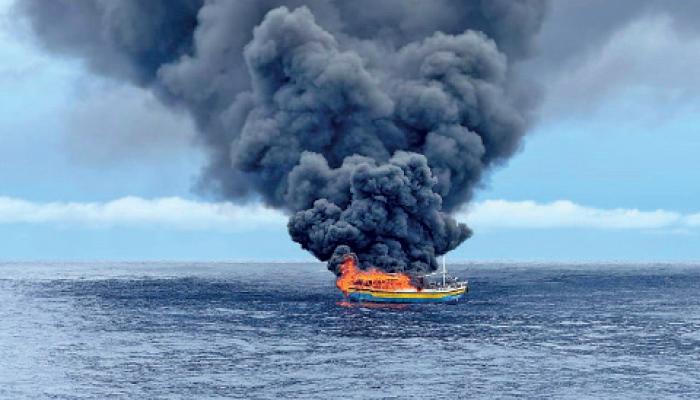
January 05, Colombo (LNW): Sri Lanka’s government has begun diplomatic and consular steps following the interception and destruction of a local fishing boat by authorities in the Seychelles, according to the Deputy Minister of Foreign Affairs and Foreign Employment, Arun Hemachandra.
The vessel, identified as Ishani-1, had set sail from the Wellamankaraya Fisheries Harbour in Wennappuwa earlier this month with six Sri Lankan fishermen aboard. It was detained by Seychelles maritime security forces late in December after entering waters under Seychelles jurisdiction. Officials there later confirmed that the boat was destroyed.
Mr Hemachandra said Colombo is working in close coordination with officials at the Sri Lankan High Commission in Seychelles to assess developments and maintain communication with local authorities. He added that the government has reviewed the statement issued by Seychelles security agencies and is continuing to follow the matter carefully.
The Deputy Minister also confirmed that consular support has been extended to the fishermen involved, with arrangements made to safeguard their welfare while diplomatic discussions continue. He noted that Sri Lanka remains committed to resolving the issue through established international and bilateral channels, while emphasising the importance of protecting its nationals overseas.
Showery conditions inspired by low-level atmospheric disturbance continue: Fairly heavy falls above 50 mm expected (Jan 05)

January 05, Colombo (LNW): The low-level atmospheric disturbance is currently established to the southeast of the island, the Department of Meteorology said today (05).
Showers will occur at times in Eastern and Uva provinces and in Nuwara-Eliya, Matale, Polonnaruwa, and Mullaittivu districts.
Fairly heavy falls above 50 mm are likely at some places in Eastern province and in Nuwara-Eliya, Matale, Badulla, Polonnaruwa, and Mullaittivu districts.
Several spells of showers will occur in Anuradhapura, Jaffna, Kilinochchi and Vavuniya districts.
Showers or thundershowers may occur at a few places in Western and Sabaragamuwa provinces and in Galle and Matara districts after 2.00 p.m.
Strong winds up to 50 kmph can be expected at times over Eastern slopes of the central hills, Northern, North-central, North-western and Eastern provinces and in Hambantota, Gampaha Colombo and Monaragala districts.
The general public is kindly requested to take adequate precautions to minimise damages caused by temporary localised strong winds and lightning during thundershowers.
Marine Weather:
The low-level atmospheric disturbance is currently established in the Bay of Bengal sea area southeast of the island. Navel and fishing communities are requested to be attentive to the future forecasts and bulletins issued by the Department of Meteorology in this regards.
Condition of Rain:
Showers will occur at several places in the sea areas off the coast extending from Kankasanthurai to Pottuvil via Trincomalee and Batticaloa.
Winds:
Winds will be north-easterly and wind speed will be (30-40) kmph. Wind speed can increase up to (55-60) kmph at times in the sea areas off the coast extending from Beruwala to Kankasanthurai via Colombo and Puttalam. Wind speed can increase up to 50 kmph at times in the sea areas off the coast extending from Kankasanthurai to Hambantota via Trincomalee and Batticaloa.
State of Sea:
The sea areas off the coast extending from Beruwala to Kankasanthurai via Colombo and Puttalam will be rough at times. The sea areas off the coast extending from Kankasanthurai to Hambantota via Trincomalee and Batticaloa will be fairly rough at times. The other sea areas around the island may be moderate.
Inquiry Report Handed Over as Probe Continues into Grade 6 English Textbook Controversy
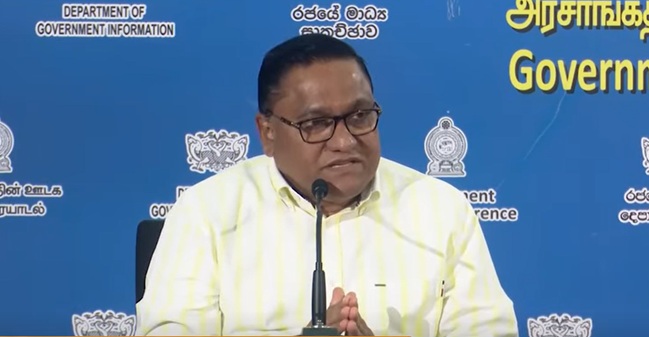
January 04, Colombo (LNW): The committee appointed to examine irregularities found in a newly produced Grade 6 English learning module has completed its investigation and submitted its findings, according to Education Minister Vijitha Herath.
Addressing journalists at a media briefing held today (04) at the Department of Government Information, the minister said the report would now be reviewed and that appropriate measures would be taken in line with its conclusions. He added that the authorities intend to act swiftly to prevent similar lapses in future educational materials.
The controversy arose after it emerged that the newly printed module contained a reference to an unsuitable website, prompting the immediate suspension of its distribution. The Ministry of Education launched an internal inquiry following a formal complaint, amid concerns over how such content found its way into material meant for schoolchildren.
The textbook was developed by the National Institute of Education (NIE) and had already gone to print when the issue was detected. Subsequently, the Secretary to the Ministry of Education, Nalaka Kaluwewe, filed a complaint with the Criminal Investigation Department, requesting a parallel criminal probe into the matter.
Mr Kaluwewe indicated that there was reason to believe the reference may have been inserted deliberately by an external party without authorisation. He stressed, however, that the document in question was not the final, legally approved version of the textbook and that ultimate responsibility for approval rests with the relevant education authorities.
As investigations continue, the Director General of the NIE, Professor Manjula Vithanapathirana, has temporarily stepped aside from her post, pending the outcome of the inquiry. The ministry has reiterated that safeguarding educational standards and protecting students remain its top priorities.