Home Blog Page 1851

Boycott of the GCE (A/L) Examination, 2023 Evaluation

0

The Federation of University Teachers’ Associations (FUTA, has long remained the conscience of this nation in relation to the education and higher education sectors, while taking a broad leadership role in fearlessly campaigning for equity and social justice throughout. Hence, it is with fear and frustration that we note the even greater depths this country is being plunged into by the waste and mismanagement that is only succeeding in exacerbating the current economic and political crisis.

To be specific, in a context where government spending on education will reach an all-time low in relation to GDP in 2023, making Sri Lanka the worst-affected country in South Asia by a wide margin, the proposed arbitrary and unfair income tax increases have caused apprehension and disgust among all those engaged in the education sector. For FUTA, an organisation that has been agitating for over a decade to increase government funding of education, health and other basic rights, this portends catastrophic consequences for all citizens alike.

While the other battles need to be fought in the medium and longer term, the major current aspect of the crisis is the ill-thought and unconscionable new Income Tax Act which imposes drastic changes to personal income tax through a mandatory Advance Personal Income Tax (APIT) payment, over and above huge increases levied on the public in the form of indirect taxes. Our concern here goes beyond the gross injustice to university academic staff and covers the broader negative repercussions to all sectors of society as well as the economy in general. Hence, this government has compelled us to consider trade union action of a kind we would never have decided upon in normal circumstances, but for the need to prevent this grossly unfair and arbitrary taxes on income and expenditure, again, as in the case of the education budget, without precedent in the region.

Therefore, it is with deep regret that the Federation of University Teachers’ Associations has instructed its members to withdraw their participation in the GCE (A/L) 2023 Evaluation Process.  While we are aware that this choice may raise serious concerns in the public, we are confident that the Government will be forced to see the light as a result of our awareness-raising and public agitation on the iniquitous and catastrophic tax law, revoking its worst provisions and revising on the basis of enlightened principles, so that we may take part in the examination and evaluation process without interruption. Moreover, even if the evaluation process were to be delayed, we are aware that no new students will be admitted to the state university system at present due to an acute lack of funding. Consequently, at this crucial juncture it is crucial that we keep up the fight for fair living standards for the populace and sufficient funding for our educational system. 

Our decision to boycott the GCE (AL) evaluation was not made lightly, but it shows how far we are willing to go to defend our rights and ensure that the country is on the right path to recovery. In doing so, we are not only safeguarding our economic rights and livelihoods, but also protecting the future of our students, who stand to be adversely affected by a sudden change in the evaluation process.

Please be informed that university academics will not participate in the GCE (A/L) Examination evaluation process this year, which was a difficult decision that was overwhelmingly supported by all academic members of the state university system, as there was no alternative to convey a clear and unequivocal message to the Government to stop its destruction of this country through this proposed pernicious taxation. We were forced to make this decision because the regime is unwilling to negotiate with us or address our demands; this means that the Government should bear full responsibility for any repercussions that may arise, as a legitimate trade union response to an illegitimate government’s refusal to listen to carefully reasoned clearly-expressed academics’ objections to these unreasonable and discriminatory tax hikes, which actually amount to salary reductions of university academic staff.

FUTA
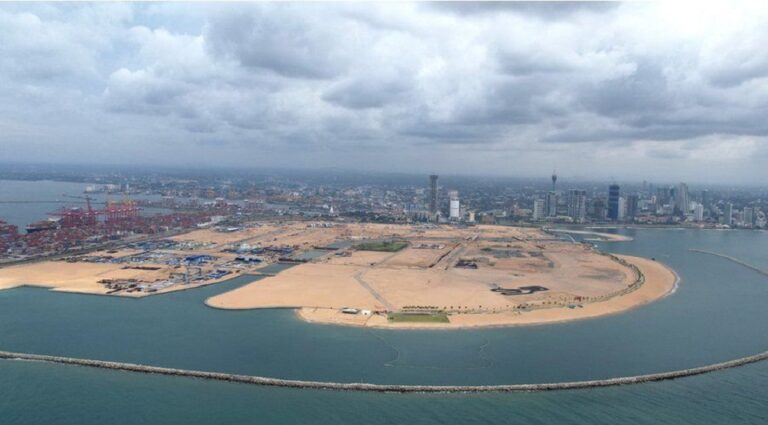
Colombo Port City new casino laws meet COPF hurdle

0

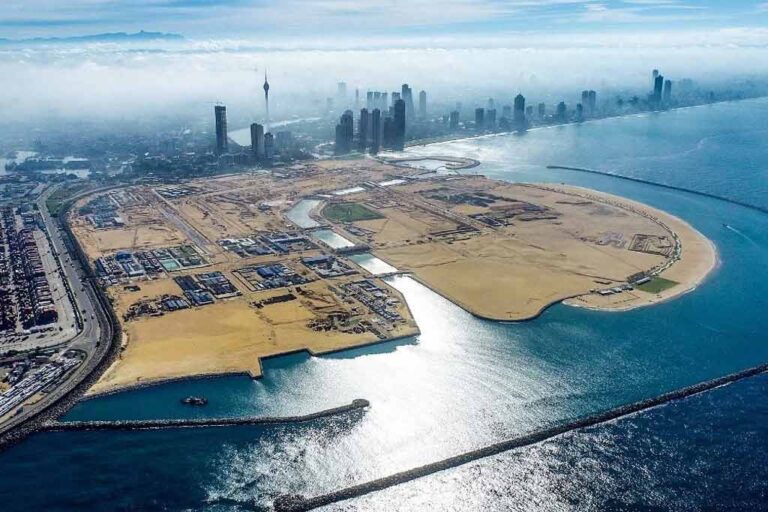
Colombo Port City Economic Commission’s latest move of enacting new legislation that would allow the country’s under-construction Colombo Port City development to feature at least one large casino resort came under stern objection of the public finance committee.

A casino resort for such an area would purportedly be looking to attract domestic patrons as well as those from the nearby nation of India and could one day even see gamblers turning up from as far afield as Europe and North America official sources said.

The Committee on Public Finance (COPF) has moved towards preventing Colombo Port City to prepare new legislation pertaining to the casinos within the offshore city free trade zone which is being set up on reclaimed land from the sea.

Public Service Commission Chairman Dr. Harsha de Silva told Parliament that the committee had informed the authorities of Port City that it has to abide by the existing laws pertaining to casinos.

“However the Port City will be welcomed to propose amendments to the existing laws.” he added

A special economic zone to be set up in the Colombo Port City reclaimed from the sea has a provision covering gaming according to a port city act passed in parliament in 2021.

A Colombo Port City Economic Commission, with a board appointed by the President of Sri Lanka and a Director General will administer the area.

The Special Zone is expected to bring a variety of investments including offshore banking to boost economic activity and also bring investments.

The Economic Commission has to license all businesses within the Port City and approve permits to “operate businesses, shopping, entertainment including gaming activities and such other facilities, to obtain possession of commercial residential facilities, in and from the Area of Authority of the Colombo Port City.

The commission will also “regulate gaming activities within the Area of Authority of the Colombo Port City and where required to make regulations for the management of such activities.

The commission will also identifying “the attributes of gaming locations within the Area of Authority of the Colombo Port City, and specifying the manner in which gaming activities are to be carried on or be operated, and the procedure for obtaining a licence and the licence fees , royalties to be paid and any other related matter, as may be necessary.”

The Economic Commission will have authority to grant exemptions or incentives under The Betting and Gaming Levy Act No 40 of 1988 and Casino Business (Regulation) Act Nov 17 of 2010.Any regulations issued by the Commission will have to be ratified in parliament.

There are several casinos operating in Colombo under de facto authority. However monks and other activists opposed the setting up of two new casinos linked to foreign operators a few years ago.

UAE to crack down on illegal human smugglers amid the surge in SL job seekers

0

The United Arab Emirates (UAE) has decided to take stern action against illegal human smuggling racketeers as more and more Sri Lankans visiting that country for employment.

The UAE’s direct investments in Sri Lanka exceeded US $19 million in 2020 and 2021, and bilateral trade amounted to $2.7 billion during the same period.

Labour and Foreign Employment Minister Manusha Nanayakkara said that the UAE will take stern action against those who facilitate illegal immigration into their country.

During the meeting the UAE Human Resources Minister Dr. Abdulrahman Abdulmannan Al Awar assured Minister Manusha Nanayakkara that his country will take stern action against those who bring foreign workers into the country through illegal methods.

There are more than 380,000 migrant workers working in the UAE with more than 35,000 Sri Lankan migrants left to the UAE in 2022, some of them were reportedly found to be seeking jobs while on a visit visa and a few were forced into other illegal trades.

Minister Nanayakkara had explained to the UAE minister about difficulties faced by Sri Lankans who come in search of jobs to UAE on visit visas as a result of various scams by individuals and organized groups.

He also explained that efforts are taken to make the public aware of the perils of seeking foreign employment opportunities through a visit visa.

The UAE minister responded positively to the request made by Nanayakkara to provide more job opportunities in the UAE for skilled workers from Sri Lanka.

The joint technical committee that was set up in 2021 between the two countries will continue to discuss technical details on how to prevent human trafficking through visit visas to the UAE.

He said a program will be implemented by mapping the qualification framework of the two countries that will recognize the qualifications of Sri Lankan migrant workers.

Minister Nanayakkara explained that 35,572 Sri Lankan workers obtained employment opportunities through the Sri Lanka Bureau of Foreign Employment last year which accounts for 11.4 percent of the total departures in Sri Lanka. This is a 27 percent increase in 2022 compared to 2021

Sri Lanka is facing its worst economic crisis in its history. Food inflation and unemployment rates have soared, forex reserves have dried up and its currency has plunged against the dollar.

The country is running out of money and is eyeing an immediate IMF bailout. Against all odds, the tiny island nation is striving hard to revive its debt-laden economy.

The bankrupt government is looking at two elements that have always ensured steady capital inflow: tourism and foreign remittance.

Last year, a record 311,188 Sri Lankans left the nation seeking jobs abroad and a good 85 per cent flew into the Middle East.

Remittances – a major source of foreign exchange, soared with migrant workers sending more than $475 million in December 2022, which was much higher than the same period of 2021 but lower than pre-Covid-19 time.

Nanayakkara is seeking more jobs for professionals in the areas of finance, healthcare, energy and information technology.

The labour ministry has embarked on a nation-wide labour market intelligence programme through a labour market information system.

He said this would give us more insights into labour supply and demand with the characteristics required for job markets. We will then communicate this with our education officials to ensure what is being produced can meet the expectations of both local and international jobs markets.”

In the past years, the economic woes were further hit with a drop in remittances, which was linked to transactions made through illegal channels, he claimed.

Thrice hit SL Tea industry faces another deadly blow from corporate tax hike

0

The Government’s corporate tax hike is to knock out thrice battered Sri Lanka tea industry by Covid-19, fertilizer ban and economic crisis is set to recover this year with a production target of 300 million kilograms and earn US$ 1.3 million from tea exports this year, industry sources said.

Sri Lanka expects tea production to recover in 2023 to 300 million kilograms after output fell to 260 million kilograms in 2022 with former President Gotabaya Rajapaksa’s utterly foolish overnight decision of banning fertilizer and agro-chemicals.

But this ambitious target towards the recovery of the industry will definitely suffer another set back for the fourth time in two years owing to the government’s action of doubling the corporate income tax rate impacting net foreign exchange earning of tea industry mainly in three ways

According to tea industry experts the increase in corporate income tax could affect the overall efficiency in the tea industry and the burden may sooner or later be felt through the entire supply chain including the tea smallholder growers.

Some tea export companies may even move to other countries like the Jebel Ali Free Zone in Dubai due to high taxes, purely to protect their market shares which have been gained through several years of hard work.

Hence the Tea Exporters Association ( TEA ) earnestly request the government to maintain the concessionary corporate income tax rate of 14 % for the tea export sector for its long term sustainability, which will ultimately bring in much higher growth dividends for the economy

Sri Lanka’s tea exports have dropped to a 25-years low in 2022 hit by a fertilizer shortage due to an ill-advised agrochemical ban, an industry report said.

Sri Lanka exported 250.19 million kgs of tea in 2022, 13 percent down compared to 2021 and it is the lowest since 1997. All categories of tea have recorded a drop except the instant tea.

“In a very challenging year of poor supply, turbulent domestic working environment, compounded by multiple international challenges, Sri Lanka exported 250.19 million kg 148 countries,” tea broker firm Asia Siyaka said in a report.

“Despite reasonable weather conditions throughout 2022, Sri Lanka tea production declined sharply and is likely to end the year at around 252 million kgs compared with 299 million kgs in 2021.”

The exports generated $1.27 billion in earnings, a decrease of 4.5 percent compared to 2021, the data showed.

In rupee terms, Sri Lanka has earned Rs 411.09 billion, an increase of 56 percent in comparison to Rs 263.35 billion in 2021, mainly due to sharp depreciation of the rupee currency.

Iraq, Russia and UAE have remained the top markets for Ceylon tea. The Tea Export sector annually bringing revenue of about $1.3 billion is concerned about the proposed corporate income tax of 30% by the government on the export sector as it could seriously hinder the industry’s efforts for revival.

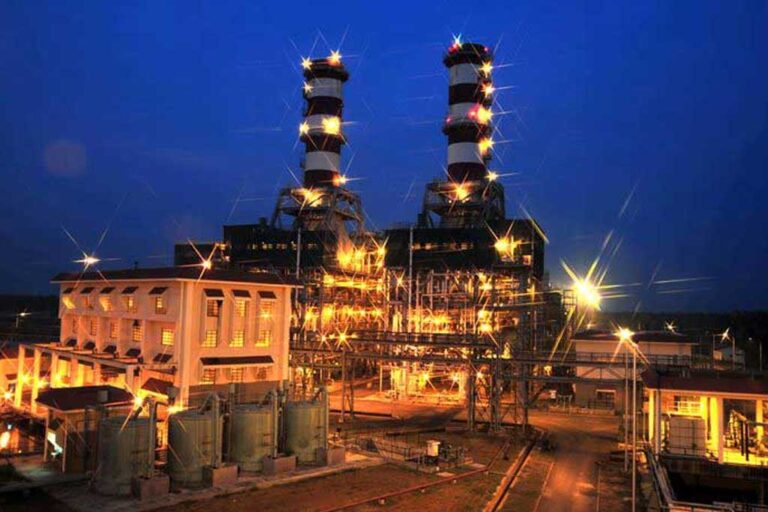
Norochcholai resumes operations, Kelanitissa stalled

0

The operations at the Kelanitissa Combined Cycle Power Plant have been stalled since this (22) morning incurring a drop of 165 megawatts from the national grid, hours after the operations at the Norochcholai Coal Power Plant, which had been stalled due to maintenance, were restored.

The power plant has stalled its operations due to the absence of sufficient stocks of naphtha owned by the Ceylon Electricity Board (CEB).

Meanwhile, the Norochcholai Power Plant is said to be fully operational.

MIAP

French court convicts 14 Sri Lankans of migrant smuggling across Europe

0

A court in northern France has sentenced 14 Sri Lankan nationals to prison for operating a migrant smuggling ring across Europe, as authorities across the continent try to crack down on the lucrative criminal networks.

The main suspect, accused of overseeing the operation from a grocery store in the village of Serifontaine, was handed a four-year prison term, with one year suspended.

Investigators determined that he set the prices and routes for moving migrants from Sri Lanka and Bangladesh across the continent from Ukraine, with the help of bribes to officials in Eastern Europe.

Another suspect, who is based in Britain but fighting extradition requests, was given a five-year sentence by the court in Beauvais, while the others were given lesser prison terms.

Smuggling gangs have flourished as increasing numbers of migrants have headed for Europe in recent years, with many hoping to cross the English Channel to Britain.

More than 45,000 migrants crossed the Channel from mainland Europe in 2022, surpassing the previous year’s record by more than 17,000, according to British government figures.

The Local

CoPF praises Port City Commission for immediate implementation of recommendations

0

The Committee on Public Funds (CoPF) on January 19 has praised the Colombo Port City Commission for taking immediate actions to implement the recommendations forwarded by the CoPF on January 05.

The CoPF’s recommendation of adopting online methods for the Port City Commission and submitting audited accounts for the year 2021 has immediately been responded with, hence Committee Chief MP (Dr.) Harsha De Silva’s appreciation of the actions.

Attending the CoPF session, officers of the Port City Commission noted that it was established under a completely legitimate purview of the government in accordance with the Port City Commission Act.

The Commission responding to a query on its ability of corroborating the validity of the information provided in the applications related to the licences emphasised that the responsibility of the information detailed in each application is referred to the applicant themselves, adding that a register of all companies in the Port City Premises are being maintained electronically enabling the general public to access these information.

Queried about the privileges of applicants who have the freedom to choose to do business outside the Port City in terms of tax policies, the Commission responded saying that those institutions have been given the authority for policy formulation pertaining to pay structures and human resources.

In response, CoPF Chief Dr. Silva stressed that the process should be subject to strong surveillance in the probability of the occurrence of irregularities. In addition, the companies are, if approved by the subject Minister, eligible to to establish a business outside the Port City on an interim basis for not more than five years.

Elaborating on surcharges and penalty charges, the Commission went on that the parameters of penalties of the Port City Commission are being formulated together with the Attorney General’s Office and other relevant regulators. The CoPF Chief argued that the Port City Economic Commission cannot serve the purpose of multiple regulators in controlling the Colombo Port City, and instructed the Commission to work closely with the Ministry of Finance, which at the present is already working as per the instructions of the CoPF to establish a body for Casino regulation by the end of 2023.

Taking the matter of resolving conflicts into account, it was revealed that the institution within the Port City, as per the Port City Commission Act, offers provisions to solve only conflicts within the Port City. However, all judicial proceedings are being carried out on a priority basis at the Magistrates’ and Civil Courts within Sri Lanka’s borders, and the Attorney General’s Office confirmed that these matters will be reviewed soon.

Conclusively, all gazettes provided for review have been approved by the CoPF under conditions, following the Port City Economic Commission’s assurance that the licence renewal process will be brought under more clarity, and regular meetings will be carried out to ensure proper submission of audit reports and avoidance of delays in other legal affairs.

State Ministers Suren Raghavan, Anupa Paskuel, MPs Chandima Weerakkody, Mayantha Dissanayake, Ranjith Bandara, Nalaka Godahewa, Premnath C. Dolawatta and Madhura Withanage, and officers of the Port City Commission and the Attorney General’s Office also attended the event.

MIAP

SLPP Mayor in Kurunegala ousted!

0

Mayor in Kurunegala Thushara Sanjeewa has reportedly been dismissed from his position, through an extraordinary gazette issued by the North-Western Province Governor with effect from 31.12.2022.

The move comes in due to Sanjeewa’s failure of passing the Budget of the Kurunegala Urban Council.

Sanjeewa is a close associate and a disciple of former Minister Johnston Fernando.

MIAP

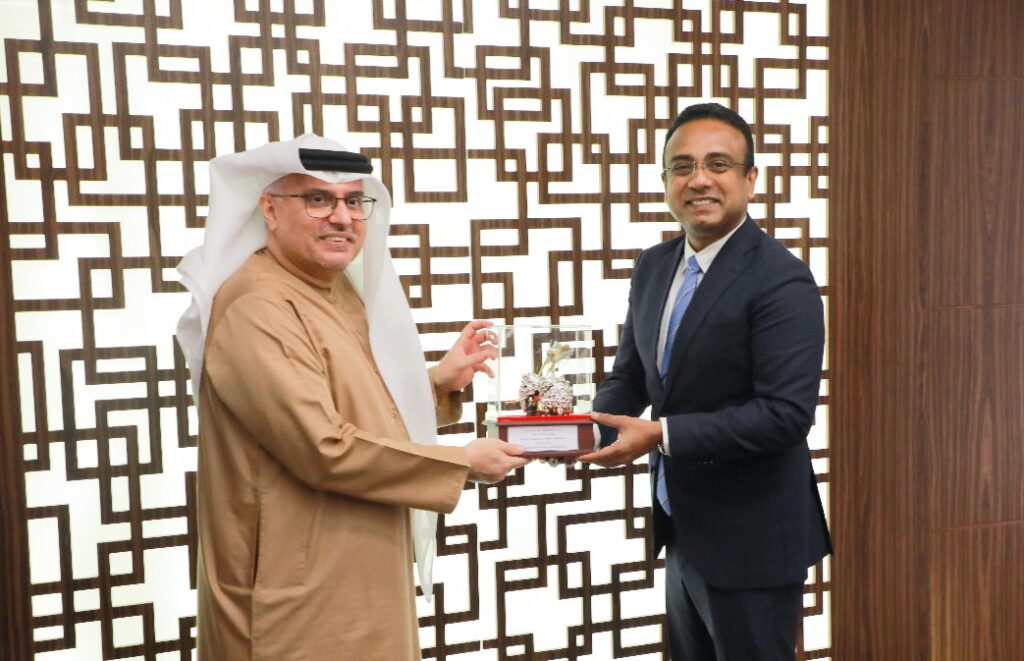
UAE HR Minister assures Minister Nanayakkara his country will take stern action against those facilitating illegal immigration to UAE

0

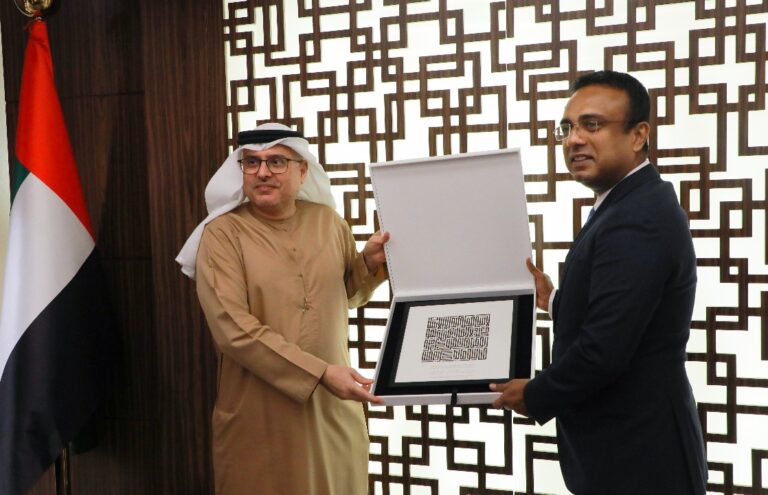
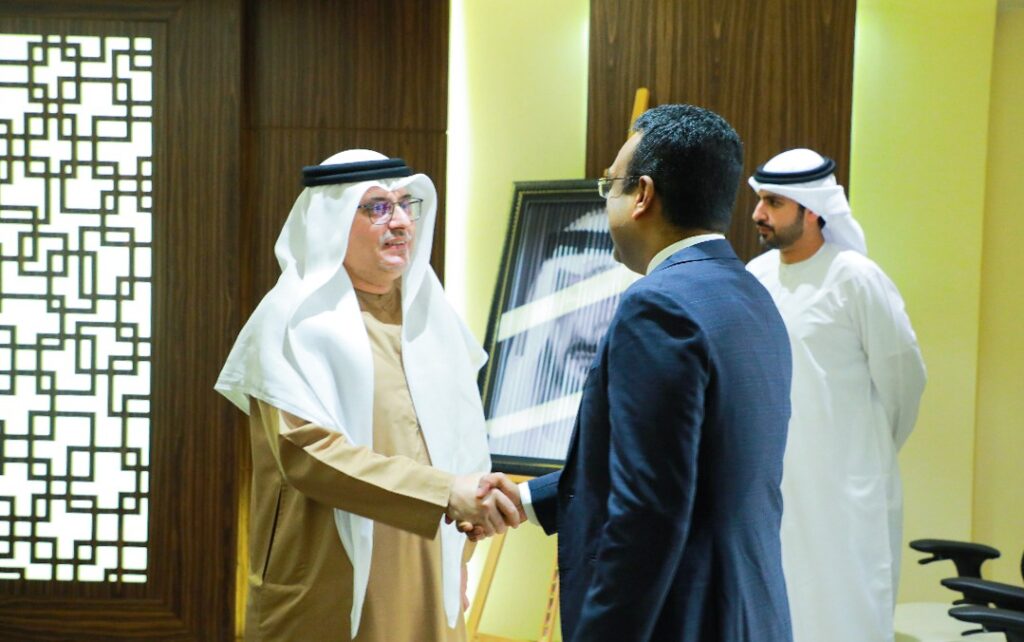
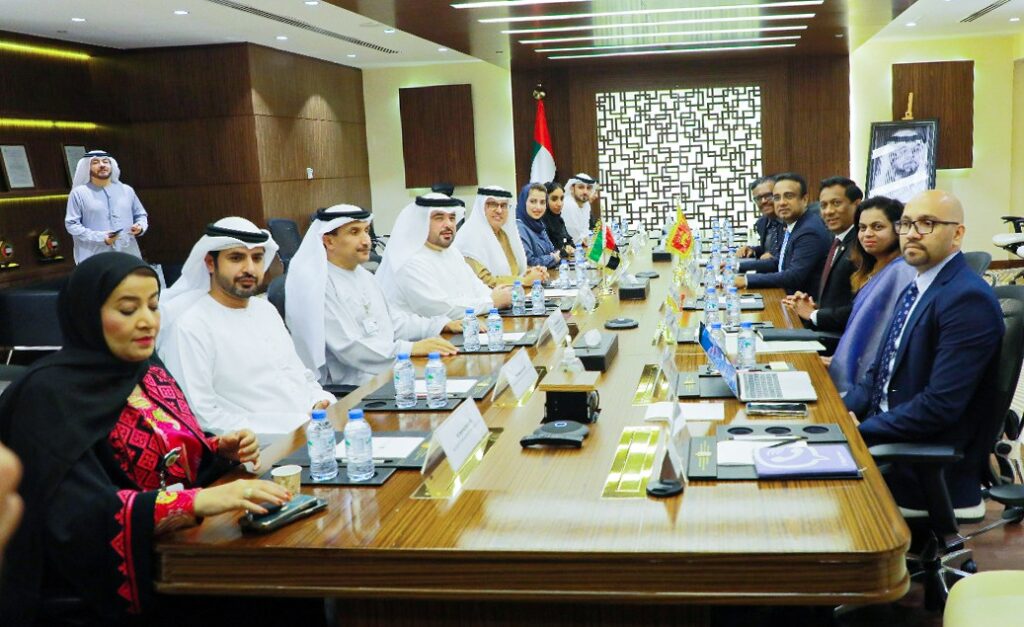
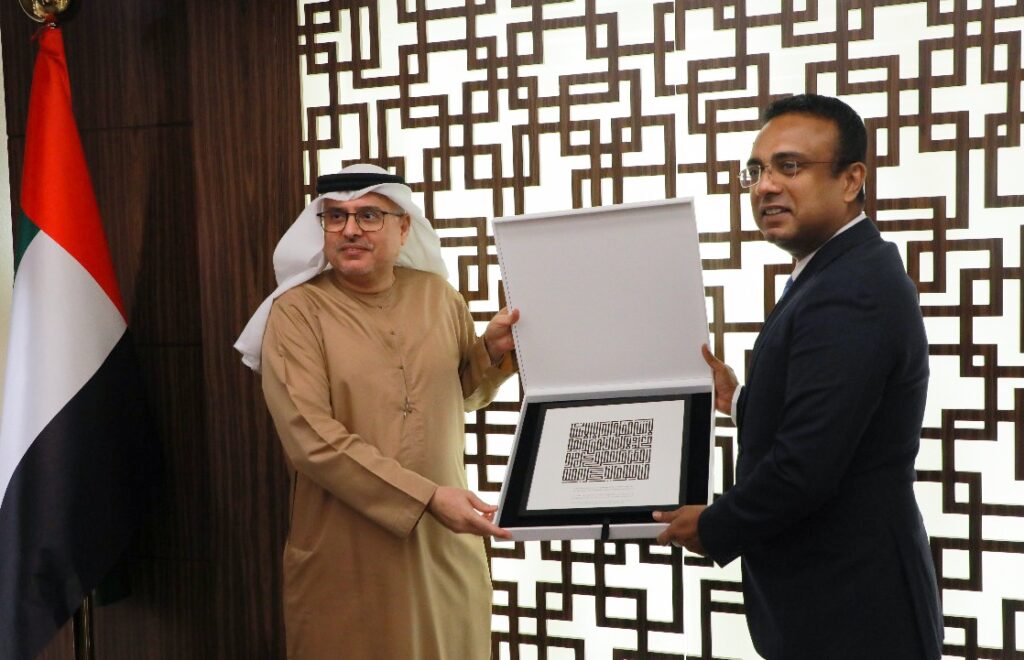
The UAE Human Resources Minister Dr. Abdulrahman Abdulmannan Al Awar assured Labour and Foreign Employment Minister Manusha Nanayakkara that his country will take stern action against those who bring foreign workers to the country through illegal methods.

Minister Nanayakkara is on an official visit to UAE and explained to the UAE minister about difficulties faced by Sri Lankans who come in search of jobs to UAE on visit Visas as a result of various scams by individuals and organized groups. He also explained that efforts are taken to make the public aware of the perils of seeking foreign employment opportunities through a visit visa.
The UAE minister responded positively to a request by minister Nanayakkara to provide more job opportunities in UAE for skilled workers from Sri Lanka.

The joint technical committee that was set up in 2021 between the two countries will continue to discuss technical details on how to prevent human trafficking through visit visas to UAE. Also, a qualification equalisation program will be implemented by mapping the qualification framework of the two countries that will recognize the qualifications of Sri Lankan migrant workers.

Minister Nanayakkara explained that 35,572 Sri Lankan workers obtained employment opportunities through the Sri Lanka Bureau of Foreign Employment last year which accounts for 11.4% of the total departures in Sri Lanka. This is a 27 percent increase in 2022 compared to 2021.

The UAE Human Resources Minister explained that the newly implemented mandatory unemployment insurance applies to migrant workers as well. This will provide an amount equal to 60 percent of the salary of a migrant worker for three months in the event of job loss. He also told Minister Nanayakkara that a center that operates in 20 languages has been set up by UAE to address migrant worker grievances. Labor recruitment fees were also discussed.

Minister Nanayakkara while explaining the recent economic crisis in Sri Lanka thanked the UAE minister for the help given by his country and was hopeful that UAE would continue to extend its support, especially in the areas of foreign employment, trade, and investment.  

Assistant Secretary for Labour Affairs Ayesha Belharfia, Assistant Secretaries Abdulla Alnuaimi, Mohsin Muhsih, Assistant Director for International Bilateral Affairs Noora Alsuwaidi, International Affairs Expert Mohamed Alhammadi, Executive Officer Moza Alshamsi, Sri Lankan Ambassador-designate to UAE Udaya Indraratne and Consul General of Dubai Nalinda Wijeratne were among the participants.

Sri Lanka Original Narrative Summary: 22/01

0

  1. World Bank projects Sri Lanka to have the lowest growth (-4.2%) among 148 countries in 2023: in January 2022, Sri Lanka’s 2022 growth was projected at +4% while the projection for 2023 was +4.5%: however, all estimates reversed dramatically after the debt default announcement of 12th April 2022, and economy commenced contraction.
  2. Central Bank to issue its largest-ever stock of Treasury Bills in its 100-year history next week, with a staggering issue of Rs.120 bn: previous highest T-Bill issue was Rs.98 bn issued on 5 occasions – 8Jun’22, 15Jun’22, 14Dec’22, 28Dec’22 & 4Jan’23: T-Bill investments generally considered “risk-free” as the CB is mandated to “print” money and repay, if the Govt is unable to pay.
  3. World Bank says Sri Lanka’s food inflation in 2022 of 64% was the 6th highest in the world: the countries ahead were Zimbabwe (376%), Lebanon (171%), Venezuela (158%), Argentina (94%) and Turkey (77%).
  4. Professionals including medical practitioners stage protest outside Finance Ministry and demand fair taxes: voice opposition against the increasing cost of living: Police, Riot Police and Navy force the protestors to spread out.
  5. Public Utilities Commission agrees to the Cabinet Decision on a retrospective electricity tariff hike with immediate effect, after a meeting with President Ranil Wickremesinghe.
  6. National People’s Power Leader Anura Kumara Dissanayake proposes 75% cut to the salaries of Local Govt councillors if the Govt claims it lacks the funds to hold Local Govt elections.
  7. Fitch Ratings downgrades National Long-Term Ratings of 5 Finance and Leasing companies – People’s Leasing, Central Finance, CBC Finance, HNB Finance and Siyapatha Finance: downgrades follow similar recent action on 10 banks and several insurance companies, consequent to the debt default.
  8. Govt stipulates new Maximum Retail Price for eggs for the 2nd time: white egg – Rs.44, brown egg – Rs.46.
  9. Senior Govt source reveals Finance Ministry is struggling to “find” Rs.55 bn to pay for coal shipments: Rs.20 bn “found” and negotiations said to be ongoing to “find” balance: CEB Engineers warn of dire consequences if money is not “found” and coal is not imported by the month’s end.
  10. Industry report reveals Tea exports dropped to a 25-year low in 2022, hit by the fertilizer shortage due to agrochemical ban: only 250 mn kgs of tea was exported in 2022 – 13% down, compared to 2021 and lowest since 1997.