Excessive market interest rates have begun to adjust downward and are expected to ease further in the period ahead, central bank announced today
Early signs of a gradual easing of excessive market interest rates have been observed recently in response to the administrative measures adopted by the Central Bank, along with the improvements in domestic money market liquidity and overall sentiments in the domestic markets.
Recent measures adopted by the Central Bank to reduce the overreliance of licensed commercial banks on the standing facilities of the Central Bank and the concurrent conduct of open market operations helped improve liquidity in the domestic money market.
This prompted activity in the interbank money market. Improved liquidity conditions, along with improved investor sentiment on the anticipation of “financing assurances” from official creditors, led to a notable moderation in the yields on government securities recently, reflecting the easing of the high risk premia attached to government securities.
Meanwhile, the market deposit rates have also shown a notable moderation, benefiting from improved liquidity conditions.
These developments are expected to pave the way for an easing of excessive market interest rates in the period ahead.
Nevertheless, outstanding credit extended to the private sector by commercial banks continued to contract in response to the tight monetary conditions and the moderation in economic activity.
Monetary expansion also moderated from peak levels, albeit at a slower pace.
Overnight liquidity in the interbank market narrowed its deficit significantly and at times turned positive after the Central Bank announced limits on access to its standing facility windows from the middle of this month.
The data on how the overnight money market liquidity behaved in the past month showed it had seesawed between surpluses and deficits, especially since the Central Bank announcement on January 3.
For instance, the Rs.230.25 billion liquidity shortage that stood at the start of 2023 came down to around Rs.200 billion in the first week of January before turning a positive Rs.57.43 billion in the following week.
Thereafter, the positive liquidity expanded to Rs.156.87 billion on January 17, the first day the directive came into effect. The overnight liquidity settled at a positive Rs.136.91 billion by end of last week, the first week since the restrictions came into effect.
This flip to surplus was a result of banks depositing a huge Rs.316.65 billion under the Standing Deposit Facility (SDF) window from just under Rs.30 billion the day before due to access limitations.
As access to the SDF facility was limited to five times a month, banks now wait till Friday to deposit their excess liquidity under this window to make the most return as they get paid interest for 3 days till Monday at 14.5 percent.
This pattern of waiting till Friday or until a day before a market holiday by banks could become the norm hereafter due to the limited access they have to the overnight window to generate returns out of their excess liquidity.
The Kingdom of Saudi Arabia has pledged to facilitate employment opportunities for 200,000 Sri Lankan migrant workers in 2023, Minister of Labour and Foreign Employment Manusha Nanayakkara revealed.
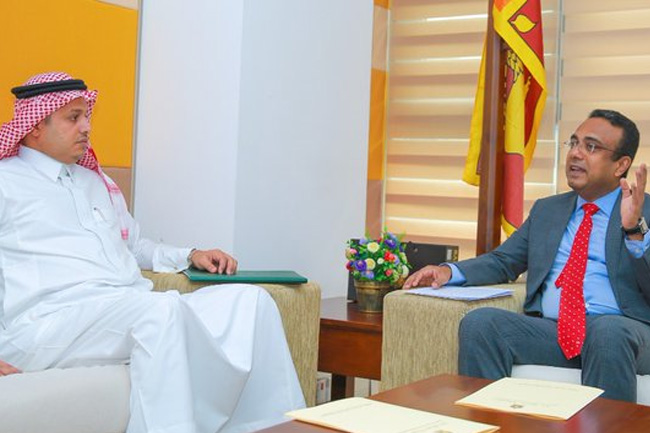
The Minister said he was given this assurance during his meeting with Khalid bin Hamoud Nasser Aldasam Alkahtani, the Ambassador of Saudi Arabia to Sri Lanka.
Issuing a Twitter message, he added that the Arabian nation had offered 54,000 migrant jobs last year.
Sri Lanka is looking for ways to boost bilateral relations with the Kingdom of Saudi Arabia through connectivity, investments and employment opportunities, Minister of Foreign Affairs Ali Sabry told a leading Middle Eastern newspaper.
Sabry, who is on an official visit to Saudi Arabia from January 23-27, made this remark during an exclusive interview with ‘Arab News’.
Recalling the cordial bilateral relations between Saudi Arabia and Sri Lanka, the minister said the island nation is hopeful of further strengthening the ties by boosting connectivity, investments and employment opportunities.
Sabry, mentioning that Saudi Arabia was a “very influential member of the international community” – especially in the Islamic world and due to the G20 membership – also spoke of the importance of improving bilateral relations with the Kingdom.
According to Sabry, improving the trade relations between the two nations will also be a focal point during his meetings with Saudi officials. He noted that boosting Sri Lanka-Saudi Arabia bilateral ties is a possible catalyst to a wider, better relationship with the Islamic world.
During his visit, Sabry is accompanied by a delegation that includes the State Minister of Rural Economy, Kader Masthan; the ambassador of Sri Lanka in Riyadh, Pakeer Mohideen Amza and the consul-general in Jeddah, Faiah Moulana.
He embarked on this visit to Saudi Arabia on an invitation extended by his counterpart in the Kingdom, Prince Faisal bin Farhan Al Saud.
Sabry is scheduled to meet with Foreign Minister Farhan Al Saud and discuss further enhancement of cordial bilateral relations.
He will also meet with the senior officials of the Islamic Development Bank, the Organization of Islamic Cooperation, the Gulf Cooperation Council and the Governors of Mecca and Medina.
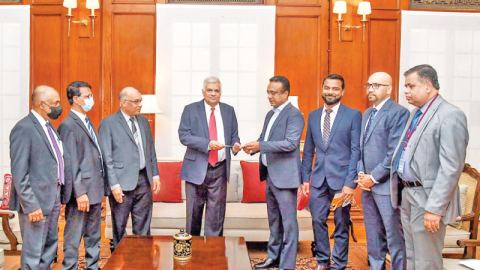
The Foreign Employment Bureau contributes a sum of Rs. 03 billion from its operational surplus to the Treasury to use for essential services such as medicine, paddy and public servants’ salaries – Labour and Foreign Employment Minister Manusha Nanayakkara hands over the cheque to President Ranil Wickremesinghe at the Presidential Secretariat.
Supreme Court sentences Retd Maj Ajith Prasanna to 04 years of RI and fines him Rs. 300,000 over contempt of court – Prasanna and two naval intelligence officers accused of intimidating witnesses to an ongoing case against several navy personnel over the abduction and disappearance of 11 youths.
Election Commission Chief Nimal Punchihewa clarifies on ‘still-pending’ gazette declaring the date of LG Polls – says the returning officers are responsible of declaring a date, not the EC – suggests the EC only approves a ‘schedule’ consisting of the date, the number of institutions, and the names of the political parties, the contenders and electoral divisions etc. ahead of a gazette – asserts the LG Polls will be held on March 09 as planned.
SJB Trade Union Leader Ananda Palitha and Secretary of the Electricity Consumers Association Sanjeewa Dhammika arrested over intimidation and criminal coercion against two members of the PUCSL, Mohan Samaranayake and Udeni Wickramasinghe – remanded till Jan. 26.
SLPP Founder and National Organiser Basil Rajapaksa launches political campaign for LG Polls – asserts SLPP will compete alone for 252 LG institutions and for a few others will contest in alliance with other parties this year.
Power cuts approved by PUCSL continue despite criticism by many parties not to amidst the ongoing GCE Advanced Level Examination – Parents and social activists lament the government’s insensitivity towards children endangers their future.
CAA to crack down on egg sellers for violating MRP declared by the government by selling eggs at a higher price amidst the ongoing struggle of poultry and egg industrialists due to scarcity of inputs; warns traders disobeying stipulated MRP that legal action will be taken against vendors violating the law – Gazette declaring new MRP says a white egg be sold at Rs. 44 and a brown egg, Rs. 46.
CB Governor under fire for ‘misleading the public’ – Trade unions and professionals allege Weerasinghe misinterpreted the monetary law by stating ‘merchandise exporters can repatriate forex without having to convert such proceeds’; point out his comment seemingly withdraws his repeated accusations of exporters ‘stashing dollars overseas’; charge suppression of wages in the export sector as a whole is the fundamental factor enabling exporters to illegally retain incomes abroad; demand both the CBSL and the GOSL to take immediate action to repatriate any illegally transferred funds and bring the perpetrators to justice – Gazette Extraordinary No. 2251/42 dated 28.10.2021 stipulates ‘only service sector exporters are authorised by law to repatriate proceeds without conversion.’
Reuters report claims China’s Exim Bank offered Sri Lanka a two-year moratorium on its debt and asserted it will support the country’s efforts to secure a US $2.9 billion loan from the IMF – Regional rivals China and India being the biggest bilateral lenders to Sri Lanka are said to be the variable to receiving IMF bailout.
Secretary to the Ministry of Sports Amal Harsha De Silva says political influence into popular international games in Sri Lanka contributed to the FIFA ban; claims his many efforts to save Sri Lankan players from ‘international harassment’ failed; laments Sri Lankan sport teams have lost international recognition due to parties with little or no knowledge about sports.
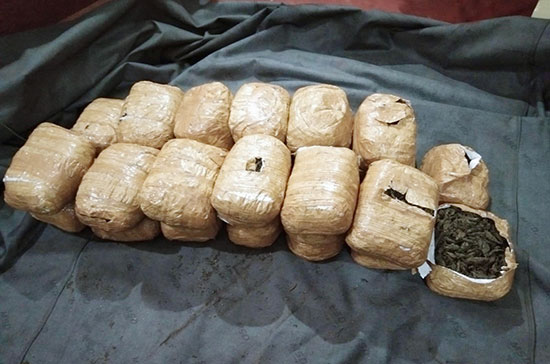
Sri Lanka Navy apprehended 02 suspects with over 54kg of Kerala cannabis, during separate search operations conducted in Norochcholai and New Town of Anuradhapura on 22nd January 2023.
A team of Navy Marines attached to SLNS Vijaya in the Northwestern Naval Command searched a suspicious lorry at Pulachchena Junction, Norochcholai on the night of 22nd January and apprehended about 45kg and 280g of Kerala cannabis (25 packages) being transferred. Accordingly, the stock of Kerala cannabis, the lorry and a suspect in connection to the incident were taken into naval custody.
Meanwhile, on receipt of information to the Northern Naval Command, SLNS Uththara and the office of Excise Department in the North Central Province conducted a combined search operation in the New Town of Anuradhapura on 22nd January. The search operation led to the apprehension of a suspect who was carrying about 08kg and 800g of Kerala cannabis in 04 packages.
The street value of Kerala cannabis (54kg and 80g) seized in these operations is believed to be over Rs. 18 million.
Meanwhile, the suspect apprehended in Norochcholai has been identified as a resident of Lunugamwehera, aged 49. The suspect along with the stock of Kerala cannabis and the lorry was handed over to the Police Narcotic Bureau, Puttalam for onward legal action.
The suspect apprehended in the New Town of Anuradhapura is a 41 year old resident of Jaffna. The accused together with Kerala cannabis was handed over to the office of Excise Department in the North Central Province for onward legal proceedings.
The Sri Lanka Bureau of Foreign Employment (SLBFE) contributed a sum of Rs. 03 billion to the Treasury. Labour and Foreign Employment Minister Manusha Nanayakkara officially handed over the cheque to President Ranil Wickremesinghe at the Presidential Secretariat yesterday (23).
Considering the current economic situation of the country, the Sri Lanka Foreign Employment Bureau has provided this amount from the operational surplus received last year, to use for essential services such as to purchase of medicine, to purchase of paddy and the payment of government employee salaries.
Previously, the total amount of money given to the Treasury by the Sri Lanka Bureau of Foreign Employment was Rs. 3.38 billion, and this is the first time in history that Rs. 03 billion has been given in a single contribution.
The Sri Lanka Foreign Employment Bureau has taken steps to make a grant of Rs. 500 million for the purchase of the necessary medicines for the Cancer Hospital, of which a cheque of Rs. 100 million was also presented to the President.
President Ranil Wickremesinghe handed over the cheque to Heath Minister Keheliya Rambukwella.
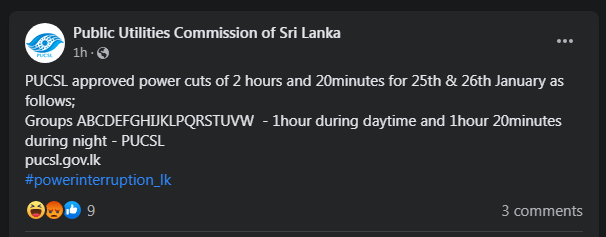
A power cut of two hours and twenty minutes has been approved for tomorrow (25) and the day after (26) announced the Public Utilities Commission of Sri Lanka (PUCSL).
This announcement comes in disregarding the previous notice that the power cut will be reduced to two hours from today (24).
Despite many requests from a number of parties not to approve power cuts amidst the ongoing G.C.E. Advanced Level Examination, the government seems to have cared less.
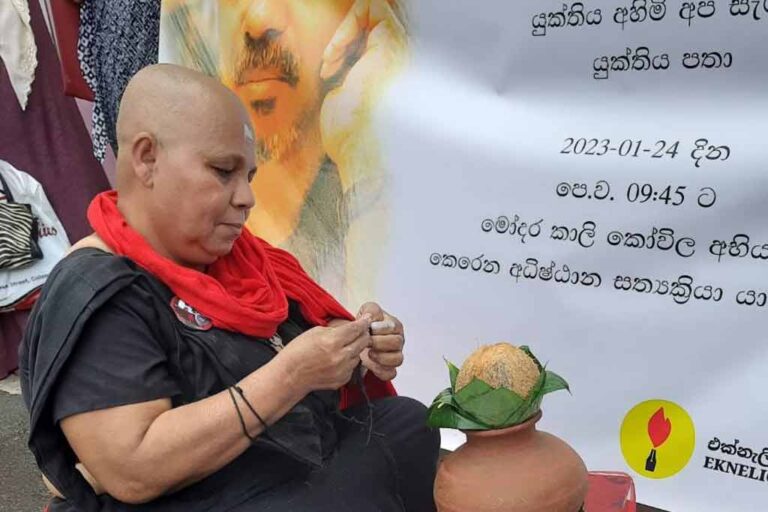
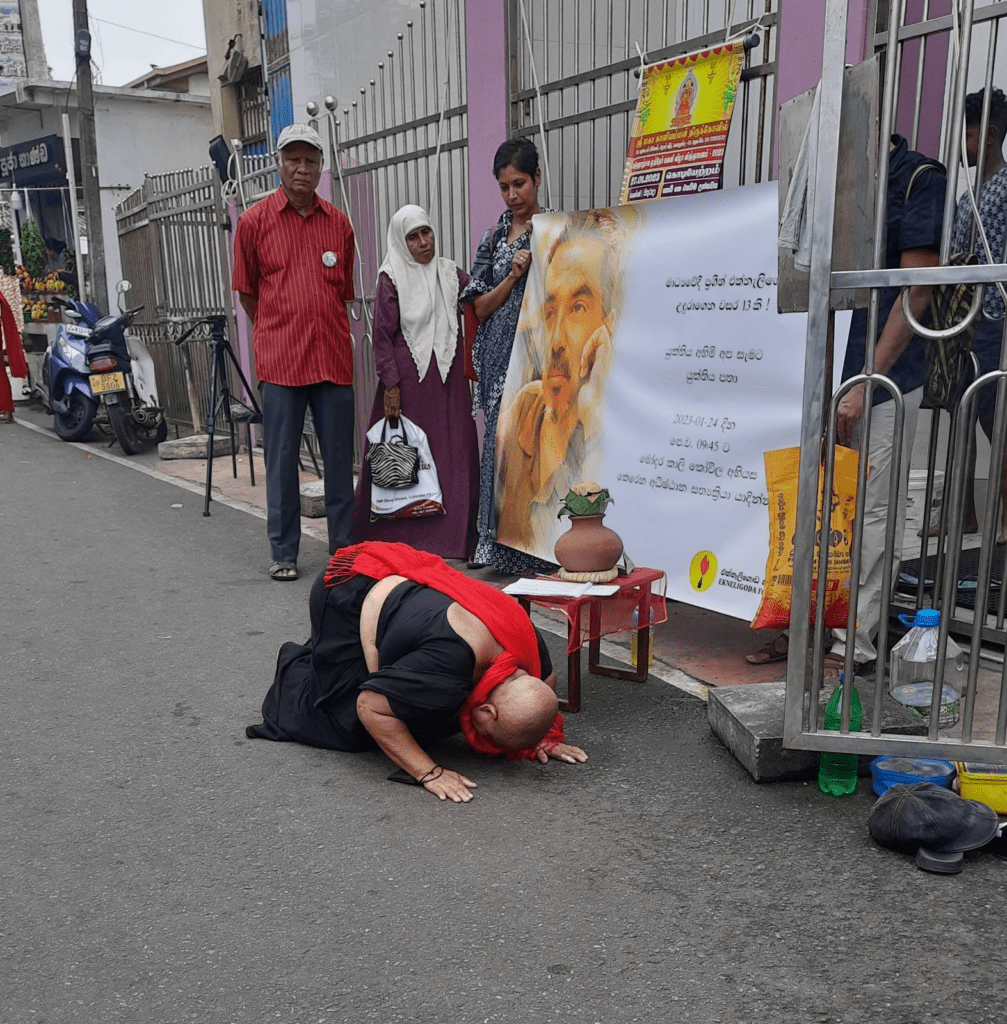
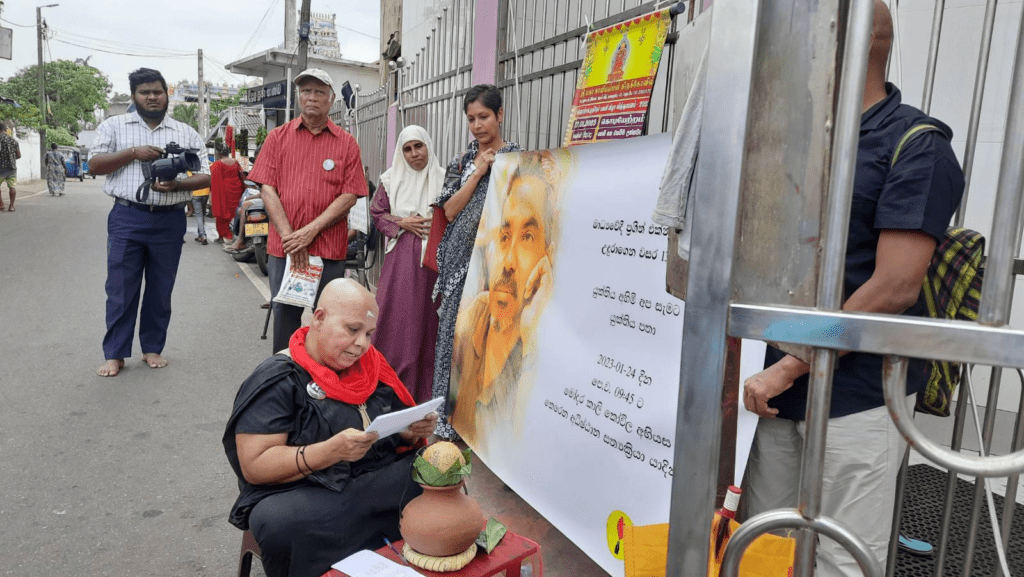
Activist Sandhya Ekneligoda today (24) launched a passive resistance marking 13 years since the abduction and disappearance of her husband, journalist Prageeth Ekneligoda.
On January 24, 2010, Ekneligoda was abducted in the suburbs of Colombo, and so far no Court has served justice for his disappearance.
Mrs. Ekneligoda launched a passive resistance at Kali Amman Kovil, Modara this afternoon in remembrance of Prageeth, and demanding justice for everyone subject to such fate.
Ekneligoda’s disappearance became a token for media repression and criminal impunity in Sri Lanka, making the fallen journalist’s fate one of the biggest unsolved cases of all time.
The International Monetary Fund (IMF) is still awaiting creditors’ assurances on Sri Lanka debt restructuring in order to present a Fund-supported program for Sri Lanka to the IMF’s Executive Board, for approval.
The IMF said “As soon as adequate assurances are obtained and remaining requirements are met, including by the Sri Lankan authorities, a Fund-supported program for Sri Lanka can be presented to the IMF’s Executive Board for approval that would unlock much needed financing.”
“The assurances from Sri Lanka’s official creditors are essential to restore debt sustainability and government authorities should reach a collaborative agreement with private creditors to get the approval of IMF executive board”.
The IMF confirmed that India has committed to help ease the debt burden of its crisis-stricken neighbor Sri Lanka as part of a possible International Monetary Fund-supported program.
“Sri Lanka is engaged with other official bilateral creditors to obtain similar assurances,” Reuters quoted an IMF spokesperson as saying in a statement.
“As soon as adequate assurances are obtained and remaining requirements are met, including by the Sri Lankan authorities, a Fund-supported program for Sri Lanka can be presented to the IMF’s Executive Board for approval that would unlock much needed financing.”
Sri Lanka requires the backing of China and India – its biggest bilateral lenders – to reach a final agreement with the IMF that is essential to help the country emerge from its worst financial crisis in seven decades.
The island nation of 22 million people has grappled with challenges during the past year ranging from a shortage of foreign currency to runaway inflation and a steep recession – the worst such crisis since independence from Britain in 1948.
Reuters reported last week that India had told the IMF it strongly supports Sri Lanka’s debt restructuring plan as the island seeks a $2.9 billion loan from the global lender, according to a letter.
Ananda Palitha, Convenor of the ‘Samagi Joint Trade Union Alliance’ attached to the Samagi Jana Balawegaya (SJB), and Secretary of the Electricity Consumers Association Sanjeewa Dhammika who were arrested by Kollupitiya Police yesterday evening (23) on the charges of threatening and criminal coercion against two members of the Public Utilities Commission of Sri Lanka (PUCSL) were remanded till January 26, as ordered by Fort Magistrate Thilina Gamage today (24).
Colombo, Sri Lanka – More than 180 prominent economists and development experts from around the world have made a global appeal to Sri Lanka’s financial lenders to forgive its debt, even as other experts are not convinced it is the best way forward for the island nation.
According to World Bank estimates, Sri Lanka has an external debt burden of more than $52bn as of December. Of that, nearly 40 percent is owed to private creditors, including financial institutions, while the rest is owed to bilateral creditors where China (52 percent), Japan (19 percent) and India (12 percent) are the largest ones.
Colombo defaulted on its debt repayments in April and negotiated a $2.9bn bailout with the International Monetary Fund (IMF).
But the IMF will not release the cash until it feels that the island nation’s debt is sustainable.
Now several prominent academics and economists, including Thomas Piketty who wrote the bestseller Capital, Harvard University economist Dani Rodrik and Indian economist Jayati Ghosh have issued a statement (PDF) calling for the cancellation of Sri Lanka’s debt by all external creditors and measures to stem the illicit outflow of capital from the country. The statement was put together by the “Debt Justice” campaign group, a global movement to “end unjust debt and the poverty and inequality it perpetuates”.
The private investors who lent at high interest rates to corrupt politicians must face the consequences of their risky lending by cancelling the debt, the academics said in the statement.
The academics have accused private creditors of contributing to Sri Lanka’s first-ever sovereign debt default as they accrued “a massive profit” by charging a premium to lend. Therefore, they said, the private lenders who benefitted from higher returns must be “willing to take the consequences” of their actions, meaning cancelling the debt and forfeiting the loans.
But not everyone agrees with this suggestion.
WA Wijewardene, a former deputy governor of the Central Bank of Sri Lanka, says that should the debt cancellation plan actually go through, it might lead to the collapse of the current global financial system.
Many of the academics who have signed the said statement are not economists, he told Al Jazeera.
“It is a galaxy of academics belonging to the social sciences field. As such, it needs to be critically appraised because, if accepted for Sri Lanka, it in fact provides a blueprint for a new world economic order.”
He added: “The present economic order is an interdependent, interconnected system. If you break this, the world will collapse. You don’t know what would happen thereafter.”
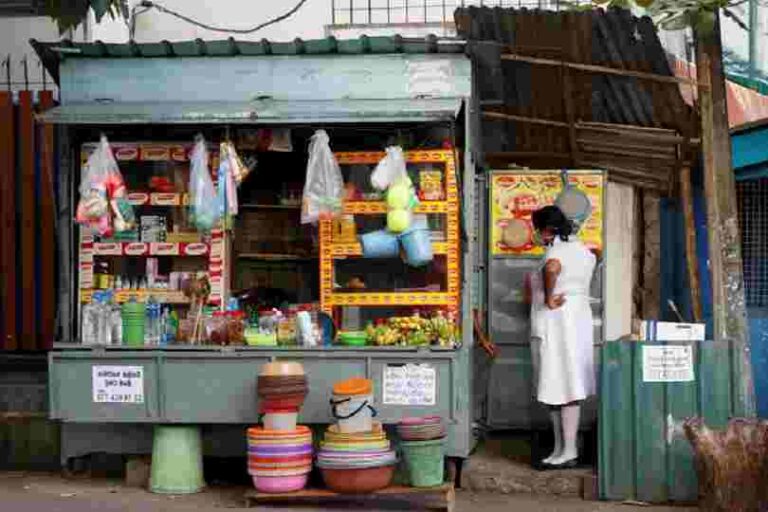
The ongoing economic crisis has left at least 8 million Sri Lankans as ‘food insecure’ [File: Eranga Jayawardena/AP Photo]
Wijewardene told Al Jazeera that he was surprised that Dani Rodrik, “who was a strong advocate for Washington Consensus, ie neo-liberal economic reform throughout the world” and Thomas Piketty, “who is from the opposite camp,” are on the same platform calling for debt cancellation.
Instead, he said, these academics and economists “should argue for the accountability to be established”.
“Money borrowed has been wasted or appropriated by rulers, leaving [out] people who haven’t benefitted from them. Those rulers should be made accountable for the losses and we should fight to establish a governance system in which they should be prosecuted for their crimes,” he said.
Wijewardene added that the cancellation of debt would not benefit the people but “the corrupt, despot” leaders.
“Corrupt despots have already benefitted from the money borrowed. When debt is cancelled, they don’t have to repay and can continue to borrow more and use that money for private gains. This is known as the moral hazard problem in economics; that when someone has taken responsibility for your liabilities, you have no incentive to take even the minimum precautions to minimise it,” he said.
Time for bilateral creditors to step up
For now, Nandalal Weerasinghe, the head of the Sri Lanka Central Bank, has urged China and India to come to an agreement over reducing the country’s debt.
“We don’t want to be in this kind of situation, not meeting the obligations, for too long. That is not good for the country and for us. That’s not good for investor confidence in Sri Lanka,” Weerasinghe told the BBC recently.
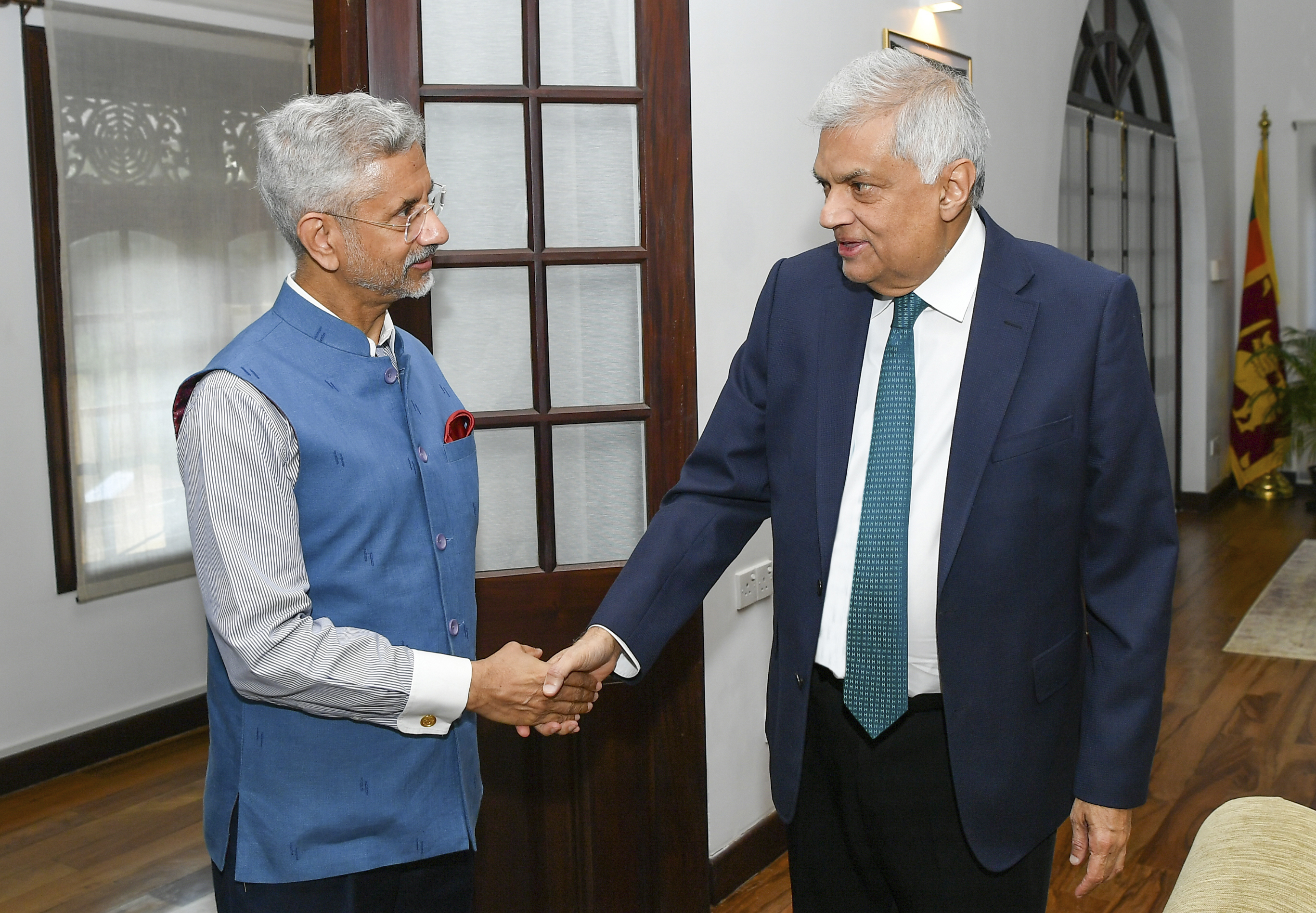
On Friday, India’s Foreign Minister S Jaishankar, while on a two-day visit to Sri Lanka, said that New Delhi had extended financing assurances to the IMF to clear the way for Sri Lanka to move forward but did not specify what those assurances were.
India’s Foreign Minister S Jaishankar (left), seen shaking hands with Sri Lankan President Ranil Wickremesinghe, told Sri Lanka that his country has given financial assurances to the IMF to facilitate a bailout plan [File: Sri Lankan President’s Office via AP]
On the heels of India’s assurance, China has offered a two-year moratorium, according to Sri Lanka’s Sunday Times newspaper.
In a letter to President Ranil Wickremesinghe, the Exim Bank of China, responsible for much of the loans given to Sri Lanka, said the two-year moratorium would be a short-term suspension of the debts owed to China while asking all Sri Lanka’s creditors to get together to work out medium-term and long-term commitments.
China is yet to make any official statement in this regard.
The assurances come on the eve of a Paris Club meeting of Sri Lanka’s creditors to discuss debt restructuring measures as a prelude to the IMF funds.
The chances of China acceding to requests for a loan waiver are slim as similar demands will then come from other parts of the developing world where China is an active lender, said Dhananath Fernando, the chief executive officer of Advocata Institute, an economic policy think tank in Sri Lanka.
“When you offer a debt relief to one country, it is like a court order. Other countries will also like to get the same relief,” he told Al Jazeera.
Moreover, taxpayers in any country would not be happy to completely write off loans offered to another country, a sentiment pointed out by IMF Managing Director Kristalina Georgieva.
“It is the notion, and is actually very broadly shared by many officials and citizens in China, that China is still a developing country and therefore … they expect to be paid back because it is a developing country,” she said in a media roundtable earlier this month.
“So, a haircut in the Chinese context is politically very difficult,” but China understands that the equivalent of that can be achieved by stretching maturities, reducing or eliminating interest rates, and payments to ultimately reduce the burden of debt, she added.
Dismissing the call for debt cancellation as “impractical”, Advocata Institute’s Fernando said that all the creditors will eventually have to agree on either a haircut (reducing the debt payment), coupon clipping (asking the lenders to reduce or waive off interest rates on bonds), extending the maturity of the loans or a combination of all three.
The Japanese embassy in Colombo had not responded by press time to an Al Jazeera request for comment.
Trade unions join call to cancel debt
Meanwhile, supporting the call for debt cancellation, a trade union representing garment factory workers, a key employer and income generator in Sri Lanka, said the economic restructuring measures required by the IMF as part of its debt relief plan will have the Sri Lankan government privatise state-owned enterprises, impose new taxes and increase the tax rates.
None of these measures “would provide an answer to Sri Lanka’s present debt crisis,” said Anton Marcus, co-secretary of the Free Trade Zones and General Services Employees Union, in a statement. The academics’ call “should be further lobbied by all labour rights campaigners and global trade union federations when Sri Lanka’s export manufacturing and service sector is hard-pressed for orders that threaten employment on large scale, in a country that is burdened with spiralling cost of living,” Marcus said.
The World Food Programme estimates that 8 million Sri Lankans — out of a 22 million population — are “food insecure” with hunger especially concentrated in rural areas.