Saman Jayasinghe has been appointed as the new Commissioner General of the Excise Department.
Jayasinghe, who is a senior administrative officer, has been appointed by the Cabinet, effective from January 02, 2023.
MIAP

Saman Jayasinghe has been appointed as the new Commissioner General of the Excise Department.
Jayasinghe, who is a senior administrative officer, has been appointed by the Cabinet, effective from January 02, 2023.
MIAP

The electricity tariffs cannot be revised on the mere basis of a Cabinet paper presented by the Subject Minister or the will of the Ceylon Electricity Board, asserted Chairman of the Public Utilities Commission of Sri Lanka (PUCSL) Janaka Ratnayake, speaking to a briefing yesterday (28).
“We haven’t received such a proposal so far. We would like to tell the public, that you don’t have to panic unnecessarily. We’re engaging in a discussion with the public on how the electricity bill should be increased. In my opinion, certain parties have given wrong data to the Minister. The decision to increase electricity tariffs should be taken through the Public Utilities Commission. Neither the Ceylon Electricity Board nor the Cabinet can increase electricity tariffs, according to law. If anyone goes on saying that the units 30, 60, 90, 180 should be brought in to a common level, that’s not the procedure accepted by the world. Generally, the common procedure is that a necessary concession is provided to those consuming lower levels of electricity. Changes such as 58, 45, or 42 cannot be made on the will of certain parties. I can assure that this affairs is not carried out on the mere basis of Cabinet papers or the will of the Ceylon Electricity Board.”
MIAP
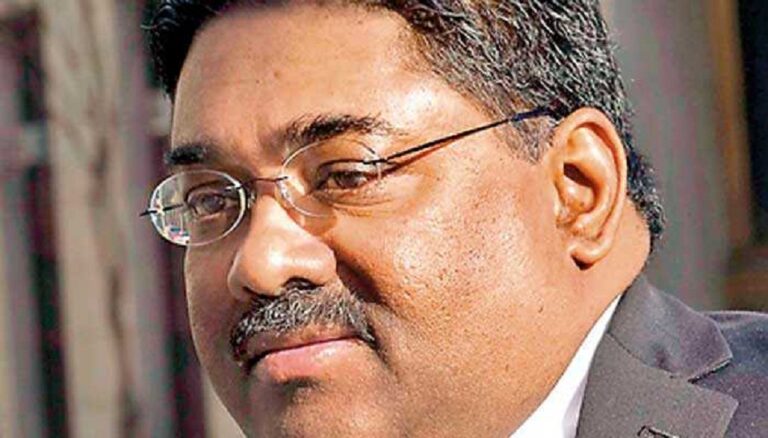
Sri Lankan-born Galleon hedge fund founder Raj Rajaratnam, alleged of being the mastermind of the largest hedge-fund insider-trading deals in US history, is now in Sri Lanka and will meet some Sri Lankan politicians in the coming days, informed sources confirmed.
The reason for his visit to Sri Lanka is not known but this old Thomian’s affection for the island nation, especially the downtrodden in the North and East may bring some relief for the dollar starved country,economic analysts predicted.
He also held some considerable percentage of shares in leading business entities and two or three banks way back in 2009.
With few big companies to invest in, the Wall Street Journal said the total value of the stock market here is only around $10 billion at that time and Mr. Rajaratnam piled his money into the limited number of large, blue-chip shares.
He and his funds quickly became the biggest shareholders in many of Sri Lanka’s top companies.
Mr Rajaratnam is a Sri Lankan Tamil who immigrated to the US in 1981. He was an old boy of S. Thomas’ College Mount Lavinia.
He grew up in a respected, middle-class family in Colombo. His father was the chairman of a sewing machine company, an important post in Sri Lanka’s garment exporting industry.
H left Sri Lanka to study at a young age and after getting a college degree at the University of Sussex in the U.K. and a business degree from the Wharton School at the University of Pennsylvania, he started a career abroad.
Mr Rajaratnam had also been accused of giving more than US$3.5 million to the Tamil Rehabilitation Organization (TRO) whose assets were frozen by the US Treasury Department in Nov. 2007 because of its alleged ties to the Tiger terrorists.
Rajaratnam was also linked to the controversial US$ three million which was deposited at the Standard Chartered Bank Branch in Kirillopane without the authority of the Central Bank in 2006.
Mr. Rajaratnam was a frequent contributor to various causes, from those that promoted development in the Indian subcontinent to programs that benefited lower-income South Asian youth in the New York area.
The Wall Street Journal reported some times back that Mr. Rajaratnam was active politically. Data from the Center for Responsive Politics, a nonpartisan group that tracks political contributions, shows Mr. Rajaratnam donated $26,200 to the Democratic Party’s fund-raising arm in 2007.
He also provided $4,600 in 2007 to the campaign of Hillary Clinton, now secretary of state, and $4,600 in 2008 to the campaign of President Barack Obama.
With about 18 people working or consulting for his family-office firm “Synamon” echoes the spice most associated with his native Sri Lanka he’s trading stocks, investing in real estate, whatever catches his eye.
Whether Rajaratnam can pick himself up after such a spectacular fall is anyone’s guess. But he still has the money to try.
The year in which he was arrested, Forbes estimated he was worth $1.3 billion. He says legal fees and fines cost him $200 million.
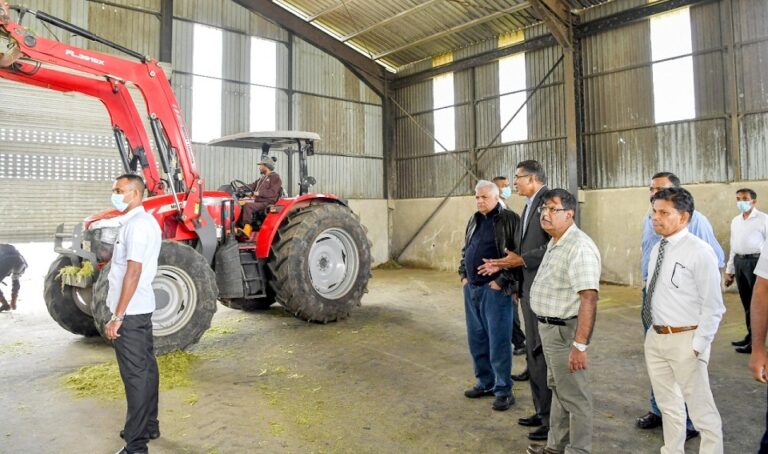
In an unprecedented goodwill gesture and a visionary move President Ranil Wickremesinghe has offered land to Ambewela Farm to feed dairy cows.
President Wickremesinghe instructed the Nuwara Eliya District Secretary and Commissioner to provide 30 acres of abandoned land adjacent to the Ambewela Farm to them and provide the necessary facilities to develop it as grazing land to meet the food requirement of the dairy cows.
Heissued these instructions during an observation tour of United Dairies Lanka (Pvt.) Ltd, which belongs to the Ambewela Farm Group.
Wickremesinghe inspected the 30 acres of abandoned land in the vicinity of the Ambewela Farm which has been identified as suitable land for the cultivation of grass.
The President commended the systematic growth achieved by the Ambewela Farm in the dairy production industry adding that it has set an example for other dairy farms as well.
The President also advised the management to open the farm for research activities for university students in the country to gain experience in the dairy farming field.
General Manager of the Ambewela Farm Group Sarath Bandara said that the Ambewela Farm is the main centre in Sri Lanka as well as in South Asia which can boast of the highest technical application in dairy production and farming technology.
Presently, there are about 1,000 dairy cows at the Ambewela Farm. All activities such as maintaining the dairy cows, providing necessary fodder, weighing, diagnosing diseases and separating them from others are done through an automated system.
The cows are milked thrice a day and 40,000 litres of liquid milk is supplied to the market daily. Around 4,500 cows are currently being fed within the entire Ambewela Farm network.
While this institution was under the Government before the establishment of the Ambewala Group in 2001, the daily milk production stood at a mere 1,500 litres.
The Ambewela Farm system has been working for the last 15 years to create the best dairy cows for Sri Lanka. Accordingly, none of these dairy cows are imported and only a very few male animals are imported once every few years.
Additionally, around one thousand indirect jobs have been created in the process of providing fodder for the animals on this farm.
A mechanism is already in place to get the whole maize plant to the Ambewela Farm from the farmers after harvesting the crop. Accordingly, the Ambewela Farm has facilities to amass around 25,000 metric tons of maize plants annually and store them.

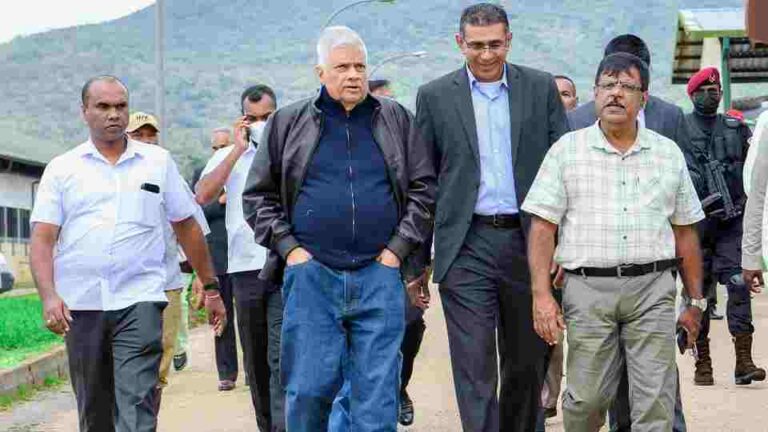
President Ranil Wickremesinghe instructed the Nuwara Eliya District Secretary and Commissioner to immediately provide 30 acres of abandoned land adjacent to the Ambewela Farm to them and provide the necessary facilities to develop it as grazing land to meet the food requirement of the dairy cows.
President Ranil Wickremesinghe issued these instructions two days ago (27) during an observation tour of the United Dairies Lanka (Pvt.) Ltd, which belongs to the Ambewela Farm Group.
The President commended the systematic growth achieved by the Ambewela Farm in the dairy production industry adding that it has set an example for other dairy farms as well. The President also instructed to open this farm for research activities for university students in the country to gain experience in the dairy farming field.
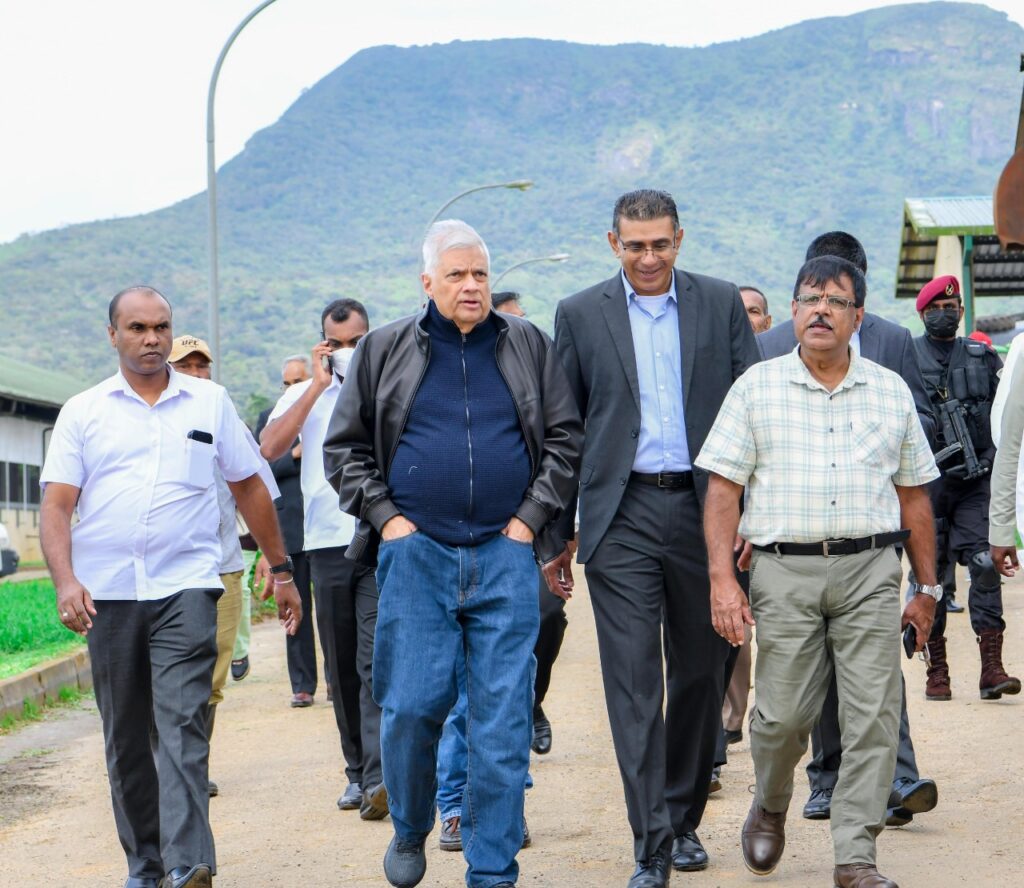
General Manager of the Ambewela Farm Group Sarath Bandara said that the Ambewela Farm is the main centre in Sri Lanka as well as in South Asia which can boast of the highest technical application in dairy production and farming technology.
Presently, there are about 1,000 dairy cows at the Ambewela Farm. All activities such as maintaining the dairy cows, providing necessary fodder, weighing, diagnosing diseases and separating them from others are done through an automated system. The cows are milked thrice a day and 40,000 litres of liquid milk is supplied to the market daily.
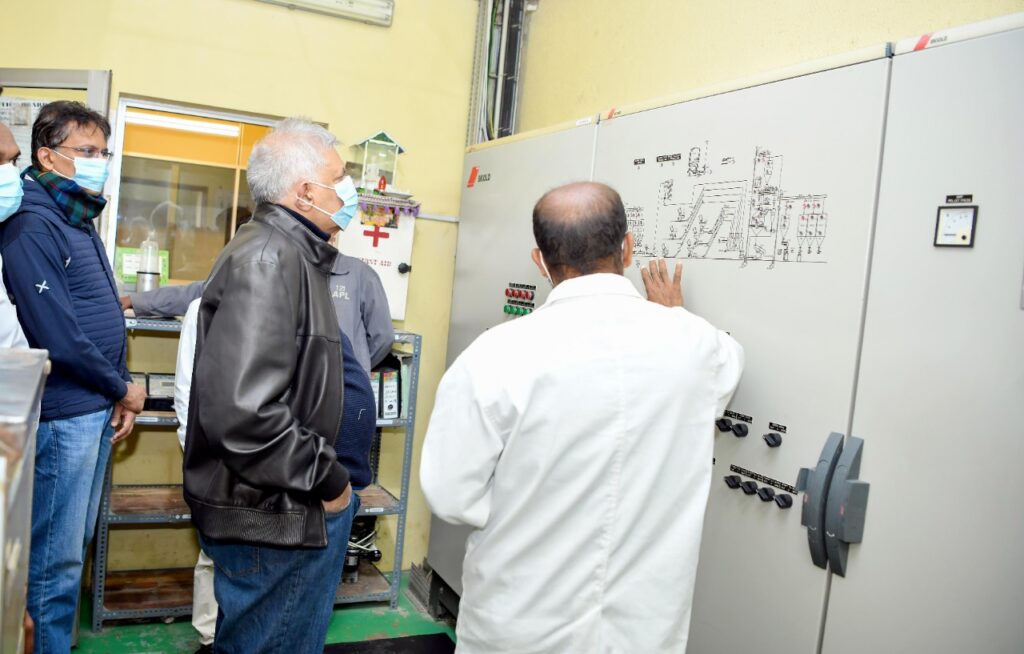
Around 4,500 cows are currently being fed within the entire Ambewela Farm network. While this institution was under the government before the establishment of the Ambewala Group in 2001, the daily milk production stood at a mere 1,500 litres.
The Ambewela Farm system has been working for the last 15 years to create the best dairy cows for Sri Lanka. Accordingly, none of these dairy cows is imported and only a very few male animals are imported once every few years.
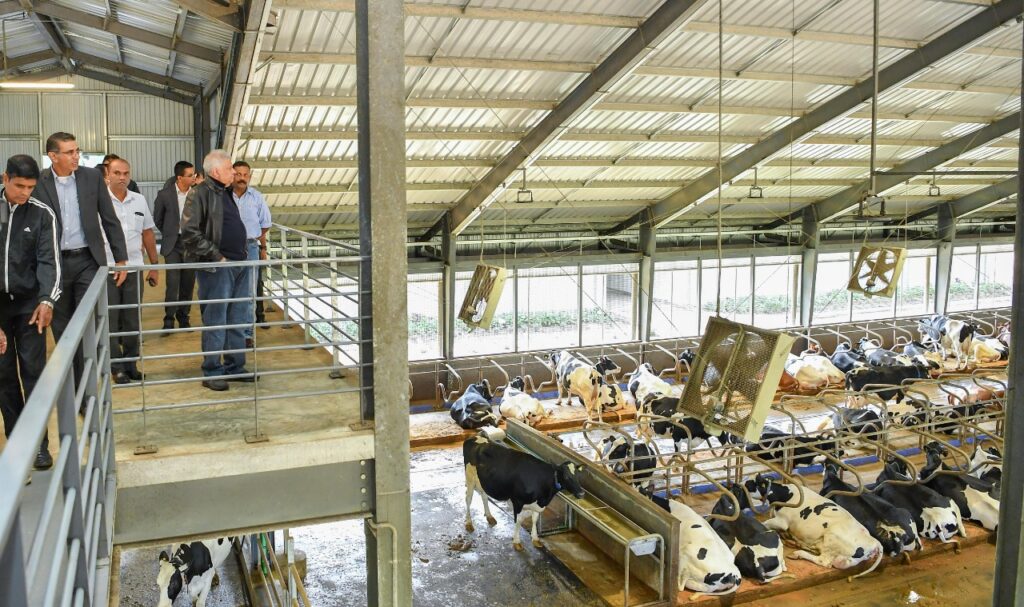
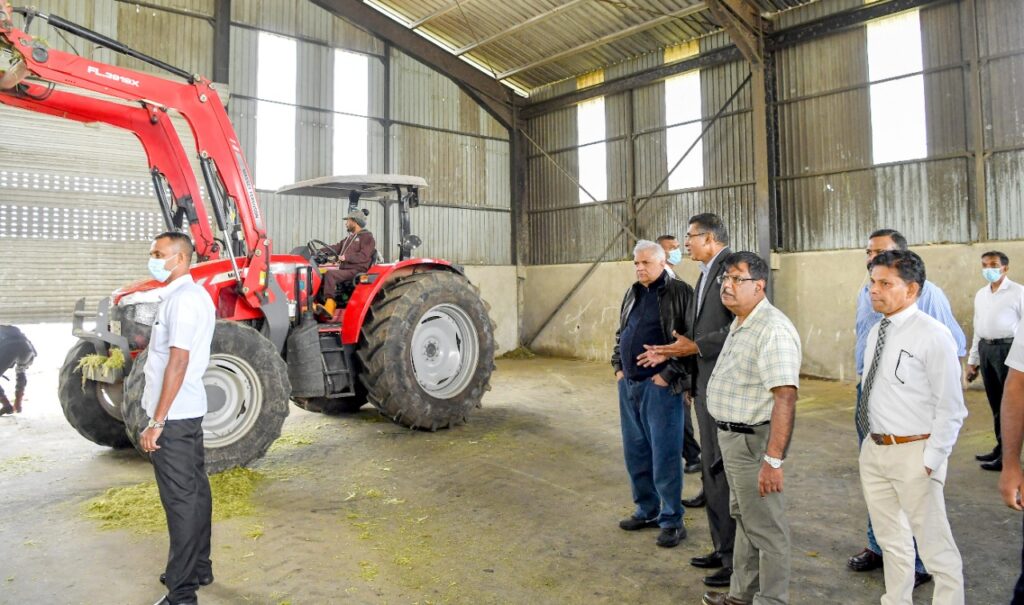
Additionally, around one thousand indirect jobs have been created in the process of providing fodder for the animals on this farm. A mechanism is already in place to get the whole maize plant to the Ambewela Farm from the farmers after harvesting the crop. Accordingly, the Ambewela Farm has facilities to amass around 25,000 metric tons of maize plants annually and store them.
President Ranil Wickremesinghe also inspected the 30 acres of abandoned land in the vicinity of the Ambewela Farm which has been identified as suitable land for the cultivation of grass.
PMD

The Monetary Board of the Central Bank of Sri Lanka (CBSL) has decided to cancel the Finance Business Licence issued to Swarnamahal Financial Services PLC (SFSP), effective from yesterday (28 Dec).
Accordingly, as per Section 37(3) of the Finance Business Act, No. 42 of 2011 (FBA), SFSP will no longer be permitted to engage in Finance Business under the FBA with effect from today.
The Certificate of Registration of SFSP as a Registered Finance Leasing Establishment was also cancelled under the provisions of the Finance Leasing Act, No. 56 of 2000, on the instructions of the Director of CBSL’s Department of Supervision of Non-Bank Financial Institutions.
In view of the contribution made by SMB Finance PLC (SMBF) (then SMB Leasing PLC) to repay the remaining deposits of SFSP, as per the directions of the “Masterplan for Consolidation of Non-Bank Financial Institutions Sector”, unclaimed deposit liability of SFSP will be transferred to SMBF along with the corresponding assets value and relevant depositor information.
Further, Sri Lanka Deposit Insurance and Liquidity Support Scheme (SLDILSS) will take necessary actions to pay compensation to the outstanding insured depositors of SFSP up to a maximum of Rs. 1,100,000/- per depositor as per the regulations of the SLDILSS in due course.
Upon the transfer of unclaimed deposit to SMBF and payment of compensation through SLDILSS, the entirety of the deposit liability of SFSP will be settled.
SMB Leasing PLC is set to buy Rs. 425 million worth of assets of Swarnamahal Financial Services PLC (SFSP), enabling the latter to settle outstanding deposits.
The move follows the Central Bank, in principle, approving SMB Leasing (SMBL) to transfer Rs. 425.3 million to SFSP to settle outstanding deposits. I
In lieu of the transfer of funds, SFSP has to transfer the unencumbered title of three properties to SMBL. Thereafter, the licence of SFSP to conduct finance business was cancelled.
The properties, which SFSP will transfer ownership to SMBL, are 195.86 perches of bare land in Gangatennwatte, Angunawala, Kandy; 46 perches of land and building at 10, De Alwis Avenue, Mt. Lavinia, and three shops at the Ja-Ela Realty Plaza.
SMBL said the Monetary Board of the CBSL granted, in principle, approval to issue a finance business license upon completing the pay-off of public deposits and purchase of certain assets of a finance company at Rs. 425.3 million.
This was under the master plan for Consolidation of Non-Bank Financial Institutions of the CBSL.
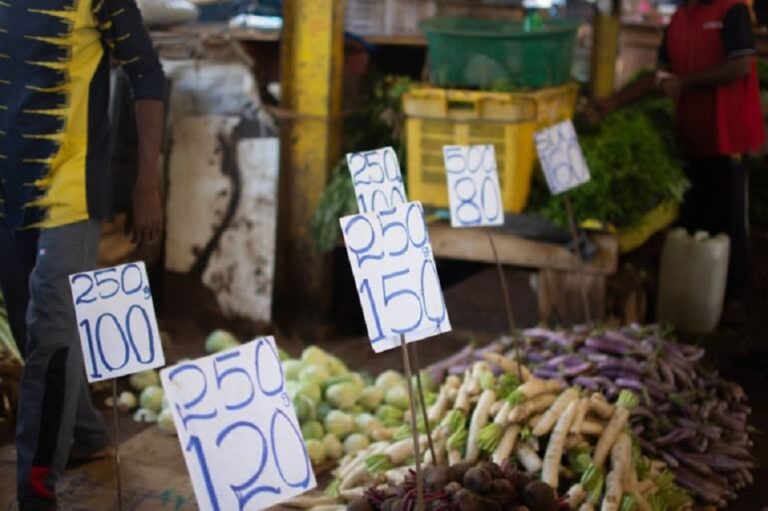
Sri Lanka’s economic crisis has deepened the risk of food insecurity, a report released by the World Food Programme (WFP) revealed.
Accordingly, while 36% of households are food insecure, 76% have resorted to food-based coping strategies, WFP stated.
This indicates the failure of the government’s efforts to minimize the impact of food shortage and high cost of living on the poor and the middle class people by implanting relief schemes.
The government has allocated Rs 46,600 million for crisis-related initiatives, including providing Rs 10,000 per food-insecure family and an additional monthly allowance of Rs 2,500 for pregnant mothers for four months respectively.
Additionally, the government recently initiated a National Food Security Programme. It has also proposed establishing youth agriculture companies, writing off paddy farmers’ outstanding loans, etc.
A further Rs 400 million was allocated for the Department of Agriculture to provide farmers with seeds/planting material urgently and Rs 40 billion for fertilizer for paddy cultivation for the 2022/2023 ‘Maha’ season
Despite having remained at relatively stabilized levels over the past three months, food security levels still remain concerningly high, the report indicated.
It has been observed that nearly eight in ten households regularly turn to food-based coping strategies and over five in ten households pawning items or formally borrowing money in order to eat.
Food prices also remain a primary concern for nine out ten households.“With limited purchasing power, over 50% of households are purchasing food on credit. Consumption of adequate diets remains low.
Thirty five percent of households are facing insufficient food consumption, with many consuming far less diverse and nutritious diets”, the report read, emphasizing that the crisis continues to disproportionately impact different segments of society.
Female-headed households (44%) are faring worse than male-headed households, while those in the estate areas (43%) consistently experience higher levels of acute food insecurity than those in urban and rural areas.
Food insecurity saw an increase of 4% in October, compared to the figures seen in September, with almost half of the households (48%) in the Southern province being deemed food insecure, followed closely by Sabaragamuwa province (45%).
Those in the East and the North recorded the lowest food insecurity scores in October, with the former having recorded a score of 26%, and the latter coming in just a percentage lower at 25%.
Six out of nine provinces saw a rise in food insecurity between September and October, namely Uva, Southern, North Central, Central, North Western and Eastern provinces.
There was a reduction in food insecurity in the Northern province of 8 percentage points from September.
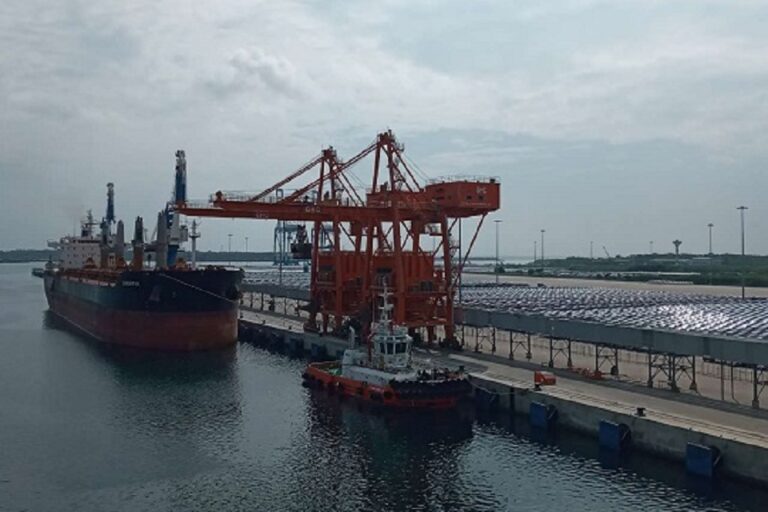
The Hambantota International Port (HIP) is to promote afloat vessel repairs promptly in 2023, the Port officials said today.
HIP is supporting Colombo Dockyard PLC (CDPLC) to handle running repairs to vessels while they remain afloat in the harbour.
The majority of vessels directed to HIP for afloat repairs come with damages experienced below the water line. CDPLC carries out permanent repairs on these ships with service assistance from HIP.
Praneeth Rajapakse, Head of Afloat Repairs, CDPLC noted that“Usually repairs of this nature require us to bring the vessel into dry docks, but we are confident of doing such operations efficiently at HIP.
HIP has the berthing capacity and capability to handle afloat repairs along with our expert team. Handling dry docking services afloat is a valuable saving of time for our vessels, especially when they are carrying cargo and incurring demurrage costs.
“The facilities available at HIP makes this complex service possible, and we are able to carry out our permanent repairs without the ship having to go elsewhere with a temporary fix,”he added
Recently, CDPLC directed MV Sandpiper for afloat repairs at HIP. The Sandpiper had damaged its stern tube aft seal unit during a cargo operation in Bangladesh and sought dry docking services.
However, CDPLC recommended afloat repairs at HIP which was a much more convenient and cost-effective solution.
“HIP being the closest in the region to east west shipping lanes, makes the port an ideal destination for ships requiring any type of repairs and we have the necessary skills, and deep draft berthing capacity to handle afloat services, which will be a value addition to the shipping industry.
“We plan on aggressively promoting this service in the coming year,” Tissa Wickramasinghe, COO of Hambantota International Port Group (HIPG) disclosed.
The MV Sandpiper which completed the repairs successfully, is now back in operation. An equally complex repair was handled by CDPLC on MV Sunny Hill, while she was berthed at Hambantota International Port in March this year.
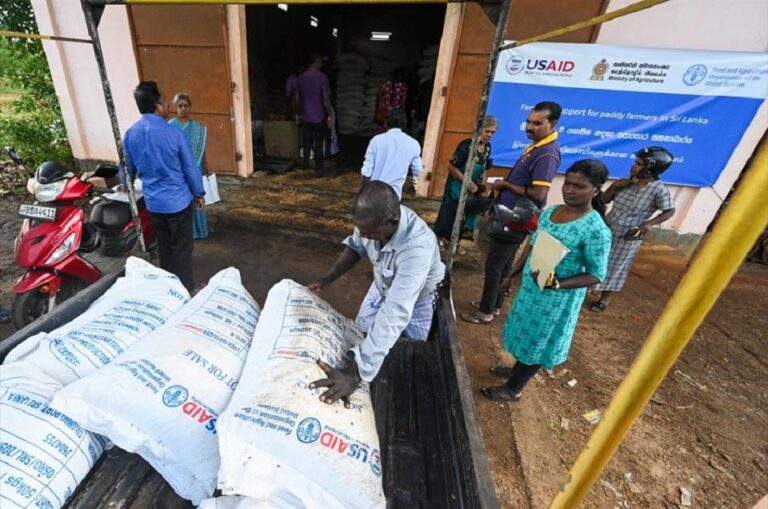
The Food and Agriculture Organization of the United Nations (FAO), with funding through the United States Agency for International Development (USAID), will distribute 36,000 metric tonnes of Triple Super Phosphate (TSP) fertilizer to all paddy farmers in Sri Lanka through the Ministry of Agriculture.
The amount of TSP provided per farmer will be determined based on the area they cultivated in the 2022/2023 Maha cultivation season.
The distribution list along with the land extent cultivated during this Maha season used to determine the amount of TSP fertilizer allocated per farmer has been published and displayed at all Agrarian Service Centres of the Department of Agrarian Development.
FAO invited all eligible paddy farmers to visit their respective Agrarian Service Centre and ensure their details have been incorporated. The distribution lists will be displayed until 5 January 2023, and the date of fertilizer distribution will be shared through the Agrarian Service Centres.
Sri Lanka has imported 103,000 metric tonnes of fertilizer after ban was lifted at the end of December 2021, Agriculture Minister Mahinda Amaraweera said, though importers were given licenses to bring down more.
However forex shortages were preventing the opening of letters of credit, blocking imports.With the fertilizer ban being implemented in 2020, paddy production had fallen 40 percent in the 2021 Maha season.
The ban was lifted in November 31, 2021 and National Fertilizer Secretariat data showed that 103,832 MT of fertilizers have been imported from December 01, 2021 to June 08, 2022, Minister Amaraweera said.
The amount of the imported chemical fertilizer is Urea -20,262 KCL -13,000 SOA -61,233Kieserite -6,411, SOP -168 ,TSP -1241.5,,CES -443.2 and DAP -811.2
Minister Amaraweera said, National Fertilizer office has given permission to import another 38,503.5 MT of Urea.But fertilizer importers were unable to open Letters of Credit due to lack of foreign exchange.
They were also owed Rs 22 billion from the government for subsidized sales of fertilizer and private importers were reluctant to get involved in the business, Amaraweera said.
The fertilizers actually imported were less than the amounts that were given permission to import.
“All other fertilizers that have been imported are less than the amount that has been permitted to import, and the main reason is inability to open LCs due to lack of forex,”Amaraweera said.
For the 2022/2023 Maha season the cabinet had given approval for state fertilizer firms to import 150,000 metric tonnes of urea, 45,000 MT of MOP and 36,000 MT of TSP.
Minister Amarweera said, to get the funds to import the necessary fertilizers, discussions have started with the World Bank, Asia Development bank and other international financial institutions.